How Do CPSIA Lead & Cadmium Limits Apply to Kids’ Sunglasses?

CPSIA 1 lead and cadmium limits confuse many kids’ sunglasses buyers. On our production line in Taizhou, one failed heavy-metal test can freeze an entire shipment — and the buyer’s launch date with it.
CPSIA lead limits apply to kids’ sunglasses designed primarily for children 12 and under: accessible components must contain no more than 100 ppm total lead, and surface coatings no more than 90 ppm. Cadmium is not a core CPSIA limit but is regulated through state laws and buyer standards.
That short answer hides real complexity. Which parts count as accessible? What documents prove compliance? And where does cadmium actually fit? Let me walk you through each question.
How do I know if my kids' sunglasses supplier can meet CPSIA lead and cadmium limits?
A buyer from Australia once asked me a blunt question during a factory audit: "How do you know your bright orange frames won't fail lead testing?" That question deserves a real answer, not a sales pitch.
A capable supplier can show you prior third-party test reports for similar materials, name the CPSC-accepted laboratory they use, explain their raw-material controls for TR90 and TPEE, and describe how they retest when pigments, coatings, or component sources change between production runs.

The honest truth is that many factories can produce a nice-looking sample. Far fewer can consistently pass total lead content 2 testing across multiple production batches. In our fifteen years making children's eyewear, we have learned that compliance is a system, not a certificate you buy once.
Questions that separate real compliance from paperwork
Ask your supplier these questions before you place a purchase order. The quality of the answers tells you almost everything.
| Question to ask | A strong answer sounds like | A weak answer sounds like |
|---|---|---|
| Which lab do you use? | Names a specific Laboratório aceito pela CPSC 3 and shares recent reports | "We can arrange testing if you need it" |
| Do you test finished frames or raw pellets? | "Finished molded frames, because colorants can add heavy metals" | "Our resin supplier gives us a lead-free certificate" |
| How do you handle new pigments? | "Every new color formulation gets tested before mass production" | "All our colors are the same material" |
| What about metal parts? | "Hinge screws and metal inserts are tested as accessible parts" | "Those parts are hidden, so they're exempt" |
That last row matters more than most buyers realize. A raw-material declaration is a starting point, but it is legally insufficient on its own. The injection molding process, masterbatch colorants, and mold-release agents can all introduce contamination that never appeared in the supplier's pellet certificate. This is why we always recommend testing the finished product — the actual frame a child will wear — rather than relying on upstream documents alone.
Material choice as a risk signal
Substrate materials matter too. Virgin TR90 and TPEE, which we use for nearly all our children's frames, have a low inherent heavy-metal risk. Recycled resins, metallic paints, and electroplated decorations raise the risk sharply. If a supplier cannot tell you exactly what their frames are made of, treat that as a warning sign.
What testing and documentation should I request to prove CPSIA compliance?
When we prepared our first large shipment for a US children's brand years ago, the buyer's compliance checklist was longer than the purchase contract. That experience taught me exactly which documents customs brokers and retailers actually ask for.
Request a Children's Product Certificate backed by third-party test reports from a CPSC-accepted laboratory covering total lead content in accessible substrates, lead in surface coatings, and phthalate content limits, plus permanent tracking label details on both product and packaging.

The Certificado de Produto Infantil 4, or CPC, is the anchor document. US law requires the importer or domestic manufacturer to issue it, but it must be based on passing test results from a CPSC-accepted laboratory. You cannot issue a valid CPC based on a supplier's self-declaration.
The core document package
Here is the documentation stack we help our B2B customers assemble for US-bound kids' sunglasses:
- Third-party test reports. These should cover total lead in accessible component parts against the 100 ppm limit, and lead in paint or similar surface coatings against the 90 ppm limit. Surface coating regulations apply to printed logos, painted finishes, and decorative graphics — all common on children's frames.
- Phthalate testing where relevant. Soft-touch parts like flexible temple tips and nose pads can fall under phthalate content limits 5, especially if a buyer classifies the product conservatively or if state rules apply.
- The Children's Product Certificate itself. It must list each applicable rule, the testing lab, the manufacturing date and location, and contact details.
- Tracking label verification. Tracking label requirements mean each pair needs a permanent mark — usually on the inside of the temple — plus matching information on the packaging, identifying the manufacturer, production date, and batch. This is what makes a targeted recall possible instead of a catastrophic one.
Where cadmium fits in the paperwork
Cadmium deserves careful wording. CPSIA is primarily a lead law, and there is no universal federal CPSIA cadmium limit for non-toy sunglasses. However, if a product is marketed in a toy-like way, ASTM F963-17 6 heavy-metal limits may come into play. State rules matter too: California restricts cadmium in children's jewelry-type products, and California Proposition 65 7 compliance adds warning obligations for listed chemicals. Many of our European and Australian buyers simply add cadmium screening 8 to their standard chemical test package, and we support that. It is cheap insurance compared to a blocked shipment.
| Requisito | Base legal | What to request |
|---|---|---|
| Total lead ≤ 100 ppm | CPSIA, accessible components | Substrate test report per material/color |
| Lead in coatings ≤ 90 ppm | CPSIA surface coating rule | Coating test on painted/printed areas |
| Cadmium screening | State law, ASTM F963-17 context, buyer specs | XRF or wet-chemistry cadmium results |
| Prop 65 chemicals | California Proposition 65 compliance | Supplier declaration plus targeted testing |
Which materials and components are most likely to cause lead or cadmium violations?
Not all parts of a pair of sunglasses carry equal risk. When our engineers review a new design — say, a wraparound sport style with a mirrored gradient lens, or a two-tone round frame with a visible hinge screw — we map every component against its heavy-metal risk before quoting.
The highest-risk components are metallic hinge screws and inserts, painted or electroplated finishes, printed logos, bright red, orange, and yellow pigments, recycled plastics, and decorative charms. Virgin TR90 and TPEE substrates carry the lowest inherent lead and cadmium risk.

Let me break this down component by component, because this is where most compliance failures actually originate.
Component risk map
| Componente | Risk level | Por que falha |
|---|---|---|
| Metal hinge screws | Alto | Cheap brass or plated screws can exceed 100 ppm lead; small parts can detach and be mouthed |
| Painted/metallic coatings | Alto | Chrome-look and metallic paints historically use lead compounds; 90 ppm coating limit is strict |
| Bright pigments (red, orange, yellow) | Alto | Lead chromate and cadmium pigments are legacy colorants; levels fluctuate between pigment batches |
| Printed logos and graphics | Médio | Ink formulations vary; each print run counts as a coating |
| Recycled resin frames | Medium-High | Legacy contamination from previous industrial use is unpredictable |
| Soft nose pads and temple tips | Médio | Plasticizer and stabilizer chemistry can trigger phthalate and cadmium questions |
| Virgin TR90/TPEE frame body | Baixo | Clean polymer chemistry with controlled colorant loading |
The hinge-screw trap and the accessibility myth
Many factories assume a hinge screw is "inaccessible" and therefore exempt from lead limits. That assumption is dangerous. The CPSC evaluates accessibility using use-and-abuse logic. A small screw that can loosen, break off, and be swallowed by a child is very much part of the compliance picture. Similarly, a coating or electroplated layer does not make lead in the substrate underneath "inaccessible" in the CPSC's view. This is why we prefer designs with molded flex hinges or well-secured, tested stainless components for our children's lines.
Why bright colors need per-batch attention
Kids' sunglasses sell on color. Fiery orange mirror lenses, periwinkle-blue fronts, mint-teal temples — these are exactly the shades brands want. But bright yellows, oranges, and reds are historically the pigment families where lead and cadmium hide. Pigment chemistry can shift between overseas production runs, so a one-time annual test on a multi-batch bright-colored line is a genuinely risky strategy. For high-chroma colorways, per-batch or per-formulation verification is worth the modest cost.
How can I avoid CPSIA compliance delays when launching a new kids' sunglasses line?
Timing is the trade-off I discuss most often with new brand founders. They want custom colors, custom packaging, and a fast launch — but every custom element adds a testing dependency. Getting the sequence right matters more than rushing any single step.
Start compliance planning at the design stage: lock materials and pigments early, choose pre-tested existing styles where possible, book the CPSC-accepted laboratory before production ends, test finished production samples rather than prototypes, and prepare the Children's Product Certificate and tracking labels in parallel with shipping documents.
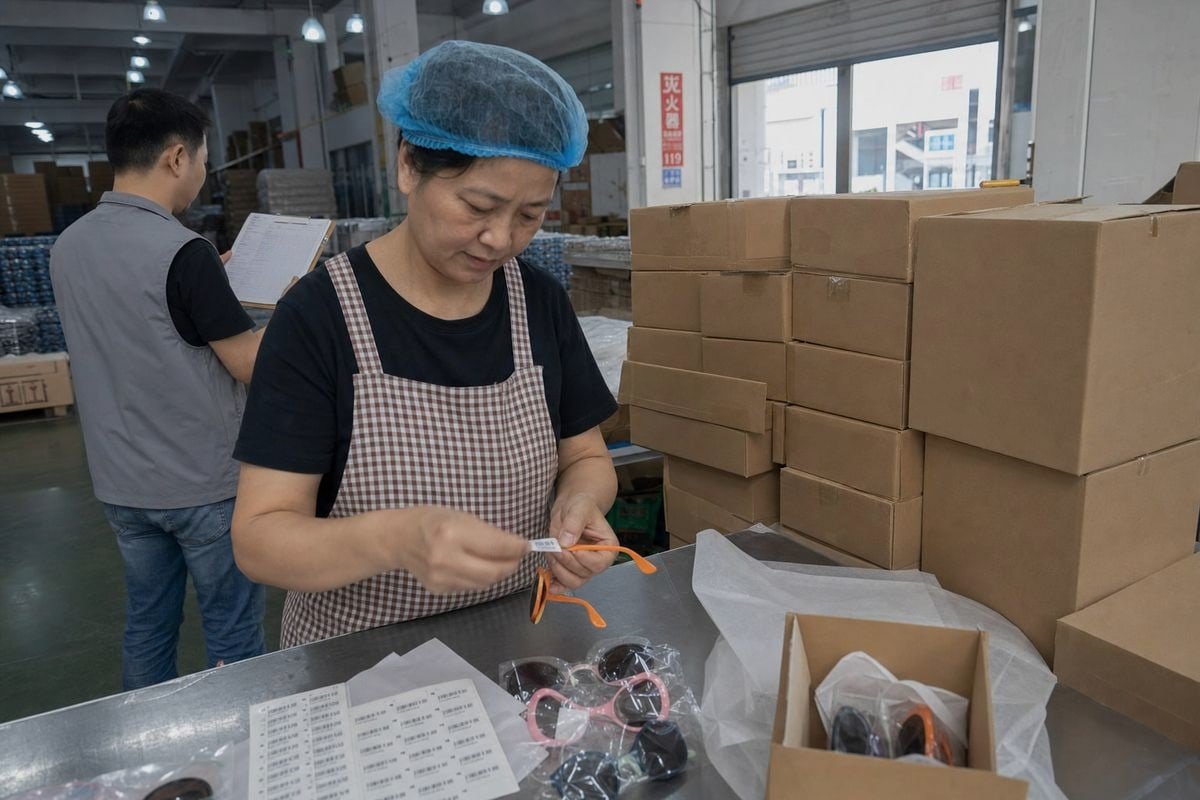
Most compliance delays we see are not caused by failed tests. They are caused by testing that started too late, or by mid-project changes that quietly invalidated earlier results. Here is the sequence that works.
A realistic compliance timeline
- Design and material lock. Confirm frame material, colorway, coatings, prints, and metal components before tooling or color matching begins. Every later change restarts the clock.
- Choose the fast lane if you can. One reason we maintain roughly 800 existing styles is that new brands can launch on proven, previously tested material platforms instead of waiting for new molds. Existing tooling with a known material history dramatically shortens the risk assessment.
- Pre-screen during sampling. An XRF screening on pre-production samples catches obvious pigment problems early, cheaply, and before mass production commits you.
- Book the lab early. CPSC-accepted laboratory queues stretch during peak season. Reserve your testing slot two to three weeks before production completes, and ship test samples from the actual production run.
- Prepare documents in parallel. Draft the Children's Product Certificate, confirm tracking label artwork on temples and packaging, and align any California Proposition 65 compliance statements while goods are still on the line — not after they reach the port.
- Plan for retesting triggers. Agree in writing with your supplier on what triggers retesting: new colors, new pigment lots, new component vendors, or recycled-content changes.
Custom projects versus existing styles
Full OEM projects with custom colors, logos, lenses, and packaging are absolutely achievable — we run them constantly — but budget an extra testing cycle in the schedule. For a first order or a market test, starting from an existing tested style and customizing logos and packaging is usually the lower-risk path. It lets you validate demand before investing in molds and fresh chemical testing for entirely new formulations.
Conclusão
CPSIA lead limits — 100 ppm in accessible parts, 90 ppm in coatings — clearly apply to kids' sunglasses; cadmium arrives through state and buyer rules. Plan testing early, document thoroughly, and choose suppliers who treat compliance as routine.
Notas de rodapé
1. Official CPSC statute page defining CPSIA lead requirements referenced throughout the article. ↩︎
2. CDC background on lead exposure supports the article’s discussion of total lead limits. ↩︎
3. Directs readers to the official list of accredited labs required for CPSIA testing. ↩︎
4. CPSC’s official guidance on CPC requirements, the core document discussed in the article. ↩︎
5. CPSC’s official phthalates regulation page supports the article’s phthalate testing guidance. ↩︎
6. Official ASTM standard page for the toy safety heavy-metal limits mentioned in the article. ↩︎
7. State agency page explaining Prop 65 warning obligations cited in the article’s cadmium discussion. ↩︎
8. CDC/NIOSH cadmium exposure resource supports the article’s recommendation for cadmium testing. ↩︎
Mais Artigos que Você Pode Gostar

1 de agosto de 2026
A Fábrica Deve Lidar com a Embalagem e Rotulagem de Óculos de Sol Infantis, ou Usar um Fornecedor Designado?

1 de agosto de 2026
Armazém Próprio vs. Envio Direto do Fornecedor: Qual Reduz os Custos de Devolução para Marcas de Óculos de Sol Infantis?

1 de agosto de 2026
Armazém Direto ao Porto ou Estiva no Exterior: Qual Economiza Mais no Envio de Óculos de Sol Infantis?
Procurando um Parceiro Confiável em Óculos Infantis?
Explore mais de 800 estilos prontos e suporte completo OEM/ODM adaptado à sua marca.
Entre em Contato English
  Español de México
  Deutsch
  Français
  日本語
日本語  العربية
  Português do Brasil