How to Clean Kids’ Sunglasses Without Scratching the Lenses?

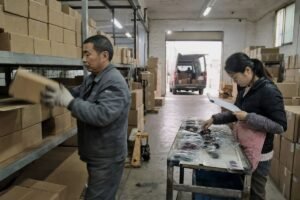
Parents ask us how to clean kids’ sunglasses all the time. In our Taizhou factory, we see returned samples ruined not by play, but by wrong cleaning habits at home.
To clean kids’ sunglasses without scratching the lenses, rinse them under lukewarm water first, add one drop of mild lotion-free dish soap, rub gently with clean fingertips, rinse again, then dry with a clean microfiber cloth. Never wipe dry lenses or use paper towels.
That is the short answer. Now let me walk you through why it works, what to avoid, and how frame materials change the routine.
What's the safest way to clean UV400 and polarized lenses without damaging their coating?
During lens QC on our production line, we handle UV400 and polarized lenses 1 daily. Our workers follow one strict rule: nothing touches a dry lens before it is rinsed.
The safest way to clean UV400 and polarized lenses is a wet method: rinse under lukewarm running water, apply a drop of mild soap, rub gently with fingertips, rinse thoroughly, and blot dry with microfiber. Water removes grit before wiping, which protects the coating from micro-scratches.
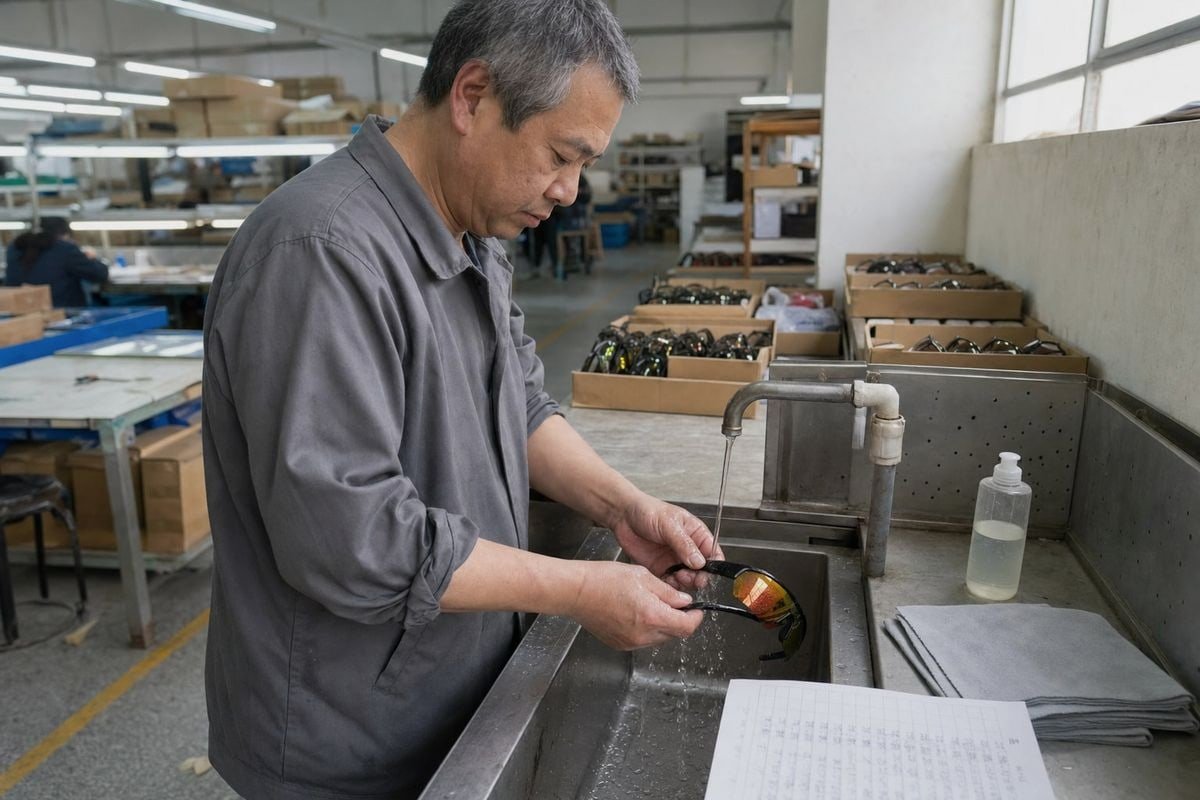
Scratches almost never come from the cloth itself. They come from what sits on the lens before you wipe. Dust, sand, and dried sunscreen are hard particles. When you rub them across the surface, they act like sandpaper. That is why the rinse step matters more than the wipe step.
Polarized lenses add another layer of concern. The polarizing film 2 and the UV400 treatment sit on or within the lens. Harsh chemicals can cloud the film or strip anti-reflective layers over time. Hot water can also stress coatings, so keep the water lukewarm.
The step-by-step method we recommend
- Wash your hands first. Oils and grit transfer easily.
- Rinse both sides of the lenses under lukewarm running water.
- Add one small drop of mild, lotion-free dish soap to your fingertips.
- Rub the lenses, frame, and nose area in light circles.
- Rinse until no soap film remains.
- Shake off excess water and blot dry with a clean microfiber cloth 3.
The whole routine takes under two minutes. In our experience shipping polarized kids' styles to brands in 20+ countries, lenses cleaned this way stay optically clear for the full life of the sunglasses. Lenses wiped dry with shirts often show visible haze within a single beach season. One habit change makes the difference.
Which cleaning tools and materials should I avoid to prevent scratches on kids' sunglasses?
A distributor in Australia once sent back a sample batch with hazy lenses. The cause was not our coating. Their showroom staff had been wiping demos with window cleaner and tissues.
Avoid paper towels, tissues, napkins, clothing hems, window cleaner, ammonia, bleach, vinegar, alcohol wipes, hand sanitizer, and hot water. Paper and fabric fibers scratch coatings, while harsh chemicals strip UV, anti-reflective, and polarizing layers. Also avoid dry wiping any lens with visible dirt on it.
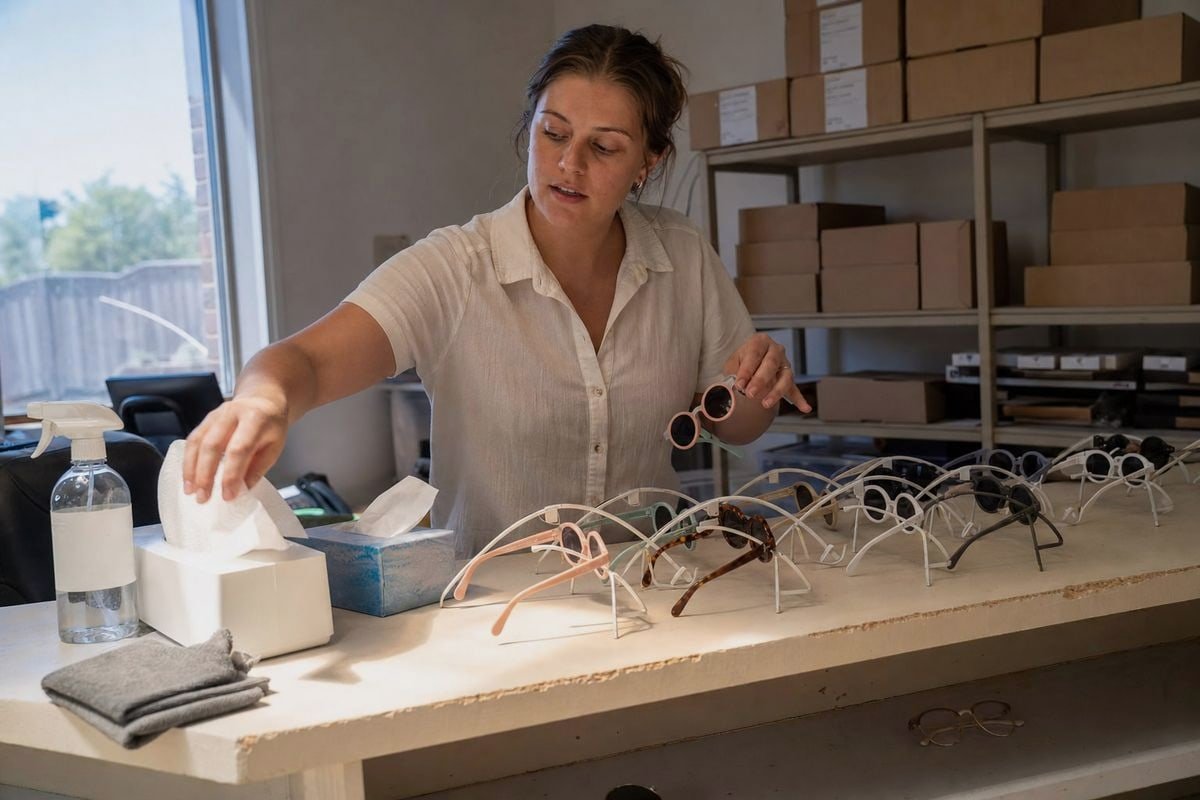
The avoid list is longer than most parents expect. Many everyday items feel soft but are abrasive at a microscopic level. Paper products contain wood fibers. Shirt hems carry dust, salt, and grit from the day. Both grind particles into the lens surface.
Chemicals are the second danger. Household glass cleaners are made for uncoated window glass, not coated lentes de policarbonato 4. Alcohol and sanitizer are common culprits with kids, because sanitized little hands grab the lenses right after application. Over weeks, this can dull anti-reflective layers and weaken the lens surface.
Quick reference: safe vs. avoid
| Safe choices | Avoid |
|---|---|
| Lukewarm running water | Hot water |
| Mild lotion-free dish soap | Windex, ammonia, bleach |
| Clean fingertips | Fingernails or aggressive rubbing |
| Microfiber or lint-free cloth | Paper towels, tissues, napkins |
| Pre-moistened lens wipes | Shirt hems and clothing |
| Cotton swabs for hinges | Alcohol wipes and sanitizer |
| Hard or microfiber case | Vinegar and saliva cleaning |
Why dry wiping is the worst habit
Even a premium microfiber cloth will scratch if the lens carries sand. So use dry microfiber only for light smudges on already-clean lenses. If you can see dirt, rinse first. When water is not available, keep pre-moistened lens wipes in the car or bag. That is the compromise we suggest to every buyer who asks us about care-card content for their retail packaging.
How can I teach my child to clean their sunglasses safely at home?
When we develop kids' styles, our engineers assume rough handling from day one. But no design survives bad habits forever, so we always encourage brands to include simple care guidance for children.
Teach your child three habits: always rinse before wiping, only use the microfiber cloth kept in the case, and hold both temple arms when taking sunglasses off. Turn the two-minute wash into a supervised routine after beach days, playground visits, and sunscreen application.
Kids copy what they see. If you wipe your own glasses on your shirt, they will do the same. So the first step is modeling the correct routine yourself. Make it visible. Wash the sunglasses together at the sink, and narrate each step in simple words: rinse, soap, rub, rinse, dry.
Keep the tools within reach. A small cleaning kit works well: one microfiber cloth in the case, a spare cloth in the family car, and a few lens wipes in the beach bag. When the right tool is always nearby, the shirt hem stops being the default.
Age-appropriate cleaning responsibilities
| Age | What the child can do | What the parent should do |
|---|---|---|
| 2–4 years | Hand the sunglasses over when dirty | Do all cleaning; store in a case |
| 5–7 years | Rinse under water with supervision | Apply soap; do the drying |
| 8–10 years | Full wash routine with reminders | Spot-check for soap residue |
| 11+ years | Independent cleaning and storage | Monthly hinge and lens inspection |
Build the two-hand habit
Teach children to remove sunglasses with both hands, one on each temple arm. This keeps fingers off the lenses and prevents the twisting that loosens hinges. Also teach them to never place sunglasses lens-down on any surface. In our fifteen years of making children's eyewear, we have seen that frames rarely fail from play. They fail from tabletops, backpack bottoms, and pockets. A case solves all three.
Does the frame material, like TR90 or TPEE, affect how I should clean and care for the lenses?
Material choice is a trade-off we weigh on every project. TR90 gives structure, TPEE gives softness, and many of our best-selling kids' frames combine both. Cleaning care differs slightly between them.
Yes, but in a helpful way. TR90 and TPEE are flexible, water-safe, and chemically stable, so the standard soap-and-water method cleans both frame and lenses together. Just avoid hot water, solvents, and prolonged soaking, and dry hinge areas fully to prevent trapped grit.
Good news first. Both TR90 e TPEE 5 tolerate the wet cleaning method very well. Neither material absorbs water, and neither is harmed by mild soap. This is one reason we build most of our children's frames from these two materials. Parents can wash the entire pair, frame and lenses together, without worrying about the frame degrading.
There are still a few material-specific points worth knowing. TR90 is a thermoplastic 6 that holds its shape through memory. Very hot water can soften it slightly and distort the fit, so lukewarm water protects both the lens coating and the frame geometry. TPEE is softer and more rubber-like. Its matte surface can hold sunscreen residue a little longer, so give TPEE temples an extra gentle rub with soapy fingertips.
Material care comparison
| Care point | armações TR90 | TPEE parts |
|---|---|---|
| Soap and water wash | Safe | Safe |
| Hot water | Avoid; may soften shape | Avoid; may deform |
| Solvents or alcohol | Avoid | Avoid |
| Sunscreen residue | Wipes off easily | Needs slightly longer rub |
| Flex during cleaning | Flexes and returns | Very flexible, very forgiving |
Do not forget the hinges
Sand loves to hide in hinge slots and around nose areas. Trapped grit migrates onto lenses during wear and causes mystery scratches. Use a cotton swab to clean these crevices monthly. On our combination frames with TR90 fronts and TPEE temples, the flexible joint area deserves the same attention. Dry the pair fully before it goes back in the case, because a damp case traps debris against the lens.
Conclusão
Scratched lenses ruin good sunglasses fast. The fix is simple: rinse first, wash with mild soap, dry with microfiber, store in a case, and teach kids the same habit.
Notas de rodapé
1. EPA sun safety guidance explains UV protection standards relevant to UV400-rated lenses. ↩︎
2. Background explanation of how polarizing film works helps readers understand lens care sensitivity. ↩︎
3. Wikipedia explains microfiber material properties that make it safe for lens cleaning. ↩︎
4. CPSC oversees consumer product safety standards including materials used in eyewear lenses. ↩︎
5. Alibaba.com is a leading sourcing platform for TR90 and TPEE eyewear frame materials. ↩︎
6. Background reference on thermoplastic properties relevant to TR90 frame behavior. ↩︎
Mais Artigos que Você Pode Gostar
1 de agosto de 2026
A Fábrica Deve Lidar com a Embalagem e Rotulagem de Óculos de Sol Infantis, ou Usar um Fornecedor Designado?
1 de agosto de 2026
Armazém Próprio vs. Envio Direto do Fornecedor: Qual Reduz os Custos de Devolução para Marcas de Óculos de Sol Infantis?

1 de agosto de 2026
Armazém Direto ao Porto ou Estiva no Exterior: Qual Economiza Mais no Envio de Óculos de Sol Infantis?
Procurando um Parceiro Confiável em Óculos Infantis?
Explore mais de 800 estilos prontos e suporte completo OEM/ODM adaptado à sua marca.
Entre em Contato English
  Español de México
  Deutsch
  Français
  日本語
日本語  العربية
  Português do Brasil