Como a Curva Base Afeta a Adaptação de Lentes de Prescrição em Óculos de Sol Infantis da China?
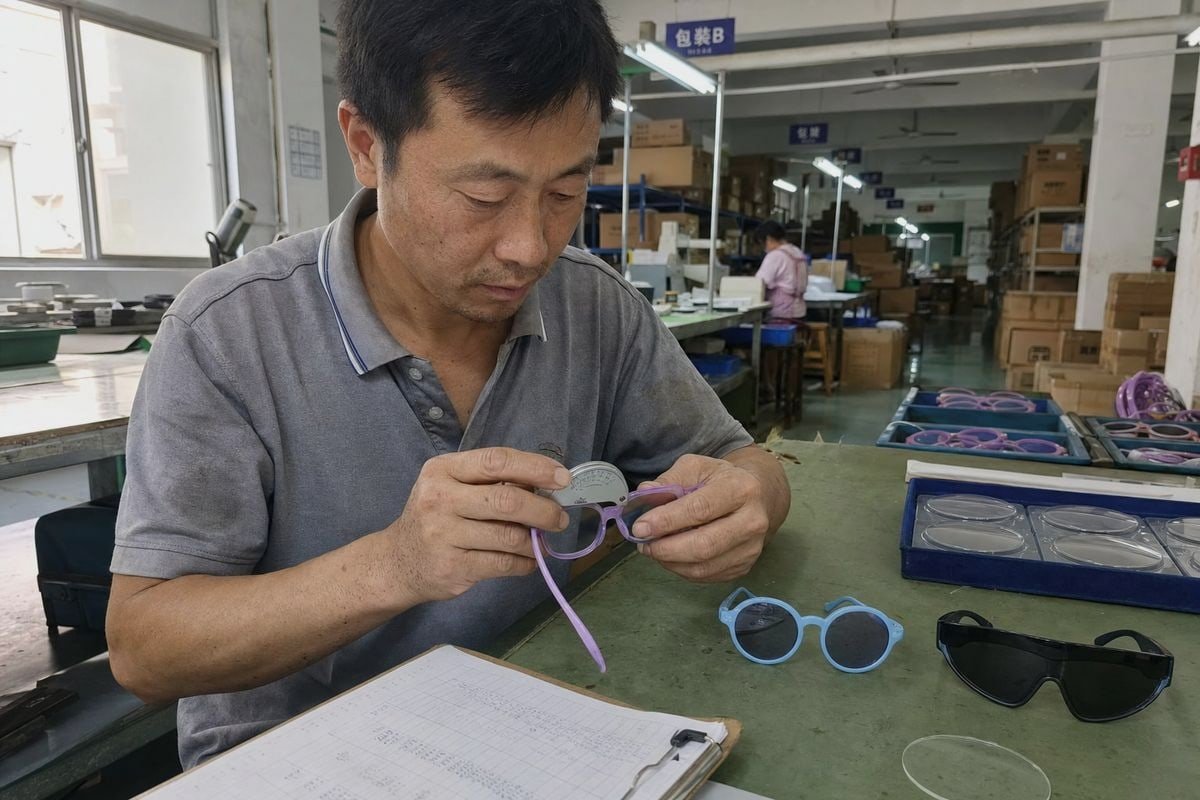
A curva base decide silenciosamente se a adaptação de lentes de prescrição em óculos de sol infantis terá sucesso ou falhará. Em nossa linha de produção em Taizhou, vejo compradores negligenciarem isso constantemente — até que as lentes saiam, as crianças reclamem de tontura e as devoluções se acumulem. A solução começa com a compreensão de um número.
A curva base determina o quanto uma lente de óculos de sol se curva ao redor do rosto de uma criança. Curvas mais planas (base 4–6) aceitam a maioria das prescrições com precisão, enquanto armações de alta curvatura de base 8 restringem a faixa de prescrição, aumentam a distorção óptica e exigem um rebaixo preciso da lente. Combinar a curva base com a geometria da armação é essencial para uma adaptação pediátrica segura e clara.
Deixe-me guiá-lo pelas opções de curva base existentes, como combiná-las com designs de armação, por que elas afetam o conforto e a segurança, e como verificar a precisão antes de fazer um pedido.
Quais Opções de Curva Base Posso Solicitar a um Fabricante de Óculos de Sol Infantis na China?
Um comprador da Austrália me pediu uma vez "óculos de sol infantis envolventes prontos para prescrição' e assumiu que todos os estilos em nosso catálogo funcionariam. Tivemos que desacelerar e falar sobre a curva base primeiro.
A maioria das fábricas chinesas de óculos de sol infantis oferece curvas base de 2 a 8. A curva base 4 é adequada para armações estilo óptico e prescrições fortes, a curva base 6 equilibra estilo e compatibilidade com Rx, e a curva base 8 atende a designs esportivos envolventes. Os compradores devem solicitar a especificação da curva base para cada estilo antes de fazer o pedido.
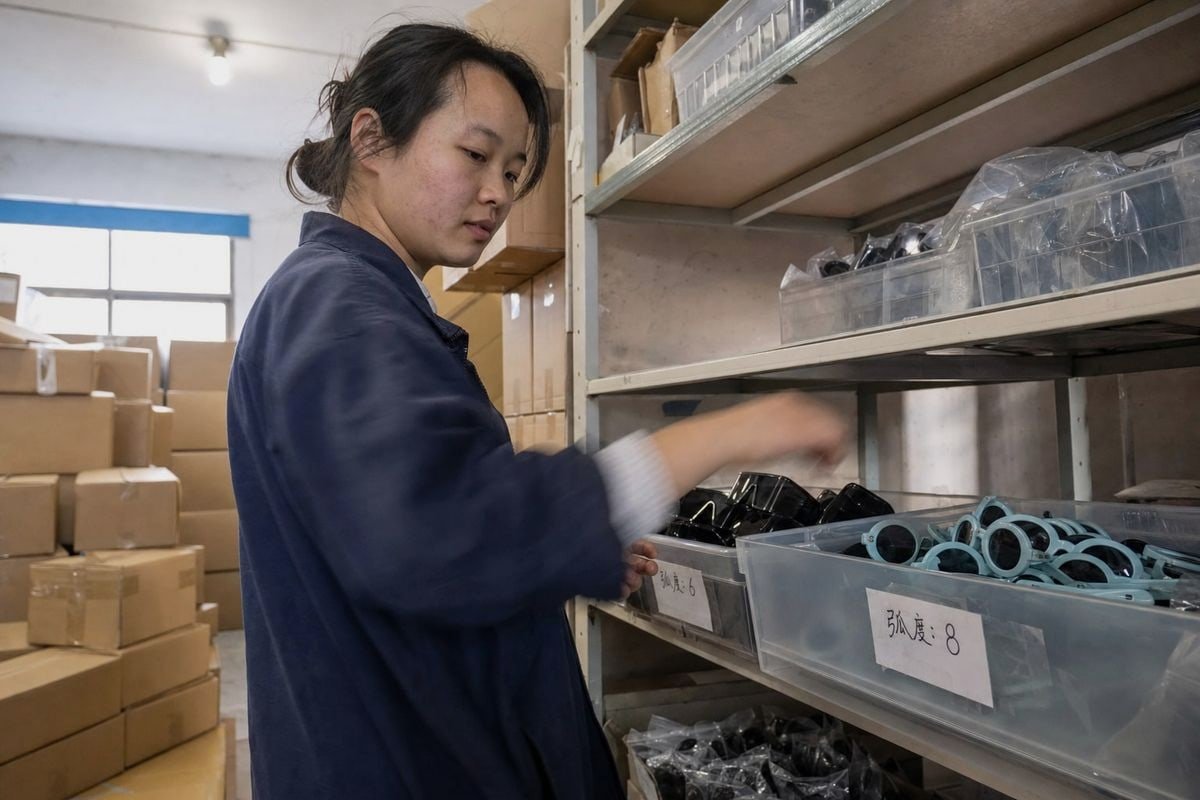
Em nossa fábrica, a maioria dos aproximadamente 800 estilos existentes se enquadra em três famílias de curvatura. Compreendê-las ajuda você a selecionar armações que atendam às necessidades de prescrição de seus clientes em vez de descobrir problemas após a produção.
A Faixa Padrão de Curva Base
A curva base descreve a curvatura da superfície frontal da lente, não a traseira. Números mais baixos significam lentes mais planas. Números mais altos significam mais curvatura. Veja como as opções comuns se dividem para óculos infantis:
| Curva Base | Nível de Curvatura | Estilo Típico | Compatibilidade com Rx |
|---|---|---|---|
| Base 2–4 | Muito plano | Óptica clássica, armações redondas | Excelente — a mais ampla faixa de prescrição |
| Base 6 | Moderado | Óculos de sol casuais do dia a dia | Bom — lida com a maioria das prescrições infantis |
| Base 8 | Alta curvatura | Protetores esportivos, estilos de ciclismo | Limitado — requer design de lente compensado |
| Base 8+ | Curvatura extrema | Óculos de esqui, protetores de corrida | Muito limitado — geralmente apenas plano |
Pegue nosso óculos infantil redondo azul-pó como exemplo. Sua forma suave e compacta assenta em uma frente de base 4 a 6. Essa geometria aceita lentes de prescrição padrão facilmente. Nosso estilo de protetor envolvente branco, por outro lado, usa um molde de base 8. Ele fica fantástico para esquiar ou andar de bicicleta, mas é um candidato muito mais difícil para conversão de prescrição.
Uma nota prática de nossa oficina: muitas fábricas chinesas usam moldes padronizados de base 6 e base 8 para produção em massa. Se o seu mercado precisar de uma curvatura especializada para prescrições pediátricas complexas, pergunte com antecedência. A curvatura personalizada geralmente requer discussão de moldes, quantidades mínimas e planejamento de prazos. Pergunte também se a fábrica oferece uma opção de ajuste de ponte baixa. Essas armações geralmente carregam uma curva frontal naturalmente mais plana, o que melhora silenciosamente a compatibilidade com lentes de maior potência. Marcamos a curva base em nossas folhas de especificações precisamente porque compradores que conhecem o número antecipadamente evitam surpresas dolorosas mais tarde.
Como Faço Para Combinar a Curva Base com o Design da Armação para um Ajuste Preciso da Prescrição?
Durante uma rodada de amostras no ano passado, nossos engenheiros rejeitaram um lote de lentes porque a curva estava um dioptria fora da ranhura da armação. Essa pequena incompatibilidade teria forçado todas as dobradiças do lote.
Combine a curvatura da base da lente com a curvatura projetada da armação em aproximadamente um dioptria. Armações ópticas planas combinam com lentes de base 2–4, armações casuais com base 6 e armações esportivas com lentes de base 8 compensadas. Desajustes causam a saída da lente, deformação da armação e distorção periférica.
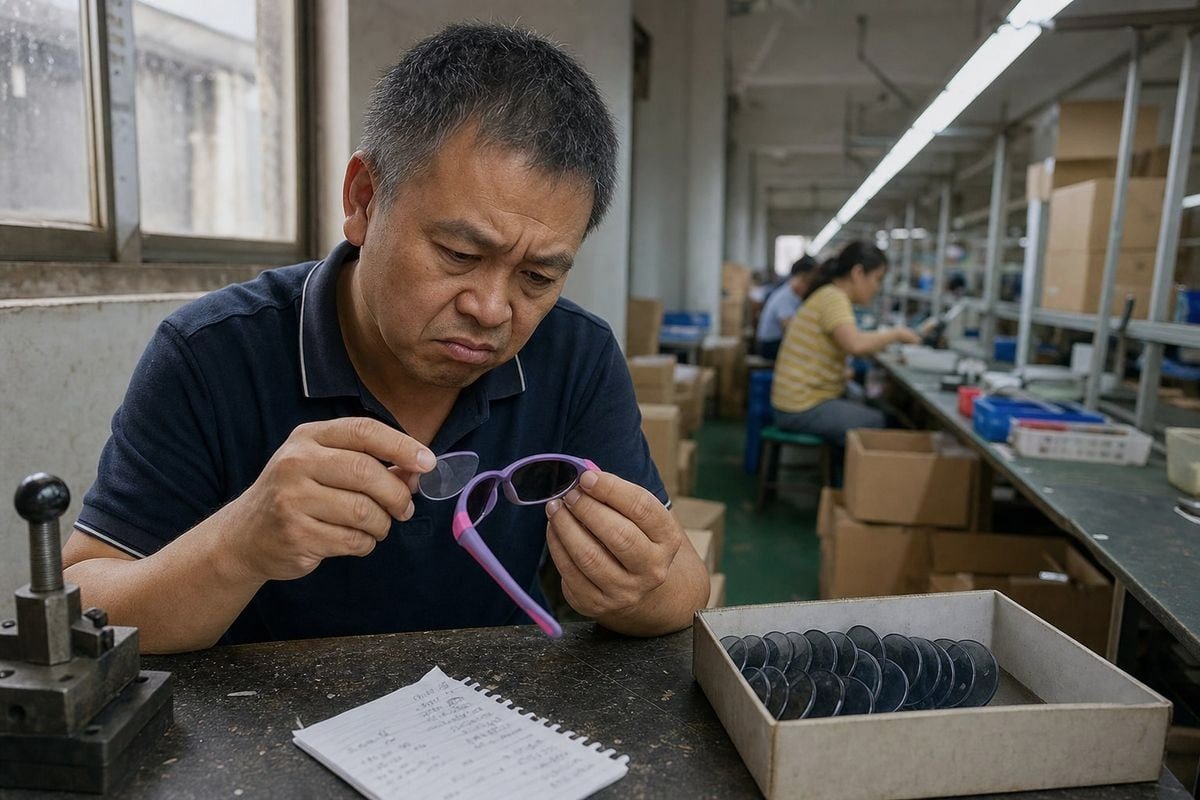
Uma armação é moldada em torno de uma curvatura de lente pretendida. A ranhura chanfrada, o ângulo de curvatura da armação e a geometria da haste assumem uma curva específica. Quando a curva da lente se desvia muito, dois problemas aparecem ao mesmo tempo: tensão mecânica e erro óptico.
O Ajuste Mecânico Vem Primeiro
Force uma lente plana em uma armação curva e a armação resiste. Durabilidade da armação TR90 1 oferece alguma tolerância aqui — o material flexiona em vez de rachar — mas a flexibilidade não é uma licença para uma combinação descuidada. Desvios significativos ainda comprometem o alinhamento. A lente pode sair durante a brincadeira, ou a armação se deforma lentamente e muda a forma como se ajusta ao rosto da criança.
O Alinhamento Óptico Vem em Segundo Lugar
Mesmo quando a lente se encaixa fisicamente, a prescrição deve ser recalculada para a nova geometria. Uma curvatura mais acentuada inclina a lente em relação ao olho. Essa inclinação altera a potência efetiva e introduz astigmatismo oblíquo 2 a menos que o laboratório aplique compensação de dioptria. O ajuste da distância do vértice também é importante: uma lente curva geralmente fica mais perto ou mais longe do olho do que a lente de teste durante o exame oftalmológico, o que muda a correção efetiva.
| Tipo de Armação | Curva de Lente Recomendada | Ação de Ajuste Chave |
|---|---|---|
| Flat kids' optical frame | Base 2–4 | Standard surfacing, verify vertex distance |
| Round casual sunglass | Base 4–6 | Match groove curve, standard edging |
| Base 4–6 | Base 6 | Check frame wrap angle, minor compensation |
| Shield wraparound | Base 8 (compensated) | Digital surfacing 3 with tilt and wrap compensation |
Practical guidance from prescription ranges we see: powers within roughly -4.00 to +3.00 usually adapt to moderate wrap. Stronger powers, or cylinder beyond about ±2.00, generally belong in flatter frames. Some advanced labs now use mini-blank digital surfacing for small pediatric frames, optimizing the optical center and trimming edge thickness even in curved designs. Ask whether your supply chain supports it before committing to a wrap style.
Por que a Curva Base Importa para o Conforto e a Segurança nos Rostos das Crianças?
The trade-off I weigh most often when advising kids' brands is coverage versus clarity. A steep wrap blocks more side light, but it also asks more of a young visual system.
A curva base afeta como uma lente se ajusta à anatomia facial pediátrica, quanta distorção periférica uma criança percebe e com que segurança a armação permanece no lugar durante a brincadeira. A curva errada causa dores de cabeça, distorção em "fundo de peixe", pontos de pressão e ajuste instável — todas preocupações de segurança para crianças ativas.
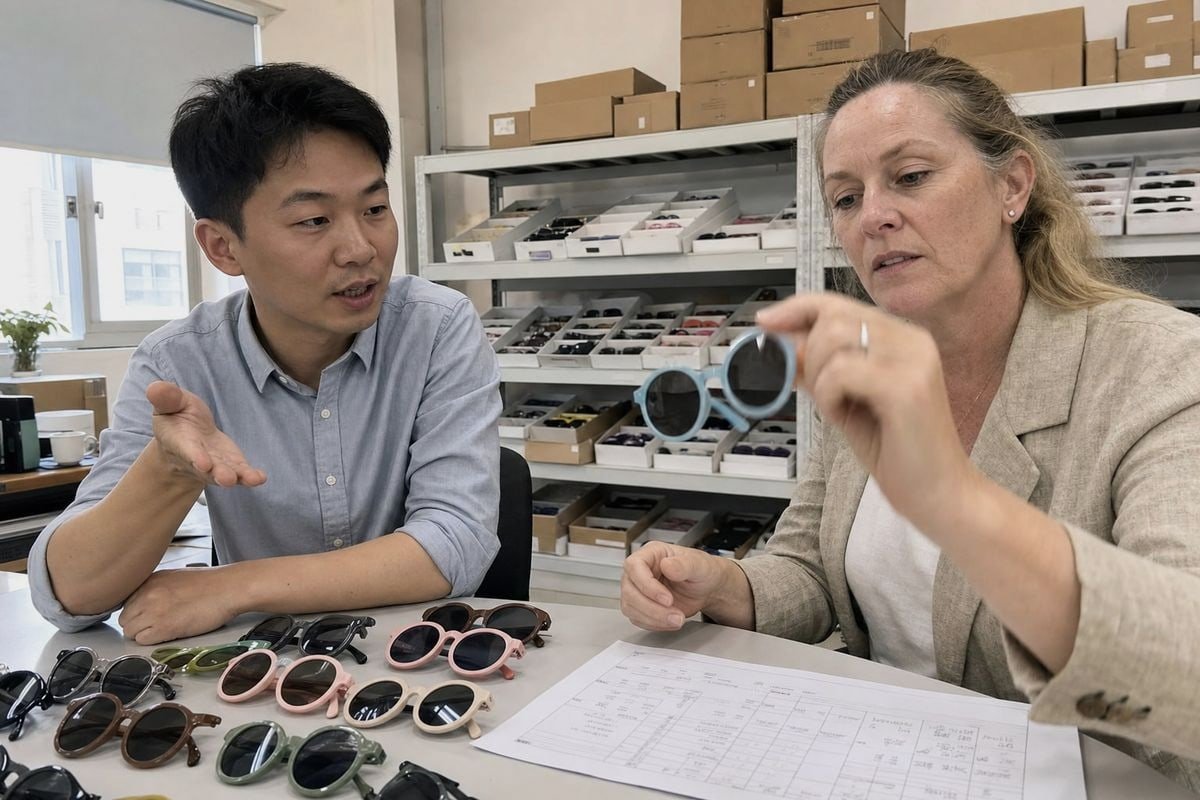
Children are not small adults. Pediatric facial anatomy 4 features a lower nasal bridge, softer cartilage, and proportions that change quickly year by year. Base curve interacts with all of it.
Comfort: What the Child Actually Sees
A high base curve in a strong prescription often produces the "fishbowl effect." Straight lines appear bent at the edges. Peripheral vision feels warped. Adults sometimes push through an adaptation period; children usually just refuse to wear the glasses, or they complain of headaches and dizziness. Steeper curves can also change apparent magnification. Even a one-diopter change in base curve can create noticeable perceptual differences, which is why consistency between a child's everyday glasses and their prescription sunglasses matters more than most buyers expect.
Safety: Fit, Stability, and Impact
Kids run, fall, and drop their glasses. That is exactly why we build with flexible TPEE temples and TR90 fronts in our Taizhou workshop — materials chosen for impact resistance and gentle contact with skin. Base curve joins that safety equation in three ways:
- A curve matched to the face keeps the frame stable during movement, so the optical center stays in front of the pupil.
- A well-seated lens resists pop-out on impact, which is critical when paired with material de lente de policarbonato 5, the standard choice for shatter-resistant kids' lenses.
- Correct wrap avoids pressure points at the temples and cheeks, preventing red marks and the constant readjusting that distracts kids outdoors.
There is also a growth dimension. As a child's nasal bridge matures, the curve that fit at age four may sit wrong at age seven. This drives the trend toward adjustable and modular designs, and it means brands serving wide age ranges should stock more than one geometry. For buyers targeting markets with formal requirements, remember that ANSI safety standards and comparable regional norms address impact performance — a lens under mechanical stress from a mismatched curve is a lens more likely to fail when it matters.
Como Posso Verificar a Precisão da Curva Base ao Obter Óculos de Sol de Grau de uma Fábrica Chinesa?
A lesson we learned early in our fifteen years of eyewear work: a product photo tells you almost nothing about curvature. Verification needs numbers, tools, and process discipline.
Verifique a curva base solicitando a especificação documentada de curva e ângulo de envolvimento da armação, medindo amostras com um paquímetro de lentes, confirmando os limites de tolerância no acordo de CQ e executando um ajuste de prescrição de teste antes da produção em massa. Fábricas confiáveis publicam dados de geometria e mantêm tolerâncias consistentes de moldagem.
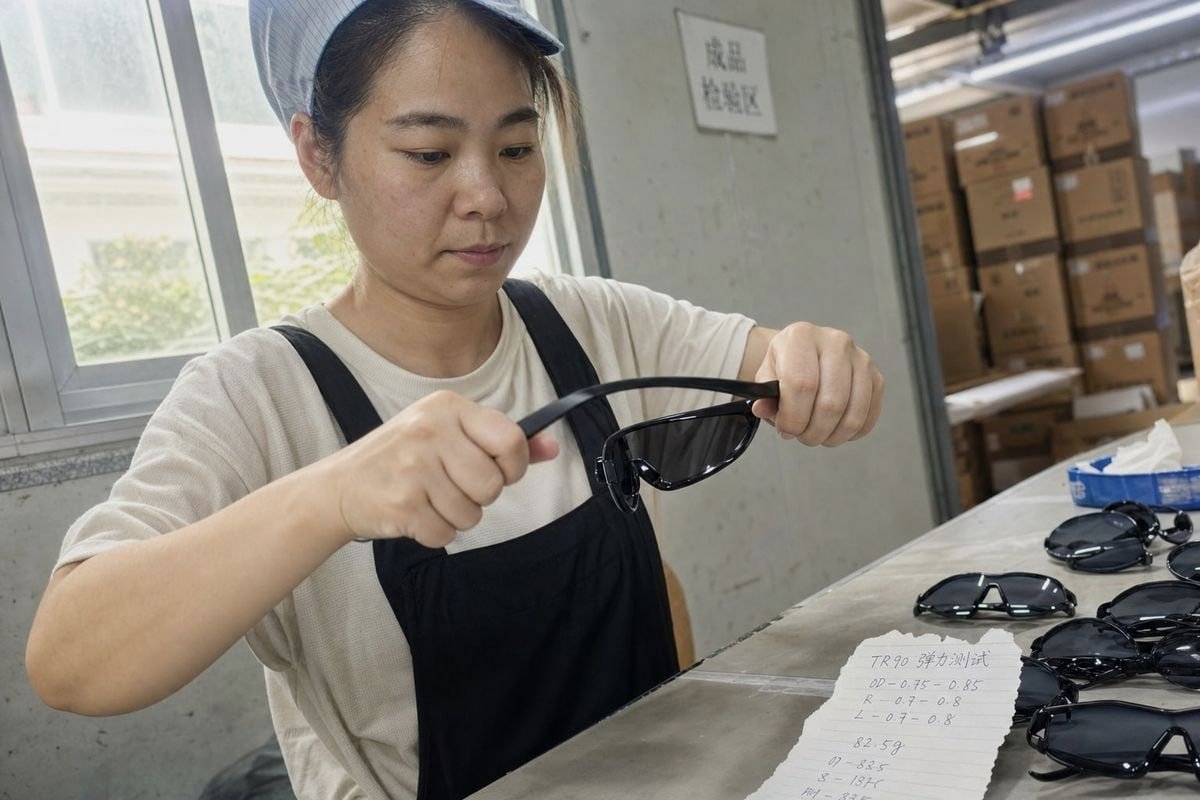
Optical labs cannot judge feasibility from a listing image. They need real frame data. Here is the verification process I recommend to every brand we work with, whether they source from us or elsewhere.
Um Processo de Verificação de Cinco Etapas
- Request the spec sheet. Ask for base curve, frame wrap angle, lens groove dimensions, and pantoscopic tilt for each style. If a factory cannot provide these, treat it as a warning sign.
- Measure physical samples. A lens clock (base curve gauge) costs little and reads the front curve in seconds. Check several units from the sample batch, not just one.
- Define tolerances in writing. Mold consistency matters. In our oficina gerenciada por 5S 6, curvature checks are part of routine inspection because small mold drift compounds into fitting failures at scale.
- Run a trial Rx fitting. Send one sample frame to your optical lab with a representative prescription. Confirm lens edging precision, bevel seating, and retention before committing to volume.
- Audit consistency at pre-shipment. Include base curve measurement in your pre-shipment inspection checklist 7 alongside hinge torque and lens retention tests.
| Verification Item | Tool or Method | Acceptable Practice |
|---|---|---|
| Front curvature | Lens clock / spherometer | Within ±0.25 D of stated curve |
| Ângulo de curvatura da armação | Protractor gauge or CAD data | Matches spec sheet value |
| Retenção da lente | Push-out test on edged lens | No pop-out under firm pressure |
| Consistência do lote | Sample multiple units per carton | Uniform readings across batch |
Forward-looking exporters are adding a digital layer. Some now use AI-assisted predictive fitting tools that model wrap angle and vertex distance against a target prescription, flagging likely failures before manufacturing begins. You do not need that technology to source safely, but you do need a partner who treats base curve as a controlled specification rather than an accident of the mold. When we develop custom styles for children's brands, geometry documentation is part of the OEM package from the first sample onward — because it protects both the brand and the child wearing the finished product.
Conclusão
Base curve is the hidden specification behind successful prescription kids' sunglasses. Choose flatter curves for stronger prescriptions, demand geometry data, verify samples — and partner with a factory that documents everything.
Notas de rodapé
1. Background on the nylon-based resin that gives eyewear frames flexibility and impact resistance. ↩︎
2. NIH resource explaining astigmatism, the optical distortion caused by mismatched lens curvature. ↩︎
3. Authoritative Wikipedia section explaining freeform technology, the industry standard for digital lens surfacing. ↩︎
4. Peer-reviewed NIH article detailing facial development and anatomical changes from infancy to adulthood. ↩︎
5. Explains the shatter-resistant plastic used for impact-safe children’s prescription lenses. ↩︎
6. Background on the lean manufacturing methodology referenced for workshop quality control. ↩︎
7. International Trade Centre guidance supports quality verification practices for export manufacturing. ↩︎
Mais Artigos que Você Pode Gostar


Procurando um Parceiro Confiável em Óculos Infantis?
Explore mais de 800 estilos prontos e suporte completo OEM/ODM adaptado à sua marca.
Entre em Contato English
  Español de México
  Deutsch
  Français
  日本語
日本語  العربية
  Português do Brasil