Foldable vs One-Piece Frame Designs: Which Is Better for Kids Sunglasses?
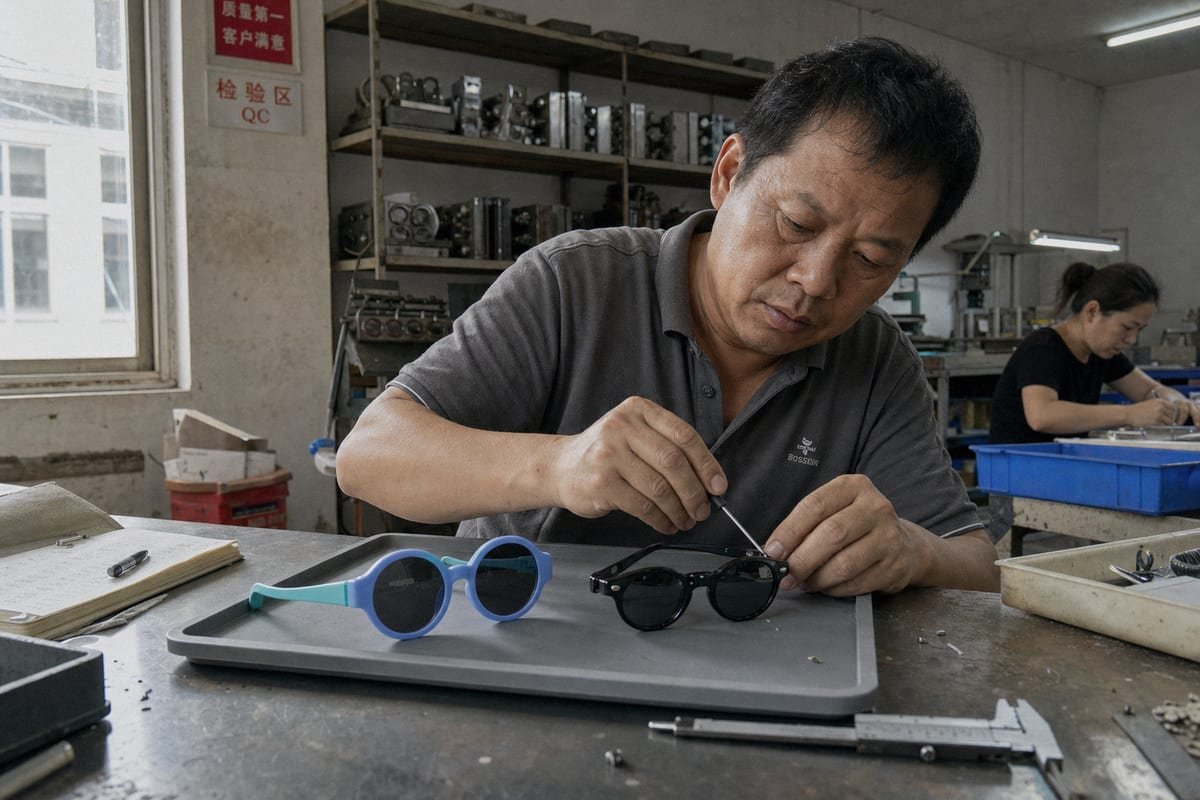
Buyers ask me about foldable vs one-piece frame designs for kids sunglasses almost weekly. Pick wrong, and returns pile up. On our production line, we see exactly why one design usually wins.
One-piece flexible frames are usually better for kids sunglasses because they eliminate hinge failure points, resist bending and twisting, and stay comfortable for daily rough use. Foldable frames are worth choosing only when compact, travel-friendly storage is the buyer’s top priority.
That short answer hides real nuance. Age, activity level, and your target market all shift the decision. Let me walk you through each factor the way I would with a buyer visiting our Taizhou factory.
What safety and durability differences should I consider between foldable and one-piece frames?
A few years back, a drop-test session in our QC room changed how I pitch frame designs. The foldable samples failed at the hinges. The one-piece TPEE frames just bounced.
One-piece frames are safer and more durable for children because they have no hinges, screws, or metal pins to loosen, break, or scratch skin. Foldable frames add two or more mechanical joints, and each joint is a potential failure point under a child's rough handling.
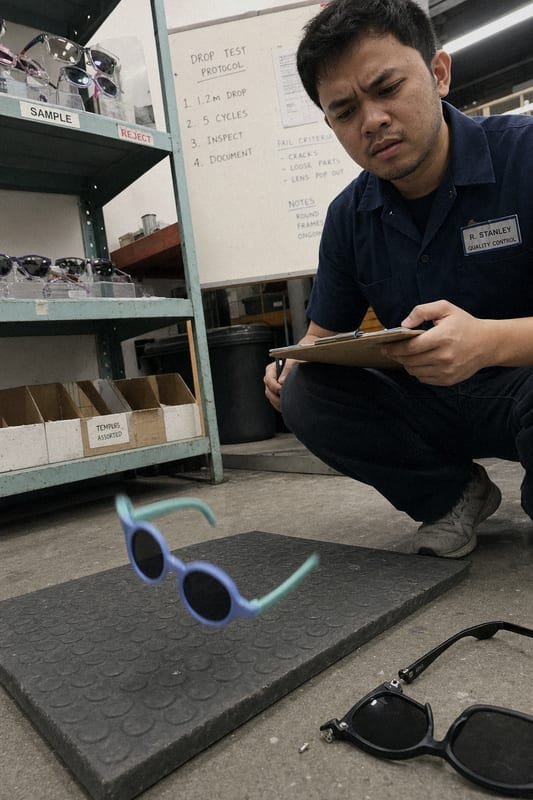
Here is the core issue. Kids do not treat sunglasses gently. They bend them, sit on them, stuff them into backpacks, and drop them on concrete. Every mechanical part you add to a frame is one more thing that can fail under that abuse.
Why hinges are the weak point
A standard foldable frame needs at least two temple hinges plus a folding bridge mechanism. That means small screws, metal pins, and moving joints. In our fifteen years of making children's eyewear, hinge failure has always been the most common breakage complaint we hear from importers. Screws work loose. Pins bend. Joints crack under sideways pressure. For toddlers, loose screws also create a small-parts hazard 1, and an exposed metal pin can scratch soft skin.
A hingeless frame design removes all of that. When we mold a one-piece frame from flexible TPEE material 2 or TR90, the whole frame flexes as a single unit. A child can twist it, sit on it, or pull the temples outward, and it springs back. That is the practical meaning of toddler eyewear durability: the frame survives behavior you cannot prevent.
Direct safety and durability comparison
| Fator | One-Piece Flexible Frame | Foldable Frame |
|---|---|---|
| Mechanical failure points | None or minimal | 2–4 hinges/joints |
| Small parts (screws, pins) | Usually none | Multiple |
| Twist and bend resistance | Excellent with TPEE/TR90 | Limited by hinge strength |
| Skin-pinch or scratch risk | Muito baixo | Higher at folding joints |
| Typical lifespan under kid use | Longer | Shorter |
Both designs should still use shatterproof polycarbonate lenses 3 com Proteção UV400 4 and BPA-free construction. Lens safety is non-negotiable regardless of the frame you choose. But on frame durability alone, one-piece wins clearly for younger and rougher-use age groups.
How do foldable and one-piece designs affect comfort and fit for active kids?
One trade-off I weigh constantly during development is weight versus function. Every hinge, screw, and reinforcement plate adds grams, and grams matter enormously on a small face.
One-piece designs generally fit active kids better because they are lighter, hold a stable wobble-free position, and press evenly on the flat nasal bridge. Foldable frames carry extra hardware weight, and their joints can loosen over time, causing slipping during play.
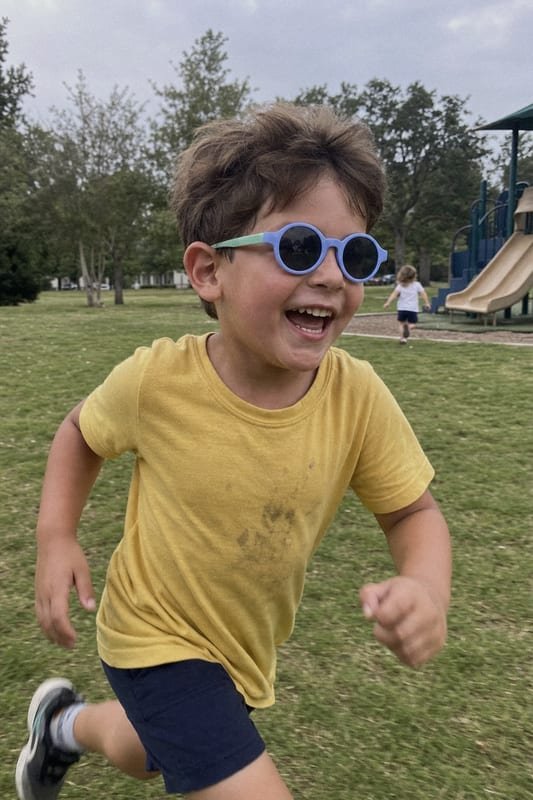
Comfort decides whether sunglasses actually get worn. An uncomfortable pair ends up in a pocket, and a pair in a pocket protects nobody's eyes. So fit is not a soft feature. It is the feature that makes UV400 protection real.
Weight and pressure points
Children have developing nasal bridges and sensitive skin behind the ears. A one-piece frame molded from flexible TPEE material spreads contact pressure across a continuous, soft-touch surface. There are no hinge housings pressing on the temples and no rigid folding bridge sitting on the nose. Foldable frames, by contrast, need reinforced joints, and those joints concentrate weight exactly where kids feel it most: the bridge and the sides of the head.
Fit stability during movement
Active kids run, jump, and hang upside down on playground equipment. A frame with multiple joints develops play in those joints over months of use. Once a hinge loosens, the temples splay, and the glasses start sliding down the nose. A one-piece frame keeps its molded geometry. When we design our children's styles, we tune the temple curve and flex so the frame grips gently without squeezing. For toddlers and sport use, we also offer an adjustable head strap as an accessory, which secures either design but pairs especially well with wraparound one-piece shapes.
Coverage and peripheral protection
There is one more fit factor buyers often miss. A one-piece wraparound shape, like the sport shield styles 5 we produce with mirrored polarized lenses, curves closely around the face. That gives more consistent peripheral UV coverage. Foldable frames often need thinner temples and gaps near the joints to allow folding, which can let stray light in at the sides. For outdoor sports, cycling, and beach use, that coverage difference is meaningful, and the impact resistance of a single molded shield lens adds another layer of protection.
Which frame type gives me better long-term value in manufacturing costs and MOQ flexibility?
A distributor from Europe once asked me to quote both designs side by side for the same launch budget. The cost breakdown surprised her, and it usually surprises new buyers too.
One-piece frames offer better long-term value because simpler molds, fewer components, and faster assembly lower unit costs and defect rates, which supports lower MOQs. Foldable frames cost more per unit and carry higher QC overhead due to hinge assembly and testing.
Let me break down where the money actually goes, because the sticker price of a sample never tells the whole story.
Where the cost differences come from
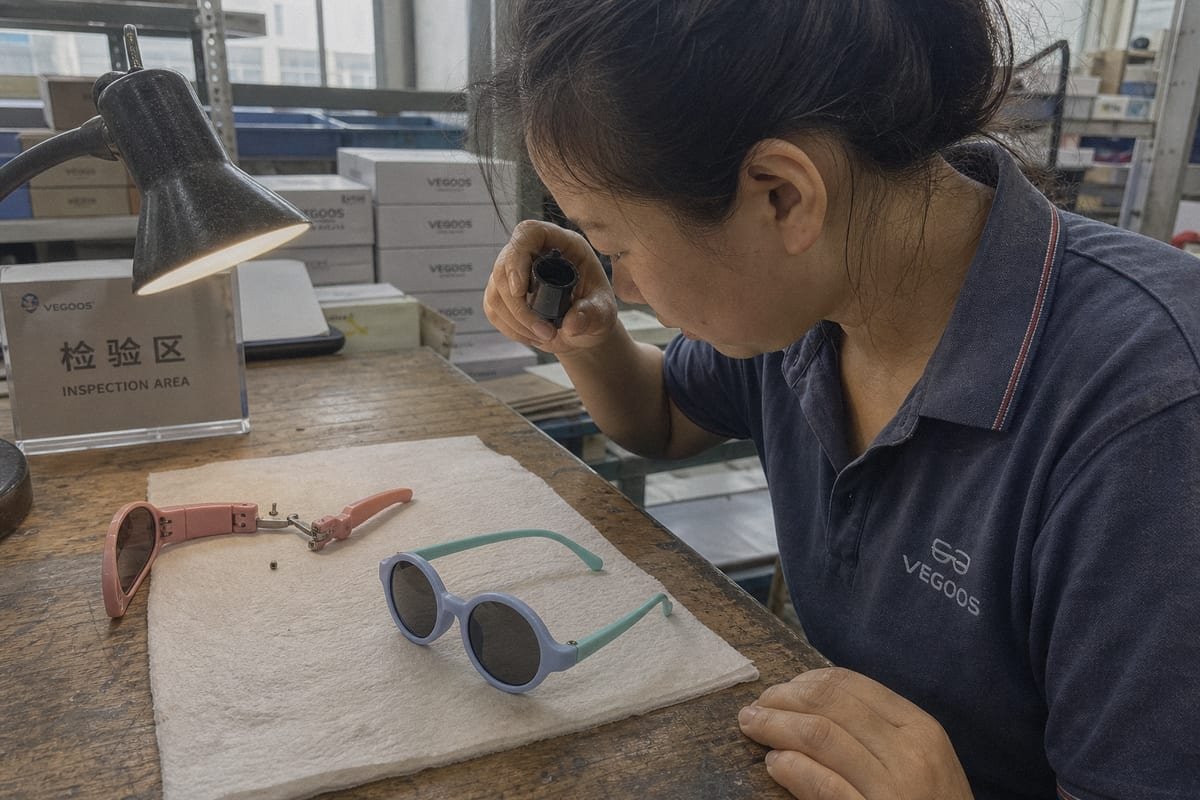
A foldable frame needs more mold cavities, more components, and more assembly labor. Each hinge must be installed, screwed, and tested. Each folding mechanism must be cycle-tested to confirm it opens and closes smoothly. Every added step is a chance for a defect, and defects in children's products are expensive. They trigger returns, complaints, and sometimes safety reviews in strict markets like the EU, Japan, and Australia.
A one-piece frame is closer to a single molding operation plus lens insertion. Fewer steps mean fewer rejects, tighter consistency between batches, and faster production runs. In our oficina gerenciada por 5S 6, one-piece styles move through QC with noticeably fewer touchpoints.
| Cost Factor | One-Piece Frame | Foldable Frame |
|---|---|---|
| Mold complexity | Menor | Higher |
| Component count | 3–5 parts | 8–15 parts |
| Assembly labor | Mínimo | Significant |
| QC checkpoints | Fewer | More (hinge cycle testing) |
| Defect and return risk | Menor | Higher |
| Typical unit cost | Menor | 15–30% higher range |
MOQ and market-testing flexibility
Here is the part that matters most for new brands. Because one-piece designs share tooling logic across many styles, factories like ours can offer them from a large existing library. We hold roughly 800 ready styles, so a buyer can test a market without investing in custom molds at all. Custom colors, logos, lentes polarizadas 7, and retail-ready packaging can all be applied to existing one-piece tooling at reasonable MOQs. Foldable designs, with their specialized mechanisms, give you fewer off-the-shelf options and less room to negotiate small trial orders. For a first launch, that flexibility difference often outweighs everything else.
Can I offer both foldable and one-piece options without complicating my product line?
Something I learned from serving kids' brands across twenty-plus countries: a focused range sells better than a broad one, but "focused" does not have to mean "one design only."
Yes, you can offer both if you position them clearly by use case. Make one-piece flexible frames your core everyday line for toddlers and active kids, and add foldable styles as a small travel-focused sub-line for older children and family travel retail.
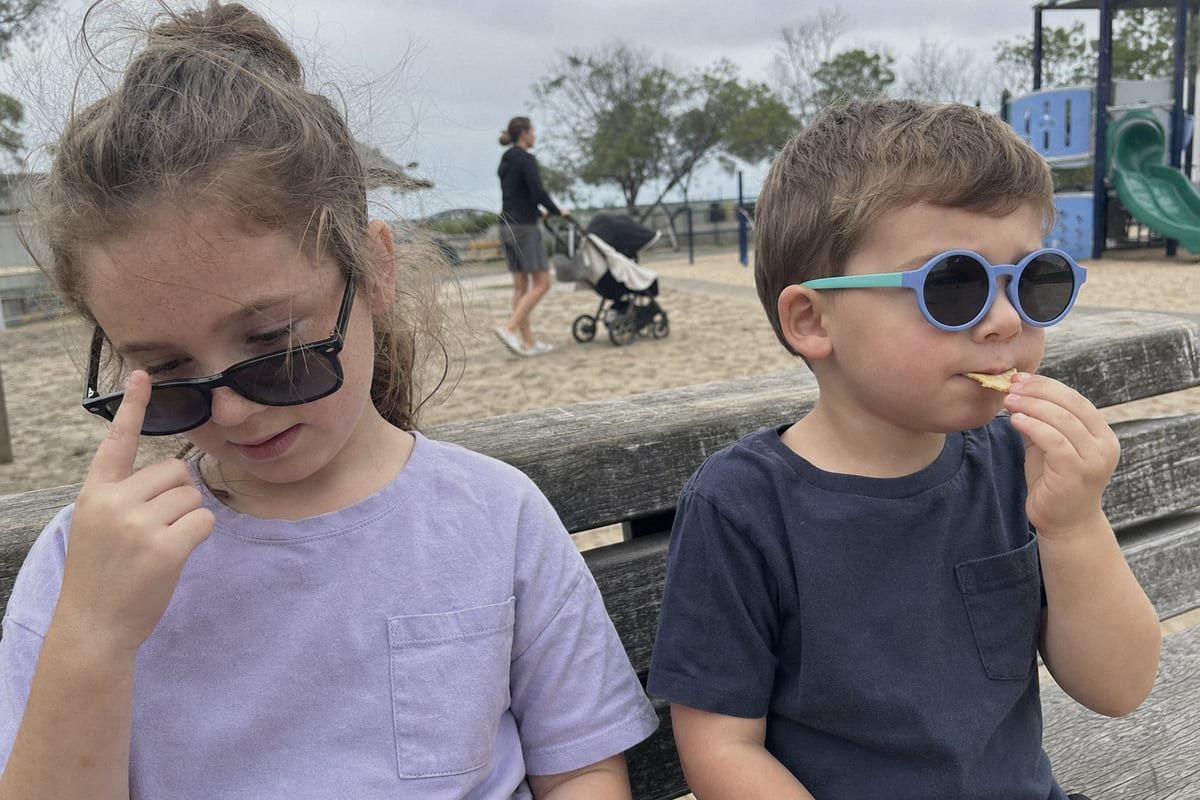
The mistake I see is treating the two designs as competing versions of the same product. They are not. They solve different problems. One-piece frames solve a wear-and-tear problem. Foldables solve a storage problem. Once you frame it that way, the product line almost structures itself.
A simple two-tier structure
- Core line: one-piece flexible frames. These carry your volume. Everyday styles in soft two-tone colors for toddlers and preschoolers, plus wraparound sport shields with mirrored polarized lenses for school-age kids. Lead with safety messaging: hingeless frame design, BPA-free construction, shatterproof polycarbonate lenses, UV400 protection.
- Niche line: foldable travel styles. A small selection aimed at ages eight and up and at travel-focused retail channels: airport shops, family travel brands, and gift sets. Lead with the portability story: folds to a fraction of its size, fits in a small pocket or diaper bag.
Age-based positioning at a glance
| Faixa Etária | Recommended Design | Key Selling Point |
|---|---|---|
| 0–3 years | One-piece flexible, with adjustable head strap | Safety, no small parts, stays on |
| 4–7 years | One-piece flexible | Toddler eyewear durability, comfort |
| 8–12 years | One-piece sport or foldable | Performance look or travel-friendly eyewear |
| Family travel gifting | Foldable | Compact storage, novelty appeal |
Keeping operations simple
To avoid supply-chain complexity, keep both lines with one manufacturing partner and unify the lens spec, packaging system, and branding across them. When we run OEM programs, we apply the same custom colors, logo printing, and retail packaging across one-piece and foldable SKUs, so the buyer manages one supplier relationship, one QC standard, and one delivery schedule. That way, adding a foldable sub-line expands your catalog story without doubling your operational load.
Conclusão
Broken hinges, returns, and unworn glasses hurt kids' brands. One-piece flexible frames solve that for everyday use; foldables serve travel niches. Choose by use case, and both designs earn their place.
Notas de rodapé
1. US safety agency guidance on choking hazards from loose small parts in children’s products. ↩︎
2. Background on thermoplastic elastomers explains the flexible material used in one-piece frames. ↩︎
3. ISO develops international safety standards referenced for protective eyewear lens materials. ↩︎
4. WHO explains UV radiation health risks that UV400-rated lenses are designed to block. ↩︎
5. CDC sun safety guidance supports the coverage benefits of wraparound protective eyewear. ↩︎
6. Explains the 5S lean manufacturing methodology referenced for the factory’s workshop organization. ↩︎
7. Background on polarization technology used in mirrored polarized sunglasses lenses. ↩︎
Mais Artigos que Você Pode Gostar

1 de agosto de 2026
A Fábrica Deve Lidar com a Embalagem e Rotulagem de Óculos de Sol Infantis, ou Usar um Fornecedor Designado?

1 de agosto de 2026
Armazém Próprio vs. Envio Direto do Fornecedor: Qual Reduz os Custos de Devolução para Marcas de Óculos de Sol Infantis?

1 de agosto de 2026
Armazém Direto ao Porto ou Estiva no Exterior: Qual Economiza Mais no Envio de Óculos de Sol Infantis?
Procurando um Parceiro Confiável em Óculos Infantis?
Explore mais de 800 estilos prontos e suporte completo OEM/ODM adaptado à sua marca.
Entre em Contato English
  Español de México
  Deutsch
  Français
  日本語
日本語  العربية
  Português do Brasil