Pre-Production Sample vs Final Inspection: Which Prevents Kids’ Sunglasses Defects?
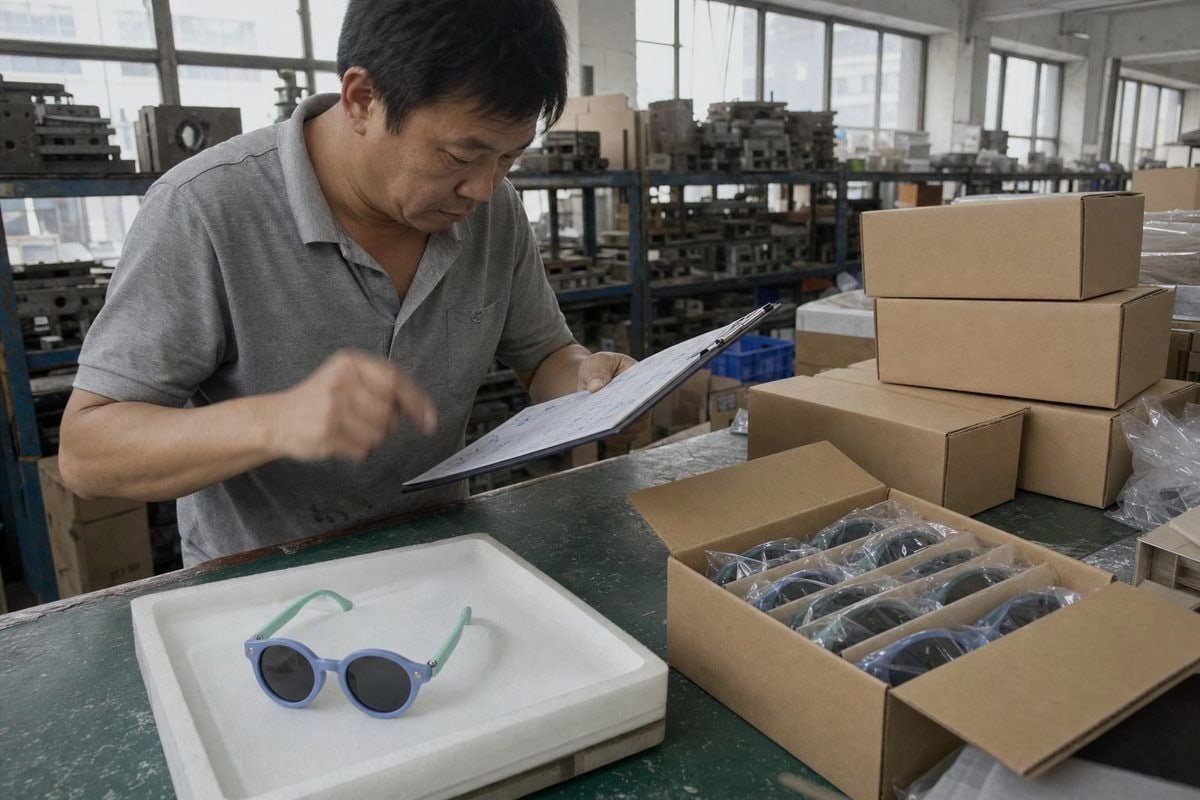
Choosing between a pre-production sample and final inspection nearly cost one of our buyers an entire container CE marking 1. On our production line, we see this gamble far too often.
Pre-production samples prevent systemic defects like wrong frame sizing, weak hinges, or failed UV400 lenses before mass production starts. Final inspection catches finished-lot defects like scratches and packaging errors. Neither replaces the other; the strongest kids’ sunglasses quality control uses both in sequence.
Let me break down what each stage really does. Then you can decide where your budget works hardest.
How can I use pre-production samples to catch design flaws before mass production begins?
A few seasons back, our engineers flagged a bridge fit issue on a wraparound shield style during sample review. That one week of correction saved the buyer's whole launch.
Approve a pre-production sample as your golden sample before tooling ramps up. Check frame dimensions, hinge strength, lens tint, UV400 lens verification, material flexibility, and branding against your spec sheet. Any defect found here can still be corrected cheaply in molds, materials, or assembly.
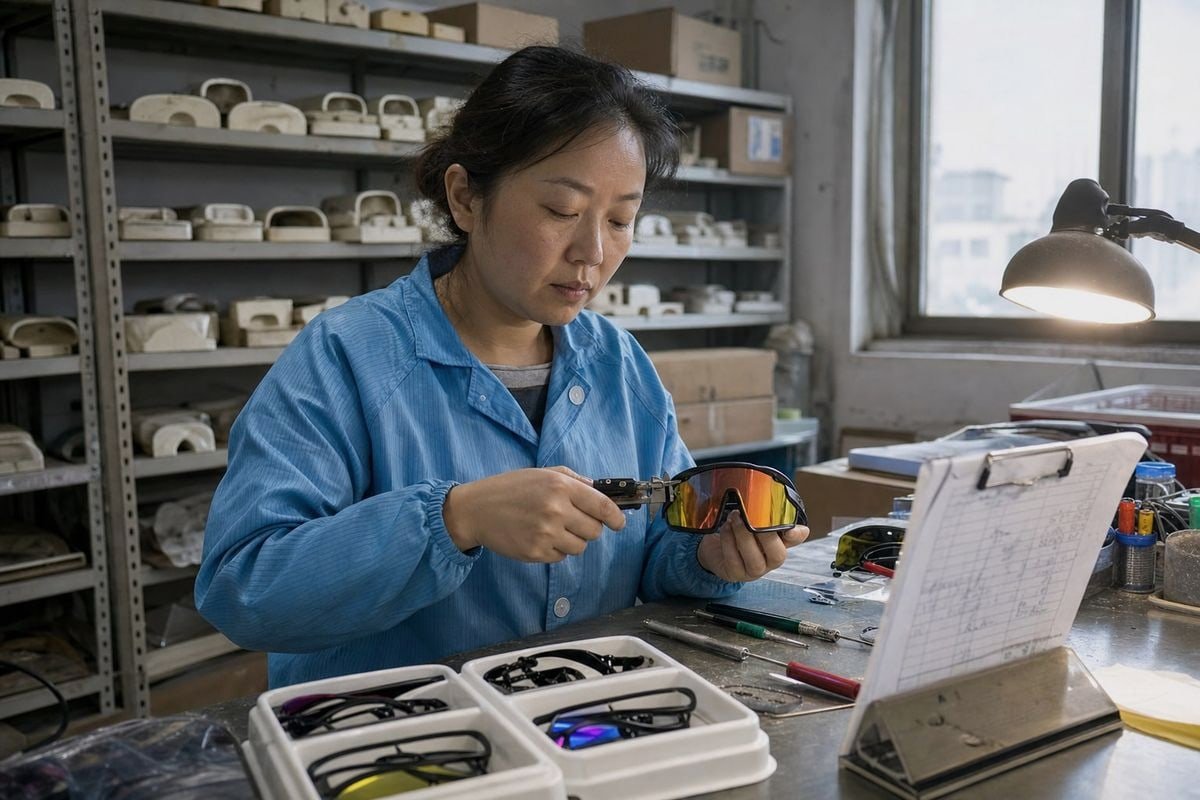
The pre-production sample, sometimes called the golden sample, is the physical reference standard for your entire order. Once you sign it off, the factory copies it thousands of times. That is exactly why this stage is your best manufacturing defect prevention tool. If a flaw exists in the sample, it will exist in every unit.
For kids' sunglasses, the stakes are higher than adult eyewear. Small frames demand tighter dimensional accuracy. A bridge that sits two millimeters too wide slides down a child's nose all day. In our 15 years making children's frames in TPEE and TR90, fit problems are the number one reason parents return kids' eyewear.
What golden sample approval should verify
Here is what we ask buyers to confirm before we release any order to mass production:
| Check Area | What to Verify | Why It Matters for Kids |
|---|---|---|
| Frame geometry | Lens width, bridge width, temple length | Small faces need precise sizing |
| Material | TR90/TPEE flexibility, BPA-free certification | Safety and comfort under rough use |
| Hinges | Screw torque, opening resistance, flex-memory return | Kids bend temples 180 degrees |
| Lenses | UV400 lens verification, tint, optical clarity | Eye protection is non-negotiable |
| Branding | Logo position, color match, pad print quality | Brand consistency at retail |
We also recommend two tests that most checklists skip. First, a sunscreen-resistance check, because pediatric lotions can delaminate lens coatings and dull frame finishes. Second, a saliva-migration safety review of pigments and coatings, since toddlers chew on temple tips. Both belong at the sample stage, not after production.
Fix a flaw now and it costs a revised sample. Fix it after production and it costs rework, scrap, or a scrapped shipment.
What defects can final inspection still miss if I skip proper sample approval?
One buyer once asked us to skip sampling to save ten days. We refused, and I explained why: final inspection can only compare products against something. Skip the sample, and there is nothing valid to compare against.
Final inspection cannot catch defects built into every unit by a flawed design or wrong material choice. If all frames share a poor bridge fit, weak hinge geometry, or under-spec lenses, AQL sampling will pass the lot because the goods match the bad reference consistently.
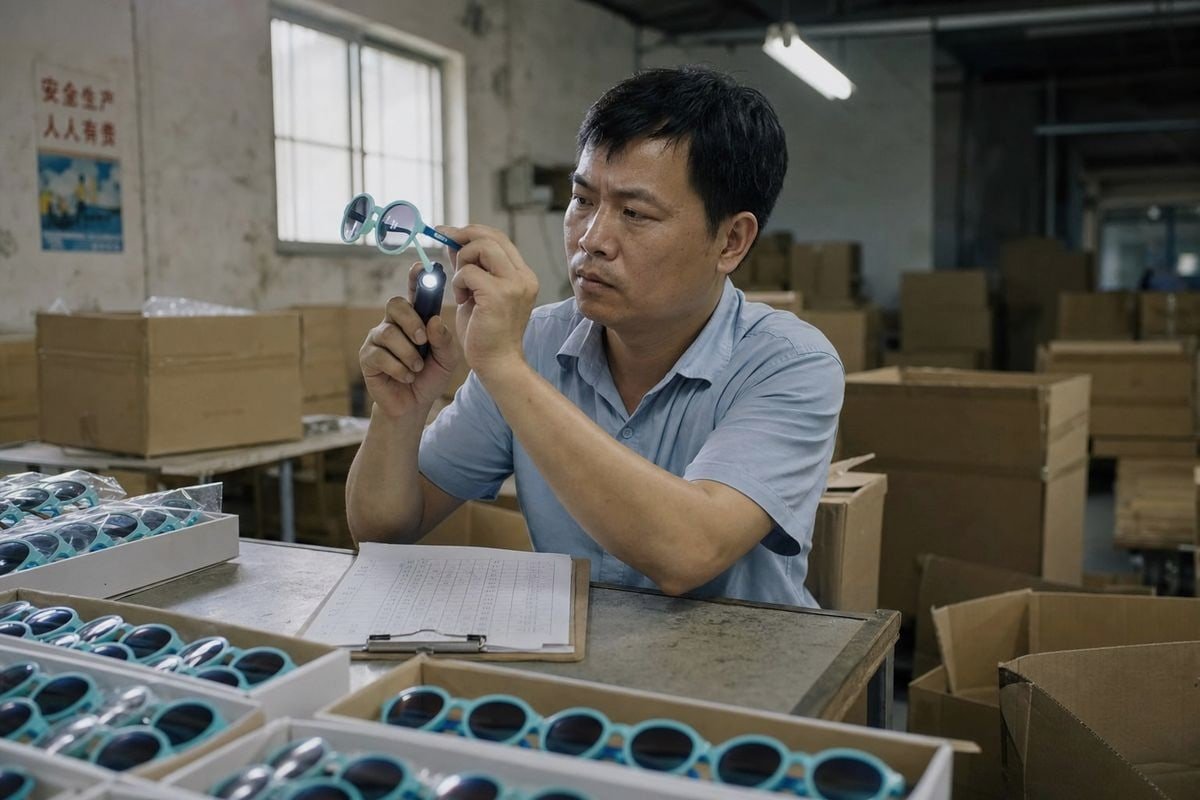
Final random inspection uses AQL sampling standards 2. Inspectors pull a random sample from packed cartons, typically when the order is at least 80% packed. They count defects and compare the tally against agreed limits, commonly AQL 2.5 for major defects and 4.0 for minors in eyewear. This works well for random workmanship faults. It fails completely against systemic faults.
Think about what "defect" means to an inspector. It means a deviation from the approved standard. If your standard itself is wrong, there is no deviation to find.
Systemic problems that sail through final inspection
- Ergonomic failures. Every frame has the same too-tight temple pressure. The inspector sees perfect consistency, not a design flaw.
- Material substitution baked in from day one. If a cheaper resin replaced TR90 before production and no golden sample exists, nothing flags it.
- Lens performance gaps. Visual checks cannot confirm UV protection 3. Without a verified sample and lab report, a UV-deficient lens looks identical to a compliant one.
- Brittleness risk. Impact resistance testing at the sample stage proves the lens material is capable. A final inspector without that baseline cannot judge whether the batch drifted.
- Coating durability. Sunscreen and sweat resistance only show up in accelerated testing, never in a one-day pre-shipment inspection.
In our experience exporting to buyers in 20+ countries, the most expensive recalls trace back to skipped sample approval, not to weak final inspections. The final inspector did their job. They just confirmed the factory faithfully produced a flawed product.
Should I invest in both pre-production samples and final inspection for kids' sunglasses orders?
The trade-off I weigh with new buyers is always the same: a sample round costs days, while a defective shipment costs a season. When you frame it that way, the answer becomes clear.
Yes. Use both. Pre-production samples prevent systemic design and material defects; final inspection blocks workmanship, labeling, and packaging escapes. For children's eyewear, where safety, fit, and compliance overlap, the two stages cover different risks and neither can substitute for the other.
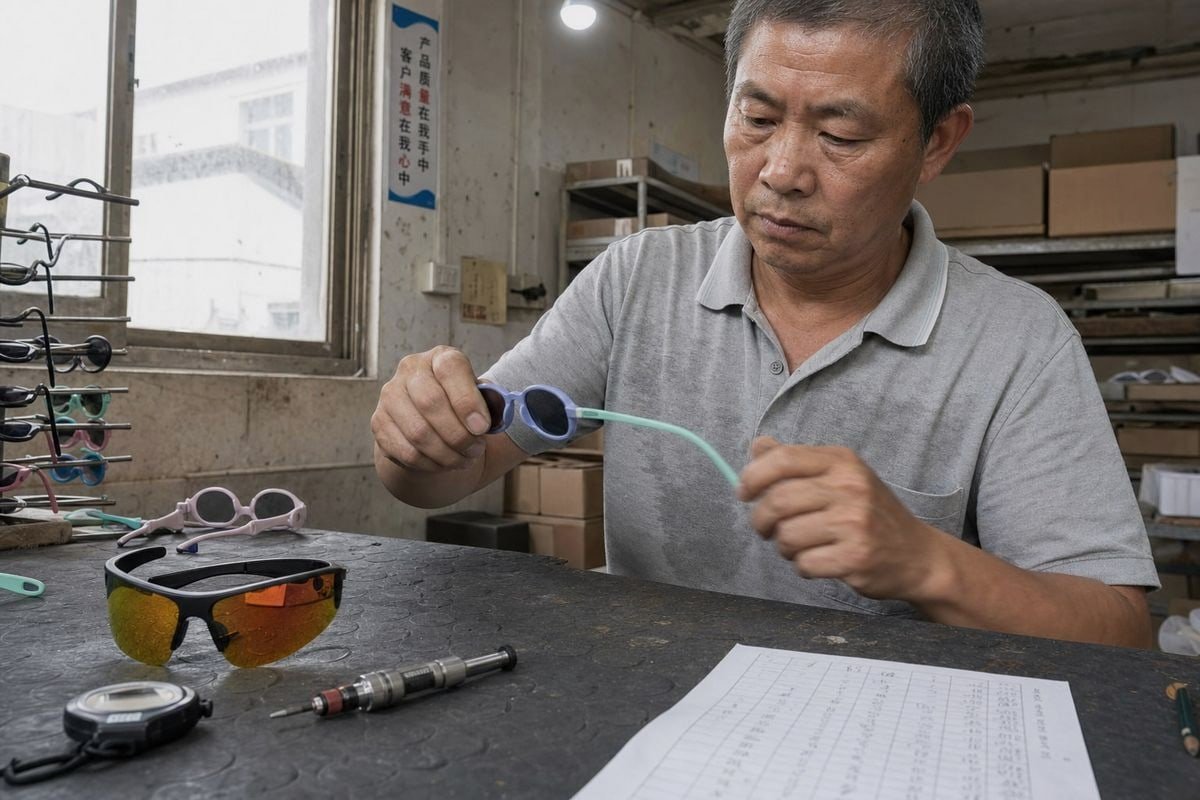
Here is the honest comparison we walk buyers through:
| Factor | Pre-Production Sample | Final Inspection |
|---|---|---|
| Timing | Before mass production | After production, 80%+ packed |
| Strategy | Proactive prevention | Reactive detection |
| Defect type caught | Design, material, spec, fit | Scratches, assembly, labels, packaging |
| Cost to fix findings | Low — adjust before tooling runs | High — rework, sort, or delay shipment |
| What it cannot do | Predict production drift | Fix root-cause design flaws |
Some practitioners argue final inspection is the more practical safeguard because it examines the actual finished shipment. That objection sounds reasonable, and shipment protection is real. But it only holds if the reference standard was solid. A final inspection against a weak or incomplete sample merely certifies a consistent bad lot. Prevention and detection are different jobs.
Why kids' sunglasses specifically need both gates
Children's products carry demands adult eyewear does not:
- Regulatory exposure. CPSIA compliance testing 4, CE marking, and regional product safety regulations apply to labeling and materials. Final inspection is the only stage that verifies the actual retail-ready packaging, safety labels, and tracking codes on the shipped goods.
- Physical abuse. Flex-memory audits on TPEE and TR90 frames at sample stage guarantee temples return to shape after extreme bending. Final inspection then confirms the batch hinges did not loosen during high-volume assembly.
- Shipping stress. A thermal-shock check at final inspection catches lens-to-frame fit issues that cause lenses to pop out when cartons move from air-conditioned warehouses into hot containers.
Even with roughly 800 existing styles that buyers can adopt without new mold investment, we still run sample confirmation on every customized order. Existing tooling reduces risk. It does not remove the need for both control points.
How do I build a quality control process that protects my brand from costly defects?
After watching a European kids' brand recover from a bad first supplier, I learned that good QC is not one inspection. It is a sequence with clear handoffs and written standards at every step.
Build a five-step process: lock specifications in writing, approve a golden sample with lab testing, run in-process checks during production, commission a final inspection against AQL limits, and keep the approved sample as the dispute reference. Document every stage in reports you retain.
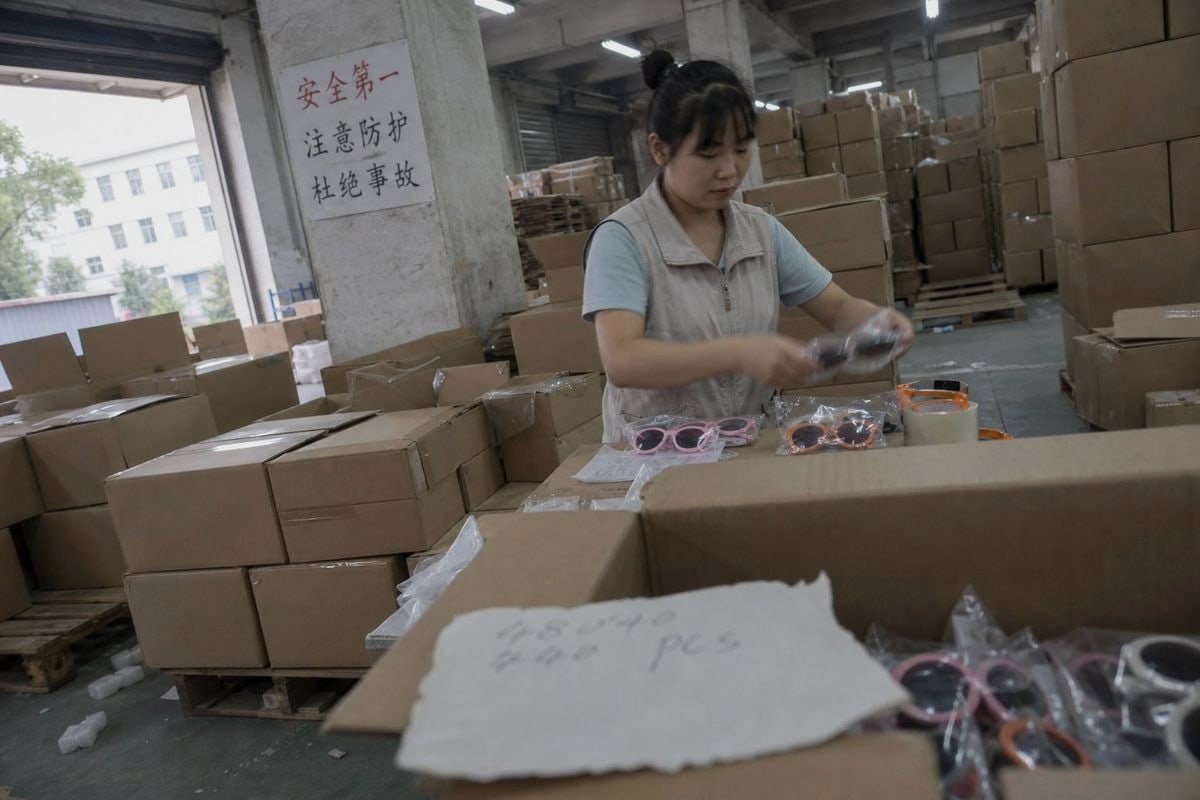
Supply chain quality management sounds abstract until you turn it into a checklist. Here is the sequence we run in our 5S-managed workshop, and the version we recommend buyers enforce with any supplier.
The five-step QC plan for kids' eyewear
| Step | Action | Output You Should Receive |
|---|---|---|
| 1. Spec lock | Define dimensions, materials, lens class, packaging, tolerances | Signed spec sheet |
| 2. Golden sample approval | Physical sample plus UV, impact, and material test data | Approved sample, lab reports |
| 3. In-process checks | Verify first-off units and mid-run consistency | Production check photos/records |
| 4. Final inspection | AQL sampling on packed goods, function and label checks | Pre-shipment inspection report |
| 5. Reference retention | Keep sealed golden samples on both sides | Dispute-proof baseline |
A few practical notes from our floor. First, insist that impact resistance testing, such as a drop ball check 5, appears twice: at sample stage to prove the lens material is capable, and at final inspection to confirm the batch has not turned brittle. Second, use third-party quality control 6 for final inspection when the order value is significant or the relationship is new. An independent inspector removes any conflict of interest, and a factory confident in its work should welcome it. We do.
Third, put your acceptance criteria in the purchase order, not in an email thread. Specify AQL levels, the applicable safety standard 7 for each destination market, and the rule that the sealed golden sample overrides any verbal agreement. Clear paperwork prevents most disputes before they start.
Finally, treat your supplier's response to this process as a supplier audit in itself. A partner who resists sample approval or independent inspection is telling you something important.
Conclusion
Pre-production samples stop systemic defects; final inspection stops escapes. Skipping either invites costly failures. Use both, document everything, and your kids' sunglasses brand stays protected.
Footnotes
1. Background on the European conformity marking referenced for regional compliance. ↩︎
2. ISO defines AQL sampling used to set acceptable defect limits in inspection. ↩︎
3. Current WHO fact sheet detailing health effects and protection measures for UV radiation. ↩︎
4. CPSC page explains the federal law governing children’s product safety compliance. ↩︎
5. Background on drop testing methodology used for impact resistance verification. ↩︎
6. Explains the independent inspection concept recommended for high-value orders. ↩︎
7. ASTM F963 is the key US toy/children’s product safety standard referenced here. ↩︎
More Articles You Might Like
Looking for a Reliable Kids Eyewear Partner?
Explore 800+ ready styles and full OEM/ODM support tailored to your brand.
Get in Touch English
  Español de México
  Deutsch
  Français
  日本語
日本語  العربية
  Português do Brasil