砂や海水にさらされた子供用サングラスのお手入れ方法
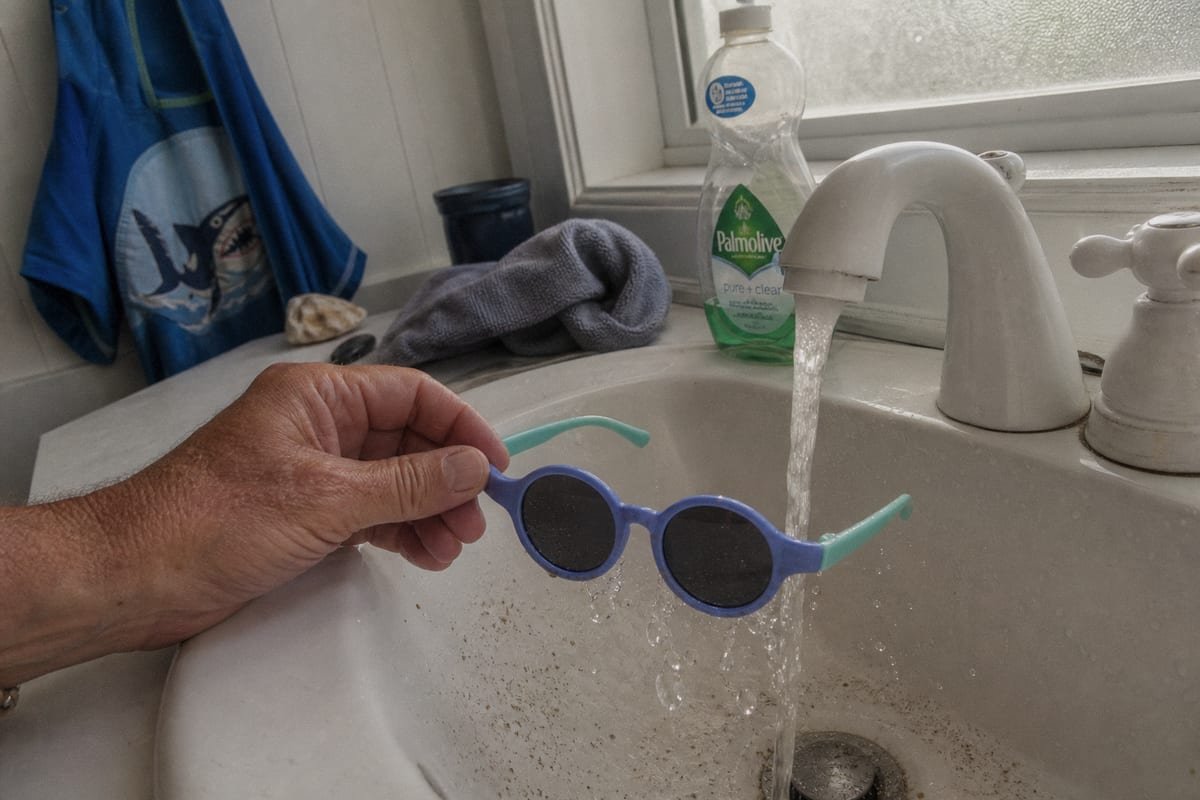
毎年のビーチシーズンになると、購入者から砂や海水にさらされた子供用サングラスのお手入れ方法について質問されます。私たちの製造ラインでは、塩分や砂粒がレンズにどのような影響を与えるかを正確に把握しています。不注意な一拭きでレンズの上を砂がこすり、 傷防止コーティング 1, が施された、数週間かけて完璧に仕上げたサングラスが1ヶ月で曇ってしまいます。保護者は製品のせいだと非難し、ブランドは工場を非難します。しかし、解決策は単純で、一つのルールから始まります。「触る前にすすぐ」ことです。.
砂や海水にさらされた子供用サングラスをきれいにするには、まずぬるま湯の流水で洗い流し、指先に食器用洗剤を1滴つけ、もう一度洗い流してから、清潔なマイクロファイバークロスで軽くたたいて乾かしてください。レンズを乾いたまま拭かないでください。付着した砂がコーティングを瞬時に傷つけます。.
その簡潔な回答は、基本的な手順を網羅しています。しかし、細部が重要です。以下では、各ステップを詳しく説明し、海水がフレームに実際にどのような影響を与えるかを解説し、素材の選択がすべてを変える理由を示します。.
子供のサングラスについた砂をレンズを傷つけずに安全に洗い流す方法は?
去年の夏の品質管理セッション中に、布でテストレンズの上を砂粒一つでこすってみました。傷は1メートル先からでも見えるほどでした。この一つの実演で、すすぎ方がどんな洗浄剤よりも重要であることをチーム全員が確信しました。.
子供用サングラスについた砂を洗い流す最も安全な方法は、ぬるま湯の水道水を優しくかけながら、見える砂粒がすべて洗い流されるまで持ち、その後、石鹸をつけた指先で残った汚れを落とすことです。水が砂をすべて洗い流すまで、レンズに触れたり拭いたりしないでください。.
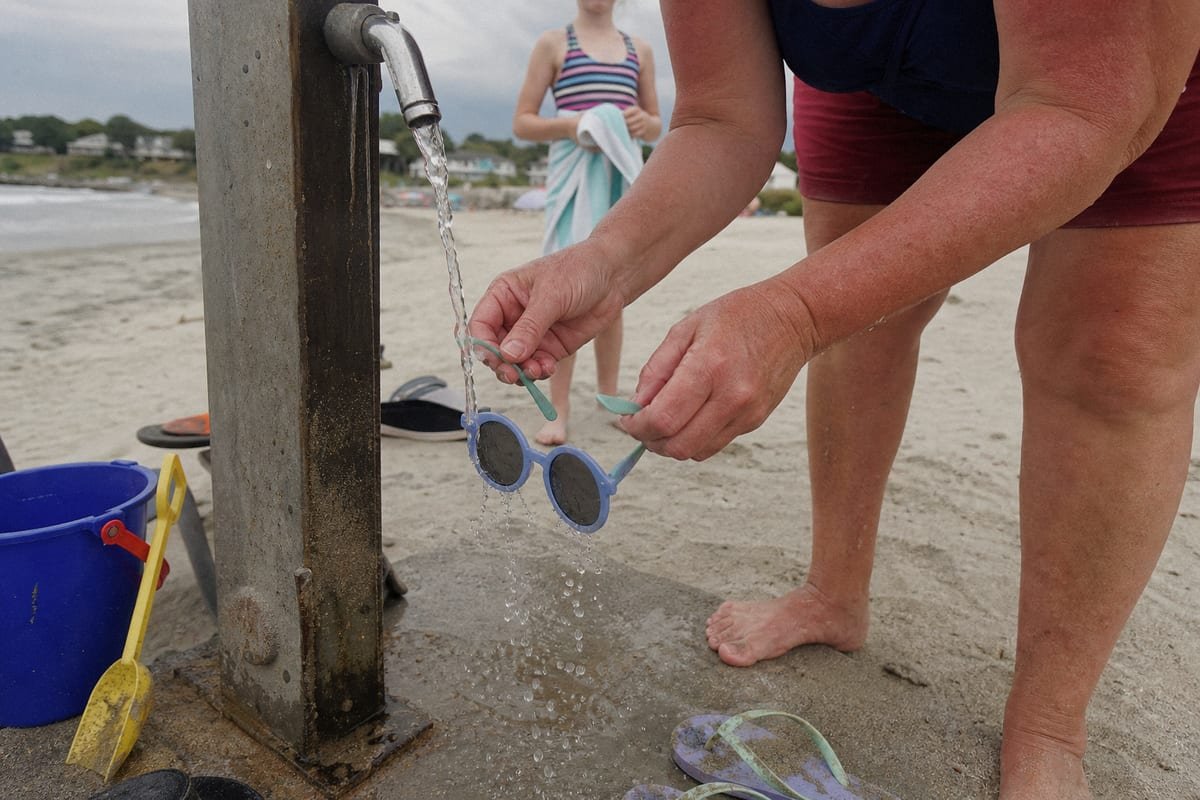
砂は子供用レンズにとって最大の脅威です。砂粒はレンズ表面よりも硬く、その上の傷防止コーティングよりも硬いです。そのため、全体の 洗浄手順 は一つの考え方に基づいて構築されています。水に仕事をさせ、砂粒がなくなるまでレンズに圧力をかけないことです。.
6段階のビーチクリーンアップ手順
- ゆるい砂を優しく振り落とします。レンズではなくテンプル(つる)を持ちます。.
- ぬるま湯の水道水で洗い流します。冷たい水でも構いません。熱湯はレンズコーティングに負担をかけたり、柔軟なフレームを歪ませたりする可能性があるため避けてください。.
- 指先に 中性洗剤 2 を小さく1滴つけます。保湿剤はにじんで残留物を残すため、ローションフリーの処方を選んでください。.
- 指でレンズとフレームを優しくこすります。鼻当て部分も忘れずに。.
- 石鹸を完全に洗い流すために、もう一度よくすすぎます。.
- 清潔なマイクロファイバークリーニングクロスで軽くたたいて乾かします。その後、軽く磨きます。.
隠れた場所の砂粒を取り除く
砂は、レンズとフレームの間の溝やヒンジのネジの周りに隠れがちです。柔らかい毛のベビー用歯ブラシは、傷つけずに狭い隙間をきれいにします。完全に無接触の方法としては、サングラスを真水の入った袋に入れ、優しく振るという浸漬・撹拌トリックを試してみてください。水が物理的な接触なしに砂粒を浮かせます。.
| する | しない |
|---|---|
| まずすすぎ、後で拭く | 乾いた砂まみれのレンズを拭く |
| ぬるま湯の水道水を使用する | 熱湯を使用する |
| ローションフリーの中性洗剤を使用する | 酢、アンモニア、またはガラスクリーナーを使用する |
| 清潔なマイクロファイバークロスで乾かす | ナプキン、ティッシュ、またはTシャツで乾かす |
| 柔らかいブラシでヒンジを掃除する | 爪で砂粒をこすり落とす |
作業場からのもう一つの注意点:マイクロファイバークリーニングクロス自体を清潔に保ってください。古い砂粒でいっぱいのクロスは、再び傷の原因となります。定期的に洗濯し、 柔らかい収納ポーチ, に入れて、砂から離れた場所に保管してください。.
塩水は、時間の経過とともに子供用サングラスのフレーム素材やコーティングにダメージを与える可能性がありますか?
オーストラリアの販売店から、競合他社のフレームが1回のビーチシーズンでチョーク状になり硬くなった写真が送られてきました。その後、自社素材で 塩水噴霧比較試験 3 を実施しました。そこで学んだことが、今日私たちがすべての購入者にアドバイスする方法を形作っています。.
はい、海水は子供用のサングラスを時間の経過とともに損傷する可能性があります。乾燥した塩の結晶はレンズコーティングを摩耗させ、金属製のヒンジネジを腐食させ、安価なフレームプラスチックを脆くする可能性があります。閉じ込められた塩は、低品質の偏光レンズの端の層間剥離を引き起こす可能性もあります。すぐに真水で洗い流すことで、これらの損傷のほとんどを防ぐことができます。.
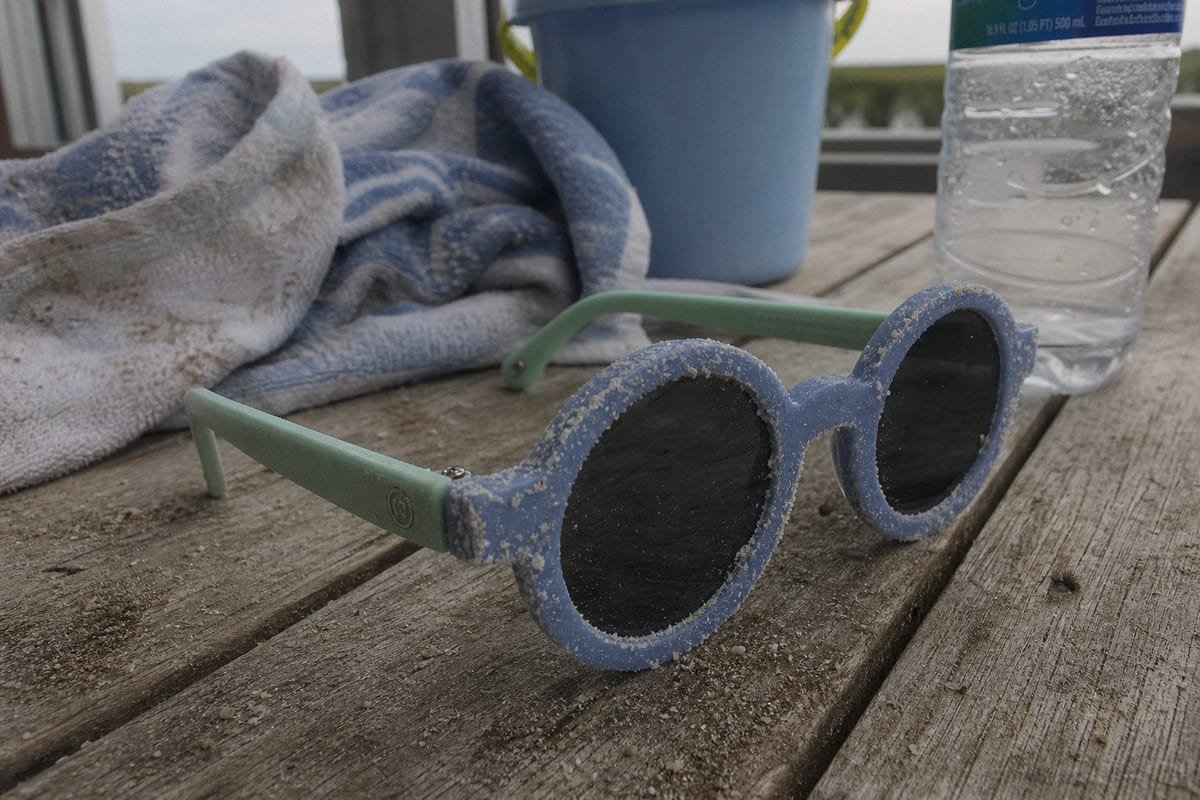
海水は、飛び散ったときは無害に見えます。問題は、乾いたときに始まります。水が蒸発すると、塩分がレンズの上やフレームの内側に硬い結晶を形成します。その瞬間から、3種類のダメージが始まります。.
塩分が各部分を攻撃する方法
まず、レンズ表面。乾いた塩分は研磨性があります。子供が目をこすり、次に眼鏡をこすると、それらの結晶が砂と同じように傷防止コーティングを傷つけます。塩分の膜は、偏光レンズのケアの努力を鈍らせ、磨いても取れない曇った層を残し、コーティングを腐食させた場合は元に戻せません。.
次に、金属部分。ほとんどの子供用フレームには小さな金属製のヒンジネジが使用されています。塩分は酸化を加速させるため、ヒンジが硬くなったり、錆び点が発生したりします。ここでの腐食防止は簡単です。ヒンジ部分をすすぎ、よく乾かしてください。ヒンジ周りの柔らかいブラシで、ダメージを与える前に閉じ込められた塩分を取り除きます。.
Third, the lens edges. On inexpensive 偏光レンズ 4, saltwater can seep between the laminated layers. Watch for edge delamination 5 — bubbling or peeling along the rim. Once it starts, it spreads, and the lens is finished.
| コンポーネント | Saltwater risk | 予防 |
|---|---|---|
| レンズコーティング | Abrasion from dried salt crystals | Rinse before salt dries; use lens cleaning spray if no water is nearby |
| ヒンジネジ | Corrosion and stiffness | Rinse, brush, and dry hinge areas after each beach day |
| Polarized lens edges | Delamination and bubbling | Choose quality lenses; inspect edges monthly |
| Frame plastic | Brittleness in cheap materials | Use TPEE or TR90 frames; rinse promptly |
The emergency rule is simple. If you cannot do a full saltwater residue removal at the beach, at least splash the glasses with fresh drinking water before the salt dries. A partial rinse now beats a perfect wash three hours later.
子供用のサングラスは、ビーチで一日過ごした後、どのように適切に乾かして保管すればよいですか?
When we design retail packaging for our OEM clients, we always push for a proper case rather than a bare cardboard sleeve. Buyers sometimes see it as an extra cost. We see it as the difference between a product that lasts one summer and one that lasts three.
きれいなマイクロファイバークロスで子供用サングラスを拭いて乾かし、ヒンジを完全に自然乾燥させてから保管してください。レンズを上にしてハードケースまたはソフト収納ポーチに入れ、砂、熱、圧力から離れたジッパー付きバッグの中に保管してください。.

Drying and storage sound boring compared to cleaning. But this stage is where most avoidable damage happens. A wet hinge stored in a hot, sandy beach bag is a recipe for corrosion, warping, and scratches all at once.
Drying the right way
Pat, don't rub. Rubbing pushes any leftover moisture and residue across the lens. Patting lifts it away. Use a dedicated microfiber cloth that never touches anything else. After patting, let the glasses air-dry for a few minutes with the temples open. Water hides inside hinge barrels, and trapped moisture is the main cause of stiff, squeaky hinges later. For streak-free results, a light mist of lens cleaning spray followed by a gentle buff works well once all grit is gone.
Never dry sunglasses on a car dashboard or in direct sun. Heat is the enemy of both lens coatings and frame geometry. Even flexible kids' frames should not be baked.
Storing for the next beach day
A hard-shell case gives the best protection against crushing in a packed beach bag. A soft storage pouch works as a lighter backup and doubles as a cleaning cloth in many designs. Either way, follow these habits:
- Store lenses facing up, never resting on the lens surface.
- Keep the case zipped inside the bag, not lying open on the towel.
- Shake sand out of the case itself each evening. A sandy case defeats its own purpose.
- Do a quick monthly inspection: check hinge tightness, look at lens edges for bubbling, and confirm the nose bridge still sits straight.
A smart parent checklist for the beach bag: pre-moistened lens wipes 6, a small bottle of fresh water, one clean microfiber cloth, and the case. That is under a minute of cleanup, packed in advance.
TPEEとTR90のフレームは、砂や水にさらされた後、他の素材よりもなぜ持ちこたえるのでしょうか?
Fifteen years of making children's eyewear in Taizhou has taught our team one clear lesson: the material decides how a frame survives real childhood. Beaches are the toughest test we know, so material choice is where we spend the most engineering time.
TPEEとTR90フレームは、どちらの素材も塩分、湿気、紫外線による劣化に強く、ひび割れる代わりに柔軟性があるため、より長持ちします。TR90はメモリーフレックスの耐久性と化学的安定性を提供し、TPEEは柔らかくゴムのような弾力性を加えます。安価なプラスチックや金属フレームのように、もろくなったり腐食したりすることはありません。.
Not all frame plastics are equal. A frame that feels fine in a showroom can fail fast in salt, sun, and sand. Here is how the common options compare after repeated beach exposure.
| 素材 | 柔軟性 | Salt & water resistance | Failure mode at the beach | Kid suitability |
|---|---|---|---|---|
| TPEE | 優れた、ゴムのような | 素晴らしい | Rarely fails; may need occasional care | 素晴らしい |
| TR90 | 非常に良い、メモリーフレックス | 素晴らしい | Very rare; springs back after bending | 素晴らしい |
| Polycarbonate frames | Moderate, rigid | 接触点に集中 | Cracks at hinges under impact | 接触点に集中 |
| Standard acetate/plastic | 低 | 普通 | Turns brittle and chalky, snaps | 普通 |
| Metal frames | 低 | 悪い | Hinge and screw corrosion | Poor for beach use |
Why chemistry matters here
TR90は 熱可塑性素材 7 with memory-flex properties. It bends when a child sits on it and springs back to shape. Chemically, it is highly stable, so saltwater and sunscreen do not break it down. TPEE goes further on softness. It has a slightly rubberized feel, which is why we use it for temples on many of our TR90 frames — the combination gives a secure, comfortable grip that does not slip on a wet, sunscreen-covered face.
Cheap injection plastics lose plasticizers over time. 射出成形 8 Salt and UV speed this up, so the frame turns stiff and brittle within a season. Polycarbonate frames handle impact well but lack the flex that active kids demand.
Caring for flexible frames
Even great materials benefit from care. After cleaning, some sources suggest a tiny amount of food-grade silicone oil rubbed into flexible or rubberized frame surfaces to keep them supple and resist salt-induced brittleness. In our experience shipping to buyers in twenty-plus countries, the frames that come back looking new are always the ones that got a simple rinse-and-case routine, regardless of climate.
結論
Sand scratches and salt corrodes, and one bad wipe can ruin a lens. Rinse first, wash gently, dry with microfiber, store in a case — and choose flexible TPEE or TR90 frames built to survive the beach.
脚注
1. Explains the function and vulnerability of protective lens layers against abrasive particles like sand. ↩︎
2. Authoritative guide on safe cleaning agents for eyewear to prevent coating damage. ↩︎
3. Standardized testing method used to evaluate the corrosion resistance of materials in coastal environments. ↩︎
4. Technical background on how polarized filters work and their specific care requirements. ↩︎
5. Authoritative Wikipedia entry explaining the separation of material layers, replacing the inaccessible ScienceDirect link. ↩︎
6. Professional advice on using convenient cleaning tools safely without scratching delicate lens surfaces. ↩︎
7. Technical specifications for high-performance polymers used in durable, flexible eyewear frames. ↩︎
8. Authoritative Wikipedia entry for the manufacturing process; updated anchor to the more technically accurate ‘injection molding’. ↩︎


 English
  Español de México
  Deutsch
  Français
  日本語
日本語  العربية
  Português do Brasil