How to Clean Kids’ Sunglasses After Sand or Seawater Exposure?
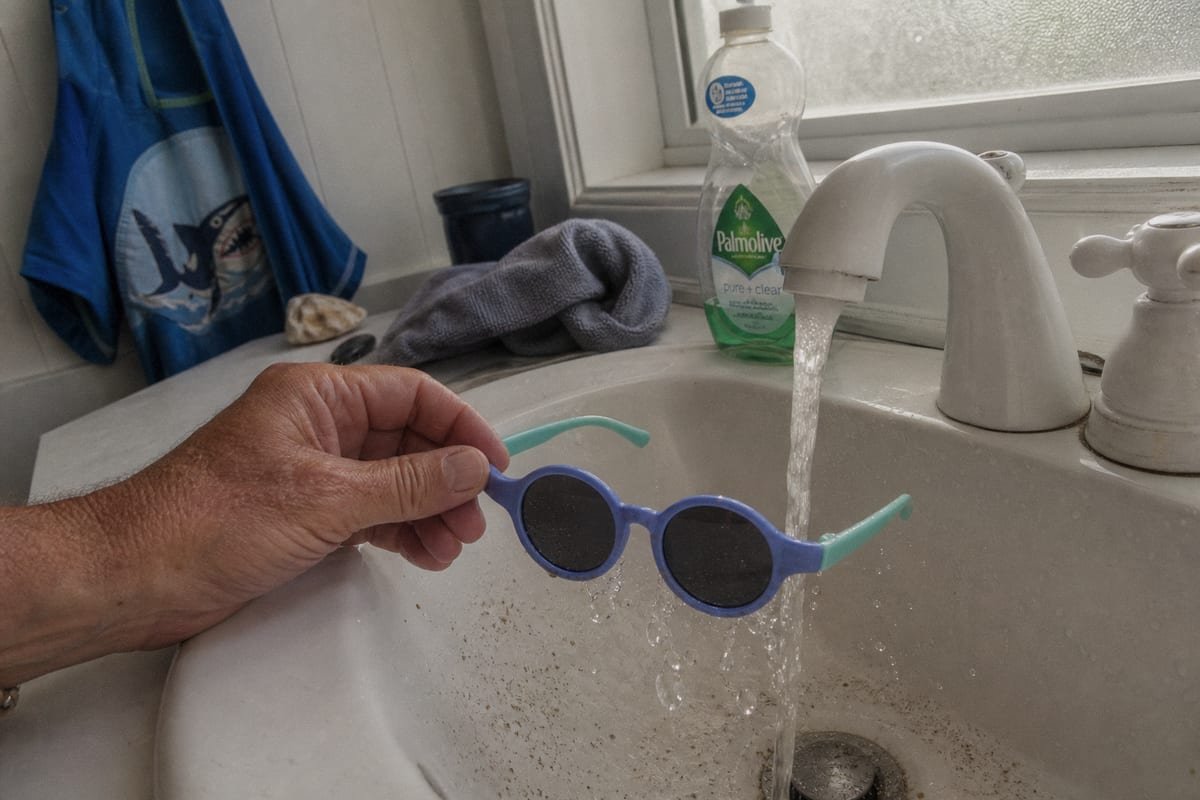
Every beach season, buyers ask me how to clean kids’ sunglasses after sand or seawater exposure. On our production line, we see exactly what salt and grit do to lenses. One careless wipe grinds sand across the anti-scratch coating 1, and a pair we spent weeks perfecting looks foggy in a month. Parents blame the product. Brands blame the factory. Yet the fix is simple, and it starts with one rule: rinse before you touch.
To clean kids’ sunglasses after sand or seawater exposure, rinse them under lukewarm running fresh water first, apply a drop of mild dish soap with your fingertips, rinse again, then pat dry with a clean microfiber cloth. Never wipe dry lenses, because trapped sand scratches coatings instantly.
That short answer covers the core routine. But the details matter. Below, I break down each step, explain what saltwater actually does to frames, and show why material choice changes everything.
What's the safest way to rinse sand off my kids' sunglasses without scratching the lenses?
During a QC session last summer, I dragged a single grain of sand across a test lens with a cloth. The scratch was visible from a meter away. That one demonstration convinced our whole team that rinsing technique matters more than any cleaning product.
The safest way to rinse sand off kids' sunglasses is to hold them under a gentle stream of lukewarm tap water until every visible grain washes away, then loosen remaining grit with soapy fingertips. Do not touch or wipe the lenses until the water has flushed all sand off.
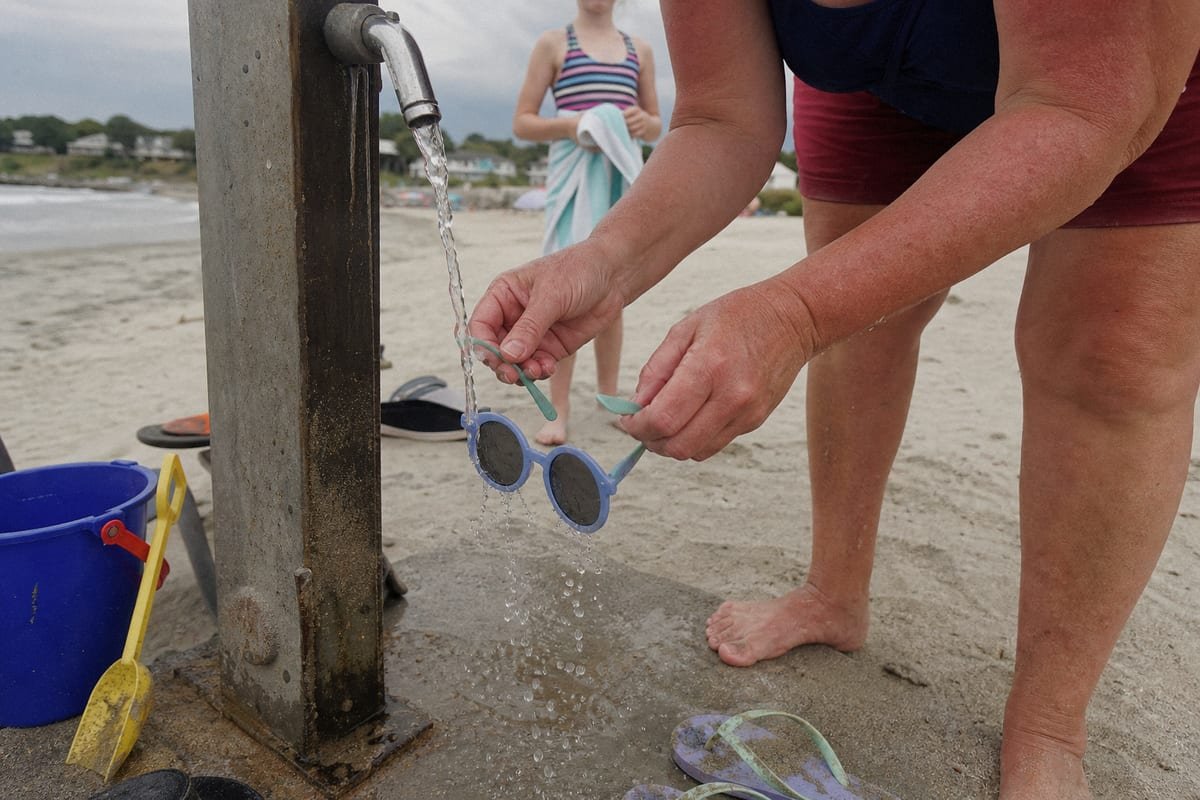
Sand is the single biggest threat to a child's lenses. Each grain is harder than the lens surface and harder than the anti-scratch coating on top of it. So the whole cleaning routine is built around one idea: let water do the work, and keep pressure off the lens until the grit is gone.
The six-step beach cleanup routine
- Shake off loose sand gently. Hold the temples, not the lenses.
- Rinse under lukewarm tap water. Cool water works too. Avoid hot water, which can stress lens coatings and warp flexible frames.
- Add one small drop of mild dish soap 2 to your fingertips. Choose a lotion-free formula, since moisturizers smear and leave residue.
- Rub the lenses and frame gently with your fingers, including the nose bridge.
- Rinse again thoroughly to remove all soap.
- Pat dry with a clean microfiber cleaning cloth. Then buff lightly.
Getting grit out of hidden spots
Sand loves to hide in the rim-to-lens channel and around hinge screws. A soft-bristled baby toothbrush clears these narrow gaps without scratching. For a truly zero-pressure method, try the submersion-agitation trick: seal the sunglasses in a bag of fresh water and shake gently. The water dislodges grit with no physical contact at all.
| Do | Don't |
|---|---|
| Rinse first, wipe later | Wipe dry, sandy lenses |
| Use lukewarm tap water | Use hot water |
| Use lotion-free mild dish soap | Use vinegar, ammonia, or glass cleaner |
| Dry with a clean microfiber cloth | Dry with napkins, tissues, or a t-shirt |
| Clean hinges with a soft brush | Scrape grit out with fingernails |
One more note from our workshop: keep the microfiber cleaning cloth itself clean. A cloth full of old grit just reintroduces scratches. Wash it regularly and store it in a soft storage pouch, away from sand.
Can saltwater damage the frame material or coating on my children's sunglasses over time?
A distributor in Australia once sent us photos of competitor frames that had turned chalky and stiff after one beach season. We ran salt-spray comparisons 3 on our own materials afterward. What we learned shaped how we advise every buyer today.
Yes, saltwater can damage children's sunglasses over time. Dried salt crystals abrade lens coatings, corrode metal hinge screws, and can make cheap frame plastics brittle. Trapped salt may also cause edge delamination in low-quality polarized lenses. A prompt fresh-water rinse prevents most of this damage.
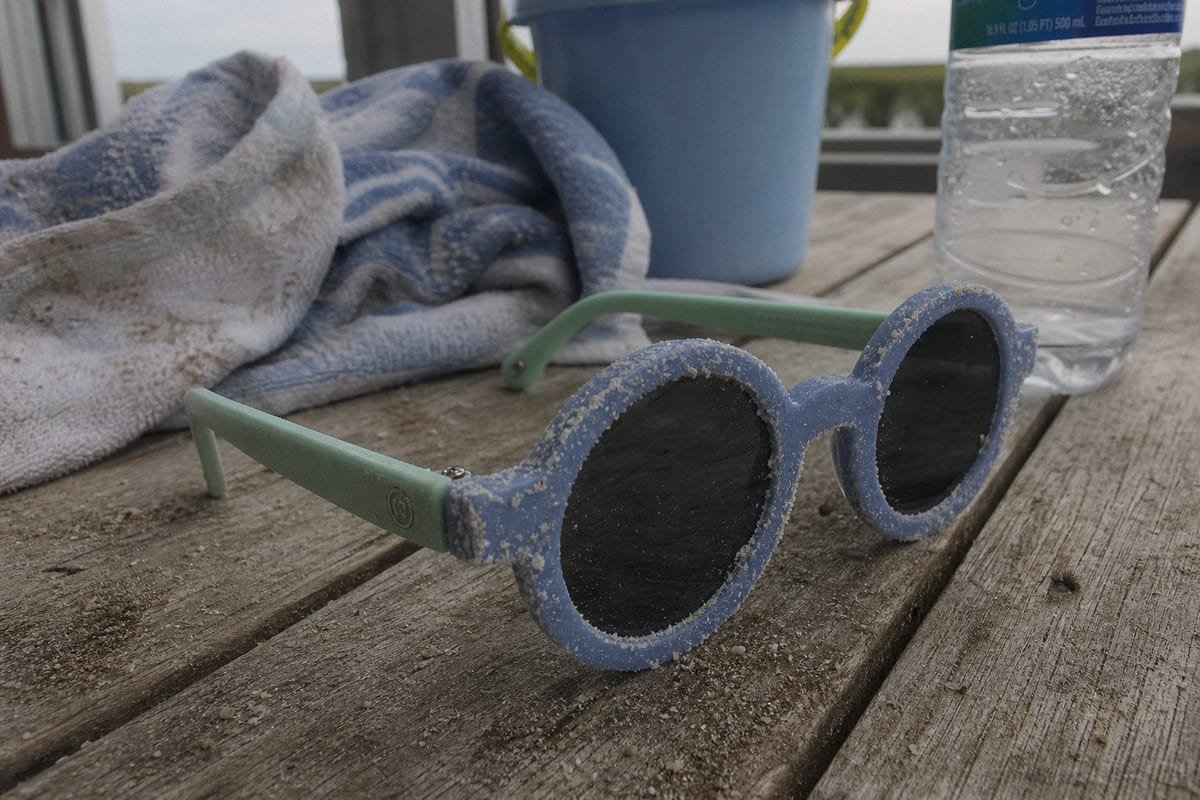
Saltwater looks harmless when it splashes on. The trouble starts when it dries. As the water evaporates, salt forms hard crystals on the lens and inside the frame. From that moment, three types of damage begin.
How salt attacks each part
First, the lens surface. Dried salt is abrasive. When a child rubs their eyes and then their glasses, those crystals scratch the anti-scratch coating just like sand does. Salt film also dulls polarized lens care efforts, leaving a hazy layer that no amount of buffing fixes if it has etched the coating.
Second, the metal parts. Most kids' frames use a small metal hinge screw. Salt accelerates oxidation, so hinges get stiff or develop rust spots. Corrosion prevention here is simple: rinse the hinge area and dry it well. A soft brush around the hinge removes trapped salt before it does damage.
Third, the lens edges. On inexpensive 偏光レンズ 4, saltwater can seep between the laminated layers. Watch for edge delamination 5 — bubbling or peeling along the rim. Once it starts, it spreads, and the lens is finished.
| コンポーネント | Saltwater risk | Prevention |
|---|---|---|
| Lens coating | Abrasion from dried salt crystals | Rinse before salt dries; use lens cleaning spray if no water is nearby |
| Hinge screws | Corrosion and stiffness | Rinse, brush, and dry hinge areas after each beach day |
| Polarized lens edges | Delamination and bubbling | Choose quality lenses; inspect edges monthly |
| Frame plastic | Brittleness in cheap materials | Use TPEE or TR90 frames; rinse promptly |
The emergency rule is simple. If you cannot do a full saltwater residue removal at the beach, at least splash the glasses with fresh drinking water before the salt dries. A partial rinse now beats a perfect wash three hours later.
How do I dry and store my kids' sunglasses properly after a day at the beach?
When we design retail packaging for our OEM clients, we always push for a proper case rather than a bare cardboard sleeve. Buyers sometimes see it as an extra cost. We see it as the difference between a product that lasts one summer and one that lasts three.
Dry kids' sunglasses by patting them with a clean microfiber cloth, then air-drying the hinges completely before storage. Store them lenses-up in a hard-shell case or soft storage pouch, kept inside a zipped bag away from direct sand, heat, and pressure.

Drying and storage sound boring compared to cleaning. But this stage is where most avoidable damage happens. A wet hinge stored in a hot, sandy beach bag is a recipe for corrosion, warping, and scratches all at once.
Drying the right way
Pat, don't rub. Rubbing pushes any leftover moisture and residue across the lens. Patting lifts it away. Use a dedicated microfiber cloth that never touches anything else. After patting, let the glasses air-dry for a few minutes with the temples open. Water hides inside hinge barrels, and trapped moisture is the main cause of stiff, squeaky hinges later. For streak-free results, a light mist of lens cleaning spray followed by a gentle buff works well once all grit is gone.
Never dry sunglasses on a car dashboard or in direct sun. Heat is the enemy of both lens coatings and frame geometry. Even flexible kids' frames should not be baked.
Storing for the next beach day
A hard-shell case gives the best protection against crushing in a packed beach bag. A soft storage pouch works as a lighter backup and doubles as a cleaning cloth in many designs. Either way, follow these habits:
- Store lenses facing up, never resting on the lens surface.
- Keep the case zipped inside the bag, not lying open on the towel.
- Shake sand out of the case itself each evening. A sandy case defeats its own purpose.
- Do a quick monthly inspection: check hinge tightness, look at lens edges for bubbling, and confirm the nose bridge still sits straight.
A smart parent checklist for the beach bag: pre-moistened lens wipes 6, a small bottle of fresh water, one clean microfiber cloth, and the case. That is under a minute of cleanup, packed in advance.
Why do TPEE and TR90 frames hold up better than other materials after sand and water exposure?
Fifteen years of making children's eyewear in Taizhou has taught our team one clear lesson: the material decides how a frame survives real childhood. Beaches are the toughest test we know, so material choice is where we spend the most engineering time.
TPEE and TR90 frames hold up better because both materials resist salt, moisture, and UV degradation while flexing instead of cracking. TR90 offers memory-flex durability and chemical stability; TPEE adds soft, rubber-like resilience. Neither turns brittle or corrodes the way cheap plastics and metal frames do.
Not all frame plastics are equal. A frame that feels fine in a showroom can fail fast in salt, sun, and sand. Here is how the common options compare after repeated beach exposure.
| 素材 | 柔軟性 | Salt & water resistance | Failure mode at the beach | Kid suitability |
|---|---|---|---|---|
| TPEE | 優れた、ゴムのような | 素晴らしい | Rarely fails; may need occasional care | 素晴らしい |
| TR90 | 非常に良い、メモリーフレックス | 素晴らしい | Very rare; springs back after bending | 素晴らしい |
| Polycarbonate frames | Moderate, rigid | 接触点に集中 | Cracks at hinges under impact | 接触点に集中 |
| Standard acetate/plastic | 低 | 普通 | Turns brittle and chalky, snaps | 普通 |
| Metal frames | 低 | 悪い | Hinge and screw corrosion | Poor for beach use |
Why chemistry matters here
TR90 is a thermoplastic material 7 with memory-flex properties. It bends when a child sits on it and springs back to shape. Chemically, it is highly stable, so saltwater and sunscreen do not break it down. TPEE goes further on softness. It has a slightly rubberized feel, which is why we use it for temples on many of our TR90 frames — the combination gives a secure, comfortable grip that does not slip on a wet, sunscreen-covered face.
Cheap injection plastics lose plasticizers over time. 射出成形 8 Salt and UV speed this up, so the frame turns stiff and brittle within a season. Polycarbonate frames handle impact well but lack the flex that active kids demand.
Caring for flexible frames
Even great materials benefit from care. After cleaning, some sources suggest a tiny amount of food-grade silicone oil rubbed into flexible or rubberized frame surfaces to keep them supple and resist salt-induced brittleness. In our experience shipping to buyers in twenty-plus countries, the frames that come back looking new are always the ones that got a simple rinse-and-case routine, regardless of climate.
結論
Sand scratches and salt corrodes, and one bad wipe can ruin a lens. Rinse first, wash gently, dry with microfiber, store in a case — and choose flexible TPEE or TR90 frames built to survive the beach.
脚注
1. Explains the function and vulnerability of protective lens layers against abrasive particles like sand. ↩︎
2. Authoritative guide on safe cleaning agents for eyewear to prevent coating damage. ↩︎
3. Standardized testing method used to evaluate the corrosion resistance of materials in coastal environments. ↩︎
4. Technical background on how polarized filters work and their specific care requirements. ↩︎
5. Authoritative Wikipedia entry explaining the separation of material layers, replacing the inaccessible ScienceDirect link. ↩︎
6. Professional advice on using convenient cleaning tools safely without scratching delicate lens surfaces. ↩︎
7. Technical specifications for high-performance polymers used in durable, flexible eyewear frames. ↩︎
8. Authoritative Wikipedia entry for the manufacturing process; updated anchor to the more technically accurate ‘injection molding’. ↩︎



 English
  Español de México
  Deutsch
  Français
  日本語
日本語  العربية
  Português do Brasil