كيفية تنظيف نظارات الأطفال الشمسية بعد التعرض للرمال أو مياه البحر؟
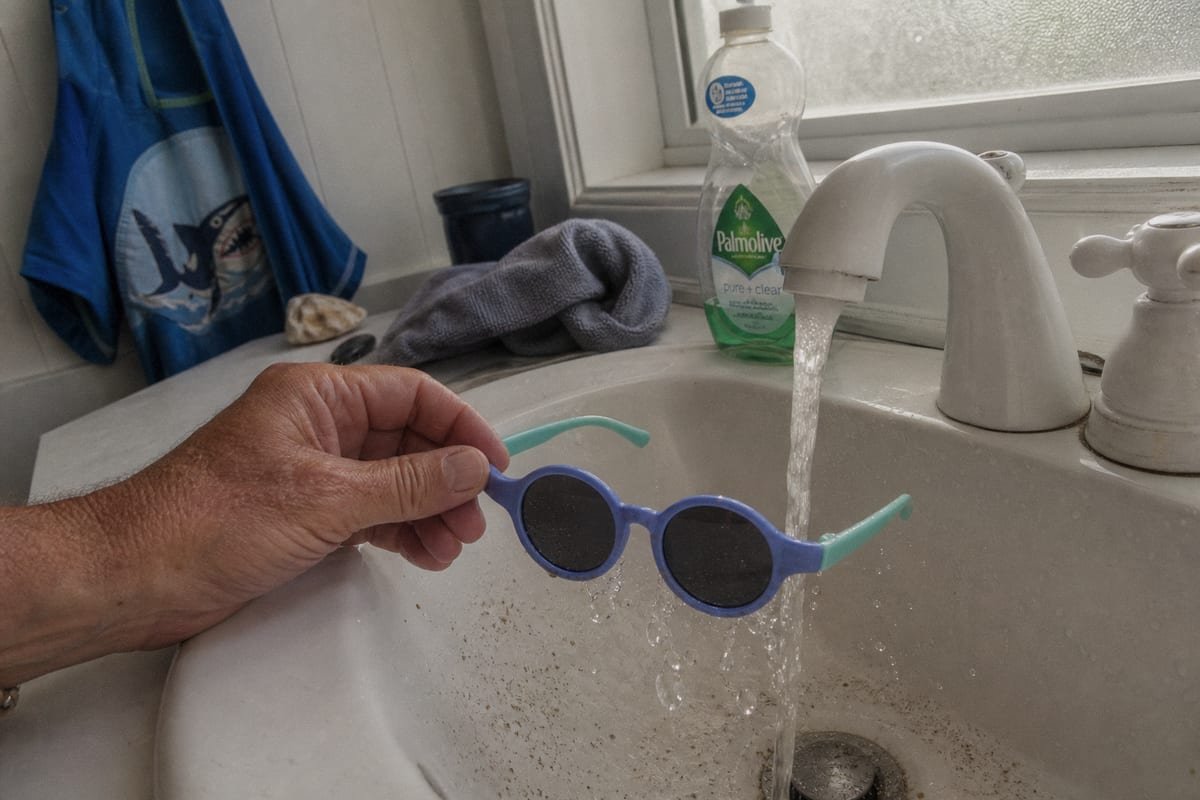
كل موسم شاطئي، يسألني المشترون عن كيفية تنظيف نظارات الأطفال الشمسية بعد التعرض للرمال أو مياه البحر. في خط الإنتاج لدينا، نرى بالضبط ما تفعله الملح والحصى بالعدسات. مسحة واحدة غير حذرة تطحن الرمال عبر طلاء مقاوم للخدش 1, ، وزوج من النظارات أمضينا أسابيع في إتقانه يبدو ضبابيًا في غضون شهر. يلوم الآباء المنتج. تلوم العلامات التجارية المصنع. ومع ذلك، فإن الحل بسيط، ويبدأ بقاعدة واحدة: اشطف قبل أن تلمس.
لتنظيف نظارات الأطفال الشمسية بعد التعرض للرمال أو مياه البحر، اشطفها تحت الماء العذب الجاري الفاتر أولاً، ضع قطرة من صابون الأطباق المعتدل بأطراف أصابعك، واشطف مرة أخرى، ثم جفف بالتربيت بقطعة قماش نظيفة من الألياف الدقيقة. لا تمسح العدسات الجافة أبدًا، لأن الرمال المحتبسة تخدش الطلاءات على الفور.
هذه الإجابة المختصرة تغطي الروتين الأساسي. لكن التفاصيل مهمة. أدناه، سأفصل كل خطوة، وأشرح ما تفعله مياه البحر بالفعل بالإطارات، وأوضح لماذا يغير اختيار المواد كل شيء.
ما هي الطريقة الأكثر أمانًا لشطف الرمال عن نظارات أطفالي الشمسية دون خدش العدسات؟
خلال جلسة لمراقبة الجودة الصيف الماضي، قمت بسحب حبة رمل واحدة عبر عدسة اختبار بقطعة قماش. كانت الخدوش مرئية من متر واحد. هذا العرض التوضيحي الواحد أقنع فريقنا بأكمله بأن تقنية الشطف أهم من أي منتج تنظيف.
الطريقة الأكثر أمانًا لشطف الرمال عن نظارات الأطفال الشمسية هي إمساكها تحت تيار لطيف من ماء الصنبور الفاتر حتى يزول كل حبيبات مرئية، ثم تخفيف الأوساخ المتبقية بأطراف الأصابع الصابونية. لا تلمس العدسات أو تمسحها حتى يغسل الماء كل الرمال.
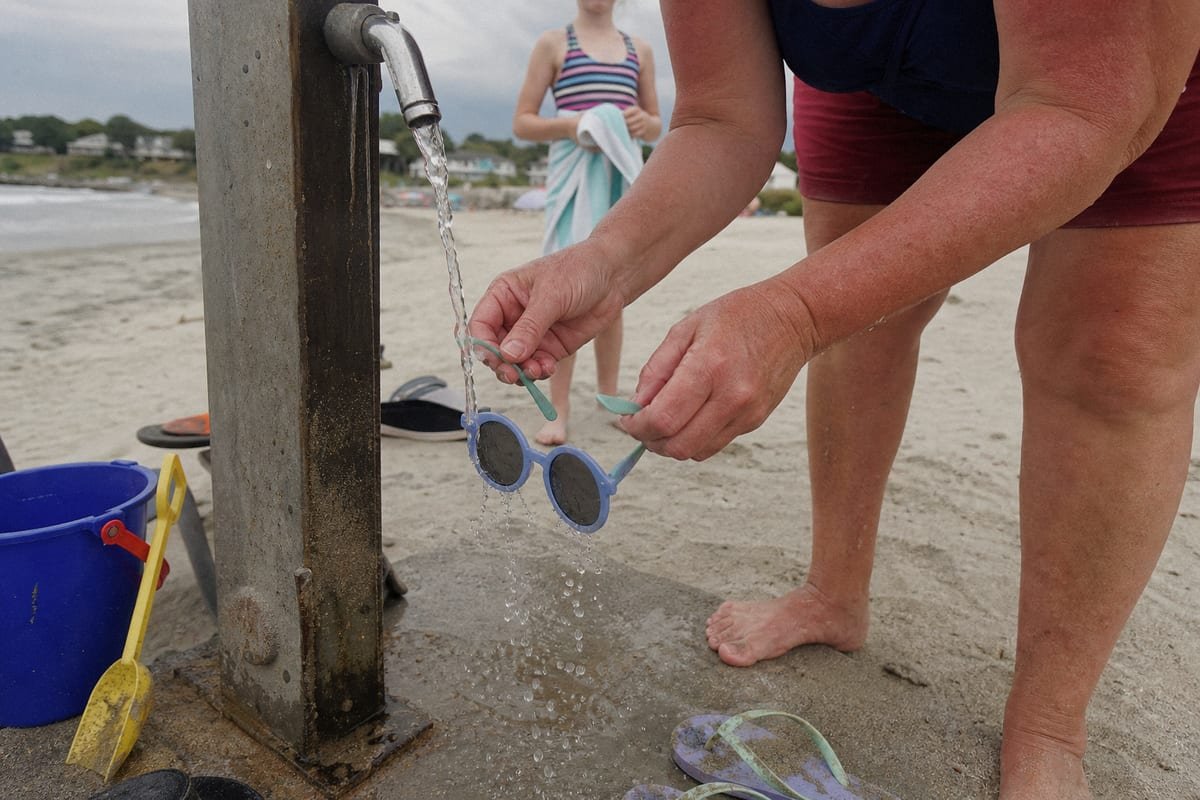
الرمال هي أكبر تهديد لعدسات الطفل. كل حبة رمل أصلب من سطح العدسة وأصلب من الطلاء المقاوم للخدش الموجود فوقها. لذلك فإن كل روتين التنظيف مبني حول فكرة واحدة: دع الماء يقوم بالعمل، وحافظ على الضغط بعيدًا عن العدسة حتى تختفي الحصى.
روتين تنظيف الشاطئ المكون من ست خطوات
- هز الرمال السائبة بلطف. أمسك بالمعابد، وليس العدسات.
- اشطف تحت ماء الصنبور الفاتر. الماء البارد يعمل أيضًا. تجنب الماء الساخن، الذي يمكن أن يجهد طلاء العدسات ويشوه الإطارات المرنة.
- أضف قطرة صغيرة من صابون الأطباق المعتدل 2 إلى أطراف أصابعك. اختر تركيبة خالية من المستحضرات، لأن المرطبات تتلطخ وتترك بقايا.
- افرك العدسات والإطار بلطف بأصابعك، بما في ذلك جسر الأنف.
- اشطف مرة أخرى جيدًا لإزالة كل الصابون.
- جفف بالتربيت بقطعة قماش تنظيف نظيفة من الألياف الدقيقة. ثم قم بتلميعها بخفة.
إخراج الحصى من الأماكن المخفية
تحب الرمال الاختباء في القناة بين الحافة والعدسة وحول براغي المفصلات. فرشاة أسنان أطفال ناعمة الشعيرات تزيل هذه الفجوات الضيقة دون خدش. للحصول على طريقة خالية تمامًا من الضغط، جرب خدعة الغمر والتحريك: أغلق النظارات الشمسية في كيس من الماء العذب ورجها بلطف. الماء يزيل الحصى دون أي اتصال جسدي على الإطلاق.
| افعل | لا تفعل |
|---|---|
| اشطف أولاً، امسح لاحقًا | امسح العدسات الجافة والرملية |
| استخدم ماء الصنبور الفاتر | استخدم الماء الساخن |
| استخدم صابون أطباق معتدل خالٍ من المستحضرات | استخدم الخل أو الأمونيا أو منظف الزجاج |
| جفف بقطعة قماش تنظيف نظيفة من الألياف الدقيقة | جفف بمناديل ورقية أو مناديل ورقية أو قميص |
| نظف المفصلات بفرشاة ناعمة | اكشط الحصى بالأظافر |
ملاحظة أخرى من ورشتنا: حافظ على نظافة قطعة قماش التنظيف المصنوعة من الألياف الدقيقة نفسها. قطعة قماش مليئة بالحبيبات القديمة تعيد الخدوش. اغسلها بانتظام و قم بتخزينها في كيس تخزين ناعم, ، بعيدًا عن الرمال.
هل يمكن أن يتلف ماء البحر مادة الإطار أو الطلاء على نظارات أطفالي الشمسية بمرور الوقت؟
أرسل لنا موزع في أستراليا صورًا لإطارات منافسة تحولت إلى لون طباشيري وصلبة بعد موسم شاطئي واحد. أجرينا مقارنات رش الملح 3 على موادنا الخاصة بعد ذلك. ما تعلمناه شكل كيف ننصح كل مشترٍ اليوم.
نعم، يمكن لماء البحر أن يتلف نظارات الأطفال الشمسية بمرور الوقت. بلورات الملح الجافة تسبب تآكل طلاء العدسات، وتؤدي إلى تآكل براغي المفصلات المعدنية، ويمكن أن تجعل البلاستيك الرخيص للإطارات هشًا. قد يتسبب الملح المحتبس أيضًا في انفصال الحواف في العدسات المستقطبة منخفضة الجودة. الشطف الفوري بالماء العذب يمنع معظم هذا الضرر.
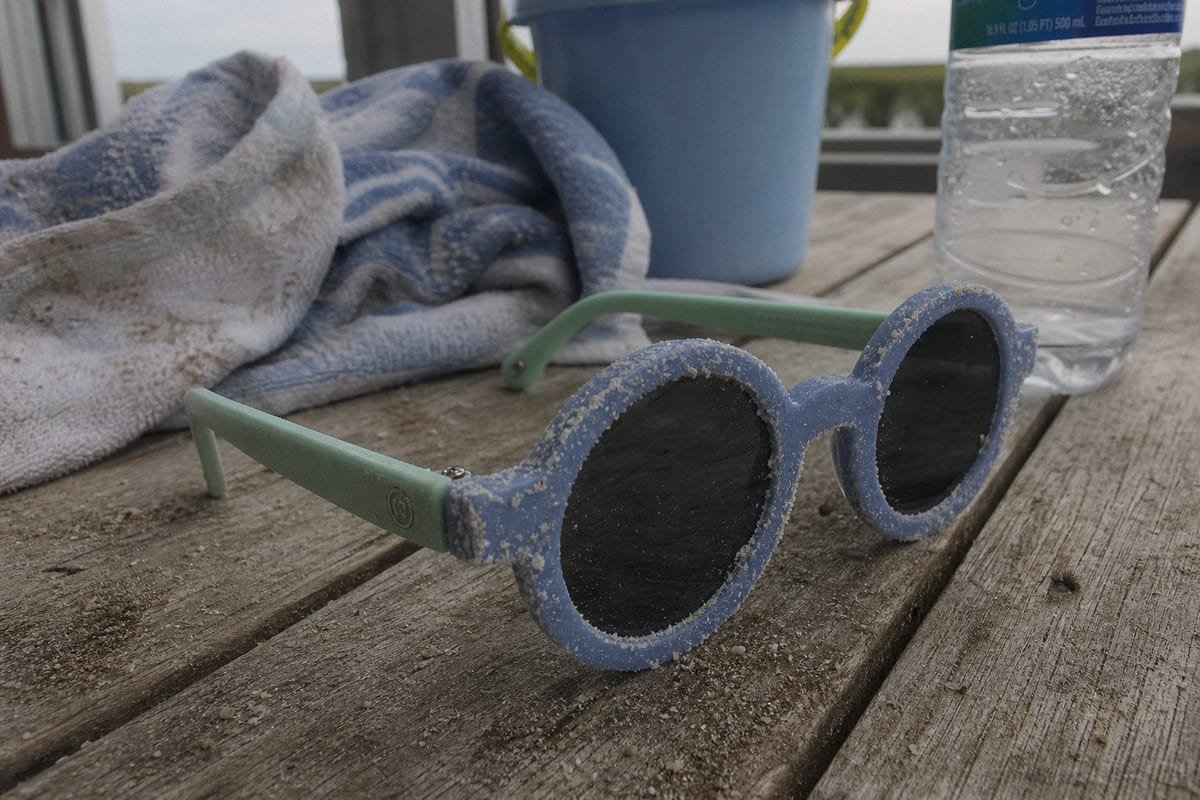
تبدو مياه البحر غير ضارة عندما تتناثر. تبدأ المشكلة عندما تجف. مع تبخر الماء، تتشكل بلورات ملح صلبة على العدسة وداخل الإطار. من تلك اللحظة، يبدأ ثلاثة أنواع من الضرر.
كيف يهاجم الملح كل جزء
أولاً، سطح العدسة. الملح الجاف كاشط. عندما يفرك الطفل عينيه ثم نظاراته، فإن تلك البلورات تخدش الطلاء المقاوم للخدش تمامًا كما تفعل الرمال. كما أن طبقة الملح تبهت جهود العناية بالعدسات المستقطبة، تاركة طبقة ضبابية لا يمكن إصلاحها بأي قدر من التلميع إذا كانت قد أكلت الطلاء.
ثانيًا، الأجزاء المعدنية. تستخدم معظم إطارات الأطفال برغي مفصلة معدني صغير. يسرع الملح الأكسدة، لذا تصبح المفصلات صلبة أو تتطور بقع صدأ. الوقاية من التآكل هنا بسيطة: اشطف منطقة المفصلة وجففها جيدًا. فرشاة ناعمة حول المفصلة تزيل الملح المحتبس قبل أن يسبب ضررًا.
Third, the lens edges. On inexpensive عدسات مستقطبة 4, saltwater can seep between the laminated layers. Watch for edge delamination 5 — bubbling or peeling along the rim. Once it starts, it spreads, and the lens is finished.
| المكون | Saltwater risk | الوقاية |
|---|---|---|
| طلاء العدسة | Abrasion from dried salt crystals | Rinse before salt dries; use lens cleaning spray if no water is nearby |
| Hinge screws | Corrosion and stiffness | Rinse, brush, and dry hinge areas after each beach day |
| Polarized lens edges | Delamination and bubbling | Choose quality lenses; inspect edges monthly |
| Frame plastic | Brittleness in cheap materials | Use TPEE or TR90 frames; rinse promptly |
The emergency rule is simple. If you cannot do a full saltwater residue removal at the beach, at least splash the glasses with fresh drinking water before the salt dries. A partial rinse now beats a perfect wash three hours later.
كيف أجفف وأخزن نظارات أطفالي الشمسية بشكل صحيح بعد يوم على الشاطئ؟
When we design retail packaging for our OEM clients, we always push for a proper case rather than a bare cardboard sleeve. Buyers sometimes see it as an extra cost. We see it as the difference between a product that lasts one summer and one that lasts three.
جفف نظارات الأطفال الشمسية عن طريق التربيت عليها بقطعة قماش ناعمة من الألياف الدقيقة، ثم جفف المفصلات تمامًا في الهواء قبل التخزين. قم بتخزينها والعدسات للأعلى في علبة صلبة أو حقيبة تخزين ناعمة، مع الاحتفاظ بها داخل حقيبة بسحاب بعيدًا عن الرمال المباشرة والحرارة والضغط.

Drying and storage sound boring compared to cleaning. But this stage is where most avoidable damage happens. A wet hinge stored in a hot, sandy beach bag is a recipe for corrosion, warping, and scratches all at once.
Drying the right way
Pat, don't rub. Rubbing pushes any leftover moisture and residue across the lens. Patting lifts it away. Use a dedicated microfiber cloth that never touches anything else. After patting, let the glasses air-dry for a few minutes with the temples open. Water hides inside hinge barrels, and trapped moisture is the main cause of stiff, squeaky hinges later. For streak-free results, a light mist of lens cleaning spray followed by a gentle buff works well once all grit is gone.
Never dry sunglasses on a car dashboard or in direct sun. Heat is the enemy of both lens coatings and frame geometry. Even flexible kids' frames should not be baked.
Storing for the next beach day
A hard-shell case gives the best protection against crushing in a packed beach bag. A soft storage pouch works as a lighter backup and doubles as a cleaning cloth in many designs. Either way, follow these habits:
- Store lenses facing up, never resting on the lens surface.
- Keep the case zipped inside the bag, not lying open on the towel.
- Shake sand out of the case itself each evening. A sandy case defeats its own purpose.
- Do a quick monthly inspection: check hinge tightness, look at lens edges for bubbling, and confirm the nose bridge still sits straight.
A smart parent checklist for the beach bag: pre-moistened lens wipes 6, a small bottle of fresh water, one clean microfiber cloth, and the case. That is under a minute of cleanup, packed in advance.
لماذا تتحمل إطارات TPEE و TR90 بشكل أفضل من المواد الأخرى بعد التعرض للرمل والماء؟
Fifteen years of making children's eyewear in Taizhou has taught our team one clear lesson: the material decides how a frame survives real childhood. Beaches are the toughest test we know, so material choice is where we spend the most engineering time.
إطارات TPEE و TR90 تصمد بشكل أفضل لأن كلا المادتين تقاومان الملح والرطوبة والأشعة فوق البنفسجية مع الانثناء بدلاً من التشقق. يوفر TR90 متانة مرنة وذاكرة واستقرارًا كيميائيًا؛ يضيف TPEE مرونة ناعمة تشبه المطاط. لا يصبح أي منهما هشًا أو يتآكل بالطريقة التي تفعلها المواد البلاستيكية الرخيصة والإطارات المعدنية.
Not all frame plastics are equal. A frame that feels fine in a showroom can fail fast in salt, sun, and sand. Here is how the common options compare after repeated beach exposure.
| المواد | المرونة | Salt & water resistance | Failure mode at the beach | Kid suitability |
|---|---|---|---|---|
| TPEE | ممتاز، شبيه بالمطاط | ممتازة | Rarely fails; may need occasional care | ممتازة |
| TR90 | جيد جدًا، مرونة الذاكرة | ممتازة | Very rare; springs back after bending | ممتازة |
| Polycarbonate frames | Moderate, rigid | جيد | Cracks at hinges under impact | جيد |
| Standard acetate/plastic | منخفض | مقبول | Turns brittle and chalky, snaps | مقبول |
| Metal frames | منخفض | ضعيف | Hinge and screw corrosion | Poor for beach use |
Why chemistry matters here
TR90 هو thermoplastic material 7 with memory-flex properties. It bends when a child sits on it and springs back to shape. Chemically, it is highly stable, so saltwater and sunscreen do not break it down. TPEE goes further on softness. It has a slightly rubberized feel, which is why we use it for temples on many of our TR90 frames — the combination gives a secure, comfortable grip that does not slip on a wet, sunscreen-covered face.
Cheap injection plastics lose plasticizers over time. قولبة بالحقن 8 Salt and UV speed this up, so the frame turns stiff and brittle within a season. Polycarbonate frames handle impact well but lack the flex that active kids demand.
Caring for flexible frames
Even great materials benefit from care. After cleaning, some sources suggest a tiny amount of food-grade silicone oil rubbed into flexible or rubberized frame surfaces to keep them supple and resist salt-induced brittleness. In our experience shipping to buyers in twenty-plus countries, the frames that come back looking new are always the ones that got a simple rinse-and-case routine, regardless of climate.
الخلاصة
Sand scratches and salt corrodes, and one bad wipe can ruin a lens. Rinse first, wash gently, dry with microfiber, store in a case — and choose flexible TPEE or TR90 frames built to survive the beach.
ملاحظات ختامية
1. Explains the function and vulnerability of protective lens layers against abrasive particles like sand. ↩︎
2. Authoritative guide on safe cleaning agents for eyewear to prevent coating damage. ↩︎
3. Standardized testing method used to evaluate the corrosion resistance of materials in coastal environments. ↩︎
4. Technical background on how polarized filters work and their specific care requirements. ↩︎
5. Authoritative Wikipedia entry explaining the separation of material layers, replacing the inaccessible ScienceDirect link. ↩︎
6. Professional advice on using convenient cleaning tools safely without scratching delicate lens surfaces. ↩︎
7. Technical specifications for high-performance polymers used in durable, flexible eyewear frames. ↩︎
8. Authoritative Wikipedia entry for the manufacturing process; updated anchor to the more technically accurate ‘injection molding’. ↩︎
مقالات أخرى قد تعجبك
August 1, 2026
هل يجب على المصنع التعامل مع تغليف ووضع ملصقات نظارات الأطفال الشمسية، أم استخدام مورد مخصص؟
August 1, 2026
مستودع خاص مقابل الوفاء المباشر من المورد: أيهما يقلل تكاليف الإرجاع لعلامات نظارات الأطفال الشمسية؟

August 1, 2026
مباشر إلى ميناء المستودع أو التخزين الخارجي: أيهما يوفر أكثر على شحن نظارات الأطفال الشمسية؟
هل تبحث عن شريك موثوق به للنظارات للأطفال؟
استكشف أكثر من 800 نمط جاهز ودعم OEM/ODM كامل مصمم خصيصًا لعلامتك التجارية.
اتصل بنا English
  Español de México
  Deutsch
  Français
  日本語
日本語  العربية
  Português do Brasil