子供用光学フレームとサングラスのデザインの違いは何ですか?
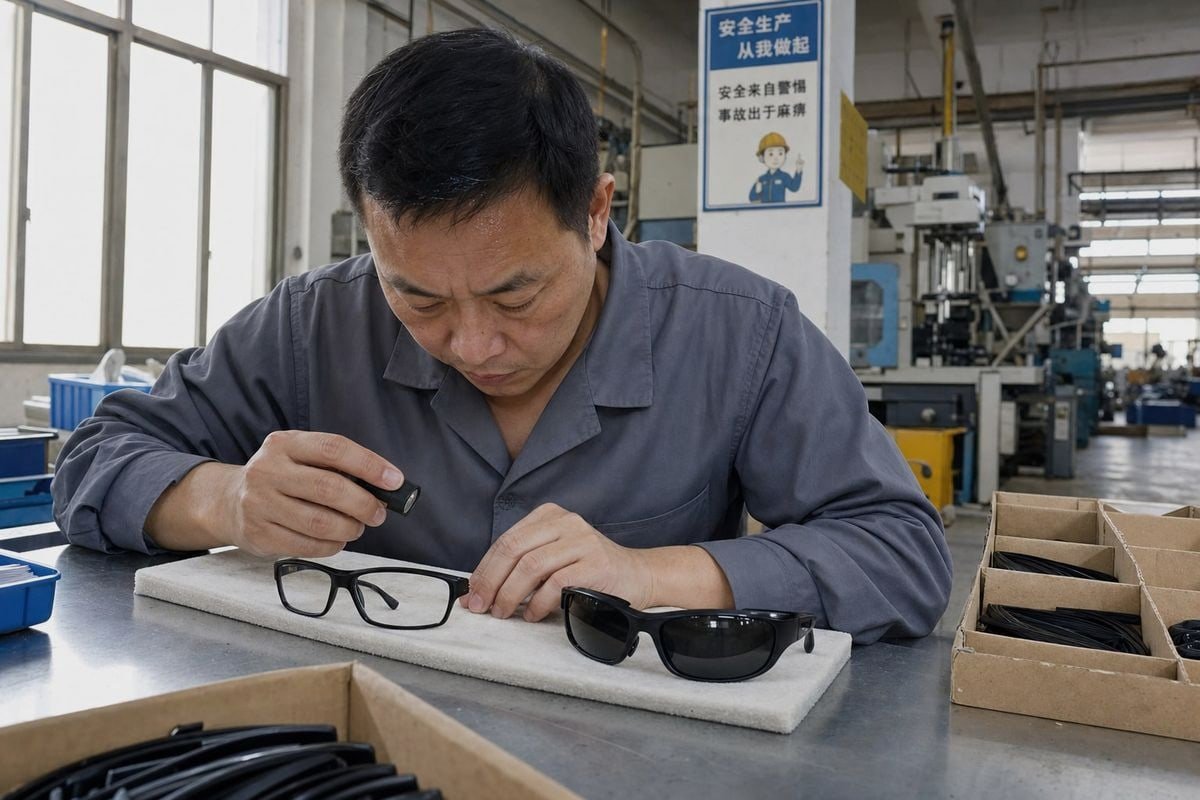
多くのバイヤーは、子供用の光学フレームとサングラスは交換可能な製品だと考えています。台州にある当社の生産ラインでは、その思い込みが実際の調達ミスを引き起こし、返品、小売業者の失望、安全に関する苦情が急速に発生します。その解決策は、これら2つの製品がどのように異なるエンジニアリングがされているかを理解することから始まります。.
子供用光学フレームは、より深いリム溝と正確な小児用ブリッジフィットを使用して、終日の屋内着用で処方レンズを安定した位置に保持するように設計されています。子供用サングラスは、UV400保護、ラップアラウンドカバレッジ、屋外での衝撃耐久性を優先し、前面、側面、上部からの光を遮断します。.
どちらの製品も小さな顔にフィットします。どちらも活発な子供に耐える必要があります。しかし、それぞれの背後にある設計ロジックは異なります。子供用アイウェアを調達する上で、これらの違いが最も重要となる4つの領域についてご説明します。.
子供用メガネとサングラスでは、素材と柔軟性の要件はどのように異なりますか?
昨年、あるヨーロッパのバイヤーが、当社のチームに光学用ラインとビーチサングラスラインの両方に同じTR90配合の見積もりを依頼しました。当社のエンジニアは、私が説明するように、正当な理由から反対しました。.
子供用光学フレームには、光学中心をずらさずに曲がるTR90メモリープラスチックまたはTPEEが必要で、レンズを一日中ずらさずに固定します。子供用サングラスは、レンズの優先順位が屋外での光学中心の安定性ではなく、色合いの均一性であるため、より柔らかく、よりゴムのような柔軟なブレンドを使用できます。.
主な違いは、フレームが曲がったときにレンズに何が起こるかという1つの質問に集約されます。処方箋を扱う光学フレームの場合、わずかなひねりでも光学中心が子供の瞳孔からずれる可能性があります。それは視力矯正を低下させます。したがって、光学フレームは、ストレス下で曲がっても常に元の正確な形状に戻る素材が必要です。これが理由です TR90メモリープラスチック 1 子供用光学フレームを支配しています。軽量で、通常の用途では壊れにくく、成形された形状にスナップバックします。.
サングラスにはより多くの自由度があります。非処方箋の着色レンズは、1ミリメートル左または右に配置されていても同じように機能します。そのため、より柔らかく、よりグリップ力のあるコンパウンドを使用できます。当社のカタログでは、多くのサングラススタイルでTR90フロントとTPEEテンプルを組み合わせています。TPEEは柔らかくゴムのような感触を提供し、汗をかく屋外での遊び中に快適さを保ち、子供が走るときにグリップ力を高めます。.
製品タイプと年齢別の素材選択
| 要因 | 子供用光学フレーム | 子供用サングラス |
|---|---|---|
| 主な素材 | TR90メモリープラスチック | TR90、TPEE、柔軟なプラスチック |
| 曲げ特性 | 正確な形状に戻る必要があります | より柔らかい柔軟性が許容されます |
| 幼児向けオプション | フルシリコンまたはTPEE、ソフトコンタクト | フルソフトTPEE、ストラップ付きが多い |
| 年長の子供たち | TR90、大人っぽい見た目のための柔軟な金属 | TR90、ファッションスタイル用アセテート |
| 皮膚への接触 | 低刺激性のフレーム素材が不可欠 | 低刺激性、耐汗性 |
バイヤーからのよくある反論の1つは、アセテートはより高級に見えるので、どこにでも使用すべきではないかということです。トレードオフは現実です。アセテートとバイオアセテートは写真写りが良いですが、パフォーマンス重視のデザインよりも硬いです。年長の子供を対象としたファッションサングラスラインの場合、アセテートは機能します。幼児向けの日常的な処方フレームの場合、柔軟性と低刺激性のフレーム素材が外観よりも優先されなければなりません。私たちはこれをクライアントに次のように提示します 年齢と使用状況の決定, 、単一素材のルールではありません。.
子供用光学フレームとサングラスを調達する際に確認すべき安全基準は何ですか?
私が新しいクライアントと最も頻繁に比較検討するトレードオフは、スピードとコンプライアンスです。バイヤーは2週間でサンプルを求めていますが、仕向地市場は文書化されたテストを求めています。15年間で20カ国以上に輸出してきた経験から、後者をスキップしてうまくいったことは一度もありません。.
光学フレームについては、フレーム素材の安全性、金属部品のニッケル放出制限、耐衝撃性レンズの適合性を確認してください。サングラスについては、さらにUV400保護認証、レンズカテゴリー表示、レンズ保持試験を要求してください。どちらも子供用製品については、小部品および化学物質の安全性コンプライアンスが必要です。.
安全文書は、光学フレームとサングラスが紙の上で最も大きく異なる点です。サングラスは、ほとんどの市場で太陽放射に対する個人用保護具として規制されています。これは、レンズ自体がコンプライアンスの負担を負うことを意味します。UV透過率、色合いカテゴリ、屈折品質がすべてテストされます。対照的に、光学フレームは、ほとんどのB2B取引では処方箋レンズなしで出荷されます。処方箋レンズは、検眼士によって現地で取り付けられます。したがって、フレームの素材の安全性と機械的耐久性がコンプライアンスの重みを負います。.
バイヤー向けの実際的なコンプライアンスチェックリスト
- まず仕向地市場を確認してください。EUのバイヤーは、CEマーク付きのサングラスが必要です。 EN ISO 12312-1 2; 米国のバイヤーは、レンズのFDAドロップボール要件を確認する必要があります。業務グレードの耐衝撃保護を希望するバイヤーは、 ANSI Z87.1安全基準 3, を参照する場合があります。.
- ただし、これは子供のファッション要件ではなく、作業着のベンチマークです。 フタル酸エステル 4, 子供向け製品の化学物質安全性レポートを要求してください。.
- 、重金属、および金属製のヒンジネジまたは装飾部品のニッケル放出。 UV400保護 5 サングラスについては、要求してください。.
- 生産バッチごとのテストレポート。一度だけの証明書ではありません。サプライヤーがレンズベンダーを静かに変更した場合、UV性能が低下する可能性があります。.
- 光学フレームについては、ヒンジサイクルテストを確認してください。処方箋メガネは毎日何度も扱われるため、柔軟なスプリングヒンジは数千回の開閉サイクルに耐える必要があります。 特に幼児向けの年齢層については、小部品および鋭利なエッジの安全性を確認してください。 幼児用アイウェア.
は、一部の法域では玩具や育児用品に近い扱いを受けます。.
子供用メガネフレームとサングラスでは、レンズの選択肢と認証はどのように異なりますか?
A Japanese client once sent us a competitor's kids' sunglasses to analyze. The lenses were dark, glossy, and completely uncertified. Our lab check showed weak UV filtering — exactly the failure that damages a children's brand overnight.
光学フレームには処方レンズとの互換性が必要です:さまざまなレンズ厚に対応する深いリム溝、反射防止コーティング、安定した光学中心、そして近視管理レンズへの対応がますます求められています。サングラスには、認定されたUV400保護、耐衝撃性ポリカーボネート、定義された色合いカテゴリ、そしてまぶしさ軽減のためのオプションの偏光レンズ技術が必要です。.
The lens is where the two product categories truly become different products. An optical frame is a lens carrier. Its rim groove must be cut deep enough to secure prescription lenses of very different thicknesses — a mild prescription edge is thin, while a strong one can be several millimeters thick. Sunglasses frames, by contrast, are optimized for uniform, thin non-prescription lenses, so their grooves and bevels are simpler.
Coating priorities flip between categories too. Indoors, an optical lens benefits from anti-reflective and blue-light coatings for screen time and classroom clarity. Outdoors, a sunglasses lens is judged on UV400 protection, tint category, and glare control. 偏光レンズ技術 6 is a genuine upgrade for water, snow, and road glare — we offer it as a standard OEM option — but it is an addition to UV protection, never a substitute for it.
Lens Specification Comparison
| Lens Attribute | 子供用光学フレーム | 子供用サングラス |
|---|---|---|
| レンズタイプ | Prescription, fitted locally | Non-prescription tinted, factory-fitted |
| Core certification | Lens supplied per optician standards | UV400 protection, tint category label |
| Key material | Impact-resistant polycarbonate or Trivex | 耐衝撃性ポリカーボネート |
| Coatings | Anti-reflective, blue-light, hard coat | Mirror, polarized, hard coat |
| Positioning tolerance | Tight — optical center on pupil | Looser — uniform tint forgives shift |
| Emerging trend | Myopia management lens compatibility | High-energy visible light filtering |
One trend deserves a buyer's attention: modern optical frames are increasingly designed around 近視管理レンズ 7. These lenses only work when their optical zones sit precisely in front of the pupil, so frame tolerances must be tighter than ever. Some emerging designs even integrate passive ambient light sensors to track a child's outdoor time as part of myopia prevention. That is a level of engineering no fashion sunglasses frame needs — and it explains why we hold our optical tooling to stricter dimensional checks than our sunglasses tooling.
同じOEM/ODMメーカーから子供用メガネフレームとサングラスの両方を調達できますか?
A question I fielded from an Australian brand founder last quarter: could one factory realistically handle her prescription-ready line and her beach sunglasses line? My honest answer shaped this whole section.
はい — メーカーが両方のカテゴリーで本物の専門知識を持っている場合です。小児科に特化したツール、TR90およびTPEE素材の能力、UV400認定レンズのサプライチェーン、そして単一の品質管理システムの下でのカスタムカラー、ロゴ、レンズ、小売対応パッケージをカバーする完全なOEM/ODMサービスを探してください。.
Sourcing both categories from one partner has real advantages: unified quality control, consolidated shipping, consistent branding across your range, and one relationship to manage. But it only works when the factory truly understands both products. Many suppliers are sunglasses factories that bolt on optical frames as an afterthought — or the reverse. The gaps show up in details like pediatric bridge fit, hinge durability, and lens sourcing.
What to Verify Before Committing
Children's faces have lower nose bridges, fuller cheeks, and smaller ears than adults. A capable kids' specialist designs around that anatomy in both categories — and knows, for example, that adjustable silicone nose pads suit some school-age optical frames but can be problematic for younger children whose nose bridges are still developing. Soft-contact molded bridges often fit toddlers better. Ask your prospective supplier how they handle this, and listen for a specific answer, not a generic one.
Then check the practical capabilities:
- Existing style library. A deep catalog lets you launch without heavy mold investment. At our factory we maintain roughly 800 existing styles across both categories, which lets new brands test the market with far lower risk than opening custom tooling on day one.
- Dual material competence. Confirm the factory molds both TR90 memory plastic for optical stability and softer TPEE for sunglasses comfort, and can combine them — such as TR90 fronts with TPEE temples.
- Hardware standards. Flexible spring hinges should be standard on optical frames for constant daily handling; sunglasses hinges can be simpler but still need corrosion resistance for sweat and salt air.
- Lens supply chain. Ask for batch-level UV400 test reports and polarized lens options on the sunglasses side, and prescription lens compatibility specs on the optical side.
- Finishing and packaging. Retail-ready presentation — custom colors, logos, cases, and cloths — should come from the same 5S-managed workshop, not a third-party subcontractor you never audit.
One caution: a single frame rarely does both jobs well. A wraparound sunglasses front with a strong base curve cannot hold most prescriptions without distortion, and a flat optical front leaves side gaps that let light leak in outdoors. The smarter play is one manufacturing partner running two purpose-built product lines.
結論
Treating kids' optical frames and sunglasses as one product invites returns and compliance failures. Sourcing them as two engineered categories — from a partner fluent in both — protects children and your brand.
脚注
1. Wikipedia background on thermoplastics clarifies the shape-memory material properties described. ↩︎
2. Authoritative Wikipedia section detailing
 English
  Español de México
  Deutsch
  Français
  日本語
日本語  العربية
  Português do Brasil