乳幼児用と大きめの子供用サングラスの構造設計の違いは何ですか?
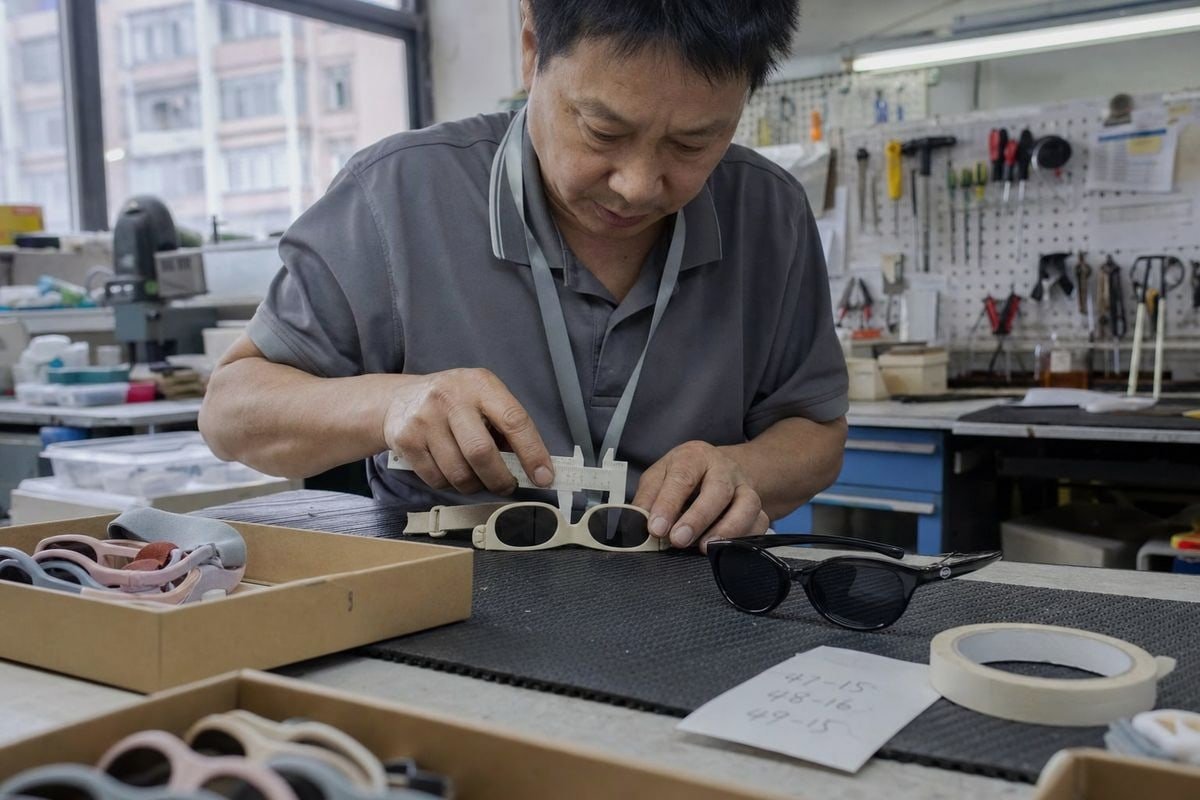
乳幼児用と大きめの子供用サングラスの構造設計の違いは、当社の台州工場を訪れる多くのバイヤーを混乱させます。 ISO 1. 。それらは、1つの金型ファミリーがすべての年齢層をカバーすると想定しています。そうではありません。間違えると、返品が積み重なり、フレームが小さな顔から滑り落ち、ブランドが非難されます。当社の生産ラインでは、年齢別の形状、素材、保持システムでこれを解決しています。.
乳幼児用サングラスは、非常に柔軟なTPEEまたはシリコンフレーム、平らで低いブリッジ、ヒンジのないワンピース構造、および保持のための調節可能なヘッドストラップを使用しています。大きめの子供用サングラスは、構造化されたTR90フレーム、はっきりしたサドルブリッジ、スプリングヒンジ、標準的なテンプルアームに移行します。これは、より発達した顔のために作られた耐久性のある日常用アイウェアです。.
これらは化粧的な違いではありません。それらは子供の顔の成長方法から来ています。各年齢層に適切な製品を指定できるように、構造要素ごとに順を追って説明します。.
乳幼児用とビッグキッズ用サングラスでは、サイズとフィットの要件はどのように異なりますか?
オーストラリアのバイヤーは、かつて私たちに、人気の大きめの子供用フレームをベビーライン用に20%縮小するように依頼しました。当社のエンジニアは反対し、そのスケーリングアプローチが失敗する理由を説明したいと思います。.
乳幼児用サングラスは、未発達な鼻梁に対応するため、狭いブリッジ、短いテンプル、前方に重心を置いたバランス、そして平らなノーズフィットが必要です。ビッグキッズ用サングラスは、顔の比率(瞳孔間距離や耳の位置)が5歳から15歳の間で劇的に変化するため、より大きなレンズ幅、長いテンプル、そして明確なブリッジ形状を使用しています。.
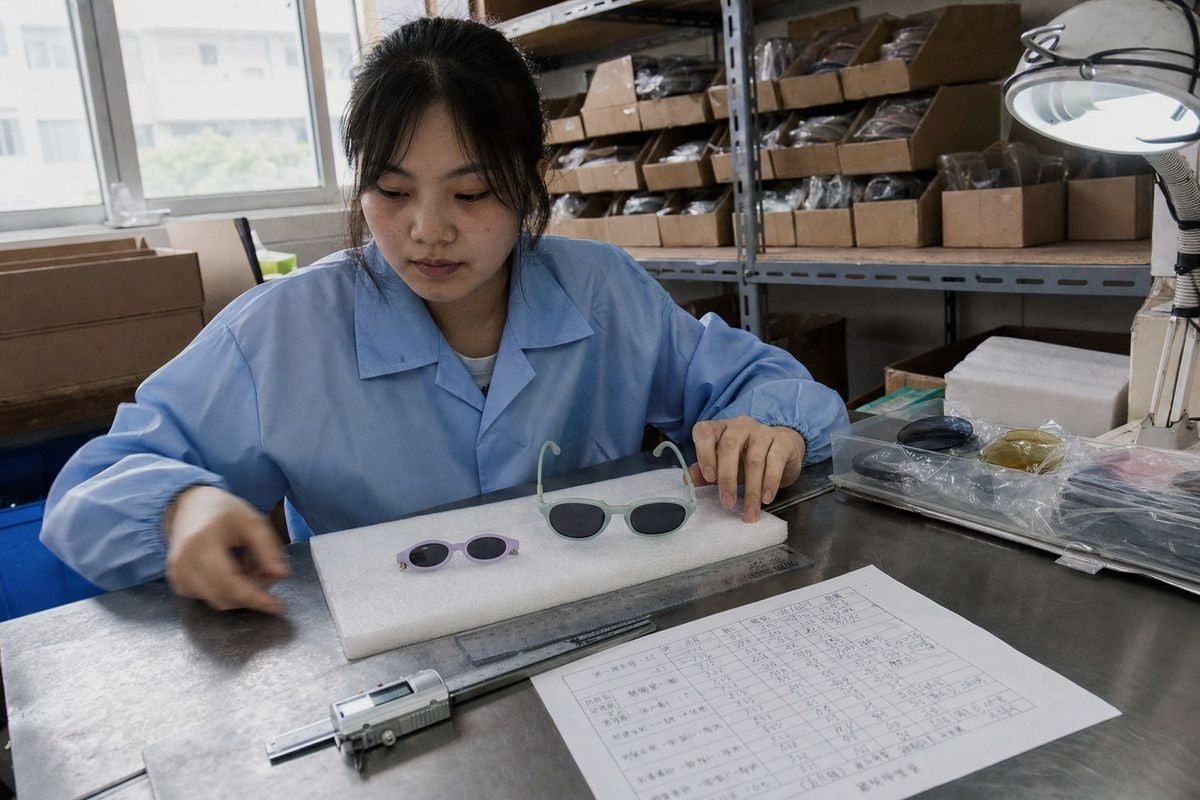
子供用サングラスは、縮小された大人用サングラスではなく、 乳幼児用サングラスは、縮小された大きめの子供用サングラスではありません。. 。各年齢層は異なるフィットの問題を解決します。赤ちゃんの頭蓋骨はより丸いです。鼻梁はほとんど発達していません。耳は目の相対的な位置が異なります。したがって、顔や耳に「引っ掛ける」ことでフィットするフレーム—大人用アイウェアの仕組み—は、ほとんど掴むものがありません。.
主要な顔の成長要因
子供の間で顔のプロポーションは大幅に変化します。. 眼間距離 2 広がります。鼻は高さと定義を獲得します。頭囲は最初の2年間で急速に成長し、その後はゆっくりと成長します。そのため、乳幼児用フレームは保持力と柔らかさを中心に構築し、大きめの子供用フレームは解剖学的なサポートを中心に構築しています。.
ここに、両方のカテゴリにおけるコアサイジングパラメータの比較を示します。
| フィットパラメータ | 乳幼児 (0〜3歳) | 大きめの子供 (6〜12歳) |
|---|---|---|
| 鼻梁サポート | フラットで幅広く、ロープロファイルのサドル | 定義されたサドルまたはキーホールブリッジ |
| レンズ幅 | 通常38〜45 mm | 通常46〜52 mm |
| テンプル長 | 非常に短く、ストラップに置き換えられることが多い | 耳掛け付きの標準的な長さ |
| フレーム重量ターゲット | できるだけ軽く、約20 g未満 | 軽量だが構造化されている |
| バランスポイント | 後ろに滑るのを防ぐために前方に重み付けされている | 中立、耳で支えられている |
年齢だけでは不十分な理由
In our experience exporting to 20+ countries, we always remind buyers that age is only a starting point. Head shape matters as much as age. A four-year-old with a low nasal bridge development curve may still need an infant-style flat bridge. That is why our catalog of roughly 800 existing styles includes overlapping transition sizes, so brands can cover edge cases without new mold investment.
乳幼児と年長児では、どのようなテンプルとストラップのデザインが最適ですか?
去年の春のQCラウンド中に、私たちは幼児のテスターがストラップのないサンプルを10秒以内に顔から外すのを見ました。その瞬間は、保持設計が2つのカテゴリ間の最大の差別化要因である理由を要約しています。.
乳幼児には、標準的なテンプルが小さな頭にフィットしないため、調節可能なネオプレンストラップ、伸縮性のあるヘッドバンド、またはラップアラウンドソフトアームが必要です。年長の子供は、耳掛けと摩擦を備えた従来のテンプルアームに頼り、スプリングヒンジやスポーツストラップは激しい活動でのみ追加します。.

保持力は、乳幼児用アイウェアがファッションアイウェアよりも保護具のように機能する場所です。赤ちゃんにメガネをかけ続けるように言うことはできません。フレームは、這ったり、頭を振ったり、意図的に引っ張ったりしても、所定の位置にとどまる必要があります。定義された耳の隆起がなく、頭がほぼ丸いため、標準的なテンプルはここで失敗します。.
年齢段階別の保持オプション
通常、ブランドクライアントにはこの進行をお勧めします。
- 0–2 years: 調節可能なネオプレンストラップまたはフルエラスティックヘッドバンド。ストラップはテンプルを完全に置き換えたり、非常に短いスタブにクリップしたりします。簡単に外れるものはないため、窒息のリスクがありません。.
- 2–4 years: TPEE製のラップアラウンドフレキシブルテンプル。多くの場合、取り外し可能なストラップがオプションで付属しています。これは移行ゾーンです。.
- 5–8 years: 柔らかい側頭骨全体に圧力を分散する、湾曲したパドル状の先端を持つ標準的なテンプル。.
- 8–12 years: 従来のテンプル構造。激しい遊び中の柔軟性のためのスプリングヒンジや、サイクリングやビーチでの使用のためのスポーツストラップがよく使用されます。.
Pressure distribution matters more than grip strength
A common mistake is over-tightening infant retention to compensate for poor geometry. Our engineers design wider temple contact surfaces instead. Distributed pressure keeps the frame secure without leaving marks on soft skin. For big kids, the ear does most of the work, so the temple tip can be slimmer and lighter, which improves comfort during longer wear periods.
We also make sure straps are washable and made from BPAフリー 3 non-toxic materials, because infant accessories get chewed, drooled on, and dropped in sand constantly.
子供の成長に伴い、レンズの形状やフレーム構造はなぜ変化するのですか?
One trade-off we weigh constantly on our line: how much structure can we add before we sacrifice the softness an infant frame demands? The answer changes at every age band, and lens shape follows the same logic.
乳幼児用サングラスは、ぴったりフィットするラップアラウンドレンズと、よりフラットなベースカーブ、ヒンジのないワンピースフレームを特徴とし、最大限のUVカットと小さな部品をゼロにしています。大きめの子供用サングラスは、TR90フレーム、スプリングヒンジ、そして偏光オプション付きのスポーティまたはファッションレンズ形状を採用しています。.

For infants, the lens must do more work because behavior cannot be trusted. A baby will not angle their head away from glare. So we spec a wrap-around frame style with wide lenses that block UV light entering from the sides. Full UV400 4 protection is non-negotiable at every age — that never changes. What changes is the structure delivering it.
Material and hardware evolution
Infant frames from our workshop use TPEE flexible frames that can twist 180 degrees and spring back. There are no screws to loosen and no small detachable parts. Hinge-free, one-piece construction eliminates pinch points and choking hazards. The frame edges are rounded and the material is soft enough to be atraumatic if a child falls face-first.
Big kids' frames graduate to TR90 5 — still flexible and light, but more structured. We often pair TR90 fronts with TPEE temples to get rigidity where it helps and flex where it protects. Spring hinges appear at this stage because older kids yank glasses off one-handed, and the hinge must survive thousands of those cycles.
| Structural Element | Infant Design | Big Kids' Design |
|---|---|---|
| フレーム素材 | TPEE, silicone, ultra-flexible | TR90, nylon, structured flex |
| ヒンジ | None — one-piece construction | Spring hinges or reinforced barrels |
| Lens shape | Wraparound, wide, flatter base curve | Sport wrap or fashion shapes |
| レンズ素材 | ポリカーボネート 6 が飛び出すのを見たことがあります。そのため、当社は製造するすべてのシリコンスタイルのデザインでレンズ溝を強化しています。 | Polycarbonate, often with coatings |
| Lens features | UV400, chew-resistant | UV400, polarized lens technology, scratch resistance |
| 小さな部品 | Zero detachable components | Screws and hinges acceptable |
Why the base curve matters for infants
A subtle point most buyers miss: infant lenses often use a flatter base curve to reduce peripheral distortion. Early binocular vision 7 and spatial tracking are still developing, and heavily curved lenses can distort the visual field. Big kids tolerate higher wrap curves, which is why sporty shield styles — like the mirrored single-lens designs we produce — work well from around age six upward.
Impact resistance standards apply across both categories. We fit polycarbonate shatterproof lenses on everything, because a lens that survives a chew test must also survive a playground.
乳幼児用と大きめの子供用サングラスの両方を開発するのに最適なサプライヤーをどのように選べますか?
A procurement manager from Japan once told me she had cycled through three suppliers before finding one that understood infant-specific engineering rather than just small frames. Her checklist shaped how I now advise new buyers.
柔軟な素材に関する実績のある専門知識、年齢別の既存の金型、文書化された耐衝撃性基準のテスト、およびストラップ、レンズ、パッケージの完全なOEM/ODMサポートを備えた工場を選択してください。トレーダーや、大人のデザインを子供向けにスケールダウンするだけの一般的なサングラス工場は避けてください。.
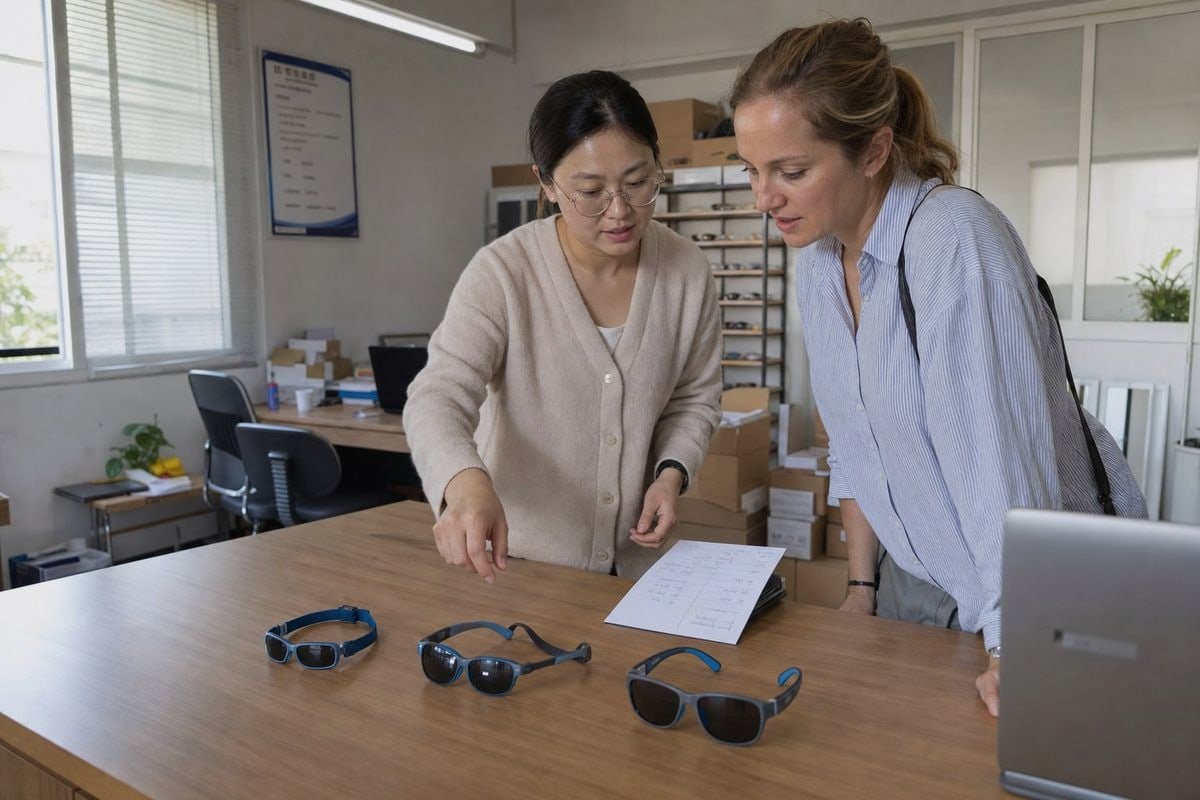
Developing both categories under one supplier saves cost and keeps quality consistent — but only if that supplier genuinely masters both architectures. After fifteen years running our eyewear factory in Taizhou with around 120 workers, I can tell you the gap between "makes kids' sunglasses" and "engineers infant eyewear" is wide.
実用的なサプライヤー評価チェックリスト
| 評価エリア | 確認内容 | なぜ重要なのか |
|---|---|---|
| 素材の能力 | In-house TPEE and TR90 molding, BPA-free non-toxic materials documentation | Infant safety depends on the raw material, not the marketing |
| Existing mold library | Age-banded styles across 0–3 and 6–12 ranges | Launching from existing molds cuts risk and avoids heavy tooling cost |
| Retention hardware | Adjustable neoprene straps, strap clips, wrap temples in stock | Retention is the hardest part to develop from scratch |
| Lens supply chain | UV400 verification, polarized lens technology options, polycarbonate stock | Lens claims must be testable, not assumed |
| 脆い商品プラスチック | 5S workshop management, incoming and final inspection records | Consistency across reorders protects your brand |
| Customization depth | カスタムカラー、ロゴ、レンズ、パッケージ、アクセサリー | Retail-ready presentation without a second vendor |
Test the supplier before the market tests you
I always suggest three steps. First, request samples from both categories and flex-test them yourself — an infant frame should twist freely; a big-kid frame should flex and recover. Second, ask how they handle the transition sizes between three and six years, because weak suppliers have nothing there. Third, start with a low-MOQ order from existing styles. With around 800 designs already tooled, a new brand can validate both infant and big-kid lines in one order, then invest in custom molds once sell-through data comes in. That staged approach is how most of our long-term partners started.
結論
Infant sunglasses are protective gear for undeveloped anatomy; big kids' sunglasses are durable everyday eyewear. Spec each correctly — or partner with a factory that already has. We're ready when you are.
脚注
1. Authoritative standards body relevant to impact resistance testing claims for children’s eyewear ↩︎
2. Defines the anatomical measurement referenced for children’s facial proportion changes ↩︎
3. FDA source on BPA safety relevant to non-toxic materials used in infant eyewear ↩︎
4. Background reference on sunglasses UV protection standards and terminology used throughout article ↩︎
5. Background on the thermoplastic material family that includes TR90 frame material ↩︎
6. Explains the shatterproof lens material specified for both infant and kids’ sunglasses ↩︎
7. Authoritative NIH/StatPearls clinical overview of binocular vision and eye coordination. ↩︎

 English
  Español de México
  Deutsch
  Français
  日本語
日本語  العربية
  Português do Brasil