子供用サングラスのフタル酸エステル検査について、規制対象となる部品は?
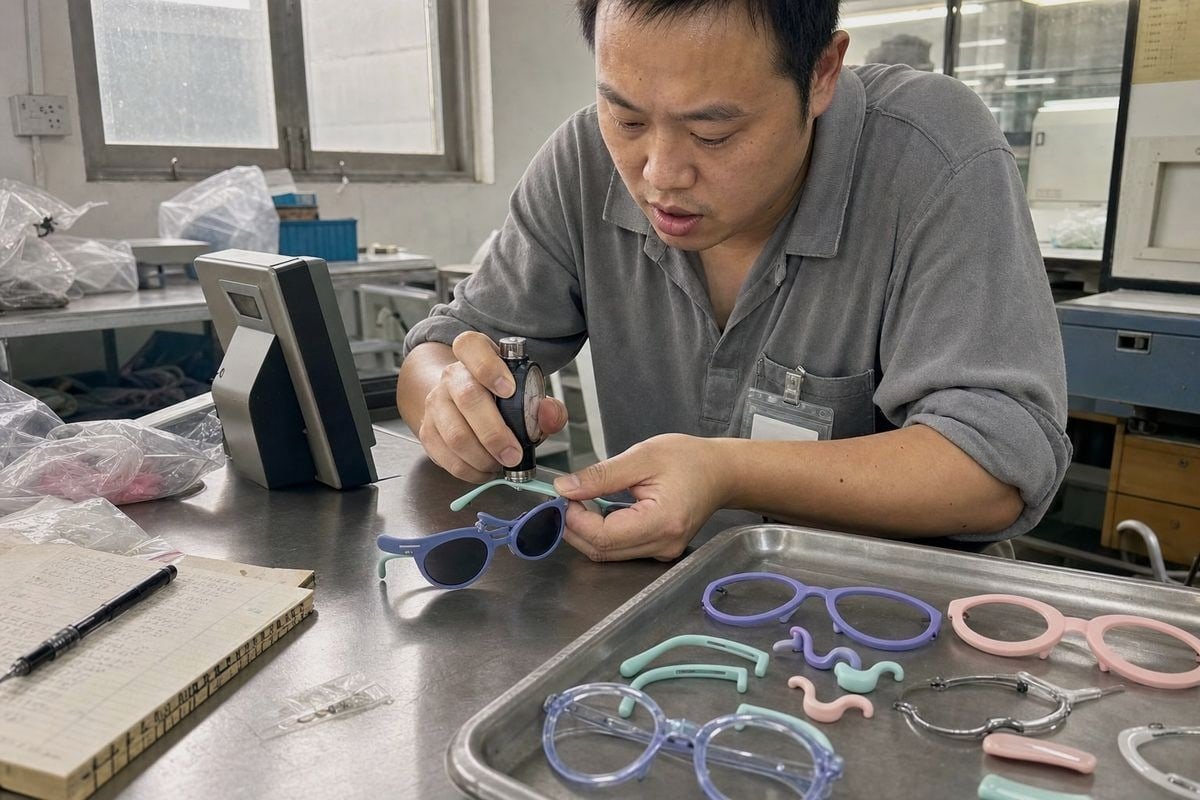
子供用サングラスのフタル酸エステル検査は、当社の台州工場を訪れる多くのバイヤーを混乱させています。1回の検査不合格レポートは、出荷全体をブロックし、キャッシュフローを凍結させ、若いブランドの評判を一夜にして傷つける可能性があります。.
子供用サングラスはCPSIAの下で子供向け製品に分類されるため、フタル酸エステル検査が必要です。柔らかくアクセスしやすい可塑化された部品には、規制されたフタル酸エステルが含まれている可能性があります。規制対象部品には、ノーズパッド、テンプルチップ、柔軟なフレーム部分、ストラップ、ソフトタッチコーティングが含まれます。レンズや硬質部品はデフォルトでは含まれません。.
「すべてのサングラスにフタル酸エステル検査が必要」というルールではありません。法律は特定の部品と特定の化学物質を対象としています。15年間、輸出用の子供用アイウェアを製造してきた経験に基づいて、これがどのように機能するかを正確に説明します。.
子供用サングラスのサプライヤーがフタル酸エステル類のコンプライアンス基準を満たしているかどうかをどうやって知るか?
オーストラリアのバイヤーはかつて、「フタル酸エステル証明書」を1枚のステッカーのように求めてきました。当社の輸出経験では、実際のコンプライアンスは、1枚の紙ではなく、文書化されたシステムです。.
準拠したサプライヤーは、CPSC認定ラボからの最新の第三者ラボテストレポートを提供し、出荷ごとに有効な児童製品証明書を発行し、コンポーネントごとの完全な材料組成を開示し、材料、色、またはサブサプライヤーが変更された場合に再テストを行います。レポートの日付、ラボの認定、およびテストされた部品リストを確認してください。.

新しいブランド顧客をオンボーディングする際には、価格について話す前に、コンプライアンスファイルを確認していただきます。その注文は重要です。追跡可能な検査データのない安価なフレームは、あなたが購入する最も高価なフレームになります。.
要求すべき書類
購入注文を行う前に、すべての輸入業者に推奨するチェックリストを以下に示します。
| 文書 | それが証明するもの | 警告サイン |
|---|---|---|
| 第三者検査レポート | 部品ごとの実際のフタル酸エステルレベル | 1年以上前のレポート、間違った製品写真、部品リストの欠落 |
| 、またはCPCは、中心となる文書です。米国法では、輸入者または国内製造者が発行する必要がありますが、CPSC認定検査機関からの合格テスト結果に基づいている必要があります。サプライヤーの自己申告に基づいて有効なCPCを発行することはできません。 | CPSIAコンプライアンスの法的宣言 | SKUまたは出荷に紐付いていない一般的なCPC |
| 材料明細書(BOM) | どの部品にどの材料が含まれているか | 樹脂名のない「プラスチック」などの曖昧な用語 |
| 材料宣言 | 樹脂サプライヤーが規制されたフタル酸エステルが含まれていないことを確認 | 実際の樹脂バッチへのトレーサビリティがない |
| 変更管理記録 | 材料変更後の再検査 | サプライヤーが最後に再検査した時期を説明できない |
実際の工場とトレーダーを分ける質問
サプライヤーに3つのことを尋ねてください。第一に、どの特定の部品が検査され、ラボの部品内訳を示すことができますか?第二に、 eight restricted phthalates 1 がスクリーニングされましたか?第三に、マスターバッチやテンプルチップベンダーを切り替えた場合に何が起こりますか?当社の約120人の従業員がいる5S管理ワークショップのような、独自の射出ラインを管理している工場は、詳細に答えることができます。トレーダーは通常できません。.
また、バイヤーに抜き打ち検査を奨励しています。出荷されたバッチから小売サンプルを年に1〜2回、独自のラボに送ってください。それは安価な保険であり、優れたサプライヤーはプロセスの規律を確認できるため、それを歓迎します。.
子供用サングラスのどの部品にフタル酸エステルが含まれている可能性が最も高いですか?
昨年のQCレビュー中に、エンジニアはクライアントがフレームに接着したい装飾的なゴム製チャームを指摘しました。ベースフレームはクリーンなTR90でしたが、その小さな柔らかいチャームが実際の化学的リスクでした。.
最もリスクの高い部分は、柔らかく、柔軟性があり、アクセスしやすい可塑化されたコンポーネントです:ノーズパッド、テンプルチップ、ゴム引きグリップ、伸縮性のあるストラップまたはコード、PVC装飾チャーム、ソフトタッチ表面コーティングなどです。硬質ポリカーボネートレンズと硬質バージン樹脂フレームにはフタル酸エステルが含まれることはめったにないため、テストは柔らかい部分に焦点を当てています。.
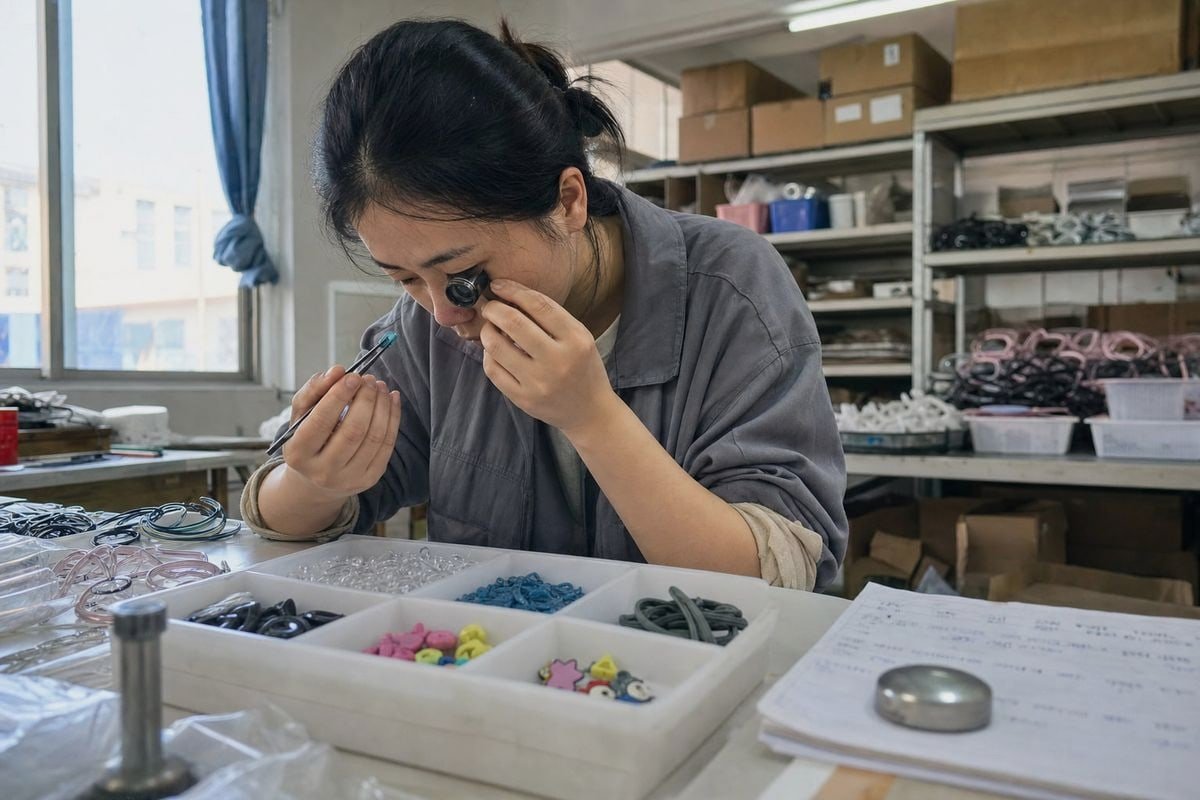
フタル酸エステルは PVC可塑剤 2. です。それらの仕事は、硬質プラスチックを柔らかく曲がりやすくすることです。したがって、子供用サングラスの危険マップは、1つの簡単なルールに従います。部品が柔らかく柔軟であるほど、可塑剤が含まれている可能性が高くなります。そして、子供たちはアイウェアを口に入れたり、噛んだり、汗をかいたりするため、規制当局はこれらのアクセス可能な部品を優先事項として扱います。.
部品リスクマップ
| コンポーネント | 一般的な材料 | フタル酸エステルリスク | 理由 |
|---|---|---|---|
| ノーズパッド | ソフトPVC、シリコン、TPE | 高(PVCの場合) | 最も柔らかい部分、肌に触れる、しばしば口に入れる |
| テンプルチップ/イヤグリップ | ソフトPVC、TPEE、ゴム | 高(PVCの場合) | 設計上柔軟、毎日汗に接触 |
| ストラップとコード | Coated textile, PVC tubing | 高い | PVC coatings frequently plasticized |
| Decorative charms / prints | PVC, plastisol inks | 高い | Plastisol inks are classic phthalate carriers |
| Soft-touch coatings | Rubberized paint | 中程度 | Some coatings use phthalates as carriers |
| フレームフロント | TR90, PC, acetate | 低 | Rigid resins need no softeners |
| レンズ | Polycarbonate, CR-39 | 非常に低い | Hard optical materials, no plasticizer |
Hidden Risks Buyers Miss
Two traps deserve special attention. First, recycled or "eco" plastics can carry legacy phthalates 3 from old, unregulated feedstock, so recycled-content frames need more frequent batch testing than virgin resin. Second, a phthalate-free base frame can still fail if a matte "soft-feel" coating is sprayed on top, because some coating formulas use phthalates to achieve that premium grip. On our production line, we control both the resin and the surface treatment for exactly this reason. Sweat matters too: a child's acidic perspiration can accelerate chemical migration from temple tips into skin, which is why we default to inherently soft materials instead of plasticized PVC.
子供用サングラスを私の市場に輸入する際に確認すべき規制は何ですか?
Shipping to twenty-plus countries has taught our team one lesson the hard way: the same frame can be legal in one port and detained in the next. Chemical rules do not travel with the container.
米国については、CPSIAフタル酸エステル制限、CPSC安全要件、鉛制限、およびCPC文書を確認してください。欧州連合については、フタル酸エステルに関するREACH規則の制限、および玩具に類似する場合は玩具安全指令を確認してください。オーストラリア、日本、カナダはそれぞれ独自のサングラス基準および化学物質規則を適用しています。.
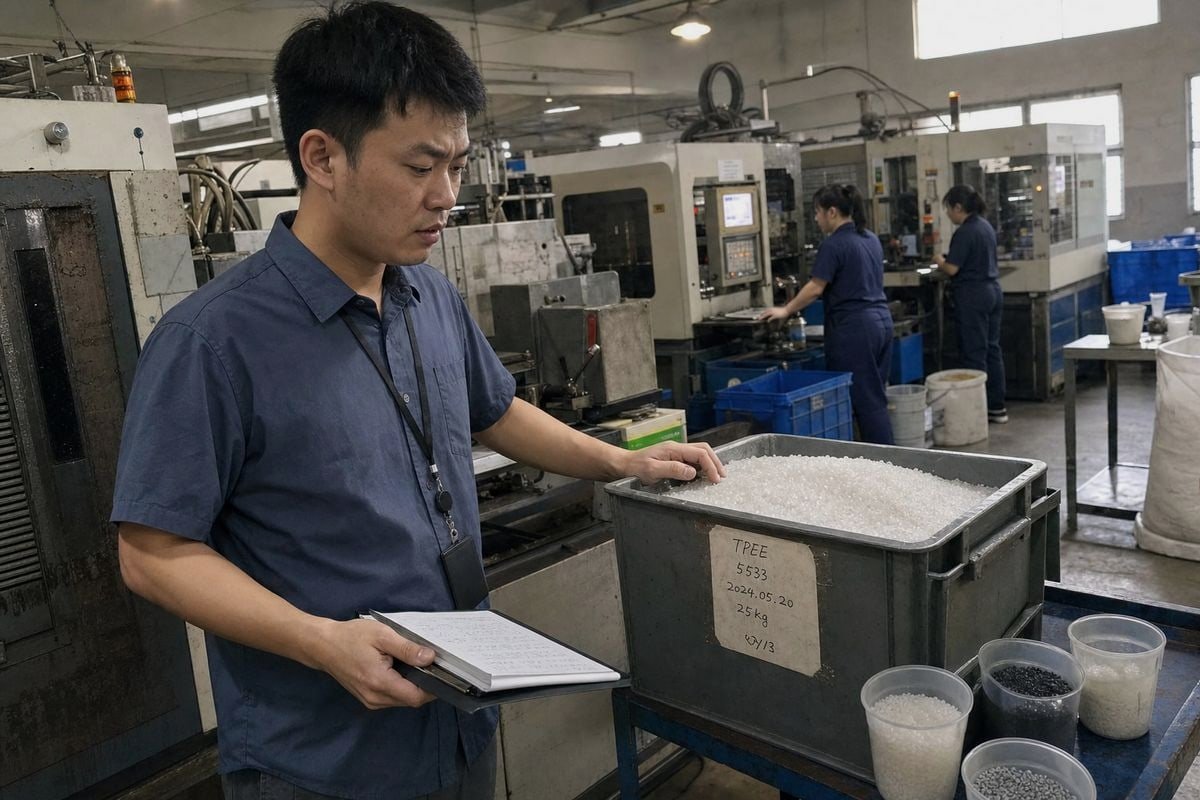
Here is a practical, market-by-market view we share with new importers before their first order:
| 市場 | Key Chemical Rule | Phthalate Limit | Key Documents |
|---|---|---|---|
| アメリカ合衆国 | CPSIA / 16 CFR Part 1307 | 0.1% for 8 phthalates in accessible plasticized parts | CPC, third-party lab reports, tracking labels |
| 欧州連合 | REACH regulation (Annex XVII) | 0.1% for DEHP 4, DBP, BBP, DIBP in most consumer articles | Test reports, technical file, DoC if toy-classified |
| オーストラリア / ニュージーランド | AS/NZS 1067 sunglasses standard + consumer law | Follows toy rules if toy-like | Lens category test, chemical reports on request |
| Canada | Phthalates Regulations (SOR/2016-188) | 0.1% in soft vinyl of toys/child care articles | Test reports, supplier declarations |
| 日本 | Food Sanitation Law analogies + ST toy standard if applicable | 0.1% in designated applications | ST mark testing if sold as toy |
The Eight Restricted Phthalates in the US
Current CPSC guidance 5 restricts DEHP, DBP, BBP, DINP, DIBP, DPENP, DHEXP, and DCHP at 0.1% (1,000 ppm) per accessible plasticized component. Older articles mention only six phthalates; that list is outdated. Make sure your lab quotes cover all eight.
Where ASTM F963 Fits
If your sunglasses are marketed as a toy — novelty shapes, play packaging, cartoon theming — ASTM F963 6 standards may apply on top of eyewear rules, adding mechanical and chemical migration limits similar to EN 71-3 in Europe. Positioning matters: "children's sunglasses with UV400 protection" and "dress-up toy glasses" trigger different compliance files. We always ask buyers how the product will be marketed before we quote testing, because that answer defines the entire regulatory scope.
TPEEやTR90のようなより安全な素材を選んでフタル酸エステルの問題を回避するにはどうすればよいですか?
The trade-off we weigh in every new development project is simple: soft PVC is cheap and easy to mold, but it drags a chemical liability into every batch. That is why our factory standardized on TPEE and TR90 years ago.
フレームフロントにはTR90(硬質で形状記憶性のある柔軟なナイロン)を、テンプルとチップにはTPEE(本質的に柔らかい熱可塑性エラストマー)をお選びください。どちらもポリマー構造によって柔軟性を実現しており、可塑剤としてPVCを添加していないため、テストによる管理ではなく、設計段階でフタル酸エステルのリスクを排除します。.
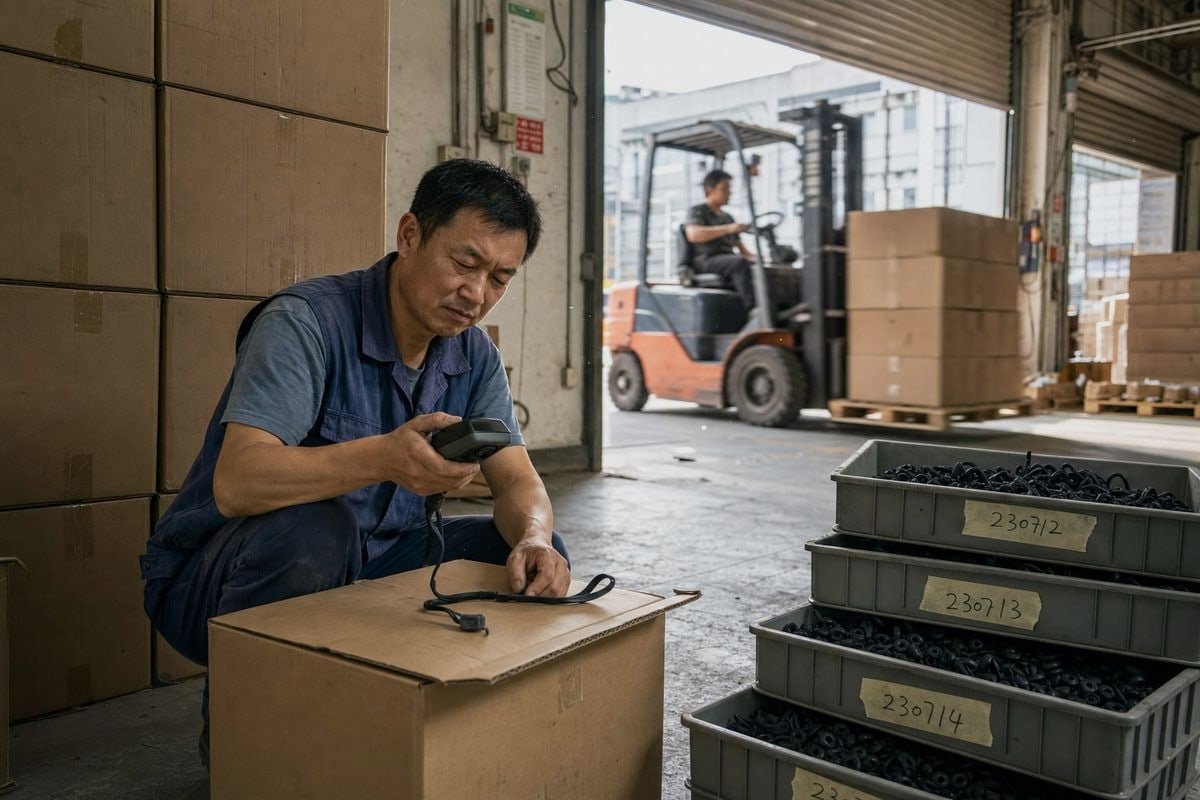
The smartest compliance strategy is not better testing. It is designing the risk out. When flexibility comes from the polymer chain itself, there is nothing to leach, no endocrine disruptors to worry about, and no batch-to-batch plasticizer variation to monitor.
Why TR90 and TPEE Work for Children's Eyewear
TR90 is a nylon-based memory material. It bends, twists, and springs back without breaking, which is exactly what an active six-year-old demands from a frame front. TPEE is a 熱可塑性エラストマー 7 that is soft and rubbery by nature. We pair them deliberately: TR90 frames with TPEE temples give a frame that survives being sat on, while the temples stay gentle on small ears. Neither material needs plasticizers, and both mold cleanly with consistent quality.
A Practical Material Decision Path
- Specify TR90 or polycarbonate for all rigid parts; never accept generic "plastic" on a BOM.
- Specify TPEE, silicone, or TPE for soft parts; explicitly ban plasticized PVC in your purchase contract.
- Question every coating. Ask whether soft-touch or matte finishes are phthalate-free, and get it in writing.
- Treat recycled content carefully. Require batch testing for legacy phthalates if you want an eco story.
- Still test the finished product. Colorants, inks, glues, and packaging inserts can introduce contamination even with clean base resins.
One more advantage matters for smaller brands. Because we maintain roughly 800 existing styles already built in these materials, a buyer can launch a phthalate-safe collection without investing in new molds — the material risk was engineered out before their project even started. We then layer on custom colors, logos, lens options, and retail-ready packaging so the compliance story and the brand story travel together.
結論
Kids' sunglasses need phthalates testing because they are children's products with soft, accessible plasticized parts. Target those components, verify supplier documentation, and design with TR90 and TPEE from day one.
脚注
1. CPSIA statute defines the restricted phthalates and testing requirements for children’s products. ↩︎
2. Explains the chemical function of phthalates as plasticizers used in PVC products. ↩︎
3. ECHA details REACH restrictions on phthalates found in recycled plastics. ↩︎
4. Background on DEHP, one of the eight restricted phthalates in children’s products. ↩︎
5. EPA overview of regulated phthalates and their associated safety limits. ↩︎
6. Official ASTM standard covering toy safety requirements referenced for toy-like eyewear. ↩︎
7. Background on the TPEE material class used to avoid added phthalate plasticizers. ↩︎
 English
  Español de México
  Deutsch
  Français
  日本語
日本語  العربية
  Português do Brasil