What REACH Tests Are Needed for Kids’ Sunglasses From China—And How to Specify Them in Contracts?
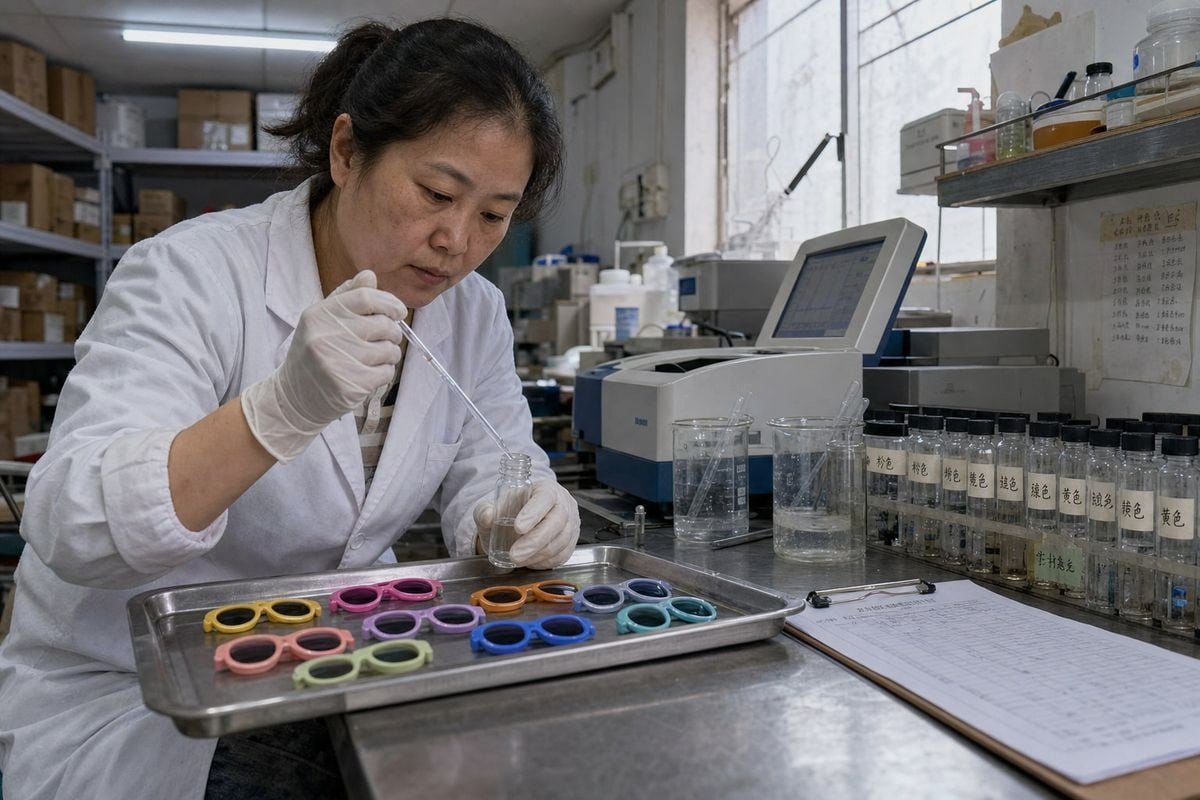
Knowing which REACH tests kids’ sunglasses from China actually need saves buyers real money. On our Taizhou production line, I have watched vague “must comply with REACH” clauses cause shipment disputes, customs holds, and painful retesting bills—problems a precise contract would have prevented entirely.
Kids’ sunglasses from China typically need REACH Annex XVII testing for phthalates, cadmium, lead, nickel release, and PAHs, plus SVHC screening. Contracts should name each substance, entry number, test method, accredited lab, sampling plan, pass/fail limits, and who pays for retesting failures.
REACH is a chemicals framework, not a single sunglasses standard. So the practical question is which tests apply to your exact materials, and how to lock them into writing. Let me walk you through it.
What REACH Substances Should I Specifically Test for in Children's Sunglasses?
A buyer from Germany once asked me why her previous supplier's REACH report covered only phthalates. The answer was simple: nobody had told the factory what else to test.
Children's sunglasses should be tested for phthalates (Annex XVII Entries 51 and 52), cadmium (Entry 23), lead (Entry 63), nickel release (Entry 27) for skin-contact metal parts, PAHs for rubberized components, and screened against the current SVHC list above 0.1% weight-by-weight.
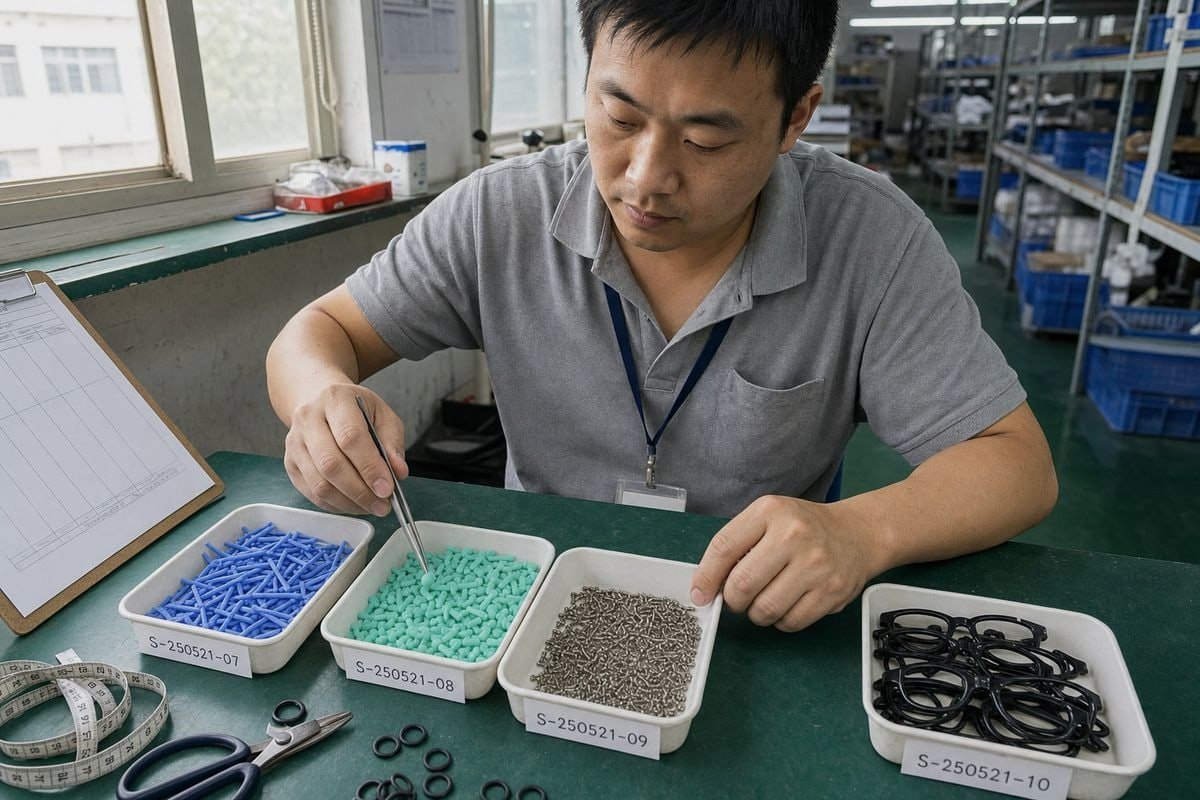
The exact panel depends on the materials in your product 1, not on the word "sunglasses." At our factory, most kids' frames use TR90 with flexible TPEE temples. A soft rubberized nose pad, a painted coating, or a small hinge screw each triggers a different chemical question. That is why "test everything" and "test nothing" are both wrong answers.
Match Each Substance to the Component That Triggers It
Here is how I map the Annex XVII restrictions to the parts of a typical children's frame:
| Substance | REACH Entry | Which Component Triggers It | Limit |
|---|---|---|---|
| Phthalates (DEHP, DBP, BBP, DIBP) | Entry 51 | Plasticized frames, temple tips, soft nose pads | 0.1% total |
| Phthalates (DINP, DIDP, DNOP) | Entry 52 | Mouthable soft plastics on kids' products | 0.1% total |
| Cadmium | Entry 23 | Pigmented plastics, stabilizers, coatings | 0.01% in plastics |
| Lead | Entry 63 | Frame coatings, metal parts, decorative paint | 0.05% |
| Nickel release | Entry 27 | Hinges, screws, metal frames touching skin | 0.5 µg/cm²/week |
| PAHs | Entry 50 | Rubber or soft-touch grip components | 1 mg/kg per PAH (child articles) |
Why Kids' Products Face Extra Scrutiny
Children's sunglasses sit closer to the skin, get chewed, and get handled constantly. Regulators know this. That is why phthalate content limits and cadmium and lead concentration checks come up far more often for child eyewear than adult styles. Neon, fluorescent, and metallic-effect pigments deserve targeted SVHC screening too, because specialty colorants sometimes contain restricted stabilizers that standard resins never see.
One more nuance: REACH chemical compliance 2 is separate from optical performance. EN ISO 12312-1 covers UV filtering and physical safety. You need both, but they answer different questions.
How Do I Write REACH Testing Requirements Into My Supplier Contract?
The best purchase contracts 3 I have signed in fifteen years of eyewear exporting share one trait: they leave nothing to interpretation. The worst ones just said "product must meet EU regulations."
Write contracts that name each substance and Annex XVII entry, define material scope per component, require ISO/IEC 17025 accredited third-party lab testing, set sampling from production batches, tie final payment to passing results, and assign retest costs and remedies to the supplier if a batch fails.

Generic wording is too easy to dispute. If your contract only says "REACH compliant," a supplier can produce a two-year-old phthalate report for a different colorway and claim the obligation is met. I have seen buyers lose that argument. Precision protects both sides—honestly, it protects good factories too, because we know exactly what we are quoting against.
The Clauses That Actually Matter
Build your Quality Assurance Agreement around these elements:
- Named substances and entries. List phthalates (Entries 51/52), cadmium (Entry 23), lead (Entry 63), nickel release (Entry 27), PAHs, and current SVHC list screening—not just "REACH."
- Material scope. Define which components get tested: frame front, temples, temple tips, nose pads, lens coatings, decorations, and every metal part in skin contact.
- Accredited labs only. Require ISO/IEC 17025 4 accredited third-party lab testing (SGS, TÜV, Intertek, or equivalent), referencing the current REACH version at time of shipment.
- Pass-or-no-pay. Make final payment contingent on the production batch passing—not just the pre-production sample.
- Material Change Notification. Prohibit switching resin or coating 5 sub-suppliers without written approval and retesting. Pigment swaps are the most common silent change I see in this industry.
- Cost and remedy allocation. Retesting at supplier cost, replacement or refund for failed batches, and recall cooperation.
- SKU-specific reports. Every report must match the exact model, colorway, and material configuration shipped.
- Future-proofing. Add PFAS restriction language for anti-fog or hydrophobic lens coatings, and a Digital Product Passport readiness clause requiring structured composition data.
When buyers bring us a contract this specific, our quotation reflects real testing costs upfront. Nobody gets surprised later.
Which Lab Reports Should I Request From My China Eyewear Manufacturer Before Shipping?
Before any container leaves our workshop, our QC team assembles a compliance dossier. Buyers who audit it carefully catch problems early; buyers who skim it inherit risk.
Request an ISO/IEC 17025 accredited chemical report covering all named REACH substances per material, an SVHC screening report, EN ISO 12312-1 optical and UV test results, sample photos with material identification, and a signed Declaration of Conformity matching your exact SKU and colorway.
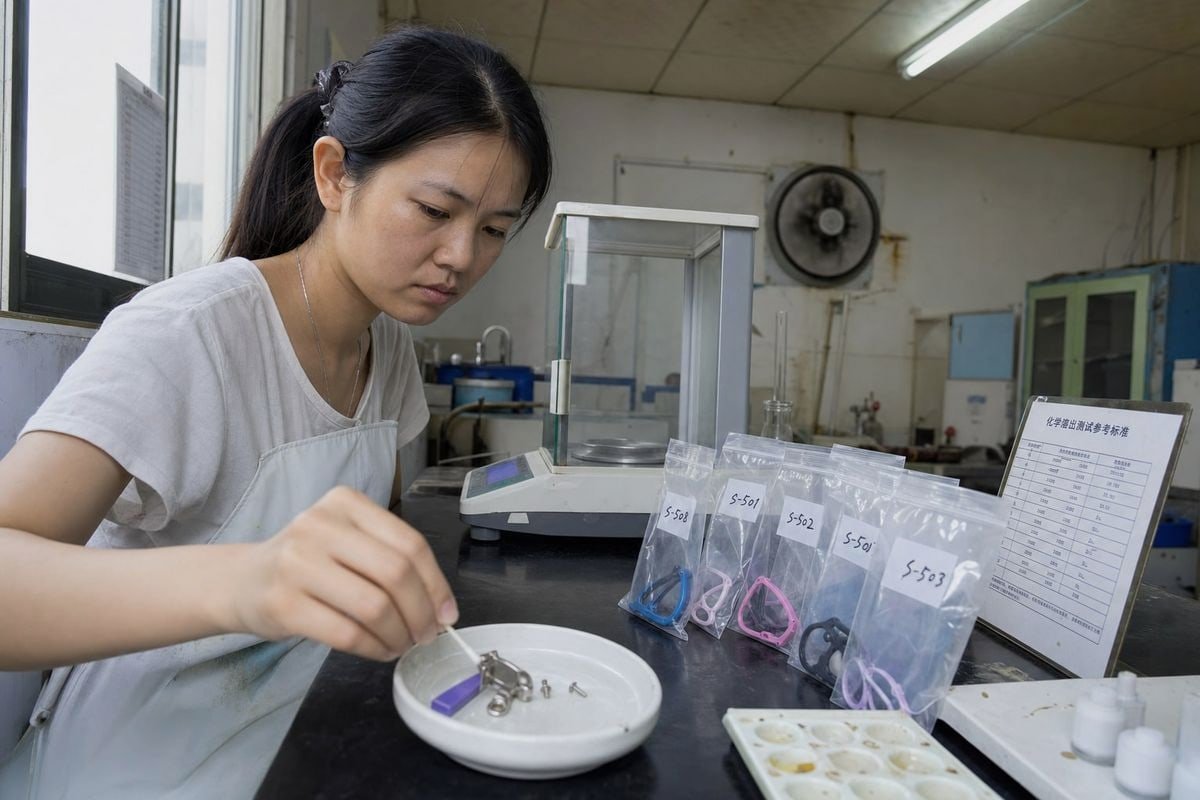
A report only proves compliance if you can trace it to your actual product. Chinese supplier reports often bundle standards—one dossier may combine EN ISO 12312-1 performance data with Annex XVII chemical checks. That bundling is convenient, but it also makes it easy to miss a gap. Read each section separately: performance safety is one question, chemical compliance is another.
How to Verify a Report Is Genuine and Relevant
| チェック | What to Look For | 赤信号 |
|---|---|---|
| ラボの認定 | ISO/IEC 17025 scope covers the test methods used | Unknown lab, no accreditation number |
| サンプルの同一性 | Photos and description match your SKU and colorway | Generic description, no photos |
| Material breakdown | Each component listed separately with results | One "composite" result for the whole product |
| Test methods | Named standards for each substance | "Pass" with no method cited |
| Date and REACH version | Recent report referencing the current SVHC list | Report older than the latest SVHC update |
| Substances covered | Every substance from your contract appears | Phthalates only, nothing else |
Separate the Three Compliance Layers
I encourage buyers to file reports in three folders. First, chemical compliance: the REACH panel and any buyer Restricted Substances List that goes stricter than the law. Second, performance safety: EN ISO 12312-1, UV400 verification, and impact behavior. Third, children's product requirements: labeling, small-parts considerations, and destination-market extras. Some retail buyers add internal limits for lead or nickel that sit below REACH thresholds—your dossier must satisfy the strictest applicable limit, not just the legal minimum.
Also ask whether your factory will support your EU technical file. Test reports alone rarely complete a Declaration of Conformity package, and a cooperative manufacturer saves you weeks of document chasing.
What Happens If My Kids' Sunglasses Fail a REACH Test After Production?
A failed batch report is the phone call no procurement manager 6 wants. Years ago, a pigment sub-supplier change on a bright frame color taught us how fast one small substitution can put a whole order at risk—and why our Material Change Notification discipline exists today.
A post-production REACH failure means the batch cannot legally enter the EU market. Your contract remedies then activate: supplier-funded root-cause investigation, component-level retesting, rework or replacement, refund or chargeback rights, and recall cooperation if goods already shipped to customers.

What happens next depends almost entirely on what you wrote into the contract before production started. This is where vague clauses become expensive. Market surveillance is real: public testing of 子供用アイウェア 7 sold through online marketplaces has found chemical and physical failures, and enforcement pressure on low-cost imports keeps rising. If your goods fail after distribution, you may face withdrawal notices, marketplace delisting, and SCIP database notification duties for SVHCs above 0.1% weight-by-weight.
The Escalation Path, Step by Step
| ステージ | ステップ | Who Pays (With a Good Contract) |
|---|---|---|
| 1. Confirm | Retest the failed component at an accredited lab | Supplier |
| 2. Isolate | Identify which material or sub-supplier caused the failure | Supplier |
| 3. Contain | Hold the batch; quarantine affected SKUs and colorways | Supplier |
| 4. Fix | Replace the material, rework, or reproduce the batch | Supplier |
| 5. Verify | Full retest of corrected production before release | Supplier |
| 6. Remedy | Refund, replacement, or chargeback per contract | Supplier |
| 7. Cooperate | Support recall or withdrawal if goods already shipped | Shared, per contract |
Prevention Beats Every Remedy
Honestly, the cheapest failure is the one caught at pre-production. Our 5S-managed workshop keeps approved-material records for each SKU precisely so a colorant or resin swap cannot slip through unnoticed. Insist on pre-production testing, change-control retesting whenever materials or tooling change, and periodic batch verification for repeat orders. Nickel release testing deserves special attention on rework: replacing a hinge screw supplier mid-production is exactly how a passing product becomes a failing one. A factory that resists these controls is telling you something important about how it manages risk.
結論
Vague REACH clauses invite disputes and failed shipments. Name the substances, entries, labs, and remedies in writing—then partner with a factory that documents every material. That is how kids' sunglasses ship safely.
脚注
1. Official UK government guidance on identifying and managing chemical substances under REACH regulations. ↩︎
2. Official ECHA page explaining the fundamental requirements for chemical compliance under the REACH framework. ↩︎
3. Wikipedia entry explaining the legal principles of business and purchase contracts. ↩︎
4. Official ISO standard page for the requirements governing testing and calibration laboratories. ↩︎
5. Wikipedia overview of synthetic resins and coatings used in industrial manufacturing processes. ↩︎
6. Wikipedia definition of the role and responsibilities of a procurement or purchasing manager. ↩︎
7. EU Safety Gate portal for monitoring alerts on dangerous products, including children’s eyewear. ↩︎



 English
  Español de México
  Deutsch
  Français
  日本語
日本語  العربية
  Português do Brasil