What Documents Do Importers Need for EU PPE Compliance on Kids Sunglasses from China?
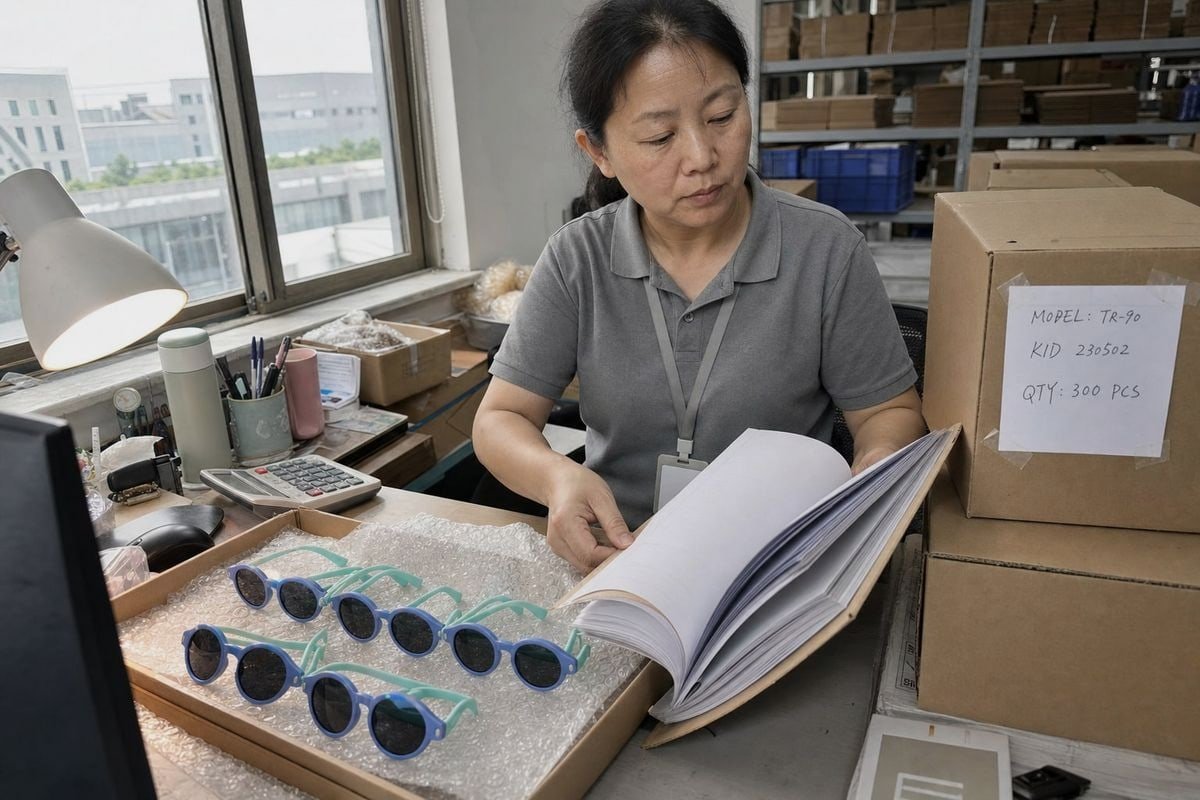
[EU PPE compliance for kids sunglasses](https://okayeyewear.com/what-certification-requirements-kids-sunglasses-meet-eu-market/) trips up many importers. On our Taizhou production line, we’ve seen buyers lose whole shipments because one document was missing at customs.
Importers need an EU Declaration of Conformity, a technical construction file, UV400 lab test reports against the EN ISO 12312-1 standard, CE marking proof, user instructions, product safety labeling evidence, and REACH Annex XVII test data before placing kids sunglasses on the EU market under Regulation (EU) 2016/425.
That is the short answer. Below, I break down each document, explain who provides it, and show you [how to verify it before your goods leave China](https://okayeyewear.com/how-verify-authenticity-supplier-test-reports-sourcing-kids-sunglasses/).
What certificates should I request from my China sunglasses manufacturer before importing to the EU?
Last spring, a Dutch buyer asked us for "the CE certificate" for a mint-teal kids frame. We sent her seven documents instead. She was surprised — and then grateful.
Request the EU Declaration of Conformity, the technical construction file, accredited UV400 lab test reports to EN ISO 12312-1, REACH Annex XVII chemical test results, label and CE marking artwork, user instructions, and risk assessment records — all tied to your exact model number.
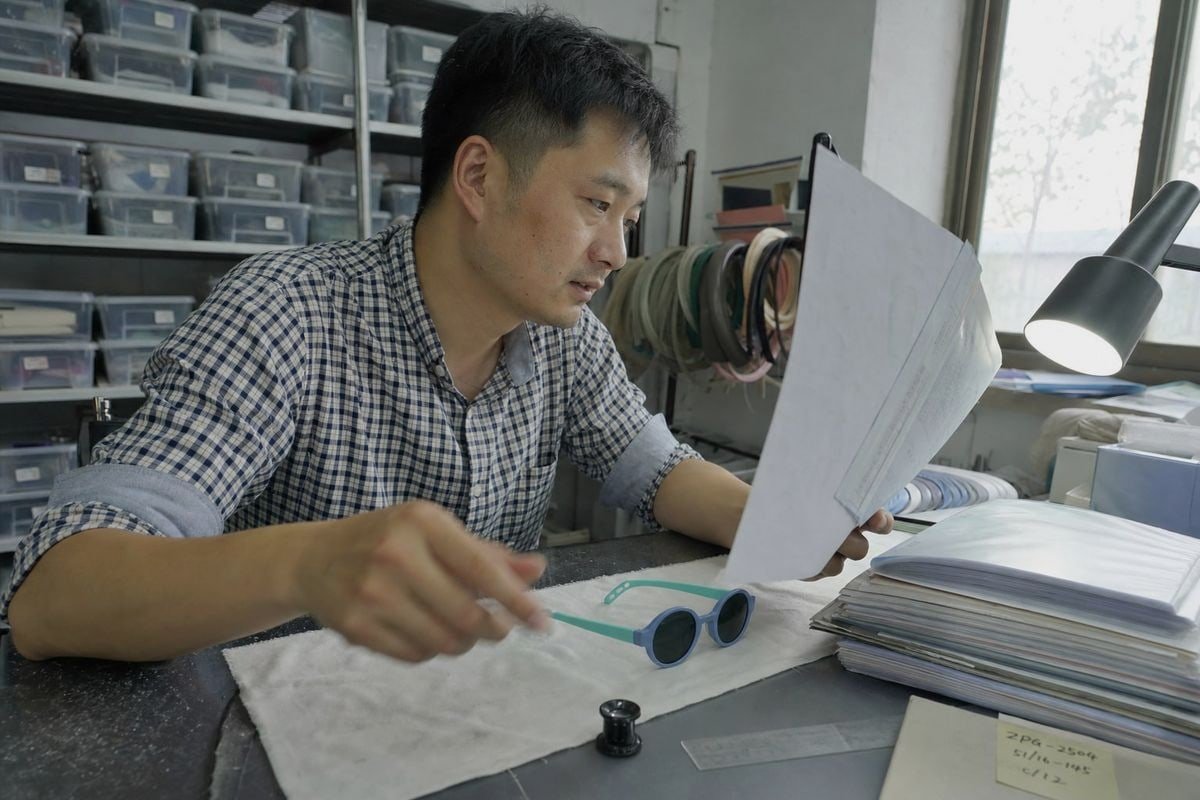
The core mistake I see is treating "a CE certificate" as one piece of paper. It is not. Under Regulation (EU) 2016/425 1, compliance is a document set, and each item does a different job. When we prepare a compliance pack for one of our TR90 or TPEE children's styles, we assemble the pack around the specific model, colorway, and lens spec the buyer ordered. A test report for a wraparound sport shield does not cover a round two-tone kids frame. Different lens, different frame geometry, different result.
The must-have documents versus supporting evidence
It helps to split the pack into two layers. The legal core is mandatory. The supporting layer makes your file defensible if a market surveillance authority ever asks questions.
| 文書 | レイヤー | 誰が準備するか | 登録番号 |
|---|---|---|---|
| EU Declaration of Conformity | Mandatory | Manufacturer (importer verifies) | Legal statement of compliance |
| Technical construction file | Mandatory | Manufacturer | How compliance was achieved |
| EN ISO 12312-1 test report | Supporting evidence | Accredited lab | UV and optical performance |
| REACH Annex XVII test data | Supporting evidence | Accredited lab | Chemical safety of frames and lenses |
| Label and CE artwork | Supporting evidence | Manufacturer | Product safety labeling and traceability |
| User instructions | Mandatory | Manufacturer | Safe use, care, and warnings |
| Risk assessment | Mandatory (in file) | Manufacturer | Hazards identified and mitigated |
Match every document to your model
Check that the model number on the test report matches the model number on your purchase order, the DoC, and the carton labels. In our experience exporting to twenty-plus countries, mismatched model numbers cause more customs delays than missing documents do. Also request batch and traceability records. If a safety question arises later, you need to trace which production run is affected.
How do I confirm my kids sunglasses supplier has valid CE PPE Category II documentation?
A buyer from Germany once forwarded us a competitor's "certificate" for review. Our QC manager spotted the problem in minutes: the issuing lab did not exist. Verification matters.
Verify the documents by checking the lab's accreditation, matching model numbers across all files, confirming the notified body number against the official NANDO database if one is cited, and reviewing whether the conformity route matches the product's actual PPE classification.
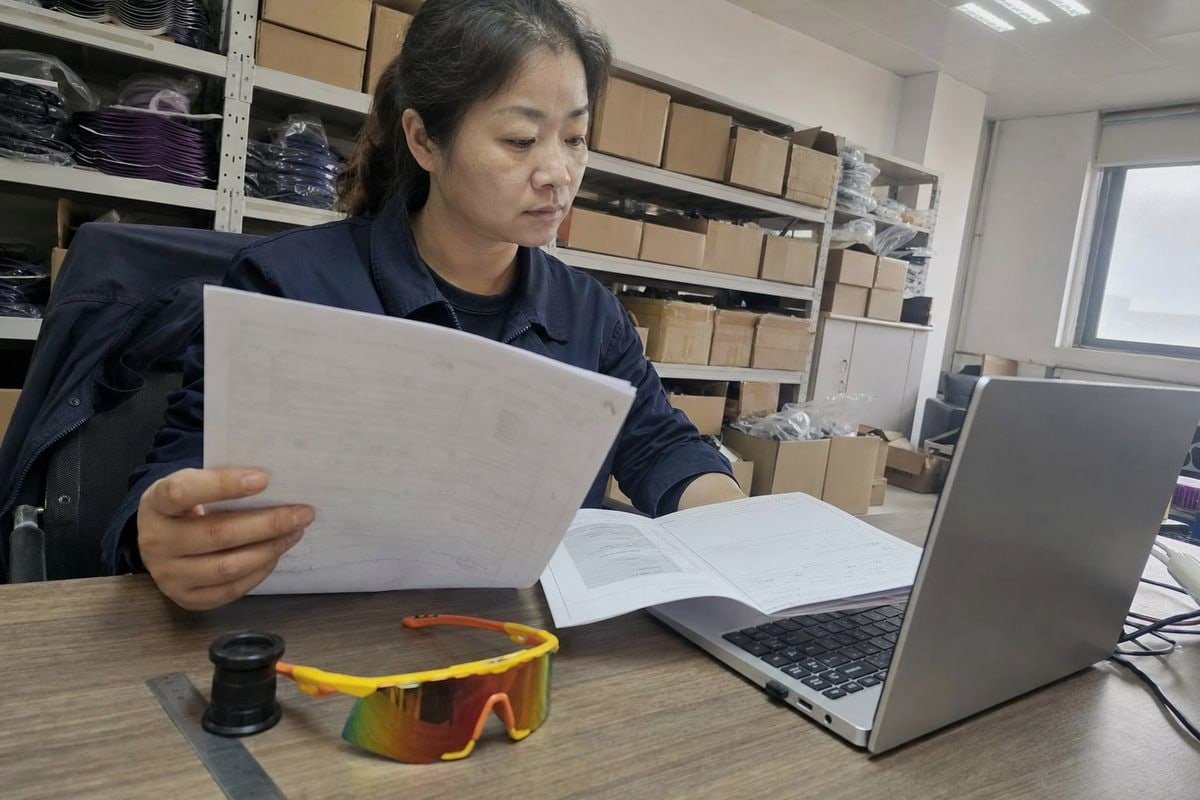
Here is an important clarification I always give buyers. Standard non-prescription sunglasses are commonly treated under the Category I PPE classification, which allows internal production control without a notified body. Some sources describe kids sunglasses as Category II, which would require an EU type examination 3. The honest answer is that the exact route depends on the product's claimed protective function and how the standard is interpreted for your market. So do not overpay for certificates you may not need — but never assume the paperwork obligation disappears. The EU Declaration of Conformity and the technical construction file are required in every route.
A practical verification workflow
When our customers audit our compliance packs, I encourage them to follow a simple sequence:
- Ask for the full pack, not a single PDF. A supplier who sends one page usually does not hold the rest.
- Check the lab. Confirm the testing laboratory holds accreditation for the EN ISO 12312-1 standard 4. Look up the lab's scope online.
- Cross-check identifiers. Model number, manufacturer name, and address must match across the DoC, test reports, and labels.
- Validate any notified body number. If the documents cite a four-digit notified body number, search it in the EU's NANDO database 5. Fake numbers are a known scam.
- Check dates and versions. A test report from five years ago may reference a withdrawn version of the standard.
- Request a pre-shipment sample. Compare the physical product, its markings, and its packaging against the documented artwork.
At our factory, we keep the technical file for every one of our roughly 800 existing styles, so this verification takes days, not months. If a supplier needs weeks to produce basic paperwork, that tells you the file may not exist yet.
What's the difference between a Declaration of Conformity and an EU Type Examination Certificate for kids sunglasses?
I weigh this trade-off with buyers constantly: pay a notified body for extra certainty, or rely on the standard self-declaration route? The answer starts with understanding what each document actually is.
The EU Declaration of Conformity is a mandatory legal statement the manufacturer signs for every PPE product. An EU Type Examination Certificate is issued by a notified body and is only required when the product's conformity route demands third-party assessment, such as Category II PPE.
These two documents get confused constantly, and the confusion costs importers money. Let me put them side by side first.
| Feature | EU Declaration of Conformity | EU Type Examination Certificate |
|---|---|---|
| Who issues it | The manufacturer | A notified body |
| Is it always required? | Yes, for every PPE product | Only for routes requiring third-party assessment |
| コスト | Internal, low | External fee, higher |
| What it contains | Product ID, regulation, standards applied, signature | Certified type description, notified body number, validity period |
| Legal role | Legal declaration of compliance | Evidence that an independent body examined the type |
| Who keeps it | Manufacturer; importer holds a copy | Manufacturer; importer holds a copy |
Why the distinction matters for your purchase order
The DoC is a self-declaration. It is legally binding, but no outside party checks it before signing. The type examination certificate adds independent scrutiny. For basic kids sunglasses following the Category I route, a valid DoC supported by accredited UV400 lab test reports is typically the backbone of CEマーキングのコンプライアンス. When we developed our flexible TPEE kids styles, we built the technical file around exactly that structure: risk assessment, material specs, lens transmission data, and label artwork, all referenced in the signed DoC.
The buyer objection I hear most
Some importers say: "My last supplier told me sunglasses are always self-certified, so I never need a notified body." That is too simple. The documentation obligation is always there, while the need for a notified body depends on the classification and the claims you make. If your marketing claims special protective performance, get the route reviewed before you print packaging.
Which notified body test reports do I need to clear customs for children's sunglasses in the EU?
The hardest lesson I've learned in fifteen years of eyewear exporting: customs officers rarely ask for documents until the one day they do — and then they want everything at once.
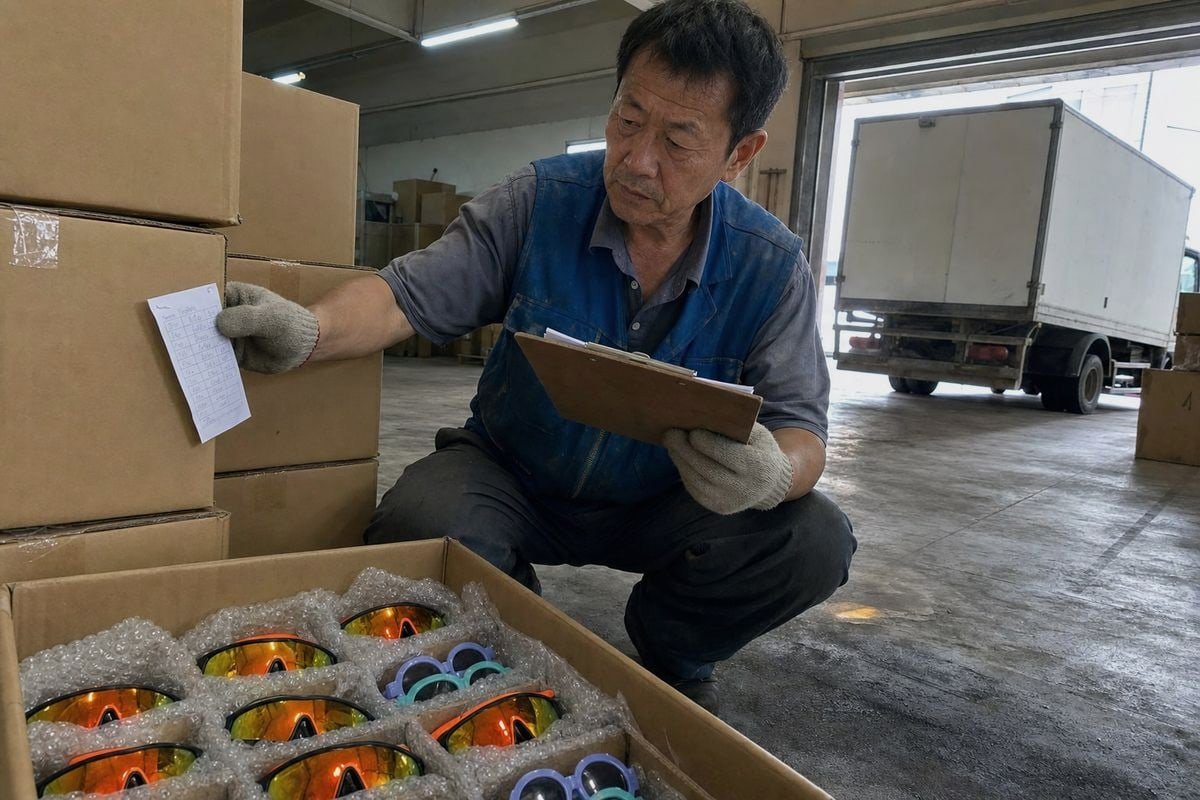
For most kids sunglasses, customs clearance relies on accredited lab test reports to the EN ISO 12312-1 standard covering UV transmission and optical quality, plus REACH Annex XVII chemical tests. A notified body report is only needed if your conformity route requires type examination.

Let me be precise about terminology, because it saves importers real money. A "notified body test report" and an "accredited laboratory test report" are not the same thing. Most kids sunglasses clear EU customs on the strength of accredited lab reports supporting the DoC. A notified body only enters the picture when the conformity assessment route requires it.
The test reports that actually support clearance
Here is what a complete testing package looks like for a children's sunglasses shipment:
| Test area | Standard or rule | What it checks | Why customs cares |
|---|---|---|---|
| UV transmission | EN ISO 12312-1 | UV400 blocking, light transmission category | Core protective claim of the product |
| 光学品質 | EN ISO 12312-1 | Refractive power, distortion, robustness | Child eye safety |
| 何をチェックするか | REACH Annex XVII | Lead, cadmium, phthalates in frames | Restricted substances on children's products |
| BPA migration | Supplementary testing | Bisphenol A in polycarbonate parts | Skin and mouth contact for young children |
| SVHC screening | REACH / SCIP | Substances of very high concern above 0.1% | Notification duties for the supply chain |
Emerging requirements deserve a mention too. The EU's microplastics restriction affects glitter finishes and some decorative coatings, and Digital Product Passport 6 readiness under the ESPR is coming for consumer goods. We already document material composition for every TPEE and TR90 style we run, so our buyers can answer those questions early rather than scrambling later.
Importer of record responsibilities at the border
Remember that importer of record responsibilities 7 sit with you, not your factory. You must confirm the conformity assessment happened before importation, verify the CE mark and product safety labeling are correct, keep the DoC available for ten years, and add your own EU business name and address to the product or packaging. Get instructions translated into the languages of your destination member states. We prepare multilingual instruction inserts for our OEM clients for exactly this reason.
結論
Missing paperwork can strand a whole container. Build the full compliance pack — DoC, technical file, test reports, labels, instructions — before ordering, and choose a factory that hands it over readily.
脚注
1. Primary EU legislation governing PPE compliance obligations discussed throughout the article. ↩︎
2. Updated official European Commission landing page for CE marking requirements. ↩︎
3. General background on third-party conformity assessment routes referenced for PPE Category II. ↩︎
4. Official ISO standard reference for the sunglasses UV and optical testing requirement cited. ↩︎
5. Official EU database importers use to verify notified body numbers as described. ↩︎
6. Official European Commission landing page for the Digital Product Passport initiative. ↩︎
7. Background concept explaining the legal role and duties importers hold under EU law. ↩︎


 English
  Español de México
  Deutsch
  Français
  日本語
日本語  العربية
  Português do Brasil