Do I Need My Own EN ISO 12312-1 Test for Private Label Kids’ Sunglasses in Europe?
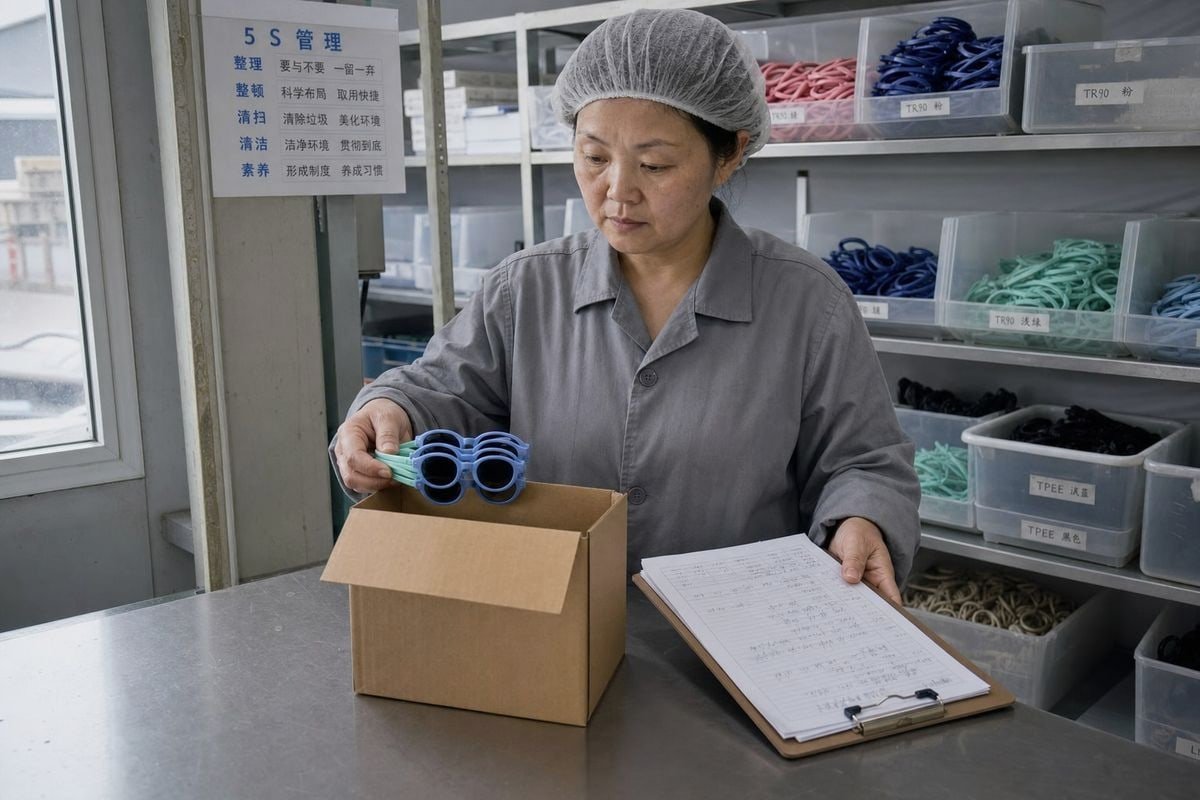
Buyers ask us about the EN ISO 12312-1 test 1 for private label kids’ sunglasses almost weekly. One wrong assumption here can freeze your shipment at EU customs. Our factory has watched it happen.
You do not need to invent your own test method, but you do need product-specific EN ISO 12312-1 test evidence for your private label kids’ sunglasses. As the brand owner, EU law treats you as the manufacturer, so your SKU needs its own lab reports, technical file, and Declaration of Conformity.
That short answer hides several practical questions. Let me walk you through supplier reports, costs, factory certificates, and what happens when things go wrong.
How Can I Verify My Supplier's EN ISO 12312-1 Test Reports Are Valid for My Brand?
A German buyer once sent me a supplier's test report to review before placing an order with us. It was three years old and covered a different lens tint. That report was worthless.
Check that the report names the exact model, colorway, and lens you will sell, cites the current EN ISO 12312-1:2022 version, comes from an accredited third-party lab, covers UV transmittance, mechanical, and labeling clauses, and is recent enough to reflect current production materials.

In our fifteen years of making children's eyewear in Taizhou, we have reviewed hundreds of test reports. Most problems fall into a few repeatable categories. The good news is that you can catch them with a structured check, even without a technical background.
The Five-Point Report Verification Check
First, match the sample description to your actual retail SKU. EN ISO 12312-1 is a finished-product standard. If the tested sample had a category 3 gray lens and you ordered a mirrored gradient lens, the transmittance data does not transfer. Lens material, tint, coating, and frame construction all change the result.
Second, confirm the standard version. The 2022 revision replaced "local variations in refractive power" with "spatial deviation" and extended side-protection requirements for children's sunglasses with category 4 lenses. A report against the older edition may miss clauses that inspectors now check.
Third, verify the lab. Ask for the accreditation number and look it up. Genuine third-party lab reports carry a scope of accreditation you can confirm online in minutes.
Fourth, check the scope of testing. A valid report should cover the areas below:
| 典型的な子供用サングラス、例えば、丸みを帯びたTR90フレームと柔軟なTPEEテンプルを持つものの場合、要件は次のように分類されます。 | What It Confirms | Common Gap in Weak Reports |
|---|---|---|
| UV and luminous transmittance | UV400 protection rating; correct filter category | Only lens material tested, not finished product |
| Refractive power / spatial deviation | Optical quality of the lens | Skipped entirely to cut cost |
| Robustness and mechanical safety | Frame and lens survive deformation and impact | Adult headform used instead of child-sized headform |
| Ignition and solar radiation resistance | Material stability in real use | Missing from "lens-only" reports |
| Information and labeling | Filter category, supplier identity, road-use suitability | Labels reviewed for factory brand, not yours |
Fifth, consider whose name is on the report. Many EU insurers will question or void product safety liability coverage if the only evidence sits in the factory's name. A report in your brand's name, tied to your SKU, is far stronger protection.
What Costs and Timelines Should I Expect When Testing Kids' Sunglasses for the EU Market?
There is a trade-off we discuss with almost every new European client: test every colorway individually, or group similar variants into families. The choice changes both budget and launch date.
Expect roughly €300–€900 per model family for EN ISO 12312-1 testing at an accredited lab, plus extra for REACH chemical testing, with typical turnaround of two to four weeks. Grouping colorways that share identical lens and frame materials reduces the total cost significantly.
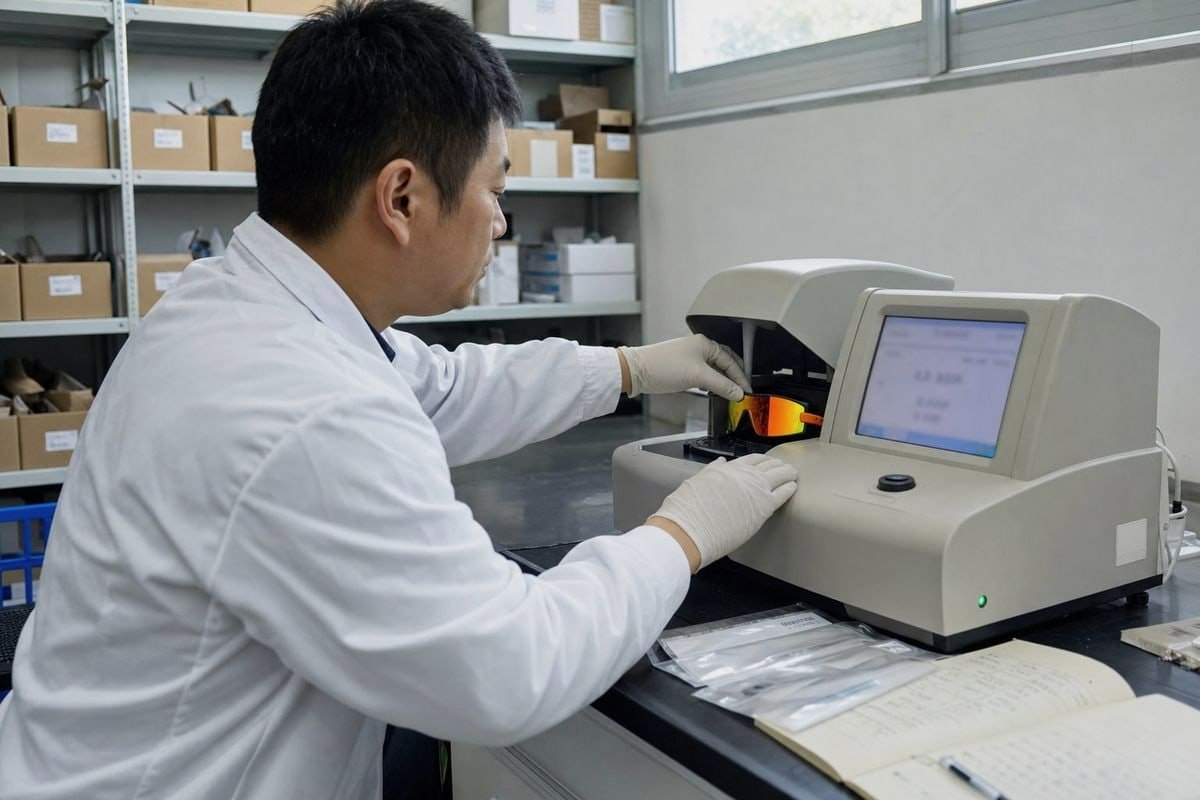
Because our catalog holds around 800 existing styles, we have seen the full range of testing budgets, from a single-SKU startup order to a distributor testing twelve families at once. Here is how the numbers usually break down and how to plan them into your launch calendar.
Typical Testing Scope and Budget
The core standard test is only part of the picture for children's products in Europe. Buyers often forget the chemical and mechanical add-ons until a lab quotes them.
| Test Package | Applies To | Indicative Budget | Typical Turnaround |
|---|---|---|---|
| EN ISO 12312-1 full test | All kids' sunglasses | €300–€900 per family | 2–3 weeks |
| REACH Annex XVII chemicals (lead, cadmium, phthalates) | Frames, temples, coatings | €150–€500 depending on materials | 1–2 weeks |
| EN 16128 nickel release | Metal parts touching skin (hinges, screws) | €100–€250 | 1–2 weeks |
| EN 71-1 mechanical (small parts) | Sunglasses for children under 36 months | €150–€400 | 1–2 weeks |
REACH chemical testing 2 deserves special attention. Children mouth their sunglasses. Regulators know this. Phthalate and heavy-metal limits are checked aggressively on kids' products, and our flexible TPEE and TR90 materials were chosen partly because they pass these restrictions comfortably.
Timeline Planning
Work backwards from your launch. Sample production takes one to two weeks. Shipping samples to the lab adds a few days. Testing takes two to four weeks. Then allow one more week to build your technical documentation file 3 and issue the EU Declaration of Conformity. In practice, we tell buyers to reserve six to eight weeks between final sample approval and compliant goods leaving the factory. Rushing this window is where mistakes happen. One lesson we learned early: never book the sea freight before the draft report arrives.
Can I Use My Factory's Existing Certification or Do I Need Separate Testing for My Private Label?
An Australian brand founder once told me, quite confidently, that her previous supplier's "CE certificate" covered any brand name she printed on the temple. I had to gently explain why that belief is risky.
A factory's existing report can support your compliance only if your product is truly identical to the tested sample. However, under PPE Regulation (EU) 2016/425 you are the legal manufacturer, so the Declaration of Conformity, technical file, and CE marking responsibility must be in your name regardless.
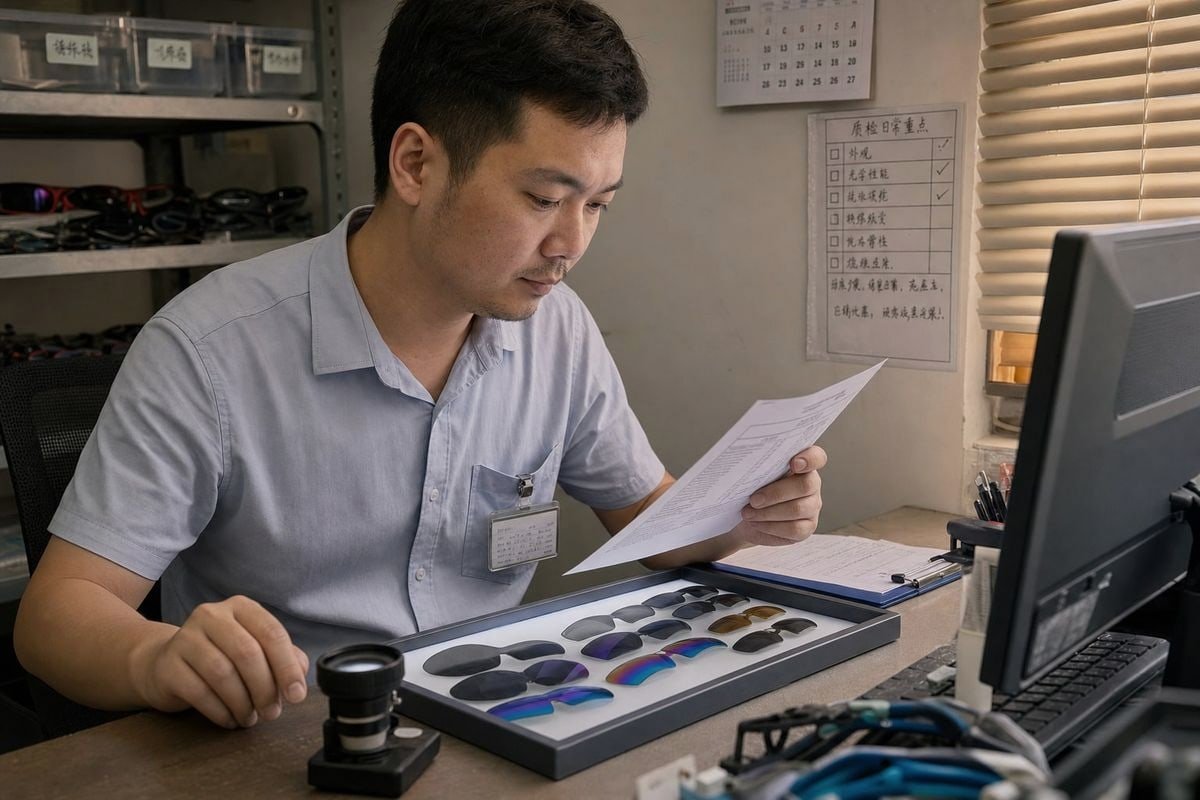
This is the point most private label sellers misunderstand, so let me break it down carefully. There are two separate things: the test evidence and the legal responsibility. They do not travel together automatically.
Test Evidence vs. Legal Responsibility
Sunglasses are Category I PPE 4 under PPE Regulation (EU) 2016/425. That classification allows self-declaration, but self-declaration still requires proof. The proof chain looks like this:
- Lab reports showing the finished product meets EN ISO 12312-1.
- A technical documentation file with design specs, risk assessment, and those reports, kept for at least ten years.
- An EU Declaration of Conformity issued in your brand's name, accessible to consumers.
- CE marking compliance on the product, plus your model identifier and registered contact details for traceability.
Notice that items two through four can only be done by you, the brand owner. No factory certificate replaces them.
When Factory Reports Can and Cannot Be Reused
| Situation | Can You Rely on the Factory Report? |
|---|---|
| Identical product, only your logo added by pad printing | Often yes, with a signed identity declaration linking it to your SKU |
| Same frame, different lens tint or coating | No — transmittance and filter category 3 lenses data changes |
| Same design, different material batch or supplier | Risky — retest is the safe path |
| Different size, color, or construction | No — treat it as a new product |
When we run OEM projects with 総所有コストには、返品、やり直し、税関リスク、再パッケージングが含まれます。これらの保護を省略した見積もりは、出荷後にバイヤーにこれらのコストを転嫁します。 5, lenses, and packaging, we always recommend fresh testing on the final retail configuration. Custom work changes the product. Even a new rubberized coating on a periwinkle-blue frame can alter chemical test results. Your CEマーキングのコンプライアンス is only as strong as the match between the tested sample and the item in the shopper's hands.
What Happens If My Kids' Sunglasses Fail EN ISO 12312-1 Compliance Checks in Europe?
Early in our export history, a client in Southern Europe had a container flagged for a documentation review. Nothing was physically wrong with the sunglasses. The paperwork gaps still cost him three weeks and a storage bill.
Failed compliance checks can trigger customs seizure, forced recalls, Safety Gate (RAPEX) alerts visible across all EU markets, fines, delisting by retailers and marketplaces, and voided liability insurance. Failures during pre-market lab testing, by contrast, cost only a redesign and a retest.
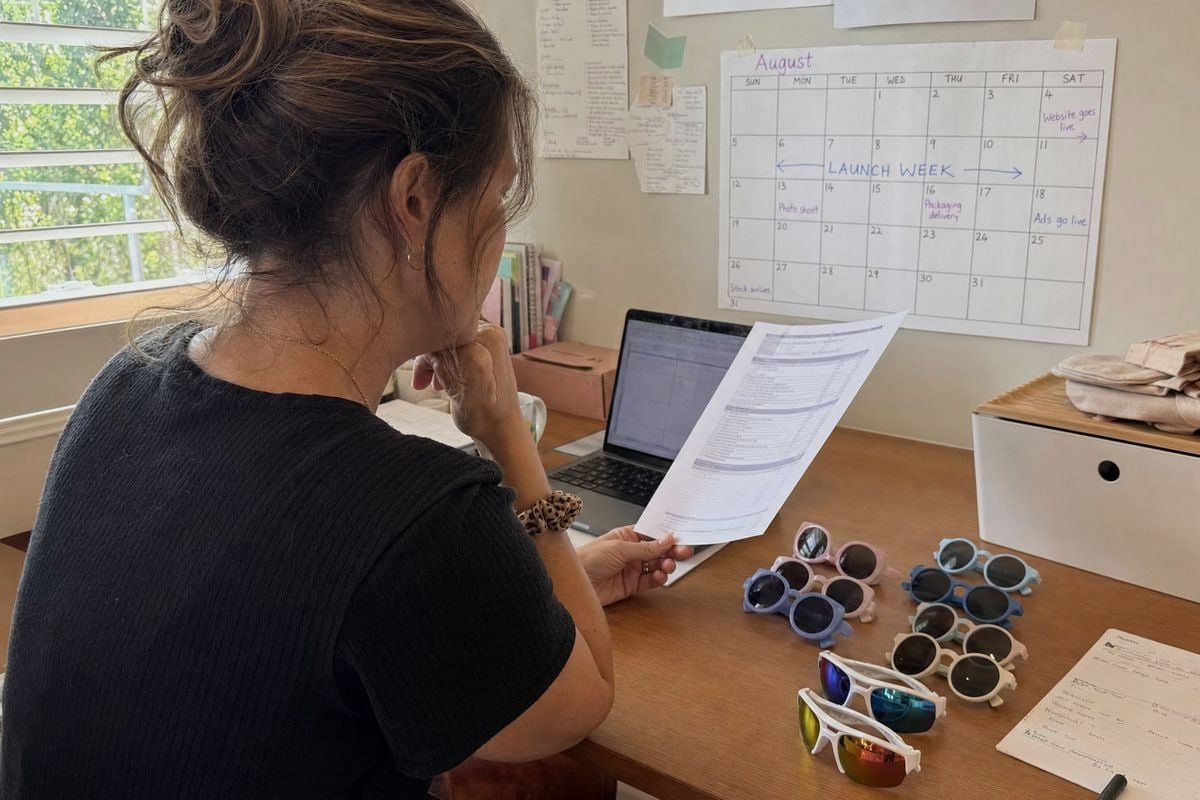
There is a big difference between failing a test before you ship and being caught non-compliant after you sell. I want you to see both scenarios clearly, because the first one is a manageable engineering problem and the second one can end a young brand.
Failing Before Market: A Fixable Problem
If your sample fails at the lab, you get a detailed report showing which clause failed. Common failure points for kids' sunglasses are robustness (frames cracking under deformation), incorrect filter category labeling 6, sharp edges at contact surfaces, and transmittance that misses the claimed UV400 protection rating. Our engineers treat a failed report as a design input. We adjust the hinge, thicken a stress point, or switch the lens supplier, then retest. The cost is a few hundred euros and two or three weeks. Frustrating, yes. Fatal, no.
Failing After Market: Escalating Consequences
Post-market failure follows a harsher sequence. Market surveillance authorities or customs identify the product. If it is deemed unsafe, it enters the Safety Gate database 7, and every EU member state can act on that alert. Customs authorities increasingly use data-driven profiling to target private label shipments with no history of batch-specific testing, so a first-time importer with thin documentation is exactly the profile they stop. Retailers delist you. Your insurer reviews your file, and if your only evidence is a factory report in someone else's name, your product safety liability cover may not respond. Add recall logistics, refunds, and reputational damage with parents — the least forgiving customer group there is.
One more angle: environmental claims. If your frames are marketed as recycled plastic, safety tests do not validate that claim. Under emerging EU green-claims rules, you need chain-of-custody certification too. Compliance for kids' eyewear is a bundle, not a single test.
結論
Skipping product-specific testing feels cheap until a shipment stops at customs. Test your own SKU, own your technical file, and your private label kids' sunglasses can enter Europe with confidence.
脚注
1. Official ISO standard page for sunglasses, detailing requirements for eye protection and transmittance. ↩︎
2. European Chemicals Agency guidance on restricted substances like lead and cadmium in consumer products. ↩︎
3. Official EU ‘Your Europe’ portal detailing mandatory technical documentation and declaration of conformity requirements. ↩︎
4. Official EU regulation classifying sunglasses as Category I Personal Protective Equipment for market entry. ↩︎
5. Wikipedia overview of


 English
  Español de México
  Deutsch
  Français
  日本語
日本語  العربية
  Português do Brasil