TR90 vs Silicone: Which Kids Eyewear Material Is Better for Young Children?
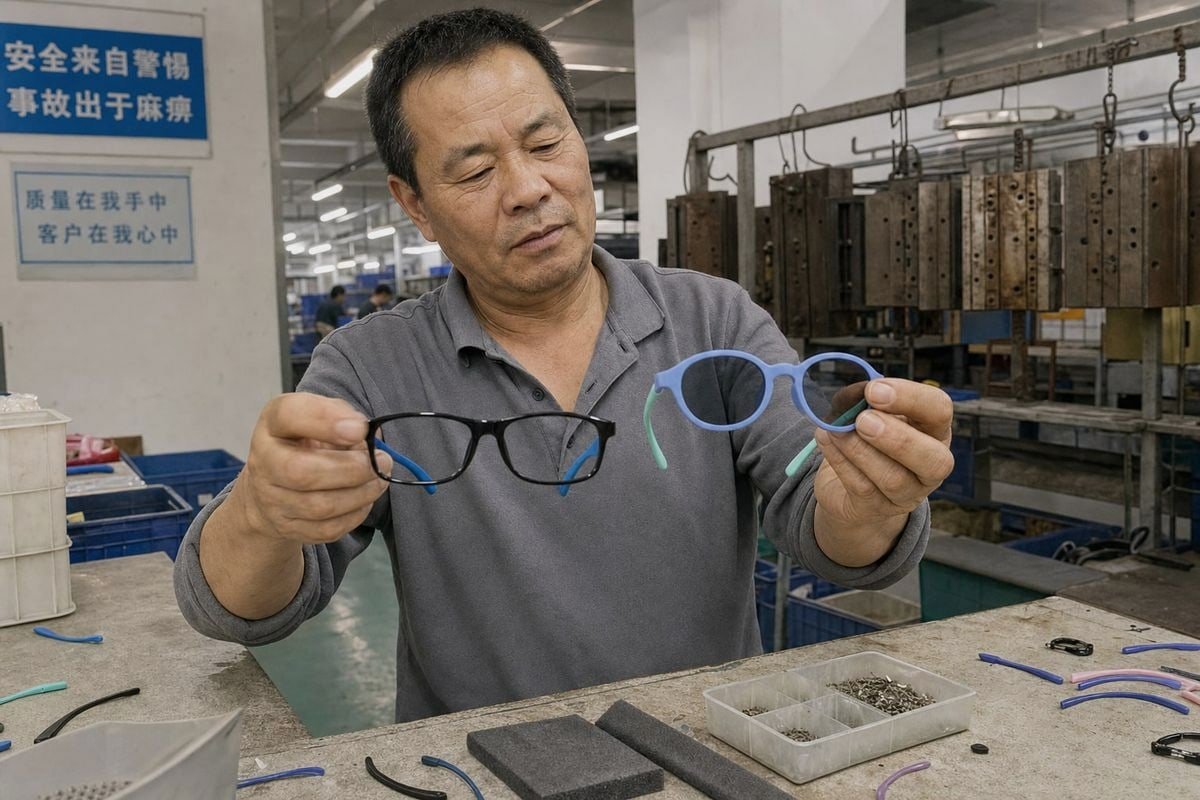
Choosing between TR90 vs silicone kids eyewear keeps many buyers up at night. On our Taizhou production line, we see the wrong material choice sink good products all the time.
Neither TR90 nor silicone is universally better for kids eyewear. Silicone suits babies and toddlers (0–3) because it is softer and gentler on skin. TR90 suits preschoolers and school-age children because it is lightweight, impact-resistant, and holds structure during active daily wear.
That short answer hides a lot of detail. Age, activity level, lens type, and even climate all change the equation. Let me walk you through what we have learned after fifteen years of building children’s frames.
How do I know if TR90 or silicone is truly safer for my youngest customers?
Last year, a baby-brand buyer from Australia asked me this exact question during a factory visit. Her concern was simple: a teething toddler will chew whatever sits on their face.
For children under three, silicone is the safer kids eyewear material because it is extremely soft, has no sharp-feeling edges, and forgives chewing and rough handling. For children over three, TR90 becomes safer overall because it bends under impact instead of snapping into fragments.
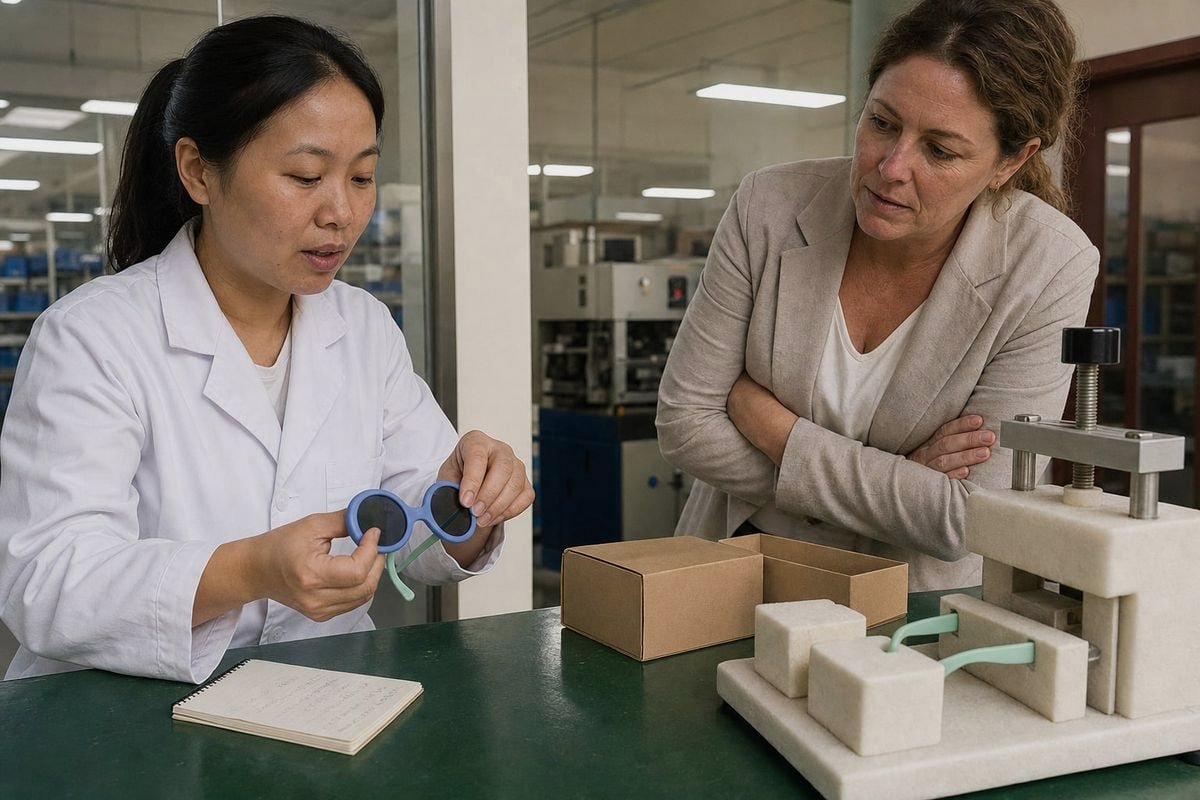
Safety in children's eyewear is not one single thing. In our QC room, we break it down into three separate risks, and each material handles them differently.
The three safety risks that actually matter
First, there is contact injury. A rigid frame can pinch skin or press into the nose bridge during a fall. Medical grade silicone almost eliminates this risk because the whole frame compresses on impact. TR90 is very good here too, but it keeps more structure, so it presses harder in a face-first fall.
Second, there is breakage injury. A frame that snaps can leave sharp stubs near the eye. TR90 is a shape memory polymer 1, so it flexes and returns to shape rather than cracking. Cheap rigid plastics fail this test badly. Both TR90 and silicone pass it well.
Third, there is chemical safety and skin sensitivity. Both materials offer strong hypoallergenic properties 2 when sourced correctly. We insist on BPAフリー素材 3 for every children's frame we produce, and we recommend buyers ask their suppliers for material test reports rather than taking marketing claims on faith.
| シリコン / TPEE | シリコーン | TR90 |
|---|---|---|
| Softness on delicate skin | 素晴らしい | 接触点に集中 |
| Chew and mouthing tolerance | 素晴らしい | 中程度 |
| Resistance to snapping | 非常に良い | 素晴らしい |
| Hypoallergenic properties | Yes (medical grade) | はい |
| Best age fit | 3歳以上 | 6歳以上 |
One warning from our side of the industry: a large share of frames marketed as "silicone" are actually TPE or TPEE 4 blends. That is not automatically bad — we work with TPEE daily and rate it highly — but your customers deserve accurate labeling. If a supplier cannot tell you exactly what polymer they use, that is a red flag for toddler safety standards compliance.
Which material holds up better for active kids who play hard every day?
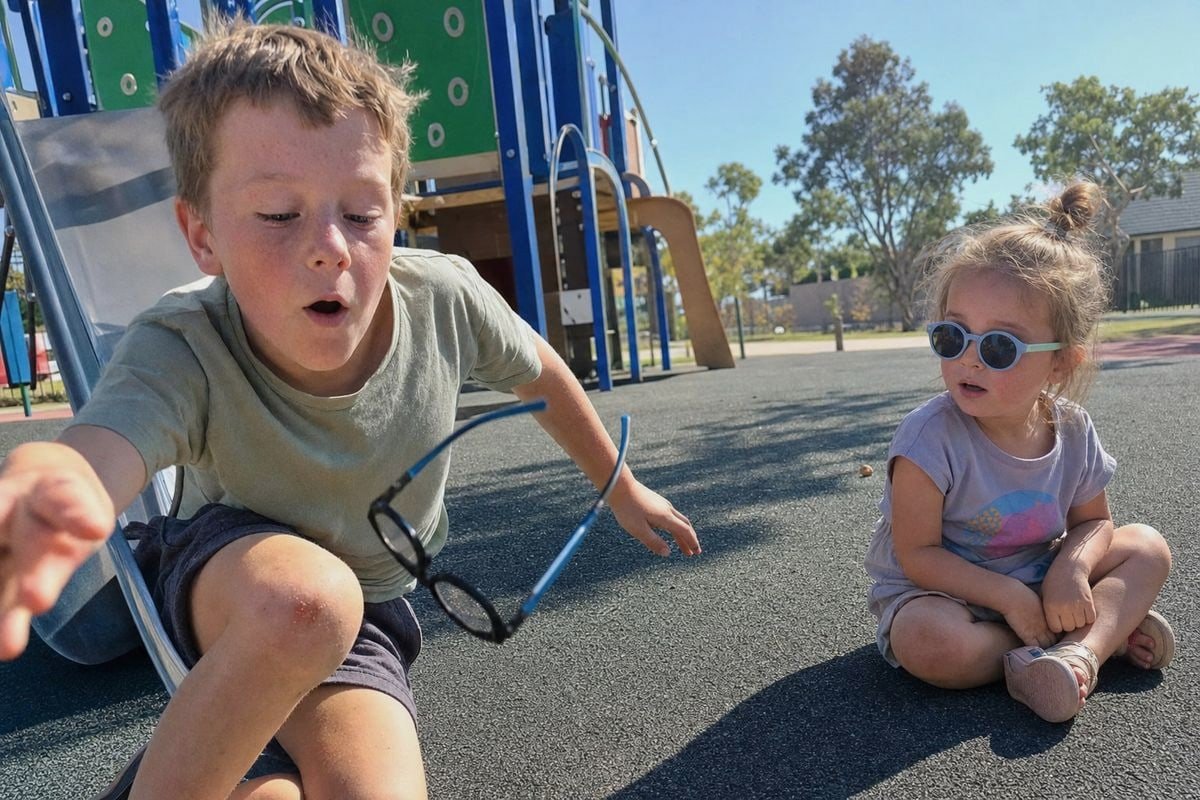
Every trade-off we weigh in product development comes down to one image: a six-year-old dropping glasses on a playground, sitting on them, then wearing them again five minutes later.
TR90 holds up better for active kids aged three and up. Its shape memory polymer structure resists bending, twisting, and drops while keeping lenses secure. Silicone survives abuse too, but its extreme softness can let lenses pop out and lets frames lose their fit.
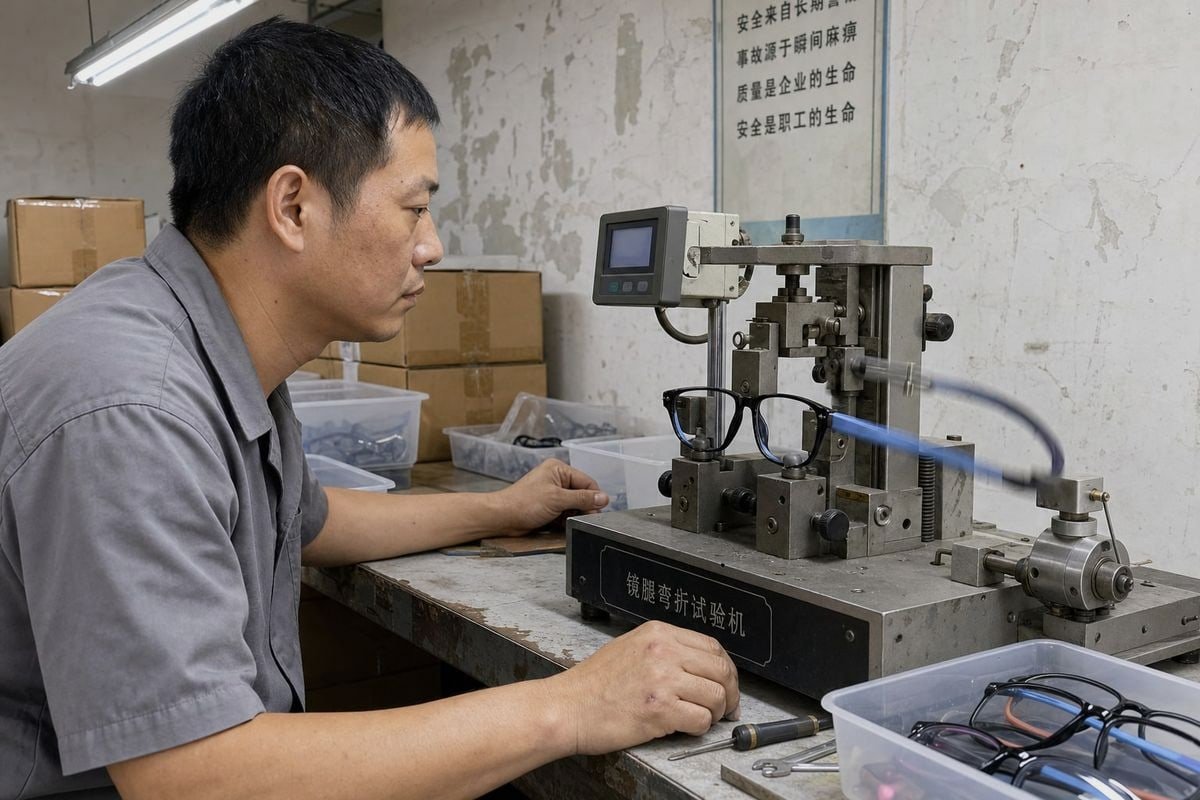
Durability means different things for different materials, and this is where buyers often get confused. Both materials are "durable" — they just fail in different ways.
How each material handles real-world abuse
TR90 is a lightweight thermoplastic with excellent impact resistance. When a child sits on a TR90 frame, it twists, then springs back into alignment. In our workshop we run repeated flex tests on temples before any batch ships, and quality TR90 handles thousands of cycles without whitening or cracking. This structural resilience is why we build most of our school-age optical frames in TR90, often paired with TPEE temples for extra give at the ears.
Silicone frames rarely break. But durability for silicone means something else: the frame stays intact while the fit degrades. Extreme elasticity means a silicone rim grips lenses less firmly. Under a sharp knock, a lens can pop out. For a plano sunglass lens, that is annoying. For a prescription lens, it is a return and a refund.
Heat matters too. TR90 has a higher heat deflection temperature 5, so it resists warping when glasses sit on a car dashboard in summer. That is a real scenario our export customers in Australia and southern Europe raise every season. On the other hand, medical grade silicone resists UV-induced yellowing better over years of sun exposure, while some lower-grade TR90 polymers can slowly become brittle under intense sunlight.
| 耐久性要因 | TR90 | シリコーン |
|---|---|---|
| 耐衝撃性 | Excellent — flexes and recovers | Very good — compresses |
| Lens retention (rim lock) | Strong, suits thick lenses | Weaker, lenses can pop out |
| Heat resistance (hot cars) | Higher deflection temperature | Can soften and warp |
| Long-term UV exposure | Can slowly degrade if low grade | Virtually immune to yellowing |
| Hygiene over time | Non-porous, resists oils | Can turn tacky, hold microbes |
One more practical point: silicone's surface can develop a tacky texture over months of facial oil contact and harbor bacteria if not cleaned regularly. TR90's non-porous surface wipes clean and stays smooth. For everyday school wear, that hygiene edge adds up.
Can I get the same flexible comfort with TR90 that silicone frames offer?
A Japanese optical buyer once told me her retailers loved silicone comfort but hated silicone limitations. Our answer was a hybrid construction, and it changed how we design.
TR90 alone cannot fully match silicone's softness, but it comes close. Modern designs pair a lightweight TR90 front with soft TPEE or silicone temple tips, nose pads, and grip zones, delivering silicone-level comfort at contact points with TR90-level structure everywhere else.
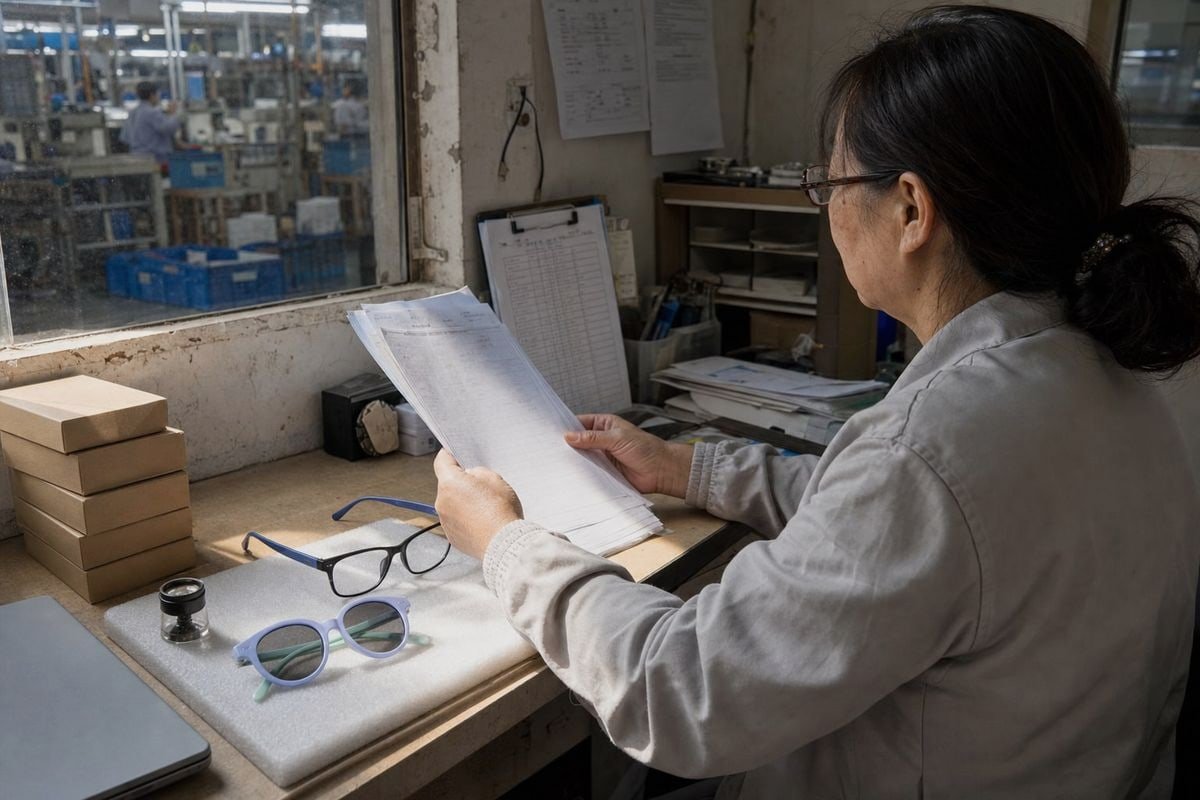
Comfort is not a single property. When we develop a new children's style, we split comfort into weight, pressure, grip, and skin feel — and then we assign the right material to each job.
Weight and pressure
TR90 wins on weight. It is a lightweight thermoplastic, noticeably lighter than acetate and far lighter than metal. That matters because heaviness is the number-one reason young children pull glasses off their faces. A frame a child forgets they are wearing is a frame that stays on. Silicone is light too, but slightly denser designs and thicker walls can add grams back.
Grip and retention
Silicone wins on grip. Its natural high-friction surface stays put on flatter, underdeveloped nose bridges — a real anatomical challenge in children under five. This is why many of our TR90 frames use silicone or TPEE at exactly the points that touch skin: nose pads, temple tips, and hinge covers. One of our popular optical styles pairs a glossy TR90 front with navy flexible temple sections and sky-blue silicone tips, plus a small embossed circular texture on the arms for extra grip. Kids get the soft feel where it matters; parents get a frame that keeps its shape.
Practical comfort add-ons
For the youngest wearers and for sports use, adjustable head straps solve retention better than any material choice alone. We also favor a screwless hinge design on baby styles, since tiny screws loosen, fall out, and become a choking hazard choking hazard prevention 6. These construction details often matter more than the headline material.
The honest takeaway: you do not have to choose one comfort philosophy. Hybrid TR90-plus-soft-touch construction is the direction most of our brand customers now take for ages three to eight, because it captures roughly the best of both materials in one frame.
What should I consider when choosing a supplier for TR90 or silicone kids' eyewear?
Fifteen years of running our Taizhou factory has taught me one lesson above all: the material spec sheet matters far less than the factory behind it.
Choose a supplier with verified material sourcing, documented safety testing, genuine flexible-material molding expertise, and consistent QC processes. Confirm they disclose exact polymers used, offer existing tooling to reduce mold investment, and support full OEM/ODM customization including lenses, colors, and retail-ready packaging.
The gap between a good children's eyewear supplier and a mediocre one shows up months after your first order, when consistency, communication, and compliance get tested. Here is the checklist we recommend buyers use — including on us.
Material honesty comes first
Ask exactly what polymer goes into the frame. "Silicone" should mean documented medical grade silicone, not an unnamed soft plastic. "TR90" should mean genuine TR90-grade nylon, not a brittle look-alike. Ask for BPA-free materials confirmation and third-party test reports 7 aligned with the toddler safety standards of your target market — EN 71 territory in Europe, and equivalent frameworks elsewhere. A factory that hesitates here will hesitate on bigger things later.
Tooling, molds, and market risk
New injection molds are expensive. For a brand testing children's eyewear for the first time, that upfront cost can kill the project. This is why we maintain roughly 800 existing styles across TR90, TPEE, and soft-touch constructions — buyers can launch a curated range, validate demand, and only invest in custom molds once the market proves itself. Any serious supplier should offer a similar low-risk entry path.
Production capability checklist
| 確認すること | なぜそれが重要なのか | 良い状態とは |
|---|---|---|
| Exact polymer disclosure | Safety claims and labeling accuracy | Named materials with test reports |
| Flexible-material molding skill | TR90 and silicone need different tooling know-how | Years of dedicated kids' eyewear output |
| 脆い商品プラスチック | Batch consistency across reorders | Structured workshop, e.g. 5S management |
| レンズオプション | UV protection is non-negotiable for kids | UV400 and polarized options in-house |
| OEM/ODM depth | 色、ロゴ、レンズ、パッケージ | Custom colors, logos, packaging, accessories |
| Factory vs trader | Communication speed and accountability | Direct production, in-house engineers |
Communication and long-term fit
Finally, judge responsiveness. Children's eyewear involves seasonal launches, size adjustments, and occasional urgent fixes. In our experience exporting to buyers in over twenty countries, the partnerships that last are the ones where technical questions get straight answers within a day. Price matters, but a supplier who treats your brand as a long-term partner will save you far more than a cheaper quote ever could.
結論
Silicone protects the youngest wearers; TR90 empowers active older kids. Match material to age and use case, partner with an honest factory, and your eyewear line will earn parents' trust.
脚注
1. Background reference explaining the polymer science behind TR90’s flexible, snap-back behavior. ↩︎
2. NIH resource on allergic reactions supports the claim about hypoallergenic eyewear materials. ↩︎
3. FDA guidance on BPA safety supports the article’s material safety claims for children’s eyewear. ↩︎
4. Background reference on thermoplastic elastomers, the polymer family TPEE belongs to. ↩︎
5. Wikipedia defines this materials-science term used to compare TR90’s heat resistance performance. ↩︎
6. Authoritative NIH/MedlinePlus resource on identifying and preventing choking hazards. ↩︎
7. ISO sets international frameworks for material testing and conformity verification referenced here. ↩︎
 English
  Español de México
  Deutsch
  Français
  日本語
日本語  العربية
  Português do Brasil