Is TR90 in Kids Sunglasses Recyclable, or Are There Bio-Based Alternatives?
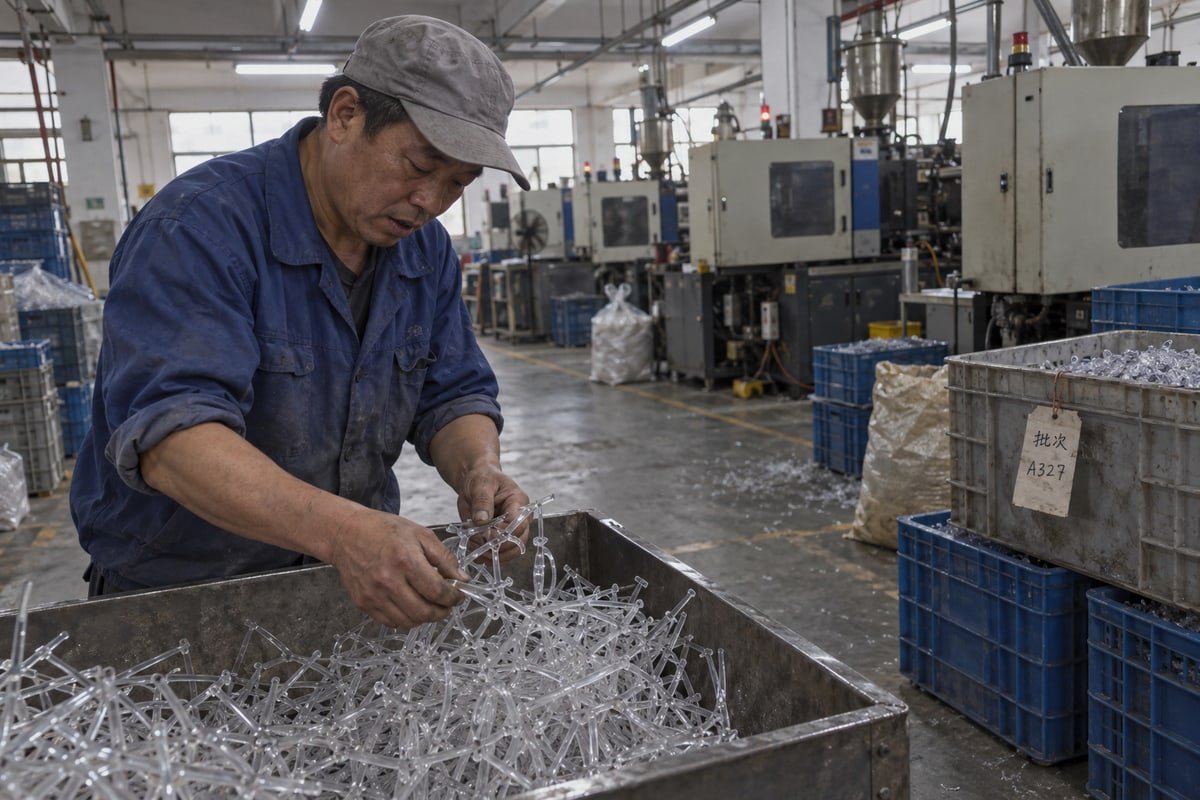
Buyers keep asking me whether TR90 kids sunglasses are recyclable. Vague answers cost trust with parents. So our Taizhou team traced what happens to a frame at end of life.
TR90 kids sunglasses are technically recyclable because TR90 is a thermoplastic polyamide, but they are rarely recycled in practice since curbside systems reject mixed-material eyewear. Bio-based alternatives exist, including castor oil based polyamides, bio-acetate, and partially bio-based TR90 grades.
That short answer hides a lot of detail. Below, I walk through how to verify recyclability, which alternatives exist, what they cost you in durability, and how to talk about it honestly.
How can I confirm whether TR90 kids sunglasses are actually recyclable at end of life?
A procurement manager from Australia once sent me a one-line email: Can we print recyclable on the box? My honest reply took three paragraphs, and it starts here.
Confirm recyclability by checking three things: the resin identity on the supplier datasheet, whether an eyewear-specific recycler or take-back program actually accepts the frame, and whether the sunglasses can be disassembled into separate polymer, metal, and lens streams.
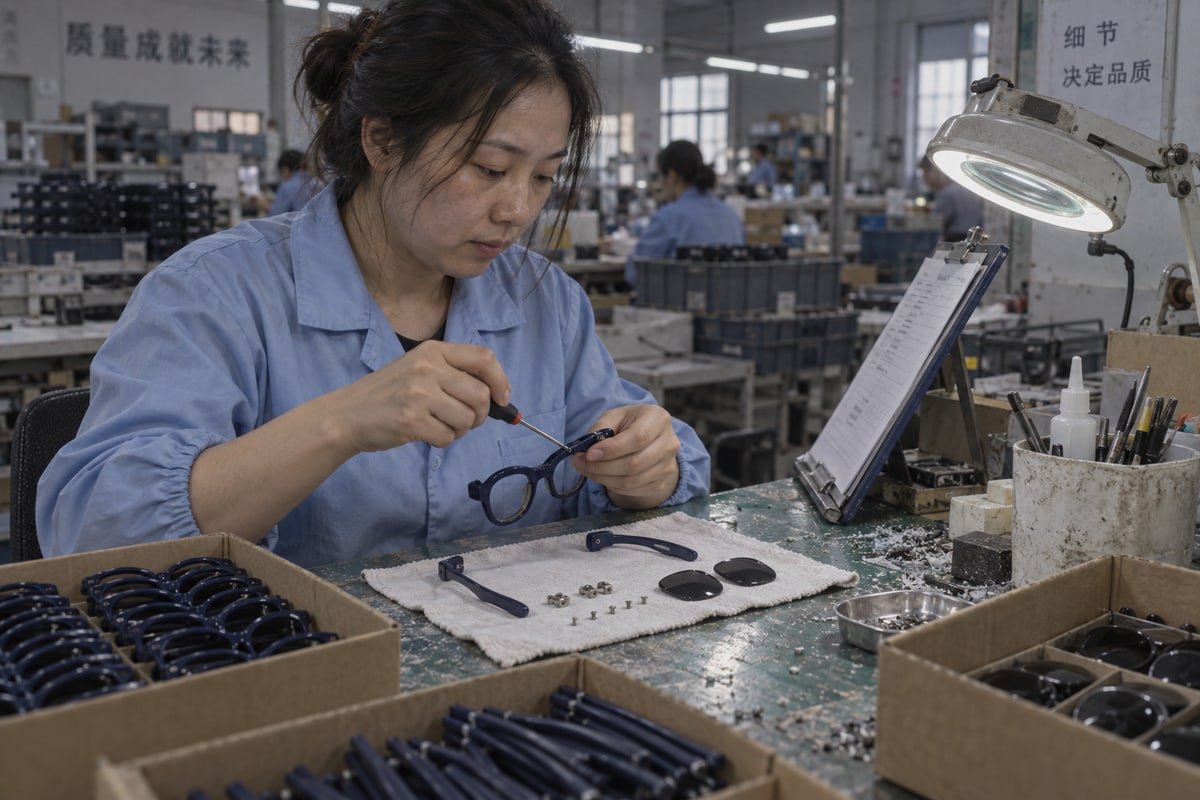
The word recyclable does a lot of work in eyewear marketing. In our experience, it means at least three different things. You need to know which one you are claiming before you print anything.
Three meanings of recyclable
| Level | 確認できますか? | Does standard TR90 qualify? |
|---|---|---|
| Technically recyclable | The polymer can be remelted and reprocessed | Yes. TR90 is a 熱可塑性ポリアミド 1, often sold as Grilamid TR90 |
| Accepted in local recycling streams | A household or municipal system will sort and process it | Rarely. Most curbside programs do not accept eyewear frames |
| Circular in practice | A real route exists: take-back, refurbishment, or closed-loop factory recycling | Only if the brand or a partner builds that route |
Our own factory recycles TR90 runners and sprues from the 射出成形プロセス 2. That scrap is clean, single-material, and easy to regrind. It goes back into non-visible parts or lower-grade runs. That is closed-loop production recycling. It is not the same as a parent dropping worn sunglasses in a blue bin, and we never present it that way.
Why a finished frame is a composite product
A finished pair of sunglasses is not a lump of TR90. It has metal hinges, tiny screws, nose pads, lenses, and lens coatings. Recyclers treat this as a composite product. Take our navy front with yellow-orange TPEE temples. That design is great for comfort, but it already means two different polymers in one frame. Effective recycling needs manual disassembly to separate the nylon front from everything else. Almost nobody does that at household scale. Eyewear-specific collectors and optical retailers with take-back boxes are the realistic route.
Mechanical versus chemical polymer recycling process
Even when TR90 is separated cleanly, the polymer recycling process matters. Mechanical recycling regrinds and remelts the material. Each cycle causes polymer chain scission. The chains get shorter. The famous memory plastic properties fade a little each time. Chemical recycling breaks the polyamide back to monomers and rebuilds it, so performance stays close to virgin. It is also rarer and more expensive. When a supplier says recycled TR90, ask which process was used and what share of the resin is recycled.
What bio-based or eco-friendly materials can I use instead of TR90 for children's sunglasses?
Every time we quote a bio-based resin, I weigh two numbers side by side: the fossil content we remove and the flex cycles a frame must survive on a playground.
The main alternatives to TR90 are castor oil based polyamides such as Rilsan Clear, partially bio-based grades in the Grilamid BTR family, bio-acetate made from wood pulp and cotton, recycled GRS-certified polyamides marketed as Eco-TR90, and recycled polycarbonate or PCR plastics.
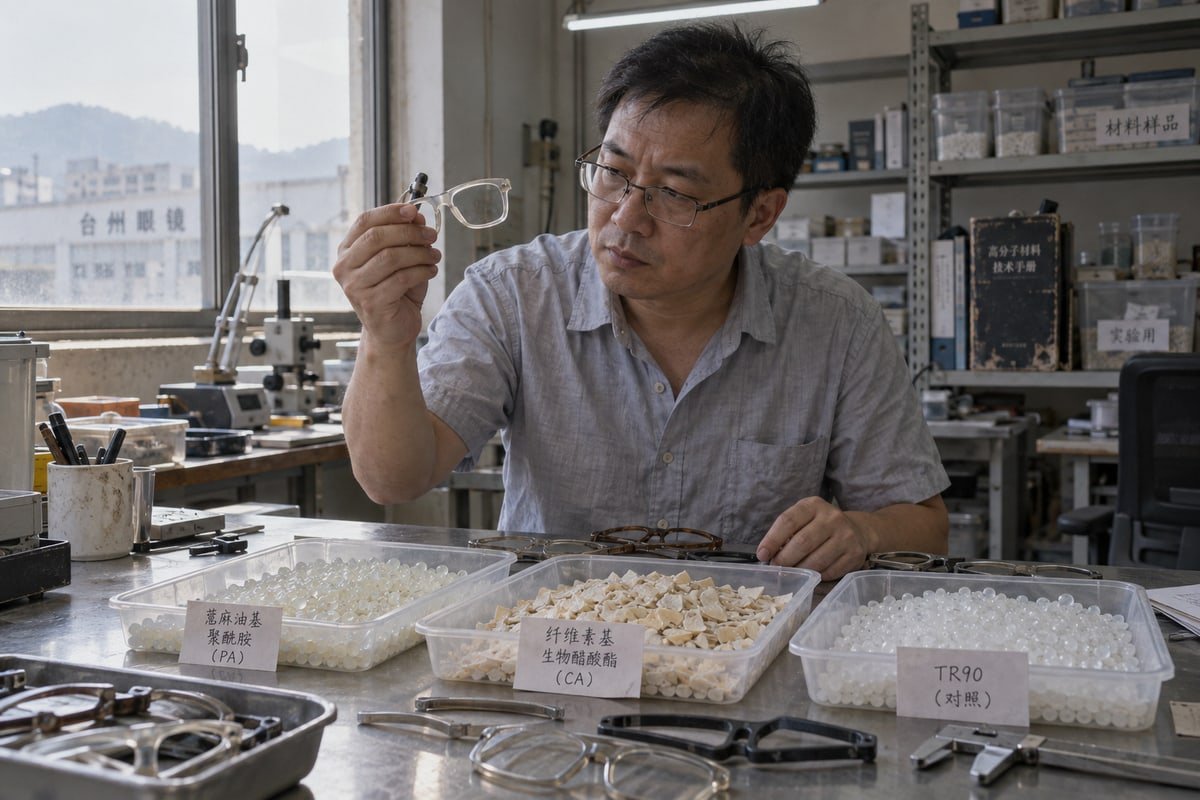
Here is the comparison I share with product development managers before we sample anything.
| 素材 | Feedstock | Flexibility and memory | 中程度から重い | Main sustainability logic | Honest caveat |
|---|---|---|---|---|---|
| Standard TR90 | Petroleum polyamide | 素晴らしい | 非常に軽い | Durability, long service life | Not widely recycled after use |
| Recycled TR90 / Eco-TR90 | Post-consumer or industrial polyamide waste | Good to very good | 非常に軽い | Less virgin fossil input | Ask for GRS proof and recycled share |
| Bio-based TR90 | Partly plant-derived polyamide | 素晴らしい | 非常に軽い | Lower fossil content | Still partly petroleum-based |
| Castor oil based polymers (Rilsan Clear, G850 type grades) | Castor beans | Excellent, matches TR90 | 非常に軽い | Renewable carbon, biogenic carbon sink | Higher resin cost, longer lead time |
| バイオアセテート | Wood pulp and cotton | Lower, no true memory | より重い | Renewable feedstock, premium feel | Not compostable, harder to recycle |
| Recycled polycarbonate / PCR plastics | Recovered plastics | Rigid | 軽い | Diverts waste | Performance depends on formulation |
Castor oil based polymers
These are the closest drop-in replacements we have handled. Rilsan Clear and similar castor-derived polyamides give the same spring-back and impact resistance as petroleum TR90. Castor beans grow on marginal land and pull CO2 from the air. That carbon stays locked in the frame for its whole life, which people describe as a biogenic carbon sink. The Grilamid BTR family from the same producer as TR90 also offers transparent grades with bio-based or recycled options. Always ask for the exact grade name and the bio-based percentage.
Bio-acetate alternatives
バイオアセテート is beautiful. It suits a glossy black oval frame with a retro look, like the style we make for the streetwear crowd. But it is heavier and it does not bend the same way. For a toddler who sits on her sunglasses, that matters. I position it for fashion-led lines for older kids, not for sports styles.
The biodegradable trap
Some suppliers promote biodegradable eyewear frames. Be careful. Bio-based means the carbon came from plants. Biodegradable means the item breaks down in a defined environment. Most bio-acetate and all bio-polyamides are not compostable at home. Do not confuse the two in your copy.
Will switching to sustainable materials affect the durability and safety my brand relies on?
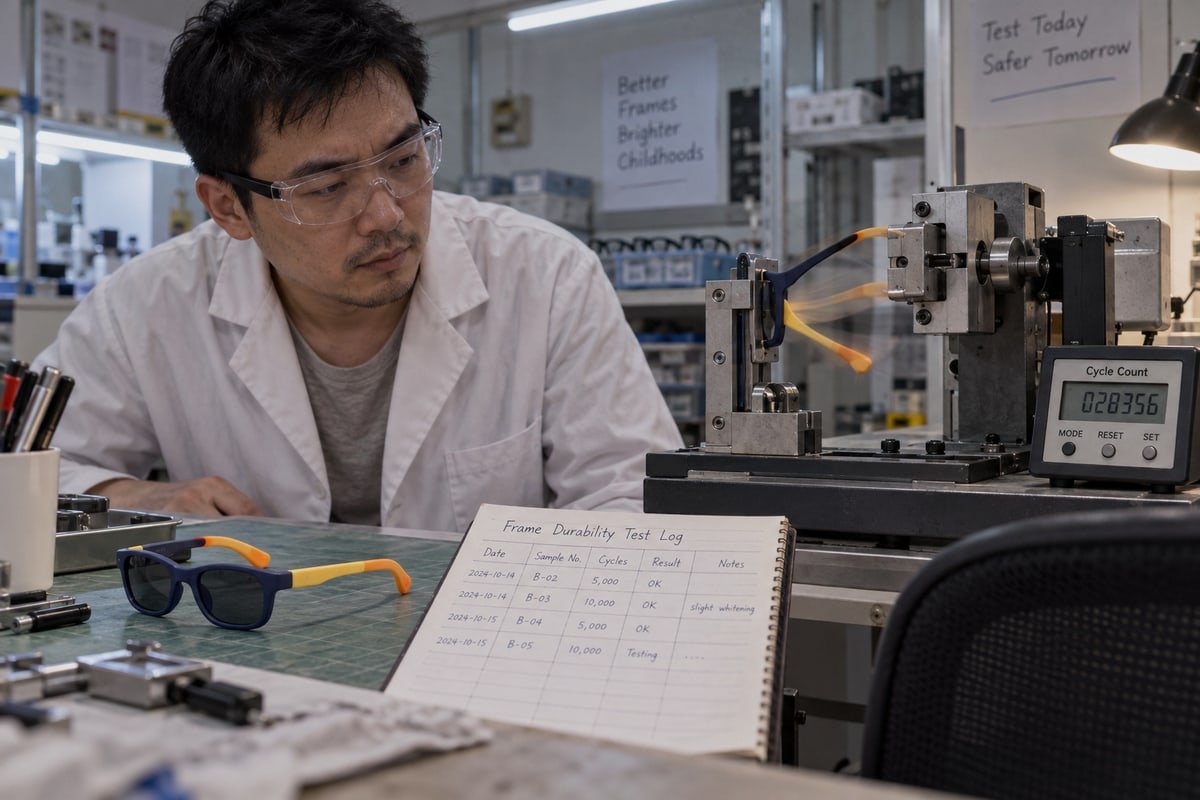
On our QC bench we flex every sample temple and watch it spring back. Last spring, one bio-acetate sample cracked on the second bend.
Switching materials can affect durability and safety, but not always negatively. Castor oil based bio-polyamides match TR90's memory and impact resistance and are plasticizer-free, while bio-acetate is heavier and less flexible. Recycled TR90 may lose memory unless chemically recycled.
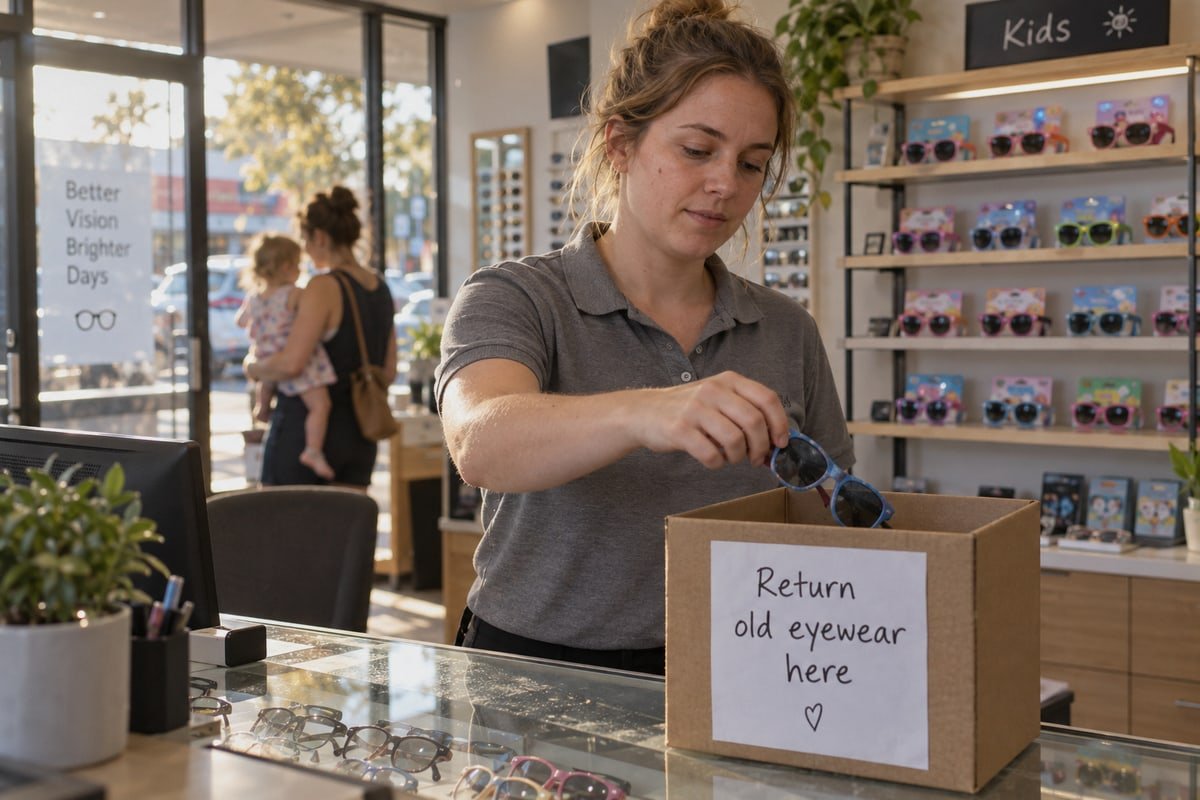
Durability is not a side issue for children's eyewear. It is the main environmental lever. A frame that bends instead of snapping gets replaced less often. Fewer replacements mean less waste. So I always ask whether a greener resin keeps that advantage.
Memory plastic properties by material
| プロパティ | Standard TR90 | Bio-polyamide (castor based) | Mechanically recycled TR90 | バイオアセテート |
|---|---|---|---|---|
| Spring-back after bending | 素晴らしい | 素晴らしい | Good, fades with each cycle | 限定的 |
| 耐衝撃性 | 高い | 高い | High, slightly lower | 中程度 |
| Resistance to sunscreen and skin oils | 接触点に集中 | Very good in advanced grades | 接触点に集中 | Moderate, can dull |
| Plasticizers in formulation | アクティブな子供のための安全性 | アクティブな子供のための安全性 | アクティブな子供のための安全性 | Uses plasticizers |
| Weight on a small face | 非常に低い | 非常に低い | 非常に低い | より高い |
Safety points parents actually ask about
Parents ask us about BPA-free frames more than any other chemical question. Polyamides like TR90 and its bio-based cousins do not use BPA in the resin. They are also inherently plasticizer-free. That removes the risk of phthalate leaching when a child chews a temple tip or sweats into the frame on a hot day. Lower-grade petroleum plastics do not always offer that. Advanced bio-polyamides also show better chemical resistance 3 to sunscreen and skin oils than standard TR90. That prevents the clouding and brittleness that push parents to throw frames away early.
Impact resistance standards and process changes
Whatever resin you choose, the frame still has to meet the 耐衝撃性基準 4 your market requires, such as the sunglasses standards used in the EU, US, and Australia. Bio-polyamides pass in our experience. Bio-acetate needs thicker sections to pass, which adds weight. Recycled polyamide needs tighter incoming inspection because batch consistency varies.
The injection molding process also shifts. Bio-polyamides need careful drying and slightly different melt temperatures. Our engineers run a short trial on an existing mold from our library of around 800 styles before we commit a client to a full order. That keeps the switch low-risk and lets you test the market without new tooling.
How do I communicate my eyewear's environmental credentials honestly to parents and retailers?
I learned this lesson the hard way: a hang tag that said eco-friendly with no proof behind it triggered more retailer questions than a plain tag ever did.
Communicate honestly by naming the exact resin, stating recycled or bio-based content with certificates, describing the real disposal route, and separating durability claims from recyclability claims. Never call a frame biodegradable or curbside recyclable unless you can prove it.
Retail buyers in Europe, Japan, and Australia now read eco claims with a skeptical eye. Regulators do too. The safest path is a claims ladder. You only step up when you have the document to back it.
A four-step claims ladder
- Name the material. Say thermoplastic polyamide, TR90, or the specific castor-based grade. Vague words like eco-plastic invite doubt.
- State the content with proof. If you claim recycled content, hold the GRS certificate and the percentage. If you claim bio-based content, hold the bio-based carbon test report from the resin supplier.
- Describe the disposal route. Say where the frame can go: a take-back program, an optical retailer collection box, or a partner recycler. If no route exists, say the frame is designed for long life instead.
- Lead with durability. A frame that survives three summers is a real environmental benefit. It is also easy for a parent to understand.
Claim versus proof
| Claim on packaging | Minimum proof you should hold |
|---|---|
| Made from TR90 thermoplastic polyamide | Supplier datasheet and material safety data sheet |
| Contains recycled polyamide | GRS or equivalent certificate plus recycled percentage |
| Made with castor oil based polymer | Resin grade name and bio-based content report |
| BPA-free and plasticizer-free | Resin composition statement from the supplier |
| Recyclable through our take-back program | A live program with a named collection partner |
| 材料は自然に分解されます | A recognised compostability certificate, which polyamides will not pass |
Circular economy in eyewear, done small
Circular economy in eyewear does not require a huge program. Start with spare parts. Offer replacement temples and nose pads for your best-selling styles. Choose designs where the lens can be swapped. Ask your supplier what happens to production scrap. When we build a branded package for a client, we prefer plain card boxes and a small insert that explains the material in one honest sentence. Parents respond well to plain truth. Retailers respond even better.
結論
The problem is simple: parents want honest answers. Vague eco labels erode trust. Pick the right resin, prove the claim, and let durability do the rest.
Interested in sourcing the products mentioned in this article? See details and request a quote here:
脚注
1. ISO standard for thermoplastic polyamides, providing the technical classification for materials like TR90. ↩︎
2. Authoritative academic overview of the technical injection molding process and its industrial applications. ↩︎
3. Scientific reference explaining the chemical resistance properties of polymers against environmental stressors. ↩︎
4. International ISO standard for sunglasses, defining the safety and impact resistance requirements for eyewear. ↩︎
 English
  Español de México
  Deutsch
  Français
  日本語
日本語  العربية
  Português do Brasil