How to Classify Kids’ Sunglasses as Category I PPE and Confirm CE Marking Responsibility in the EU?
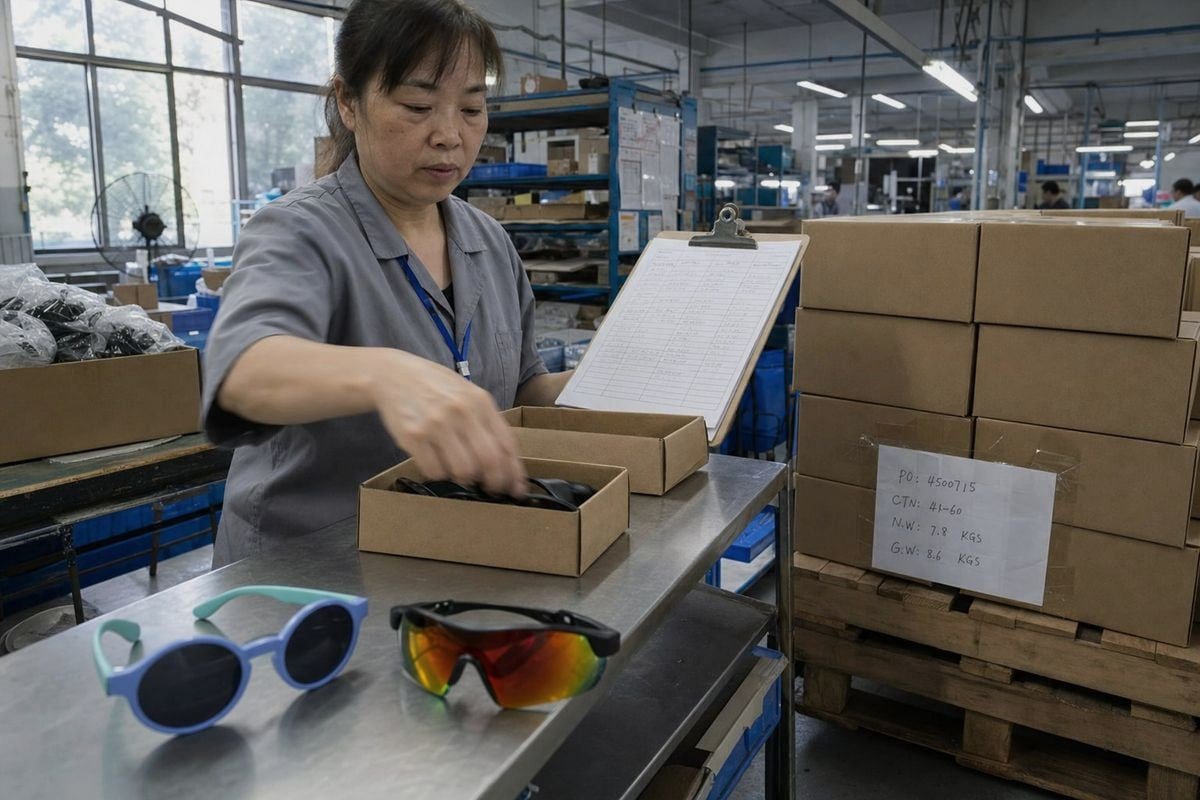
Classifying kids’ sunglasses as Category I PPE confuses many buyers who visit our Taizhou factory フタル酸エステル 1. Get it wrong, and your shipment can be stopped at an EU border.
Kids’ sunglasses qualify as Category I PPE under Regulation (EU) 2016/425 when they protect only against minimal risks like ordinary sunlight. CE marking responsibility falls on the manufacturer, but the EU importer — or any brand selling under its own name — legally assumes those same compliance duties.
That short answer hides several practical questions. Below, I walk through classification, legal responsibility, documentation, and supplier risk — step by step, in plain English.
What criteria determine if my kids' sunglasses qualify as Category I PPE under EU regulation?
A German buyer once asked our team why "simple" children's sunglasses fall under PPE law at all. It surprises many people, but the logic is clear once you see it.
Kids' sunglasses qualify as Category I PPE if their only intended function is protection against minimal risks — specifically, damage to the eyes from sunlight exposure. If the product claims extra protection, such as impact resistance or eclipse viewing, it moves into a higher risk category.
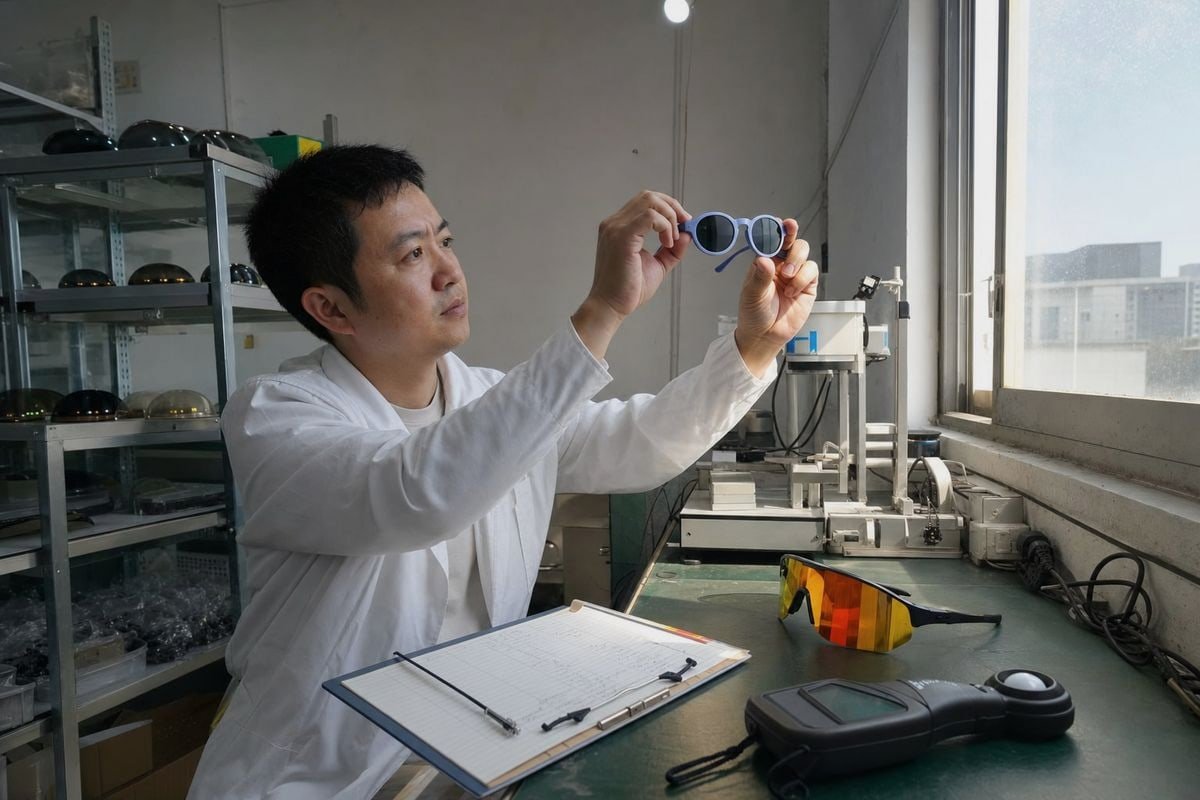
The key point is that Category I is a legal risk classification, not a marketing label. The PPE Regulation (EU) 2016/425 2 defines categories by the risk the product protects against — not by the product's name, price, or the age of the user.
The minimal-risk test
Annex I of the regulation lists minimal risks. One of them is explicitly "damage to the eyes due to exposure to sunlight." Ordinary kids' sunglasses — like the flexible round frames and sport wraparound shields we produce — fit this definition perfectly when they are sold purely for solar glare and UV protection.
So the classification question is really an intended-use question. Ask yourself: what does my packaging, marketing, and product listing claim?
| Product claim | Likely PPE category | Conformity route |
|---|---|---|
| UV / sunlight protection only | Category I | Self-declaration (Module A) |
| Impact or ballistic protection | Category II | Notified body EU type-examination |
| Eclipse viewing, laser, extreme hazards | Category II or III | Notified body plus ongoing surveillance |
| Novelty toy glasses with dark lenses | May trigger Toy Safety Directive 3 overlap | EN 71 testing in addition to PPE rules |
When classification shifts
Watch your own copywriting. If your Amazon listing says "shatterproof — protects eyes during sports impacts," you have just claimed a risk beyond sunlight. That claim can push the product out of Category I, and your simple self-declaration route no longer covers you. In our experience, this happens most often with sporty wraparound styles, because brands are tempted to promise impact performance the product was never assessed for.
Also remember the Toy-PPE overlap. Sunglasses with high play value — cartoon shapes, novelty designs — may need to comply with the Toy Safety Directive as well, including EN 71 mechanical and chemical testing. A proper risk assessment at the design stage keeps you on the right side of both frameworks.
Who is legally responsible for CE marking when I import or private-label children's sunglasses?
Early in our export history, a European client assumed our factory's paperwork alone made them compliant. That misunderstanding taught both sides a valuable lesson about economic operator responsibilities.
The manufacturer is primarily responsible for CE marking. However, when children's sunglasses are imported from outside the EU, the importer must verify full compliance before sale. If you sell under your own brand name, you legally assume all manufacturer obligations yourself.
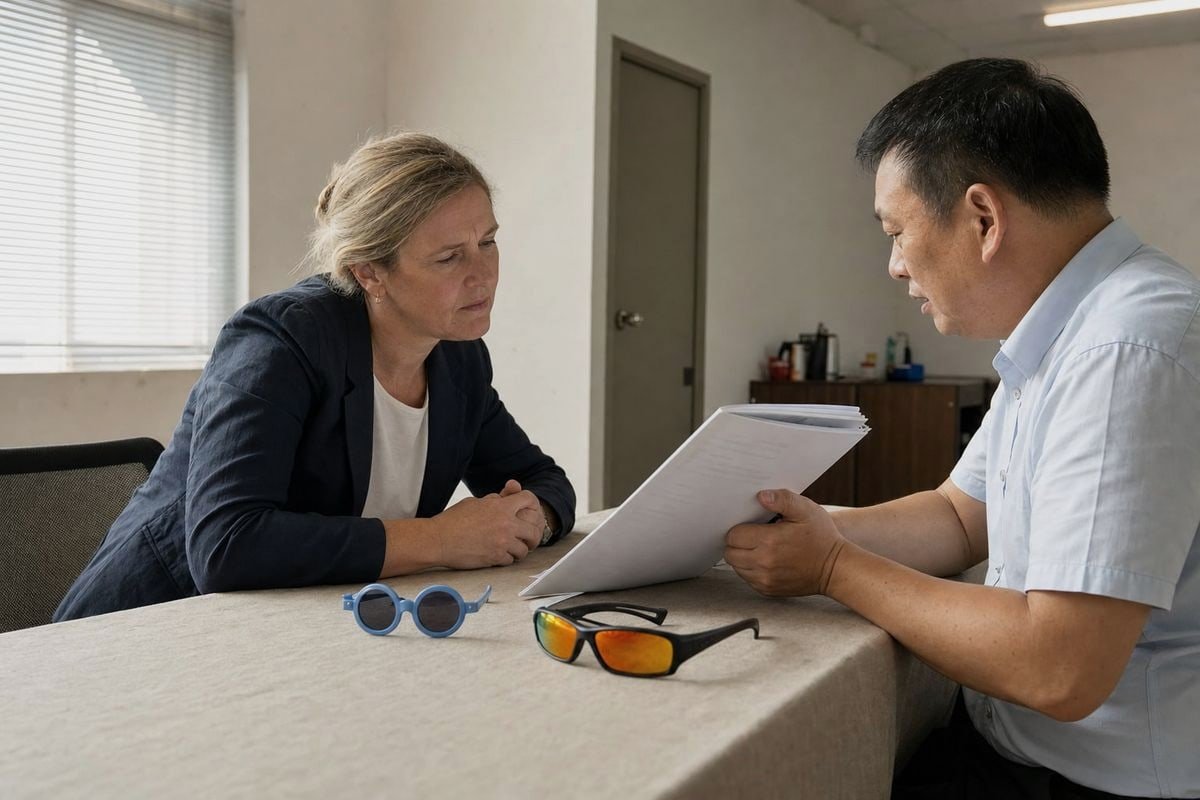
EU product law assigns duties to each economic operator in the supply chain. Understanding your role is the single most important compliance decision you will make before launch.
A simple decision tree
- Made in the EU, sold under the maker's name? The manufacturer holds full CE responsibility.
- Imported from outside the EU under the original maker's name? The importer must verify that the conformity assessment was done, the technical documentation exists, and the EU Declaration of Conformity is available.
- Sold under your own brand or trademark? You become the legal manufacturer, with every obligation that title carries — regardless of who physically made the product.
- Distributing only? You still must check that the CE mark, labeling, and traceability details are present before you sell.
Most of our clients fall into category three. They are kids' brands in Australia, Japan, and Europe who private-label our TR90 and TPEE frames. When their logo goes on the temple, EU law sees them as the manufacturer. That is not a technicality — it means their name must appear on the product or packaging with a postal address, and they must hold the technical file.
The new Responsible Person requirement
Since December 2024, the General Product Safety Regulation 4 (EU) 2023/988 adds another layer. Non-EU brands must designate a Responsible Person established in the EU to support market surveillance. If your company sits outside the EU and sells direct to European consumers, you need this appointed contact before shipping. We now raise this question with every new EU-bound client during the quotation stage, because fixing it after goods land is expensive and slow.
What technical documentation and testing do I need to prove compliance with the PPE Regulation?
Balancing testing cost against launch speed is a trade-off we discuss with nearly every new brand. The good news: Category I keeps the burden manageable if you organize it early.
You need a technical file containing a risk assessment, design drawings, test reports against EN ISO 12312-1, labeling evidence, and user instructions — plus a signed EU Declaration of Conformity. Category I allows internal production control, so no notified body certificate is required.

Category I follows Module A — internal production control. You self-declare conformity, but "self-declare" does not mean "no evidence." Market surveillance authorities can request your technical documentation at any time, typically within ten years of the last unit sold.
The core standard: EN ISO 12312-1
The harmonized European standard for general-use sunglasses is EN ISO 12312-1 5. Testing against it gives you presumption of conformity with the essential requirements. For our kids' lines, we test UV transmittance to confirm UV400 protection, verify the filter category classification, and check optical quality, robustness, and ignition resistance.
| Technical file element | それがカバーするもの | Who typically prepares it |
|---|---|---|
| Risk assessment | Hazards, intended use, foreseeable misuse by children | Brand with factory input |
| Design documentation | Drawings, materials list, lens specifications | 工場 |
| Test reports | EN ISO 12312-1 optical, transmittance, mechanical tests | Accredited lab |
| Labeling and instructions | Filter category, use restrictions, traceability details | Brand and factory jointly |
| EU Declaration of Conformity | Signed statement referencing the regulation and standard | Legal manufacturer |
Product labeling requirements
Product labeling requirements are where many otherwise compliant sunglasses fail inspection. The product or packaging must show the model reference, the manufacturer or importer identification with a postal address, the filter category (usually category 3 for dark lenses like the opaque gray ones on our round kids' frames), and any restrictions on use — for example, "not suitable for direct observation of the sun" and "not for driving at twilight or night" where applicable. Instructions must be in the languages of the destination markets.
Also look ahead: eyewear is a priority category for the Digital Product Passport 6 under the ESPR. A scannable QR code on frames linking to compliance and material data is coming. Building a clean technical documentation habit now will make that transition painless.
How can I avoid compliance risks if my supplier doesn't understand Category I PPE requirements?
Over fifteen years of eyewear production, we have inherited more than a few projects from suppliers who could not explain what a Declaration of Conformity was. The rescue work always costs more than doing it right.
Protect yourself by auditing your supplier's compliance knowledge before ordering: request recent EN ISO 12312-1 test reports, a sample EU Declaration of Conformity, material safety data for REACH, and labeling samples. If the supplier cannot produce these, commission independent testing or change suppliers.

A supplier who does not understand the PPE Regulation (EU) 2016/425 is not automatically a bad factory — but they transfer all the compliance work, and all the risk, onto you. Since you may be the legal manufacturer anyway, you need a supplier who can feed you reliable evidence.
Red flags versus green flags
| 赤信号 | Green flag |
|---|---|
| "CE certificate" from an unknown body with no test data | Recent EN ISO 12312-1 reports from an accredited lab |
| No answer on filter category or UV400 protection claims | Transmittance data per lens tint, filter category on file |
| No material declarations for frames | REACH-relevant data on TPEE, TR90, TPE/TPU components |
| Generic packaging with no traceability plan | Support for compliant labeling and retail-ready packaging |
| "The CE mark is on the lens, you're fine" | Willingness to share technical documentation for your file |
The chemical compliance blind spot
Market surveillance is increasingly testing "unbreakable" flexible kids' frames for REACH Annex XVII 7 substances — especially phthalates and lead in soft TPE and TPU materials. This is exactly why we standardized on TPEE and TR90 for our children's ranges. Flexibility and comfort should never come from plasticizers that fail a chemical screen. Ask your supplier directly what makes their frames flexible. A vague answer is itself an answer.
Practical steps before your first order
- Send a written compliance questionnaire covering the PPE Regulation, harmonized European standards, and REACH.
- Order pre-production samples and commission your own third-party test if reports look thin.
- Agree in the purchase contract who prepares which technical file elements.
- Verify labeling artwork against EU requirements before mass production.
- Keep every report, drawing, and declaration in one organized technical file.
One advantage of working from an existing catalog — we hold around 800 developed styles — is that documentation and test history often already exist for the base model, which shortens your path to a compliant launch considerably.
結論
Kids' sunglasses are Category I PPE when they protect only against sunlight. Whoever brands or imports them owns CE responsibility — so build the evidence before you build the order.
脚注
1. Background reference on the plasticizer chemicals flagged as a compliance risk in flexible frames. ↩︎
2. Official EU legal text defining PPE categories referenced throughout the classification discussion. ↩︎
3. Official EU directive text relevant to the toy-PPE overlap for novelty children’s sunglasses. ↩︎
4. Primary legal source for the new Responsible Person requirement discussed for non-EU brands. ↩︎
5. ISO is the standards body publishing the harmonized sunglasses testing standard cited. ↩︎
6. European Commission page describing the upcoming ESPR requirement mentioned for eyewear traceability. ↩︎
7. ECHA page explaining restricted substances relevant to phthalates and lead testing mentioned. ↩︎

 English
  Español de México
  Deutsch
  Français
  日本語
日本語  العربية
  Português do Brasil