How to Tell If Kids’ Sunglasses Frames Are Genuine TPEE?
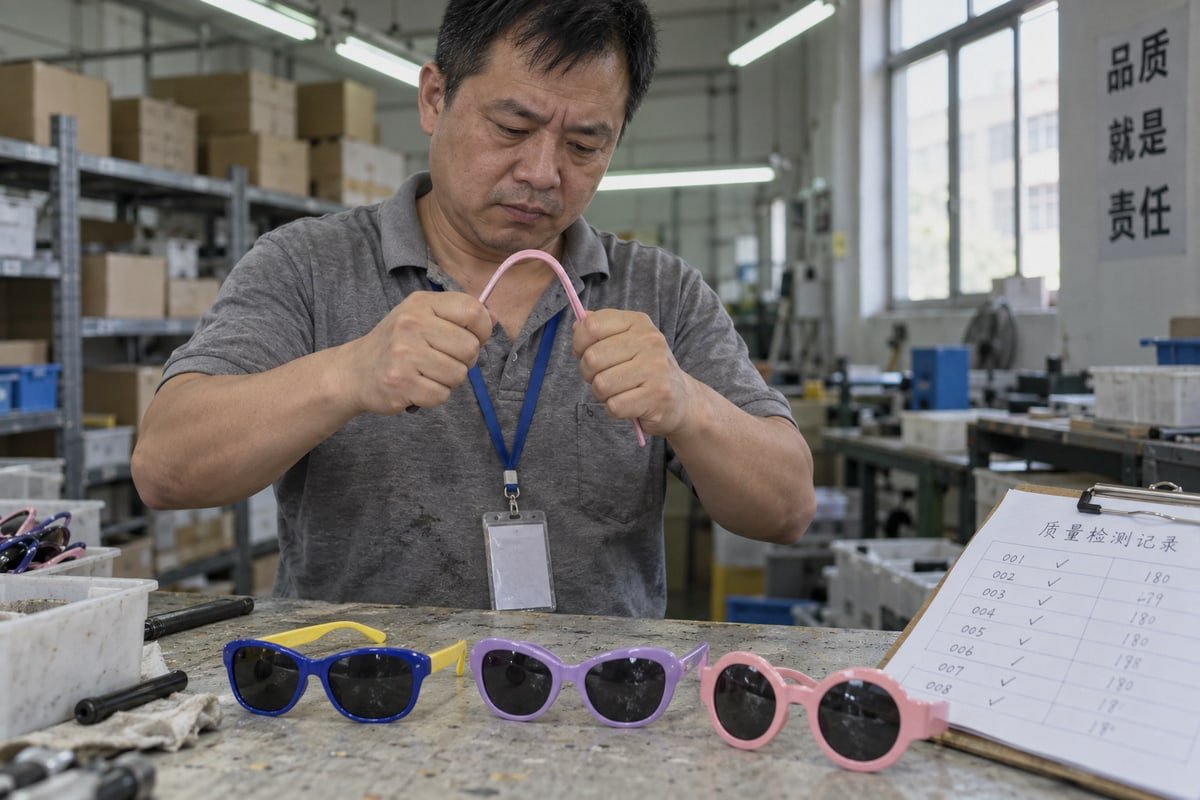
Every month, buyers send our Taizhou factory photos of kids’ sunglasses frames sold as genuine TPEE that snapped BPA, phthalates, and heavy metals 1. That costs trust and returns. Proper verification prevents it.
Genuine TPEE kids’ sunglasses frames are verified through labeling plus documentation, not touch alone. Check that the seller names TPEE or thermoplastic polyester elastomer, request a material declaration or test report, then confirm the frame bends 180 degrees and springs back without stress whitening, cracking, or chemical odor.
That short answer covers the principle. The rest of this guide shows you how to apply it. I will walk through the hands-on tests, explain why the material matters for safety, show how to check a supplier’s paperwork, and list the red flags I see most often in the market.
What physical tests can I use to check if a frame is real TPEE material?
Last spring, a QC worker on our line rejected a batch of temples because they returned to shape too slowly. That small delay told her the resin was wrong.
Physical tests for real TPEE include a 180-degree twist test, a stress-whitening check at the bend point, a memory recovery speed observation, a cold-flex test, a weight comparison, and a scent check. Genuine TPEE snaps back instantly, stays odorless, and shows no white marks or cracks.
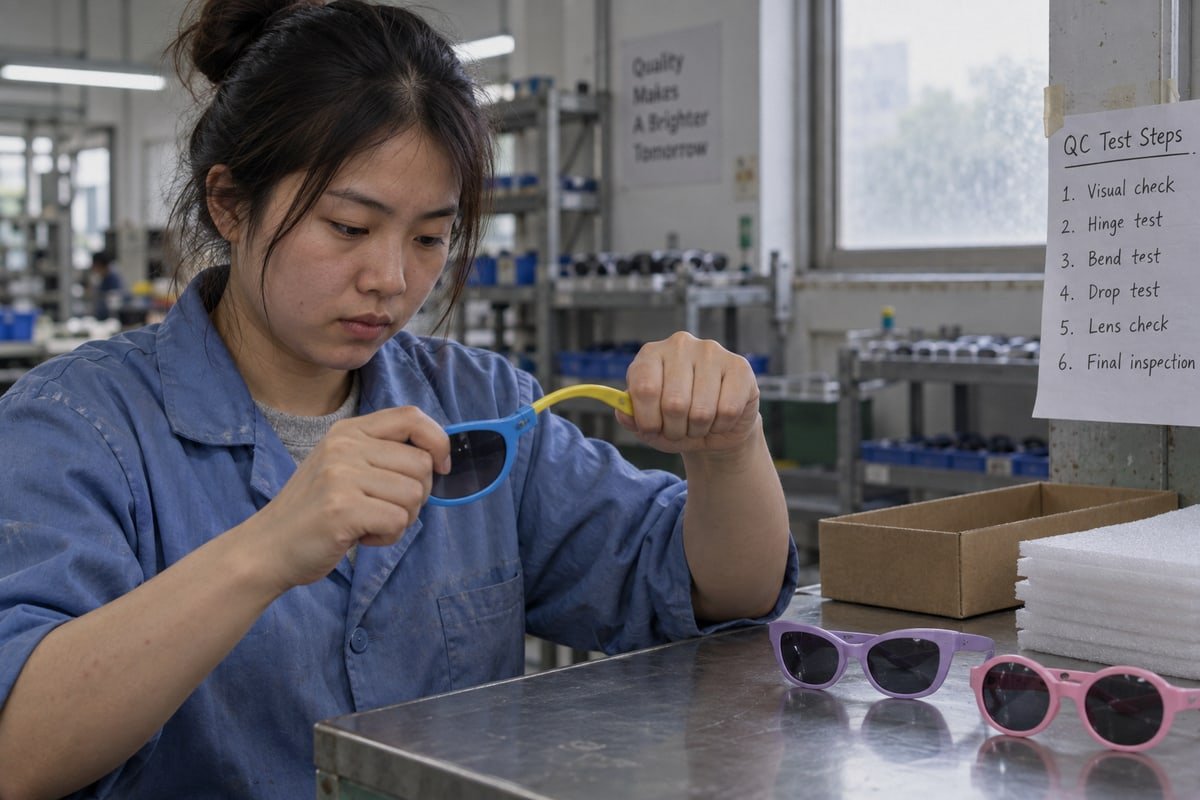
Hands-on tests are the first filter. They are fast, they cost nothing, and they catch the worst imitations. In our workshop we run a version of each test below on incoming material and on finished frames. Here is how I explain them to buyers who visit us.
The six bench tests
| テスト | 方法 | What genuine TPEE does | What imitations do |
|---|---|---|---|
| Twist test | Bend the frame or temple 180 degrees | Bends smoothly, returns to shape at once | Snaps, creaks, or stays bent |
| ストレスによる白化 | Fold sharply at one point and look at the outside of the bend | No white marks or crazing | White line or cloudy patch appears |
| Memory recovery speed | Release after a deep bend and watch | Near-instant snap-back | Slow, "lazy" return |
| Cold-flex test | Chill the frame in a freezer for an hour, then bend | Stays elastic | Turns stiff or brittle |
| 中程度から重い | Compare to an acetate or hard plastic frame of similar size | Noticeably lighter | Heavy or dense feel |
| Scent check | Smell the frame straight out of the bag | Odorless | Burnt, sweet, or chemical smell |
The twist and rebound tests
まずは twist test. Hold the front in one hand and a temple in the other. Twist the temple a full half turn. A frame made of 熱可塑性ポリエステルエラストマー 2 will feel springy the whole way. It will not click or resist suddenly. When you let go, it should return without any pause. That instant return is what I call memory elasticity. It is the single most useful bench signal.
Then look closely at the bend point. Cheap polycarbonate blends and PVC show white stress marks where the polymer chains have torn. TPEE does not. If you see a white line, the material is not what the label claims.
Surface, weight, and smell
Run your thumb along the temple. TPEE has a soft-touch, slightly rubbery finish. It never feels cold or glassy the way hard PC does. Hold the frame in your palm. It should feel light, because the resin is far less dense than acetate. Finally, smell it. TPEE is chemically inert. A sharp plastic odor usually means recycled filler or non-toxic plasticizers have been replaced with cheaper ones.
What these tests cannot tell you
I want to be honest here. These tests confirm that you have a good flexible elastomer. They do not prove the exact resin. A high-grade TPE can pass every test above. So bench tests rule out fakes, but they do not certify genuine TPEE on their own. That is why documentation, covered later, is the other half of the answer.
Why does TPEE flexibility matter for my children's eyewear safety standards?
Softer resin means more comfort but less lens grip. We weigh that balance every time we specify a TPEE grade for a toddler frame.
TPEE flexibility matters because a frame that bends instead of snapping removes sharp break edges, reduces impact injury risk, and survives rough play. However, flexibility alone does not meet children's eyewear safety standards; UV400 lenses, secure lens retention, and compliance testing such as CE or CPSIA complete the picture.
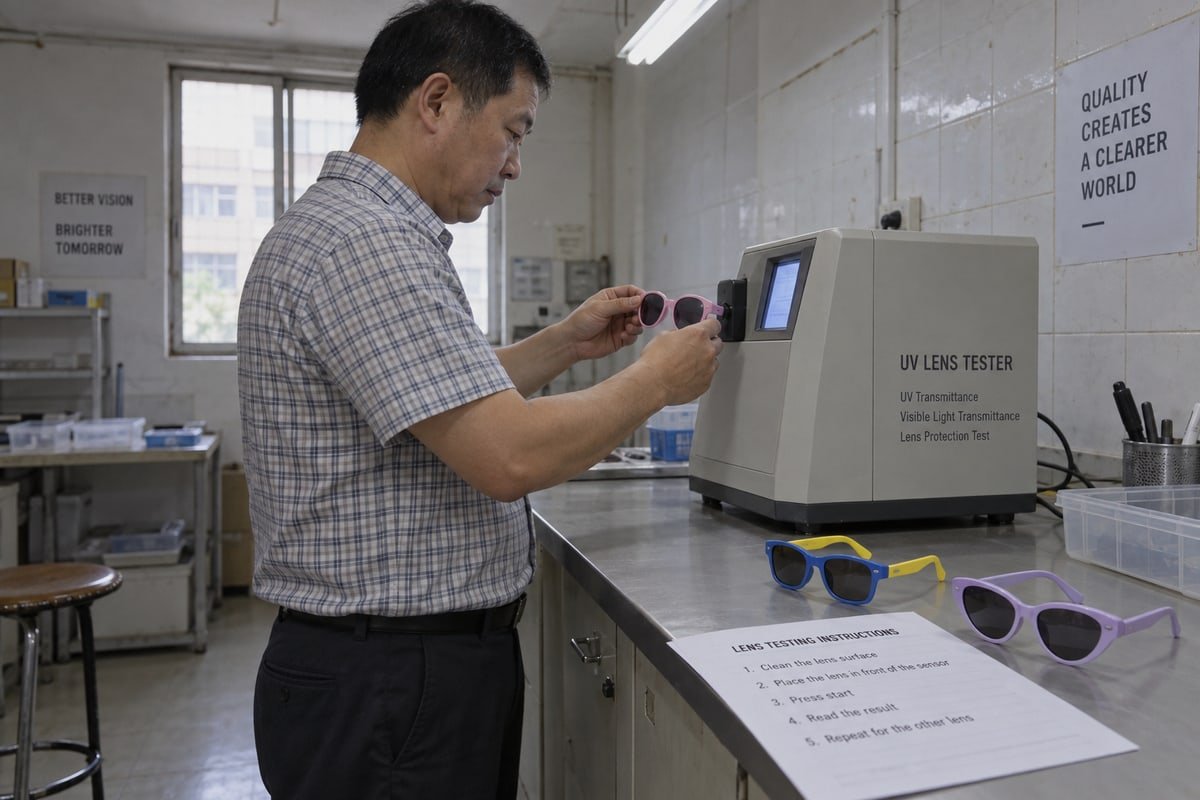
Children fall asleep in their sunglasses. They sit on them. They pull the temples apart to see what happens. A rigid frame fails under that treatment, and a broken rigid frame has sharp edges near the eye. That is the core safety argument for flexible frame durability. But I hear a fair objection from buyers: "If TPEE is unbreakable, why do I still see broken kids' glasses?" The answer is that the material is only one part of the system.
TR90 vs TPEE at a glance
| プロパティ | TPEE | TR90 | 標準PC |
|---|---|---|---|
| 柔軟性 | 非常に高い、ゴムのような | High, springy but structured | 低 |
| 耐衝撃性 | High, absorbs energy | 高い | Moderate, can crack |
| 中程度から重い | 非常に軽い | 軽い | 中程度 |
| 肌触り | Soft-touch, matte | Smooth, firm | Hard, glassy |
| Typical age range | Roughly 18 months to 7 years | Roughly 4 to 12 years and adults | Older kids and adults |
| Weak point | Lens retention in very soft grades | Hinge screws if poorly set | Snapping under stress |
Where flexible frames actually fail
Marketing calls TPEE unbreakable kids eyewear. In practice, the frame body almost never breaks. The lens-frame junction is where trouble starts. If the resin is too soft, the rim can flex enough for a lens to pop out during play. That is why our engineers pair softer TPEE with a rim geometry that grips the lens groove firmly. For older kids we often use a TR90 front with TPEE temples. The front holds the lens; the temples bend around the ears.
Flexibility is not UV protection
A frame can pass every bend test and still let UV through. Frame material and lens quality are separate specifications. We fit our children's styles with polycarbonate or TAC lenses 3 rated UV400. A buyer should verify that claim on its own, with its own test report. A soft frame with poor lenses protects the face and fails the eyes.
Fit still matters
Flexibility helps fit, but it does not replace sizing. A toddler frame should sit snug without pinching behind the ears. Very young children benefit from a strap-friendly design. Older children and sport users often prefer a TR90 structure that holds its shape during running. "More flexible" is not always "better." The right answer depends on age and use.
How can I verify a supplier's TPEE material claims before placing my order?
A procurement manager from Australia once asked me for the resin datasheet 4 before she asked about price. I respected that order of questions.
Verify supplier TPEE claims by requesting the resin datasheet with the exact grade name, a material declaration, third-party test reports for BPA, phthalates, and heavy metals, plus product-level UV400 and CE or CPSIA documentation. Then order physical samples and run twist, whitening, and odor checks yourself before committing.
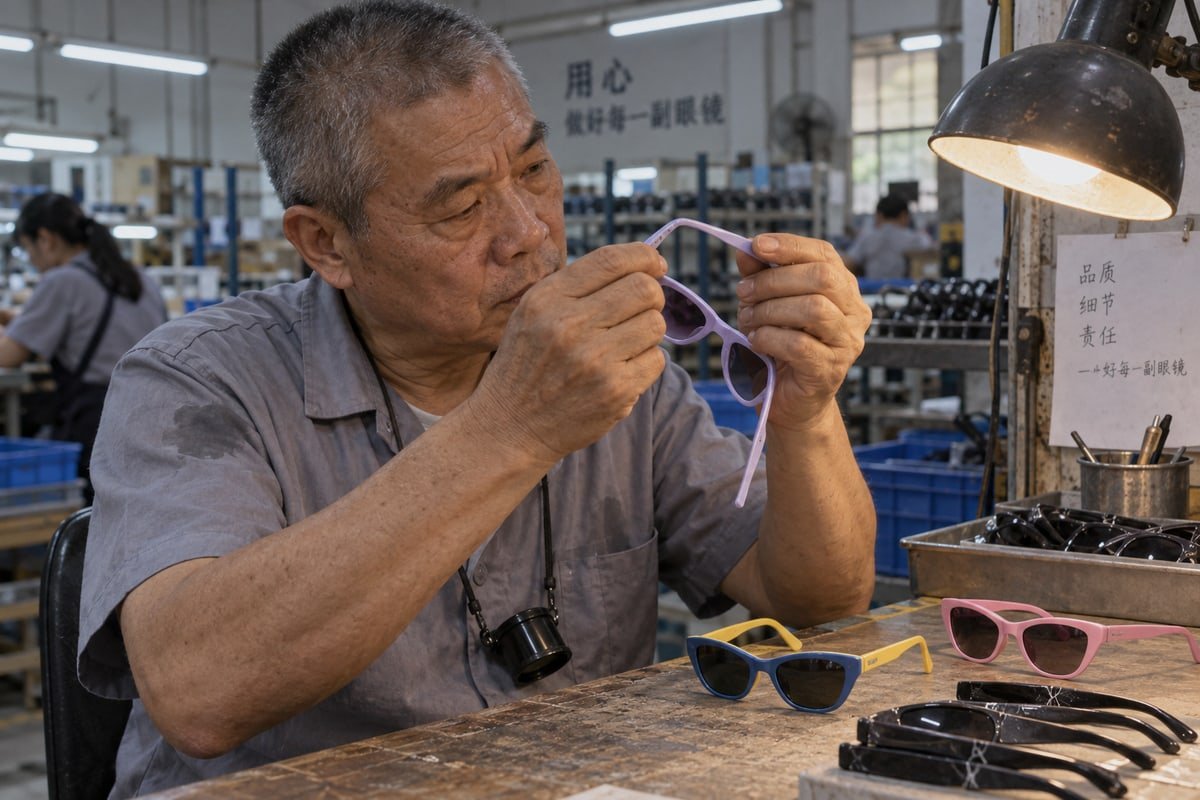
Authenticity is partly a documentation problem. A serious factory can show you where its resin comes from and what has been tested. A trading company that resells mixed stock usually cannot. Here is the process I recommend to brand buyers, in the order I would follow it myself.
5段階の検証プロセス
- Ask for the resin datasheet. It should name the polymer as 熱可塑性ポリエステルエラストマー and give a grade number. If the supplier cannot name the grade, stop there.
- Request a written material declaration. This is a signed statement that the frame is made from that grade, with no undeclared blending or regrind.
- Collect material safety reports. Look for third-party results covering BPA-free material status, phthalates, and heavy metals. These support food-grade safety standards claims, which matter because toddlers chew on temples.
- Collect product-level compliance. For Europe, CEマーキング 5 and EN ISO testing. For the US, CPSIA. For lenses, UV400 or 100% UVA/UVB reports. Ask whether reports are batch-specific.
- Order samples and test them. Run the bench tests from the first section. Compare samples from two production runs for consistency.
Documents ranked by value
| 文書 | 登録番号 | How much weight to give it |
|---|---|---|
| Resin datasheet with grade | The polymer identity | 高い |
| Signed material declaration | The factory's commitment to that polymer | 高い |
| Third-party chemical reports | Absence of BPA, phthalates, heavy metals | 高い |
| CE / CPSIA / EN ISO reports | Product meets children's safety rules | 高い |
| UV400 lens report | Optical protection | High, but separate from frame |
| "Eco-friendly" or "non-toxic" statement alone | Marketing intent only | 低 |
| Seller-reported bending cycle counts | Internal durability testing | Medium, unless documented |
Check consistency and the factory itself
Read the supplier's product pages, FAQs, and technical sheets. The material name should be the same everywhere. If one page says TPE and another says TPEE for the same frame, ask why. Then ask about the factory. We operate a 5S-managed workshop with around 120 workers and fifteen years in eyewear. I encourage buyers to request a video walkthrough or a visit. A real production line, incoming material inspection, and clear storage labels tell you more than any brochure.
What are the warning signs of fake or mixed TPEE frames I should avoid?
Years ago, a sample from another factory taught me a lesson: it bent beautifully but smelled sharp out of the bag. The compound had been cut with cheap filler.
Warning signs of fake or mixed TPEE frames include vague labels like soft rubber or unbreakable without a resin name, TPE and TPEE used interchangeably, a chemical or burnt smell, white stress marks after bending, sluggish shape recovery, stiffness in cold, missing test documents, and prices far below market.
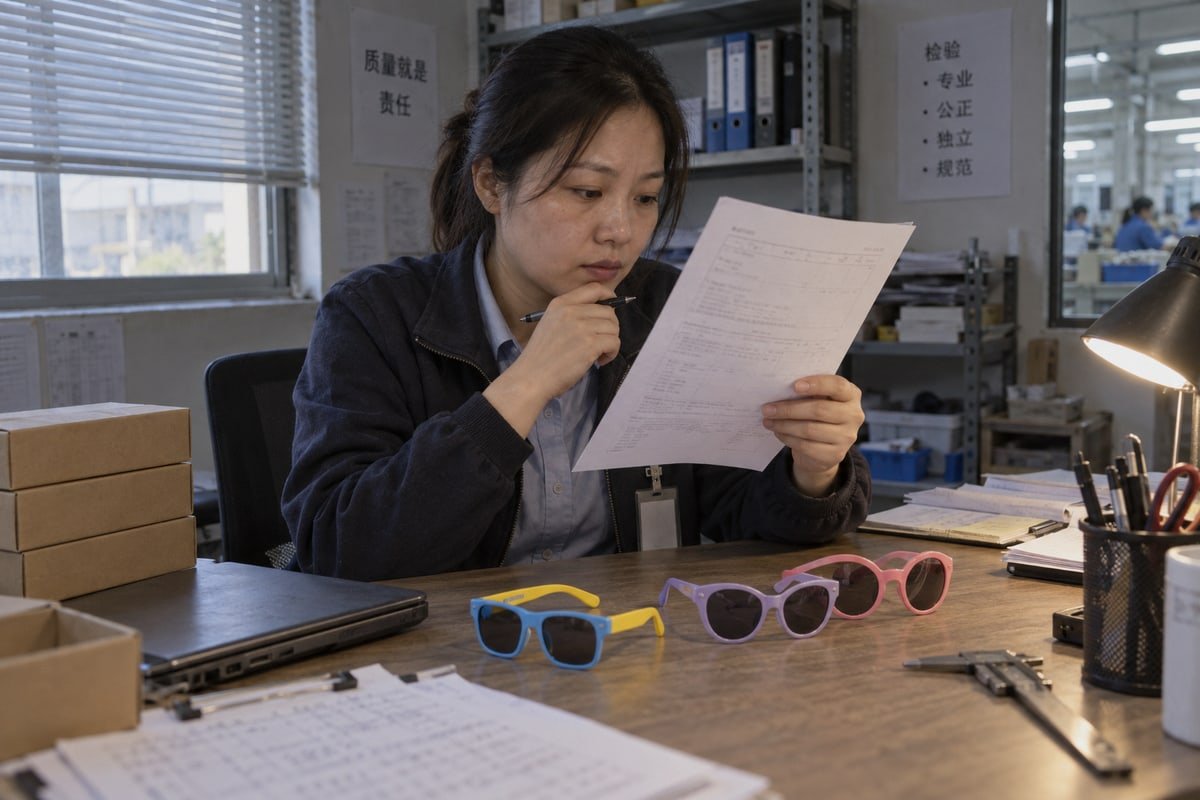
Fakes come in two forms. The first is a different polymer sold under the TPEE name. The second is real TPEE mixed with regrind or filler to lower cost. The second kind is harder to catch because it can pass a casual twist test. Below is how I sort listings and samples when a buyer asks for a second opinion.
赤信号と緑信号
| シグナル | 赤信号 | 緑信号 |
|---|---|---|
| Material label | "Rubber frame," "bendable," "unbreakable" only | "TPEE" or "thermoplastic polyester elastomer" with grade |
| Naming consistency | TPE on one page, TPEE on another | Same term across listing, FAQ, and spec sheet |
| Smell | Burnt or chemical odor | No odor |
| Bend behavior | White marks, slow return | Clean bend, instant recovery |
| Cold behavior | Stiff after chilling | Still elastic |
| Safety paperwork | "Non-toxic" statement only | CE, CPSIA, or EN ISO reports plus UV400 |
| Price | Far below comparable factory quotes | In line with genuine resin costs |
| Hinge and rim | Loose lenses, wobbly hinge | Tight lens groove, secure hinge |
Why "unbreakable" is a warning, not a promise
The word unbreakable appears on many listings. I treat it as a marketing phrase. Genuine bendable sunglasses frames resist snapping, but the lens can still pop out and a hinge can still loosen. A supplier who explains this limit is more credible than one who promises the frame is indestructible. Seller-reported bending cycle counts or drop tests are useful only when a report backs them.
The TPE and TPEE mix-up
TPE is a broad family of thermoplastic elastomers. TPEE is one specific member with a polyester base and better heat and fatigue performance. Some sellers use the two words as if they mean the same thing. They do not. When you see both terms on one product, ask the supplier which resin was actually molded and request the datasheet.
Separate eco claims from safety claims
Recyclable, PVC-free, and phthalate-free claims are good to see. We make those claims ourselves because our materials are environmentally friendly. But an eco claim does not verify the resin, and it does not verify the lenses. Judge each claim on its own evidence. A listing that stacks many soft claims and no hard documents is telling you something.
結論
Fake TPEE puts children and your brand at risk. Verify labeling, demand documents, and test samples yourself. Our factory welcomes that scrutiny on every one of our 800 styles.
Interested in sourcing the products mentioned in this article? See details and request a quote here:
脚注
1. Official US government resource for safety standards regarding chemical content in children’s products. ↩︎
2. Technical overview of thermoplastic elastomers, the material class including TPEE used in flexible frames. ↩︎
3. FDA guidance on selecting sunglasses that provide effective ultraviolet radiation protection for the eyes. ↩︎
4. Explanation of the standardized documents used to provide information on chemicals and industrial materials. ↩︎
5. Official European Commission explanation of the CE marking process for product safety and compliance. ↩︎
 English
  Español de México
  Deutsch
  Français
  日本語
日本語  العربية
  Português do Brasil