中国製の子供用サングラスの処方レンズのフィッティングにベースカーブはどのように影響しますか?
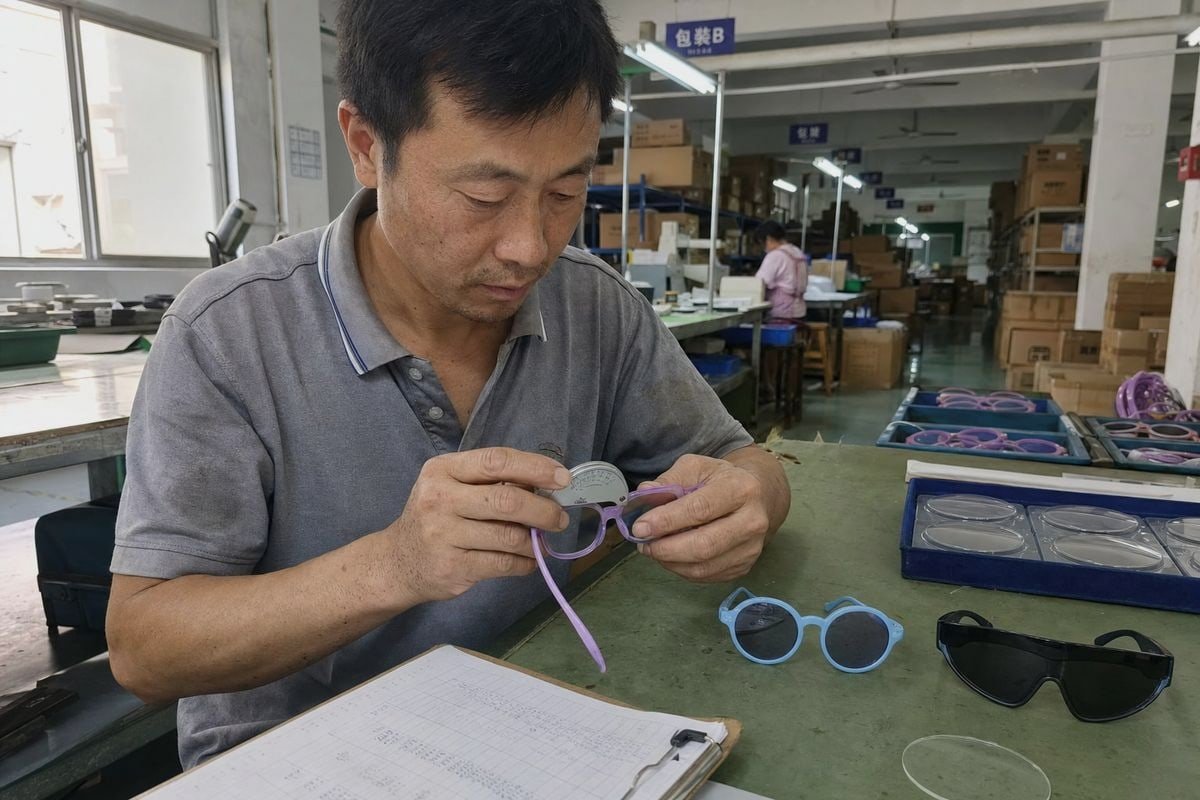
ベースカーブは、子供用サングラスの処方レンズのフィッティングが成功するか失敗するかを静かに決定します。太州の生産ラインでは、バイヤーが常にそれを見落としているのを目にします。レンズが外れたり、子供がめまいを訴えたり、返品が山積みになったりするまで。修正は、1つの数字を理解することから始まります。.
ベースカーブは、サングラスのレンズが子供の顔にどれだけ巻き付くかを決定します。フラットなカーブ(ベース4〜6)はほとんどの処方を正確に受け入れますが、ハイラップの8ベースフレームは処方範囲を制限し、光学歪みを増加させ、正確なレンズ加工を必要とします。ベースカーブとフレームの形状を一致させることは、安全でクリアな小児のフィッティングに不可欠です。.
どのようなベースカーブの選択肢があるか、それらをフレームのデザインにどのように合わせるか、なぜそれらが快適さと安全性に影響を与えるのか、そして注文する前にどのように精度を確認するかを説明します。.
中国の子供用サングラスメーカーに依頼できるベースカーブのオプションは何ですか?
以前、オーストラリアのバイヤーが私に「処方箋対応のラップアラウンド子供用サングラス」を求めてきましたが、カタログのすべてのスタイルが機能すると想定していました。私たちはペースを落とし、まずベースカーブについて話す必要がありました。.
ほとんどの中国の子供用サングラス工場では、ベースカーブは2から8まで提供しています。ベース4は、オプティカルスタイルのフレームや強い度数に適しており、ベース6はスタイルと処方箋の互換性のバランスを取り、ベース8はスポーツラップアラウンドデザインに使用されます。バイヤーは、注文する前に各スタイルのベースカーブ仕様を要求する必要があります。.
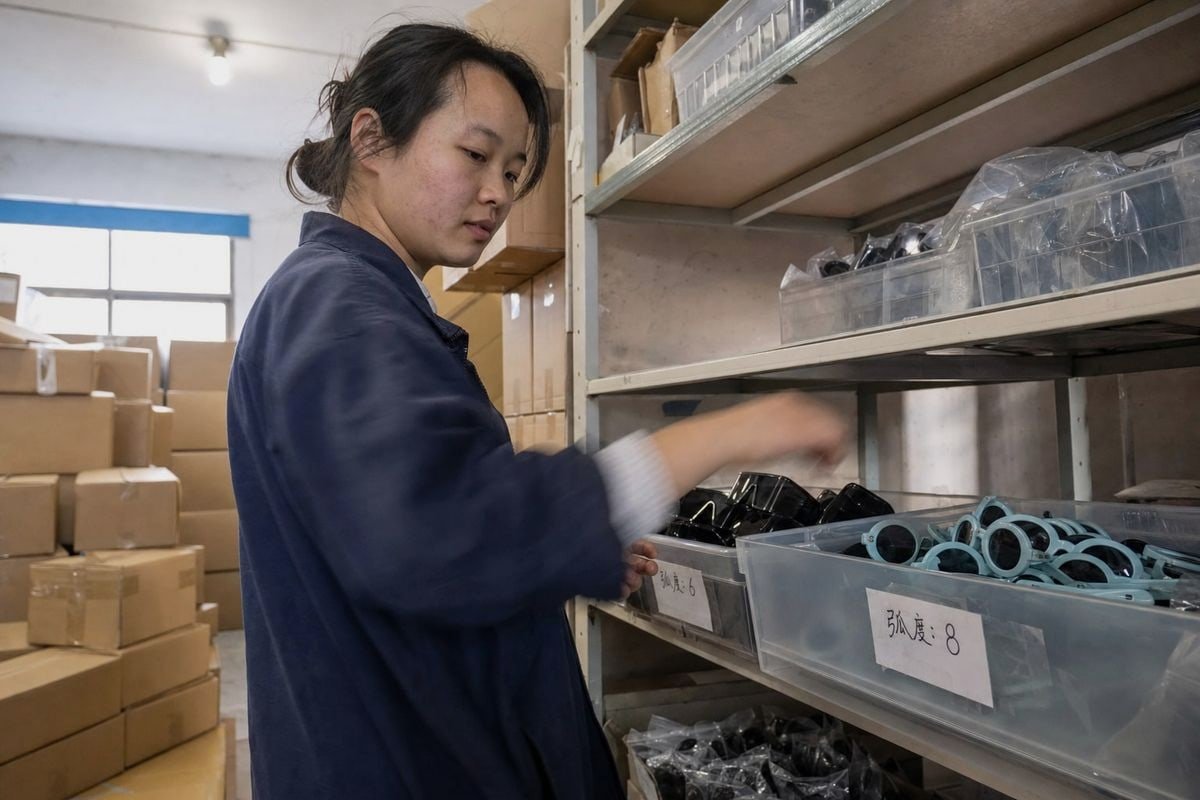
私たちの工場では、約800の既存スタイルのほとんどが3つの曲率ファミリーに分類されます。それらを理解することは、あなたがショートリストを作成するのに役立ちます 顧客の処方ニーズに合ったフレーム 生産後に問題を発見するのではなく。.
標準ベースカーブ範囲
ベースカーブはレンズの後ろではなく、前面の曲率を説明します。数字が低いほど、レンズはフラットになります。数字が高いほど、ラップは大きくなります。子供用眼鏡の一般的なオプションの内訳は次のとおりです。
| ベースカーブ | ラップレベル | 典型的なスタイル | Rx互換性 |
|---|---|---|---|
| ベース2〜4 | 非常にフラット | クラシックな光学、丸いフレーム | 優れています—最も広い処方範囲 |
| ベース6 | 中程度 | 日常のカジュアルサングラス | 良い—ほとんどの子供の処方を処理します |
| ベース8 | ハイラップ | スポーツシールド、サイクリングスタイル | 限定—補正レンズ設計が必要 |
| ベース8+ | エクストリームラップ | スキーゴーグル、レーシングシールド | 非常に限定的—多くの場合、平面のみ |
例として、私たちの丸いパウダーブルーの子供用フレームを取り上げましょう。その柔らかくコンパクトな形状は、ベース4〜6の前面にあります。その形状は、標準的な処方レンズを簡単に受け入れます。対照的に、私たちの白いラップアラウンドシールドスタイルは、ベース8の金型を使用しています。スキーやサイクリングには素晴らしいですが、処方箋への変換ははるかに困難な候補です。.
私たちのワークショップからの実用的な注意点:多くの中国の工場では、大量生産のために標準化されたベース6およびベース8の金型を使用しています。あなたの市場が複雑な小児の処方箋のために特別なカーブを必要とする場合は、早期に尋ねてください。カスタム曲率は通常、金型の検討、最小数量、およびリードタイムの計画を必要とします。また、工場がローブリッジフィットオプションを提供しているかどうかも尋ねてください。これらのフレームは、自然にフラットな前面カーブを持つことが多く、これにより、高出力レンズとの互換性が静かに向上します。番号を事前に知っているバイヤーが後で痛みを伴う驚きを避けることができるように、私たちは仕様シートにベースカーブをフラグ付けしています。.
フレームデザインとベースカーブを正確に合わせるにはどうすればよいですか?
昨年のサンプリングラウンド中に、エンジニアはカーブがフレームの溝から1ジオプターずれていたため、レンズバッチを却下しました。そのわずかな不一致は、実行中のすべてのヒンジにストレスをかけていたでしょう。.
レンズのベースカーブを、フレームの設計されたカーブに約1ジオプター以内で合わせます。フラットな光学フレームにはベース2~4のレンズを、カジュアルフレームにはベース6を、スポーツラップフレームには補正されたベース8のレンズを組み合わせます。不一致は、レンズの飛び出し、フレームの歪み、周辺部の歪みの原因となります。.
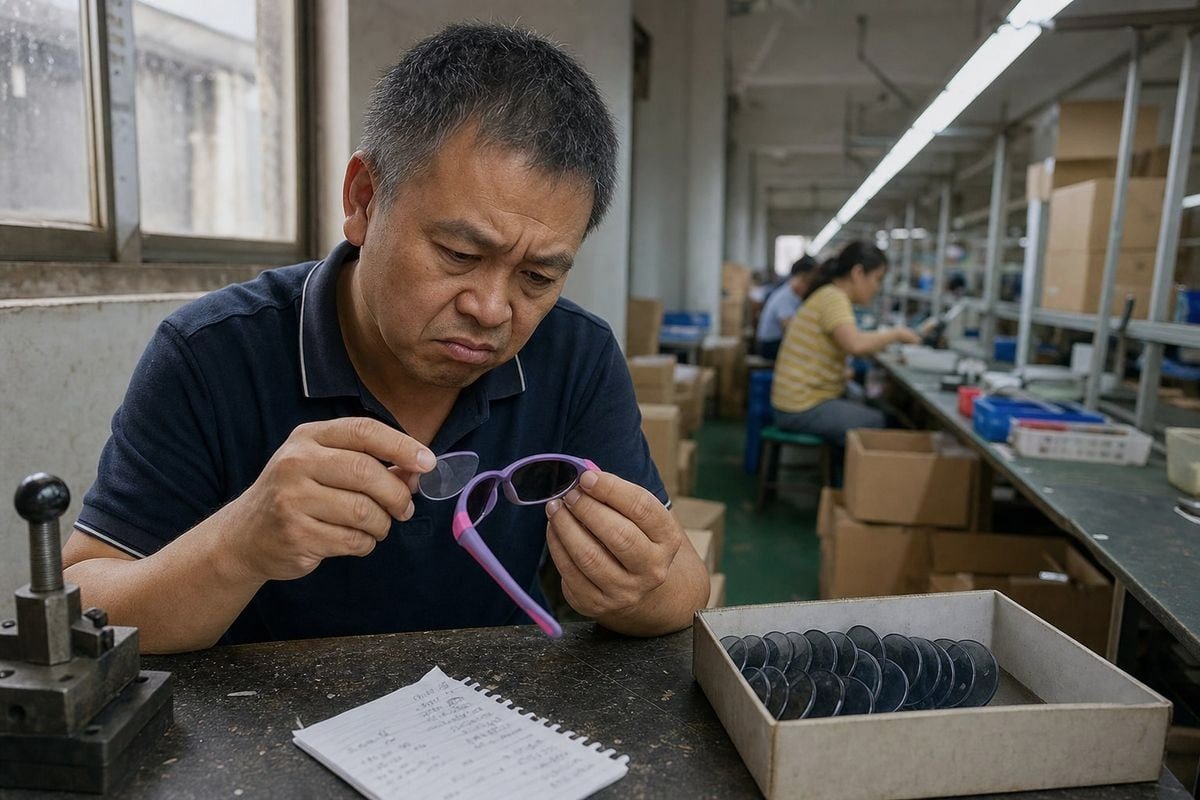
フレームは、意図されたレンズの曲率を中心に成形されます。面取り溝、フレームのラップ角度、テンプルの形状はすべて、特定のカーブを想定しています。レンズカーブが離れすぎると、機械的張力と光学誤差の2つの問題が同時に発生します。.
まず機械的なフィット感
フラットなレンズを湾曲したフレームに無理やり押し込むと、フレームが反発します。. TR90フレームの耐久性 1 ここではある程度の許容範囲を提供します—素材はひび割れるのではなく曲がります—しかし、柔軟性はいい加減なマッチングの許可ではありません。大きなずれは依然としてアライメントを損ないます。レンズが遊び中に外れたり、フレームがゆっくりと歪んで子供の顔への装着方法が変わったりする可能性があります。.
次に光学アライメント
レンズが物理的にフィットしても、新しい形状に合わせて処方を再計算する必要があります。より急なラップは、レンズを目の相対的な位置に傾けます。その傾きは有効パワーを変化させ、 斜乱視 2 ラボがジオプター補正を適用しない限り。頂点距離の調整も重要です。ラップされたレンズは、目の検査中に試用レンズがあった場所よりも、目に近づいたり遠ざかったりすることがよくありますが、これは有効な補正をシフトさせます。.
| フレームタイプ | 推奨レンズカーブ | 主なフィッティングアクション |
|---|---|---|
| Flat kids' optical frame | ベース2〜4 | Standard surfacing, verify vertex distance |
| Round casual sunglass | Base 4–6 | Match groove curve, standard edging |
| Moderate sport frame | ベース6 | Check frame wrap angle, minor compensation |
| Shield wraparound | Base 8 (compensated) | Digital surfacing 3 with tilt and wrap compensation |
Practical guidance from prescription ranges we see: powers within roughly -4.00 to +3.00 usually adapt to moderate wrap. Stronger powers, or cylinder beyond about ±2.00, generally belong in flatter frames. Some advanced labs now use mini-blank digital surfacing for small pediatric frames, optimizing the optical center and trimming edge thickness even in curved designs. Ask whether your supply chain supports it before committing to a wrap style.
子供の顔の快適さと安全性において、ベースカーブはなぜ重要なのでしょうか?
The trade-off I weigh most often when advising kids' brands is coverage versus clarity. A steep wrap blocks more side light, but it also asks more of a young visual system.
ベースカーブは、レンズが小児の顔の解剖学にどのようにフィットするか、子供がどの程度周辺歪みを認識するか、そして遊び中にフレームがどれだけしっかりと装着されているかに影響します。間違ったカーブは、頭痛、魚眼レンズのような歪み、圧迫点、そして不安定なフィット感を引き起こし、これらはすべて活発な子供たちの安全上の懸念となります。.
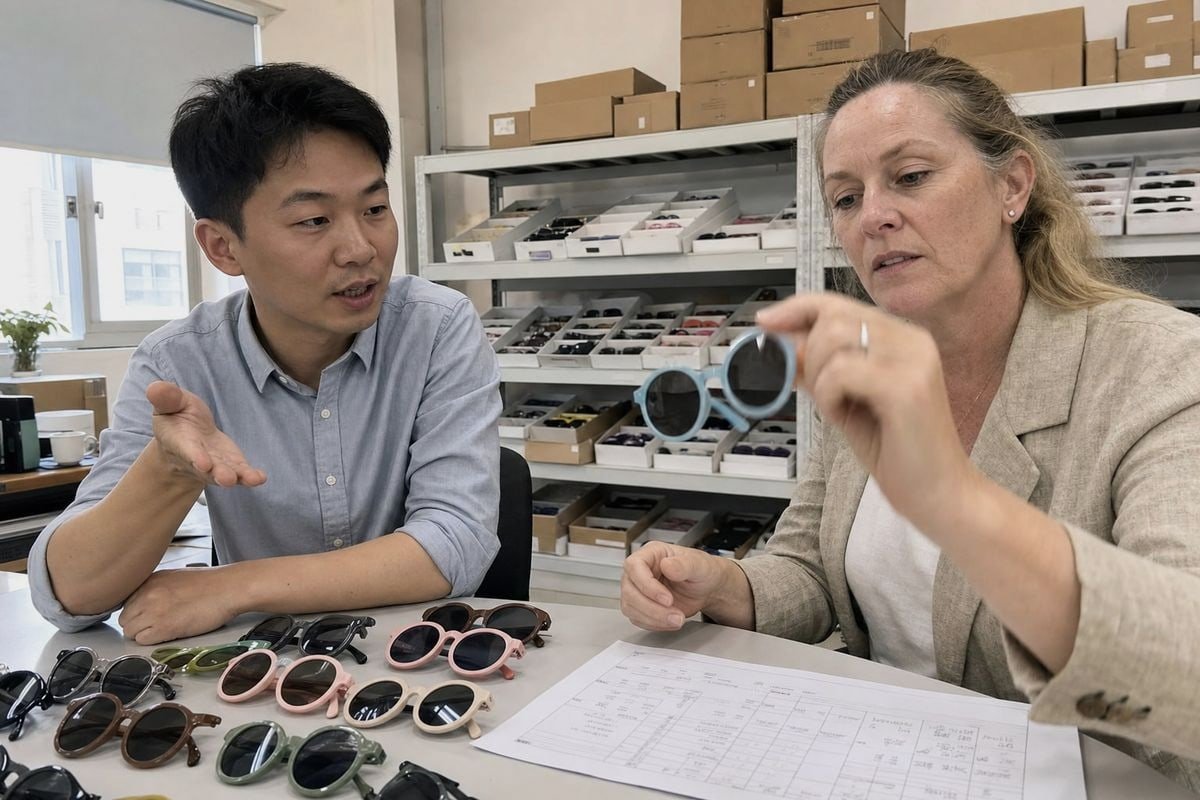
Children are not small adults. Pediatric facial anatomy 4 features a lower nasal bridge, softer cartilage, and proportions that change quickly year by year. Base curve interacts with all of it.
Comfort: What the Child Actually Sees
A high base curve in a strong prescription often produces the "fishbowl effect." Straight lines appear bent at the edges. Peripheral vision feels warped. Adults sometimes push through an adaptation period; children usually just refuse to wear the glasses, or they complain of headaches and dizziness. Steeper curves can also change apparent magnification. Even a one-diopter change in base curve can create noticeable perceptual differences, which is why consistency between a child's everyday glasses and their prescription sunglasses matters more than most buyers expect.
Safety: Fit, Stability, and Impact
Kids run, fall, and drop their glasses. That is exactly why we build with flexible TPEE temples and TR90 fronts in our Taizhou workshop — materials chosen for impact resistance and gentle contact with skin. Base curve joins that safety equation in three ways:
- A curve matched to the face keeps the frame stable during movement, so the optical center stays in front of the pupil.
- A well-seated lens resists pop-out on impact, which is critical when paired with polycarbonate lens material 5, the standard choice for shatter-resistant kids' lenses.
- Correct wrap avoids pressure points at the temples and cheeks, preventing red marks and the constant readjusting that distracts kids outdoors.
There is also a growth dimension. As a child's nasal bridge matures, the curve that fit at age four may sit wrong at age seven. This drives the trend toward adjustable and modular designs, and it means brands serving wide age ranges should stock more than one geometry. For buyers targeting markets with formal requirements, remember that ANSI safety standards and comparable regional norms address impact performance — a lens under mechanical stress from a mismatched curve is a lens more likely to fail when it matters.
中国の工場から度付きサングラスを調達する際に、ベースカーブの精度をどのように確認できますか?
A lesson we learned early in our fifteen years of eyewear work: a product photo tells you almost nothing about curvature. Verification needs numbers, tools, and process discipline.
フレームの文書化されたカーブとラップアングル仕様を要求し、レンズクロックでサンプルを測定し、QC契約で許容範囲を確認し、大量生産前に試用処方フィッティングを実行して、ベースカーブを確認します。信頼できる工場は、ジオメトリデータを公開し、一貫した金型公差を維持します。.
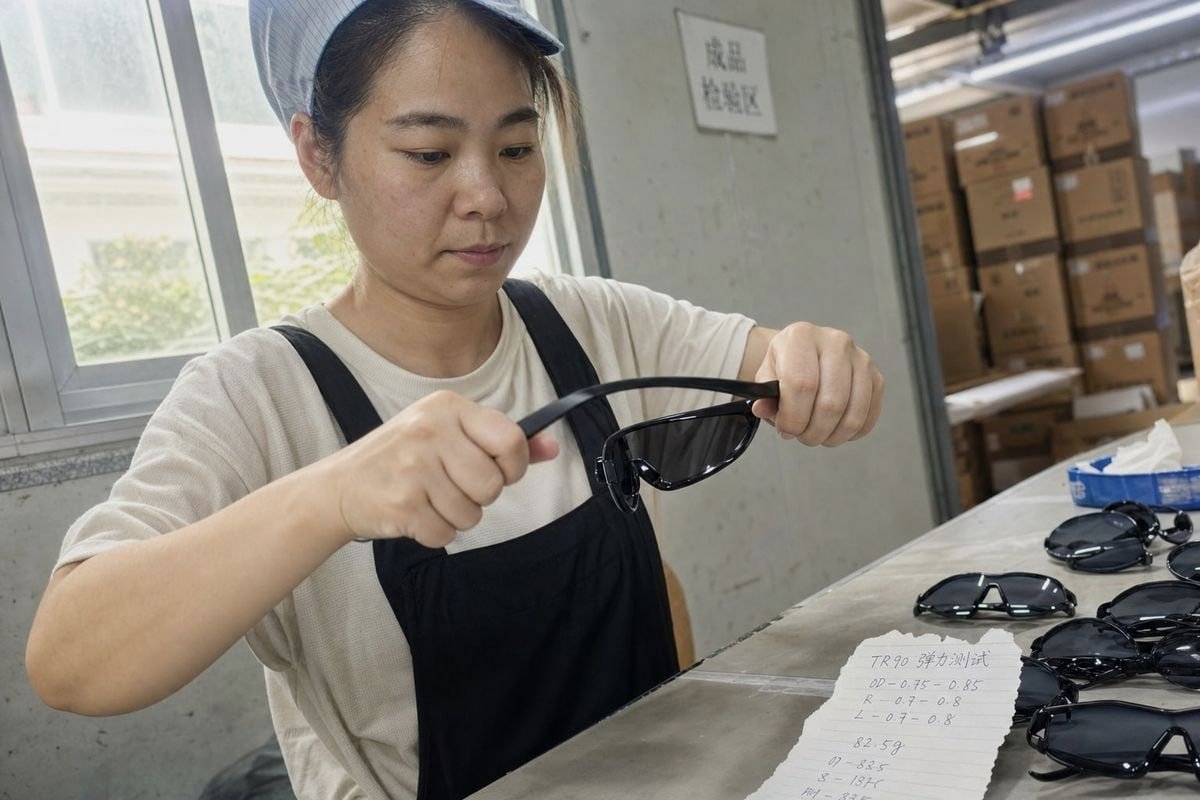
Optical labs cannot judge feasibility from a listing image. They need real frame data. Here is the verification process I recommend to every brand we work with, whether they source from us or elsewhere.
5段階の検証プロセス
- Request the spec sheet. Ask for base curve, frame wrap angle, lens groove dimensions, and pantoscopic tilt for each style. If a factory cannot provide these, treat it as a warning sign.
- Measure physical samples. A lens clock (base curve gauge) costs little and reads the front curve in seconds. Check several units from the sample batch, not just one.
- Define tolerances in writing. Mold consistency matters. In our 5S管理ワークショップ 6, curvature checks are part of routine inspection because small mold drift compounds into fitting failures at scale.
- Run a trial Rx fitting. Send one sample frame to your optical lab with a representative prescription. Confirm lens edging precision, bevel seating, and retention before committing to volume.
- Audit consistency at pre-shipment. Include base curve measurement in your pre-shipment inspection checklist 7 alongside hinge torque and lens retention tests.
| Verification Item | Tool or Method | Acceptable Practice |
|---|---|---|
| Front curvature | Lens clock / spherometer | Within ±0.25 D of stated curve |
| Frame wrap angle | Protractor gauge or CAD data | Matches spec sheet value |
| 何も外れない(EN 71-1ロジック) | Push-out test on edged lens | No pop-out under firm pressure |
| Batch consistency | Sample multiple units per carton | Uniform readings across batch |
Forward-looking exporters are adding a digital layer. Some now use AI-assisted predictive fitting tools that model wrap angle and vertex distance against a target prescription, flagging likely failures before manufacturing begins. You do not need that technology to source safely, but you do need a partner who treats base curve as a controlled specification rather than an accident of the mold. When we develop custom styles for children's brands, geometry documentation is part of the OEM package from the first sample onward — because it protects both the brand and the child wearing the finished product.
結論
Base curve is the hidden specification behind successful prescription kids' sunglasses. Choose flatter curves for stronger prescriptions, demand geometry data, verify samples — and partner with a factory that documents everything.
脚注
1. Background on the nylon-based resin that gives eyewear frames flexibility and impact resistance. ↩︎
2. NIH resource explaining astigmatism, the optical distortion caused by mismatched lens curvature. ↩︎
3. Authoritative Wikipedia section explaining freeform technology, the industry standard for digital lens surfacing. ↩︎
4. Peer-reviewed NIH article detailing facial development and anatomical changes from infancy to adulthood. ↩︎
5. Explains the shatter-resistant plastic used for impact-safe children’s prescription lenses. ↩︎
6. Background on the lean manufacturing methodology referenced for workshop quality control. ↩︎
7. International Trade Centre guidance supports quality verification practices for export manufacturing. ↩︎

 English
  Español de México
  Deutsch
  Français
  日本語
日本語  العربية
  Português do Brasil