子供用メガネフレームサプライヤーから素材試験レポートをリクエストする方法は?
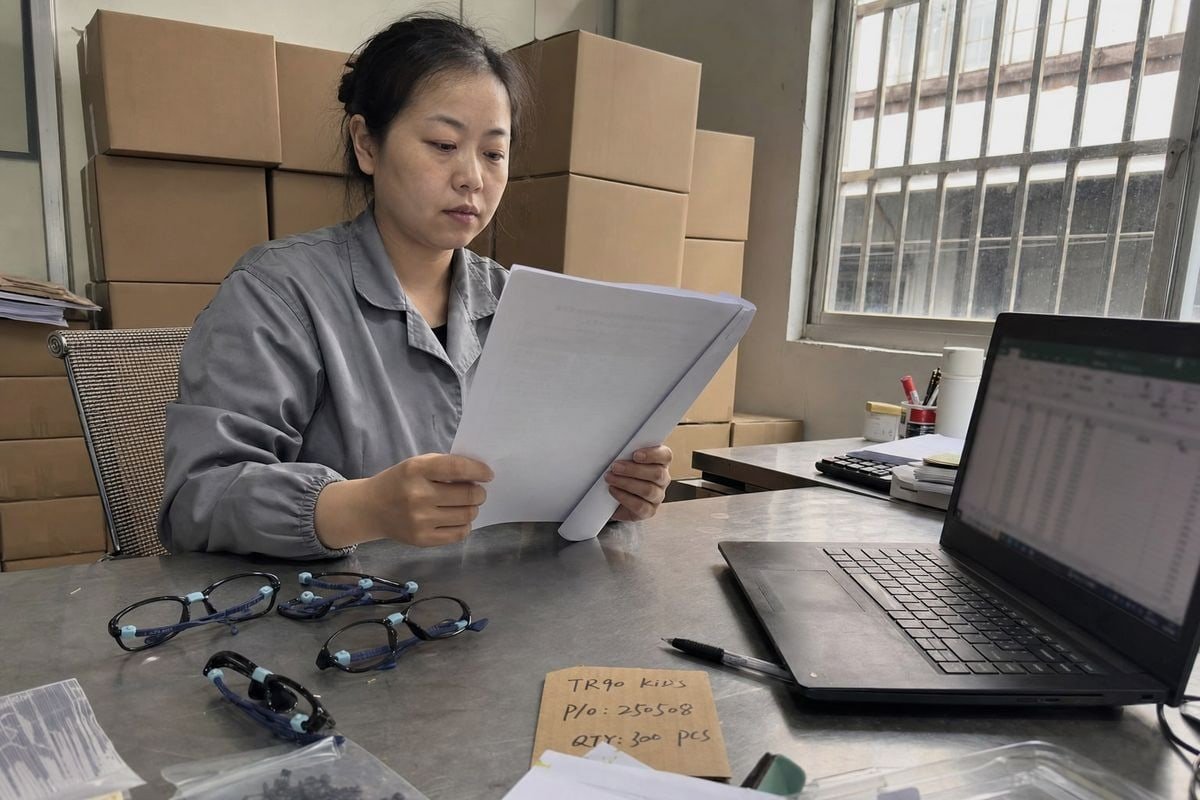
子供用メガネフレームサプライヤーから素材試験レポートをリクエストするのは簡単そうに聞こえますが、曖昧な「コンプライアンスがあります」という返答で、通関で出荷が滞り、発売日が遅れることがあります。台州の生産ラインでは、バイヤーが書類不足でシーズン全体を失うのを何度も見てきました。解決策は、何をいつ要求するかを正確に知ることです。.
お客様の子供用光学フレームサプライヤーに、正確なSKU、適用された基準(CPSIA、REACH、EN 14139、またはASTM F803)、認定された第三者検査機関名、テスト日、バッチ参照を示す、完全なテストレポートPDFをリクエストしてください。注文後ではなく、注文前に。.
その一文の返答には多くの詳細が隠されています。以下では、どの書類が重要か、偽造品の見分け方、適用される基準、そして各リクエストの適切なタイミングについて説明します。 TR90とTPEEで 1, サプライヤーの試験レポートが本物で最新であることをどのように確認できますか?.
子供用メガネフレームサプライヤーにどのような材料試験報告書を要求すべきですか?
バイヤーはしばしば3つの非常に異なる書類を混同するため、それらを明確に区別させてください。素材試験レポートは、原材料またはコンポーネントを対象とします。例えば、TR90素材の安全データシートは、ポリマーに制限化学物質が含まれていないことを示します。製品試験レポートは、コーティング、ネジ、テンプルチップなど、組み立てられた完成フレームを対象とします。証明書またはコンプライアンスファイルは、それらのレポートを法的宣言にバンドルします。例えば、米国市場向けのものです。.
4種類の書類を要求します:フレーム樹脂の原材料試験報告書、市場基準に準拠した最終製品試験報告書、ヒンジおよびノーズパッドのコンポーネントレベル証明書、通関のための適合証明書またはCPSIA準拠証明書。.
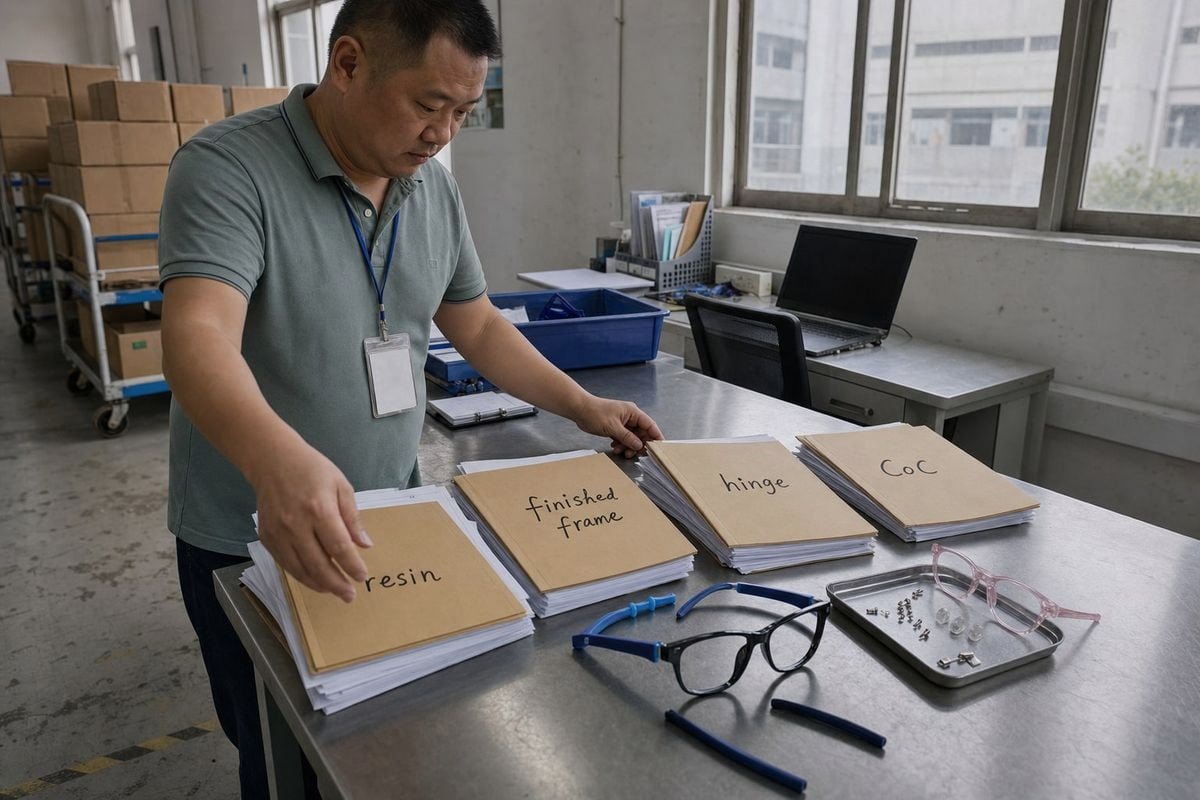
リクエストすべきコア書類 これは、私たちが協力するすべてのブランドに推奨するチェックリストです。 なぜそれが必要なのか 原材料試験レポート TR90またはTPEE樹脂組成、BPAフリー認証 ベースポリマーが子供に安全であることを確認します 完成品レポート 子供用製品証明書 鉛およびフタル酸エステル試験、化学物質移行.
組み立てられたフレームは、原材料樹脂とは異なる場合があります
コンポーネント証明書
| 文書 | 対象範囲 | ヒンジ、ネジ、ノーズパッド、シリコン部品 |
|---|---|---|
| 小さな金属部品にはニッケルフリー試験が必要です | コーティングレポート | 塗装、傷防止または曇り止め処理 |
| 顔料やコーティングはしばしば重金属を導入します | 適合証明書/CPC | ラボレポートに関連付けられた法的宣言 |
| 米国およびEUの税関で必要とされます | コンポーネントレベルの詳細が重要な理由 | 私たちの工場では、フレームフロント、TPEEテンプル、シリコンイヤーフック、金属ネジはすべて異なる素材バッチから供給される場合があります。「プラスチックフレーム」とだけ記載されたレポートは、ほとんど何も教えてくれません。サプライヤーに試験の範囲を明記するように依頼してください:フレーム素材、ヒンジ、ノーズパッド、テンプルチップ、コーティング、ネジ。カスタム染色のカラーウェイについては、顔料固有の試験も要求してください。私たちの経験では、重金属は認定されたベース樹脂よりも、着色剤を通じて混入する可能性がはるかに高いです。カラーウェイファミリーごとに1つのレポートを要求するのは妥当ですが、カタログ全体で1つのレポートを要求するのは妥当ではありません。 |
| 原材料レポートと完成品レポートは異なる2つの書類であり、子供用アイウェアのバイヤーは両方を要求すべきです。 | 組み立てられたフレームには、樹脂レポートだけではカバーされないコーティング、顔料、ネジ、パッドが含まれているため、完成品試験は素材レポートが見逃すリスクを検出します。 | サプライヤーの適合証明書だけでは、フレームが実際にラボで試験されたことを証明します。 |
| 適合証明書は宣言であり、証拠ではありません。参照されている下位の第三者ラボ試験レポートに裏付けられて初めて信頼性があります。 | 私の輸出キャリアの初期に、クライアントが競合他社のレポートをレビューのために転送してきました。ラボ名は本物でしたが、試験されたモデルは全く異なるフレームでした。それは私に書類を一行一行確認することを教えました。 | レポートを額面通りに受け取らないでください。好きなサプライヤーからであっても。検証は不信感のためではなく、トレーサビリティのためです。SGS、Intertek、Bureau Veritas、またはTÜVのような第三者ラボ試験施設からの本物のレポートには、要求に応じてラボが確認できる一意のレポート番号が含まれています。ほとんどの大手ラボは、まさにこの理由のためにオンライン検証ポータルを提供しています。 |
5段階の検証ルーチン
レポートには、あなたが購入している正確なSKUまたはモデル番号が記載されている必要があります。レポート内の高解像度写真を、物理的なサンプルとカラーウェイと比較してください。 ラボの資格を確認してください。米国向けの商品はCPSCの承認、またはを検索してください。目に見える資格のない未知のラボは赤信号です。.
サプライヤーのテストレポートが本物で最新であることをどのように確認しますか?
私の輸出キャリアの初期の頃、クライアントが競合他社のレポートをレビューのために私に転送してきました。ラボ名は本物でしたが、テストされたモデルは全く異なるフレームでした。それが私に教えてくれたのは 文書を一行ずつ確認すること.
テストされたSKUと写真を実際のフレームと照合してテストレポートを確認し、ラボがCPSC認定またはISO 17025認定を受けていることを確認し、レポートの日付と製造ロットを照合し、ラボに直接連絡してレポート番号を認証します。.

好きなサプライヤーであっても、レポートを額面通りに受け取ってはいけません。検証は不信感からではなく、トレーサビリティのためです。 第三者ラボの 2 SGS、Intertek、Bureau Veritas、TÜVなどのテスト施設からの本物のレポートには、ラボが要求に応じて確認できる一意のレポート番号が含まれています。ほとんどの大手ラボは、まさにこの理由のためにオンライン検証ポータルを提供しています。.
5段階検証ルーチン
- 生産の代表性について尋ねます。. レポートには、購入している正確なSKUまたはモデル番号が記載されている必要があります。レポート内の高解像度写真を、現物のサンプルとカラーウェイと比較してください。.
- ラボの資格を確認してください。. 米国向けの製品の場合はCPSCの承認、 子供用アイウェアを15年間輸出してきた経験からのいくつかの警告。第一に、サプライヤーの社内ラボレポートは、どんなにプロフェッショナルに見えても、CPC要件を満たしません。第二に、一般的なラボからのレポート 3. または該当する地域の規制を確認してください。資格が不明で、目に見える資格がないラボは赤信号です。.
- 日付を確認します。. A report from four years ago may predate the current resin batch, the current pigment supplier, or updated REACH regulation standards 4.
- Confirm exact match vs. similar model. Ask the supplier in writing: is this report for this exact frame, or a similar construction? Get the answer by email, not just verbally.
- Trace the batch. Compare sample or batch identifiers in the report against your purchase documents where possible.
Common Red Flags
Watch for these warning signs. A claim of compliance with no PDF attached. A screenshot instead of a full document. A report where key fields are cropped or unreadable. A report covering a different material — for example, acetate results offered for a TR90 order. And vague multi-region language like "meets all international standards" without naming a single actual standard. When we share reports with buyers, we always send the complete PDF plus a short confirmation email stating that the tested item matches the offered SKU or the same material family. Ask your supplier to do the same.
TR90またはTPEEフレームのテストレポートを確認する際に、どの安全基準を確認すべきですか?
One trade-off we discuss with almost every new brand is testing scope versus budget. Testing every colorway against every standard gets expensive fast, so knowing which standards your market actually requires saves real money.
米国については、CPSIAの鉛およびフタル酸エステル類の制限、スポーツスタイルについてはASTM F803、およびコンポーネントテストに関する16 CFR 1109を確認してください。欧州については、REACH附属書XVIIおよび眼科用光学機器に関するEN 14139を確認してください。すべての市場について、ニッケルフリーおよびBPAフリーの結果を確認してください。.
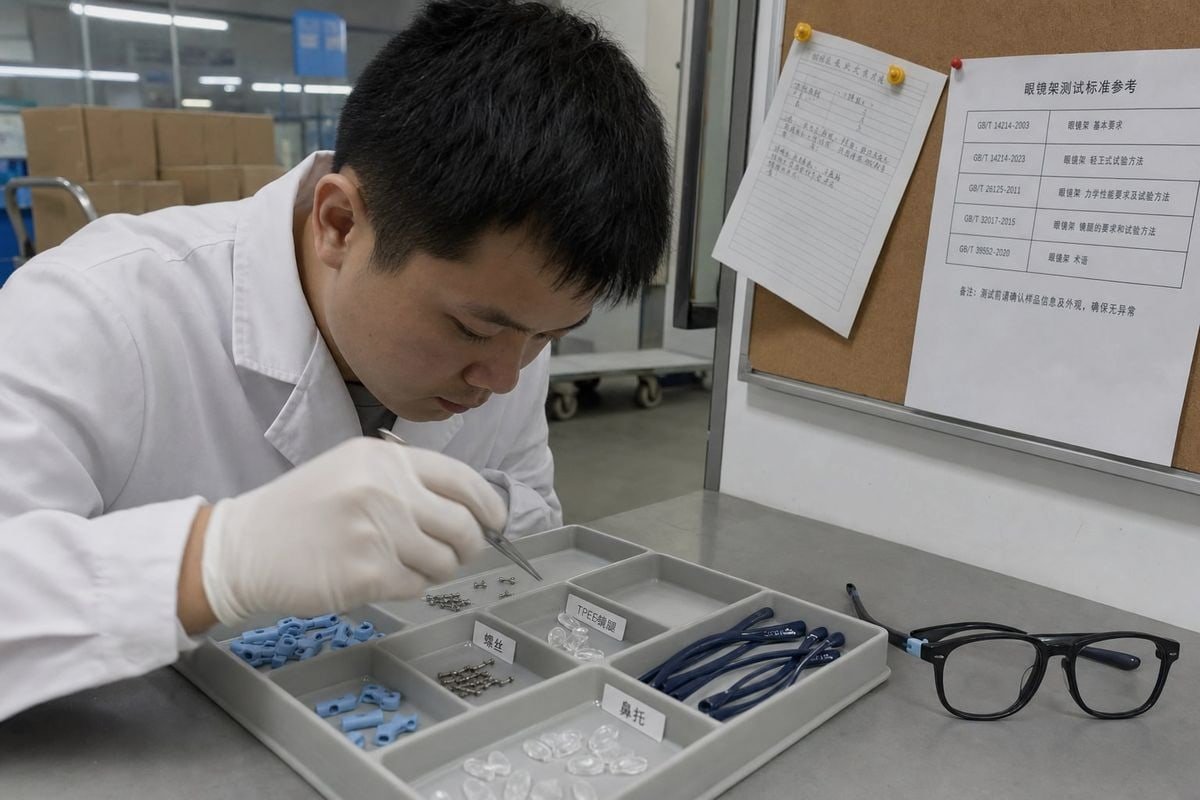
TR90 and TPEE are both excellent flexible materials for children's faces — that is exactly why we built our product line around them. But "flexible and comfortable" does not automatically mean "compliant." The standards below are the ones that appear most often in our buyers' documentation requests.
Standards by Market
| 市場 | Key Standards | What They Test |
|---|---|---|
| アメリカ合衆国 | CPSIA, 16 CFR 1109 5, ASTM F803 | Total lead, phthalates, component part testing, impact for sports eyewear |
| 欧州連合 | REACH Annex XVII, EN 14139 | Restricted chemicals, ophthalmic optics requirements for finished spectacles |
| Global / general | Nickel release, BPA-free certification | Metal hinge and wire-core safety, plastic additive safety |
Points Buyers Often Miss
First, the Component Part Testing Rule under 16 CFR 1109 can lower your costs. If your supplier certifies the shared TR90 or TPEE raw material once, that certification can support multiple frame styles built from the same resin. We use this approach across our catalog of roughly 800 existing styles, so buyers testing the market do not pay for redundant lab work.
Second, do not skip internal components. A metal wire core inside a plastic temple still needs nickel-free testing, because outer layers wear down over years of daily use by an active child.
Third, be careful with emerging chemical rules. PFAS-free confirmation for anti-fog or anti-scratch coatings is increasingly requested by European and Australian buyers, and it is easier to address before production than after.
Finally, a note on scope: optical frames sold as prescription eyewear may also touch FDA医療機器登録 6 requirements in the US, depending on how the product is marketed. If you sell frames with demo lenses for later prescription fitting, ask your regulatory advisor where your product sits. And if a supplier claims bio-acetate or eco-friendly content, ask for an ASTM D6866 report to verify the renewable percentage rather than accepting the marketing claim.
サプライヤーからこれらのテストレポートを調達プロセスのいつ要求すべきか?
A lesson I learned the hard way: a European importer once asked us for REACH documents after their goods had already sailed. Everything worked out, but the stress was avoidable. Timing is half of compliance.
Request test reports at three points: during the RFQ stage to screen suppliers, before paying the deposit to confirm the exact SKU is covered, and during mass production to test samples from the actual production batch rather than golden samples.

Documentation should follow your sourcing timeline, not chase it. Buyers are shifting from asking "Can you make it?" to asking "Can you prove it meets the rules?" — and the proof needs to arrive before money moves, not after.
The Request Timeline
| Sourcing Stage | 要求事項 | Why This Timing |
|---|---|---|
| RFQ / supplier screening | Existing CPSIA and REACH reports for similar frames | Filters out suppliers with no compliance history |
| サンプル評価 | Exact-match reports for your chosen SKU and colorway | Confirms the specific frame is covered before commitment |
| Before deposit | Written confirmation that reports match your order | Locks accountability into the transaction |
| 量産 | New third-party testing on production-batch samples | Golden samples do not prove batch consistency |
| 出荷前 | CPSIA compliance certificate or CPC, final QC report | Customs and Border Protection expects these documents |
Plan for Lead Times and Costs
Lab reports are not instant. In typical workflows, a new test report can take around twelve working days, so build that into your production schedule. Some suppliers also charge document retrieval fees or require report requests at the time of purchase — ask about costs upfront so there are no surprises.
What If the Supplier Has No Report?
You still have options. Ask for a report on a similar frame from the same material family. Request in-house quality control inspection data 7 as an interim reference. For meaningful order volumes, commission a new third-party test on your actual production sample — we regularly support this for private-label buyers. And if compliance is critical to your market and the supplier resists every option, treat that as your answer. Some suppliers cite customer-specific confidentiality or NDA terms, and sometimes that is legitimate. But for children's products, the burden of proof sits with the supplier before the order — a partner unwilling to meet that burden is signaling how the rest of the relationship will go.
結論
Missing paperwork can stall a children's eyewear launch for months. The solution is simple discipline: request exact-match reports early, verify the lab, and test production batches — every single time.
脚注
1. Background on the thermoplastic elastomer materials commonly used in kids’ eyewear frames. ↩︎
2. Wikipedia page defining third-party and independent testing organizations. ↩︎
3. ISO’s own standard page defines the lab accreditation credential buyers should verify. ↩︎
4. ECHA’s official REACH page explains the EU chemical restriction rules referenced here. ↩︎
5. Official US federal regulation text for children’s product component testing requirements. ↩︎
6. Current official FDA guidance page for medical device registration and listing. ↩︎
7. General background on quality control processes referenced as an interim compliance reference. ↩︎


 English
  Español de México
  Deutsch
  Français
  日本語
日本語  العربية
  Português do Brasil