子供用メガネフレームの景品が窒息の危険がないことを確認する方法
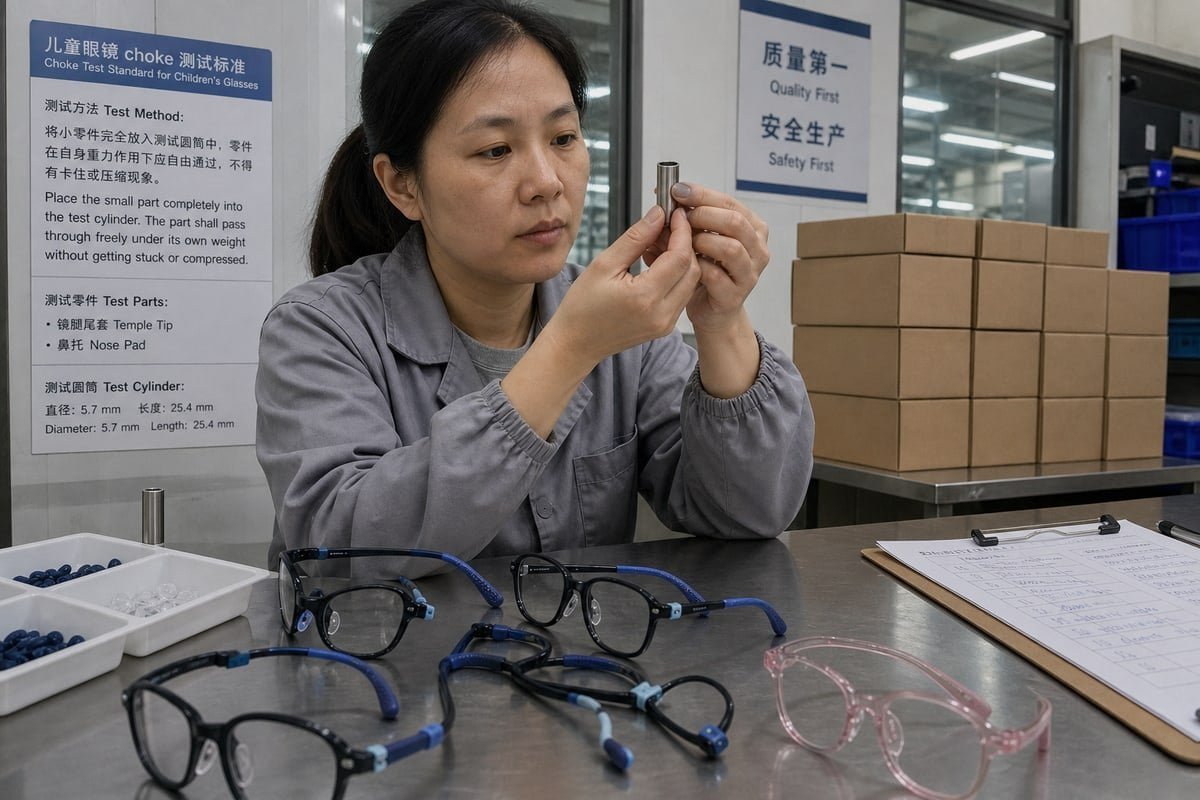
無料のメガネは無害に感じられますが、テンプルの先端が幼児の口に入るまでです。子供用メガネフレームの景品は、実際の窒息のリスクを伴います。これは、私たちの台州の生産ラインが日常的に直面していることです。.
子供用光学フレームの景品が誤飲の危険がないことを確認するには、取り外し可能な小さな部品をなくし、すべての部品をCPSC小型部品シリンダー(16 CFR 1501)でテストし、ワンピースまたはネジなしのデザインを使用し、ポリカーボネートレンズを選択し、流通前に製造業者から第三者機関の試験書類を要求してください。.
その答えは簡単そうです。実際には、ほとんどの景品が失敗するのは、バイヤーが販促用フレームを規制された子供用製品ではなく、ノベルティグッズとして扱ってしまうからです。この記事では、小さな手と小さな口を安全に保つための基準、デザインの詳細、サプライヤーへの質問、そして工場の能力について説明します。.
プレゼントキャンペーン用に子供用メガネフレームを選ぶ前に、どのような安全基準を確認すべきですか?
昨年、あるヨーロッパのベビーブランドが、競合他社の景品フレームを送ってきました。 その鼻パッドは 軽い指の圧力で外れました。そのサンプルは、彼らが仕様書を作成する方法を変えました。.
プレゼント用に子供用光学フレームを選ぶ前に、CPSCの小部品規則(16 CFR Part 1501)、ASTM F963の物理的および機械的要件、CPSIAの鉛およびフタル酸エステル制限を確認し、すべてのパッケージに適切な年齢区分と窒息の危険性に関する警告ラベルを付けましょう。.
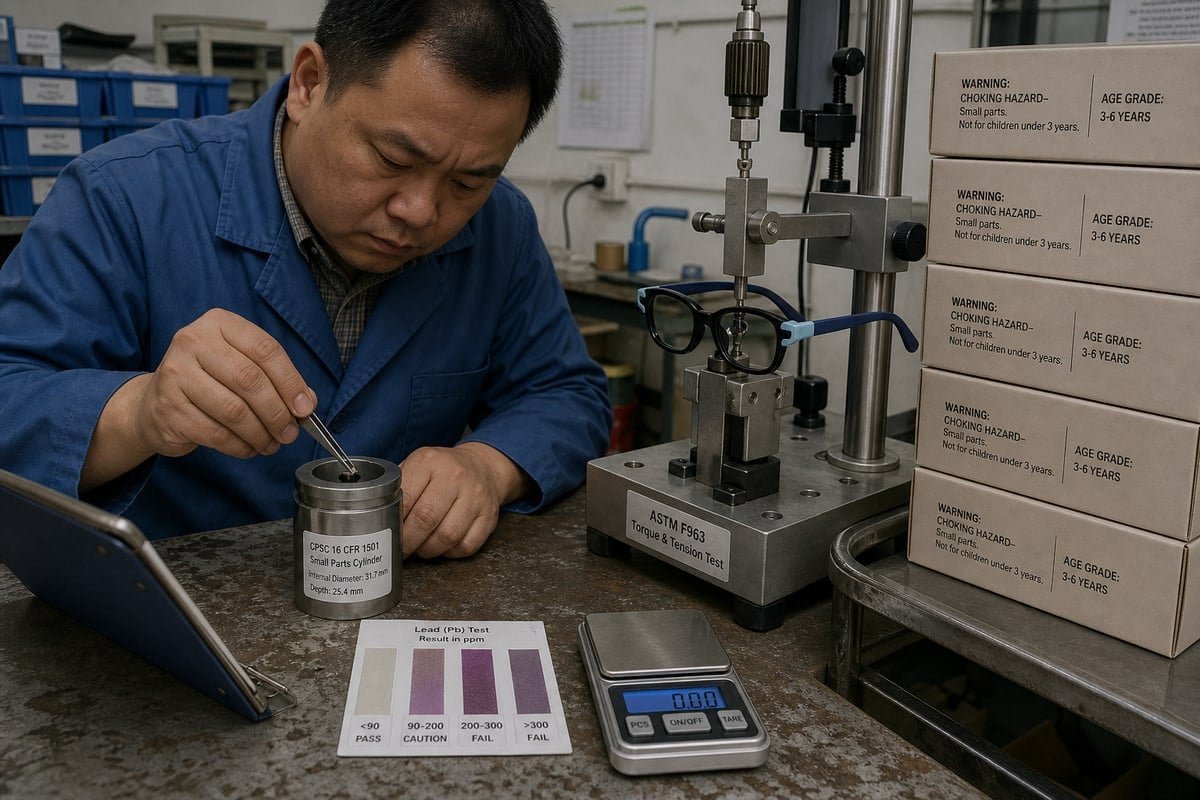
規制の状況は、最初は複雑に見えます。各規則が実際に何を規制しているかによって規則を分類すると、管理可能になります。これは、景品の注文が製造に入る前に、私たちがB2Bバイヤーに説明する基本的な内容です。.
| 標準または規則 | それがカバーするもの | 景品にとってなぜ重要か |
|---|---|---|
| 16 CFR Part 1501 (CPSC) | 16 CFR § 1501.4 で定義されている小部品テストとシリンダー寸法 | シリンダーに適合する部品は、3歳未満の子供向け製品では禁止されている有害物質です。 |
| ASTM F963規格 | 使用・乱暴テストを含む、玩具の物理的および機械的安全性 | ヒンジおよびテンプル部品のトルク、張力、および落下テストのベンチマーク |
| CPSIAコンプライアンス | 鉛含有量、フタル酸エステル含有量、追跡ラベル | フレームの形状だけでなく、フレーム素材や表面コーティングも対象となります。 |
| 対象年齢表示と警告ラベル | 梱包材への窒息危険警告 | 小部品が存在し、製品が3歳未満に限定されていない場合に必要です。 |
小部品テストを平易な言葉で説明
部品は、圧縮せずに CPSCの小部品シリンダー 1. に適合する場合、窒息の危険があります。これには、使用中に外れる部品も含まれます。したがって、本当の質問は「フレームは小さいか?」ではなく、「ネジ、鼻パッド、または装飾的な部品が緩んでシリンダーに適合する可能性があるか?」ということです。"
対象年齢表示がすべてを変える
CPSCの安全基準では、3歳未満の子供向け製品ははるかに厳しく扱われます。景品が幼児を対象としている場合、小さな取り外し可能な部品は単純に禁止されています。年長の子供の場合は、警告ラベルが規則を満たすかもしれませんが、それはラベルが正しい場合のみです。.
国際市場はさらに多くの規則を追加します
米国のコンプライアンスだけでは、グローバルキャンペーンには十分ではありません。例えば、子供用フレームに関する中国の草案基準では、滑らかな表面、確実な留め具、およびレンズなしのフレーム重量制限を19gと提案しています。複数の地域に出荷するバイヤーのために、これらの違いを早期に指摘します。.
子供用眼鏡において、メーカーの素材やデザインが実際に窒息のリスクを低減するかどうかをどうすればわかりますか?
私たちの台州ワークショップでのすべての設計レビューでは、同じトレードオフが考慮されます。装飾的な魅力は売れますが、追加された部品はすべて潜在的な取り外しポイントです。通常、魅力はカットします。.
メーカーは、ワンピースまたはモノブロック設計、ネジなしヒンジ構造、永久接着部品、TR90やTPEEなどの柔軟なBPAフリー素材、深い溝のフレームにポリカーボネートレンズを使用し、さらに量産サンプルでトルク、テンション、落下試験に合格することにより、誤嚥のリスクを真に低減しています。.
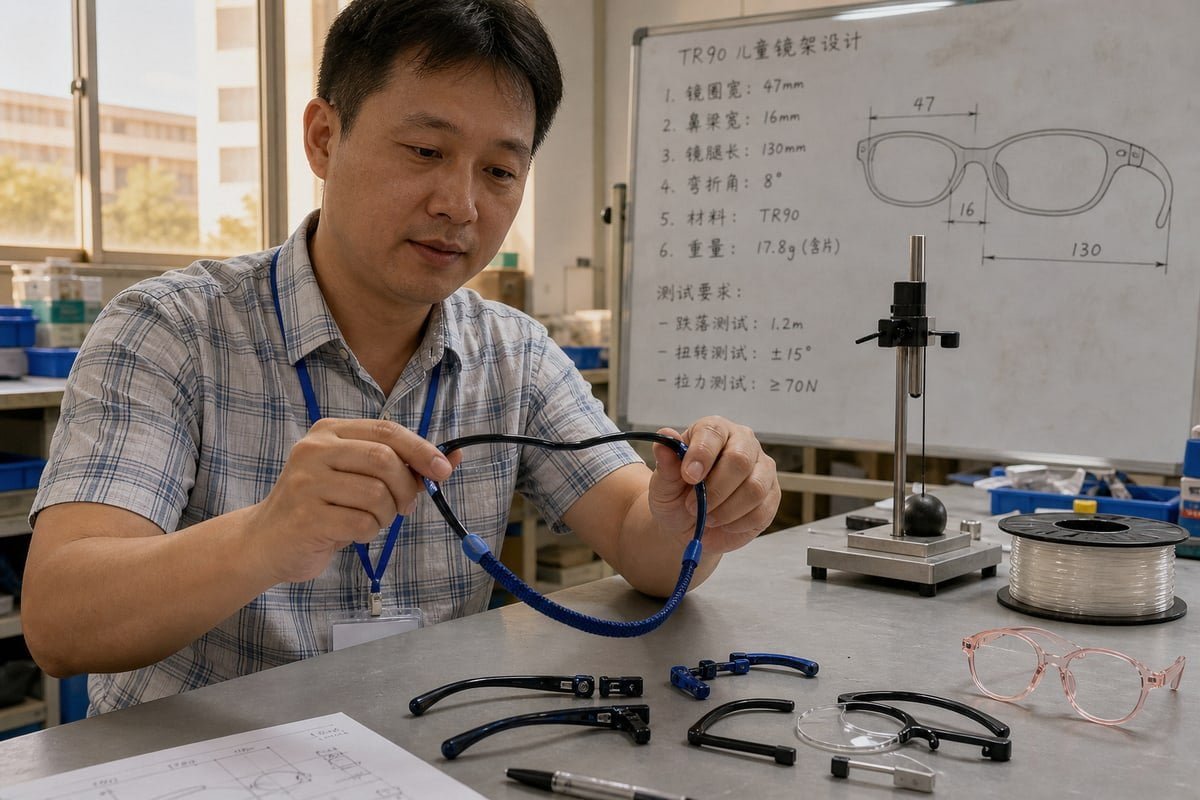
マーケティング上の主張と実際の安全性が乖離するのは、素材と構造の部分です。フレームは子供に優しいように見えても、すべての接合部で取り外しのリスクを隠している可能性があります。景品プログラムのために子供用メガネフレームを開発する際には、単純な質問に対して各コンポーネントを監査します。「決意の強い3歳児がこれを引き離すことができるか?」
| コンポーネント | リスクのあるバージョン | より安全なバージョン |
|---|---|---|
| ヒンジ | 時間とともに緩む金属ネジヒンジ | ネジなしヒンジ設計、超音波溶接、または一体成型リビングヒンジ |
| ノーズパッド | 外れるプッシュフィットパッド | フレーム本体に一体成型されたブリッジ |
| テンプルチップ | スライド式プラスチックチップ | 共成形TPEEまたは柔軟なシリコン製イヤーフック |
| 装飾 | 接着されたチャームとインサート | インモールドパターンとエンボス加工のモチーフ |
| レンズ | ガラス、または浅い面取りフィット | 深溝保持におけるポリカーボネート |
折れるのではなく曲がる素材
私たちは、ほとんどの子供用フレームをTR90とTPEEで製造しています。それは、それらが破片に砕けるのではなく、乱暴な使用で曲がるからです。どちらも BPAフリー素材 2, and any surface color must use non-toxic coatings that survive prolonged mouthing — which is why saliva-simulated leaching tests exist for kids' products. Glass lenses are a separate hard rule: WHO eye care guidance states children should never be fitted with glass, and polycarbonate is ideal because of its high impact resistance.
Design features that remove detachment points
Our safest giveaway styles integrate everything. One black frame we produce uses navy TPEE temples with a flexible silicone strap and textured dotted pattern — the strap is co-molded, not clipped on. Monoblock injection molding 3 with living hinges goes even further by eliminating mechanical pins entirely. Deep-groove lens fitting matters too, because a popped-out demo lens is itself a small-part hazard.
小さな部品のコンプライアンス試験と品質管理を確認するために、サプライヤーにどのような質問をすべきですか?
During a pre-shipment inspection last spring, our QC team pulled ten frames at random and hung weights from each temple. One buyer watched the whole test on a video call.
小さな部品、トルク、引張強度、落下試験を対象とした第三者機関の検査レポート、CPSIAの鉛およびフタル酸エステルに関する証明書、コーティングの安全データシート、入荷部品のチェック詳細、量産前サンプル承認、およびすべての景品注文に対するロットレベルのトレーサビリティについてサプライヤーに依頼してください。.
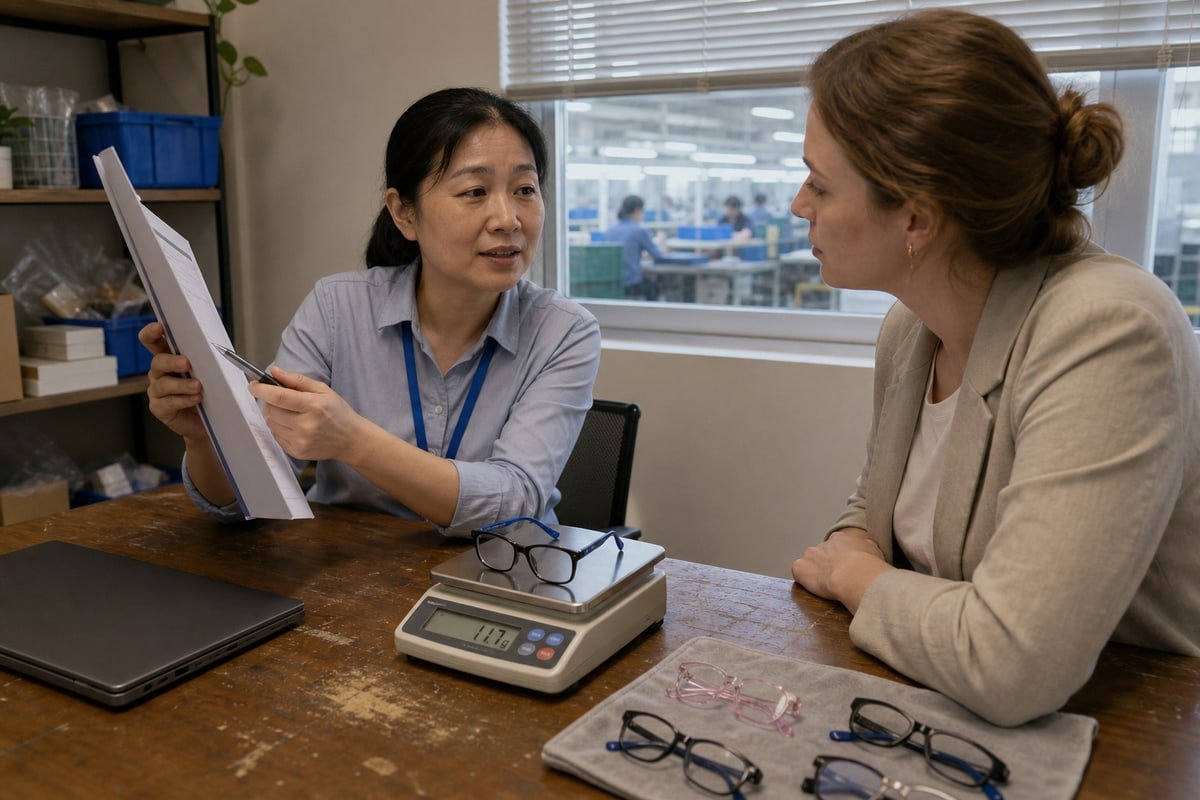
Suppliers rarely volunteer weaknesses. You have to ask directly. After fifteen years of running these conversations from the factory side, here are the questions that separate serious partners from assemblers of mixed components.
- Which 第三者機関の試験 have these exact frames passed, and can I see the reports?
- Do you run use-and-abuse testing — torque, tension, and drop tests — on hinges, temples, and any attached parts?
- What tensile strength testing do you apply to straps and co-molded joints before shipment?
- How do you perform sharp edge assessment on molded parts, checking for burrs and protrusions?
- Are colorants and coatings verified as lead-free and phthalate-compliant under CPSIA?
- Do you inspect incoming components before assembly, or only finished goods?
- Can you provide batch-level traceability — some buyers now request batch-specific QR codes on temples linking to certifications and testing data?
- Will you produce and approve pre-production samples before mass production?
| Document to request | 登録番号 | してきましたが、バイヤーが早期に適切な書類を求めることで、ほぼすべての下流の問題を回避できることを学びました。注文する前に要求することをお勧めします。 |
|---|---|---|
| Small-parts cylinder test report | No component or fragment fits 16 CFR 1501 dimensions | Supplier relies on visual judgment alone |
| Mechanical test report (torque, tension, drop) | Fasteners and hinges stay attached under abuse | "Our frames are strong" with no data |
| CPSIA certificates | Materials and coatings meet lead and phthalate limits | Only a general material name, no lab result |
| QC inspection procedure | Consistent checks across the full batch | Testing done once, years ago, on a different style |
In our own 5S管理ワークショップ 4, these checks happen at three stages: incoming materials, in-process assembly, and pre-shipment sampling. Any supplier should be able to describe their equivalent process without hesitation. Vague answers usually mean the process does not exist.
子供向けの安全な販促用フレームを調達する際に、経験豊富なアイウェア工場と協力することがなぜ重要なのか?
Fifteen years of eyewear production taught me one hard lesson: safety failures rarely come from bad intentions. They come from factories treating children's frames like adult ones.
経験豊富なアイウェア工場が重要なのは、子供向けの安全なフレームには、特殊な工具、柔軟な素材に関する専門知識、厳格な5S品質管理、確立されたテスト手順、および既存の準拠スタイルが必要であり、これらは一般的な販促品サプライヤーにはない能力であり、配布用フレームが子供向け製品安全要件を満たすかどうかを直接決定するためです。.
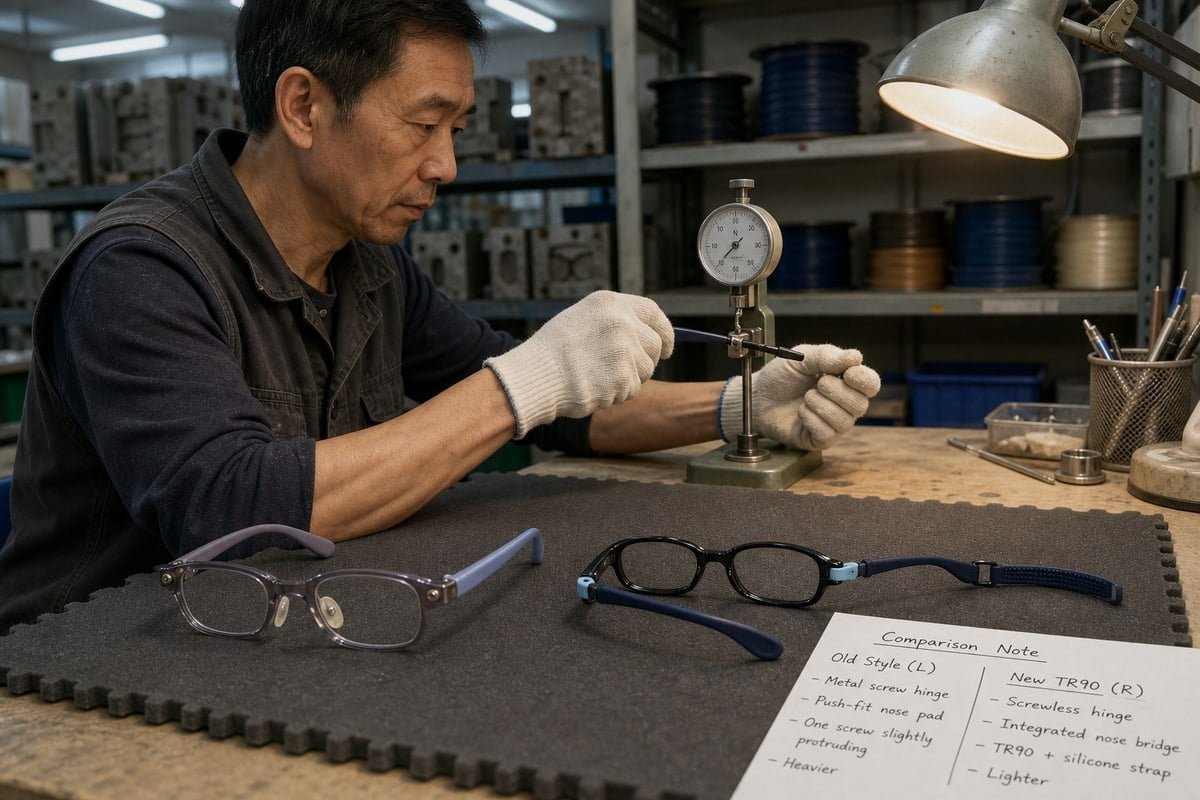
Promotional product safety fails most often at the sourcing stage, not the design stage. Giveaway frames are typically ordered at lower cost, assembled from mixed components, and pushed through on tight event deadlines. A generic promotional supplier will quote fast and cheap. But they usually lack children's eyewear tooling, so they retrofit adult constructions — screw hinges, push-fit nose pads, glued decorations — into smaller sizes. Every one of those shortcuts creates a detachment point.
An experienced children's eyewear factory changes the starting position. At our facility, around 120 workers run production lines built specifically for flexible TR90 and TPEE kids' frames, so screwless and co-molded constructions are standard, not custom engineering. Our library of roughly 800 existing styles means a brand, clinic, or event organizer can pick a proven, already-tested design instead of funding new molds and hoping the first samples pass. Full OEM/ODM support then handles custom colors, logos, lenses, and retail-ready packaging without touching the safety-critical structure.
Before you approve any kids giveaway frame, run this quick decision check:
- Does it have detachable small parts? If yes, reject it.
- Could any part fail the small-parts cylinder test? If yes, reject it.
- Does it use glass lenses? If yes, reject it.
- Is children's eyewear testing documentation missing? If yes, reject it.
If a frame clears all four gates, you have a giveaway you can distribute with confidence — and a supplier worth keeping.
結論
Treat kids optical frames giveaways like regulated children's products. Verify standards, demand screwless designs, question suppliers, and partner with an experienced factory — because one loose part outweighs any marketing win.
脚注
1. Official federal regulation defining the choking-hazard test referenced throughout the article. ↩︎
2. FDA reference on BPA safety supports the claim about non-toxic frame materials. ↩︎
3. Background on the manufacturing process used to eliminate mechanical hinge pins. ↩︎
4. Explains the lean manufacturing methodology behind the factory’s quality control process. ↩︎

 English
  Español de México
  Deutsch
  Français
  日本語
日本語  العربية
  Português do Brasil