子供用サングラスの調達時にサプライヤーのテストレポートの真正性を確認する方法
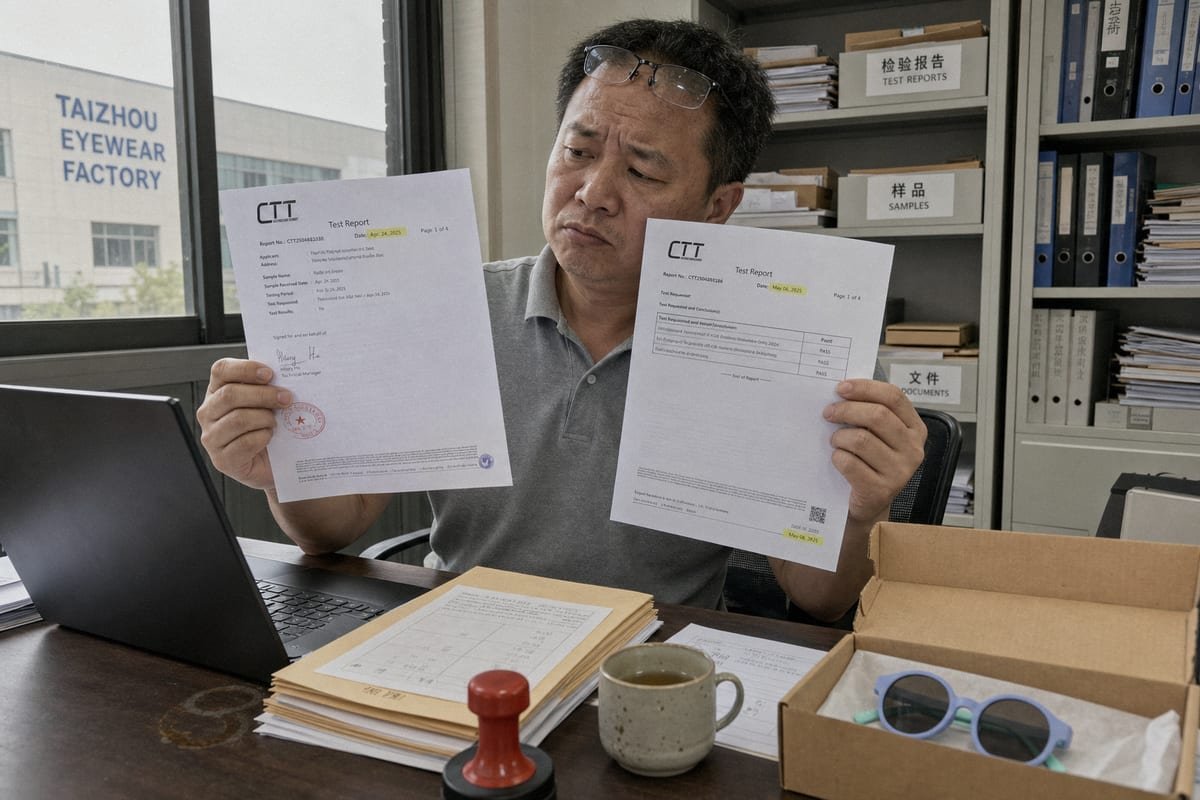
真正性を確認する方法を学ぶ サプライヤーのテストレポート 1 は、多くのバイヤーを破滅から救ってきました。偽の書類は、税関や訴訟で露呈されるまで説得力があります。.
子供用サングラスのサプライヤー試験レポートの真正性を確認するには、3つのレイヤーを確認してください。文書が本物であること、発行ラボが認定されておりレポート番号を検証できること、そしてレポートがお客様の正確なSKU、素材、およびCPSIA、EN 71、ISO 12312-1などの必要な基準をカバーしていることです。.
その3層モデルはシンプルに聞こえます。実際には、ほとんどのバイヤーは最初の層しかチェックしません。以下に、デポジットを送金する前に実行できる各層の手順を説明します。.
本物のCPSCまたはEN71テストレポートで、偽造でないことを確認するために確認すべきことは何ですか?
オーストラリアのバイヤーは、かつて競合他社の「CPSCレポート」をレビューのために私に転送しました。台州の当社のコンプライアンスチームは、2分で問題を発見しました。ヘッダーの日付とフッターの日付が一致しませんでした。.
本物のCPSCまたはEN 71テストレポートには、ユニークなレポート番号、認定ラボの名前とロゴ、申請者の詳細、正確な製品モデル、個別のテスト基準、テストごとの合格/不合格結果、発行日、および承認された署名が含まれています。フィールドの欠落または不一致は、偽造の兆候です。.

15年間、書類を作成した後 子供用眼鏡の輸出 2, 、ほとんどの偽のレポートは、全体像ではなく、詳細で失敗すると言えます。偽造者は、実際のSGSまたはIntertek認証ドキュメントのレイアウトをコピーします。しかし、ラボが自動的に生成するフィールドでは怠惰になります。.
すべての実際のレポートに含まれるコアフィールド
フィールドごとのレビューから始めます。CPSC認定ラボまたはISO 17025ラボからのすべての正当なレポートには、これらの要素が明確に表示されます。.
| フィールド | 表示されるべき内容 | 製造警告サイン |
|---|---|---|
| レポート番号 | ラボの形式での一意のラボレポート追跡番号 | 番号が見つからない、一般的、またはドキュメント全体で再利用されている |
| 申請者/保持者 | あなたのサプライヤーまたは実際の工場の名前 | 説明なしの無関係な商社 |
| 製品説明 | 正確なモデル、フレーム素材、レンズタイプ、色 | 「プラスチックサングラス」のような曖昧な用語" |
| テストされた基準 | CPSIAの鉛とフタル酸エステル、EN 71の安全テスト、ISO 12312-1 | 古いバージョンの基準または間違った市場ルール |
| テスト結果 | 制限値と測定値を含む項目別の結果 | データテーブルなしの「合格」のみ |
| 発行日 | 現在の生産ロットに対して十分新しい | ページ間で矛盾する日付 |
| 署名 | 承認された署名者、しばしばデジタルシール付き | ぼやけた、貼り付けられた、または欠落した署名 |
フォーマットはバイヤーが考えるよりも重要
JPG、PNG、またはWordファイルではなく、元のPDFを要求してください。画像ファイルや再保存されたスキャンは、変更がはるかに容易です。最新のラボは、サーバーサイドのデジタル署名付きPDFを発行します。ファイルを プロフェッショナルPDFリーダー 3 で開き、署名パネルを確認してください。暗号化されたシールが破損している場合、発行後にファイルが編集されたことを意味します。PDFメタデータも検査してください。「作成者」タグにAdobe Photoshopが表示されている場合は、深刻な警告です。実際のラボシステムは、画像エディタではなく、レポートソフトウェアを通じてレポートを生成します。.
最後に、範囲を確認します。子供用サングラスの場合、レポートはフレームのフタル酸エステルと鉛含有量、EN 71に基づく小部品と機械的安全性、および光学性能をカバーする必要があります。 UV400保護基準. レンズのみのレポートでは、子供向け製品としては不十分です。.
サプライヤーのテストレポートを元のテストラボのデータベースと照合するにはどうすればよいですか?
私たちがTR90およびTPEEの子供用フレームのテストレポートを新しいクライアントに送る際、同じメールにラボの検証リンクを含めます。バイヤーに確認してもらいたいのです。その習慣は、より見栄えの良い書類を持つ偽造者に注文を奪われた正直な工場を見て育ったことから来ています。.
発行ラボの公式検証ポータル(Intertekの証明書検証やTÜV SÜD証明書検索など)に、そのユニークなレポート番号を入力してレポートを照合してください。ポータルが存在しない場合は、サプライヤーからではなく、公式ウェブサイトの連絡先情報を使用してラボに直接メールしてください。.
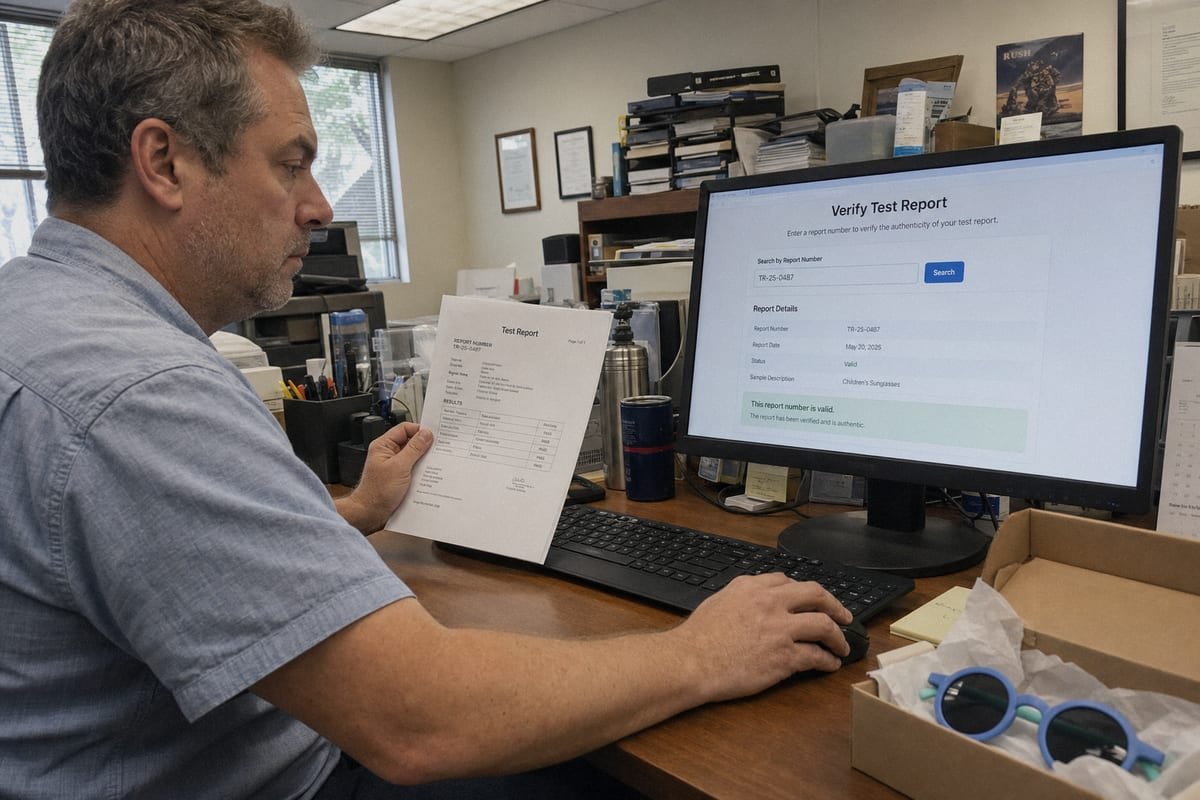
第三者ラボによる検証は、ワークフロー全体で最も強力なステップです。偽造者は書類を偽造できます。偽造者はラボ自身のデータベースを偽造できません。したがって、真実の情報源として紙ではなくラボを扱ってください。.
データベース検証の手順
- ラボを独立して特定します。. ラボの名前を自分で検索します。サプライヤーのメールやPDF内のリンクをクリックしないでください。実際のラボのインターフェースを模倣した偽の検証ページは既知の詐欺戦術であるため、QRコードの基になるURLを信頼する前に確認してください。.
- Confirm accreditation first. Look up the lab in the accreditor's official directory 4, such as ILAC-member bodies, CNAS, or the CPSC's list of accredited laboratories. An unaccredited lab makes the report worthless even if it is "real."
- Use the lab's validation tool. Major labs offer portals: Intertek certificate validation, Bureau Veritas e-certificates, TÜV SÜD Certificate Finder, and UL Product iQ. Enter the lab report tracking number and compare every field against your copy.
- Contact the lab if no portal exists. Many legitimate labs have no public database. Email or call using details from their official site. Ask them to confirm the report number, applicant, product, and issue date.
- Record everything. Save screenshots of the portal result or the lab's confirmation email. This audit trail protects you internally if the shipment is ever questioned.
One nuance I always share with buyers: absence from a public database does not automatically mean fraud. Smaller regional labs often verify only by email. The red flag is a supplier who blocks or delays your direct contact with the lab, not the lack of a portal itself.
子供用サングラスサプライヤーが古いテストレポートを再利用または改ざんしている可能性を示唆する赤信号とは?
The trickiest case our sales team ever handled involved a real report for the wrong product. A trader had taken a valid EN 71 report for an adult wraparound sport style and presented it for a toddler round-frame model. The document was authentic. The compliance claim was not.
スクリーンショットまたは低品質のスキャンとしてのみ提供されるレポート、注文と一致しない製品写真またはSKU、サプライヤーと異なる申請者名、期限切れまたは関連性のない基準、フォントまたは日付の不一致、および現在の材料バッチよりも古いレポートなどが、主な警告サインです。.
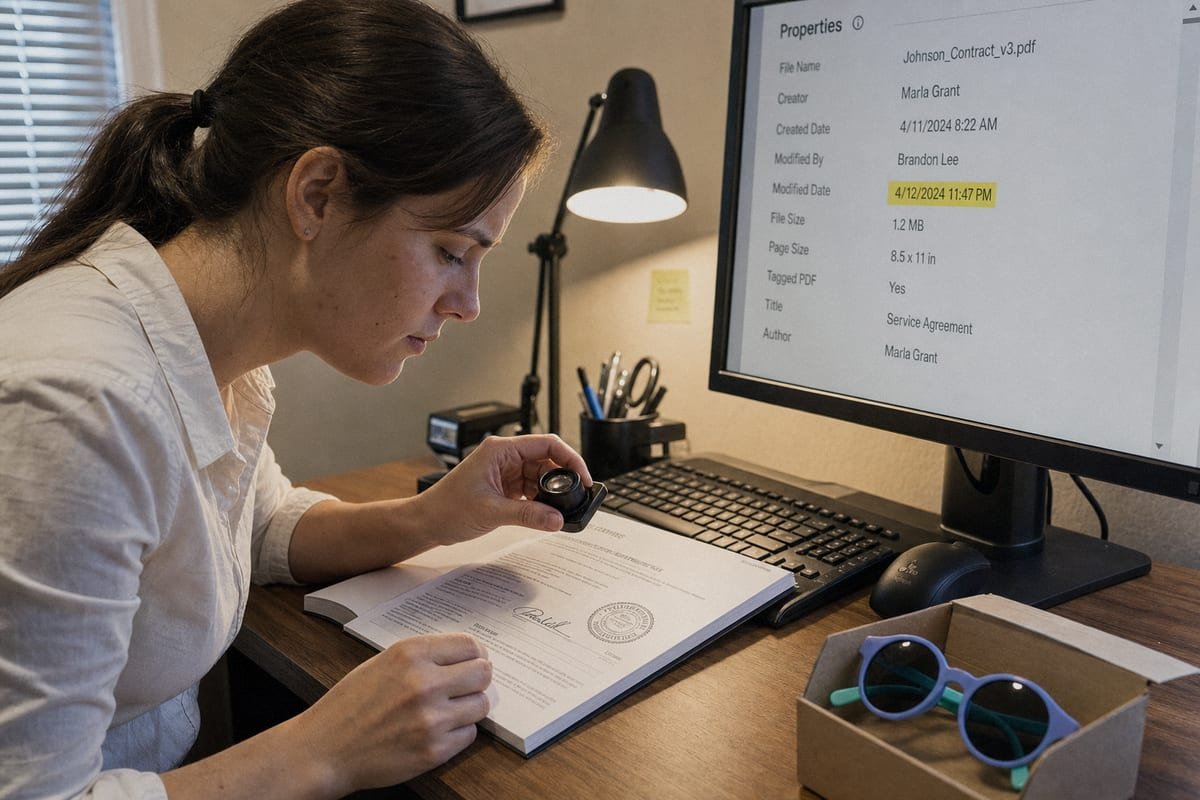
Most fraudulent documentation in our industry is not invented from scratch. It is a genuine report misused: swapped onto a different SKU, edited to change a model number, or stretched to cover a new production run with different materials. That is why relevance checks matter as much as authenticity checks.
The Most Common Red Flags, Ranked by Risk
| 赤信号 | Likely Meaning | あなたの返信 |
|---|---|---|
| Report only available as JPG or screenshot | Possible editing to hide changes | Demand the original signed PDF |
| Lab cannot find the report number | Forged document or spoofed lab | Stop the order; escalate immediately |
| SKU or product photo mismatch | Report swapped from another product | Require testing on your exact model |
| Applicant is an unknown third party | Trader borrowing a factory's report | Ask for the chain of ownership in writing |
| Standards outdated or wrong market | Reused report from an old order | Require retesting to current standards |
| Fonts, dates, or logos inconsistent | Manual tampering in an editor | Check PDF metadata and digital signature |
| Report predates a material or color change | Results no longer represent the product | Request batch-relevant testing |
Why Component-Level Scope Is a Hidden Red Flag
Children's sunglasses contain more than lenses. Hinge screws, internal metal temple wires, coatings, and decorative parts all carry chemical risk. A generic lens-only report often omits these high-risk components. When we develop a new TPEE-temple style at our factory, the metal hinge screw goes into the chemical test scope 5 alongside the frame material, because that is exactly what CPSIA compliance and REACH規則への準拠 6 demand for children's products. If a supplier's report never mentions metal components, ask why. Also verify that the Children's Product Certificate, where required for the US market, traces back to the underlying third-party test report and matches your import batch.
サプライヤーの安全文書を信頼する前に、独立した第三者による再検査を依頼すべきか?
Price pressure creates a real trade-off here, and I weigh it with buyers constantly. Retesting a kids sunglasses style at an accredited lab costs a few hundred dollars. A recall, a customs seizure, or an injured child costs infinitely more.
Yes, for first orders, high-volume programs, or any verification doubt, commission independent retesting at a CPSC accredited laboratory. Pull samples from actual production, not supplier-provided "golden samples," and test against CPSIA, EN 71, ISO 12312-1, and impact requirements for your market.
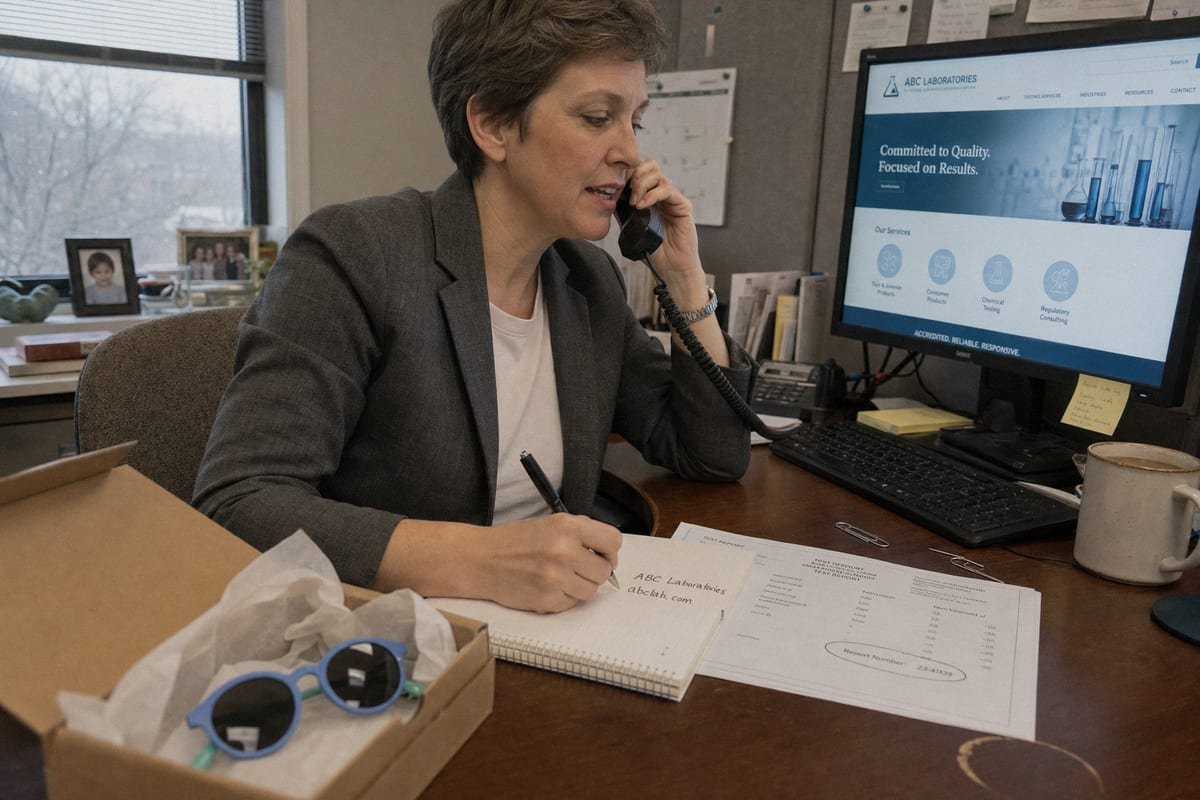
Retesting is not an insult to a good supplier. When our clients in Europe or Japan order their own SGS or Intertek certification testing on our frames, we welcome it. It shortens trust-building and gives both sides a shared, neutral reference. A supplier who resists independent testing is telling you something important.
When Retesting Is Worth the Cost
Not every order justifies a fresh lab invoice. Use a risk-based approach.
| シナリオ | Retesting Recommendation |
|---|---|
| First order with a new supplier | Always retest core safety and optical parameters |
| Supplier report failed or stalled verification | Mandatory retest before any payment milestone |
| New colorway or material on an existing style | Retest chemical parameters like lead and phthalates |
| Repeat order, verified supplier, same batch materials | Rely on existing verified reports; spot-check periodically |
| Large program or private-label launch | Retest plus documented ongoing surveillance testing |
What Your Retest Should Cover
For the US, include CPSIA lead and phthalates testing 7, the FDA impact resistance test for lenses, and ANSI Z80.3 or ISO 12312-1 certification for optical performance and UV400 protection standards. For the EU, cover EN 71 safety testing where applicable, ISO 12312-1, and REACH regulation compliance for chemicals. Insist that the lab draws or receives sealed production samples, ideally selected during a pre-shipment inspection, so the tested units truly represent your goods.
Then build this into a repeatable process. Validate the first lot fully. Re-verify documents at every reorder. Schedule periodic retests annually or when anything changes. Verification is an ongoing workflow, not a one-time checkbox at onboarding.
結論
Fake or misused test reports are a solvable risk. Verify the document, verify the lab, verify the product match, and retest when in doubt. That workflow protects children and your brand.
脚注
1. Official site of Intertek, providing global testing and certification services for consumer goods and safety. ↩︎
2. Wikipedia overview of sunglasses, including safety standards and market requirements for global exports. ↩︎
3. Wikipedia overview of the Portable Document Format (PDF) and its capabilities for secure documentation. ↩︎
4. Official CPSC search tool for verifying if a laboratory is accredited for specific safety standards. ↩︎
5. Wikipedia overview of chemical analysis and testing scopes used to identify substances in consumer products. ↩︎
6. Official European Chemicals Agency guide on the REACH regulation for product safety and chemical compliance. ↩︎
7. Official CPSC overview of rules requiring third-party testing for children’s products, including lead and phthalates. ↩︎


 English
  Español de México
  Deutsch
  Français
  日本語
日本語  العربية
  Português do Brasil