子供用メガネフレームのサイズ要件をどのように伝えますか?
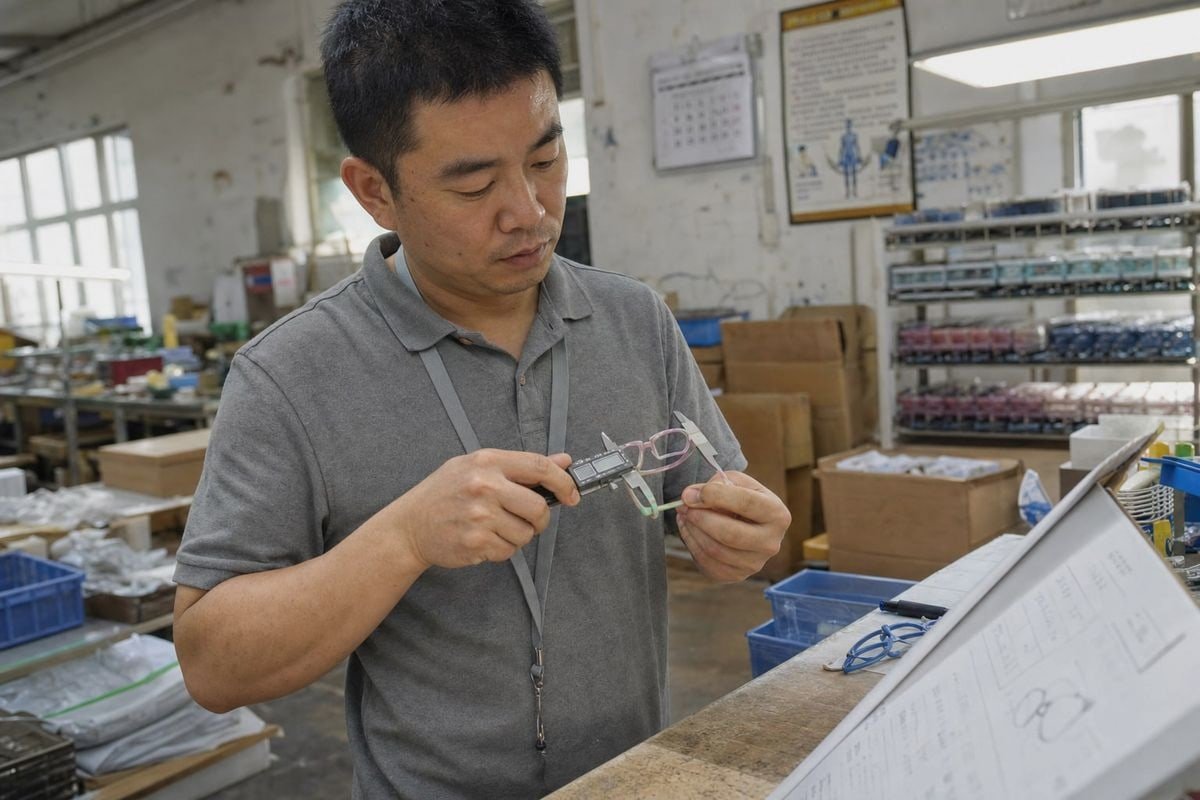
子供用メガネフレームのサイズ要件を伝えることは、サイズが合わないフレームのコンテナが届くまで、簡単なように思えます。当社の生産ラインでは、曖昧なサイジングの指示が、コストのかかる手戻りの最大の原因となっています。.
レンズ幅、ブリッジ幅(DBL)、テンプル長などの正確なミリメートル測定値、対象年齢層、瞳孔間距離範囲、および瞳孔の中心、ずり落ちない、頬や眉に触れないなどの機能的なフィットルールを指定することにより、子供用光学フレームのサイズ要件を伝えます。.
それが短い答えです。以下に、サプライヤーに送るべき正確な測定値、年齢範囲、チャート、およびテックパックの詳細を説明します。.
子供用光学フレームサンプルをリクエストする際に、どのようなサイズの測定値を提供すべきですか?
オーストラリアのバイヤーがかつて、「6歳児用のフレーム」を求めて私たちにメールしてきました。その一文だけで、3回のサンプリングラウンドが必要になりました。正確な数字があれば、一度で解決したでしょう。.
ミリメートル単位の3つの主要な測定値を提供します:レンズ幅(通常は35〜52 mm)、ブリッジ幅またはDBL(14〜18 mm)、テンプルアーム長(115〜130 mm)。工場がサンプリング前にフィットを確認できるように、全体の前面幅、B測定値、およびターゲットの瞳孔間距離を追加してください。.
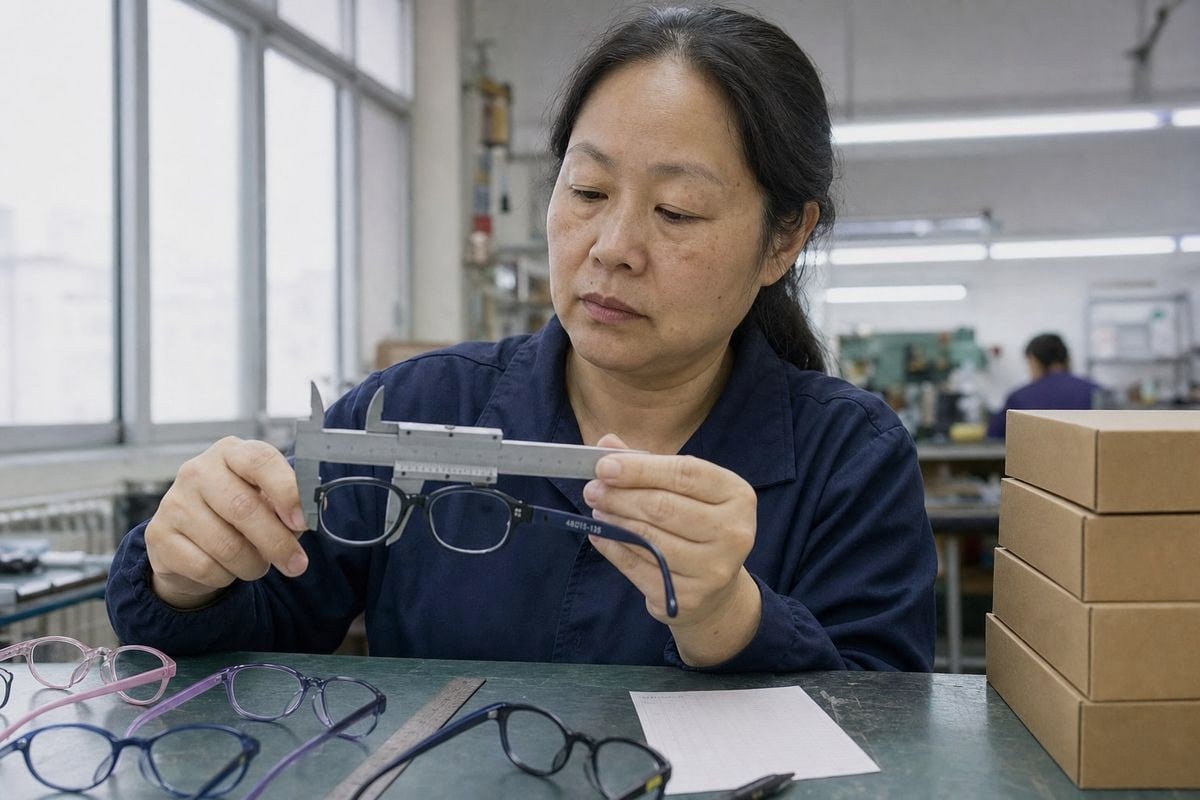
眼鏡業界では、標準化された言語である ボクシングシステム 1. を使用しています。すべてのフレームはA-DBL-テンプルとして記述されます。水平レンズ幅(A)、レンズ間の距離(DBL)、およびテンプルアームの長さです。このサイズコードは、ほとんどの既存フレームの内側のテンプルアームに印刷されています。当社の営業チームがそのコードを受け取ると、自信を持って見積もりとサンプリングを行うことができます。.
最も重要な5つの測定値
完全なサイジングリクエストに含めるべきものと、各数値が子供の顔にとってなぜ重要なのかを以下に示します。.
| 測定 | 子供の一般的な範囲 | なぜ重要なのか |
|---|---|---|
| レンズ幅(A) | 35〜52 mm | フレーム全体のスケールとレンズのサイジングを決定します |
| ブリッジ幅(DBL) | 14~18 mm | 子供の平坦な鼻梁は、これを最も一般的な失敗点にしています |
| テンプルアームの長さ | 115~130 mm | 長すぎると滑り、短すぎると耳の後ろを挟みます |
| 総前面幅 | エンドピースからエンドピースまで | 子供の顔幅を超えてはなりません |
| B測定値(レンズの高さ) | 30 mm以上を推奨 | 最新の近視管理レンズは、垂直方向の治療ゾーンが必要です |
B測定値は現在、特別な注意が必要です。日本やヨーロッパの多くの眼鏡会社のお客様は、 近視制御レンズ 2, を装着しており、治療ゾーンを維持するために少なくとも30 mmの垂直レンズ高さが必要です。その市場にサービスを提供している場合は、最小B測定値を明示的に指定してください。.
生の数値を超えて、幾何学的中心距離(GCD)の目標をサプライヤーに伝えてください。フレームのGCDがターゲット年齢グループの平均に近い場合、レンズは薄くカットされ、周辺の歪みが減少します。便利なルール:フレームサイズにブリッジサイズを加えたものは、子供のPDを超えて8 mmを超えてはなりません。 瞳孔間距離 3 最後に、参照用のペアがあれば送ってください。適切にフィットするフレームの印刷されたサイズコードをコピーすることは、OEMアイウェア製造の最も速く、最も信頼性の高い基準です。.
テンプルアームの内側に印刷されたサイズコードは、ミリメートル単位でレンズ幅-ブリッジ幅-テンプル長のパターンに従います.
子供の年齢グループに合うフレームのサイズを知るにはどうすればよいですか?
年齢に基づいたサイジング.
子供用フレームのサイズは、おおよそ年齢に応じてスケールします:0〜3歳はレンズ幅35〜40 mm、4〜6歳は41〜45 mm、7〜9歳は46〜48 mm、10〜13歳は49〜52 mmです。年齢チャートは出発点としてください。実際の顔幅、ブリッジのフィット感、PD(瞳孔間距離)の方がより予測的です。.
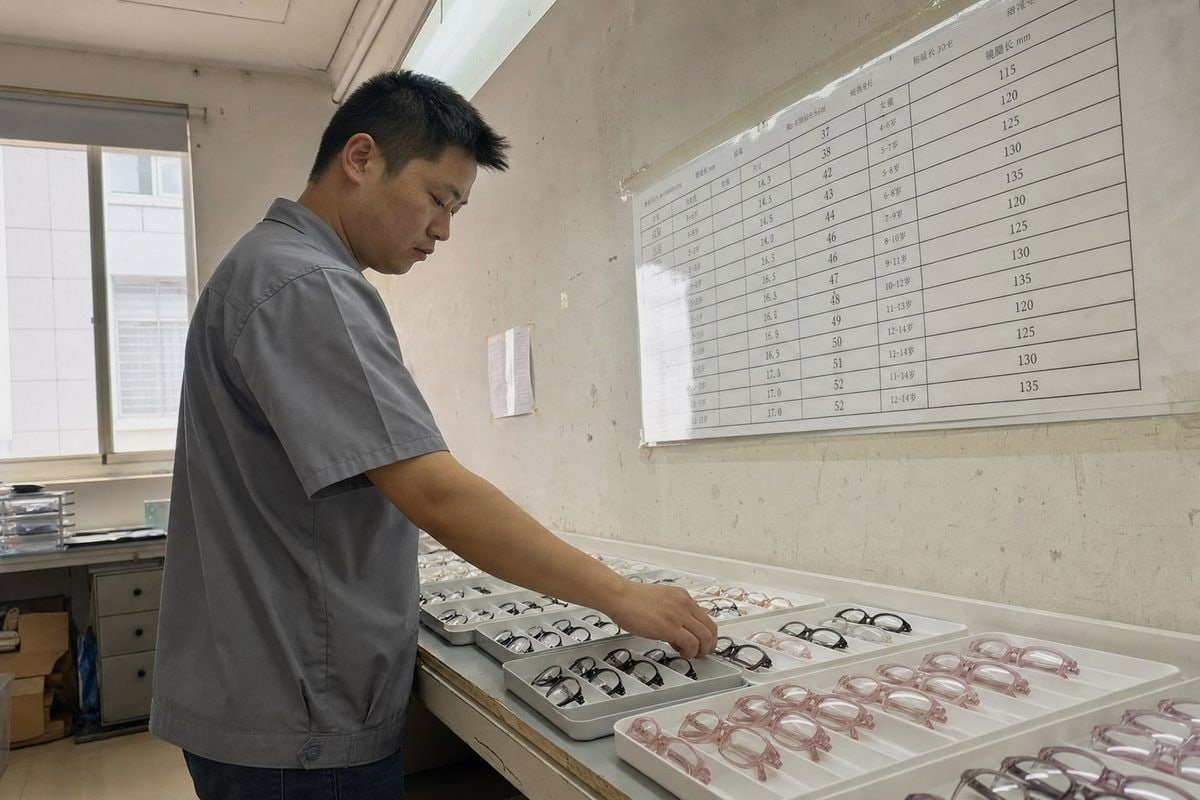
はマーケティングには便利ですが、それは単なる代理にすぎません。7歳児でも、すべての寸法で数ミリメートル異なるフレームが必要になる場合があります。子供用アイウェアを製造してきた15年間で、成功したバイヤーは年齢範囲を使用して製品ラインを定義し、仕様を確定する前に実際の顔の測定値で検証しています。 実用的な子供用アイウェアサイジングチャート.
ブリッジ(DBL)
| 年齢グループ | レンズ幅 | 0〜1歳 | テンプル長 |
|---|---|---|---|
| 35〜37 mm | 14〜15 mm | 110〜115 mm | 37〜40 mm |
| 1〜3年 | 14〜16 mm | 115〜120 mm | 4〜6歳 |
| 15〜16 mm | 41〜45 mm | 118〜125 mm | 7〜9歳 |
| 15〜17 mm | 46〜48 mm | 120〜128 mm | 10〜13歳 |
| 49–52 mm | 17–19 mm | 16~18 mm | 10–13歳 |
Why the Bridge Is the Hidden Failure Point
A child-size label does not guarantee the bridge measurement will fit. Toddlers and preschoolers have flat, undeveloped nasal bridges, so a standard adult-style bridge slides straight down the nose no matter how correct the lens width is. For younger age groups, specify a saddle bridge or keyhole bridge design, or request adjustable シリコンノーズパッド 4 on the frame. A DBL distance of 14–17 mm covers most pediatric cases well.
Handling the "Room to Grow" Objection
Buyers often push us to size up so parents feel they get longer wear. I understand the retail logic, but I push back. An oversized frame shifts during play, positions the optical center wrongly, and creates the "bug-eye" look parents dislike. The better answer is frame material flexibility. Our TR90 frames with TPEE temples flex with a growing face without permanent deformation, which gives real longevity without compromising optical alignment on day one.
Also account for pediatric anatomy in the tilt. Children have lower ear positions and flatter facial profiles, so we calibrate pantoscopic tilt near 0 degrees on our kids molds rather than copying adult geometry.
メガネメーカーからサイズチャートやフィッティングガイドを入手できますか?
One lesson I learned early: buyers who launch without a fitting guide field endless returns and support emails. Now we prepare sizing documentation for clients as a standard part of OEM development.
はい。専門的な子供用眼鏡工場であれば、すべてのSKUのA-DBL-テンプル測定値、正面全体の幅、およびB測定値を記載したサイズチャートを提供すべきです。さらに、年齢推奨と機能的なフィットチェックリストを備えた、消費者を対象としたフィッティングガイドも提供すべきです。サプライヤーがこれを提供できない場合は、注意信号と見なしてください。.

A serious factory measures every style during quality control, so producing a size chart costs them nothing. When we onboard a new brand client, we send a spreadsheet covering all requested styles from our catalog of roughly 800 existing designs, with each dimension listed to the millimeter. That lets a procurement manager compare styles against their target age groups before ordering a single sample.
But ask for more than the chart. The strongest sourcing partnerships include two documents.
The Factory Size Chart
This is the technical document: A-DBL-Temple codes, total frontal width, B-measurement, lens shape, weight in grams, and material per style. Use it to shortlist styles. Cross-check the GCD against your target market's average PD so lens labs get frames they can glaze efficiently.
The Consumer Fitting Guide
This is the retail-facing document. Since most families now buy children's glasses online, they need remote fitting help. A good guide includes an age-to-size table, printable sizing tools, and a functional checklist: eyes centered in each lens, no red marks on the nose, temples straight without bowing, no contact with cheeks or eyebrows, and no slipping when the child looks down. We help clients adapt our internal fit standards into branded guides for their own websites and packaging.
One more forward-looking request: ask whether the factory can share 3D CAD files (.obj or .stl) of your chosen styles. These files feed Virtual Try-On tools, which increasingly drive online kids' eyewear sales and cut return rates further.
サイズ間違いを避けるために、テックパックにどのような詳細を含めるべきですか?
During a QC review last year, we caught a batch where a client's tech pack specified テンプル長 but never mentioned the ear-hook drop. The frames measured perfectly and still slid on active kids. That gap taught us to demand functional fit language in every frame tech pack.
完全なフレームテックパックには、許容範囲を含むすべてのボクシングシステムの測定値、ブリッジデザインタイプ、B測定値の最小値、パントスコピックチルト、素材仕様、ヒンジタイプ、ターゲットPD範囲、およびプレイ中のずれがない、瞳孔が3〜4 mm以内に中心にあるなどの機能的なフィット要件が含まれている必要があります。.
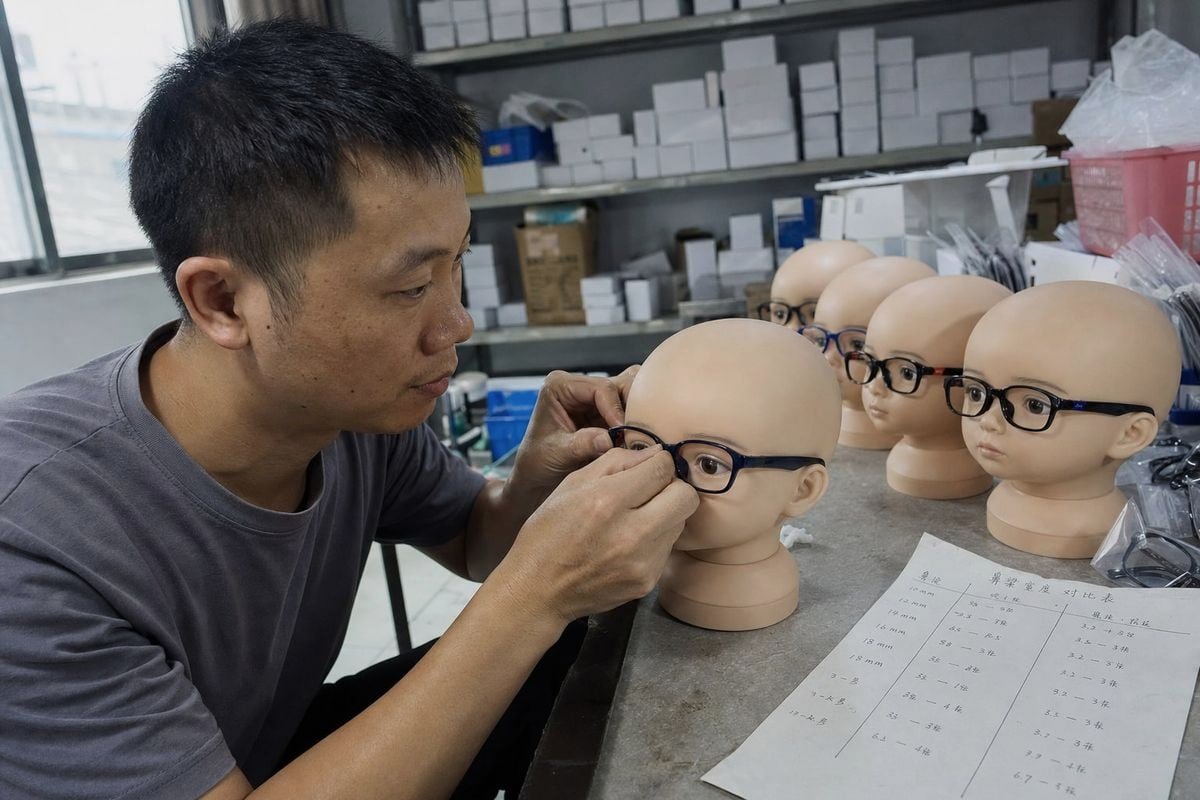
A frame tech pack does two jobs. It tells the factory exactly what to build, and it gives your QC team objective pass/fail criteria at inspection. Vague packs produce disputes; precise packs produce consistent shipments.
Tech Pack Checklist for Kids Optical Frames
| Section | 指定すること | 例 |
|---|---|---|
| Dimensions | A-DBL-Temple with tolerance | 44-15-120, ±0.5 mm |
| Lens height | Minimum B-measurement | ≥30 mm for myopia-management lenses |
| ブリッジ | Design type and fit target | Saddle bridge, low nasal profile |
| Tilt | Pantoscopic angle | Near 0° for pediatric anatomy |
| Materials | Polymer type and certification | TR90 front, TPEE temples, food-grade certified |
| ヒンジ | Type and cycle expectation | Spring hinge durability tested to open-close cycles |
| Fit behavior | Functional requirements | No sliding, no cheek contact, pupils centered ±3–4 mm |
| Optical | Target PD alignment | GCD within 8 mm of target PD range |
Specify Materials and Safety Alongside Size
Size and material interact. Rigid acetate holds dimensions but snaps; flexible polymers like TR90とTPEEで 5 resist permanent deformation from twisting and support cold-glazing at the lens lab. For toddler lines, require food-grade certification 6 on all polymers, since young children chew temple tips. If sustainability matters to your market, request GRS traceability 7 on recycled materials. Add adjustable silicone nose pads or slip-resistant temple tips where the design allows — details like the silicone ear hooks on our sport-style kids frames exist precisely because measurements alone cannot guarantee fit on a moving child.
Include Sample Wording Your Supplier Can Act On
A single clear sentence prevents most sizing mistakes. Something like: "Child frame approx. 44-15-120, total frontal width suited to a narrow face, eyes centered in lenses, secure saddle bridge, no cheek contact, flexible temples, and no sliding during active play." Any experienced factory can build, sample, and inspect against that sentence.
結論
Precise millimeter specs, age-appropriate ranges, factory size charts, and a complete tech pack turn kids optical frame sourcing from guesswork into a repeatable process. Communicate clearly, and returns disappear.
脚注
1. Background on standardized eyewear sizing conventions referenced by the Boxing System. ↩︎
2. NIH’s National Eye Institute explains myopia management relevant to lens height specs. ↩︎
3. NIH’s eye institute is an authoritative source on pupillary distance and vision measurement. ↩︎
4. Background on silicone material properties used for adjustable nose pads on kids frames. ↩︎
5. Explains thermoplastic elastomer properties behind flexible TR90 and TPEE eyewear materials. ↩︎
6. FDA guidance on food-contact substances supports certification requirements for chewed temple tips. ↩︎
7. ISO oversees traceability and recycling standards referenced for sustainable eyewear materials. ↩︎

 English
  Español de México
  Deutsch
  Français
  日本語
日本語  العربية
  Português do Brasil