Why Assess Nose Pads, Screws & Decorative Parts on Kids’ Frames for Swallowing Risk?
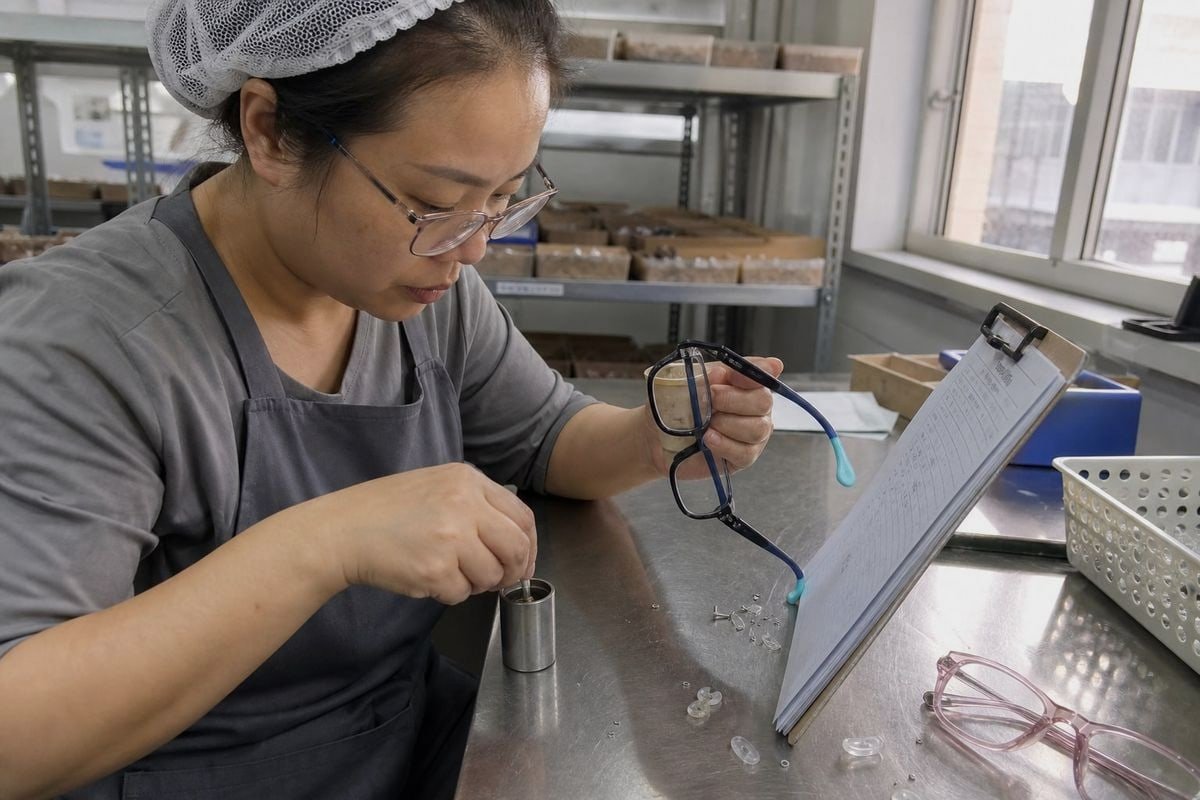
Assessing nose pads, screws, and decorative parts on kids’ frames for swallowing risk is something our Taizhou factory treats as non-negotiable, because a detached part becomes a medical emergency, not a warranty claim.
Nose pads, screws, and decorative parts on kids’ frames must be assessed for swallowing risk because young children mouth objects, and any component that detaches and fits inside a 1.25-inch small parts test cylinder is a legally recognized choking and ingestion hazard.
Let me walk you through exactly which parts to check, how to test them before ordering, which standards apply, and how to pick a manufacturer that designs the risk out from the start.
What Small Parts on Kids' Frames Do I Need to Check for Choking Hazards?
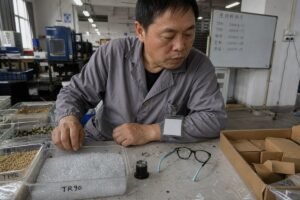
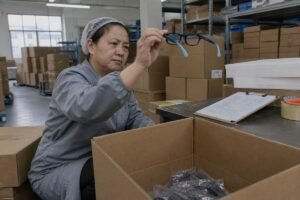
Last year, our QC team rejected an entire sample run because a supplier's decorative charm popped off under thumb pressure. That single loose part taught our buyers what to inspect first.
Check every component that could detach: hinge screws, clip-on nose pads, pad arms, temple end tips, decorative charms, bows, rivets, and glued-on stickers. Any of these that separates under stress and fits in a child's mouth is a potential choking hazard.
Children under three explore new objects by mouthing them. That single behavioral fact changes how you must look at a kids' frame. An adult frame with a loose screw is an annoyance. A kids' frame with a loose screw is an ingestion risk. Thousands of children swallow foreign objects each year, and the highest-risk window sits roughly between 6 months and 3 years old.
The Anatomy of Risk on a Typical Kids' Frame
Not every part carries equal danger. Here is how we rank the components during our incoming inspections:
| コンポーネント | Detachment Likelihood | Danger if Swallowed | 理由 |
|---|---|---|---|
| Hinge screws | 高い | 非常に高い | Most frequent failure point; sharp metal can puncture the digestive tract |
| Clip-on nose pads | 高い | Moderate–high | Small, smooth, easy to mouth silently |
| Decorative charms/bows | 1,000〜2,000個 | 高い | Often glued, not mechanically fixed |
| Pad arms | 中程度 | 高い | Thin metal with sharp edges |
| Temple end tips | 低〜中程度 | 中程度 | Larger, but can slide off worn temples |
| Rivets and studs | 低 | 高い | Rarely detach, but sharp when they do |
Loose or missing hinge screws are the most frequent cause of frame failure. They work loose when frames get stuffed into backpacks, sat on, or bent during play. That is normal kid behavior, not abuse. So your assessment has to assume rough handling as the baseline, not the exception.
There is one more problem that surprises many buyers. Many modern plastic decorative parts are non-radiopaque. They do not show up on a standard X-ray. If a toddler silently swallows or aspirates a clear plastic bead from a frame, a clinician may struggle to diagnose it. That is why we push our brand customers toward designs with fewer detachable parts, full stop.
How Can I Test Nose Pads, Screws, and Decorations for Swallowing Safety Before Ordering?
One trade-off we weigh constantly on our production line is decoration versus retention. A charm that survives our pull tests costs more to attach — and it is always worth it.
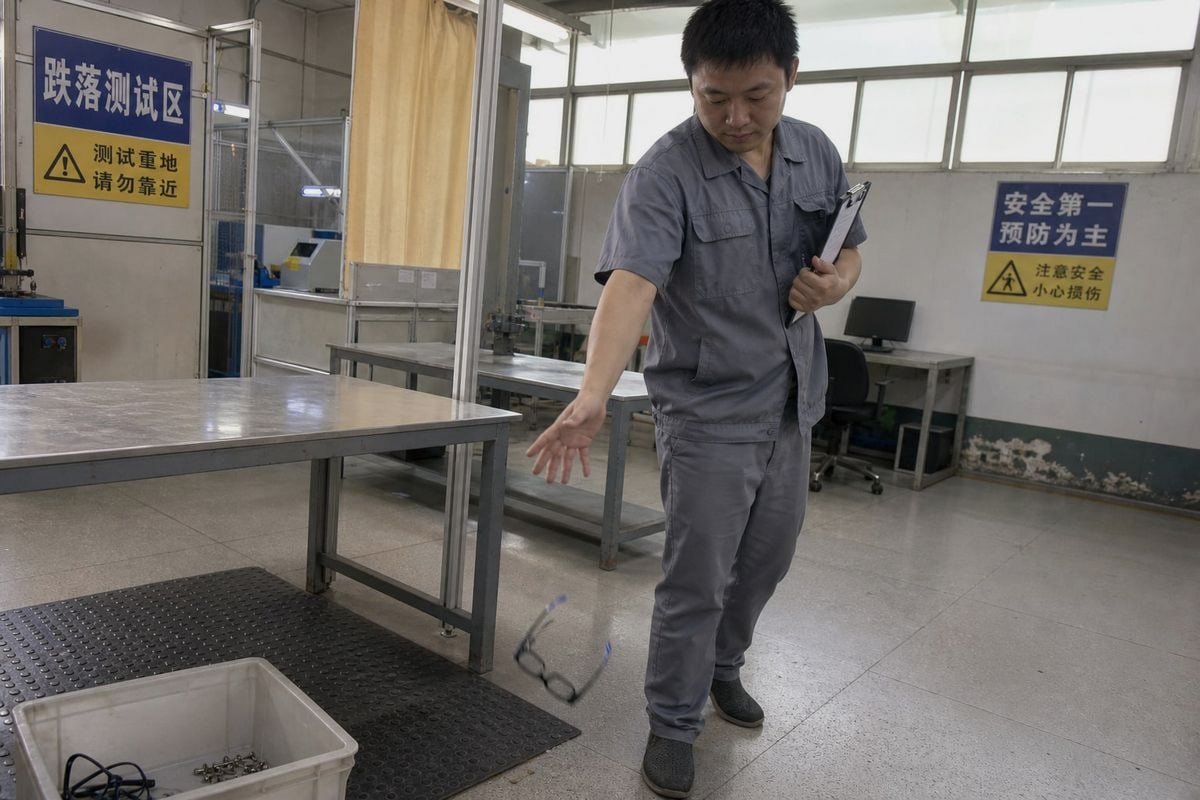
Test samples with component pull testing on every attached part, torque testing on temples, and drop tests from table height. Then check whether any detached piece fits fully inside a 1.25-inch small parts test cylinder. If it does, reject the design.
You do not need a full laboratory to run a meaningful first screen. Before you commit to an order, ask for physical samples and run this sequence yourself. It mirrors the "use and abuse" logic that regulatory testing applies to children's products.
A Five-Step Pre-Order Test Sequence
- Visual and wiggle inspection. Grip each nose pad, charm, and end tip. Twist gently. Anything that rotates or shifts under finger pressure will fail a real tension test.
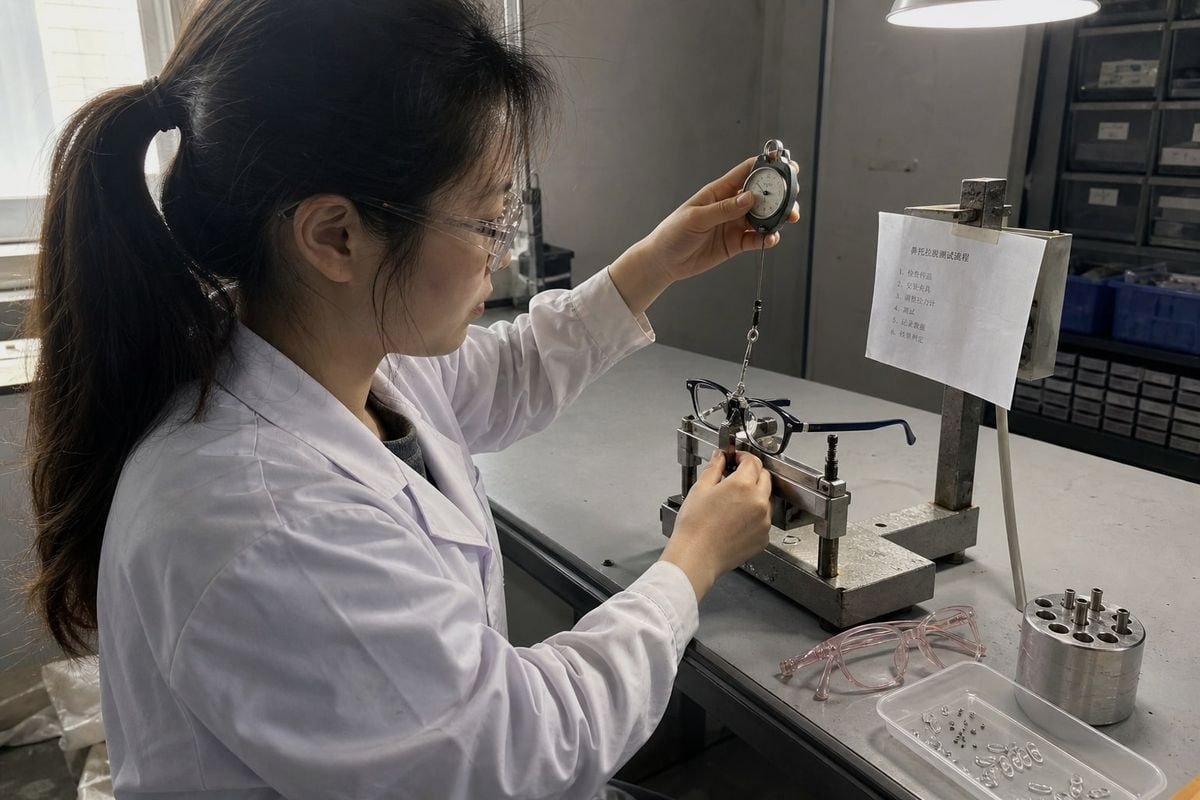
- Pull test. Apply firm, steady tension to each decorative part and nose pad for ten seconds. Eyewear-specific safety testing explicitly checks whether these components detach under tension, so simulate it.
- Torque and flex test. Twist the temples past normal opening angle. Flex the bridge. Quality TPEE and TR90 2 frames should bend and return without cracking or shedding parts.
- Drop test. Drop the frame from table height onto a hard floor several times. Then repeat step one. Drops loosen screws before they eject them.
- Small parts cylinder check. Place any part that detached — or looks likely to — into a 1.25-inch (31.7mm) test cylinder. If it fits entirely inside, treat it as a legally classified choking hazard.
What to Ask Your Supplier For
Alongside your own checks, request the factory's test reports. At our workshop, we document component pull testing results per production batch, because a passing sample means little if batch 3 uses a different glue. Ask specifically for tension test data on nose pads and decorations, not just lens impact reports. Also confirm the frame uses non-toxic materials with supporting documentation, since mouthing exposes children to the material itself, not only to loose parts.
Which Safety Standards Should I Reference When Assessing Small Parts on Children's Eyewear?
A procurement manager from Australia once asked me why our compliance file was thicker than her toy supplier's. My answer: kids' eyewear sits at the intersection of several standards, and we test against all of them.
Reference CPSC safety standards for small parts (16 CFR 1501 and the 1.25-inch test cylinder), ASTM F803 for eye protector impact and retention performance, and the destination market's children's product rules, such as EN 71-style mechanical testing logic for parts that may detach.
Standards can feel abstract, so let me make them practical. Each one answers a different question about swallowing risk, and you need answers to all of them before your product ships.
Matching Standards to the Questions They Answer
| 試験領域 | Question It Answers | Relevance to Small Parts |
|---|---|---|
| CPSC small parts rule (16 CFR 1501) | Is a detached part a choking hazard? | Defines the 1.25-inch small parts test cylinder used to classify hazards for children under 3 |
| ASTM F803 | Does the frame survive impact without fragmenting? | Fragmented frames create sharp small parts; retention matters as much as impact |
| Use-and-abuse mechanical testing | Do parts detach in real-world handling? | Mandatory drop, torque, and tension tests confirm decorations stay attached during rough play |
| Market-specific children's product rules | Is the product legal in the destination country? | EU, UK, Japan, and Australia each layer additional requirements on children's items |
Why Standards Alone Are Not Enough
Here is the nuance buyers sometimes raise as an objection: "Not every small part is dangerous — many stay attached for years." That is true. But standards exist precisely because you cannot predict which unit will fail. The risk becomes significant when a part is loose, poorly secured, or designed so it can detach under stress. Testing to CPSC safety standards converts that unknown into a measurable pass or fail. In our fifteen years of eyewear production, we have never regretted testing a design too thoroughly. We have seen competitors regret testing too little.
One emerging area deserves a note. Smart eyewear for children introduces button lithium batteries and micro-sensors. A breached battery causes internal chemical burns within hours. If your product roadmap includes electronics, your ingestion risk assessment must expand well beyond mechanical parts.
How Do I Choose a Manufacturer That Already Designs Frames to Minimize Swallowing Risk?
When we developed our TR90 kids’ optical frames with TPEE temples, we made a deliberate choice: eliminate detachable parts at the design stage rather than testing them into compliance later.
Choose a manufacturer that offers hinge-free or monolithic designs in flexible TPEE or TR90, molds nose pads into the frame body, documents component pull testing per batch, and provides material safety data — rather than one that decorates cheap frames with glued add-ons.
The safest small part is the one that does not exist. That principle should drive your supplier evaluation more than any test report, because design decisions remove entire failure categories.
Design Features That Remove Risk at the Source
The industry is shifting toward monolithic frame architecture, where the bridge, nose pads, and hinges form one continuous piece of material. Flexible, injection-molded materials like TPEE and TR90 make this possible. They allow hinge-free designs that eliminate small metal components entirely. Advanced 3D printing now even enables screw-less custom frames shaped to a child's craniofacial structure, reducing breakage points further. When you review a supplier's catalog — even in online product photos — look for these signals:
| Design Feature | What It Eliminates |
|---|---|
| Molded-in nose pads (no clip-ons) | Detachable pads and sharp pad arms |
| Hinge-free flexible temples | Hinge screws, the most common loose part |
| Co-molded color blocking instead of glued decorations | Charms, bows, and stickers that peel off |
| Hypoallergenic silicone temple tips, mechanically anchored | End caps that slide off worn temples |
| Solid TPEE/TR90 body | Fragmentation into sharp shards on impact |
Questions That Reveal a Factory's Real Priorities
Ask how many of their kids' styles are hinge-free. Ask whether nose pads are integral or attached. Ask for pull-test records from actual production batches, not just certification samples. In our own case, we maintain roughly 800 existing styles, and the pediatric frame durability logic is built into the molds themselves — which also means a new brand can launch without heavy mold investment while still getting designs where the swallowing-risk assessment was done before the first unit was ever produced. A factory with 5S-managed workshops and dedicated QC staff will answer these questions quickly and with documents. A trader reselling generic frames usually cannot.
結論
Assessing nose pads, screws, and decorative parts on kids' frames for swallowing risk protects children and your brand. Test rigorously, reference CPSC and ASTM F803, and partner with factories that design hazards out entirely.
脚注
1. Background medical concept explaining why small parts pose airway blockage risks to children. ↩︎
2. Explains the thermoplastic material category underlying TR90 and TPEE frame construction. ↩︎
 English
  Español de México
  Deutsch
  Français
  日本語
日本語  العربية
  Português do Brasil