子供用サングラスのUVカットレンズはどのように機能しますか?
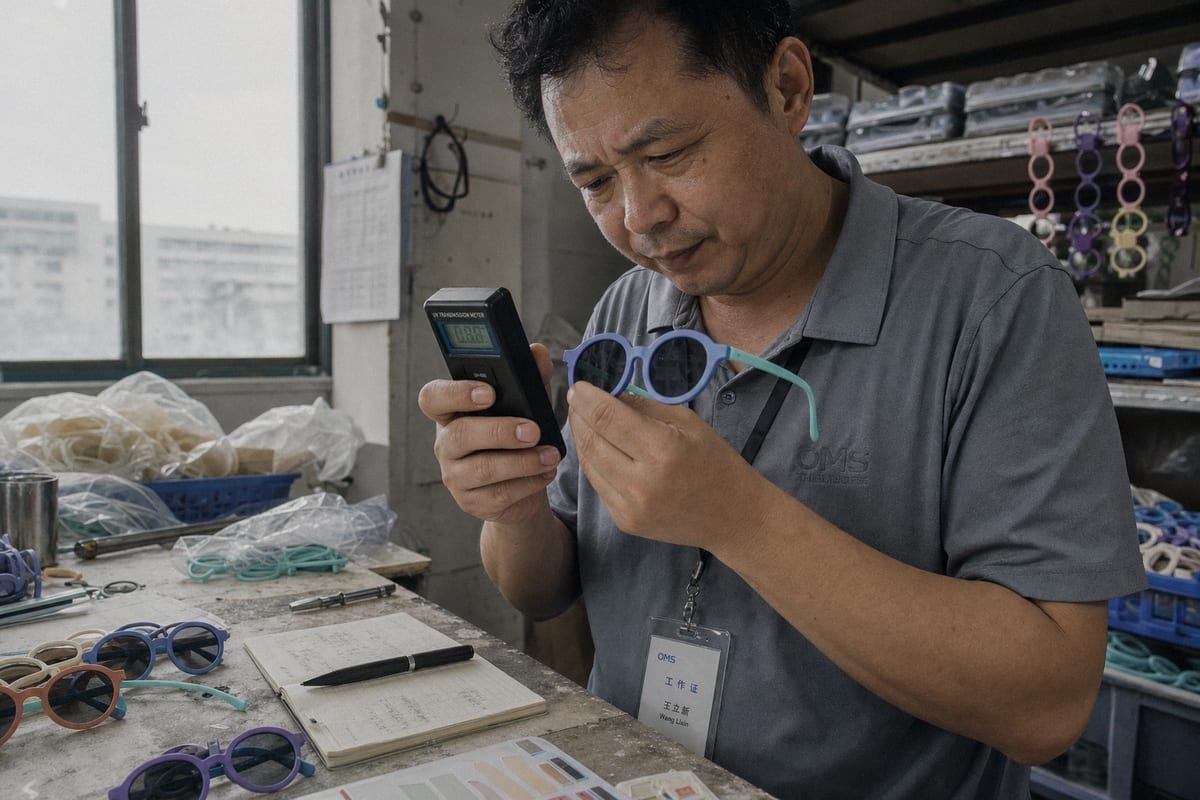
子供用サングラスのUVカットレンズは、当社の太原工場で製造されるすべての製品の中心です。しかし、多くのバイヤーは、濃い色合いと実際の保護を混同しています。これは高価な間違いです。.
子供用サングラスのUVカットレンズは、紫外線が目に届く前に吸収またはブロックすることで機能します。レンズ素材に埋め込まれた、またはコーティングとして適用されたUV吸収分子が、UVAおよびUVBの光子を捕捉し、熱として放散することで、400ナノメートルまでの波長を停止させます。.
これが1つの段落での科学です。しかし、ブランドのために子供用アイウェアを調達する場合、さらに詳細が必要です。実際に重要なことについて説明しましょう。.
子供用サングラスを探す際に、どのようなUVカットレベルを選べばよいですか?
数年前、あるヨーロッパのバイヤーが競合他社のサンプルを当社に送ってきました。レンズはほとんど黒でしたが、UV透過テストに不合格でした。当社のエンジニアは驚きませんでした。.
子供用サングラスを調達する際は、必ずUV400保護を指定してください。これは、最大400ナノメートルのUVAおよびUVB放射線の100%をブロックします。業界標準のレンズの中には、380nmまでしかフィルターしないものもあるため、注文前にUV400または100%のUVA/UVB認証を書面で要求してください。.
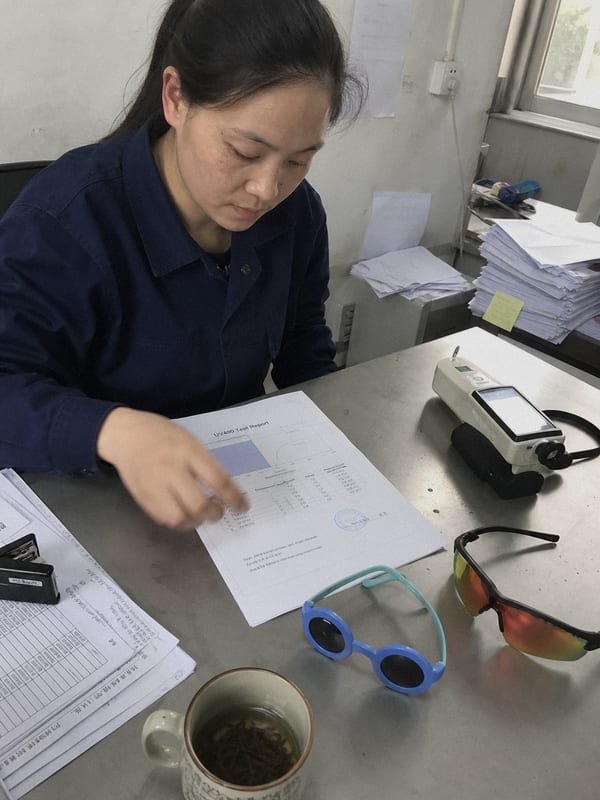
380 nmと400 nmの区別はわずかに聞こえます。そうではありません。. UVA放射線 1 は400ナノメートルまで伸びており、子供の目はそれに特に脆弱です。子供の 水晶体 2 は大人よりも透明です。UVを効果的にフィルターできません。これは、網膜に到達する放射線が増加し、累積的な 網膜損傷 3 に数十年かけて寄与する可能性があることを意味します。研究によると、子供は18歳になる前に生涯のUV眼曝露の大部分を受けています。したがって、今日選択する保護レベルは、長年にわたる眼の健康を形作ります。.
参照すべき基準
オーストラリア、ヨーロッパ、または日本のバイヤーに見積もりを提示する際には、常に市場に適用される基準を確認します。主なものは以下のとおりです。.
| 標準 | 地域 | 対象範囲 |
|---|---|---|
| UV400 | グローバルベンチマーク | 400 nmまでのすべてのUV(完全なUVAおよびUVB)をブロックします |
| ANSI Z80.3 | アメリカ合衆国 | UV透過限界、レンズ品質、衝撃安全性 |
| EN ISO 12312-1 | ヨーロッパ | UVフィルタリング、レンズカテゴリ、機械的安全性 |
| AS/NZS 1067 4 | オーストラリア/ニュージーランド | 高UV環境のための厳格なUV規制 |
色合いのレベルが別の問題である理由
色合いは可視光の透過、つまり世界がどれだけ明るく見えるかを制御します。UVカットは不可視放射線を制御します。レンズは非常に暗くてもUVを通すことができます。さらに悪いことに、UVカットのない暗いレンズは瞳孔を散大させ、メガネをかけないよりも多くの放射線を取り込みます。だからこそ、私たちはバイヤーに次のように伝えています。UV定格と色合いのカテゴリを別々に指定してください。一方が他方を意味すると仮定しないでください。.
子供用メガネの偏光レンズとUV400レンズは違うの?
バイヤーはほぼすべてのビデオ通話でこの質問をしますが、私は彼らに答えるのと同じように答えます。まず直接比較し、次に生産ラインで検討するトレードオフについて説明します。.
はい、これらは異なる技術です。UV400は目に見えない紫外線をブロックし、目の健康を守ります。偏光フィルターは、水、砂、道路からの水平方向のまぶしさを軽減し、視覚的な快適さを向上させます。偏光レンズは自動的に紫外線防御になるわけではないため、子供用アイウェアは常にまずUV400を備えている必要があります。.

ここで簡単に考えることができます。色合いは快適さ。偏光はまぶしさ制御。UV定格は目の安全性。これらは3つの別々の機能であり、子供にとって交渉不可能なのは1つだけです。.
| 特徴 | それがすること | 眼の健康を守るか? | 子供に必要か? |
|---|---|---|---|
| 色合い | 可視光の明るさを軽減します | いいえ | オプション |
| 偏光 | 反射した水平方向のまぶしさをカットします | いいえ | オプション |
| UV400 | UVAおよびUVB放射線をブロックします | はい | 必須 |
偏光が真の価値を追加するとき
偏光レンズは文字通り水の上で輝きます。ビーチブランド、スイミングスクールプログラム、アウトドアキッズラインにとって、水や濡れた砂からのまぶしさは強烈です。子供は大人よりも背が低いため、舗装や砂のような反射する地面に近い場所にいます。その近さにより、反射するUVとまぶしさの線量が上昇します。これらのユースケースでは、偏光とUV400を1つのレンズに組み合わせることをお勧めします。そして、約800の既存スタイルすべてで両方のオプションを提供しています。.
UV400のみで十分な場合
日常の遊び場での着用、学校への送迎、ベビーカーでの使用には、高品質のUV400レンズが不可欠な役割を果たします。偏光をスキップすることで、最初のコレクションの小売価格を手頃なものに保つことができます。当社の新しいブランドクライアントの多くは、UV400のみのレンズで発売し、市場をテストしてから、シーズン2で偏光プレミアムティアを追加します。この段階的なアプローチは、リスクを低減しますが、安全性を損なうことはありません。なぜなら、光線角膜炎や長期的な損傷を防ぐ紫外線カットは、初日から存在しているからです。.
バルク注文を確定する前にUV保護の品質を確認するにはどうすればよいですか?
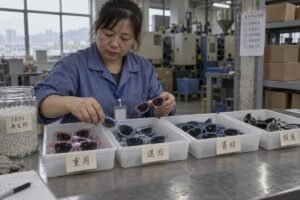
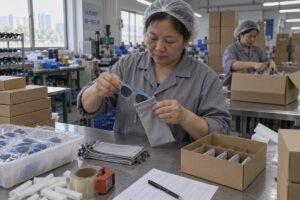
アイウェア業界での15年間の経験から得た教訓の1つは、証拠なしにサプライヤーの主張を決して受け入れないことです。私たちもそのルールに従っており、当社の5S管理ワークショップがUV検証を後付けではなく、QCルーチン内に保持している理由です。.
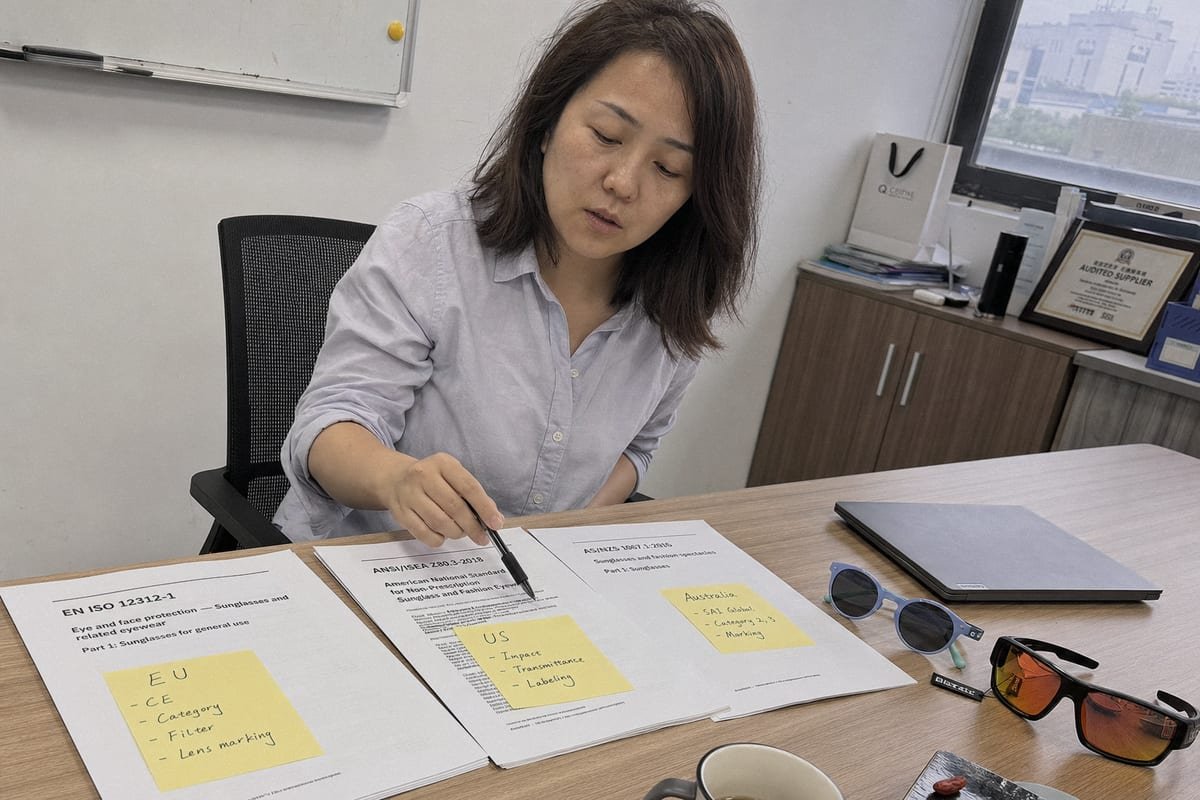
ANSI Z80.3 または EN ISO 12312-1 に対する第三者機関の検査レポートをリクエストし、UV分光光度計を使用して量産前のサンプルをテストし、レンズとパッケージにUV400のマーキングを確認し、生産中の入荷レンズバッチを監査することにより、UV保護を検証します。目視による色の確認だけに頼らないでください。.
UVカットは目に見えません。それが根本的な問題です。合格したレンズと不合格のレンズは、あなたの目には同じように見えます。したがって、検証は手続き的なものでなければならず、視覚的なものであってはなりません。ここで、私たちから注文する場合でも、他の誰から注文する場合でも、すべてのバイヤーに推奨するプロセスを紹介します。.
5段階の検証プロセス
- まず書類を要求してください。. 最近のテストレポートを参照して要求する ANSI Z80.3規格 5, 、EN ISO 12312-1、またはAS/NZS 1067(市場によって異なります)。レポートの日付とテストされた正確なレンズ仕様を確認してください。.
- 量産前のサンプルを独立してテストする。. サンプルを第三者のラボに送るか、UV分光光度計を使用します。多くの眼鏡店では、280〜400 nmの範囲で迅速な透過チェックを実行できます。.
- ラベルが実際の状態と一致していることを確認する。. レンズまたはパッケージには、UV400または100% UVA/UVBと記載されている必要があります。「UV耐性」や「日焼け止め」などのあいまいなフレーズは危険信号です。.
- 生産中に監査する。. サプライヤーに、入荷するレンズロットをどのように検証しているか尋ねてください。当社の工場では、レンズロットは組み立て前にチェックされます。なぜなら、交換されたレンズロットはこの業界で最も一般的な故障点だからです。.
- 納品された商品に対して、ゴールデンサンプルの再テストを行ってください。. 密封された承認済みサンプルを保管してください。レンズの仕様、色合いの深さ、可視光線透過率のカテゴリーについて、出荷されたサンプルと比較してください。.
故障を予測する危険信号
疑わしいほど安いレンズ価格を提示したり、 レンズ素材 6, を言えなかったり、文書なしで安価なアクリルに「UVコーティング」を提供したりするサプライヤーに注意してください。コーティングは効果があるかもしれませんが、レンズ素材に組み込まれた保護機能は、傷がつかないため、子供向け製品にはより信頼性があります。また、裏面反射防止コーティングについても尋ねてください。設計が不十分なARコーティングは、子供の後ろからのUVを目に反射する可能性があるため、まぶしさだけでなくUVについても設計されている必要があります。.
アクティブな子供たちに最高のUV安全を提供するレンズ素材は?
素材の選定は、当社のエンジニアが開発に最も時間を費やす部分です。レンズをTPEEおよびTR90フレームと組み合わせる場合、2つの安全システム、つまり放射線用と衝撃用を組み合わせています。.
ポリカーボネートレンズは、活発な子供たちにとって最高の組み合わせを提供します。コーティングなしで自然にUVAとUVBを100%吸収し、優れた耐衝撃性を提供します。トライベックスは強力なプレミアム代替品ですが、子供用サングラスには未処理のアクリルは避けるべきです。.
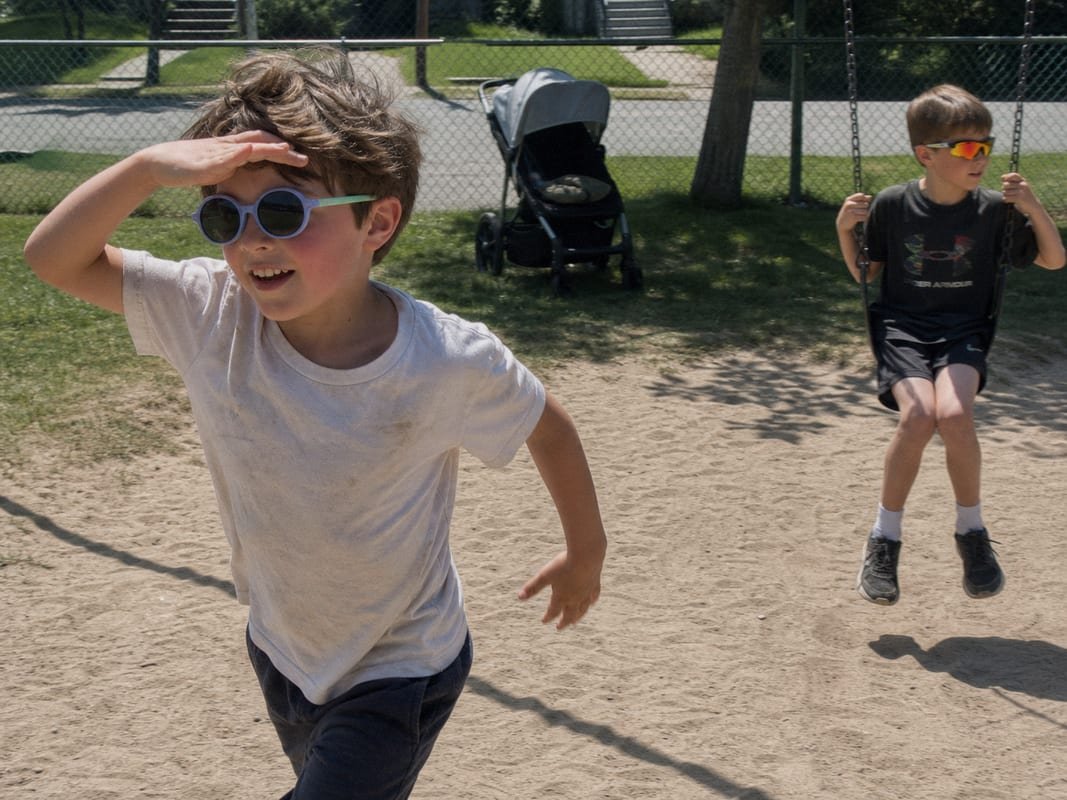
なぜ素材がそれほど重要なのでしょうか?子供たちはサングラスを落としたり、投げたり、座ったり、噛んだりするからです。砕けるレンズは裂傷のリスクとなります。UVを透過するレンズは、眼の健康に対する遅く、目に見えないリスクです。適切な素材は、これら両方の問題を一度に解消します。.
一般的なレンズ素材の比較
| 素材 | UVカット | 衝撃強度 | 中程度から重い | 最適な用途 |
|---|---|---|---|---|
| ポリカーボネート | 本来の100% UVA/UVB | 素晴らしい | 非常に軽い | 日常使いおよびスポーツ用子供用アイウェア |
| トライブレックス | 本質的な完全UVブロック | 素晴らしい | 最軽量 | プレミアム子供用光学レンズおよびサングラスレンズ |
| CR-39(樹脂) | UV処理が必要 | 中程度 | 軽い | 大人用光学レンズ、幼児にはあまり適さない |
| アクリル(未処理) | 添加剤なしでは性能が低い | 低 | 軽い | 子供には推奨されません |
なぜポリカーボネートが子供用アイウェアで主流なのか
ポリカーボネートは、素材自体の特性として、完全な 紫外線スペクトル 7 を吸収します。保護は表面層ではないため、遊び場での使用による傷が劣化させることはありません。UV光子を吸収するのと同じ分子構造は、割れる代わりに衝撃下でたわみます。そのため、ポリカーボネートは、幼児向けの柔らかい丸いツートンカラーのデザインであっても、年長の子供向けの角張ったラップアラウンドスポーツシールドであっても、ほとんどの子供用スタイルで標準のレンズとなっています。.
フレームがシステムを完成させる
完璧なレンズでも、側面から光が入ると保護性能が漏れてしまいます。ラップアラウンドシールドデザインは、一体型ミラーレンズで製造しているスポーツスタイルと同様に、こめかみから入るUVをカットします。反射光線もここでの問題となります。子供は背が低いため、反射する舗装、砂、水に目が近くなります。レンズを、遊び中にずれない柔軟なTR90またはTPEEフレームと組み合わせ、マーケティングでつばの広い帽子を推奨してください。サングラスは、より広範な太陽光対策の一部として機能するのが最も効果的であり、その全体像を伝えるバイヤーは、より信頼されるブランドを構築する傾向があります。.
結論
安価な色付きレンズは、子供の目に生涯にわたる害を静かに及ぼす可能性があります。解決策は簡単です。検証済みのUV400保護、ポリカーボネートレンズ、ラップアラウンドフィット、およびサプライヤーからの文書化されたテストを要求してください。.
私たちが開発するすべてのコレクションは、その原則から始まります。子供用アイウェアラインを構築している場合は、UV保護をマーケティングではなくエンジニアリングとして扱うパートナーを選んでください。そうすれば、あなたのブランドは、保護者が再び来る信頼を獲得するでしょう。.
脚注
人間の目に及ぼす紫外線スペクトルとその健康への影響に関するWHOのガイダンス。. ↩︎
人間の眼球システム内の水晶体の解剖学的概要とその機能。. ↩︎
紫外線曝露が長期的な網膜損傷にどのように寄与するかについての臨床的説明。. ↩︎
高UV環境におけるサングラスおよびファッション眼鏡のオーストラリア政府の公式安全基準。. ↩︎
アメリカのANSI Z80.3(処方箋なし眼鏡用)を含む国際サングラス規格の概要。. ↩︎
光学レンズに使用されるさまざまな素材とその特定の屈折特性に関する技術的概要。. ↩︎
電磁放射線範囲内の紫外線スペクトルの科学的定義と特性。. ↩︎

 English
  Español de México
  Deutsch
  Français
  日本語
日本語  العربية
  Português do Brasil