顔の形に基づいて子供用サングラスを選ぶ方法
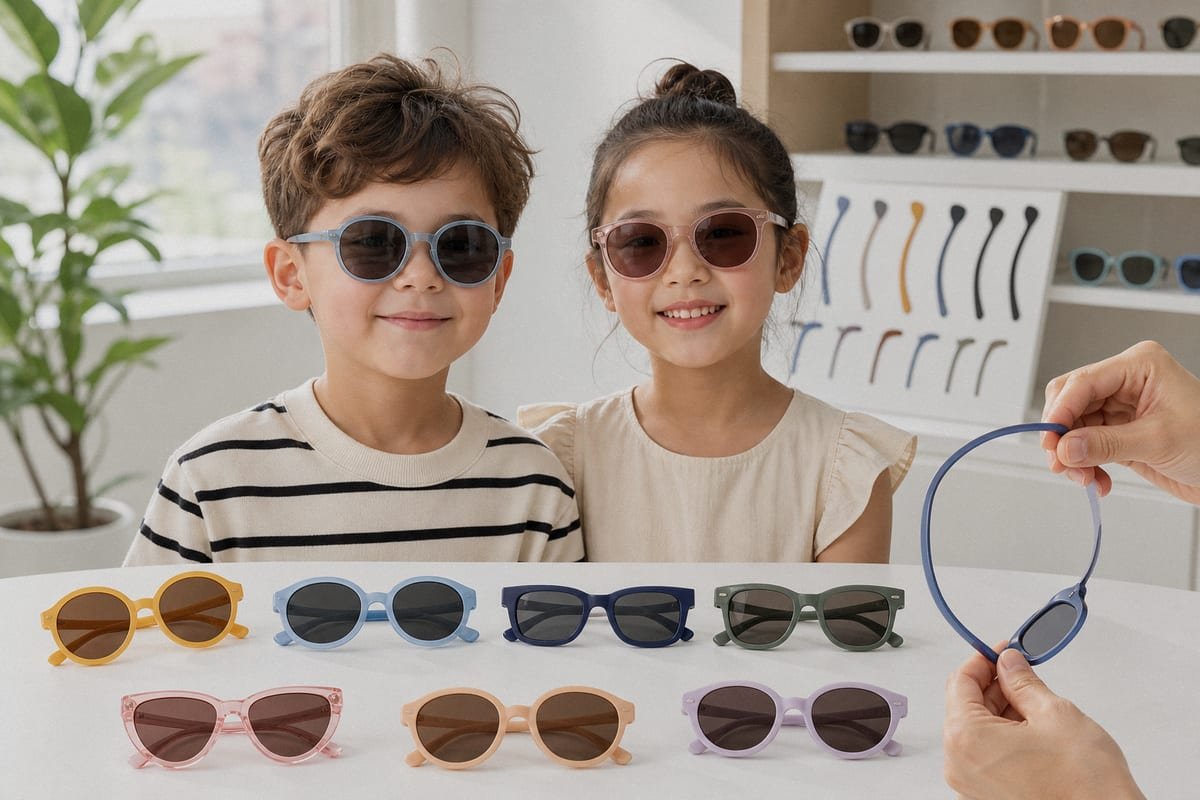
顔の形に基づいて子供用サングラスを選ぶのは簡単そうに見えますが、バイヤーから送られてきたサンプルがずれたり、挟まったり、曲がったりすることがあります。台州の生産ラインでは、本物の子供の顔で美しいフレームが失敗するのを見てきました。「かわいく見える」と「正しくフィットする」の間のギャップは、ブランドに返品やレビューのコストをかけます。修正方法は明確な方法です。まず保護、次にフィット、最後に顔の形です。.
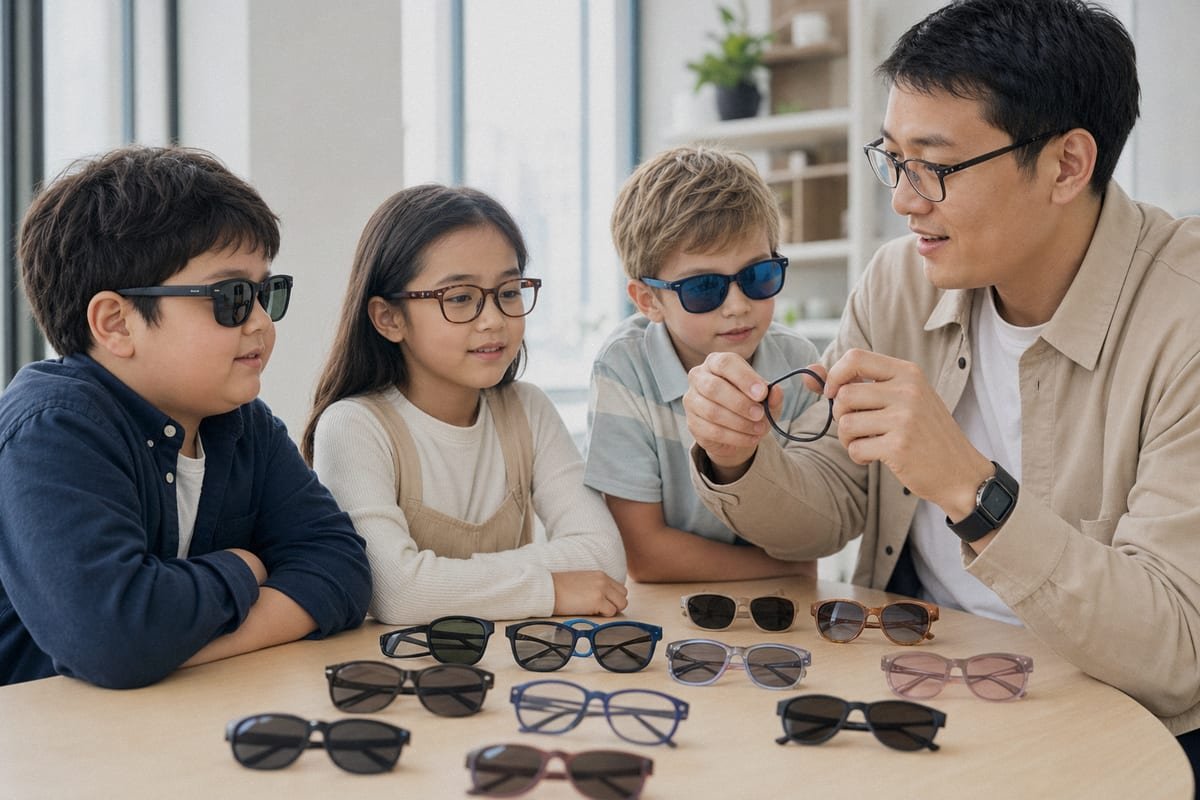
顔の形に基づいて子供用サングラスを選びましょう。丸顔には角張ったフレーム、四角い顔には柔らかい丸いフレーム、そしてほとんどのスタイルには楕円顔を組み合わせます。スタイリングの決定の前に、必ずUV400保護、耐衝撃性レンズ、そしてぴったりとした柔軟なフィット感を確認してください。.
このガイドでは、各顔の形を説明し、小さな顔のサイズ調整について説明し、なぜ素材がスタイルよりも重要なのかを示し、ブランドが金型費用なしで多様性を提供できる方法を共有します。.
子供の丸顔や楕円顔にサングラスの形を合わせるにはどうすればよいですか?
オーストラリアのバイヤーから、丸いレンズのサンプルが息子に「似合わない」理由を尋ねられたことがあります。彼の顔も丸かったのです。その質問は、どんなスタイルガイドよりも多くのことを教えてくれました。.
丸顔には、直線的なラインがメリハリとコントラストを加えるため、四角形、スクエア、または角のあるキッズサングラスが最適です。オーバル顔は最も汎用性の高い形であり、フレームの幅が顔に合い、顔を圧倒しない限り、ほぼすべてのフレームに適しています。.
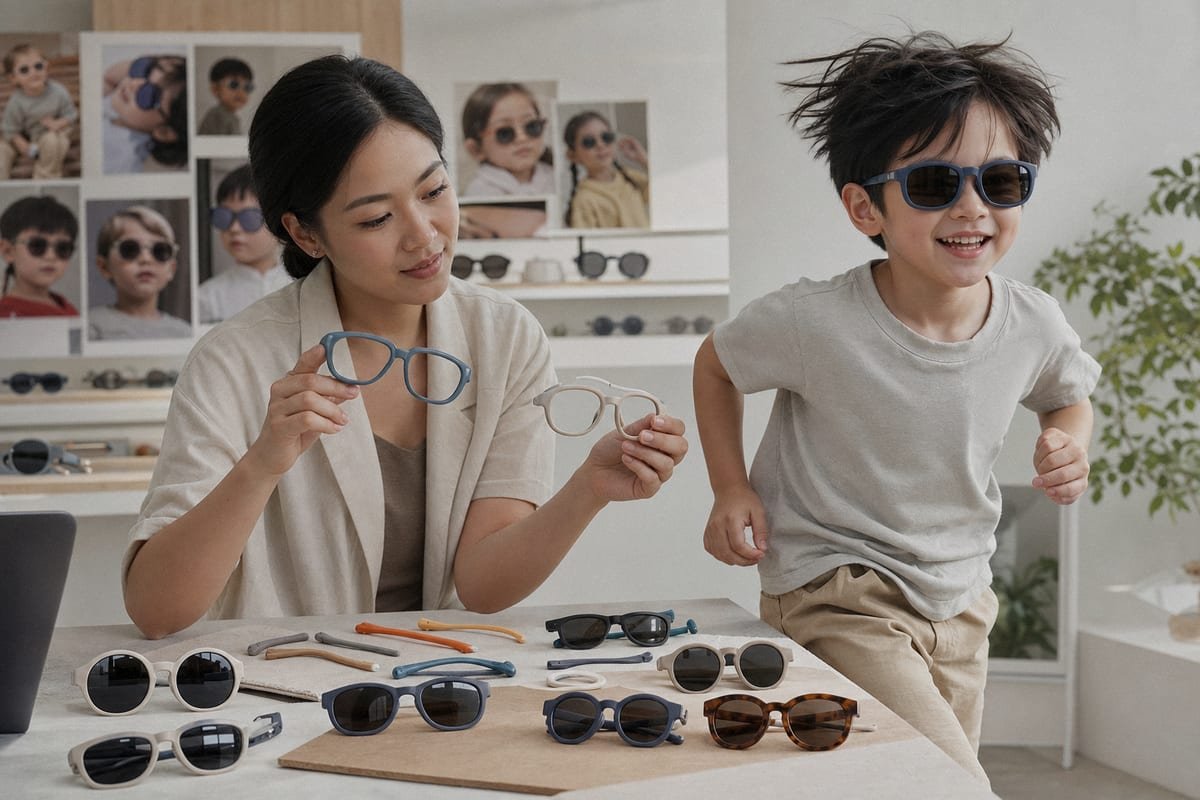
顔の形のマッチングは、実際にはコントラストとバランスに関するものです。丸顔は、柔らかい頬、湾曲した顎のライン、そしてほぼ同じ幅と長さを特徴とします。その顔に完全に丸いフレームをかけると、すべてが柔らかい円に溶け込みます。角張ったフレームはそれを壊します。顔に自然にない視覚的なエッジを作成します。だからこそ、四角いスタイルや長方形のスタイルが丸顔に繰り返し推奨されるのです。.
楕円顔は differently に機能します。幅よりも長く、顎がわずかに狭くなっています。プロポーションはすでにバランスが取れているため、ほとんどのフレーム形状はうまくフィットします。唯一の本当のリスクはスケールです。幅が広すぎる、または高さが高すぎるフレームは、小さな楕円顔を飲み込んでしまいます。中型のフレームは、自然なバランスを維持します。.
一般的な顔の形のクイックリファレンス
| 顔の形 | 最適なフレームスタイル | 避けるべきスタイル |
|---|---|---|
| 丸い | 長方形、四角、角張った | 完全に丸い、非常に湾曲したレンズ |
| 楕円 | ほぼすべてのミディアムサイズのスタイル | 大きすぎて顔を圧倒するフレーム |
| 四角い | 丸い、楕円、柔らかく湾曲した | 箱型、鋭く角張ったフレーム |
| ハート型 | アビエイター、下重心、軽量フレーム | 幅広、上重心のデザイン |
子供の顔の形を識別する方法
Look at four things: forehead width, cheekbone width, jawline shape, and overall face length. A round face is about as wide as it is long. An oval face is longer, with soft edges. A square face has a strong, flat jawline. A heart face has a wide forehead and a narrow chin.
私の経験から、20カ国以上でブランドのフレームサンプルを作成した正直な注意点:顔の形のルールはスタイリングの助けにはなりますが、法律ではありません。一部のスタイリストは、実際のフレーム幅とレンズの高さが形状ルールよりもはるかに重要であると主張しています。私はバランスの取れた見方に同意します。顔の形を使ってスタイルを絞り込みます。次に、フィット感で最終決定を下します。フィット感が良い「間違った」形状は、常にフィット感が悪い「正しい」形状よりも優れています。.
小さめまたは細めの顔の子供に最適なフレームのスタイルは何ですか?
サイズ調整は、工場で最も多くのエンジニアリング時間を費やす部分です。2歳の鼻梁と9歳の鼻梁は完全に異なる構造であり、1つのフレームでは両方に対応できません。.
顔が小さめまたは細めのお子様には、低いクッション付きのノーズブリッジ、短いテンプルアーム、瞳孔間距離に合わせたレンズ幅を備えたコンパクトなフレームが必要です。年齢別のサイズチャートと深い垂直レンズの高さは、ずれを防ぎ、リムからの紫外線漏れを止めます。.
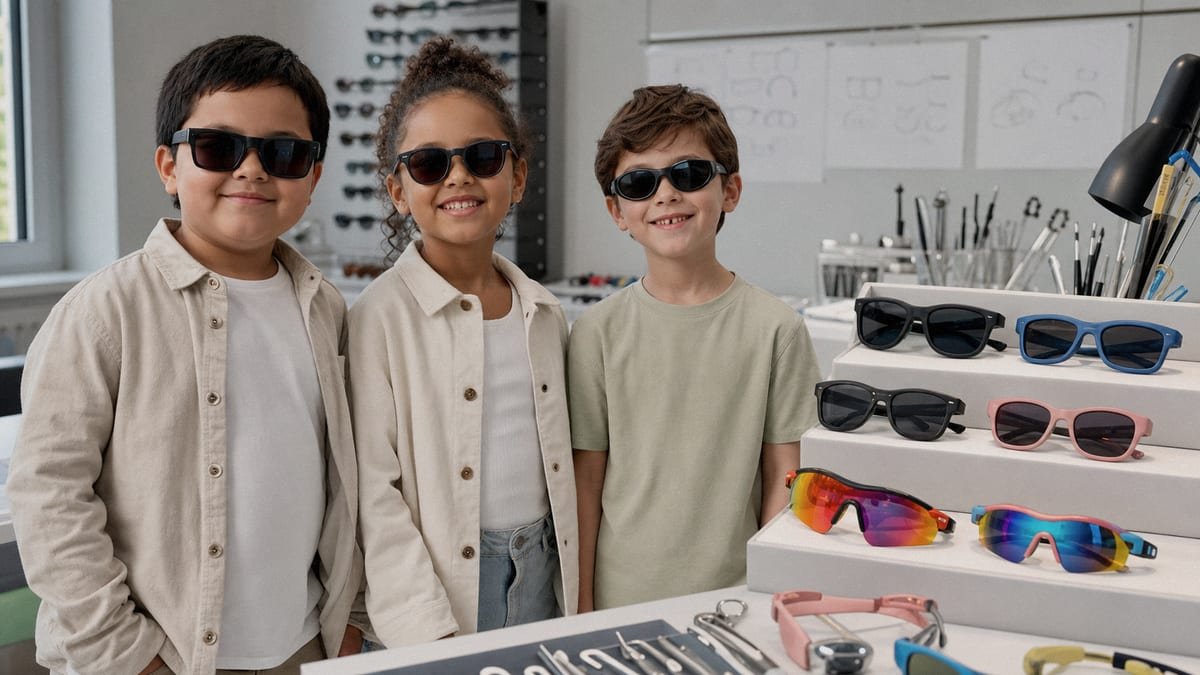
子供の顔は縮小された大人の顔ではありません。彼らの 鼻梁 2 はより平らで低いです。目と眉の間の距離は短いです。こめかみは狭いです。したがって、20%で縮小された大人のフレームは、依然として悪くフィットします。だからこそ、私たちは子供のヘッドフォームデータから子供用フレームを設計するのであり、大人の型からではありません。.
実際に重要な測定値
子供向けの適切な フレーム測定ガイド は3つの数字をカバーします。フレームの幅は顔の幅とほぼ一致する必要があります。これにより、サングラスはこめかみを挟んだり、横にずれたりしません。テンプルの長さは、アームが小さな耳の後ろに正しく引っかかるのに十分な短さでなければなりません。レンズの高さは、眉のラインの近くから下眼窩骨の下までをカバーするのに十分な深さが必要です。.
最後の点は注意に値します。子供は目から眉までの距離が短いため、浅いレンズは上部に隙間を残します。太陽光がリムを越えて忍び込み、目に直接当たります。より深いレンズは、そのギャップを閉じます。これは単なる快適性の問題ではなく、保護の問題であり、長期的な目の健康と太陽の安全性に直接関係しています。.
年齢別のサイズ調整が一目でわかる
| 年齢範囲 | 一般的なフレーム幅 | ブリッジスタイル | テンプルの注意点 |
|---|---|---|---|
| 0~2歳 | 非常にコンパクト | 平らで柔らかく、幅広のブリッジ | 短いアーム; ストラップオプションが役立ちます |
| 3~5歳 | 小さい | 低いブリッジ、クッション付き | Short, flexible arms |
| 6–9 years | Medium-small | 標準的な子供用ブリッジ | Rubber tips reduce slipping |
| 10–12 years | 中程度 | Closer to adult geometry | Adjustable or grippy tips |
Bridge fit and comfort make or break a narrow-face frame. If the bridge floats above the nose, the whole frame tips forward. If it digs in, the child pulls the sunglasses off within minutes. We test our TR90 and TPEE frames on multiple bridge profiles for exactly this reason. For a brand buyer, the practical lesson is simple: order size-graded styles across age bands rather than one "universal" kids' size.
活発な子供の服選びで、素材の柔軟性が形よりも重要なのはなぜですか?
Fifteen years of eyewear production has taught me one blunt lesson: the prettiest frame in the world is worthless once a four-year-old sits on it.
柔軟な素材は形状よりも重要です。なぜなら、子供たちはサングラスをねじったり、落としたり、寝転がったりするからです。TPEEとTR90のフレームは折れることなく曲がり、飛散防止ポリカーボネートレンズは衝撃に強く、柔らかくしなやかなフィット感は子供たちがそれを着用し続けることを保証し、それが実際に紫外線防御をもたらします。.
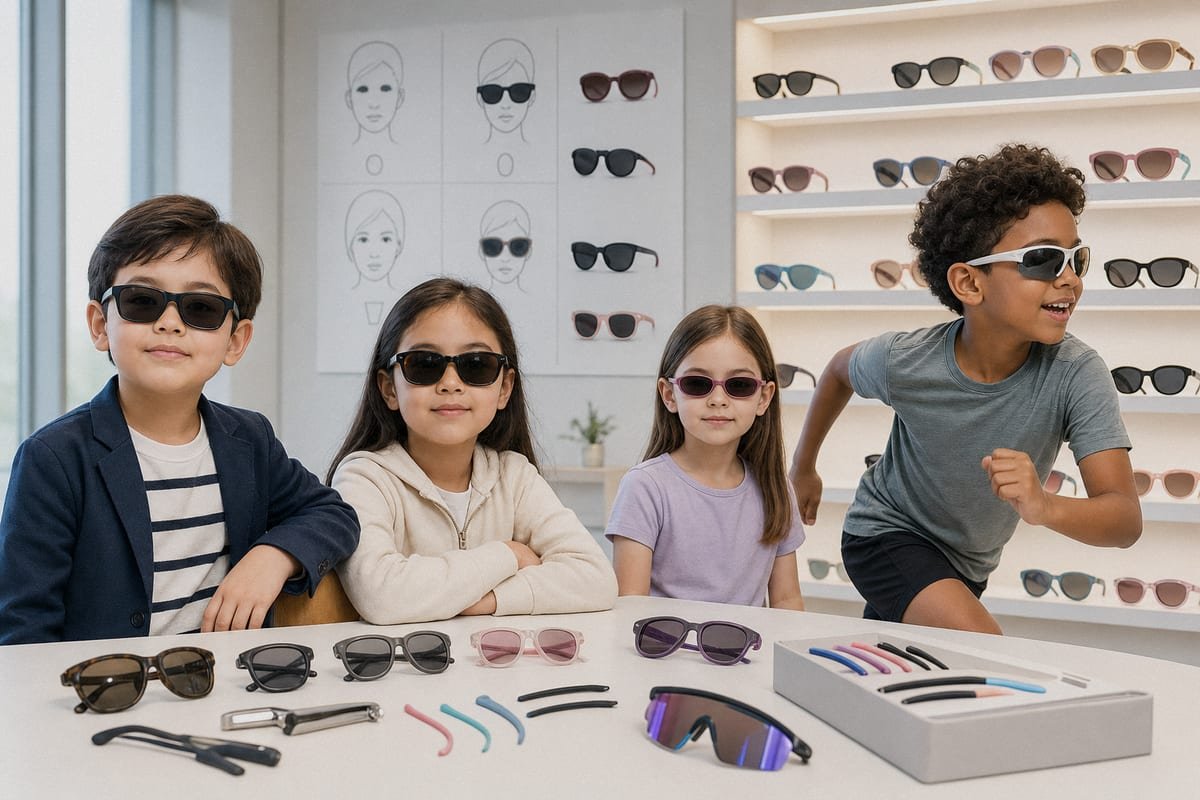
Think about how a child treats eyewear. They pull it off with one hand, stretching the temples outward. They shove it into a backpack under a water bottle. They fall while wearing it. A rigid frame fails under this treatment in one of two ways. It snaps, which ends its life. Or it breaks with a sharp edge, which is a safety hazard near a child's eyes.
Flexible materials solve both problems. TR90 is a lightweight nylon-based material with strong shape memory 3. TPEE goes even further; it behaves almost like flexible silicone frames, bending nearly flat and returning to shape. In our workshop we combine them, using TR90 fronts with TPEE temples so the frame holds its structure while the arms take the abuse. Both materials are also environmentally friendlier options than many cheap plastics, and they avoid the harsh chemical stabilizers that can irritate thin, sensitive skin.
Lens safety is non-negotiable
耐衝撃性レンズ 4 matter just as much as the frame. Polycarbonate is the standard here because it does not shatter into fragments on impact. Pair that with true UV400保護, and you have eyewear that protects rather than decorates. Polarized lenses for kids are a strong upgrade for beach, snow, and water settings, since they cut glare that plain tinted lenses cannot.
Why comfort beats style in real life
Here is the chain of logic I share with product managers. Sunglasses only protect eyes when worn. Kids only wear what feels comfortable. Comfort comes from lightweight, flexible materials and good bridge fit, not from lens shape. So the material decision, not the shape decision, determines whether your product actually does its job. Shape decides whether the parent buys it. Material decides whether the child keeps it on. A brand needs both, but if forced to rank them, material wins every time.
各カスタム金型を注文せずに、複数のフレーム形状を提供するにはどうすればよいですか?
Every few weeks, a startup founder emails Alan on our sales team with the same worry: they want round, angular, and wrap-around sports styles in their launch line, but three custom molds would destroy their budget.
ブランドは、既存のスタイルライブラリから選択することで、カスタム金型なしで複数のフレーム形状を提供でき、その後、OEM/ODMサービスを通じて色、ロゴ、レンズ、パッケージをカスタマイズできます。これにより、形状あたりの数千ドルの金型投資が、低リスクで迅速なローンチが可能なカタログ戦略に変わります。.
Custom injection molds 6 are expensive and slow. Each new shape typically means weeks of tooling, sample rounds, and a high minimum order to justify the cost. For an established brand with proven sellers, molds make sense. For a brand testing which shapes its market prefers, molds are a gamble.
The alternative is an existing-style library. Our factory maintains roughly 800 ready styles across kids' sunglasses and optical frames, precisely so buyers can cover every face shape from day one. A typical starter line might look like this: a soft pastel round frame for oval and square faces, an angular frame for round faces, and a wrap-around shield style for sports and maximum coverage. Two of our own examples show the range well — a periwinkle-and-mint round frame in flexible matte plastic for toddlers, and a bold wraparound shield with a mirrored orange-to-gold gradient lens built for active older kids.
Custom molds versus existing styles
| 要因 | Custom Mold | Existing Style Library |
|---|---|---|
| Upfront cost | High tooling investment per shape | No mold cost |
| リードタイム | 数週間から数か月 | Days to sample |
| Minimum order | Large, to recover mold cost | Much lower |
| Design uniqueness | Fully exclusive | Shared base, customized finish |
| Market risk | High if the shape flops | Low; test and reorder winners |
What you can still customize
Choosing existing shapes does not mean generic products. Frame colors, temple color combinations, logo printing, lens tints, polarized or UV400 lens upgrades, and retail-ready packaging are all customizable. A soft amber or rose tint, for example, can serve children with sensory sensitivities by reducing visual overstimulation. Hybrid lens coatings that add blue light filtration 7 on top of UV protection suit kids who move between playgrounds and screens. The smart sequence is simple: launch on existing styles, learn which shapes sell in your market, then invest in a custom mold only for your proven bestseller.
結論
Face shape helps you style kids' sunglasses, but protection, sizing, and flexible materials decide whether children actually wear them. Start with UV400 and fit, then match shapes, then scale smartly with existing styles.
脚注
1. National Eye Institute provides authoritative guidance on UV protection standards for eyewear. ↩︎
2. Explains nasal bridge anatomy relevant to why children’s frames need custom bridge geometry. ↩︎
3. Explains shape-memory polymer properties behind flexible TR90 frame materials. ↩︎
4. 2024 FDA consumer update confirming that all sunglasses must meet federal impact resistance standards. ↩︎
5. Background on polycarbonate’s impact-resistant properties used widely in children’s eyewear lenses. ↩︎
6. Alibaba.com is a major sourcing platform where brands compare custom mold versus existing-style manufacturing. ↩︎
7. National Eye Institute discusses blue light exposure and eye health relevant to lens coatings. ↩︎

 English
  Español de México
  Deutsch
  Français
  日本語
日本語  العربية
  Português do Brasil