子供用サングラスのUV400表示の標準適合性を検証する方法
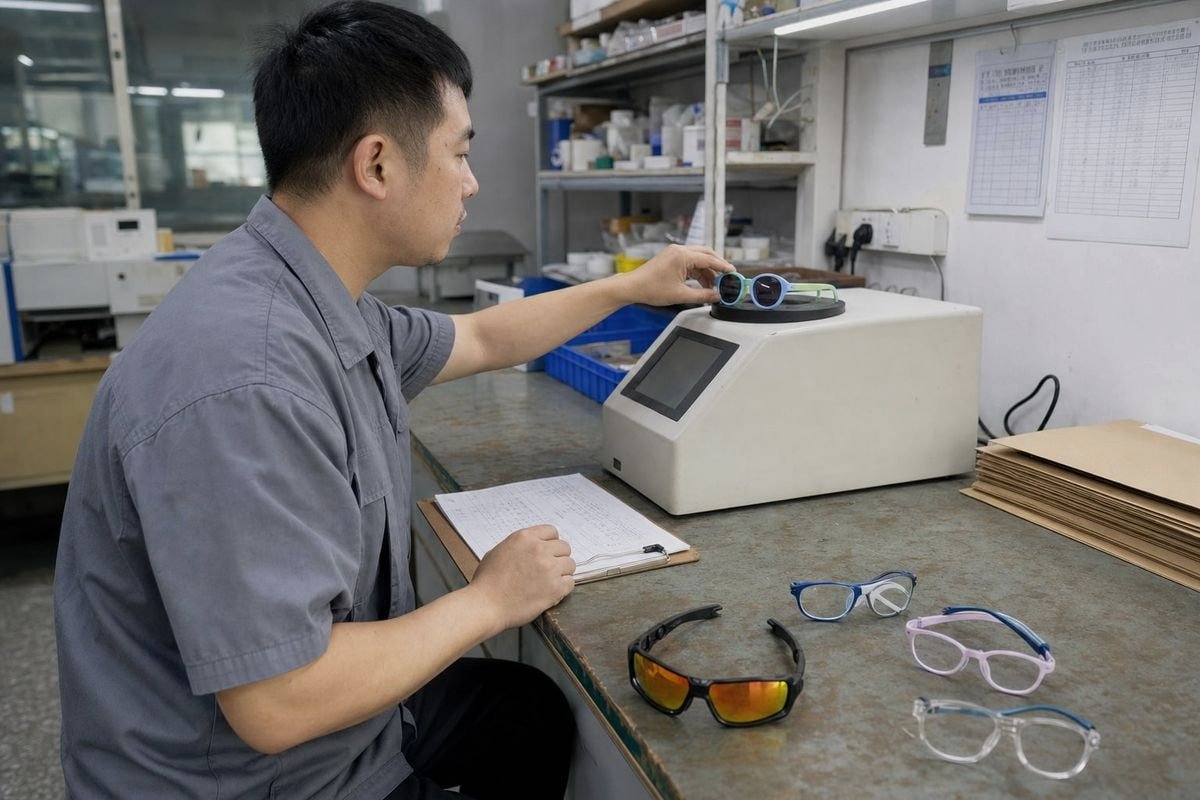
子供用サングラスのUV400表示の検証は、私たちの台州工場で毎週受ける質問です。偽のステッカーは数円ですが、リコールはブランドにすべてを失わせます。真の検証は両方を保護します。.
子供用サングラスのUV400表示を検証するには、認定された検査機関に、280〜400 nmで紫外線透過率がほぼゼロであることを示す分光透過率レポートを要求し、ISO 12312-1、EN、ANSI Z80.3、またはAS/NZS 1067.1への準拠を確認し、実際の生産ロットに対して試験レポートを照合してください。.
それが簡単な答えです。しかし、特に大量に子供用アイウェアを購入する場合、詳細は重要です。ステップバイステップで、私たちがどのようにこれに対処するかを説明します。.
サプライヤーのUV400の主張が実際のラボテストに裏付けられていることをどのように確認できますか?
オーストラリアのバイヤーが、競合他社の「UV400認証済み」サンプルを送ってきました。私たちはそれを私たちの 生産前に宛先の基準を書面で指定し、その正確な基準に対する認定ラボからの第三者試験レポートを要求し、分光光度計データで紫外線透過率を確認し、サプライヤーがバッチごとにテストするか、スタイルごとに一度だけテストするかを監査します。口頭の「UV400」の主張に頼らないでください。 1. でテストしました。380 nmを超えるとUVがひどく漏れました。ラベルは何も意味しませんでした。.
UV400の主張を確認するには、第三者の認定機関に分光透過曲線を発行してもらい、そのレポートが注文しているレンズの材質とモデル番号と完全に一致していることを確認し、測定された透過率が280〜400 nmのUVAおよびUVB範囲全体でほぼゼロに近いことを確認します。.

最も信頼できる証拠は 分光光度計による試験. です。分光光度計は、さまざまな波長でレンズに光を当てます。次に、各波長でどれだけの光が透過するかを記録します。本物のUV400レンズの場合、透過曲線は280 nmから400 nmまでゼロまたはゼロに近い状態である必要があります。この範囲は、UVAとUVBの両方の保護をカバーします。ステッカーに何と書かれていても、曲線が400 nmより前に上昇する場合、レンズはその主張を満たしていません。.
本物の試験レポートの外観
私たちの工場では、組み立て前にレンズロットの入荷テストを行っています。信頼できるレポートには、いくつかの項目が含まれている必要があります。バイヤーに確認してもらうように伝えているのは次のとおりです。
| レポートの要素 | なぜ重要なのか |
|---|---|
| ラボ名と認定 | ラボが認識されていることを確認します。社内印刷物ではありません。 |
| サンプル説明とモデル番号 | レポートは、実際の製品と一致する必要があります。「類似」の製品ではありません。 |
| 分光透過率曲線(280〜400 nm) | UV遮断性能の核心的な証拠 |
| 可視光線透過率値 | レンズカテゴリと運転適合性を決定します。 |
| 参照された試験基準 | 結果を ISO 12312-1 2, 、ANSI Z80.3、またはAS/NZS 1067.1に結び付けます。 |
| 試験日 | 古いレポートは、現在の材料調達を反映していない場合があります。 |
「ゴールデンサンプル」トリックに注意してください
一部のサプライヤーは、完璧なサンプルを1つテストし、その後、より安価なレンズ在庫で製造します。そのため、バイヤーには2つのことをお勧めします。まず、サプライヤーがロットごとまたはモデルごとにテストしているかどうかを尋ねてください。次に、出荷された商品からランダムにユニットを抜き取り、独立したテストに送ってください。地元の眼鏡店での簡単な分光光度計チェックは、リスクと比較すると安価です。暗い色合いだけでは何も証明しません。UVフィルターのない暗いレンズは、実際には子供の瞳孔を散大させ、より多くの放射線を取り込みます。.
注文前にUV400準拠を確認するために、どのような書類を要求すべきですか?
を取り込むため、より危険です。.
スペクトル透過曲線、適用規格を記載した適合宣言書、レンズおよびフレームの材料安全データシート、ロットレベルの品質管理記録、および完成品に表示されているものと一致する明確なサプライヤー識別情報を含む、第三者試験報告書を要求してください。.

段ボールを1つ出荷する前に、営業チームはバイヤーごとにドキュメントパックを組み立てます。子供用アイウェアの輸出で15年の経験を持つ私たちは、書類の不備は税関で表面化し、決してそれ以前には現れないことを学びました。.
コアドキュメントチェックリスト
- 文書はあなたの法的盾です。税関職員、小売業者、または親がUV400の主張に疑問を持った場合、レンズサプライヤーから始まり倉庫で終わるペーパートレイルが必要です。ここに、すべてのバイヤーがデポジットを送金する前に要求するように勧めるパックがあります。. 第三者ラボの試験レポート。.
- 市場に適した基準を参照し、単なる「合格」の判定ではなく、透過率データを含める必要があります。. 適合宣言書(DoC)。 CEマーキング 4. EUの場合、これはCE認証マークをサポートします。.
- 。英国の場合、UKCAマーキングをサポートします。DoCには、製造業者、製品モデル、および適用された基準を記載する必要があります。. 材料安全データシート。.
- 子供向け製品の場合、バイヤーはフレーム素材に関する化学物質コンプライアンスの証拠を求めることがよくあります。当社のTPEEおよびTR90素材は、これらの要件をサポートするため、一部選択されています。. 耐衝撃性証拠。. ポリカーボネートレンズ 5 子供たちはサングラスを落としたり、座ったり、投げたりします。.
- は、素材自体にUV遮断性と耐衝撃性が組み込まれているため、ほとんどの子供用スタイルに推奨しています。. バッチQC記録。.
書類を製品に合わせる
工場が試験レポートと生産実行をどのように関連付けているかを尋ねてください。この理由から、5S管理されたワークショップでバッチトレーサビリティを維持しています。.
子供用サングラスは、紫外線(UV)保護のために、どの国際基準を満たすべきなのでしょうか?
Buyers from twenty-plus countries ask us this, and the answer always depends on destination. A shipment bound for Melbourne faces different rules than one heading to Munich or Chicago.
子供用サングラスは、欧州連合(EU)向けにはCEマーキング付きISO 12312-1、米国向けにはANSI Z80.3、オーストラリアおよびニュージーランドでは必須規格であるAS/NZS 1067.1:2016、英国向けには英国CAマーキング付き該当するBS ENバージョンを満たす必要があります。.
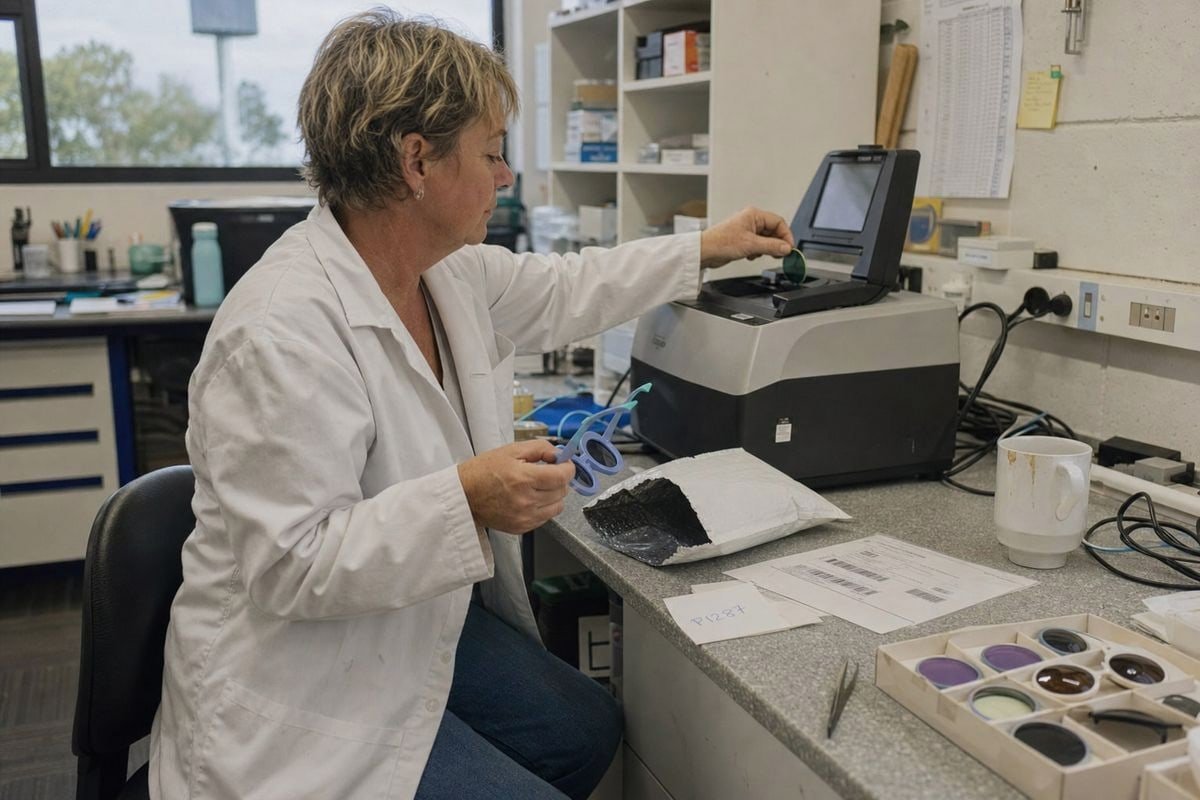
UV400 is a consumer-friendly shorthand. The real authority comes from the standard behind it. Each major market has its own framework, and they overlap heavily but not perfectly. Here is how they compare at a glance:
| 市場 | 標準 | サプライヤーの識別情報とレンズカテゴリーラベル | 必須? | 主要なUV要件 |
|---|---|---|---|---|
| EU | ISO 12312-1 (EN version) | CE | Yes, as PPE | UV limits tied to lens category |
| イギリス | BS EN 12312-1 | UKCA / CE (transition) | はい | Same technical basis as EU |
| アメリカ | ANSI Z80.3 | None required on product | Voluntary but expected | UVA/UVB transmittance limits |
| オーストラリア / ニュージーランド | AS/NZS 1067.1:2016 | Supplier labeling required | Yes, mandatory | Protection across 280–400 nm |
| 日本 | Generally follows ISO-based specs | Varies by retailer | Retailer-driven | UV transmittance per ISO methods |
What These Standards Actually Test
These standards go beyond UV. They also cover optical clarity, so a child does not get distorted vision through a cheap lens. They set visible light transmission categories, which tell parents how dark the lens is and whether it suits driving or bright sun. Several include mechanical robustness requirements as well. Recent revisions, including the updated EN ISO 16321 family and ANSI Z80.3 work, push testing toward a wider range of headforms so frames fit real faces without UV leaking around the edges. That matters enormously for children, whose faces are smaller. This is one reason our design team favors wraparound sport shields and close-fitting rounded frames for kids: coverage is part of protection, not just the lens itself.
Why Australia Deserves Special Attention
Australia treats sunglasses under a mandatory consumer standard. Products must protect across the 280–400 nm range and carry clear, legible supplier identification. If Australian retail is in your plan, build AS/NZS 1067.1 compliance into your spec sheet from day one. Retrofitting it after production is painful and expensive.
UV400の表示が製造およびパッケージングを通じて正確であることをどのように確認しますか?
The hardest lesson from my early years in this trade: compliance can be perfect at sampling and broken by week six of mass production. Labels drift, lens stock changes, packaging gets substituted.
契約で承認済みレンズサプライヤーを固定し、分光光度計による入荷レンズ検査をバッチごとに要求し、印刷前にラベルとパッケージのアートワークを承認し、ラベルがテスト済み製品と一致することを確認する出荷前検査を実行することで、UV400ラベル表示の正確性を維持します。.
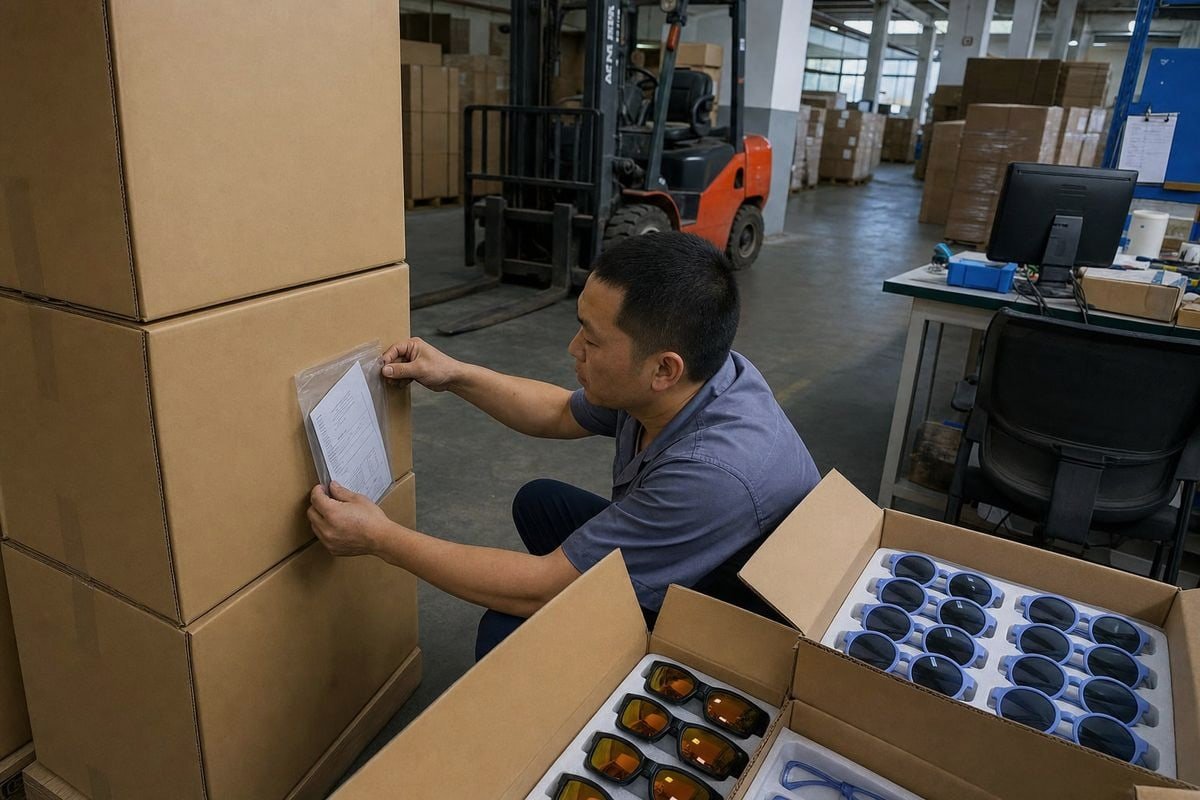
Accuracy is not a one-time event. It is a chain of controls that runs from raw material to the retail shelf. If any link breaks, the label on the hang tag no longer describes the lens inside the frame. Here is the control sequence we apply on our own lines, and what you as a buyer should demand.
The Production Control Chain
| ステージ | Control Point | What Can Go Wrong Without It |
|---|---|---|
| Lens sourcing | Approved supplier locked in the contract | Factory swaps in cheaper untested lens stock |
| Incoming inspection | Batch UV transmission check | A bad lens batch slips into thousands of units |
| 組み立て | Model and lens pairing verification | UV400 lenses go into one SKU, plain lenses into another |
| ラベリング | Artwork approval with standard references | Vague claims like "blocks UV" replace precise UV400 wording |
| パッケージング | Label-to-product matching check | Correct labels end up on the wrong products |
| 出荷前 | Random sampling and re-testing | Drift over a long production run goes undetected |
Practical Steps for Buyers
First, write the lens specification into your purchase order. Name the material, such as polycarbonate lenses, the UV requirement, and the standard. Second, approve every piece of printed material yourself: hang tags, lens stickers, box copy, and inserts. Insist on precise language like "UV400" or "100% UVA and UVB protection" rather than soft phrases. Third, schedule a pre-shipment inspection, either your own or third-party, that includes pulling random units for UV re-testing. Fourth, think about longevity. Surface coatings can degrade over two to three years of heat, salt, and micro-scratches, which is another argument for lenses where UV blocking lives in the material, not on it. Finally, some of our brand clients now add QR codes on packaging that link to their test documentation. It reassures parents, deters counterfeits, and supports 小児の目の健康 7 messaging at the point of sale.
結論
A UV400 label without proof is just ink. Demand spectral data, standard-based documentation, and batch-level QC — and partner with a factory that treats children’s eye protection as non-negotiable.
脚注
1. Wikipedia background explains the spectrophotometer testing method used to verify UV400 claims. ↩︎
2. Authoritative Wikipedia section detailing international sunglasses safety standards including ISO 12312-1. ↩︎
3. WHO reference explains UV radiation health risks relevant to children’s eye protection standards. ↩︎
4. Background on CE marking process referenced for EU compliance of children’s sunglasses. ↩︎
5. Explains polycarbonate material properties relevant to impact resistance and UV blocking in lenses. ↩︎
6. EU official page explains Declaration of Conformity requirements under the New Legislative Framework. ↩︎
7. Official National Eye Institute resource for maintaining children’s vision and eye health. ↩︎


 English
  Español de México
  Deutsch
  Français
  日本語
日本語  العربية
  Português do Brasil