オーストラリアで子供用サングラスが満たすべき安全基準は何ですか?
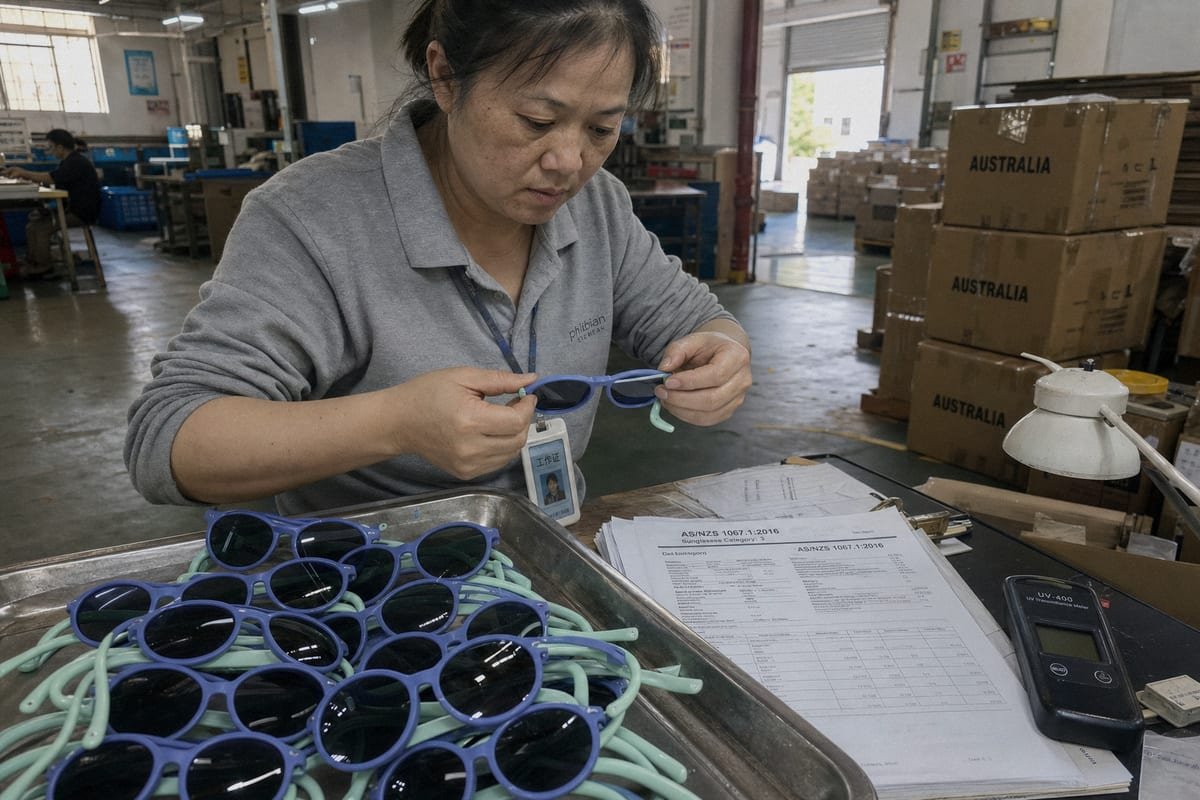
オーストラリアの子供用サングラスの安全基準は、他のほとんどの市場規則よりも多くの輸入業者を悩ませています。 可視光線透過率 1. 。台州の生産ラインでは、「UV400」ステッカーがあれば十分だと購入者が思い込んだために、有望なオーストラリアの注文が停滞するのを見てきました。そうではありません。オーストラリアでは子供用サングラスは 規制製品 2, として扱われており、適切な検査とラベリングなしで商品が到着した場合、最初の販売前に押収、リコール、ブランドイメージの低下のリスクがあります。良いニュースは、どこを見ればよいか分かれば要件は明確であり、最初からコンプライアンスを組み込んだ工場があれば、プロセス全体がスムーズになるということです。.
オーストラリアで販売される子供用サングラスは、必須規格AS/NZS 1067.1:2016に準拠する必要があります。これには、レンズが280〜400 nmの紫外線放射を遮断し、設計、構造、および衝撃試験に合格し、レンズのカテゴリ、サプライヤーの識別情報、および規格準拠を示すラベルが付いていることが要求されます。.
それが簡単な答えです。しかし、輸入している場合は、より詳細な情報が必要です。以下に、税関を通過し、オーストラリアの棚に安全に並べるための認証、検査書類、および素材について説明します。.
オーストラリアに子供用サングラスを輸入する際に、どのような安全認証を確認すべきですか?
数年前、オーストラリアのバイヤーが、販売から外された競合他社の出荷を見せてくれました。フレームは問題ありませんでした。書類が問題でした。その教訓が、今日私たちがすべてのオーストラリアの注文を準備する方法を形作りました。.
AS/NZS 1067.1:2016(オーストラリア消費者法に基づきACCCによって施行されている必須規格)への準拠を証明するテストレポートを探してください。個別の認証マークはありません。代わりに、認定されたラボのテストレポートと、レンズカテゴリーおよびサプライヤーの詳細を示す適切な製品ラベルが必要です。.
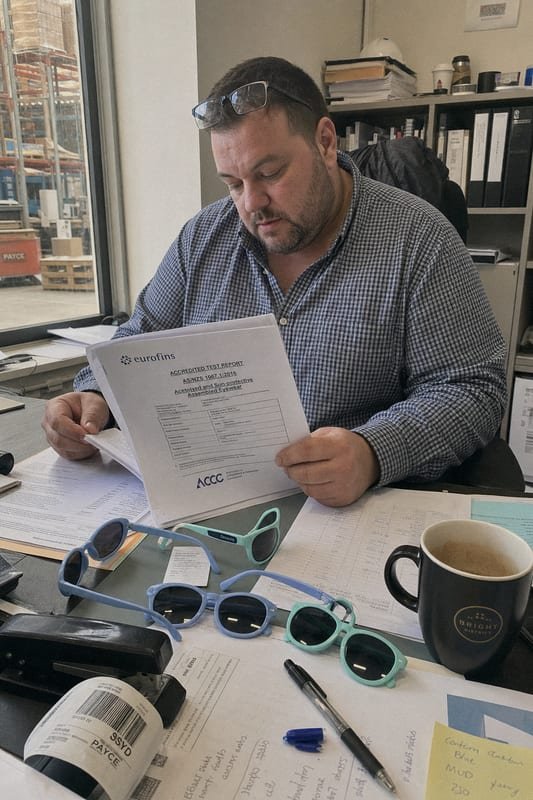
オーストラリアはヨーロッパやアメリカとは異なります。CEマークに相当するものはありません。代わりに、ACCCの必須基準制度により、処方箋なしのすべてのサングラスにAS/NZS 1067.1:2016が法的に義務付けられており、子供用サングラスはその範囲に明示的に含まれています。2019年7月1日以降、オーストラリアで販売されるすべてのペアは、この基準に従って検査およびラベリングされなければなりません。ファッションメガネ、クリップオン、一体型バイザーも対象となります。.
標準が実際に規制するもの
この基準は暗いレンズだけではありません。5つの分野をカバーしています。 紫外線透過率 3, 、可視光線透過率、光学品質、構造の堅牢性、およびラベリング。レンズはほとんど黒く見えてもUVテストに合格しない可能性があり、まさに規制当局が色合いを保護の代わりとしない理由です。.
| 要件分野 | 輸入業者にとっての意味 |
|---|---|
| 紫外線透過率 | レンズは280〜400 nmの紫外線放射をブロックする必要があります |
| レンズカテゴリー 0〜4 | カテゴリーはテストされ、割り当てられ、ラベルに印刷される必要があります |
| 光学品質 | 子供の視力の発達に害を及ぼす可能性のある歪みがないこと |
| 構造 | フレームとレンズは堅牢性テストに耐える必要があります |
| ラベリング | サプライヤーの識別情報、カテゴリー番号、および適合性声明 |
おもちゃのサングラスは落とし穴です
多くの新しいブランドが引っかかるニュアンスがあります。おもちゃのサングラスは保護基準の範囲外ですが、おもちゃとして明確にラベリングされ、日焼け止めとしてマーケティングすることはできません。SunSmartガイドラインは、特に親に対して、おもちゃのアイウェアを屋外で使用しないように警告しています。製品がおもちゃのように見えてもUV保護を主張する場合、法的に最悪の状況に置かれます。私たちは常に、バイヤーに準拠したサンウェアに完全にコミットすることを推奨しています。私たちの柔軟なTPEEおよびTR90の子供用スタイルは、そのグレーゾーンがリコールが発生する場所であるため、ノベルティアイテムではなく、本物のサングラスとして構築およびテストされています。.
サプライヤーのUV400レンズの主張がオーストラリアの要件を満たしていることをどのように確認できますか?
バイヤーはしばしば、私たちの UV400保護 レンズはオーストラリアで「カウント」されるのかと私にメールで尋ねてきます。これは調達マネージャーが尋ねることができる最も賢明な質問の1つであり、その答えにはいくつかの説明が必要です。.
UV400はマーケティング用語であり、オーストラリアの法的基準ではありません。サプライヤーの主張を検証するには、認定された検査機関に分光光度計の検査レポートを依頼し、AS/NZS 1067.1:2016に対して測定された280〜400 nmの紫外線透過率の結果と、各カラーウェイに割り当てられたレンズカテゴリーを含めてください。.
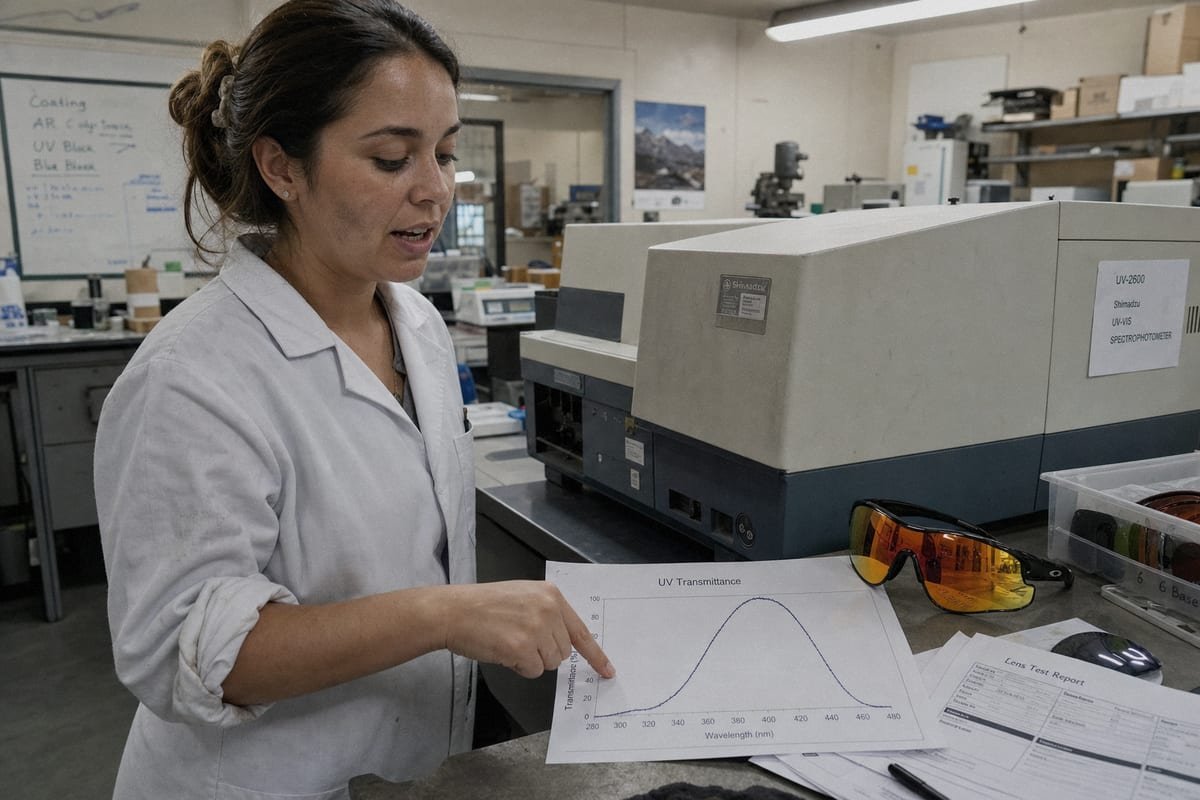
UV400保護とは、レンズが400ナノメートルまでの波長をブロックすることを意味します。これは、オーストラリア基準の280〜400 nmの範囲の上限と一致するため、本物のUV400レンズは通常合格します。問題は「本物」という言葉です。私たちの工場では、UV400ステッカーが付いているにもかかわらず、測定可能なUVAが漏れる安価なサプライヤーのサンプルレンズをテストしました。ステッカーのコストは1セント未満でした。実際の UV吸収レンズ素材 には実際のお金がかかります。そのギャップが、子供たちの紫外線による目の損傷が現実的なリスクとなる場所です。子供たちのより透明な水晶体は、大人よりも多くの紫外線を網膜に到達させます。.
実用的な検証プロセス
- 証明書概要ではなく、ラボレポートを要求してください。データのない1ページの「適合証明書」は要注意です。.
- テストされた波長範囲を確認してください。380 nmだけでなく、280〜400 nmをカバーする必要があります。.
- レポートをご自身のレンズと照合してください。異なる色合いやバッチのレポートは、ご自身のものについては何も証明しません。.
- レンズカテゴリーを確認してください。レンズカテゴリー3は、オーストラリアの高い日差し条件の一般的な基準です。.
- 第三者テストによる抜き打ち検査. 。出荷前に、認定されたラボにランダムな生産サンプルを送ってください。.
レンズカテゴリーの理解
| スタイルの例 | 光線透過率 | オーストラリアの子供に適しているか |
|---|---|---|
| 0–1 | 非常に高いから高い | ファッションのみ、日焼け止めではありません |
| 2 | 中程度 | 一般的な日中の使用に適しています |
| 3 | 低 | 明るいオーストラリアの太陽光におすすめ |
| 4 | 非常に低い | 極端なまぶしさのみ、運転には絶対に使用しないでください |
子供用偏光レンズは、オーストラリアのお客様に人気があります。なぜなら、それらはカットするからです 反射したまぶしさ 4 水や砂から。しかし、偏光は快適機能です。UVテストに代わるものではなく、偏光レンズは依然としてカテゴリーの検証が必要です。.
オーストラリアに出荷する前に、製造業者はどのようなテスト文書を提供すべきですか?
すべての新しいオーストラリアのお客様と話し合うトレードオフがあります。すべてのスタイルのすべてのカラーウェイをテストするか、代表的なサンプルをテストするか?このバランスを正しく取ることで、法的リスクを生むことなく費用を節約できます。.
出荷前に、製造元は、UV透過率、レンズカテゴリー割り当て、光学品質、およびフレームの堅牢性に関する認定ラボテストレポート(AS/NZS 1067.1:2016準拠)に加え、ラベルアートワークの承認、バッチトレーサビリティ記録、およびレポートとお客様の特定の生産ロットを関連付ける署名済み宣言書を提供する必要があります。.
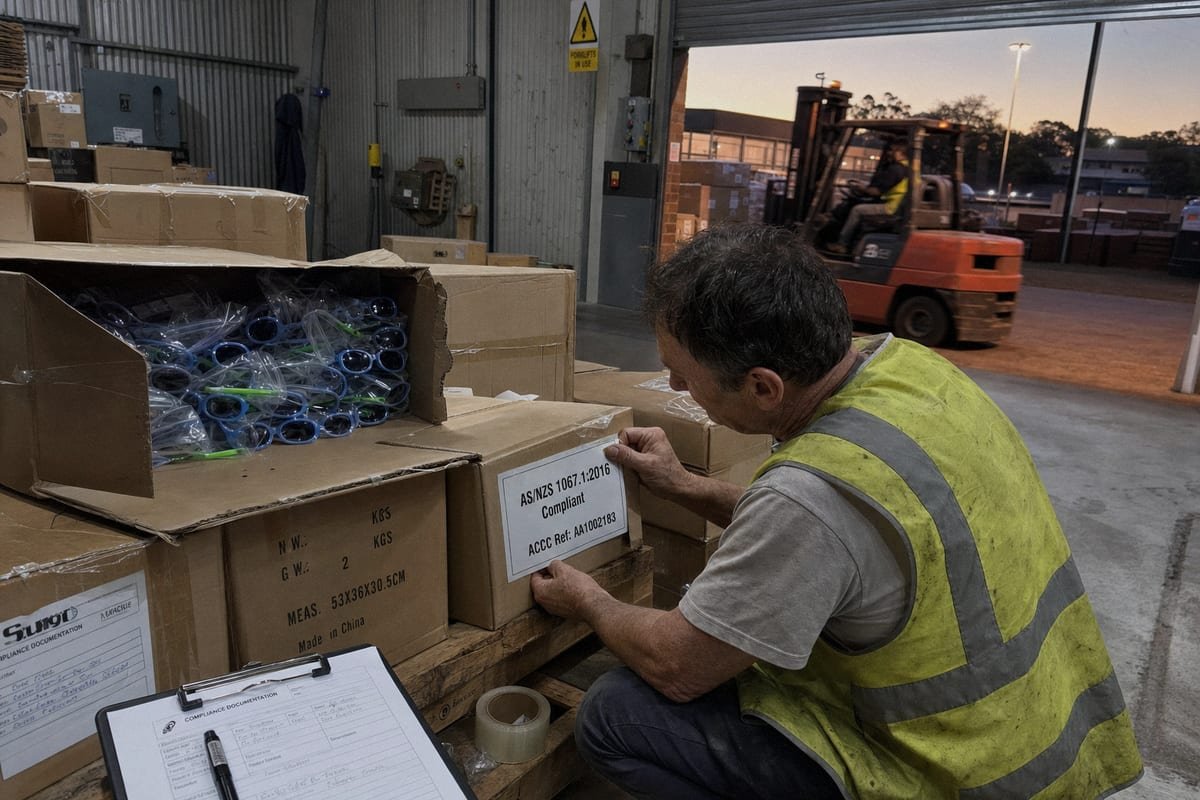
ドキュメントは、優れた工場が安価な工場から自分自身を分離する場所です。オーストラリア消費者法の下では、輸入者が法的にコンプライアンスに責任を負い、海外の工場ではありません。規制当局が製品に疑問を持った場合、迅速に証拠を提示する必要があります。アイウェア製造の15年間で、問題が発生した後に追いかけるのではなく、商品が出荷される前に書類パッケージを組み立てる必要があることを学びました。.
完全なドキュメントパッケージ
| 文書 | 目的 | 必要なとき |
|---|---|---|
| 認定されたラボテストレポート | UV、光学、および堅牢性のコンプライアンスを証明します | 生産承認前 |
| レンズカテゴリーの確認 | 色合いごとにカテゴリー0〜4を割り当てます | ラベル印刷前 |
| ラベルアートワークの署名 | サプライヤーID、カテゴリー、運転適合性テキストを確認します | 大量生産前 |
| バッチトレーサビリティレコード | レポートを出荷にリンクします | 出荷時 |
| 適合宣言 | ACCCまたは小売業者の監査のためのファイル | 出荷時 |
ラベリングもドキュメントです
スイングタグとラベルはミニチュアの法的文書です。各ペアは、製造業者または供給業者を特定し、 レンズカテゴリー番号 5, を記載し、AS/NZS 1067.1への準拠を宣言し、レンズが運転に適していない場合は警告する必要があります。オーストラリアのお客様の中には、パッケージにアイプロテクションファクターのような消費者メッセージを追加する方もいますが、必須要素が最初に来る限り問題ありません。OEMパッケージングのフルサポートを提供しているため、アートワーク承認中にこれらの要素を小売準備完了のスイングタグに組み込みます。そのように、カートンが密封される前にコンプライアンスストーリーは完了し、税関ブローカーが即興を行う必要はありません。.
どのフレーム素材が子供用サングラスのオーストラリアの安全性と耐久性基準の合格に役立ちますか?
最初のTR90フレームをTPEEテンプルで開発していたとき、目標はシンプルでした。幼児が曲げたり、噛んだり、落としたりしても危険にならないフレームです。オーストラリアのテストはこの考え方を正確に評価します。.
柔軟で耐衝撃性のあるTR90およびTPEE製のフレームは、子供用サングラスがオーストラリアの耐久性テストに合格する可能性を最大限に高めます。これらの素材は、鋭利な破片に折れることなく曲がり、熱による変形に強く、小さな顔に軽量で、化学的安全性のためにBPAフリーおよびフタル酸エステルフリーで製造できます。.
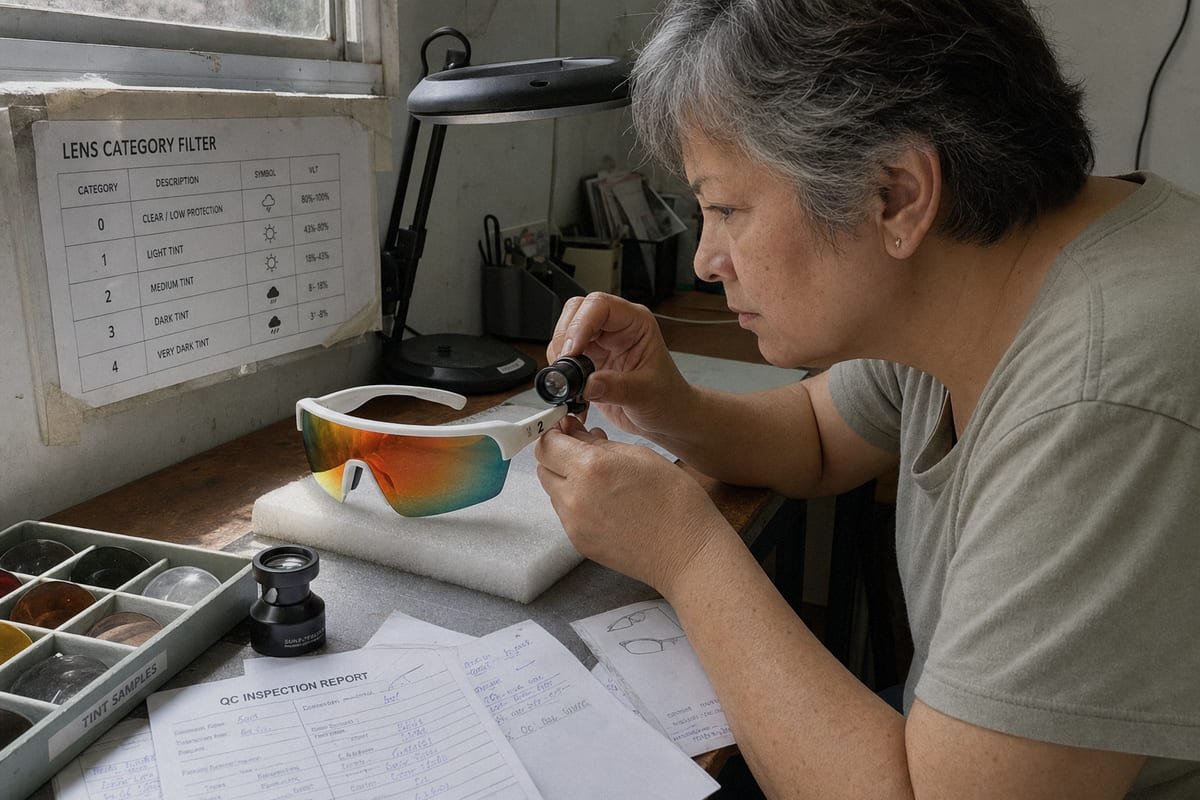
フレーム素材は快適さ以上のものを決定します。オーストラリア規格の構造と堅牢性の要件は、子供の目の近くでフレームが割れるとそれ自体が危険になるため存在します。安価なノベルティサングラスに一般的な硬くて脆いプラスチックは、アクティブな子供たちが毎日行うねじれや落下の下でひび割れる可能性があります。柔軟なエンジニアリングプラスチックは異なる挙動をします。エネルギーを吸収して元に戻ります。.
なぜTR90とTPEEが子供用アイウェアをリードするのか
TR90は形状記憶性のある熱可塑性プラスチックです。フレームをねじっても、元の形状に戻ります。TPEEはさらに柔らかく、よりゴムのようなので、TR90フロントとTPEEテンプルを組み合わせることがよくあります。フロントはレンズを安定した位置に保ち、テンプルは子供の頭の周りで安全に曲がります。5S管理のワークショップでは、生産バッチごとにサンプルのねじりテストと落下テストを行っています。なぜなら、素材はそれを支える成形次第だからです。.
この年齢層では化学的安全も同様に重要です。幼児はテンプルの先端を噛みます。私たちの 素材調達 6 は、環境に優しく、BPAフリーでフタル酸エステルフリーの化合物に優先順位を付けており、オーストラリアの子供向けブランドが仕様にますます書き込んでいる食品グレードの安全期待値と一致しています。.
オーストラリアのコンプライアンスのための素材比較
一般的なオプションがどのように積み重なるかを検討してください。
- TR90:優れた耐衝撃性、軽量、レンズの位置合わせを保持します。フロントに最適です。.
- TPEE:極度の柔軟性とソフトタッチ。テンプルとベビーフレーム全体に最適です。.
- 標準ポリカーボネートフレーム:適度な強度ですが、小さな顔には硬いです。.
- 安価なアクリルまたはPSプラスチック:脆く、鋭い破断を起こしやすい。堅牢性テストのリスクです。.
さらに1つのデザインポイントがコンプライアンス目標をサポートします。ARPANSAと SunSmartガイダンス 7 は、側面のUV侵入をブロックするため、ラップアラウンドスタイルを支持しています。幅広のラップアラウンドレンズを備えたスポーツシールドスタイルは、若いアスリートに広いカバレッジを提供しますが、柔らかい丸いパステルフレームは、穏やかで柔軟なフィット感を必要とする幼児に適しています。どちらのアプローチもオーストラリアの基準を満たすことができます。素材とレンズの品質がそれを決定します。.
結論
オーストラリアのコンプライアンスは障害ではなく、弱い競合他社を排除するフィルターです。AS/NZS 1067.1:2016に準拠したテスト済みレンズ、柔軟なフレーム、完全な書類を備えれば、お子様のアイウェアブランドは自信を持ってローンチできます。OKAY EYEWEARのチームは、最初のサンプルからコンプライアンスを組み込んでいるため、お客様は販売に集中できます。.
脚注
レンズカテゴリーのテストと光学基準に関連する光透過原理の技術的説明。. ↩︎
規制製品としてのサングラスの必須安全基準を定義する、権威あるオーストラリア政府の情報源。. ↩︎
世界保健機関(WHO)の紫外線放射に関する資料と、健康のための透過率遮断の重要性についての説明。. ↩︎
反射グレアの科学的説明と、偏光レンズが視覚的な不快感を軽減するためにどのように機能するか。. ↩︎
ARPANSAは、オーストラリア法に基づくレンズカテゴリーとその特定の保護レベルの公式の内訳を提供します。. ↩︎
TR90やTPEEなどの準拠した素材を選択する際に考慮すべき産業調達慣行の一般的な概要。. ↩︎
子供向けの適切な保護を提供するサングラスを選択するための公式のオーストラリアSunSmartガイドライン。. ↩︎
 English
  Español de México
  Deutsch
  Français
  日本語
日本語  العربية
  Português do Brasil