How to Verify Kids’ Sunglasses Meet Australia’s Labeling Safety Standard 2017?
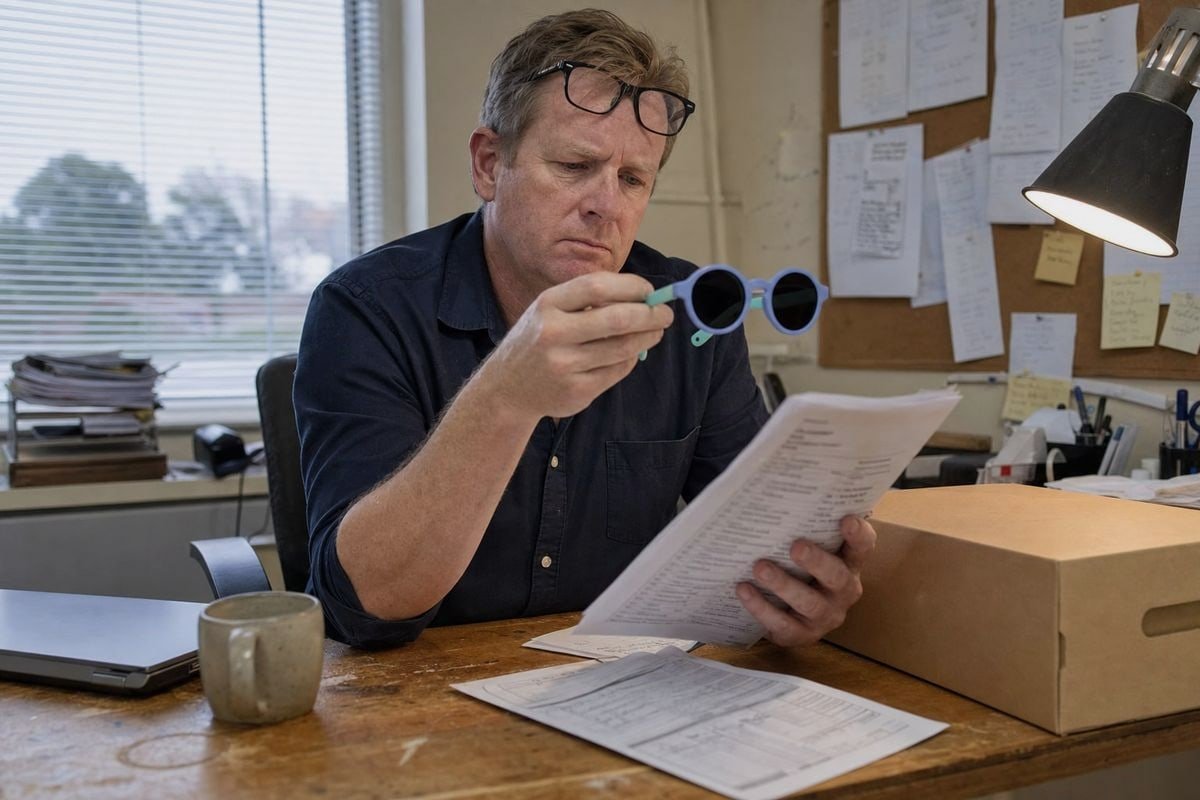
Verifying kids’ sunglasses against Australia’s labeling safety standard 2017 stumps many buyers who contact our factory. One mislabeled shipment can trigger a recall, destroy retail trust, and wipe out a season’s margin overnight.
To verify kids’ sunglasses meet Australia’s Consumer Goods (Sunglasses and Fashion Spectacles) Safety Standard 2017, check that the label cites AS/NZS 1067.1:2016, shows a lens category 0–4, identifies the supplier, includes required usage warnings, and is backed by test reports for that exact model.
That is the short answer. Below, I break down what the standard requires, how to check supplier claims, what documents to demand, and how to pick a factory that gets it right.
What Does Australia's 2017 Sunglasses Labeling Standard Actually Require?
A few years back, an Australian importer sent our team a competitor's kids' sunglasses with a lonely "UV400 1" sticker and asked if that was enough. It was not — not even close.
Australia's Consumer Goods (Sunglasses and Fashion Spectacles) Safety Standard 2017 requires clear, legible labeling that states the manufacturer or supplier identity, the lens category number and description, usage information, and any mandatory warnings. Labels must align with AS/NZS 1067.1:2016 and must not be hidden by stickers.
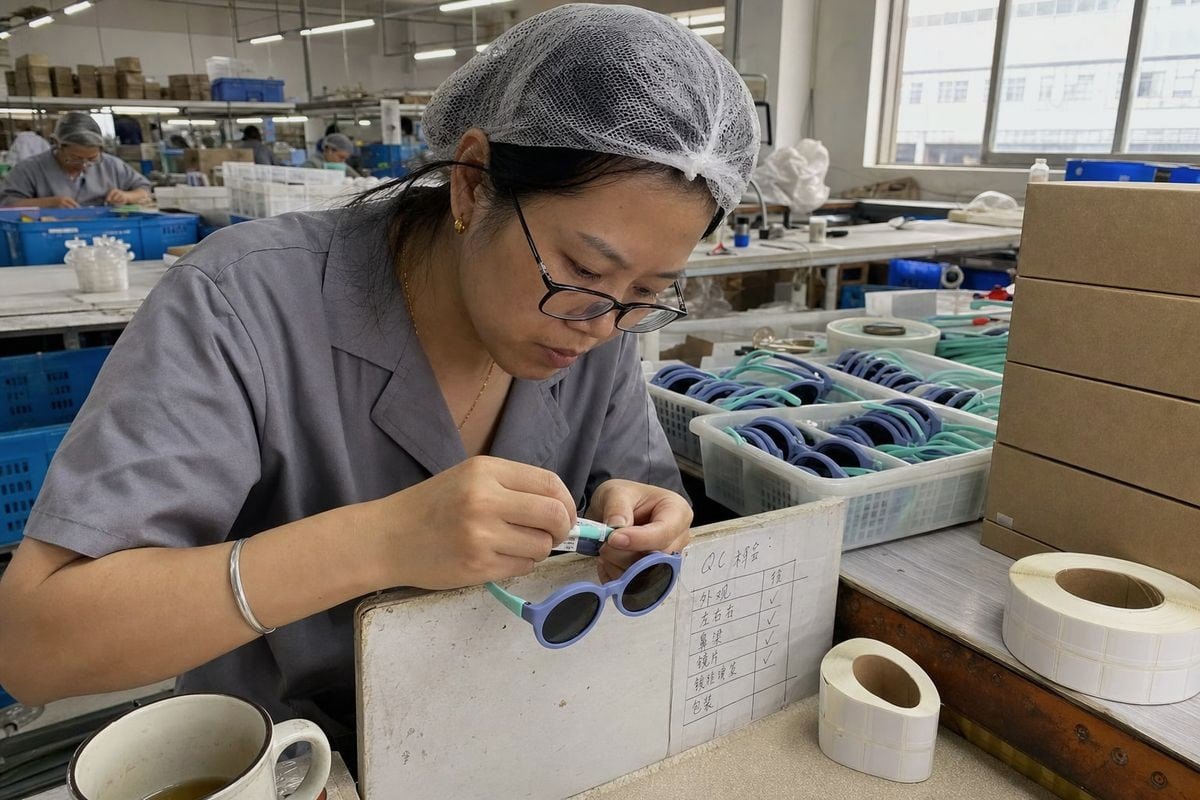
The Consumer Goods Standard 2017 is the current enforceable mandatory standard, administered under ACCC product safety rules 2. It replaced the older 2003 framework and aligns with AS/NZS 1067.1:2016 3, which tightened UVA expectations and revised label wording and pictograms. That matters for buyers: an older overseas label may look credible, yet still fall short of the current mandatory labeling requirements.
The standard explicitly covers children's sunglasses. It also covers spectacle-frame sunglasses, clip-ons, slip-ons, rimless sunshields, and one-piece visors — including sport-style wraparound shield designs like the single-lens models we produce for active kids. Calling a product "fashion" or "kids' accessory" does not exempt it. Only genuine toy sunglasses sit outside the mandatory UV scope, and that boundary depends on the product's real intended use, not its packaging style.
What the Label Must Contain
| Label Element | What to Look For |
|---|---|
| Supplier identity | Manufacturer or supplier name, traceable contact details |
| Lens category | A number from 0 to 4 |
| Category description | Plain-language usage meaning of that category |
| Usage information | Suitability for driving, daylight conditions |
| Warnings | "Not for direct viewing of the sun", night-use restrictions |
| Special lens notes | Photochromic 4 or polarised status, faded/darkened category |
Acceptable Label Formats
Industry guidance accepts an indelible frame marking, a removable lens label, a removable frame label, printed packaging information, or a combination of these. The key rule is legibility: a price sticker slapped over the category marking creates instant noncompliance, even if the lenses themselves would pass every optical quality standards test in the lab.
Understanding lens category 0–4 5 is essential. Category 0 lenses are near-clear fashion lenses. Category 2 and 3 cover most everyday sun protection. Category 4 is for extreme glare — and is never suitable for driving. The category tells parents what light conditions the glasses handle, so it is functional information, not decoration.
How Can I Confirm My Supplier's Lenses Are Tested to This Standard?
There is a trade-off I discuss with almost every Australian buyer: trusting a supplier declaration versus paying for independent verification. In my experience, the answer depends on how much evidence sits behind the declaration.
Confirm testing by requesting a third-party lab report referencing AS/NZS 1067.1:2016 for the exact model and lens batch, checking the report covers UV transmittance to 400nm and lens category classification, and matching the report data against the physical label on the product.
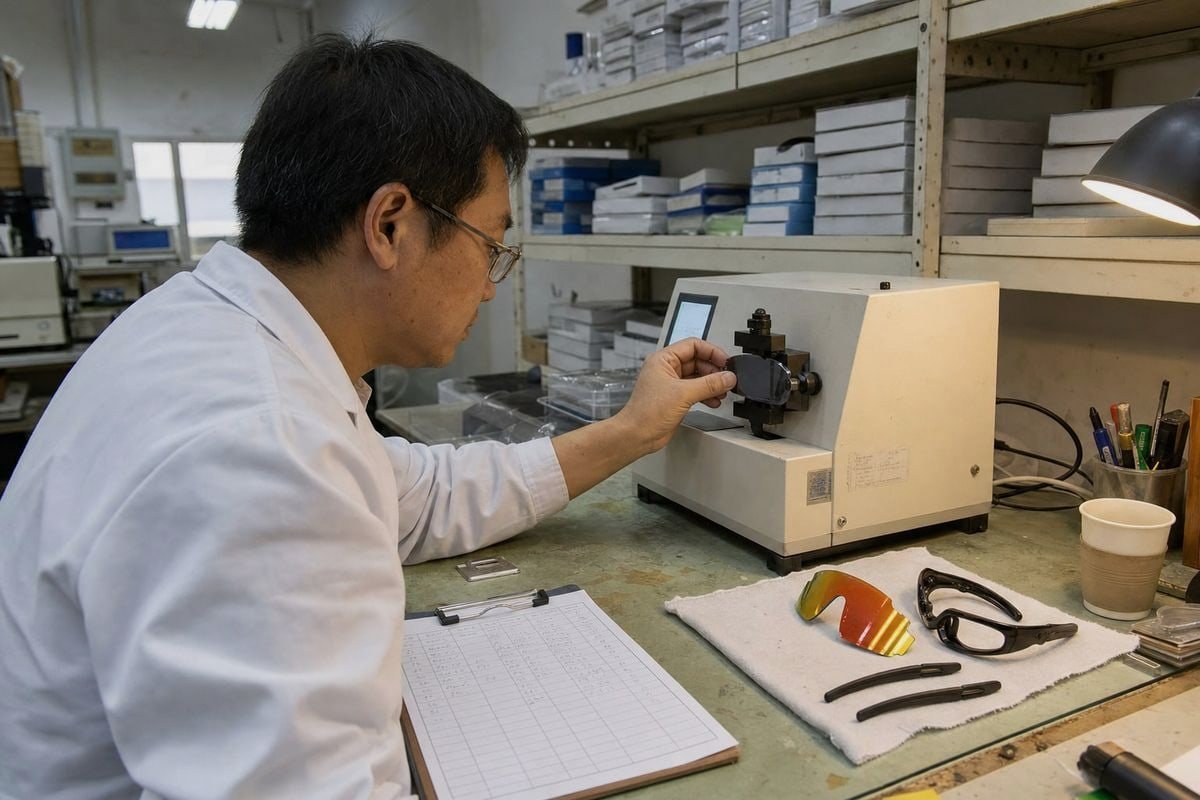
A declaration letter is a promise. A test report is proof. When our factory in Taizhou develops a new UV400 or polarized lens option for a children's line, we test the lens material and the finished model, because coatings, tints, and gradient mirror finishes can all shift transmission results. Buyers should apply the same logic when auditing suppliers.
A Practical Verification Sequence
- Ask for the full test report, not a one-page certificate summary.
- Check the report cites AS/NZS 1067.1:2016 — not the outdated 2003 version.
- Confirm the model number and lens description on the report match your actual product.
- Verify UV protection levels extend to 400nm, since Australia's expectation exceeds the 380nm cutoff common in many international standards.
- Cross-check the lens category on the report against the category printed on the label.
- Look at the report date; a five-year-old report may predate material or coating changes.
Some suppliers now add QR codes on hang tags linking to batch-specific results from NATA-accredited labs 6. That kind of digital verification is a strong trust signal, especially for online retail where parents cannot inspect frame markings before buying. ARPANSA also offers testing services in Australia and typically returns results within about ten business days, which gives importers an accessible, independent second check before a container clears customs.
One more warning I share with new buyers: photochromic and polarised lenses need extra documentation. The label may need to state the filter category in both faded and darkened states for photochromic products. A generic report on standard tinted lenses does not cover these variants.
What Documentation Should I Request Before Placing a Bulk Order?
A procurement manager from a baby-product brand once told me her golden rule: "If the paperwork arrives slower than the samples, walk away." After fifteen years in eyewear, I think she is right.
Before a bulk order, request the AS/NZS 1067.1:2016 test report for your exact model, a supplier declaration of conformity, label and packaging artwork showing all mandatory elements, material safety documentation such as BPA-free and phthalate-free certificates, and pre-shipment inspection terms in writing.
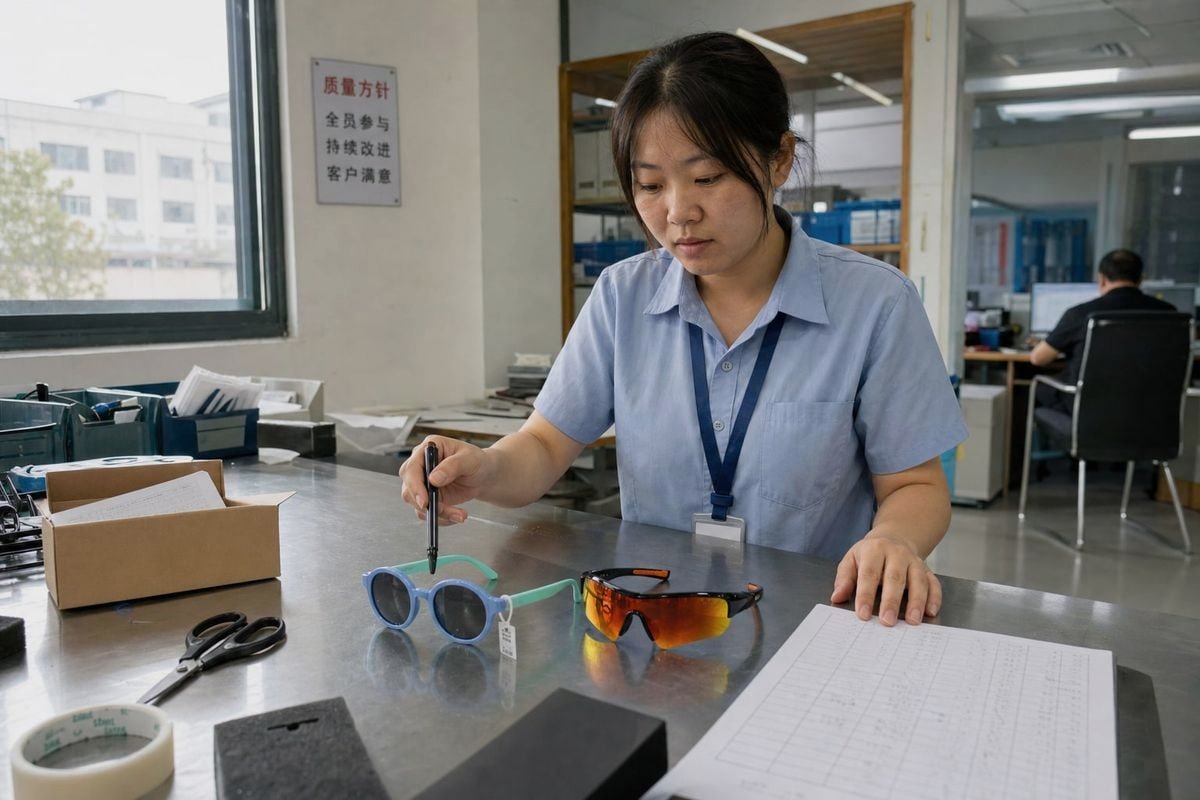
Documentation is your legal shield. Under ACCC product safety rules, retailers, distributors, and importers share responsibility for compliance — it does not stop at the factory gate. If you cannot produce evidence when a regulator asks, "the supplier said it was fine" will not protect you from a recall notice.
The Document Checklist
| Document | Purpose | Red Flag If Missing |
|---|---|---|
| Test report (AS/NZS 1067.1:2016) | Proves lens performance and category | Supplier only offers a generic "CE" or FDA reference |
| Declaration of conformity | Formal supplier commitment to the 2017 standard | Vague wording, no model numbers |
| Label artwork approval | Confirms all mandatory labeling requirements appear | No lens category or supplier name in artwork |
| Chemical safety certificates | BPA-free, phthalate-free frame materials for infants | No material traceability |
| Pre-shipment inspection report | Confirms production matches approved samples | Supplier refuses third-party inspection |
| Recall and traceability plan | Batch coding for corrective action | No batch or date coding system |
Why Chemical and Physical Safety Documents Matter Too
The mandatory 2017 standard focuses on optical performance and labeling — it does not mandate impact resistance. So for children's products, smart buyers go further. We recommend shatterproof polycarbonate lenses 7 and flexible frame materials like TPEE and TR90, because toddlers drop, bend, and chew eyewear. Chemical certificates matter for the same reason: frames touch young skin for hours, and infants mouth their glasses. When we approve label artwork with clients, we lock the layout before mass production so the category marking, supplier identity, and warnings survive every packaging revision.
Some buyers also ask about Eye Protection Factor EPF ratings and HEV blue light filtration claims. These can be genuine value-adds for developing pediatric retinas, but they must be substantiated by testing, just like any UV claim. Unsupported marketing claims are themselves a compliance risk.
How Do I Choose a Manufacturer Who Can Reliably Meet This Standard?
The hardest lesson from our early export years was this: passing one lab test is easy; passing it consistently across ten production runs is the real challenge. Consistency comes from systems, not luck.
Choose a manufacturer with documented experience exporting to Australia, in-house quality control aligned with AS/NZS 1067.1:2016, batch-level traceability, flexible child-safe materials like TPEE and TR90, full OEM/ODM labeling support, and willingness to accept third-party inspections and provide model-specific test reports.
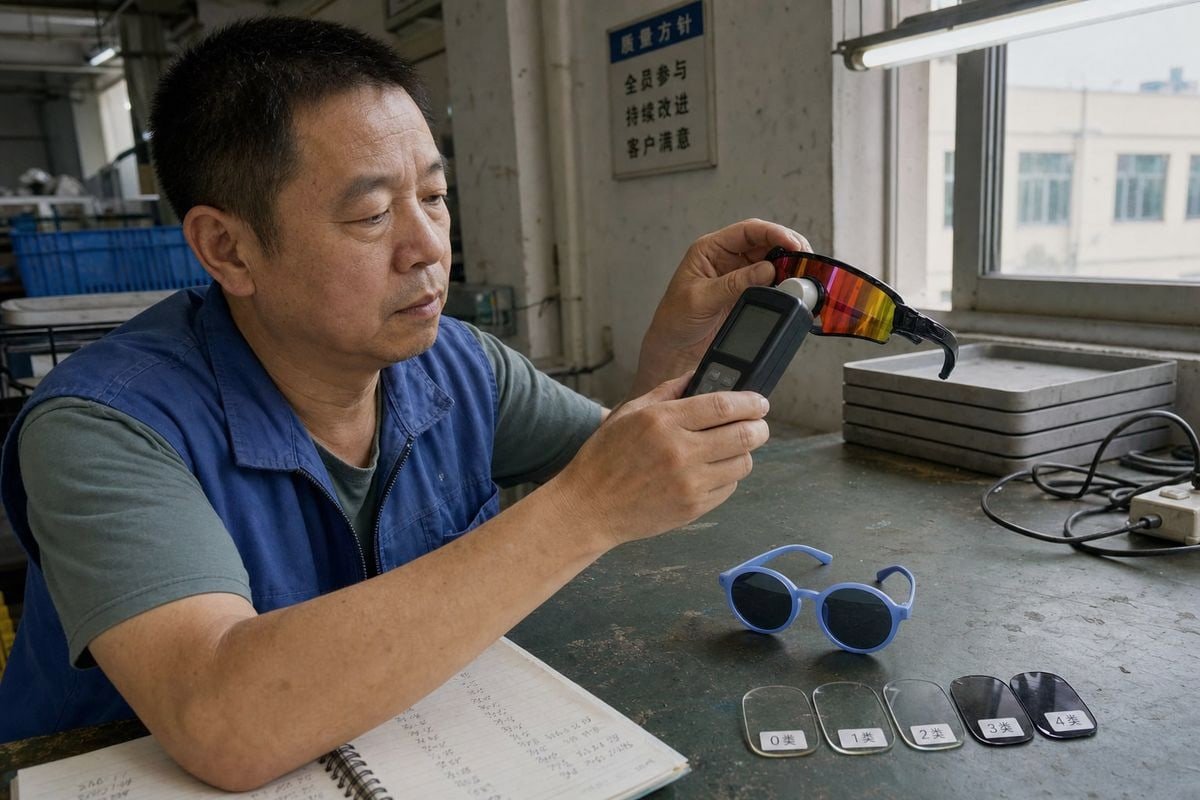
A compliant label is the last step of a compliant process. If the factory's process is weak, the label is just decoration. Here is how I suggest buyers evaluate manufacturing partners, based on what serious Australian and European brands check when they audit our 5S-managed workshop.
Factory Evaluation Criteria
| Criterion | What Good Looks Like | Why It Matters for Australia |
|---|---|---|
| Standard knowledge | Staff can explain lens category 0–4 and label rules | Prevents artwork errors that trigger recalls |
| Material expertise | Genuine TPEE/TR90 capability, not just cheap PC frames | Flexibility and comfort for children's faces |
| Lens sourcing | Traceable UV400 and polarized lens supply | Stable UV protection levels batch to batch |
| Existing style library | Ready-made compliant designs to adapt | Lower mold cost, faster market testing |
| OEM/ODM support | Custom labels, packaging, and warnings done in-house | Retail-ready, standard-compliant presentation |
| QC transparency | Accepts third-party inspection, shares batch records | Protects you as the importer of record |
Questions Worth Asking on a Factory Call
Ask which Australian clients or markets they have shipped to, and how they handled label artwork for the 2017 standard. Ask how they control tint consistency on gradient and mirrored lenses, since a shifting tint can move a lens between categories. Ask whether wrap-around frame design models get separate testing, because curved shield lenses behave differently in transmission tests than flat lenses. With around 800 existing styles in our library, we often steer new brands toward proven, already-tested constructions first — it lets them launch in Australia with lower risk before investing in custom molds.
Finally, judge communication speed. A partner who answers compliance questions in a day, with documents attached, will behave the same way if a problem ever appears mid-production. That responsiveness is worth more than a few cents saved per unit.
Conclusion
Compliance failures rarely announce themselves — they surface as recalls after stock ships. Verify the label, demand model-specific test reports, and partner with a factory that treats Australia's 2017 standard as routine.
Footnotes
1. Background on UV radiation wavelengths underlying UV400 protection claims discussed in the text. ↩︎
2. Official Australian government legislation for the 2017 mandatory sunglasses safety standard enforced by the ACCC. ↩︎
3. Standards Australia is the body that publishes the referenced mandatory sunglasses testing standard. ↩︎
4. Background on light-adaptive lens technology that requires extra compliance documentation. ↩︎
5. ACCC guidance explains the mandatory lens category classification referenced in labeling rules. ↩︎
6. NATA is the national body accrediting Australian testing laboratories cited for compliance checks.
More Articles You Might Like
August 1, 2026
Should Factory Handle Kids Sunglasses Packaging & Labeling, or Use a Designated Supplier?
August 1, 2026
Own Warehouse vs Supplier Direct Fulfillment: Which Cuts Return Costs for Kids Sunglasses Brands?
August 1, 2026
Direct-to-Port Warehouse or Overseas Staging: Which Saves More on Kids Sunglasses Shipping?
Looking for a Reliable Kids Eyewear Partner?
Explore 800+ ready styles and full OEM/ODM support tailored to your brand.
Get in Touch English
  Español de México
  Deutsch
  Français
  日本語
日本語  العربية
  Português do Brasil