How to Trace Gray-Market Kids Sunglasses Using Batch Codes or Packaging Markings?
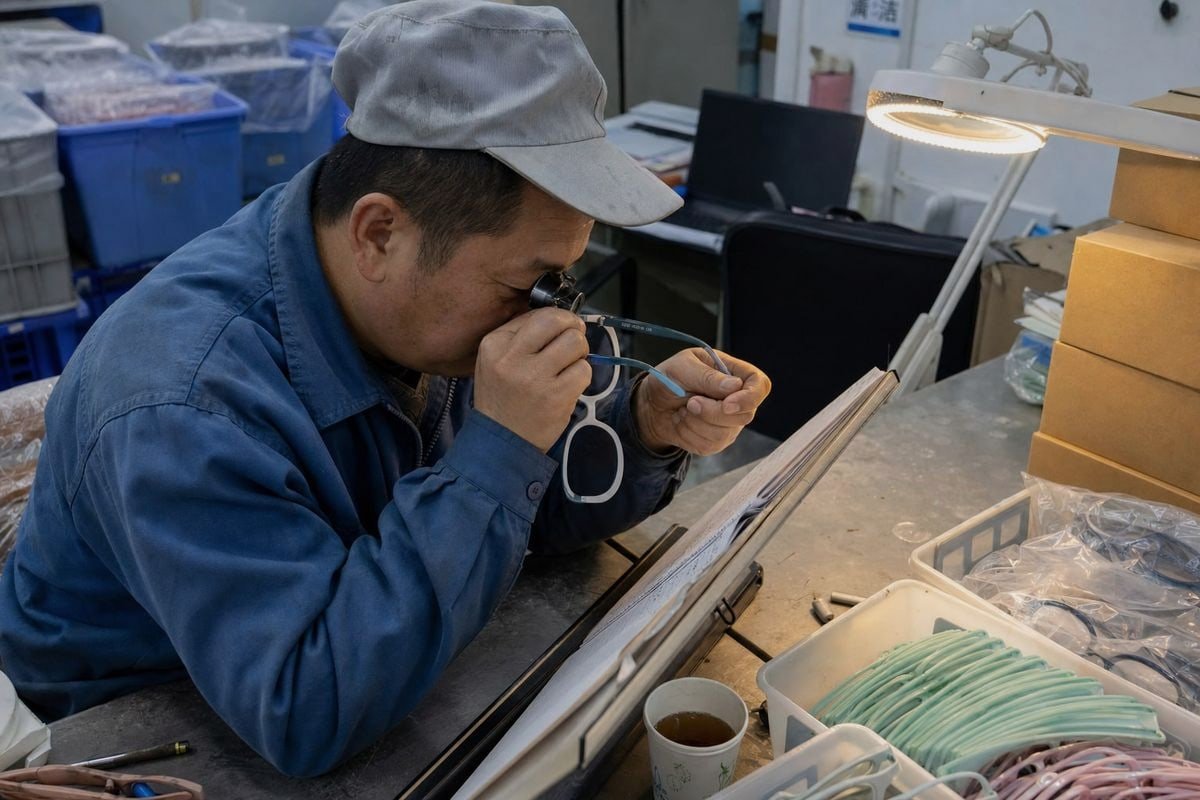
Gray-market kids sunglasses can quietly undercut a brand we helped build on our own production line. One day your product appears on an unauthorized marketplace, cheaper, with strange packaging. Your retail partners get angry. Your margins erode. The good news: batch codes and packaging markings give you a real trail to follow.
To trace gray-market kids sunglasses, locate the batch or lot code on the inner temple arm and packaging, match it against the manufacturer’s production records, verify barcode and regional markings for consistency, and ask your factory to identify which order and distributor that lot was shipped to.
This sounds simple, but each step has traps. Below, I walk through how to read the codes, spot diversion clues, work with your factory, and prevent leaks going forward.
How can I identify batch codes on kids' sunglasses to trace their origin?
A buyer once sent me photos of suspect frames and asked which order they came from. Within an hour, our lot number tracking told us the exact production week and customer.
Batch codes on kids' sunglasses are short alphanumeric strings, usually 3–11 characters, printed or laser-etched on the inside of the temple arm, inside the bridge, or on the box flap. They identify a specific production lot, unlike model numbers or retail barcodes.
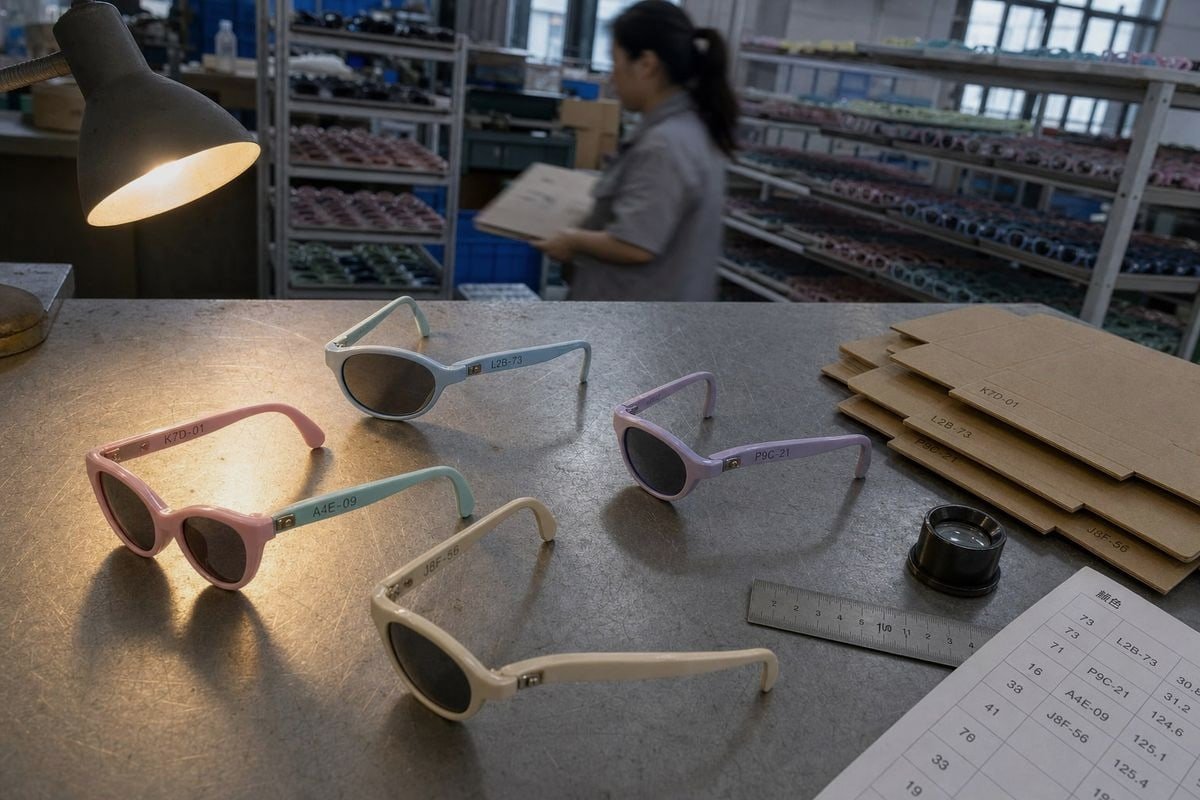
The first mistake most people make is confusing markings. A pair of kids' sunglasses often carries three or four different codes, and each one answers a different question. Before you can trace anything, you need to know which code you are looking at.
Batch code vs. model number vs. barcode
| Marking | What it looks like | What it tells you |
|---|---|---|
| Batch / lot code | Short string, e.g. "23B07" or "0451A", often stamped separately | Production lot, factory, and date range |
| Model number | Style reference, e.g. "OK-8012", molded into the temple | Which frame design it is |
| Retail barcode (EAN/UPC) | 12–13 digit number under bar lines | Retail SKU for point-of-sale scanning |
| Julian date code | YYDDD format, e.g. "24187" = day 187 of 2024 | Exact production day, common in eyewear |
On the frames we produce in Taizhou, the batch code is typically pad-printed or laser-marked on the inner temple, near the hinge. It is deliberately placed where a child cannot pick at it but an adult can read it. For US-bound children's products, CPSIA compliance 1 also requires a permanent tracking label with the manufacturer identification number, production date, and batch or run information. That mandatory label is your strongest legal traceability anchor for children's eyewear sold in the United States.
How to read the code correctly
Copy the code exactly, including letters, leading zeros, and separators. A single transcription error can break verification against production records. Photograph the marking under good light, because stamped codes can be shallow. If the packaging carries a QR or GS1 2D code 2, scan it too. GS1 barcodes can encode the GTIN, the lot number, and sometimes a date, which gives you machine-readable evidence that either matches the frame marking or exposes a mismatch.
What packaging markings should I check to spot gray-market children's eyewear?
Packaging is where diversion usually shows first. In fifteen years of producing retail-ready kids' eyewear, I have seen more gray-market clues on cartons and inserts than on the frames themselves.
Check that the model number on the frame matches the SKU on the box, verify regional certification marks like CE or UKCA fit the sales market, inspect batch codes for scratching or re-application, and confirm inserts, warranty cards, and QR codes are present and consistent.
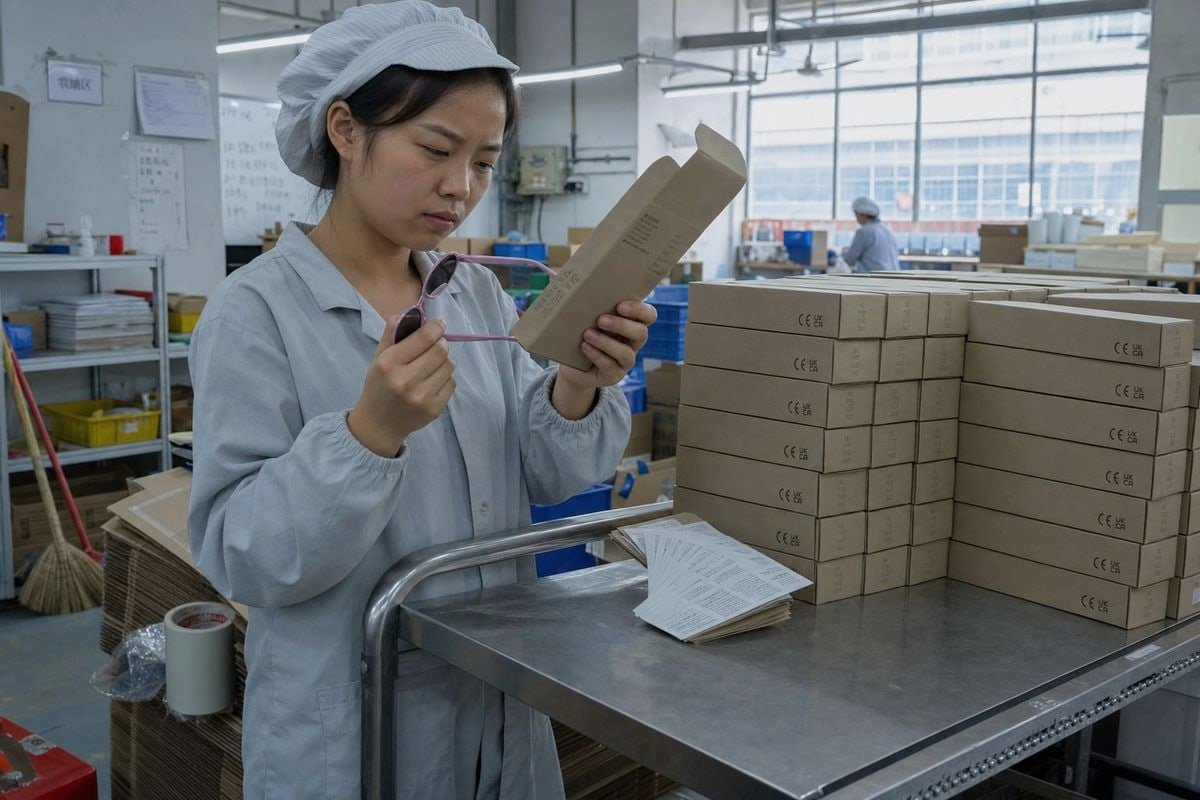
Parallel imports 3 are usually genuine products. That is exactly why the frame itself often looks perfect while the packaging tells the real story. Gray-market sellers move goods across regions, strip warranty materials, or repack items to hide the original distribution channel. Your job is product diversion detection: finding the small inconsistencies that reveal an unauthorized route.
The packaging consistency checklist
| Marking to check | Consistent (likely authorized) | Red flag (possible diversion) |
|---|---|---|
| Frame model vs. box SKU | Both match exactly | Model on frame differs from box label |
| Batch code on frame vs. box | Same lot reference | Missing, scratched off, or re-stickered |
| Regional marks (CE, UKCA 4, FDA) | Correct for the sales market | CE mark on non-EU stock, missing UKCA in Great Britain |
| Language of inserts | Matches destination country | Wrong-language warranty or care card |
| UV protection labeling | UV400 5 claim matches lens spec sheet | Vague or absent UV protection standards |
| QR / GS1 code | Scans and matches product name | Dead link, mismatch, or no code at all |
Why scratched codes matter most
Gray-market sellers sometimes physically scratch out or "de-brand" the batch code on the frame or carton. They do this precisely because the code works: it lets the brand trace which authorized distributor leaked the inventory. A removed or visibly re-applied code is not proof of counterfeiting on its own, but it is strong evidence that someone did not want the item traced. For children's eyewear, a missing tracking label is also a compliance failure in itself, which gives you additional leverage when confronting a seller. Always document these findings with photos before escalating.
How do I work with my manufacturer to verify authentic batch and production records?
The trade-off I always explain to buyers is this: tighter lot documentation adds a small administrative cost per order, but it turns every future dispute into a one-hour lookup instead of a dead end.
Send your manufacturer clear photos of the batch code, frame markings, and packaging. Ask them to match the lot against production logs, QC records, and shipping documents, then confirm in writing which order, date, and customer that batch was produced for.

Supply chain transparency is only as good as the records behind it. At our workshop, every production order gets a lot reference that follows the goods from injection molding through lens assembly, QC inspection, and packing. When a customer suspects diversion, we trace backward through that chain. Any serious factory should be able to do the same. If your supplier cannot, that itself tells you something.
The verification workflow, step by step
- Photograph the suspect product: inner temple markings, bridge, box flap, barcode, inserts, and any QR codes.
- Transcribe the batch code exactly, including letters and leading zeros.
- Send everything to your factory contact with the purchase context: where the item was found, at what price, and by whom.
- Ask the factory to pull the production record: order number, production date, quantity, lens specification, and packing configuration for that lot.
- Request the shipping trail: which consignee received that lot, on which date, under which invoice.
- Compare the factory's answer against the suspect listing. A lot shipped to a European distributor appearing on an Asian marketplace is your leakage point.
- Get the confirmation in writing. This document becomes evidence for takedown requests and distributor conversations.
What good factory records look like
Strong product authentication depends on records that connect three things: the physical lot code, the QC file, and the commercial documents. When we run OEM orders, the lot reference appears on the inspection report, the carton marks, and the packing list. That linkage is what makes authorized distributor verification possible later. If you are qualifying a new supplier, ask them to demonstrate a mock trace before you place the first order. It takes ten minutes and reveals more about their systems than any brochure.
What steps can I take to prevent gray-market diversion of my kids' sunglasses in the future?
A lesson we learned early: prevention designed into the product costs far less than investigation after the leak. Traceability decisions made at the tooling and packaging stage pay off for years.
Prevent diversion by serializing packaging with QR codes, assigning distributor-specific batch codes, adding covert markings such as UV-fluorescent prints, tightening distributor contracts with channel clauses, and running periodic test buys to detect leaks early.
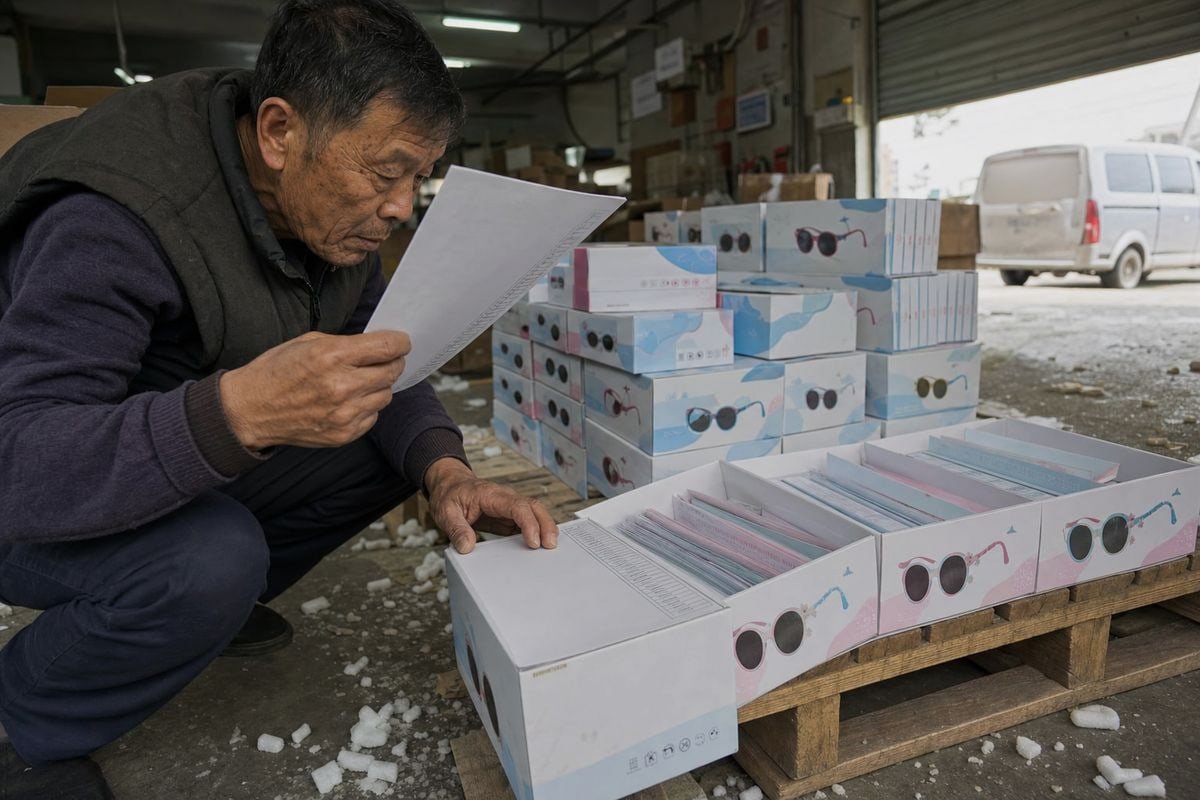
Prevention works in layers. No single measure stops a determined diverter, but each layer raises the cost of hiding the goods' origin. The most effective programs combine overt markings the diverter can see, covert markings they cannot, and commercial monitoring that catches anomalies fast.
Layered prevention measures compared
| Layer | Measure | Cost to add | Diversion resistance |
|---|---|---|---|
| Overt | Distributor-specific lot codes on frame and carton | Low | Medium — can be scratched off |
| Overt | Serialized QR codes linked to a verification page | Low–medium | Medium-high — repacking breaks the link |
| Covert | UV-fluorescent "shadow" batch codes on inner frame | Medium | High — diverters rarely detect them |
| Digital | NFC tags 7 in premium frames as a supply chain passport | High | Very high — tamper-evident |
| Commercial | Test buys plus pricing-anomaly monitoring | Ongoing | High — finds leaks, not just hides them |
Practical steps for a kids' brand
Start with what is cheap and immediate. Assign each distributor a unique lot suffix at the purchase-order stage; we do this for OEM clients at no tooling cost because it only changes the pad-print artwork. Next, add serialized QR codes to hang tags or boxes, so a scan confirms the product name, lens spec, and UV protection claim. Emerging anti-counterfeiting technology like invisible inks and NFC suits higher-price-point lines, while AI-driven monitoring tools can cross-reference batch codes from test buys against unauthorized seller inventory surges. Finally, put teeth in your contracts: require distributors to record onward sales, prohibit cross-territory shipping, and reserve audit rights. Diversion thrives where nobody is watching. A modest, consistent monitoring routine changes that calculation.
Conclusion
Gray-market diversion drains margins and damages retail trust. Trace it with batch codes, packaging checks, and factory records, then prevent it with layered marking, contracts, and monitoring.
Footnotes
1. Official source explaining mandatory tracking label requirements for children’s products. ↩︎
2. Background on GS1 barcode standards used for encoding GTIN and lot data. ↩︎
3. Background concept explaining how genuine goods enter unauthorized distribution channels. ↩︎
4. Official UK government page explaining UKCA marking requirements for products sold in Great Britain. ↩︎
5. FDA consumer guidance on UV protection standards relevant to sunglasses labeling claims. ↩︎
6. Wikipedia explains gray-market goods concept referenced throughout the diversion discussion. ↩︎
7. Explains NFC technology used as tamper-evident supply chain passport for premium frames. ↩︎
More Articles You Might Like

August 1, 2026
Should Factory Handle Kids Sunglasses Packaging & Labeling, or Use a Designated Supplier?

August 1, 2026
Own Warehouse vs Supplier Direct Fulfillment: Which Cuts Return Costs for Kids Sunglasses Brands?

August 1, 2026
Direct-to-Port Warehouse or Overseas Staging: Which Saves More on Kids Sunglasses Shipping?
Looking for a Reliable Kids Eyewear Partner?
Explore 800+ ready styles and full OEM/ODM support tailored to your brand.
Get in Touch English
  Español de México
  Deutsch
  Français
  日本語
日本語  العربية
  Português do Brasil