How to Request Third-Party Testing Reports for Kids’ Sunglasses from Suppliers?

Requesting third-party testing reports for kids’ sunglasses seems simple until a supplier sends you a blurry, outdated PDF. On our production line, we see this problem every week.
To request third-party testing reports for kids’ sunglasses, ask your supplier in writing for the full lab report — not just a certificate — covering your exact SKU, the target-market standard, the accredited lab’s details, sample identification, and a recent test date on the finished product.
That is the short answer. Below, I will walk you through exactly which documents to request, how to verify them, and what to do when the paperwork falls short.
What Certifications and Test Reports Should I Ask My Kids' Sunglasses Supplier For?
Last spring, a buyer from Australia asked us for "the certificate" on a TR90 frame. We sent her four documents instead — because one certificate alone proves very little.
Ask for the full third-party lab test report, the Children's Product Certificate for US sales, chemical testing for lead and phthalates, UV400 and optical test results to the relevant standard, and impact resistance testing data — all matched to your exact style and market.

The biggest mistake I see new buyers make is accepting a single-page "pass" certificate and calling it done. A certificate is a declaration. A test report is evidence. You need both, and for children's eyewear, the evidence matters far more.
Here is the core document set I recommend every buyer request before placing an order:
| Document | What It Proves | Who Needs It |
|---|---|---|
| Full third-party lab test report | The finished product was actually tested | All markets |
| Children's Product Certificate 1 (CPC) | Legal declaration of CPSIA compliance | US importers and Amazon sellers |
| Lead and phthalates 2 testing results | Chemical safety of frames, temples, coatings | US (CPSIA), often EU too |
| UV400 3 / optical performance report | Lenses block UV as claimed | All markets |
| Impact resistance testing (drop ball) | Lenses will not shatter on impact | US (FDA 21 CFR 801.410 4) |
| Factory audit report | The facility can produce consistently | Larger brands and retailers |
Why the Full Report Beats the Certificate
For US children's products, the Children's Product Certificate must be based on third-party testing of the finished product by a CPSC-accepted laboratory. The CPC itself is issued by the manufacturer or importer — but it only holds up if the underlying test reports exist. Those records must be kept for five years. So when we prepare export files at our factory, the CPC and the supporting lab reports travel together as one package.
Match the Paperwork to the Product
One more point from experience: children's sunglasses are children's products. That means chemical rules apply on top of optical rules. A supplier who only shows you a lens report has covered half the picture. Ask about the frame material, the paint, the rubber temple tips, and any decorative parts. With our TPEE and TR90 frames, we test the material set as sold, not just the lens.
How Do I Verify That a Supplier's Third-Party Testing Reports Are Genuine and Not Outdated?
A procurement manager once forwarded us a competitor's report to ask if it looked right. The lab name was real — but the report was for a different frame color, tested three years earlier.
Verify a report by checking the lab against the official CPSC-accepted laboratory database, confirming the model number and product photo match your exact item, ensuring the test date falls within the last 12 months, and requesting sample identification details directly from the lab if in doubt.
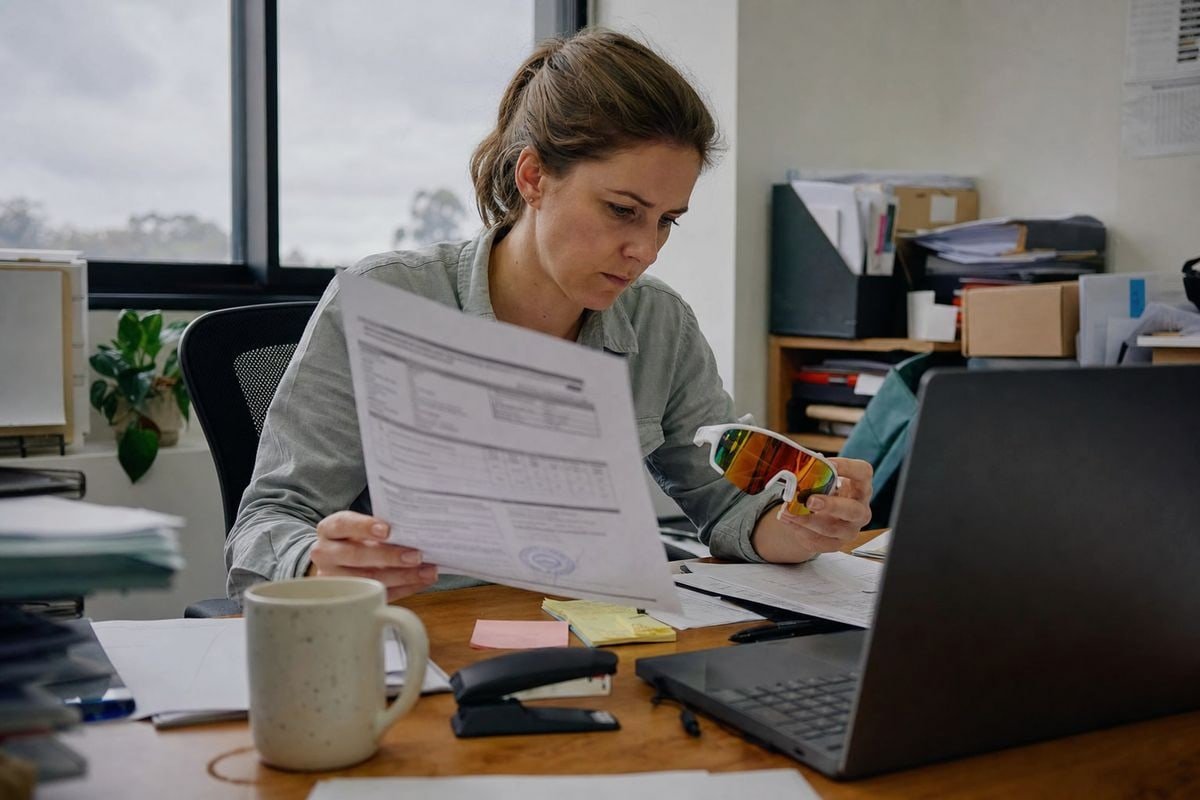
Fake and recycled reports are a real problem in eyewear sourcing. In our fifteen years making children's eyewear, we have seen buyers burned by reports that were technically genuine but belonged to a different product entirely. Verification is not about distrust. It is basic procurement hygiene.
A Simple Five-Step Verification Process
- Check the lab's accreditation. For US children's product rules, search the CPSC's online database of accepted laboratories CPSC-accepted laboratory database 5. The lab must be accepted for the specific rule tested, not just accredited in general.
- Match the sample identity. The report should name the exact model number, describe the product, and ideally include a photo. Cross-reference this against your physical samples. A report for a "similar style" is not your report.
- Check the date. Reports older than 12 months may not reflect current production. Materials, paint suppliers, and lens sources change. We re-test when any input changes, and you should expect the same discipline from any supplier.
- Read the scope. Confirm which standard was tested and whether the finished product — not just raw material — was on the bench. Raw material reports are useful but incomplete.
- Contact the lab if needed. Reputable laboratories will confirm whether a report number is genuine. Some buyers also request raw chromatogram data from chemical tests to detect falsified summary sheets.
Red Flags Worth Pausing Over
Watch for in-house "lab" documents dressed up as third-party reports, generic "test passed" statements with no data, missing sample photos, and reports where the applicant company name has clearly been altered. Also ensure documentation is provided in English. If a supplier resists any of these checks, that resistance is itself information.
Which Testing Standards Matter Most for UV400 and Polarized Lenses in Children's Eyewear?
When we develop a new polarized lens for a wraparound sport style, the first question our engineers ask is not "does it look good?" It is "which market will this ship to?"
The most important standards are ISO 12312-1 certification for the EU and international markets, ANSI Z80.3 standards for the US, AS/NZS 1067 for Australia, plus FDA impact resistance testing and CPSIA chemical rules whenever the sunglasses are made for children.
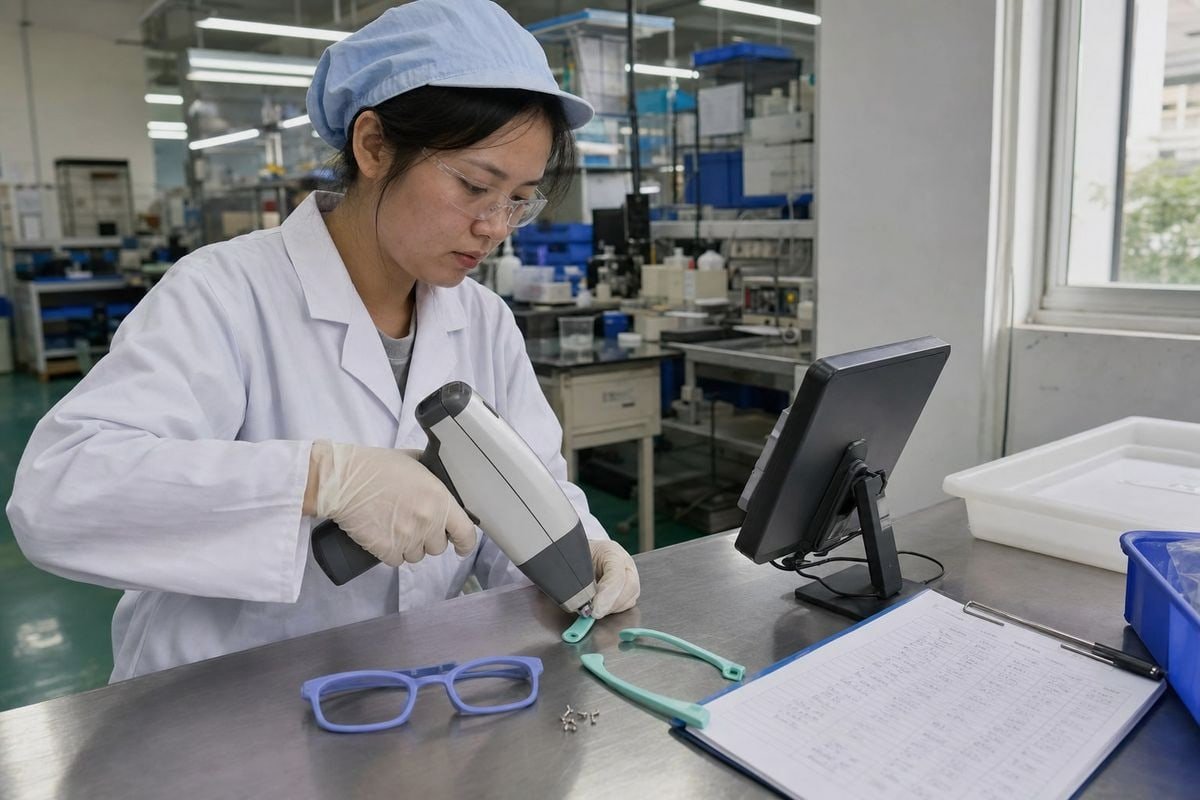
There is no single universal sunglasses report. That is the nuance many first-time buyers miss. A report that satisfies a European distributor may not satisfy a US marketplace compliance review, and vice versa. Here is how the main standards line up:
| Standard | Market | What It Covers |
|---|---|---|
| ISO 12312-1 6 (EN ISO 12312-1) | EU, UK, international | UV transmittance, lens categories, optical quality, robustness |
| ANSI Z80.3 7 | United States | UV protection, transmittance, optical performance |
| FDA 21 CFR 801.410 | United States | Impact resistance via the drop ball test |
| AS/NZS 1067 | Australia, New Zealand | Lens categories, UV protection; ARPANSA testing returns results within about 10 business days |
| CPSIA (lead, phthalates) | United States | Chemical safety for all children's products |
What UV400 Actually Requires
A UV400 protection rating means the lens blocks UV wavelengths up to 400 nanometers. But the claim is only as good as the transmittance data behind it. Ask the supplier for the actual UV transmittance curve in the report, not just the phrase "UV400" printed on a hang tag. For products facing heavy sun exposure, some buyers also request accelerated aging data to confirm UV protection remains stable after 50-plus hours of intense light exposure. That is a reasonable ask for a premium children's line.
Polarized Lenses Add One More Check
Polarization does not replace UV testing — it is a separate property. A polarized lens report should confirm both the polarization efficiency and the UV transmittance. On our polarized kids' styles, we treat these as two distinct test items, because a lens can polarize glare beautifully while still failing UV requirements.
Do Not Forget the Frame
For active kids' styles — the wraparound sport shields especially — frame durability matters as much as the lens. Flexural fatigue testing on flexible materials like TPEE confirms the temples will not snap into sharp points after thousands of bending cycles. This is exactly why we build children's frames in TPEE and TR90 rather than brittle commodity plastics.
What Should I Do If My Supplier Cannot Provide Valid Safety Testing Documentation?
Early in my export career, I watched a European importer lose an entire retail launch window because his supplier "was still working on the paperwork." The lesson stuck with me.
If your supplier cannot provide valid documentation, require new third-party testing on a production sample before shipment, nominate your own accredited lab if needed, split payment terms around test results, or switch to a supplier with an established product safety documentation process.
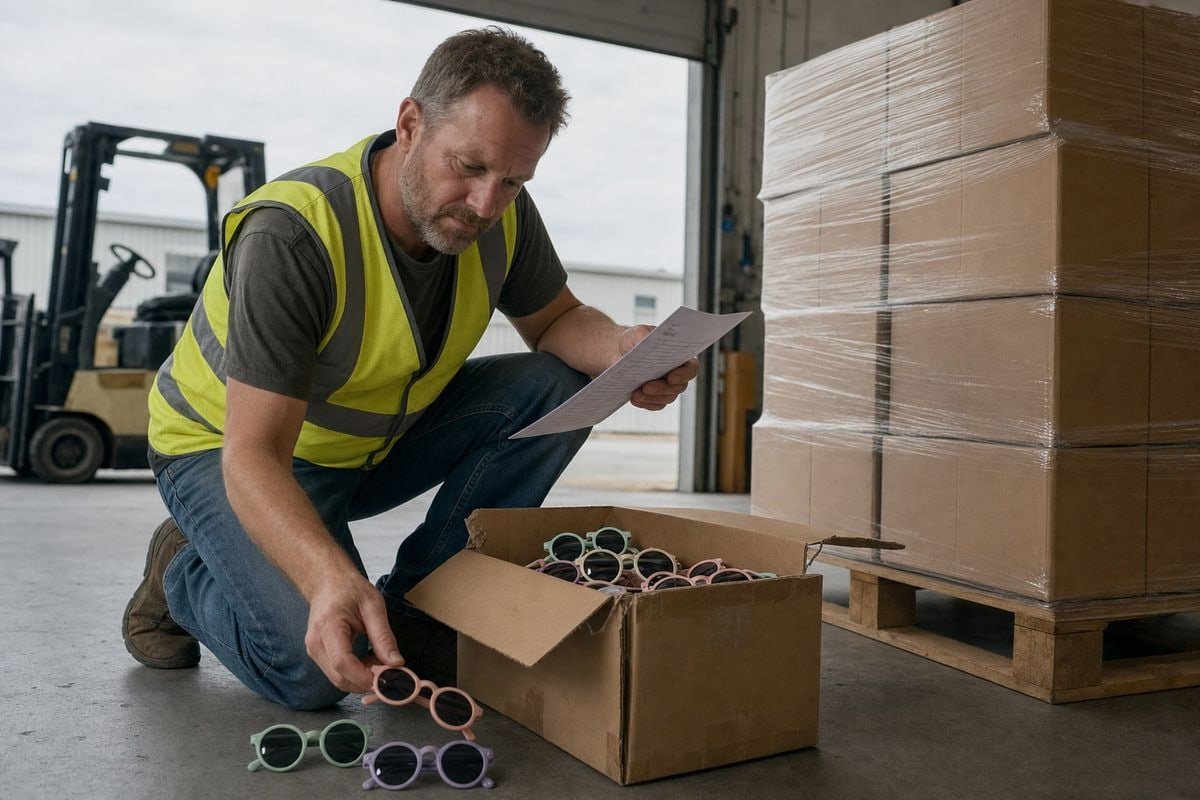
Missing paperwork is not always a scandal. Sometimes a factory has real quality but has simply never exported to your market before. Your job is to separate the fixable gaps from the fatal ones. Here is the decision framework I share with buyers:
| Supplier Situation | Risk Level | Recommended Action |
|---|---|---|
| Has reports, but for a similar style | Medium | Request a new test on your exact variant |
| Has raw material reports only | Medium | Test the finished product before shipping |
| Has only in-house test data | High | Require third-party testing as an order condition |
| Refuses testing or dodges questions | Very high | Walk away — for children's products, do not gamble |
Commissioning New Testing
If the supplier is cooperative, new testing is straightforward. Send a production-representative sample to an accredited lab in your target market's framework. Turnarounds are manageable — Australian sunglass testing through ARPANSA, for example, returns results within about 10 business days. If you sell on Amazon, you can route documents through a recognized TIC service provider: request quotes, select a provider, and share the Test Request Form identification number so testing proceeds against the right listing.
Protect Yourself Contractually
Put testing into your purchase order. Specify who pays for the test, which lab performs it, and that shipment is conditional on a passing report for the exact SKU. Serious factories accept this without friction. When buyers ask us to write third-party testing into contracts, we agree readily — because a factory confident in its materials has nothing to hide.
Know When to Move On
For children's eyewear, some gaps are disqualifying. A supplier who cannot explain CPSIA compliance, does not know what a CPSC-accepted laboratory is, or offers to "share another customer's report" is telling you how they treat safety. With roughly 800 existing tested styles available from factories like ours, there is no reason to build a children's brand on undocumented product.
Conclusion
Vague supplier promises put children and your brand at risk. Demand full third-party testing reports, verify the lab and sample, match standards to your market, and partner with factories that document safety properly.
Footnotes
1. Explains CPSIA legal basis behind Children’s Product Certificate requirements for US importers. ↩︎
2. EPA overview of phthalates chemical safety relevant to children’s product testing requirements. ↩︎
3. Background on UV protection ratings and sunglasses standards referenced throughout the article. ↩︎
4. Direct link to the official Electronic Code of Federal Regulations (eCFR) text. ↩︎
5. Official CPSC database lets buyers verify accredited labs cited in supplier test reports. ↩︎
6. Official ISO standard page defines sunglasses requirements referenced for EU markets. ↩︎
7. Background on ANSI, the body behind the Z80.3 sunglasses standard cited for US markets. ↩︎
More Articles You Might Like

Looking for a Reliable Kids Eyewear Partner?
Explore 800+ ready styles and full OEM/ODM support tailored to your brand.
Get in Touch English
  Español de México
  Deutsch
  Français
  日本語
日本語  العربية
  Português do Brasil