How to Fix Peeling Coating on Kids’ Sunglasses?
Peeling coating on kids’ sunglasses is a complaint I see land in buyers’ inboxes far too often. It damages trust, triggers returns, and quietly kills reorders. On our production line, we treat it as a solvable engineering problem — and that is exactly what I want to walk you through here.
To fix peeling coating on kids’ sunglasses, replace the lenses rather than repair the coating, because delamination is permanent once it starts. For minor edge lifting, gentle cleaning can slow it down, but the lasting fix is replacement lenses or a corrected production run with better coating adhesion.
That short answer covers the immediate fix. But if you sell children’s eyewear under your own brand, the deeper question is why it happened and how to stop it recurring. Let’s break it down step by step.
What Causes the Coating to Peel on Children's Sunglasses in the First Place?
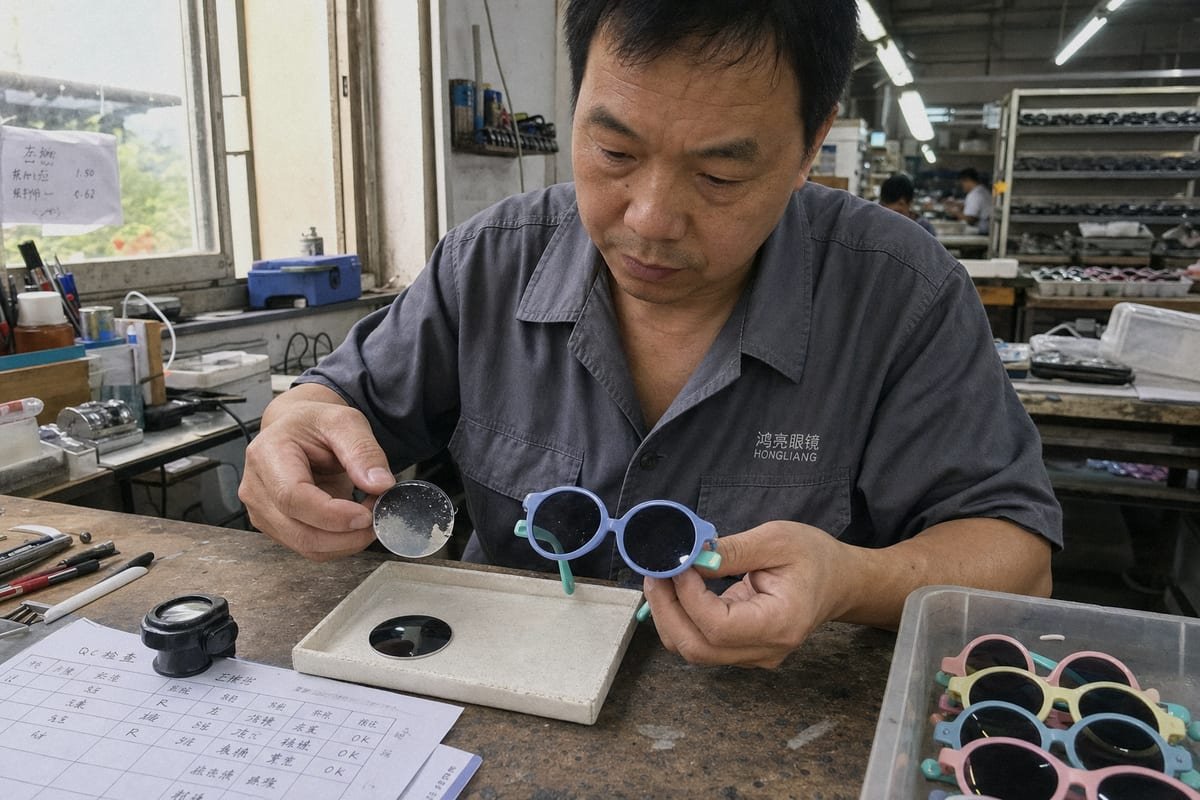
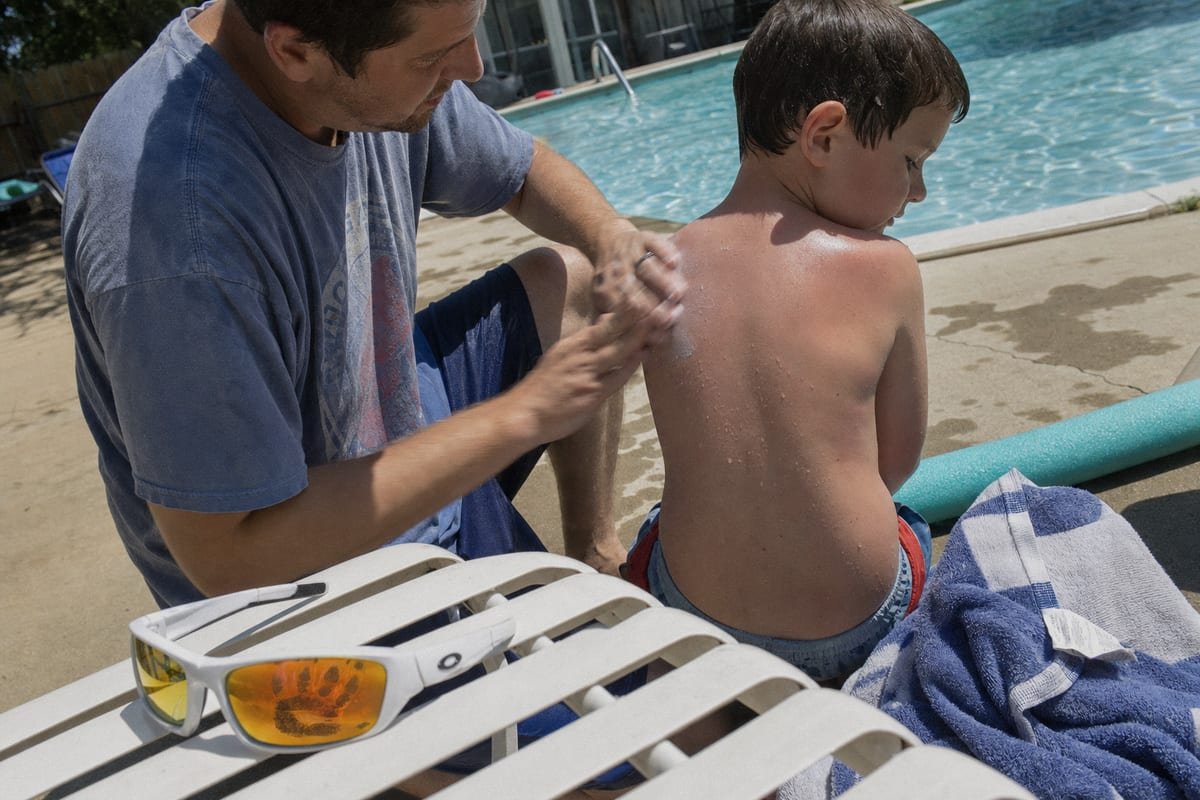
During a QC review at our Taizhou factory a few years back, we traced a batch of flaking mirror lenses to one root cause nobody suspected: sunscreen residue on kids' fingers. Causes are rarely obvious.
Coating peels when the chemical bond between the coating layer and the lens breaks down. The main triggers are heat exposure, sunscreen chemicals, saltwater corrosion, sweat, abrasive cleaning, and poor coating adhesion during manufacturing. Kids' rough handling accelerates every one of these failure modes.
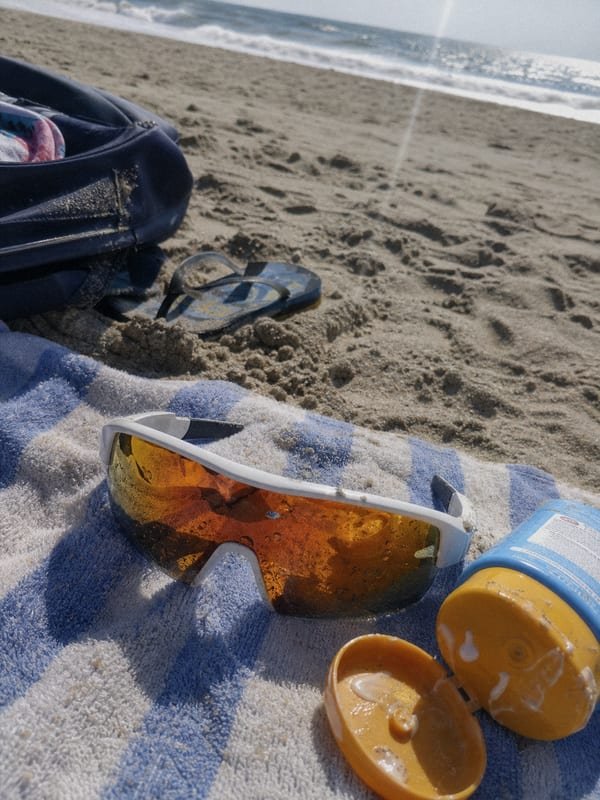
What parents call "peeling" is technically delamination. A sunglass lens is not a single piece of material. It is a base lens — usually polycarbonate lens material 1 in kids' eyewear — with one or more thin layers bonded on top. Those layers can include a tint layer, a UV400 protection layer 2, a scratch resistant treatment, a mirror coating, or an anti-reflective layer. When any of those layers loses adhesion, it lifts, bubbles, and flakes.
Environmental and Usage Causes
Children put sunglasses through conditions adults never would. Each stress attacks the coating bond differently:
| Cause | How It Damages the Coating | Typical First Sign |
|---|---|---|
| Heat (car dashboards, beach bags) | Lens and coating expand at different rates, causing "crazing" | Fine spiderweb cracks |
| Chemical sunscreen (oxybenzone) | Acts as a solvent that dissolves coating adhesives | Cloudy smears that won't wipe off |
| Saltwater and chlorine | Corrosive buildup eats at the coating edge | Peeling starting at the lens rim |
| Sweat and skin oils | Slow chemical degradation over months | Dull patches near the nose bridge |
| Wiping with shirts or tissues | Micro-abrasion wears through thin layers | Hazy scratches, then lifting |
| Harsh cleaners (isopropyl alcohol cleaning, window spray) | Strips coating chemistry directly | Sudden widespread flaking |
Manufacturing Causes
Not all peeling is the user's fault. If the lens surface was not properly cleaned and treated before coating, adhesion is weak from day one. We have seen competitor samples where polarized lens delamination appeared within weeks of normal use — no abuse required. Cheap vacuum coating 3 with poor process control produces a mirror finish that looks great in photos and fails in the field. This is why coating adhesion testing matters before mass production, which we will cover later.
How Can I Tell If It's a Material Defect or a Manufacturing Quality Issue?
One of our long-term European buyers once sent back photos of flaking lenses, convinced the coating chemistry was bad. Our lab check told a different story — and the distinction mattered for who fixed what.
Check the pattern and timing. Material defects show as uniform failure across many units early in the product's life. Manufacturing quality issues appear as random, scattered failures — edge lifting, bubbles, or patchy adhesion on some lenses but not others from the same batch.
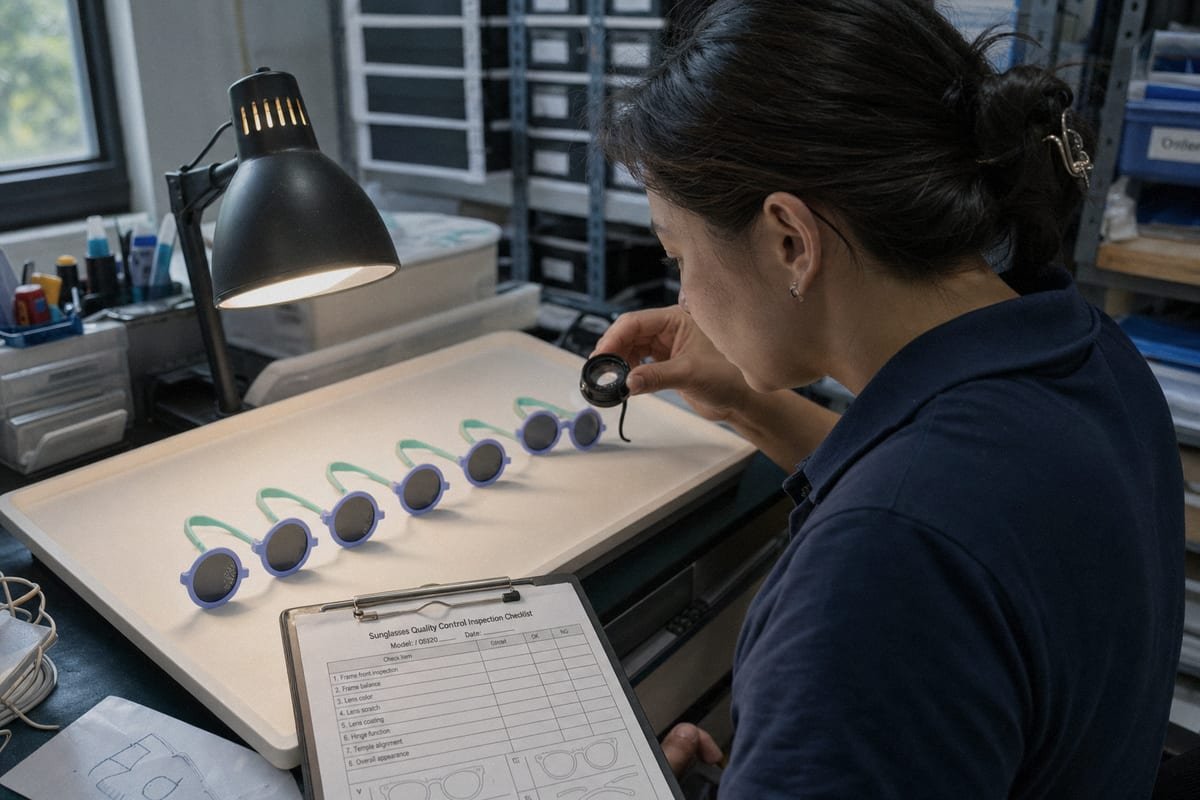
This diagnosis matters commercially. It determines whether you need a different lens supplier, a different coating process, or simply better handling instructions on your packaging. In our fifteen years of making children's eyewear, we have learned to run a structured comparison before assigning blame.
The Diagnostic Comparison
| Signal | Points to Material Defect | Points to Manufacturing Quality Issue |
|---|---|---|
| Failure rate | High and consistent across the batch | Low and scattered, unit to unit |
| Location on lens | Whole surface degrades evenly | Edges, corners, or isolated spots |
| Timing | Within weeks, even with gentle use | Varies widely; some units never fail |
| Appearance | Uniform clouding or crazing | Bubbles, lifted flakes, tape-test failures |
| Both lenses affected? | Almost always yes | Often only one lens |
Simple Tests a Buyer Can Run
You do not need a lab for a first assessment. First, do a tape lift test 4 on a sacrificial sample: press high-tack tape firmly onto the coated surface and peel it back sharply. A properly bonded coating stays put. If the mirror or anti-reflective layer comes off with the tape, adhesion was weak from the factory. Second, do a soak test in warm salt water for 24 hours, then inspect the lens edge under magnification. Early saltwater corrosion at the rim signals inadequate edge sealing. Third, compare failed units against unopened stock from the same shipment. If sealed units already show micro-bubbles, it is a production issue, not a customer-use issue.
Document everything with dated photos. A professional supplier will want that evidence, and it moves the conversation from opinion to facts.
What Should I Look for in a Manufacturer to Prevent Coating Problems Before Production?
Choosing between two coating suppliers last year, we rejected the cheaper one over a single detail: they skipped plasma surface treatment 5 before vacuum coating. That one shortcut is invisible on a sample and disastrous at scale.
Look for a factory that performs surface pre-treatment before coating, runs adhesion and salt-spray tests on every batch, controls coating in-house or through audited partners, and offers documented QC reports. Ask specifically how they validate coating durability on flexible kids' frames.
Prevention is far cheaper than any fix. When a brand comes to us to develop kids' sunglasses — whether from our roughly 800 existing styles or a custom OEM project 6 — the coating conversation happens before tooling, not after complaints. Here is what I would press any supplier on.
Questions That Separate Serious Factories From Assemblers
- How do you prepare the lens surface before coating? Cleaning and surface activation determine adhesion. If they cannot describe the step, the coating bond is luck.
- What batch tests do you run? At minimum: tape adhesion tests, humidity and heat cycling, and salt-spray exposure 7 to simulate beach and sweat conditions.
- Do you test the coating on the actual lens, not just a flat sample? Curved wraparound shield lenses, like sporty mirrored styles, stress coatings differently than flat rounds.
- How do you verify the UV400 protection layer independently of the tint? Dark lenses without real UV blocking are dangerous for children, whose pupils dilate behind them.
- Can you provide pre-shipment inspection reports with photos? Documentation discipline usually correlates with process discipline.
Match the Coating to the Real Use Case
Not every kids' style needs the same lens build. We often advise buyers to weigh these trade-offs:
| Lens Option | Best For | Coating Risk Level | Our Recommendation |
|---|---|---|---|
| Solid tint polycarbonate, UV400 | Toddler everyday styles | Low — tint is in or on robust layers | Ideal for ages 1–5 |
| Scratch resistant treatment added | Active school-age kids | Low–Medium | Worth the small cost |
| Polarized lenses | Water, snow, glare-heavy use | Medium — laminated structure can delaminate if poorly made | Use proven polarized film suppliers |
| Mirror coating (gradient/iridescent) | Sport and fashion styles | Higher — thin metallic layer is most exposed | Demand adhesion test data |
A mirrored sport shield looks fantastic at retail. But the mirror layer is the most fragile coating type, so it deserves the most scrutiny. Pair it with a hard case and a microfiber lens cloth in your retail packaging — accessories we routinely include in OEM packages — and field failures drop noticeably.
How Do I Work With My Supplier to Resolve a Peeling Coating Issue on an Existing Order?
A buyer in Australia once messaged us in a panic: retail customers were reporting flaking mirror lenses on a summer bestseller. Because we had retained batch samples, we resolved it in under two weeks. Process beats panic.
Report the issue with dated photos, affected quantities, and batch numbers. Ask the supplier to test retained samples, agree on root cause, then negotiate a remedy: replacement sunglass lenses, replacement units, credit, or a discount — plus a corrective action plan for future orders.
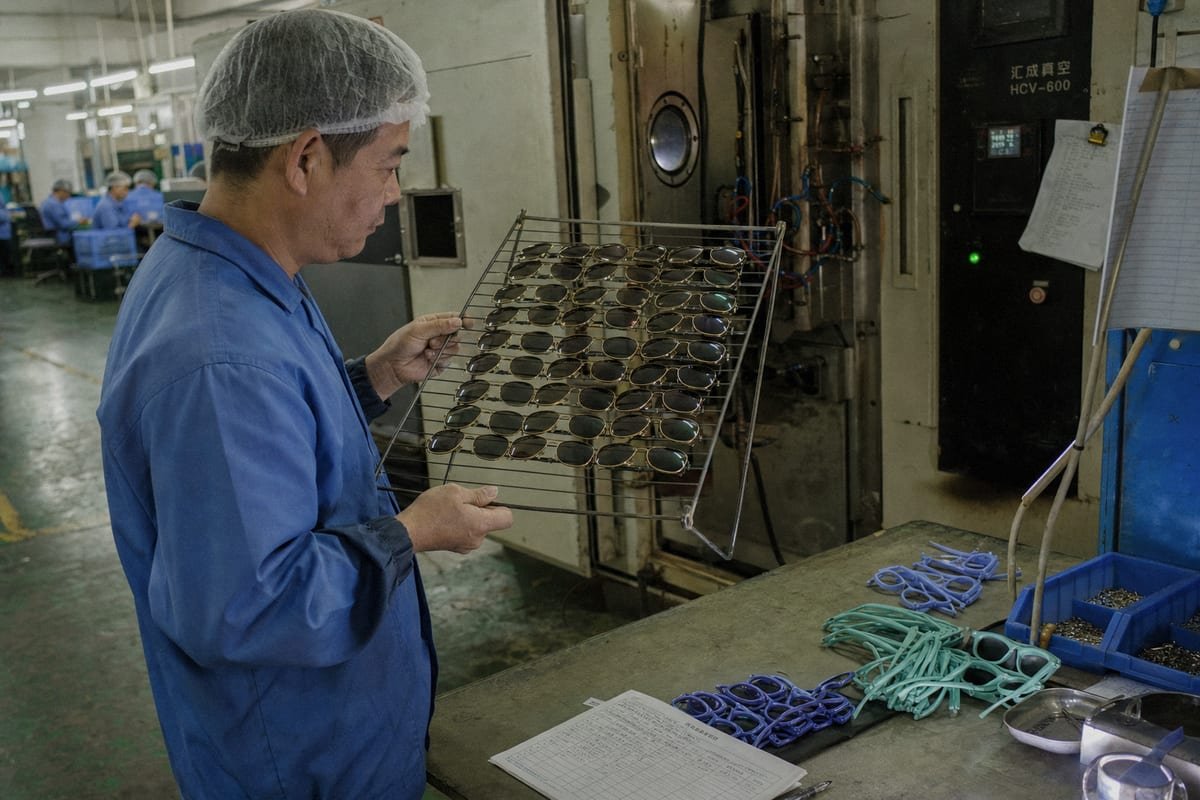
How a supplier responds to a coating claim tells you more about them than any sales presentation. A factory that values long-term partnerships will treat your complaint as shared data, not an accusation. Here is the process we follow with our own customers, which you can use as a template with any supplier.
A Step-by-Step Resolution Process
- Gather evidence first. Collect photos of the delamination, the quantity affected versus total order size, purchase dates, and any pattern (one region, one color, one lens type). Note whether failures cluster on mirrored or polarized units.
- Notify the supplier in writing. Include batch or PO numbers. Vague complaints get vague answers; specific claims get engineering attention.
- Request retained-sample testing. Good factories keep sealed samples from every shipment. Testing those tells you whether the defect existed at production or developed in the field.
- Agree on root cause before remedy. If it is weak coating adhesion, the supplier owns it. If it is heat or sunscreen damage in use, the fix may be care instructions and better packaging, not compensation.
- Negotiate the remedy proportionally. Options include free replacement lenses if frames are fine, full replacement units in the next shipment, a credit note, or a partial refund. For consumer-facing brands, we usually recommend replacement units so your end customers experience a clean warranty resolution.
- Lock in corrective actions. Ask for a written change: a different coating supplier, added adhesion testing, edge sealing on polarized lenses, or updated care-instruction inserts warning against isopropyl alcohol cleaning and dashboard heat.
Protect the Relationship, Not Just the Order
One peeling batch does not necessarily mean a bad supplier — but a supplier who deflects, delays, or refuses testing is showing you the future. In our experience exporting to 20+ countries, the buyers who handle claims with evidence and fairness get the fastest resolutions and the best long-term pricing. Mirror finish restoration on individual lenses is not commercially realistic; systematic prevention on the next production run is. Aim your energy there.
Conclusion
Peeling coating cannot be truly repaired — only replaced and prevented. Diagnose the cause, work your supplier with evidence, and choose a partner who tests adhesion before problems ever reach a child's face.
Footnotes
1. Background on the plastic base material used in most kids’ sunglass lenses. ↩︎
2. NIH eye health authority on UV protection relevant to children’s sunglass safety. ↩︎
More Articles You Might Like



Looking for a Reliable Kids Eyewear Partner?
Explore 800+ ready styles and full OEM/ODM support tailored to your brand.
Get in Touch English
  Español de México
  Deutsch
  Français
  日本語
日本語  العربية
  Português do Brasil