How to Find Reliable Kids Optical Frames Suppliers in China?
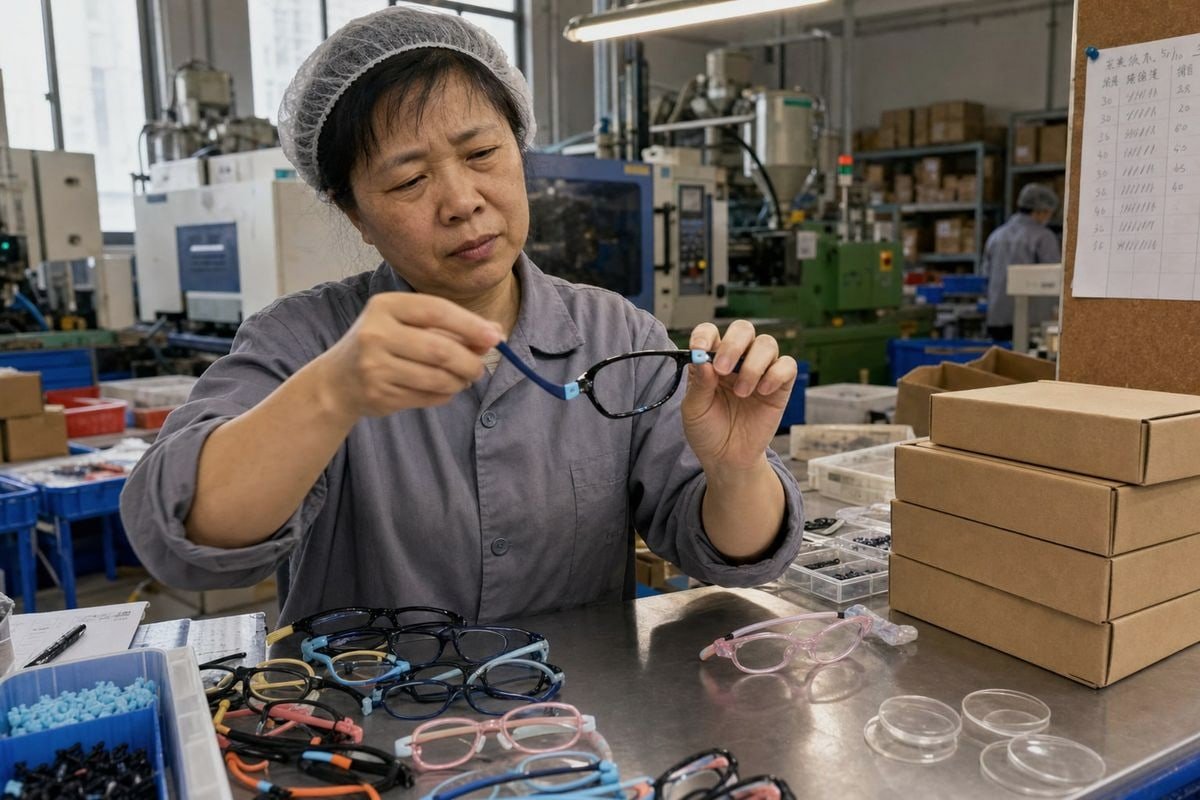
Finding reliable kids optical frames suppliers 1 in China is harder than it looks. On our production line in Taizhou, we regularly meet buyers who were burned by a supplier that looked perfect online. The frames arrived brittle, the hinges pinched small fingers, and the “certified” material reports never existed. One bad container can sink a young kids’ brand — refunds, angry retailers, and a damaged reputation with parents who trusted you. The good news: after 15 years making flexible children’s eyewear for buyers in 20+ countries, I can tell you the vetting process is learnable, repeatable, and far less mysterious than most sourcing guides suggest.
To find reliable kids optical frames suppliers in China, focus on verified factories in hubs like Wenzhou and Taizhou with kids-specific product lines, documented CE and FDA certification, TR90 or TPEE material expertise, transparent MOQs, fast sampling, and proven OEM/ODM export experience — then confirm everything with samples and audits.
That short answer covers the “what.” The rest of this guide covers the “how.” I will walk you through vetting factories, checking child-safety claims, running the sampling process, and building a long-term supply partnership.
What should I look for when vetting a kids optical frames factory in China?
Last year, a buyer from Australia forwarded me a quote from a "factory" that had no workshop photos, no address, and a suspiciously perfect catalog. It was a trading company reselling our category.
When vetting a kids optical frames factory in China, verify it is a real manufacturer, not a trader: check the factory address, workshop photos, worker count, kids-specific collections, OEM/ODM eyewear services, export history, and product depth. Then cross-check claims through video calls, audits, and third-party verification.
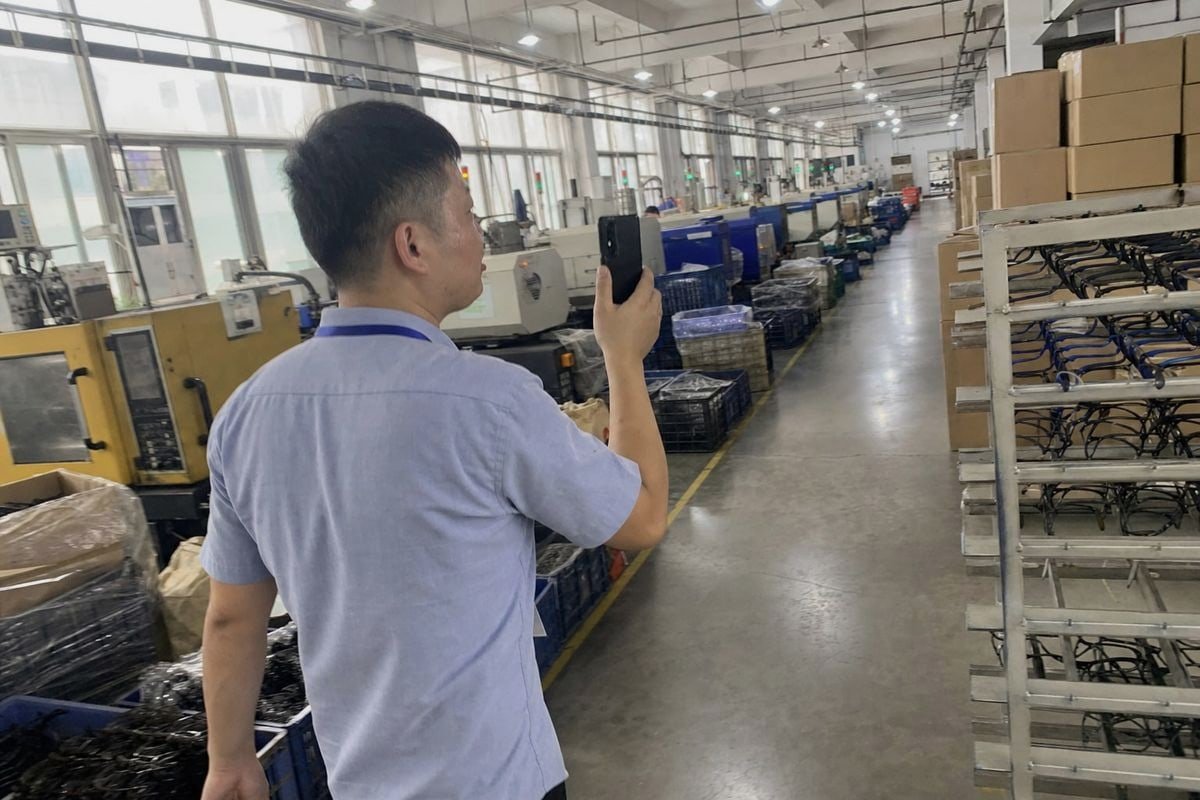
The single biggest mistake I see buyers make is treating every B2B listing as equal. Made-in-China alone lists over 2,000 kids frame manufacturers and suppliers 2, and Alibaba shows more than 6,500 unique listings across eyewear subcategories. Most of those entries are trading companies, wholesalers, or general plastic-goods factories that added a few kids' styles to their catalog. A generic supplier can make a frame that looks fine in photos. But children's eyewear demands specific tooling, softer materials, smaller size flexible thermoplastic materials 3 runs, and safety-first design details. That specialization is what you are actually vetting for.
Manufacturer or trading company? How to tell
In my experience, a few practical checks separate real factories from middlemen quickly:
- Ask for a live video walkthrough of the workshop. A factory can do this in minutes. A trader will stall.
- Ask which frame materials they injection-mold in-house. Vague answers are a red flag.
- Ask for their kids-specific style count. A real specialist has depth — our own library holds roughly 800 existing styles — while a trader shows the same 30 photos everyone else has.
- Check the region. Wenzhou eyewear manufacturers 4 dominate volume production, while Taizhou, Shenzhen, and Yiwu each have their own clusters. A "factory" registered far from any eyewear hub deserves extra scrutiny.
A simple factory audit checklist
| Vetting item | What a reliable factory shows | Red flag |
|---|---|---|
| Legal status | Manufacturing business license, real address | Only a trading license |
| Workshop | Video tour, 5S-managed floors, injection machines | Stock photos, excuses |
| Kids specialization | Dedicated kids collections and sizing | A few kids SKUs in an adult catalog |
| Export history | Named markets, references, trade fair presence | "We export everywhere" with no proof |
| OEM/ODM capability | Mold-making, custom colors, logo, packaging | Only resells stock designs |
| Communication | Technical answers within one business day | Slow, vague, price-only replies |
Trading companies are not always bad — they add convenience for small mixed orders. But for children's eyewear, where safety liability sits with your brand, you want direct accountability with the people who actually mold the frames.
How can I confirm the materials and safety standards are truly child-safe?
A trade-off we weigh in every new development project: parents want frames that survive playground abuse, yet the same frame must never splinter, leach chemicals, or pinch a child's skin.
Confirm child safety by requesting documented CE and FDA certification, a Children's Product Certificate for the US market, and third-party test reports proving frames are BPA-free, lead-free, and nickel-free. Then physically test samples for flexibility, impact resistance, and hypoallergenic skin contact.
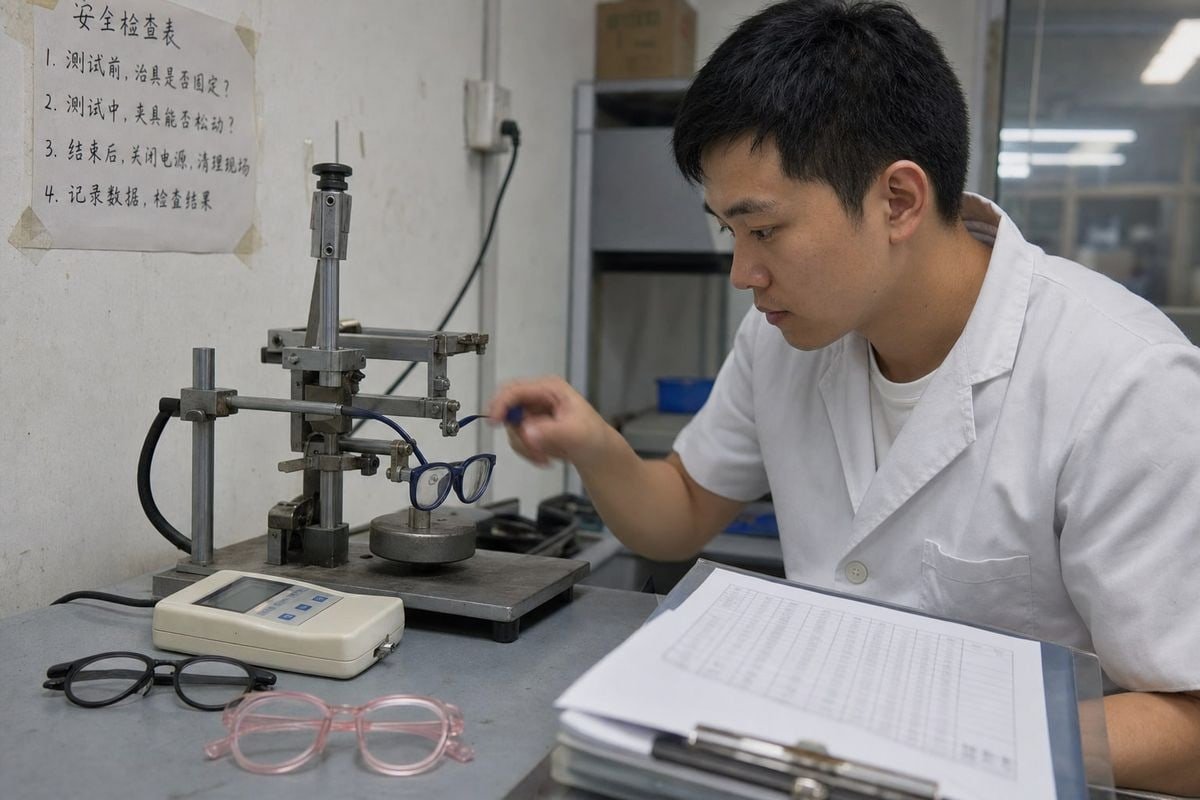
Safety is where kids optical frames differ most from adult eyewear, and it is where cheap suppliers cut corners you cannot see in photos. On our line, we work mainly in TR90 and TPEE 5 precisely because these materials bend instead of breaking. TR90 kids glasses frames are lightweight and memory-flexible; flexible TPEE frames go further, twisting almost flat and springing back — which matters when a toddler sits on their glasses or yanks them off by one temple. Hard acetate and rigid metals still have a place for older kids, but they demand rounded edges, spring hinges, and nickel-free plating.
Documents you should ask for before ordering
Do not accept a supplier saying "yes, we are certified" in a chat window. Ask for the actual paperwork and check the dates and the named product:
- CE documentation for the European market
- FDA registration for the US market
- A Children's Product Certificate (CPC) backed by accredited lab testing if you sell in the US
- Material test reports confirming lead-free, BPA-free, and non-toxic status
- Nickel-release results for any metal parts touching skin
Reputable factories keep these on file and share them without friction. When we develop a new colorway, we retest rather than reuse an old report, because pigments change the chemistry. A supplier who resists retesting is telling you something.
Physical checks you can do yourself
| Test | How to do it | Pass criteria for kids' frames |
|---|---|---|
| Flex test | Twist the temples outward and bend the bridge | Frame returns to shape, no whitening or cracks |
| Hinge pinch check | Open and close temples against your fingertip | No sharp gaps that could pinch skin |
| Edge check | Run a fingernail along all rims and tips | Smooth, rounded, no molding flash |
| Weight | Weigh the frame | Light enough for a small nose bridge, typically well under adult norms |
| Skin contact | Wear the temple tip against your inner wrist for a day | No irritation; hypoallergenic materials should feel neutral |
Also ask about material sourcing trends. Some buyers now request bio-based polymers 6, such as castor-oil-derived nylons, for sustainable and hypoallergenic children's collections. A supplier with genuine material expertise can discuss these options intelligently; a reseller cannot.
What does the sampling and OEM/ODM process look like before I place a bulk order?
A Japanese buyer once told me she almost skipped sampling to save three weeks. The sample we sent revealed her chosen bridge size gapped badly on Asian kids' fits — a fix that cost nothing pre-production and would have cost a container afterward.
A proper process runs in stages: select or design styles, receive stock samples within days, approve custom pre-production samples with your colors and logo, confirm packaging, then place the bulk order. Expect one to three weeks for custom samples and clearly agreed MOQs before mass production.
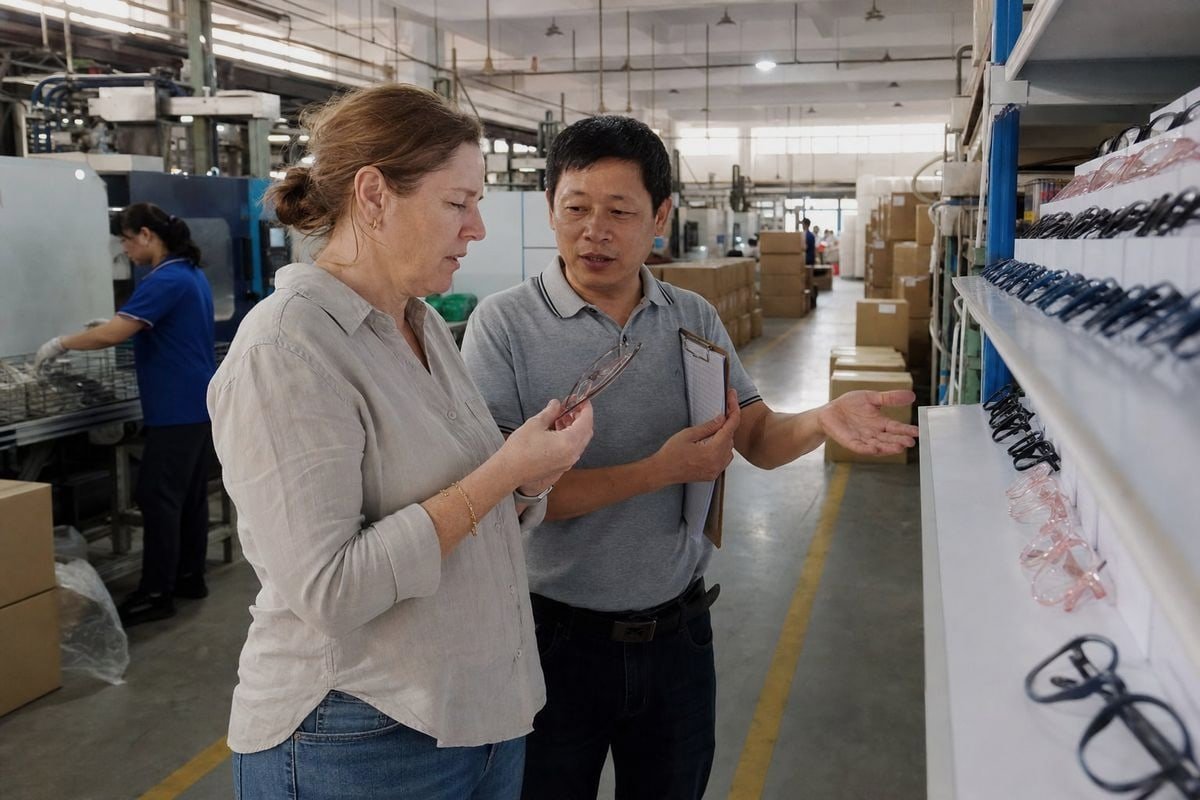
Sampling is not a formality. It is your cheapest insurance policy, and how a supplier handles it predicts how they will handle your production. Our OEM/ODM eyewear services follow a staged path, and I recommend you demand something similar from any supplier you shortlist.
The step-by-step sampling and customization path
- Style selection or design brief. You either pick from existing molds or submit your own design. Choosing from an existing library — ours holds around 800 styles — lets new brands launch without heavy mold investment, often the smartest way to test a market.
- Stock samples. The factory ships current versions so you can judge fit, flexibility, and finish in hand. This should take days, not weeks.
- Custom pre-production sample. Your Pantone colors, temple logo, lens spec (clear, anti-blue-light, or photochromic for optical lines), and any two-tone or silicone-grip details. Budget one to three weeks.
- Packaging and presentation approval. Cases, pouches, cleaning cloths, hang tags, retail-ready cartons. Kids' brands live or die on shelf presentation, so approve physical packaging samples too.
- Signed golden sample. Both sides keep an approved reference unit. Every bulk piece is inspected against it.
- Bulk order. Only now do you commit real money.
What commercial terms signal a serious partner
Ask about minimum order quantity 7 early, but read it in context. A very low MOQ with rock-bottom pricing often means stock resale, not manufacturing. A reasonable MOQ per style per color, with a lower threshold for mixed trial orders, signals a factory that wants long-term partners. Also confirm sample cost policy (often credited against your first order), mold cost and ownership for fully custom designs, and realistic lead times — many capable factories quote production within 15 to 45 working days depending on customization depth. Consider growth-adaptive features at this stage too: multi-size bridge inserts or interchangeable temple systems extend a frame's usable life as children grow, and they must be planned before tooling, not after.
How do I make sure my supplier can support long-term growth and consistent quality?
The lesson that shaped how we run our workshop: the second order is the real test. Almost any factory can make one good batch. Consistency across reorders is what separates a supplier from a partner.
Ensure long-term reliability by choosing a factory with multi-stage quality control inspection, stable production capacity, documented processes like 5S, responsive communication, and willingness to support reorders, new development, and after-sales issues. Verify this through repeat sample consistency, references, and trade fair meetings.
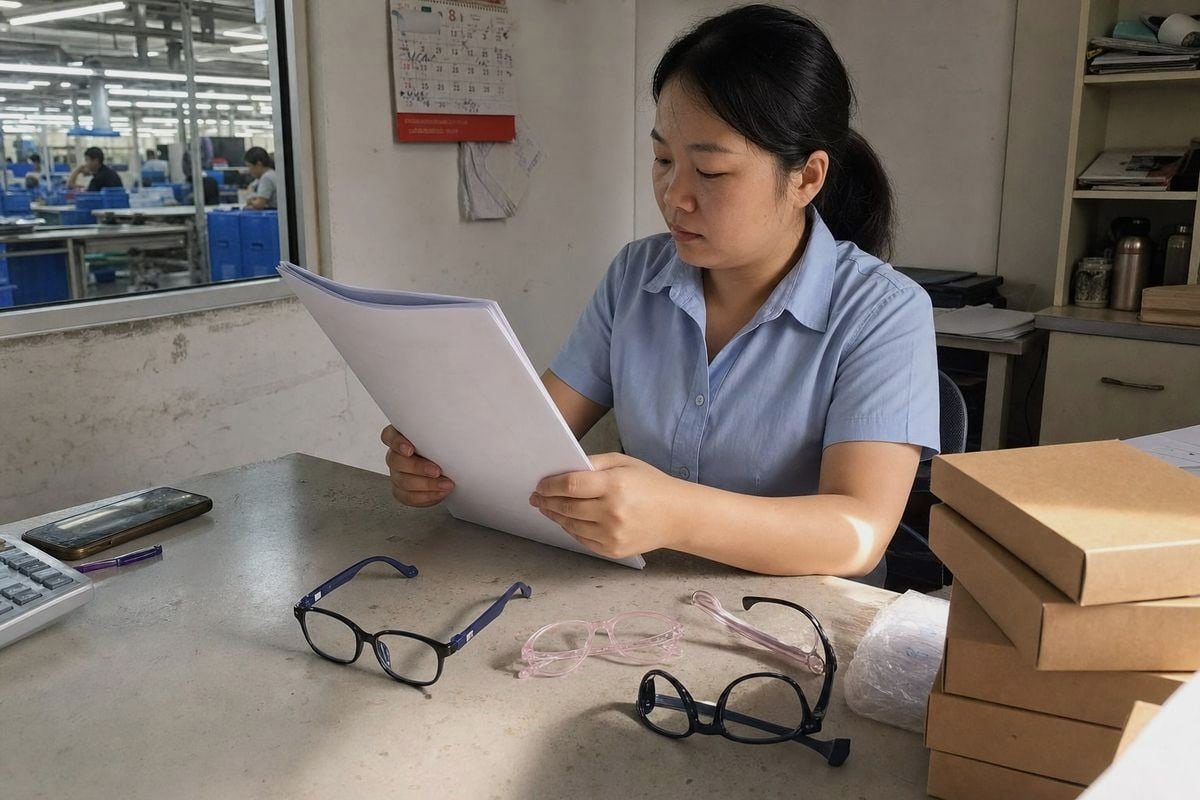
Growth breaks weak suppliers. When your kids' line takes off, order volumes jump, colorways multiply, and delivery windows tighten. A factory without systems will start substituting materials, rushing quality control inspection, or bumping your order for a bigger client. Here is how to stress-test long-term capability before you depend on it.
Look at systems, not promises
Ask how quality is controlled at each stage, not whether it is controlled. A credible answer covers at least three checkpoints: incoming raw material testing 8 (so a cheaper resin never slips into your TR90 frames), in-process checks during molding and assembly (hinge torque, temple alignment, bridge symmetry), and a final pre-shipment inspection against the golden sample. On our floor, 5S workshop management keeps these checks routine rather than heroic — and you can see 5S discipline instantly on a video tour. Clean, labeled, organized floors correlate strongly with consistent output.
Meet them in person when you can
Photos flatter frames. Flexibility, finish, and hinge feel do not survive a camera. The Wenzhou International Optics Fair and the China International Optics Fair (CIOF) let you handle products, meet engineers, and compare dozens of suppliers in two days. Some excellent factory-direct suppliers barely list on major platforms at all and are easier to discover through industry channels, WeChat groups, or fair referrals — another reason not to treat marketplace search as your whole strategy.
Price versus reliability: the honest trade-off
You will meet suppliers advertising the absolute lowest factory price. You will also meet suppliers who say openly that they are not the cheapest. I will be direct about where we stand: we compete on safety, consistency, and service, not on being the lowest quote. For children's products 9, that trade-off usually favors reliability, because the cost of one failed safety batch dwarfs years of small per-unit savings.
| Signal | Short-term supplier | Long-term partner |
|---|---|---|
| Pricing pitch | "Cheapest in China" | Transparent costing, stable over reorders |
| Reorder consistency | Color and fit drift batch to batch | Matches the golden sample every time |
| Communication | Fast before payment, slow after | Same responsiveness pre- and post-sale |
| Problem handling | Blames shipping or "your spec" | Investigates, corrects, documents |
| Development support | Stock catalog only | New styles, materials, and packaging ideas |
| Capacity planning | Overpromises every deadline | Flags peak-season constraints honestly |
Finally, build a supplier scorecard and re-score every quarter: on-time rate, defect rate, response time, and issue resolution. Reliable sourcing is a repeatable process, not a one-time search for a mythical perfect factory.
Conclusion
Reliable kids optical frames suppliers in China do exist — but only disciplined vetting, safety documentation, staged sampling, and a repeatable scorecard will surface them. Verify the factory, test the frames, then scale with confidence.
Footnotes
1. Global market data and classification for various eyewear product categories. ↩︎
2. Official trade resource for identifying verified manufacturers and suppliers in the region. ↩︎
3. Scientific explanation of TPEE and other soft eyewear materials. ↩︎
4. Overview of Wenzhou’s status as a major global manufacturing and eyewear hub. ↩︎
5. Technical explanation of thermoplastic elastomers used in flexible, durable children’s eyewear. ↩︎
6. Information on sustainable and hypoallergenic bio-based polymers used in modern manufacturing. ↩︎
7. Business definition of minimum order requirements in manufacturing and supply chain management. ↩︎
8. Authoritative overview of testing procedures for manufacturing materials.
More Articles You Might Like
August 5, 2026
Bio-Based vs Regular Cellulose Acetate: What's the Difference for Kids' Frames?
August 5, 2026
How Recyclable Are Kids' Optical Frame Materials, and What Eco-Friendly Alternatives Exist?
August 5, 2026
Do Kids Optical Frames Whiten or Age in Storage, and How to Control Warehouse Conditions?
Looking for a Reliable Kids Eyewear Partner?
Explore 800+ ready styles and full OEM/ODM support tailored to your brand.
Get in Touch English
  Español de México
  Deutsch
  Français
  日本語
日本語  العربية
  Português do Brasil