How Do EU and Australia Kids’ Sunglasses Compliance Requirements Differ?
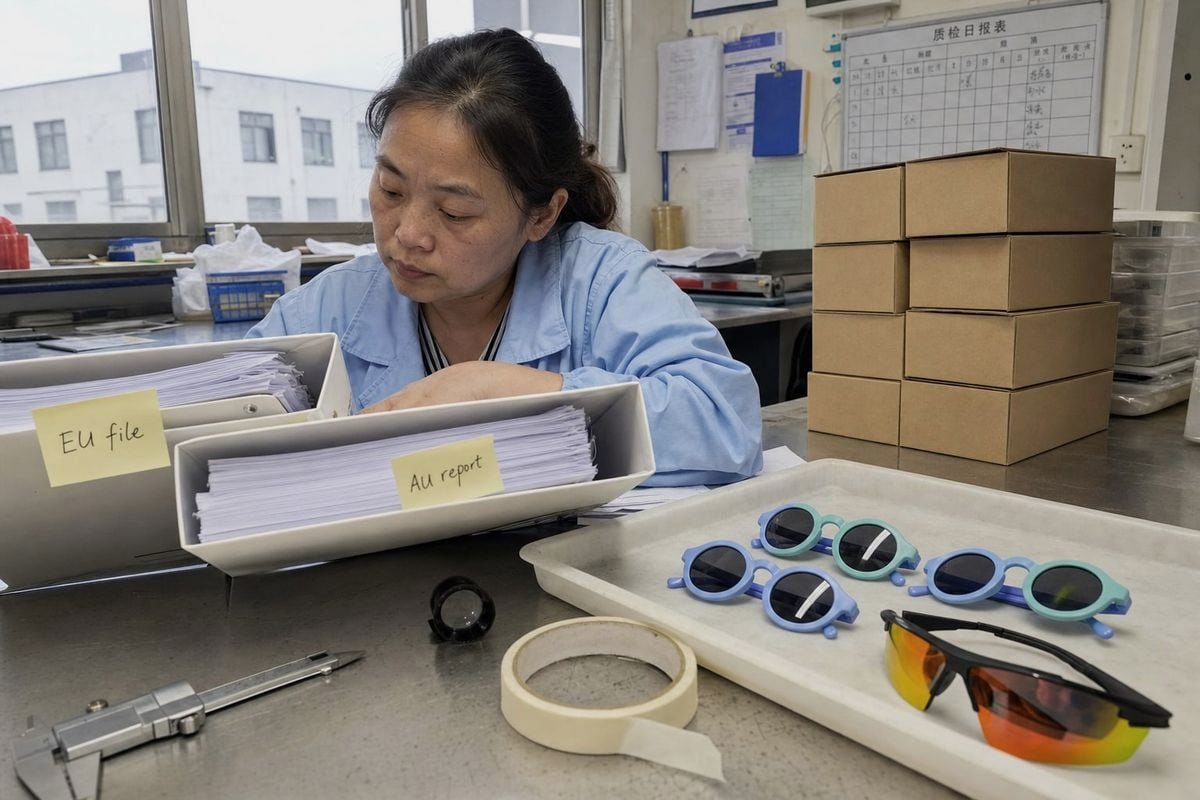
EU and Australia kids’ sunglasses compliance requirements confuse many buyers who visit our Taizhou factory. One product, two rulebooks — and one wrong assumption can block a whole shipment at customs.
EU and Australia kids’ sunglasses compliance requirements differ mainly in legal structure: the EU regulates sunglasses as PPE under EN ISO 12312-1 with CE marking, while Australia enforces the mandatory consumer standard AS/NZS 1067.1:2016 under ACCC oversight, with stricter UV cut-off and labeling rules.
Both systems chase the same goal: protecting children’s eyes. UV radiation 1 But the paths are different. Let me walk you through the standards, the UV rules, the labels, and how to choose a factory that handles both.
What safety standards do I need to meet for EU versus Australian kids' sunglasses?
A buyer from Melbourne once asked me why our EU-ready kids' frames still needed extra work for her market. That question comes up in almost every project we quote, so it deserves a clear answer.
For the EU, kids' sunglasses must comply with the PPE Regulation (EU) 2016/425 and the harmonized standard EN ISO 12312-1, shown by CE marking. For Australia, they must meet the mandatory consumer standard AS/NZS 1067.1:2016, enforced by the ACCC before sale.
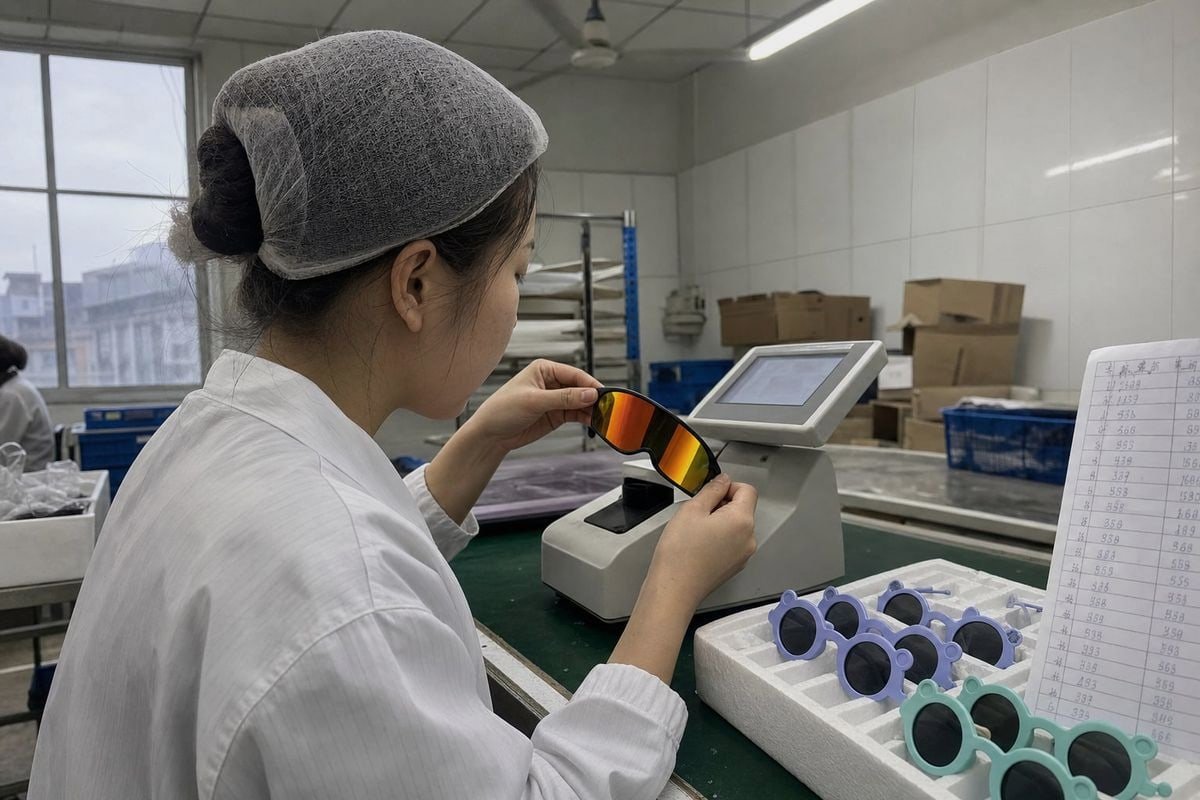
The core difference is architecture, not intent. The EU treats sunglasses as Category I Personal Protective Equipment. That means your product sits inside a formal conformity framework. You need a technical file, a declaration of conformity, and CE marking on the product. Australia takes a different route. It uses ACCC 2 mandatory standards, which are consumer product rules. There is no CE-style mark, but compliance with AS/NZS 1067.1:2016 is legally required before the product reach 3es a shelf.
Here is the comparison at a glance:
| Aspect | European Union | Australia |
|---|---|---|
| Legal basis | PPE Regulation (EU) 2016/425 4 | Mandatory consumer product safety standard |
| Core standard | EN ISO 12312-1 5 | AS/NZS 1067.1:2016 |
| Conformity method | Self-declaration (Category I PPE) with technical file | Testing against the mandatory standard |
| Marking | CE marking on frame or packaging | Supplier identity plus lens category label |
| Enforcement | Member-state market surveillance | ACCC market surveillance and recalls |
Why the product definition matters for kids
The EU standard uses child-specific test geometry. Children's sunglasses are assessed on smaller headforms, with narrower interpupillary distances and different coverage dimensions. In our development work, this is why we never just shrink an adult frame. Australia embeds children's sunglasses inside the same general sunglasses standard, so a kids' style is tested like any other sunglass — but it still must pass fully.
Watch the toy loophole
Both regions exempt products clearly sold as toys — under EN 71 6 in Europe or AS/NZS ISO 8124 in Australia. But toy sunglasses cannot claim UV protection. We advise brands never to use this loophole for genuine sun protection products, because parents buy kids' sunglasses precisely for optical radiation safety.
How do UV protection and lens category requirements differ between the EU and Australia?
When we specify lenses for a dual-market kids' style, the first trade-off we weigh is the UV cut-off wavelength. It sounds like a small number, but it decides which lens supplier and which coating we can use.
The EU standard EN ISO 12312-1 requires UV protection up to 380nm, while Australia's AS/NZS 1067.1:2016 demands protection up to 400nm because of higher UV intensity. Both use lens filter categories 0–4, but Australia adds stricter lateral coverage rules for Category 4 lenses.
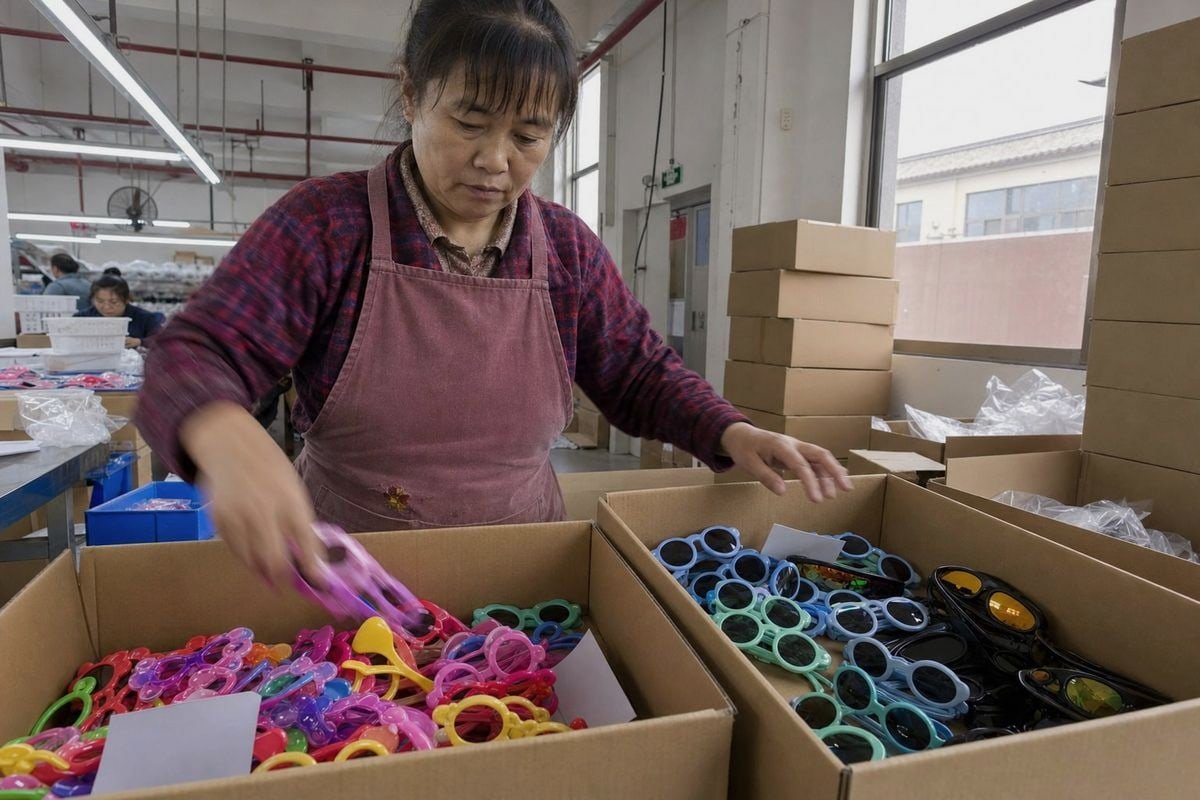
That 20-nanometer gap is the single most practical difference for lens sourcing. If you build your kids' line on UV400 protection from the start, you cover both markets with one lens specification. That is our default recommendation, and it is why our polarized and standard kids' lenses are specified to UV400 rather than the EU minimum. It costs slightly more per lens, but it removes an entire compliance risk for Australian orders.
Lens filter categories in both systems
Lens filter categories describe how dark a lens is and where it can be used:
| Category | Light transmission | Typical use | Road use suitability |
|---|---|---|---|
| 0 | 80–100% | Fashion, indoor | Yes |
| 1 | 43–80% | Low sunlight | Yes |
| 2 | 18–43% | Medium sunlight | Yes |
| 3 | 8–18% | Bright sunlight (most kids' sunglasses) | Yes |
| 4 | 3–8% | Extreme glare, snow, high altitude | No — not for driving |
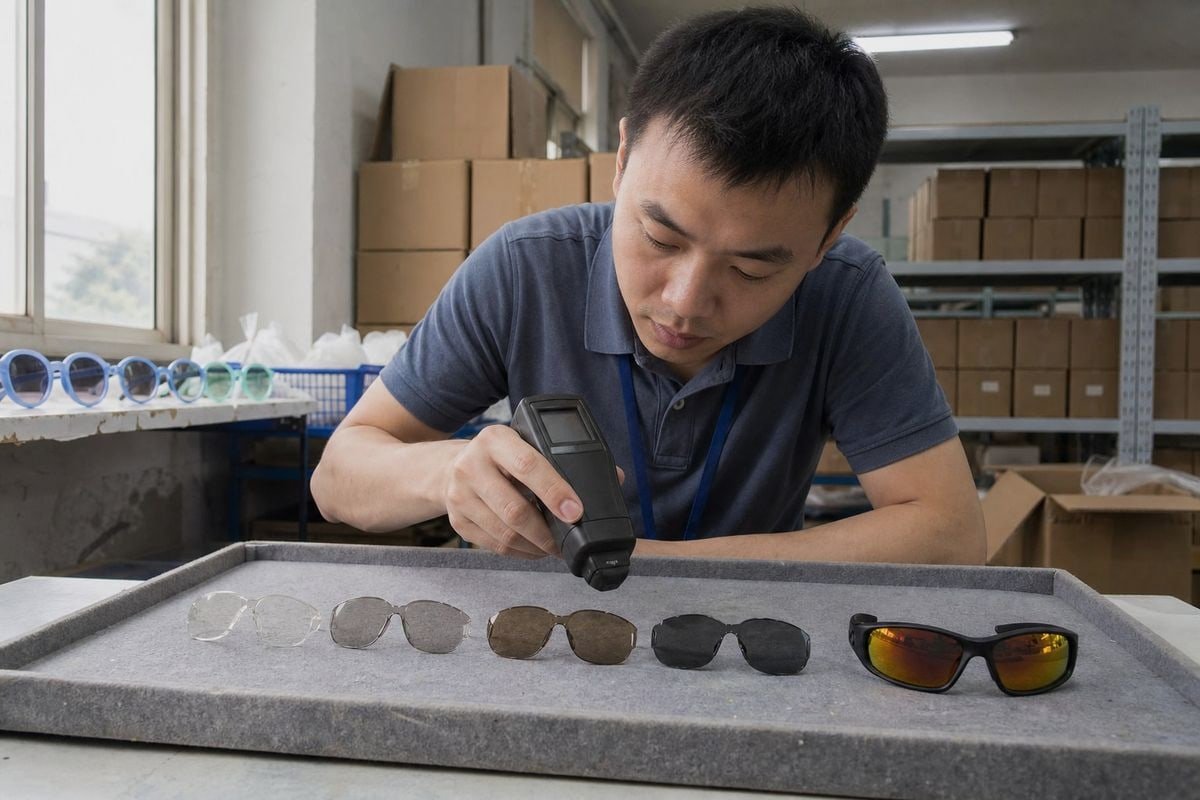
Most children's sunglasses we produce sit in Category 3. Australia pays special attention to Category 4, requiring lateral coverage so intense peripheral light cannot leak around the lens edge — a detail the general EU standard treats less strictly. For a wraparound shield style, like our sport visor designs with full-coverage mirrored lenses, this lateral coverage is easier to achieve than with small round frames.
Beyond UV: emerging expectations
Australian health guidance is increasingly discussing High-Energy Visible (HEV) blue light protection for children's developing retinas. This is not yet codified in the EU PPE framework. Both markets also test optical quality and increasingly review impact resistance testing, especially for sport styles marketed to active kids. We flag these trends to buyers early, because a lens choice made today should survive tomorrow's rules.
What labeling and documentation do I need for each market?
A hard lesson from our early export years: a shipment with perfect lenses can still fail inspection over a missing label line. Since then, our QC checklist treats mandatory labeling information as strictly as optical testing.
EU kids' sunglasses need CE marking, an EU declaration of conformity, a technical file, and user information including filter category. Australian sunglasses need the supplier's identity, the lens category number and description, and road-use suitability statements, backed by test reports against AS/NZS 1067.1:2016.
Documentation is where the two systems feel most different day to day. The EU's CE marking requirements come with paperwork behind the mark. Because sunglasses are Category I PPE, the manufacturer can self-declare — but the declaration must be supported by a real technical file with test evidence against EN ISO 12312-1. Australia relies less on a mark and more on the label content itself, plus test reports the ACCC or state regulators can demand.
Here is what we prepare for each market:
| Item | EU requirement | Australia requirement |
|---|---|---|
| Product mark | CE mark on frame or packaging | No CE mark; label content instead |
| Supplier identity | Manufacturer and EU importer details | Australian supplier or manufacturer identity |
| Lens category | Filter category 0–4 with description | Lens category 0–4 with category description |
| Road use | Statement if unsuitable for driving | Explicit suitability-for-road-use wording |
| Documentation | Declaration of conformity plus technical file | Test reports proving compliance with the mandatory standard |
Chemical and material documentation
Labeling is not the whole file. EU buyers increasingly ask us about REACH substances — phthalates, PAHs, and nickel release standards for metal parts like hinge screws. The EU is also moving toward broader PFAS restrictions in consumer plastics. Australia's chemical focus under AICIS still centers on lead and phthalate migration. Because we build kids' frames in TPEE and TR90, both environmentally friendly materials, our material declarations cover both regimes from one supplier file.
The documentation gap ahead
The EU's upcoming Digital Product Passport 7 will require a scannable transparency record for PPE. Brands that only hold traditional paper test reports — common in Australia-focused supply chains — should start structuring digital compliance files now.
How do I find a manufacturer who can help me meet both EU and Australian compliance requirements?
Buyers often tell me their previous supplier could quote a price in minutes but went silent when asked for an EN ISO 12312-1 test report. That silence is the most reliable red flag in kids' eyewear sourcing.
Choose a factory with documented experience in both EN ISO 12312-1 and AS/NZS 1067.1:2016, existing child-tested designs, UV400 lens sourcing, third-party test reports, and full OEM/ODM support for compliant labeling and packaging. Verify their technical files before placing any order.
Compliance starts at the factory, long before a test lab sees your sample. In fifteen years of making children's eyewear in Taizhou, we have learned that dual-market compliance is a design decision, not a paperwork exercise. Here is the practical process we recommend to any brand:
- Ask for standard-specific evidence. Request recent test reports against both EN ISO 12312-1 and AS/NZS 1067.1:2016 for a comparable kids' style. A factory that serves both markets will have them.
- Check the lens specification. Confirm UV400 protection is the baseline, not an upgrade. Ask how filter categories are verified batch by batch.
- Review the materials. Flexible TPEE temples and TR90 frames handle the twisting and dropping that real children inflict, and they support impact resistance testing far better than brittle cheap plastics. This also helps with the under-36-months challenge, where frames must flex for toy-style torque tests yet hold optical alignment.
- Start from proven styles. Working from an existing catalog — we maintain around 800 styles — lets you launch without mold investment and with designs whose geometry already suits children's faces.
- Confirm labeling support. Your factory should print or supply the mandatory labeling information for each destination, including lens category, supplier identity, and road-use statements, plus CE marking for EU shipments.
- Test communication early. Send a compliance question before you send a purchase order. The speed and clarity of the answer predicts the whole relationship.
One buyer objection I hear: "Isn't the EU system simply better because CE marking looks more official?" Not necessarily. Australia's mandatory standard is stricter on UV cut-off and often clearer for retail buyers to explain. Stricter-looking architecture does not equal stronger protection. The right approach is designing to the tougher requirement in each dimension — which is exactly what a dual-market technical file does.
Conclusion
Selling non-compliant kids’ sunglasses risks recalls, refunds, and lost parent trust. The fix is simple: design to EN ISO 12312-1 and AS/NZS 1067.1:2016 together, specify UV400, and partner with a factory that documents everything.
The EU’s PPE and CE marking model and Australia’s ACCC mandatory standard pursue one goal through two systems. If you plan compliance market by market from day one — with the right lens spec, child-specific fit, and complete labeling — one well-built children’s sunglasses line can serve both. That is exactly the kind of project our team builds with brand partners every season, and we are always glad to share our compliance files before you commit to an order.
Footnotes
1. WHO reference explaining UV radiation risks relevant to children’s eye protection. ↩︎
2. Official Australian regulator page covering mandatory sunglasses safety standard enforcement. ↩︎
3. Background on the EU chemical regulation buyers ask about for material compliance. ↩︎
4. Official Eur-Lex portal for the EU regulation on personal protective equipment. ↩︎
5. Stable Wikipedia section detailing the international sunglasses safety standard. ↩︎
6. Reference standard for the toy safety exemption discussed for children’s sunglasses. ↩︎
7. Explains the upcoming EU transparency requirement mentioned for PPE compliance files. ↩︎
More Articles You Might Like
August 1, 2026
Should Factory Handle Kids Sunglasses Packaging & Labeling, or Use a Designated Supplier?
August 1, 2026
Own Warehouse vs Supplier Direct Fulfillment: Which Cuts Return Costs for Kids Sunglasses Brands?
August 1, 2026
Direct-to-Port Warehouse or Overseas Staging: Which Saves More on Kids Sunglasses Shipping?
Looking for a Reliable Kids Eyewear Partner?
Explore 800+ ready styles and full OEM/ODM support tailored to your brand.
Get in Touch English
  Español de México
  Deutsch
  Français
  日本語
日本語  العربية
  Português do Brasil