How to Establish Traceable Batch Records for Kids’ Optical Frames to Meet Recall Requirements?
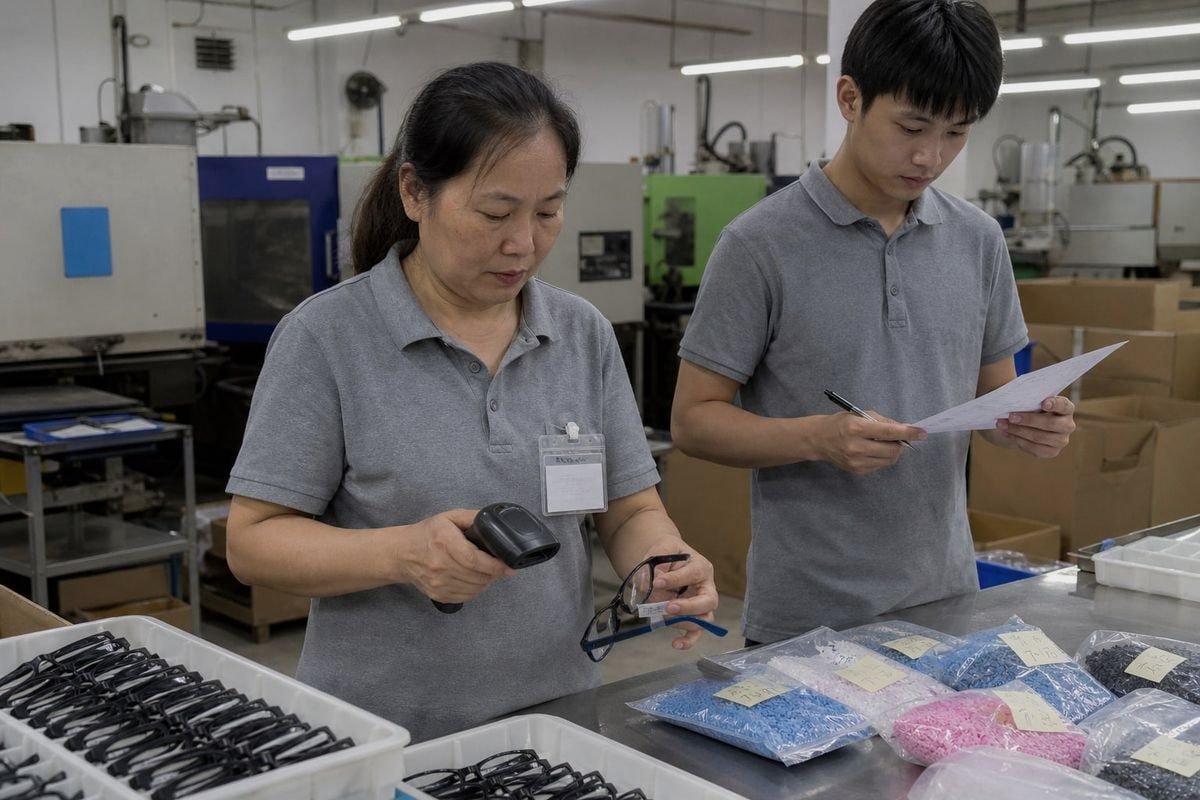
Traceable batch records for kids’ optical frames decide whether a recall is surgical or catastrophic. On our production line in Taizhou, I have seen both outcomes play out.
Establish traceable batch records by assigning a unique batch number at material receipt, carrying it through fabrication, assembly, painting, and QC, then linking each finished frame’s serial or barcode to that batch, supplier lots, inspection reports, and shipment destinations.
That is the short answer. Below, I will break it into practical steps you can implement with your factory partner, starting with what each record must actually contain.
What Information Should I Include in Each Batch Record for Kids' Optical Frames?
A few years back, a buyer asked me to trace one returned TR90 frame back to its hinge supplier. We did it in twenty minutes — because the record was complete.
Each batch record should include raw material lot numbers and supplier details, a unique production batch ID, equipment and operator information, in-process and final inspection results, paint or coating batch references, deviations or rework notes, sign-off approvals, and the finished-frame serial numbers shipped to each customer.
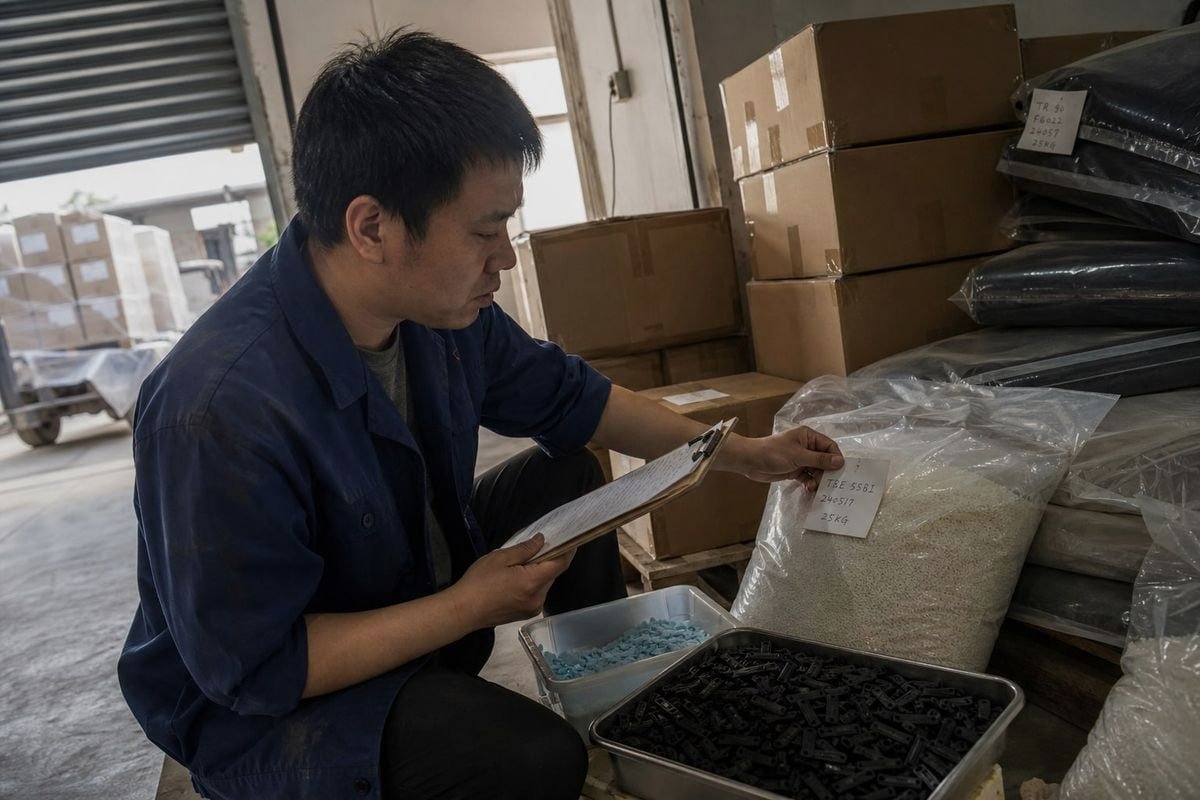
Think of a batch record as the frame's biography. If any chapter is missing, a recall investigation stalls at that gap. In our workshop, we structure records around three stages: incoming, in-process, and finished goods.
Incoming Material Records
Raw material control starts at the receiving dock. Before any TPEE pellets, TR90 sheets, hinges, or silicone temple tips reach production, we log the material name, supplier name, supplier lot number, goods receipt number, received date, and acceptance status. Kids' frames deserve extra care here. A defect can hide in a hinge lot or a coating run, not just the frame body. Component-level traceability is what lets you isolate a bad temple lot without recalling every frame you shipped that quarter.
In-Process and Finished Goods Records
During production, one batch number follows the job card through molding, welding, assembly, painting, and inspection. The finished frame then carries a serial number or barcode tied back to everything.
| Record Stage | Required Fields |
|---|---|
| Incoming materials | Material name, supplier, supplier lot, GRN number, receipt date, acceptance status |
| Production batch | Batch ID, date, line/workstation, operator IDs, equipment, quantities, deviations |
| Quality control | In-process checks, drop ball test certification for impact resistant lenses, inspector ID, sign-off |
| Finished goods | Frame serial/barcode, linked batch ID, paint batch, QC report reference |
| Shipment | Customer, destination, ship date, serial numbers per carton |
For the US market, remember two regulatory anchors. Optical frames are Class I medical devices, so a Device History Record 1 mindset under 21 CFR Part 820 2 applies. And CPSIA tracking labels require the manufacturer or importer name, production location and date, and a batch number on children's products. Your batch record should feed both requirements from the same data, not from two disconnected systems.
How Can I Work with My Manufacturer to Set Up a Reliable Traceability System?
The trade-off I weigh most often with new brand clients is simple: how much traceability discipline is worth the setup effort? For children's eyewear, my answer is always "more than you think."
Work with your manufacturer to agree on a shared batch numbering convention, scan-based data capture at receiving and production handoffs, component-level lot linkage, defined QC sign-off points, and regular record audits — documented in your supplier agreement before the first purchase order ships.
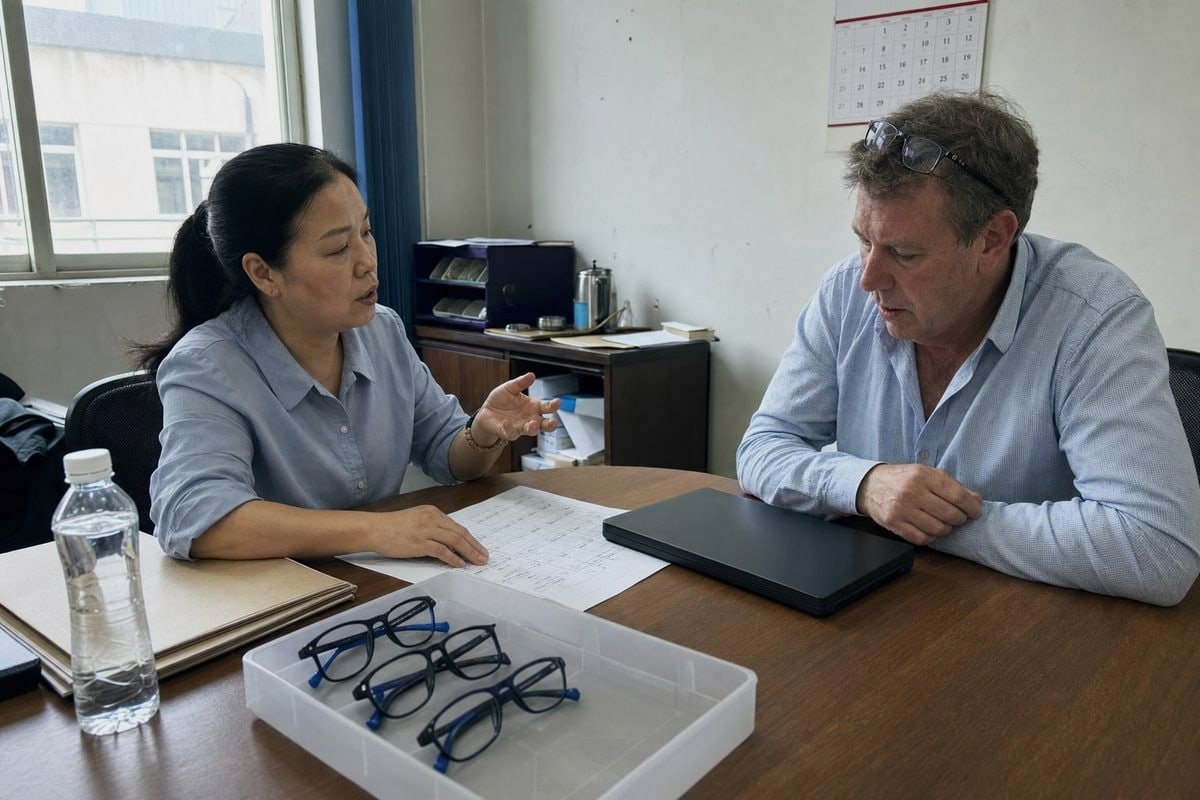
Traceability fails most often at the boundary between brand and factory. You assume the factory keeps records. The factory assumes you only need a packing list. So make the system explicit, together.
Agree on One Numbering Convention
Insist on a batch code that reveals information at a glance. We use a department-date-sequence format, such as FAB-2025-10-26-01. The critical rule: the number must stay stable across the whole process. Some factories generate fresh, unrelated numbers at every stage. That breaks trace-back completely. Also, clarify the difference between lot and unit identifiers early. A batch number covers a shared production run. A serial number identifies one finished frame. For kids' optical frames, a hybrid model is strongest — one batch per run, one serial or barcode per frame.
Build Data Capture Into the Workflow
Follow this sequence when setting up with your partner:
- Receiving: scan or log supplier lot, quantity, date, and acceptance status before issuing materials.
- Fabrication: attach the batch number to job cards and work-in-process tags.
- Assembly and finishing: keep the same batch identity; add paint batch and rework references.
- Final QC: tie inspection results to each finished-frame serial number.
- Shipment: record which serials went to which customer, so recall notices target only affected shipments.
A factory operating under a real Quality Management System 3 — ideally aligned with ISO 13485 compliance principles 4 — will already have most of these habits. Ask to see a sample completed batch record during your factory audit, not just a blank template. Barcode or QR scanning at each handoff is usually the lowest-friction upgrade with the biggest recall payoff, because it removes manual entry errors and timestamps every transaction. Supply chain visibility is built one scan at a time.
What Documentation Do I Need to Respond Quickly if a Recall Happens?
One lesson our team learned early: records you cannot find fast are records you do not have. A recall clock starts the moment a defect is confirmed, not when your spreadsheet loads.
For a fast recall response, you need searchable finished-frame serial logs, batch production records, QC and drop ball test certifications, supplier lot registers, shipment records mapping serials to customers, CPSIA tracking label data, and a written recall procedure naming who does what within the first 48 hours.
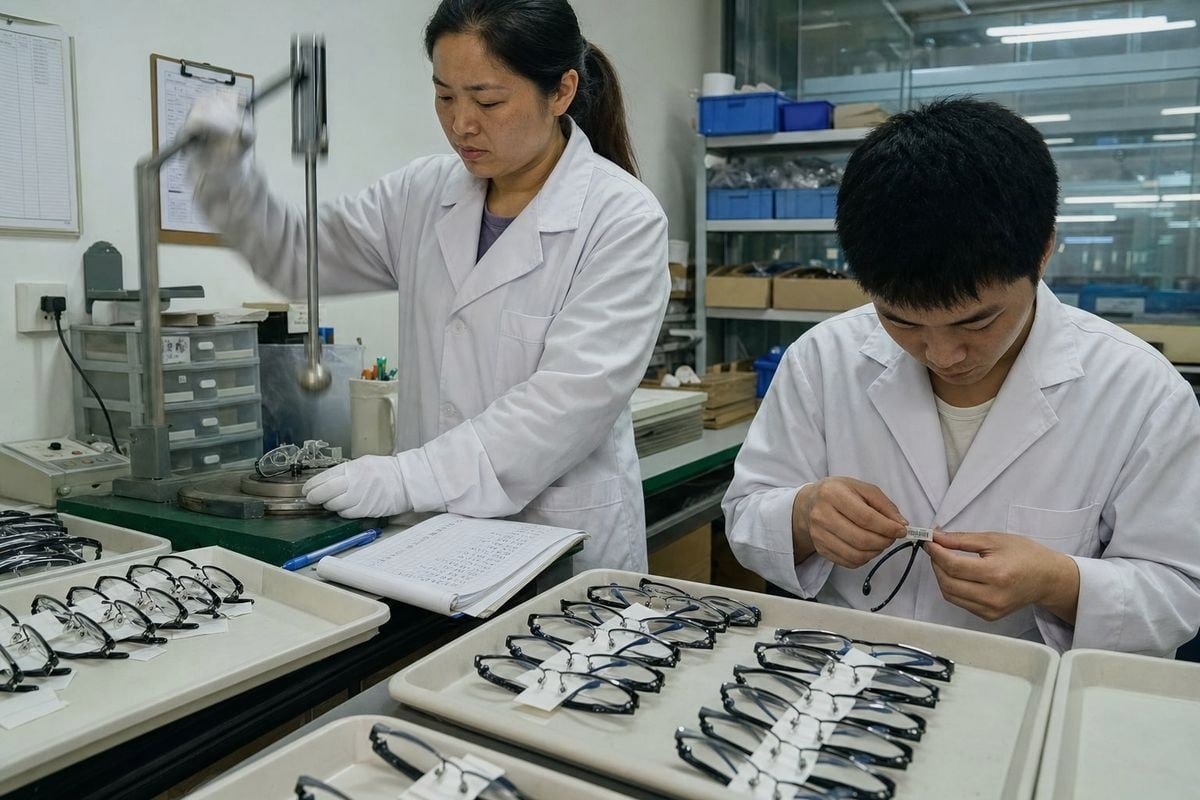
A recall investigation runs backward. You start with one returned frame and its serial number. From there, you identify the production batch, then the inspection and operator records, then the component and supplier lots. Once a root cause is suspected, you isolate every other frame from the same batch, line, or component lot. Every step depends on a document you prepared earlier.
The Core Recall Document Set
| Document | What It Answers in a Recall |
|---|---|
| Serial-to-batch register | Which batch does this returned frame belong to? |
| Batch production log | When, where, and by whom was the batch made? |
| Inspection and test reports | Did QC catch anything? What did impact resistant lenses testing show? |
| Supplier lot register | Which component lots fed this batch? |
| Shipment records | Which customers received frames from this batch? |
| Deviation and rework log | Was anything unusual noted and how was it resolved? |
Retention matters as much as content. A common baseline is keeping material batch registers, process inspection reports, production logs, and final inspection reports for at least two years — longer if your warranty terms or destination-market rules demand it. Records should be immutable after sign-off, with any rework, quarantine, or scrap status permanently linked to the original batch identity. For US-bound frames, your documentation set also supports post-market surveillance obligations and, where Unique Device Identification 5 applies, submissions to the FDA's GUDID database. Manufacturers and initial US distributors must also handle annual establishment registration and device listing, so keep those filings alongside your recall file. Good product recall management is really document management done in advance.
How Do I Choose an OEM/ODM Partner That Supports Proper Batch Tracking?
When buyers visit our 5S-managed workshop, the question I respect most is not about price. It is "show me how you would trace this frame back." After fifteen years making children's eyewear, I know that question separates serious partners from spreadsheet gamblers.
Choose an OEM/ODM partner with a documented Quality Management System, stable batch numbering across all production stages, component-level lot records, digital or scan-based data capture, defined record retention, and willingness to share completed batch records — verified during a factory audit, not just promised in a quotation.
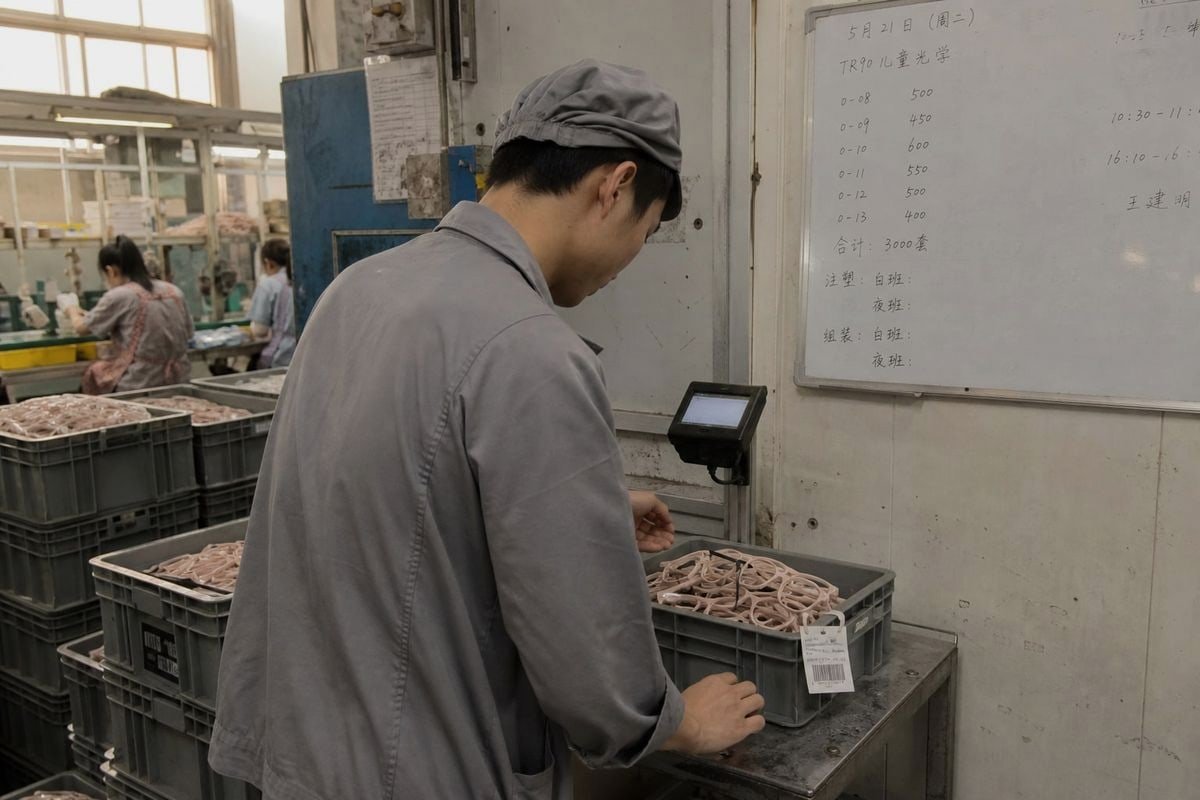
Not every factory that quotes a good price can support a recall. Kids' frames are often smaller-volume, higher-variation products — many colorways, mixed materials like TR90 fronts with TPEE temples, custom logos and packaging. That variation makes batch discipline easy to skip until a safety issue forces the question. Your job is to test for that discipline before you commit.
An Evaluation Checklist That Actually Works
| Evaluation Area | What to Ask For | Red Flag |
|---|---|---|
| Batch numbering | Sample codes from a real order | New unrelated numbers at each stage |
| Component traceability | Supplier lot register linked to batches | "We only track finished goods" |
| QC documentation | Completed inspection reports with sign-offs | Blank templates only |
| Data capture | Barcode/QR scanning or ERP records | Loose paper notes, no timestamps |
| Regulatory awareness | Familiarity with CPSIA labels, 21 CFR Part 820 basics, manufacturing process validation | Confusion about children's product rules |
| Record retention | Written retention policy of two years or more | "We keep records until shipment" |
Some buyers push back on cost: paper and Excel are cheaper to start, and electronic systems demand setup and discipline. That objection is fair — but incomplete. Manual records are slow to search and inconsistent, and in a recall, slow means broad. Electronic batch records improve search speed, auditability, and cross-linking, which is exactly what medical device traceability demands when regulators are asking questions. You do not need a full MES on day one. In our experience exporting to buyers in over twenty countries, a pilot on one production line — standardized naming, scanning at receipt and issue, quarterly record audits — delivers most of the benefit. Emerging tools like digital twins, blockchain ledgers, and NFC smart packaging can extend traceability to consumers later, but they only add value on top of disciplined batch fundamentals. A partner who has those fundamentals, plus a broad existing-style catalog and full OEM/ODM support, lets you launch safely without heavy mold investment or traceability blind spots.
Conclusion
Recall readiness is designed before defects happen. Build linked batch records from material receipt to shipped serials, choose a partner who proves it, and any recall stays small.
Footnotes
1. Replaced with the direct FDA regulation (21 CFR § 820.184) on Device History Records from Cornell Law School, providing an authoritative source. ↩︎
2. Explains requirements for medical device quality systems. ↩︎
3. Defines the systematic approach to managing quality processes. ↩︎
4. Standard for quality management systems in medical device manufacturing. ↩︎
5. Explains the FDA system for identifying medical devices. ↩︎
More Articles You Might Like
August 5, 2026
Bio-Based vs Regular Cellulose Acetate: What's the Difference for Kids' Frames?
August 5, 2026
How Recyclable Are Kids' Optical Frame Materials, and What Eco-Friendly Alternatives Exist?

August 5, 2026
Do Kids Optical Frames Whiten or Age in Storage, and How to Control Warehouse Conditions?
Looking for a Reliable Kids Eyewear Partner?
Explore 800+ ready styles and full OEM/ODM support tailored to your brand.
Get in Touch English
  Español de México
  Deutsch
  Français
  日本語
日本語  العربية
  Português do Brasil