What Medical Device Registration Responsibilities Do Distributors Have for Kids Optical Frames?

Medical device registration responsibilities for kids optical frames confuse many of our distributor clients Quality Management System certificates 1. Buyers assume the factory handles everything, then an audit or customs hold exposes gaps we could have closed together early.
Distributor responsibilities for kids optical frames depend on role and country. Initial US importers must register with the FDA annually; ordinary domestic wholesalers usually do not. Canada requires an MDEL licence. EU distributors verify CE marking, labeling, and documentation rather than registering in EUDAMED.
That short answer hides real complexity. Your obligations change based on whether you import, first-distribute, or simply resell. Let me walk you through each question in detail.
What documentation do I need from my manufacturer to meet medical device registration rules as a distributor?
A procurement manager from a European optical brand once emailed us a two-page document request before placing her first order of TR90 kids frames. Our team appreciated it — that checklist made her audit painless a year later.
Distributors should collect the manufacturer's establishment registration proof, EU Declaration of Conformity or FDA listing details, CE marking evidence, technical documentation summaries, test reports for materials and impact resistance, labeling files, Unique Device Identification data, and Quality Management System certificates before placing frames on the market.
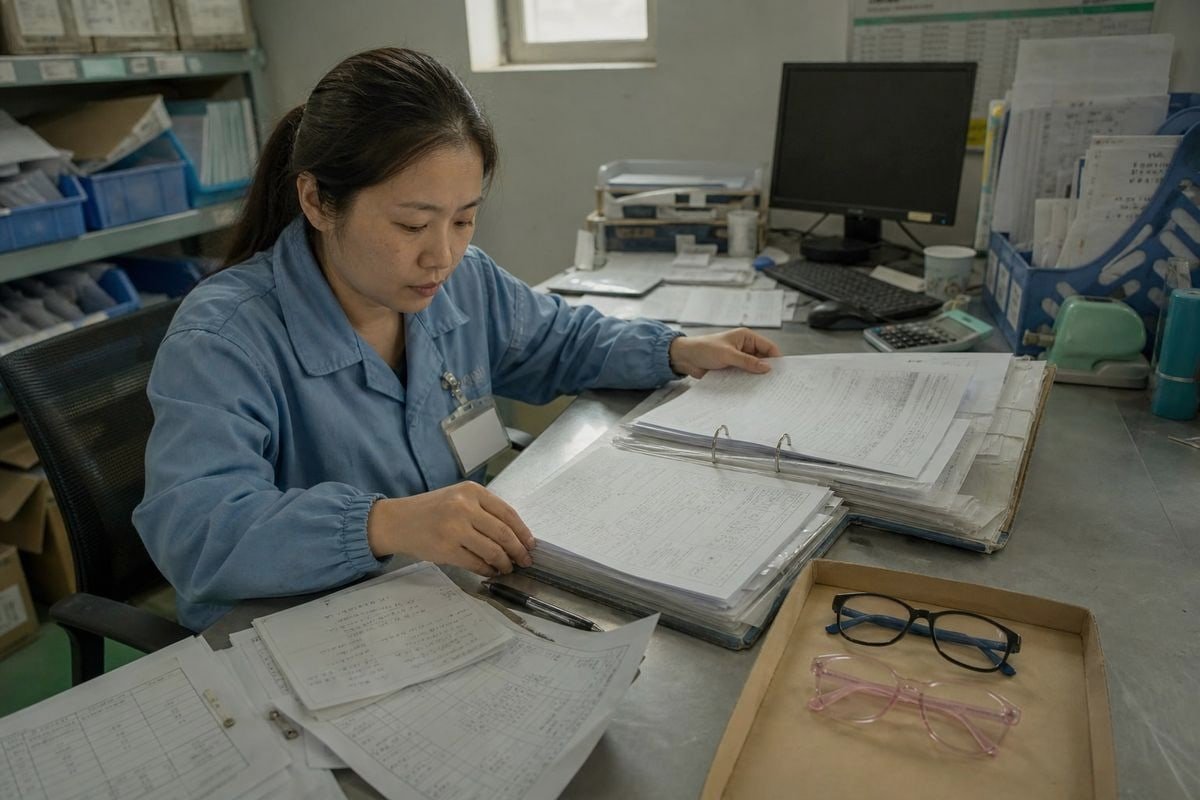
The documentation you need falls into three practical buckets: proof of who made the device, proof the device conforms, and proof the system behind it is controlled. In our fifteen years supplying children's eyewear from Taizhou, the buyers who request all three buckets up front never scramble later.
The core document set
Spectacle frames sit in a low-risk category — in the US they are Class I medical devices 2 exempt from premarket 510(k) submission, and in the EU they typically follow the self-declared conformity route under EU MDR compliance rules 3. Low risk does not mean no paperwork, though. Regulators still expect a paper trail from factory to shelf.
| Document | Why you need it | Who provides it |
|---|---|---|
| Manufacturer registration / establishment details | Confirms the factory is a legitimate, identifiable legal manufacturer | Manufacturer |
| EU Declaration of Conformity | Legal statement that frames meet MDR requirements | Manufacturer |
| CE marking 4 evidence and label artwork | You must verify this before selling in the EU | Manufacturer |
| Technical documentation summary | Supports classification and safety claims | Manufacturer |
| Material and biocompatibility test reports | Kids frames touch skin for hours daily | Manufacturer / test lab |
| Impact resistance testing certificates (if lenses fitted) | Required under 21 CFR 801.410 in the US | Manufacturer / lens supplier |
| Children's Product Certificate (US, where applicable) | Covers CPSIA lead and phthalate limits for children's products | Manufacturer / importer |
| QMS certificate (e.g., ISO 13485 or equivalent) | Shows production is controlled and repeatable | Manufacturer |
Documents specific to children's frames
Kids products attract extra scrutiny even when the legal classification is identical to adult frames. Parents complain faster. Retailers audit harder. So we always prepare biocompatibility data for our TPEE and TR90 materials, plus CPSIA-relevant substance test reports, because our US-bound clients need them for their Children's Product Certificate files. Ask your supplier for these explicitly. A factory that hesitates on material test reports is telling you something important.
Finally, get the manufacturer's Authorized Representative details if the factory is outside your market. In the EU, a non-EU manufacturer must appoint one, and that name belongs on the label you are verifying.
Am I legally responsible for optical frame registration, or does that obligation belong to the factory I work with?
One trade-off we discuss with nearly every new importer is this: taking the "initial distributor" position in a market gives you control and margin, but it also pulls registration duties onto your shoulders instead of ours.
Registration responsibility follows your role, not your contract title. Manufacturers register and list their devices. Importers and initial US distributors must register with the FDA annually. Canadian distributors need an MDEL. Ordinary domestic wholesalers and EU distributors generally do not register, but still carry verification duties.
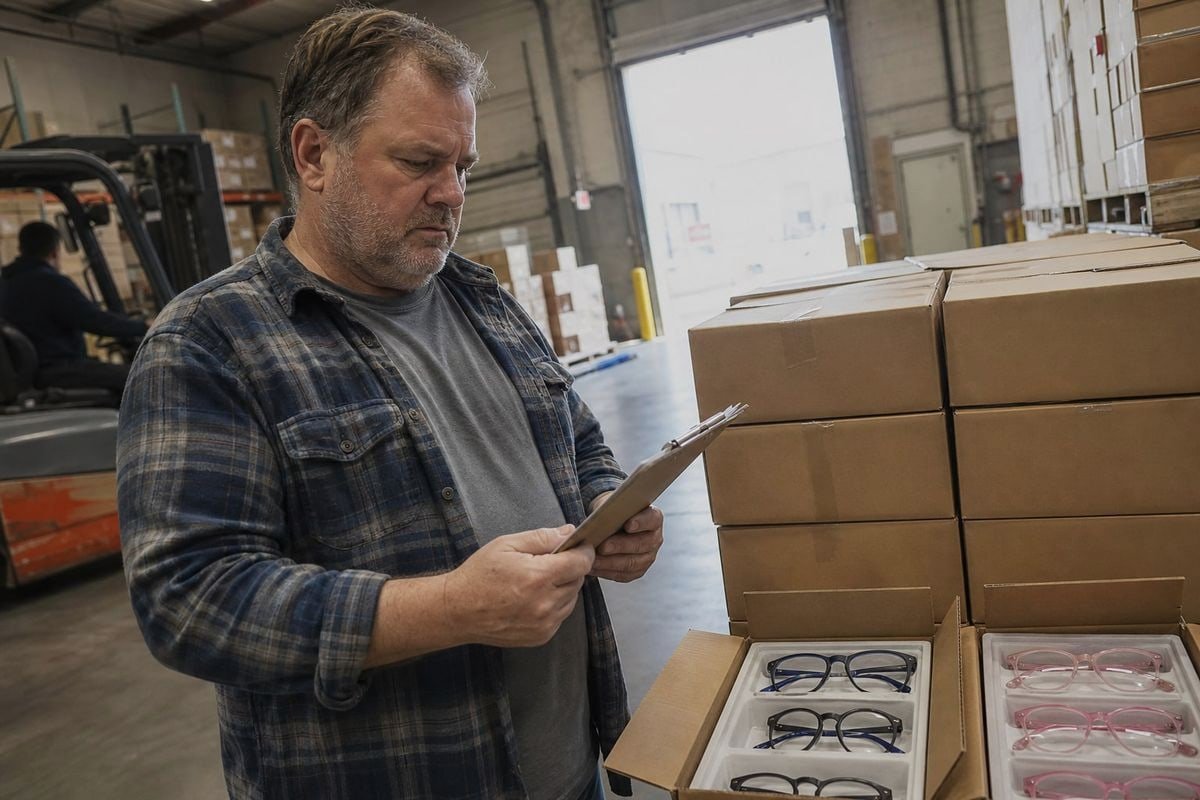
The word "distributor" is where most confusion starts. Regulators do not care what your invoice says. They care what you actually do with the frames. In our export work across 20+ countries, we have seen the same company be a simple reseller in one market and a fully obligated importer in another.
Know your role in the chain
Break the supply chain into five roles. Each carries a different registration burden.
| Role | What you do | Registration duty (typical) |
|---|---|---|
| Manufacturer | Designs and produces the frames | Registers, lists devices, holds technical documentation |
| Importer / initial distributor | First brings frames into the market country | US: annual FDA establishment registration; Canada: MDEL; EU: verification plus economic-operator duties |
| Wholesale distributor | Resells domestically without importing | US: generally no FDA registration; EU: no EUDAMED registration but national rules may apply |
| Retailer / dispensing optician | Sells or fits frames for end consumers | Generally exempt from establishment registration |
| Foreign manufacturer | Produces abroad for the US market | Registers with FDA and appoints a US Agent |
Where buyers get caught out
Here is the objection I hear most often: "The factory is registered, so I'm covered." That is only half true. Yes, as the legal manufacturer we handle our own registration obligations and appoint the required representatives for markets like the US. But if you are the first company placing our frames on the US market, FDA regulations put annual establishment registration on you, not us. We cannot register on your behalf.
The reverse misconception also exists. Some US wholesalers panic and assume they must register when they buy from a domestic importer. Usually they do not — the FDA's own framework excludes wholesale distributors that neither manufacture nor import. Canada is stricter: importers and distributors both need an active Medical Device Establishment Licence 6 to sell to anyone other than the ultimate consumer. In the EU, distributors skip EUDAMED registration, but individual member states can impose national registration, so check locally before assuming you are exempt.
What compliance risks do I face if I distribute kids optical frames without proper registration support?
A hard lesson from early in our export history: one client's shipment sat in customs for weeks because the importer of record had never registered its establishment. The frames were fine. The paperwork chain was not.
Risks include customs detentions, import refusals, fines, forced recalls, and delisting by retailers. Missing registration or documentation can also void insurance coverage, expose you to product liability claims involving children, and trigger regulator scrutiny of your entire product portfolio, not just eyewear.
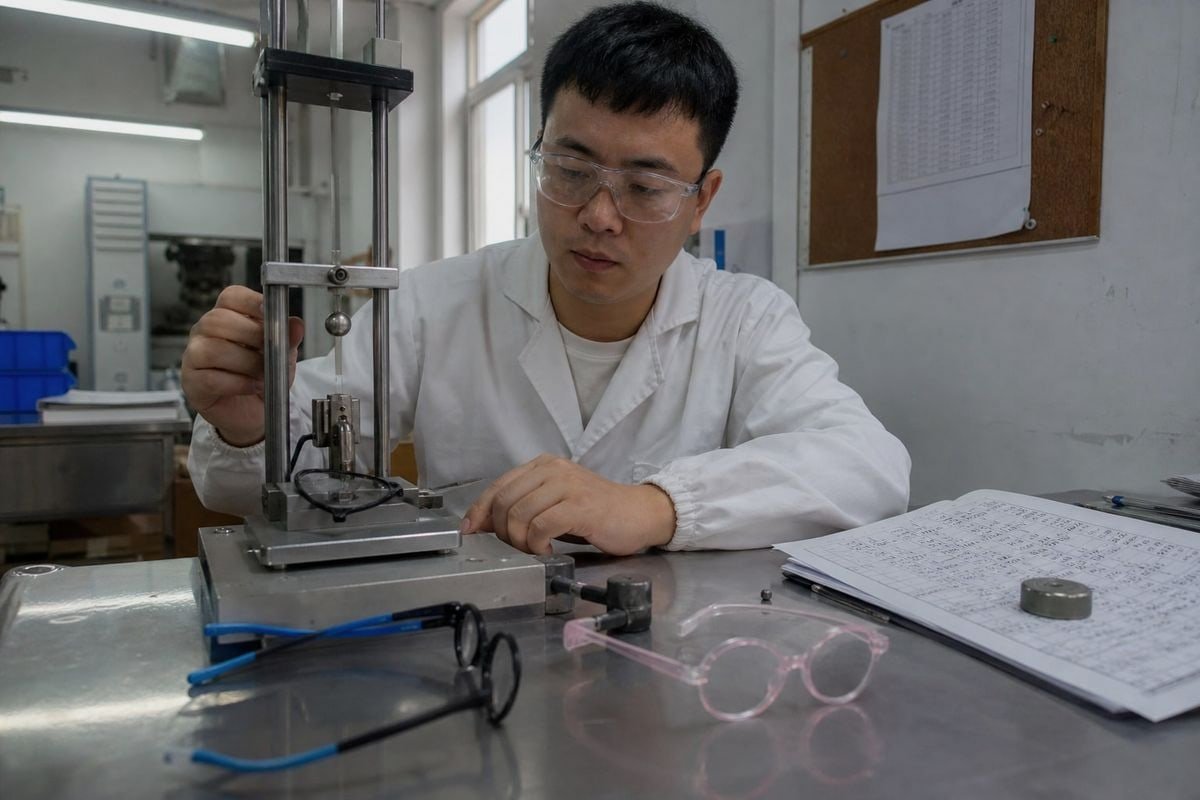
The risks compound because you are dealing with two overlapping regimes at once: medical device rules and children's product safety rules. Failing either one hurts. Failing both at the same time can end a small brand.
The layered risk picture
Think of the exposure in escalating tiers:
- Border risk. Customs authorities can detain or refuse shipments when the importer lacks registration or the frames lack required marks and labeling. This is the most common and most immediate cost — dead inventory and missed launch dates.
- Market surveillance risk. EU and national authorities increasingly check distributors for CE marking verification, Declaration of Conformity files, and language-correct instructions. Gaps lead to sales stops and corrective orders.
- Recall and post-market risk. Without a complaint log and traceability records, you cannot execute a targeted recall. Regulators then force broader, more expensive withdrawals. Post-market surveillance duties do not disappear just because you are "only" a distributor.
- Children's product risk. In the US, CPSIA rules on lead and phthalates apply to kids frames as children's products. Selling without the supporting Children's Product Certificate documentation adds a second, separate enforcement pathway.
- Commercial risk. Large retailers and optical chains audit suppliers' supply chains. One documentation failure can get your whole line delisted, and rebuilding that trust takes years.
Why kids frames raise the stakes
Nothing in the law creates a separate registration regime for children's frames — they are regulated as spectacle frames. But the practical risk is higher. Children break frames more often, wear them during sports, and cannot judge fit problems themselves. If frames are sold with lenses, impact resistance testing under 21 CFR 801.410 becomes non-negotiable for the US market. When something goes wrong with a child's product, media attention, retailer reaction, and regulator response are all faster and harsher. That is exactly why we build our frames from flexible TPEE and TR90 and document the material safety — the durability engineering and the paperwork protect our distributors together.
How can I confirm my supplier's quality system will hold up under local medical device registration audits?
Buyers visiting our Taizhou workshop often ask to see two things first: the 5S-managed production floor and our incoming material inspection records. Both requests tell me they understand what an audit actually probes.
Confirm the supplier holds a certified Quality Management System, request recent audit reports, verify traceability from raw material to finished frame, review complaint and CAPA records, check test documentation for materials and impact resistance, and conduct or commission a factory audit before committing to volume.
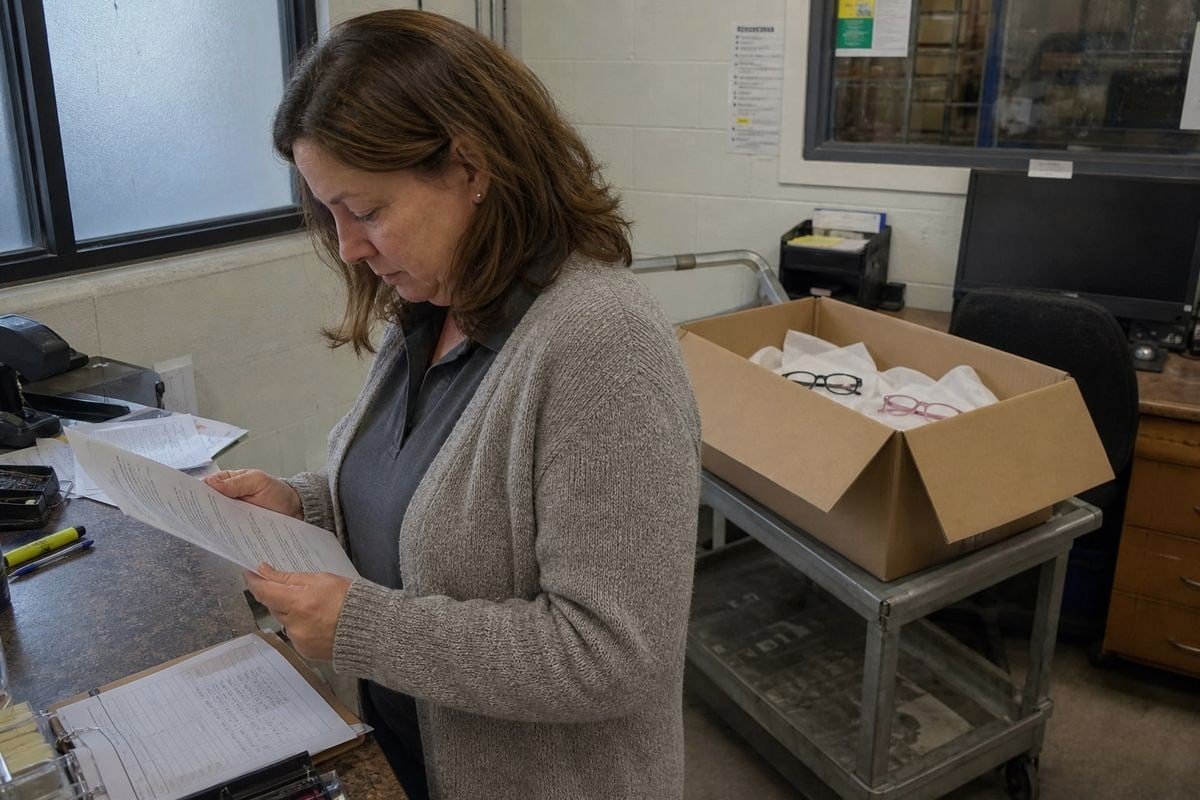
An auditor examining your distribution business will eventually trace backward to your supplier. If the factory's system collapses under questioning, your registration status will not save you. So evaluate the supplier the way an auditor would — on evidence, not promises.
A practical verification sequence
Follow these steps in order. Each one filters out weaker suppliers before you spend money on the next.
| Step | What to check | Red flag |
|---|---|---|
| 1. Certificates | Valid QMS certification, scope covers eyewear | Expired certificate or scope mismatch |
| 2. Documentation | Technical documentation, DoC, test reports available on request | "We'll send it after the order" |
| 3. Traceability | Batch codes linking materials, production runs, and shipments | No batch or lot system at all |
| 4. Complaint handling | Written procedure, logged complaints, corrective actions | "We've never had a complaint" |
| 5. Factory audit | On-site or third-party audit of workshop and QC stations | Refusal to allow inspection |
| 6. Sample testing | Independent lab verification of materials and lenses | Reluctance to share testable samples |
What "audit-ready" looks like on the floor
In our experience hosting international buyers, an audit-ready factory shows consistency between documents and reality. The work instructions on the line match the technical documentation. QC inspection records exist for the actual batches you bought, not just template examples. Material certificates trace to the specific TPEE or TR90 resin lots used. Staff can explain the process without a manager whispering answers.
Also test the supplier's responsiveness. Send a mock document request — DoC, material test report, and label file for one style — and time the reply. A factory with roughly 120 workers and a real system, like ours, can pull those files within days because they already exist. A factory that improvises documentation on demand will improvise it during a regulator's inquiry too, and that is when you get hurt.
One more tip: check whether the supplier assigns and manages Unique Device Identification data 7 correctly for markets that require it, and whether their labeling process handles the languages your market demands. Labeling errors are among the most common findings in distributor-level inspections, and they almost always originate at the factory.
Conclusion
Registration duties for kids optical frames follow your role, not the product's age group. Verify your position, collect documentation early, and partner with an audit-ready factory — that combination keeps every market open.
Footnotes
1. Official ISO page detailing the international standard for quality management systems in medical devices. ↩︎
2. Explains the FDA’s classification system for medical devices, including Class I. ↩︎
3. Found official European Commission page outlining the new Medical Device Regulations (MDR). ↩︎
4. Provides an overview of CE marking and conformity assessment for medical devices in the EU. ↩︎
5. Official FDA page detailing the premarket notification (510(k)) process for medical devices. ↩︎
6. Official Health Canada guidance on MDEL requirements for importers and distributors. ↩︎
7. Official FDA resource explaining the Unique Device Identification (UDI) system. ↩︎
More Articles You Might Like

August 5, 2026
Bio-Based vs Regular Cellulose Acetate: What's the Difference for Kids' Frames?
August 5, 2026
How Recyclable Are Kids' Optical Frame Materials, and What Eco-Friendly Alternatives Exist?
August 5, 2026
Do Kids Optical Frames Whiten or Age in Storage, and How to Control Warehouse Conditions?
Looking for a Reliable Kids Eyewear Partner?
Explore 800+ ready styles and full OEM/ODM support tailored to your brand.
Get in Touch English
  Español de México
  Deutsch
  Français
  日本語
日本語  العربية
  Português do Brasil