How to Design a Size-Upgrade Replacement Plan for Kids Sunglasses?
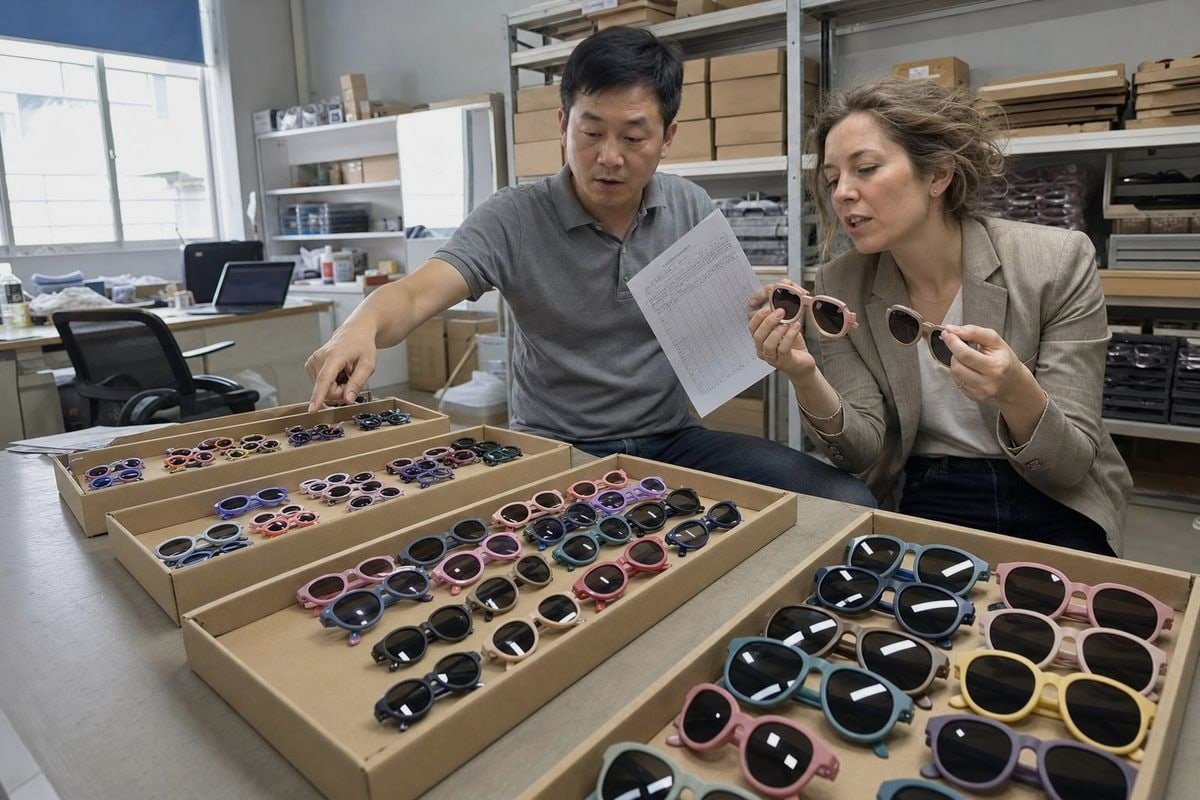
A size-upgrade replacement plan for kids sunglasses is something buyers ask our factory about constantly, and honestly, most brands get it wrong at first. Here is the problem: children’s faces grow fast, so a frame that fits perfectly in spring can pinch, slide, and lose UV coverage 1 by autumn. When that happens, [kids stop wearing the sunglasses](https://okayeyewear.com/why-kids-resist-wearing-sunglasses-design-fix-do/), parents blame the brand, and repeat purchases never materialize. The solution is to treat kids’ eyewear as a growth-managed product lifecycle — with planned size tiers, transition-friendly materials, and a marketing story that turns “my child outgrew these” into “time to order the next size.”
To design a size-upgrade replacement plan for kids sunglasses, segment sizes by developmental age brackets, define fit-based upgrade triggers, use flexible frame materials that forgive growth, build a scalable size range with your manufacturer, and market the program to parents through trade-in credits and clear sizing guides.
Each of those steps deserves a closer look. Below, I walk through the four decisions that determine whether your upgrade program builds loyalty or just adds complexity.
How do I determine the right age-based size categories for a kids sunglasses upgrade plan?
One of our long-term European buyers once launched with a single "one size fits 3–10" frame. Returns taught them what our fitting data already showed: age bands must follow facial growth, not convenience.
Determine age-based size categories by segmenting into developmental brackets — roughly 0–2, 3–5, 6–9, and 10+ — then defining lens width, bridge width, and temple length for each tier. Younger brackets need narrower gaps between sizes because facial growth is fastest before age six.
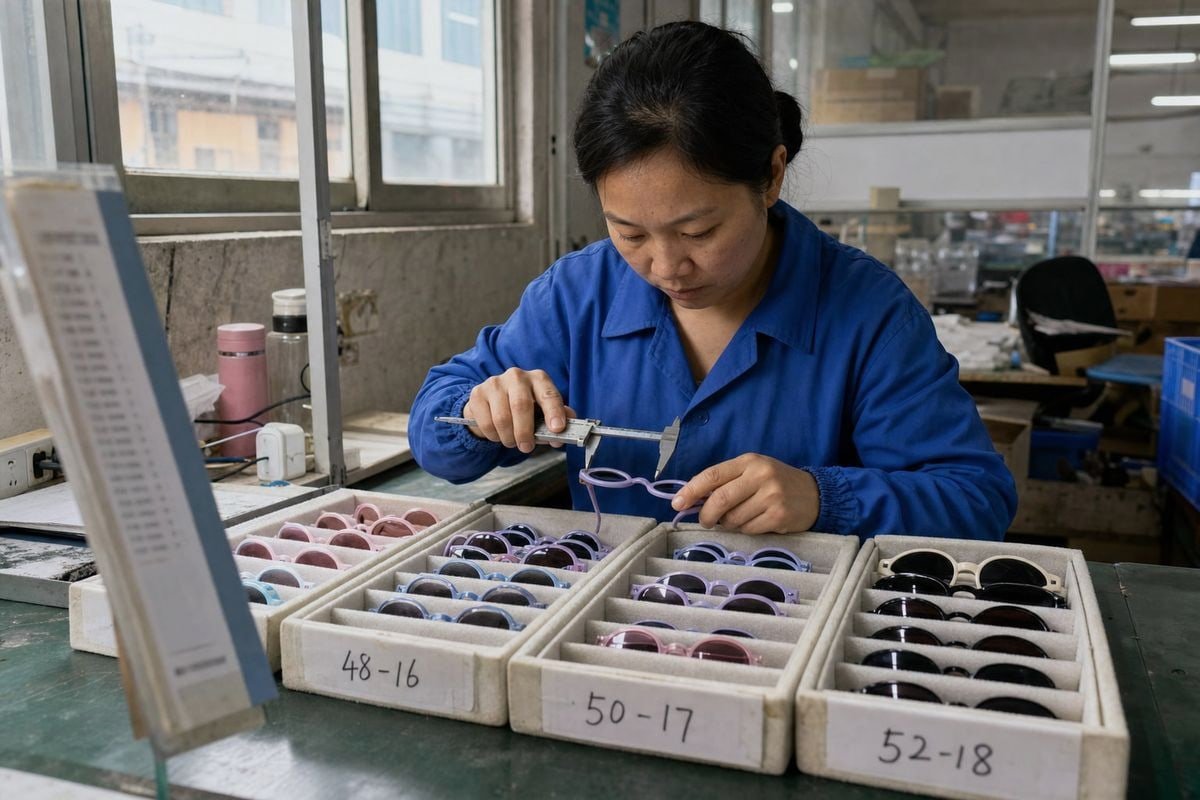
Age is a starting point, not the whole answer. Pediatric fit guidance is clear: head shape, bridge development 2, and temple length matter more than a birthday. So your size categories should be built on measurements, with age used only as a shopping shortcut for parents.
The three measurements that define each tier
Every size tier needs three numbers: lens width 3, bridge width, and temple length. Bridge width deserves the most attention. A child's nasal bridge is flat in the toddler years and develops gradually, which is why frame slippage is the most common fit failure in kids' eyewear. Pupillary distance also grows with age, so lens width per tier should keep the eyes centered in the lenses — a core marker of both comfort and UV coverage.
Here is a practical framework we share with brands building growth-adjusted sizing charts:
| Age Bracket | Typical Lens Width | Bridge Focus | Recheck Cadence |
|---|---|---|---|
| 0–2 years | 35–40 mm | Very low, wide bridge; consider adjustable silicone straps | Every 2–3 months |
| 3–5 years | 40–44 mm | Low bridge, soft contact area | Every 3–4 months |
| 6–9 years | 44–48 mm | Developing bridge; standard fit works | Every 6 months |
| 10+ years | 48–52 mm | Near-adult bridge geometry | Every 6–12 months |
Build upgrade triggers into each bracket
Alongside the chart, give parents objective physical triggers: red marks on the temples, eyelashes touching the lenses, frames sliding down the nose, or eyes no longer centered behind the lenses. These signals matter because pediatric vision development 4 depends on consistent protection — sunglasses that fit poorly get worn less, and coverage drops exactly when kids need it. Very young children may genuinely need a new size every three to six months, so your 0–2 and 3–5 tiers should sit closer together in measurements than your older tiers. That tighter spacing is what makes the upgrade plan feel responsive rather than arbitrary.
What frame materials make it easier to transition children between sunglasses sizes safely?
Material choice is a trade-off we weigh on every new project: rigidity gives structure, but flexibility forgives the months when a child sits between two sizes. Getting that balance right is the heart of a workable upgrade plan.
Flexible frame materials like TPEE and TR90 make size transitions safest because they bend without snapping, tolerate slight tightness during growth phases, and return to shape after rough handling. Pair them with impact-resistant polycarbonate lenses and soft temple tips for the full safety package.
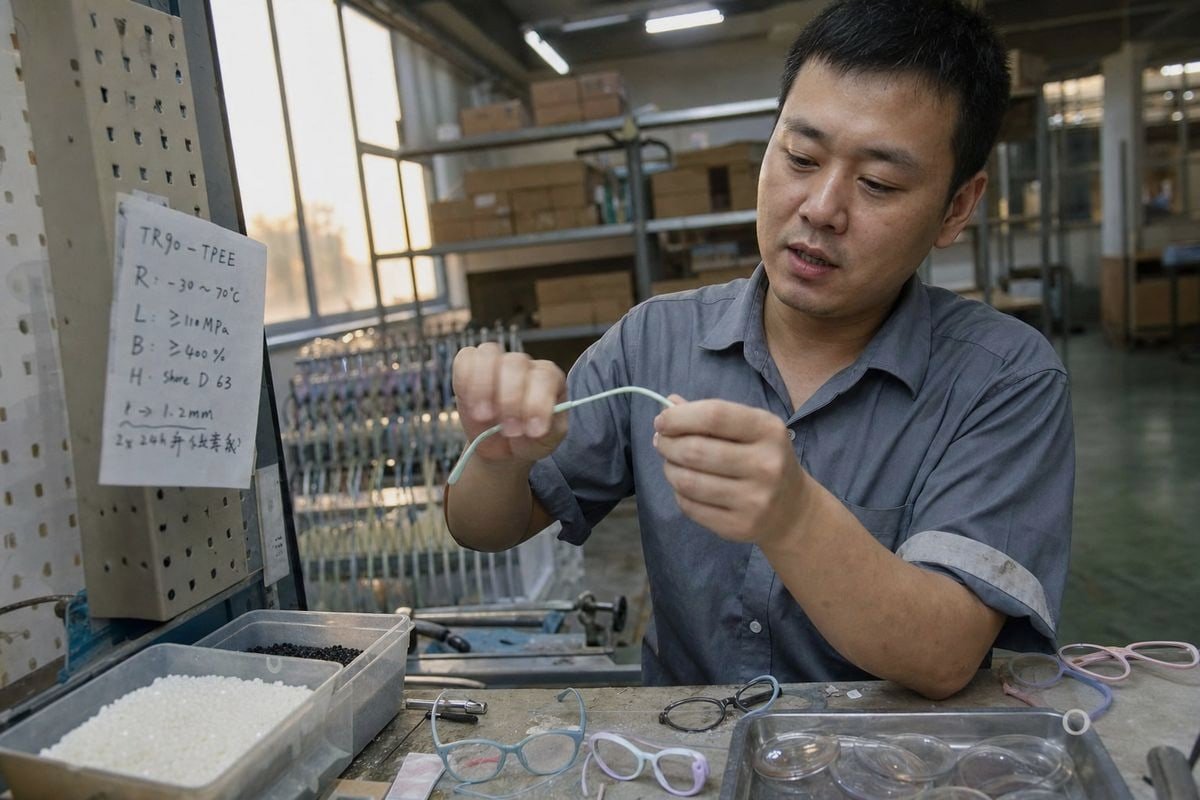
No size chart is perfect. A child will always spend a few weeks or months at the edge of a size, where the current frame is slightly snug but the next size is slightly loose. The frame material determines whether that transition window is comfortable or miserable.
Why flexibility extends usable fit
Rigid acetate or hard PC frames have a narrow comfort band. When the head grows a few millimeters, temple pressure rises sharply, red marks appear, and the child pulls the sunglasses off. Flexible frame materials behave differently. In our fifteen years producing children's eyewear, we have standardized on TR90 fronts 5 with TPEE temples for exactly this reason: TR90 holds lens geometry and optical alignment, while TPEE temples flex outward gently as the head widens. That flex buys parents extra months of comfortable wear inside each size tier, which makes your replacement schedule feel generous rather than aggressive.
Material comparison for transition-friendly design
| Material | Flexibility | Safety Profile | Best Use in Upgrade Plans |
|---|---|---|---|
| TPEE | Very high; near-unbreakable in child use | Soft, no sharp edges on flex | Temples and full frames for 0–5 tiers |
| TR90 | High; memory return to shape | Lightweight, impact-tolerant | Frame fronts for 3–10 tiers |
| Silicone-touch coatings | N/A (surface) | Grippy, reduces slippage | Nose pads and temple tips across tiers |
| Standard hard plastic | Low | Can crack under stress | Avoid for under-6 sizes |
Small hardware, big difference
Two additions widen the transition window further. Spring hinges 6 let temples open beyond ninety degrees without stressing the frame, absorbing both growth and rough handling. And for the 0–2 bracket, adjustable silicone straps replace temple fit entirely, so one strap-based size can genuinely span a wider growth range. Every lens across every tier should carry UV400 protection 7 — flexibility never justifies compromising the lens spec. Impact-resistant polycarbonate lenses remain the default for children because they are shatter-resistant, which matters most in the youngest, clumsiest brackets.
How can I work with a manufacturer to create a scalable size range without ordering new molds each time?
A procurement manager from Australia asked me this exact question last year: "We love the upgrade concept, but four sizes means four molds, right?" Not necessarily — and that answer changed their whole launch plan.
Avoid new mold costs by building your size range from a manufacturer's existing tooling library, scaling one proven design across pre-built size variants, using modular components like interchangeable temple lengths, and reserving custom molds only for your hero style once sales volume justifies the investment.

Mold investment is the biggest barrier to a multi-size program. A single injection mold can cost thousands of dollars, and a four-tier size range built entirely on custom tooling multiplies that before you sell a single unit. There is a smarter sequence.
Start from an existing style library
Our factory maintains roughly 800 existing styles, and many popular silhouettes already exist in small, medium, and larger children's sizes because previous buyers requested them. A new brand can select a rounded frame — like our soft periwinkle-and-mint two-tone style with matte, flexible construction — for the 3–5 tier, then pick a compatible sibling style in the 6–9 dimensions. Custom colors, custom logos, and custom packaging make the range look designed as one family, even though no new steel was cut. This is exactly how brands test a subscription-based eyewear model or upgrade program without heavy upfront risk.
A phased tooling roadmap
- Phase one: Launch all size tiers from existing molds with unified OEM colorways and branding.
- Phase two: Add modular elements — interchangeable temple lengths or strap kits — to fine-tune fit between tiers.
- Phase three: Once one tier proves demand, invest in a custom mold for that hero size only.
- Phase four: Extend the custom design to adjacent sizes as volume grows, tier by tier.
What to ask your supplier before committing
Ask for the actual lens width, bridge width, and temple length of every candidate style, and check the spacing between tiers against your growth-adjusted sizing charts. Ask whether temples use spring hinges, whether lens specs are consistent — UV400 protection and polarized options 8 should carry across every size — and whether the workshop can hold color consistency across tiers so the range reads as one product line on the shelf. In our experience exporting to twenty-plus countries, buyers who verify these details upfront avoid the most common failure: a size range that looks unified in photos but feels like four unrelated products in a parent's hands.
What packaging and marketing strategies help me promote a size-upgrade program to parents?
Packaging is where I have watched good upgrade programs quietly fail. We once produced a beautifully sized three-tier range for a buyer whose boxes never mentioned sizing at all — parents simply never learned the next size existed.
Promote a size-upgrade program by printing size tiers and fit-check guides on packaging, including at-home sizing tools like printable rulers, offering trade-in credits for outgrown frames, sending growth-based reminder emails, and framing replacement as a safety milestone rather than a repeat expense.
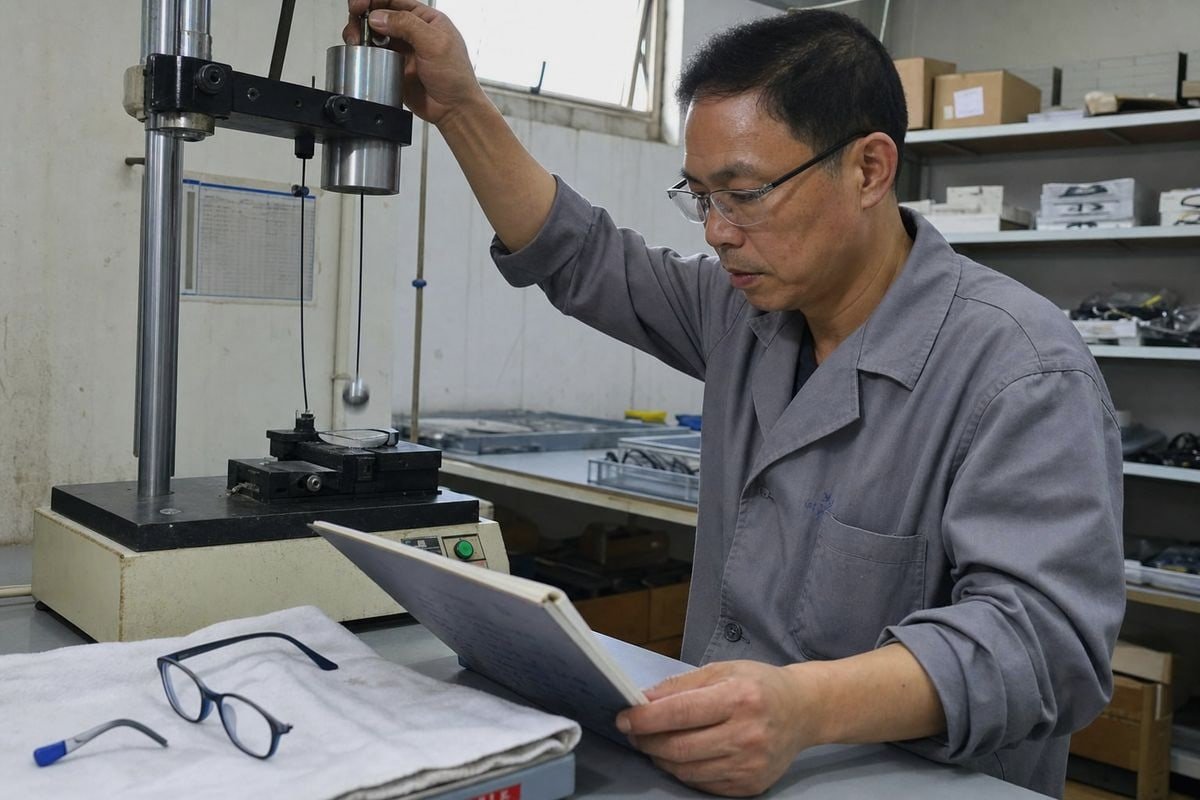
Parents do not resist buying the next size. They resist not knowing when, why, or which one. Every packaging and marketing decision should close that information gap.
Make the packaging teach the system
Print the tier name and measurements clearly on the box: "Size 2 · Ages 3–5 · Fits face width 105–115 mm." Add a simple fit checklist inside the lid: eyes centered in the lenses, no contact with cheeks or eyelashes, no red marks behind the ears, no sliding. Include a printed ruler or fold-out sizing card so parents can measure at home — the same at-home sizing tools that reduce online return rates. Since more parents now buy eyewear online using printed frame measurements, your packaging becomes the bridge between the pair they own and the pair they order next. Our OEM packaging team builds these inserts as part of retail-ready presentation, and buyers consistently tell us the insert outperforms any advertisement.
Programs that turn replacement into loyalty
| Program Type | How It Works | Best For |
|---|---|---|
| Trade-in credit program | Return outgrown frames for a discount on the next size; refurbish or donate returns | Sustainability-focused brands |
| Subscription-based eyewear model | Auto-ship the next tier every 12–18 months based on the child's age | Convenience-driven parents |
| Lost-or-broken guarantee | Discounted replacement for damage or loss within a set window | High-activity outdoor brands |
| Growth reminder emails | Email fit-check prompts timed to the child's age bracket | All direct-to-consumer brands |
Tell the safety story, not the spending story
The message that converts is protective, not promotional. Outgrown sunglasses slide, expose the eyes to UV at the edges, and get abandoned in backpacks. Framing the upgrade as protecting pediatric vision development — consistent UV400 protection through every growth stage — turns a repeat purchase into responsible parenting. A circular angle strengthens this further: outgrown frames returned through a trade-in credit program can be donated or refurbished, which resonates strongly with the environmentally conscious parents our buyers in Europe and Australia serve.
Conclusion
Outgrown frames quietly kill repeat sales and sun protection. A tiered size plan, flexible materials, mold-smart sourcing, and parent-friendly marketing turn growth into your most reliable revenue cycle.
Footnotes
1. Updated WHO Q&A page providing authoritative guidance on UV radiation and sun protection measures. ↩︎
2. AAO guidance on fitting eyeglasses for children, emphasizing bridge fit. ↩︎
3. Technical overview of eyeglass frame measurements and lens sizing. ↩︎
4. Comprehensive guide from the American Academy of Ophthalmology on children’s visual milestones. ↩︎
5. Technical overview of Polyamide 12, the high-performance polymer used to manufacture TR90 frames. ↩︎
6. Authoritative Wikipedia overview of eyeglass frame components and temple construction. ↩︎
7. Wikipedia section explaining international sunglasses safety standards and UV400 protection levels. ↩︎
8. Scientific explanation of light polarization and its application in protective lenses. ↩︎
More Articles You Might Like


Looking for a Reliable Kids Eyewear Partner?
Explore 800+ ready styles and full OEM/ODM support tailored to your brand.
Get in Touch English
  Español de México
  Deutsch
  Français
  日本語
日本語  العربية
  Português do Brasil