How to Design Kids’ Sunglasses Packaging to Prevent Lens Deformation During Shipping?
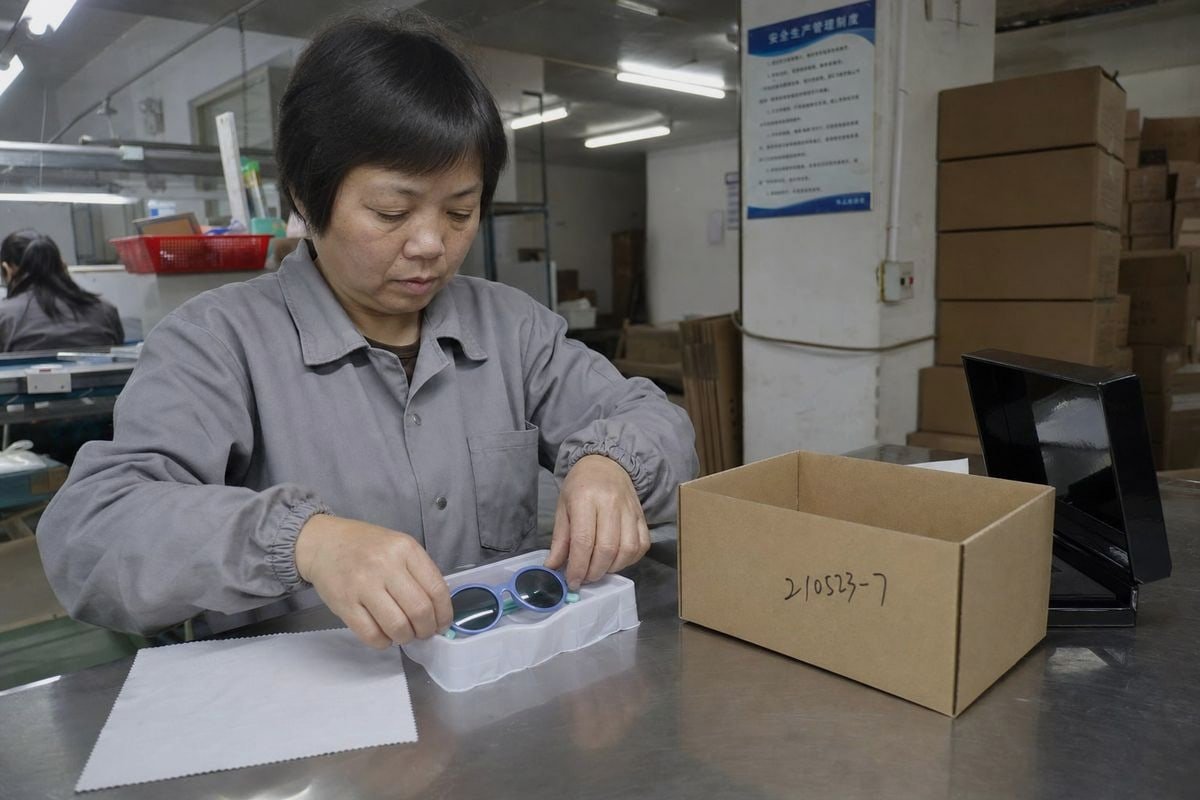
Kids’ sunglasses packaging failures cost brands real money. On our production line in Taizhou, we once saw a buyer lose a whole shipment to warped shield lenses 1 — all because of a flimsy mailer.
To prevent lens deformation during shipping, design kids’ sunglasses packaging with three layers: a rigid inner case or molded insert that immobilizes the frame, a soft wrap that protects lens surfaces, and a snug crush-resistant corrugated outer box with under 1 cm of movement.
That answer sounds simple. But the details decide whether your product arrives retail-ready or bent. Let me walk you through each layer, based on what actually works for flexible children’s frames.
What packaging materials work best to protect flexible TR90 and TPEE lenses during long-distance shipping?
A buyer from Australia once asked me why her mirrored wraparound shields arrived with a twisted base curve 2. The frames were fine. The packaging was the problem — and I told her exactly that.
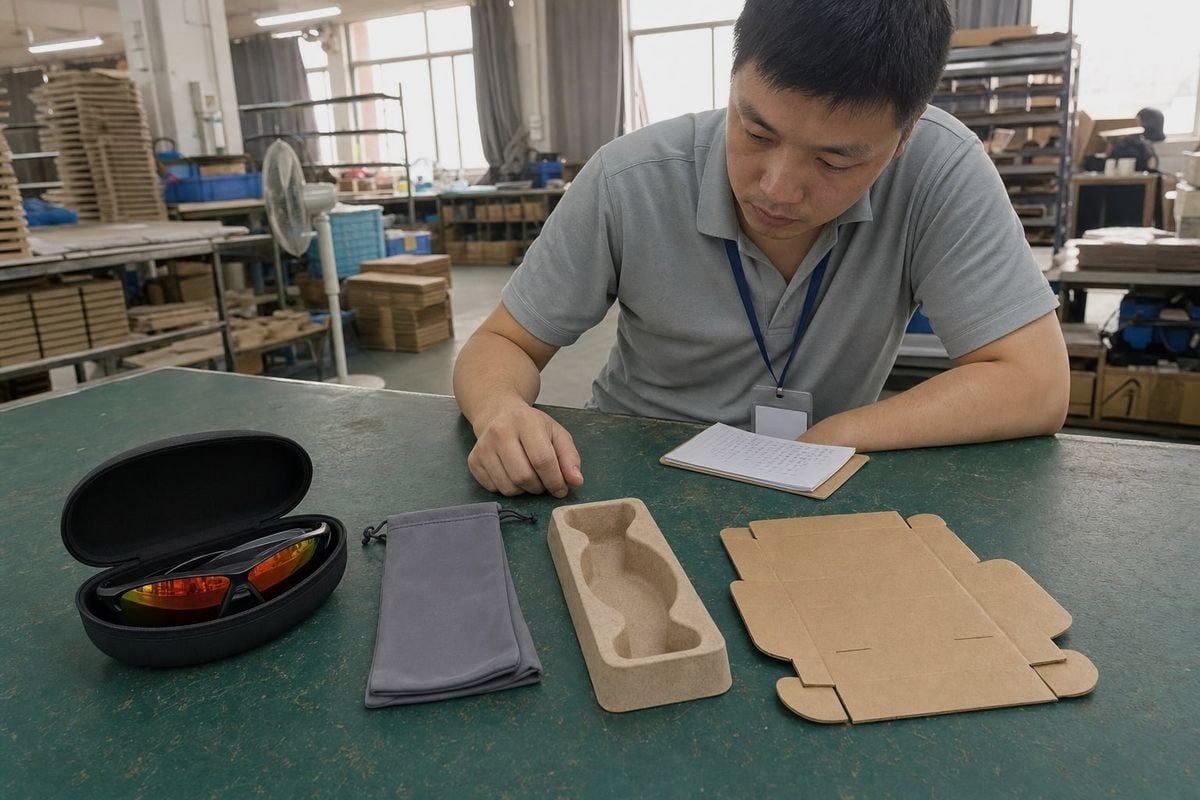
The best materials for shipping flexible TR90 and TPEE kids' eyewear are a hard EVA or clamshell case, a microfiber pouch to stop lens friction, custom-fit foam or molded pulp inserts, and a 3-ply rigid corrugated outer carton — never a padded mailer alone.
Flexible materials are a blessing and a curse. TR90 3 and TPEE are exactly what you want on a child's face — they bend, flex, and bounce back instead of snapping. Our factory has built its whole product line around that safety benefit. But that same flexibility means a lightweight kids' frame deforms under continuous compression far more easily than a stiff adult acetate frame. The packaging has to supply the rigidity the frame deliberately lacks.
The Layered Material Stack
Think of the packaging as four jobs handled by four materials:
| Layer | Material | Job it does |
|---|---|---|
| Contact layer | Microfiber pouch or cloth | Stops lens coatings from rubbing and scuffing |
| Structural shell | Hard EVA case or vacuum-formed clamshell tray | Blocks squeeze and bending forces on lenses and bridge |
| Immobilization layer | Custom foam insert or molded pulp 4 | Eliminates rattle and vibration movement |
| Transit armor | 3-ply (minimum) corrugated box 5 | Resists crushing from stacking and rough handling |
A few material notes from our shipping experience. First, heat matters. Cargo holds and summer container yards get hot, and thin plastic lenses can soften slightly. Choose case and insert materials with reasonable temperature tolerance, and avoid packaging that presses on the lens when materials expand. Second, for children's products, insist on child-safe specifications: BPA-free plastics 6, water-based inks, and low-residue cushioning. Your retail buyers in Europe, Japan, and Australia will ask about this, so it is smarter to build it in from day one. Third, if you like the sustainability story, molded pulp does double duty — it cradles the frame, prevents motion, and supports an eco-friendly brand message without giving up much protection.
How can I test my kids' sunglasses packaging design before committing to a full production run?
There is a trade-off we weigh with every OEM packaging project: testing costs time before launch, but skipping it costs far more after. One returned container teaches that lesson permanently.
Test kids' sunglasses packaging with simulated drop-and-vibration protocols such as ISTA 3A, real-route shipping trials to your actual markets, compression stacking tests, and heat-cycle checks — then inspect lenses for base-curve distortion, frame torque, and coating scratches before approving mass production.
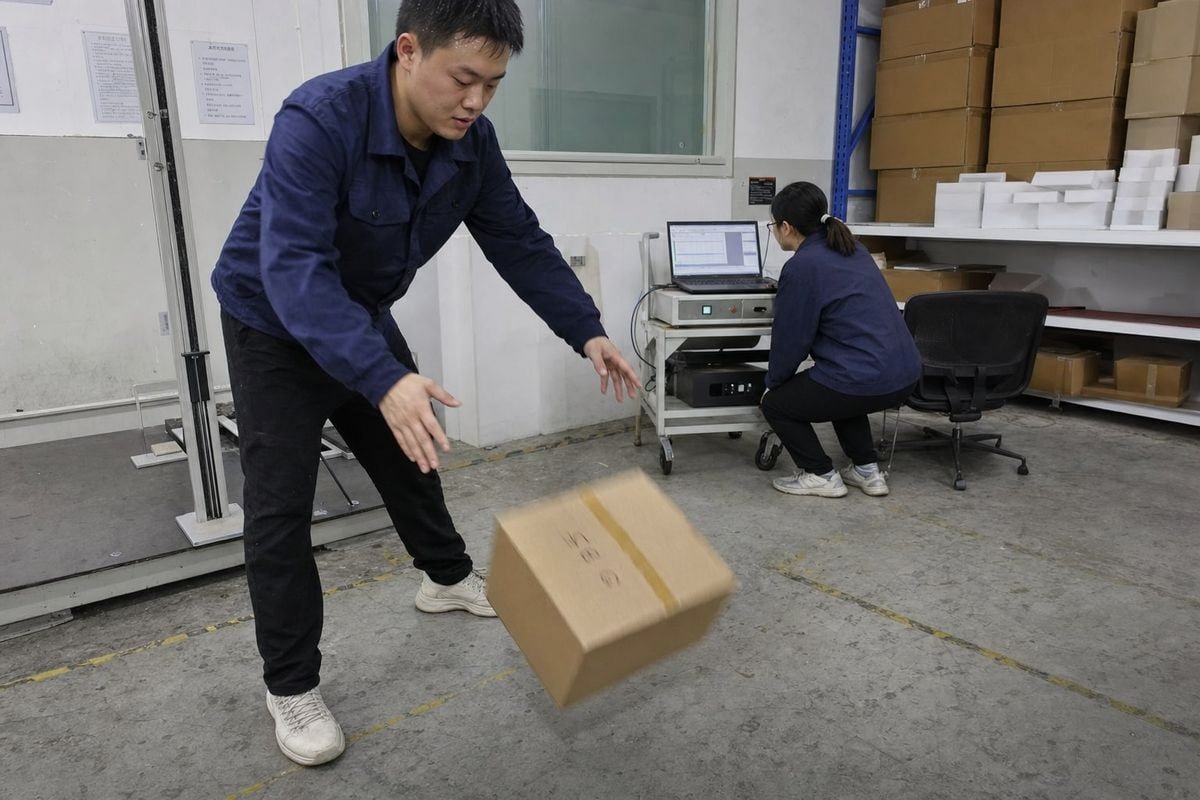
Standard adult eyewear test thresholds often miss problems unique to children's frames. Kids' lenses are thinner and lighter, so they deform at lower forces than the test assumes. In our experience exporting to 20+ countries, the smartest buyers run a small pilot before scaling. Here is the process I recommend.
A Five-Step Pre-Production Test Plan
- Bench test the fit. Place the sunglasses in the case and shake it. Any audible rattle means movement, and movement means vibration damage over a 30-day sea voyage. Confirm the case shifts less than 1 cm inside the outer carton.
- Run a drop sequence. Drop the packed carton from waist height onto each face, edge, and corner. Open it and check the bridge, hinges, and lens seating after every drop.
- Simulate vibration. ISTA 3A-style testing replicates parcel-network handling. If you cannot access a lab, a long real-route trial shipment is the practical substitute — we often courier pilot samples to a buyer's own warehouse in Australia or Europe.
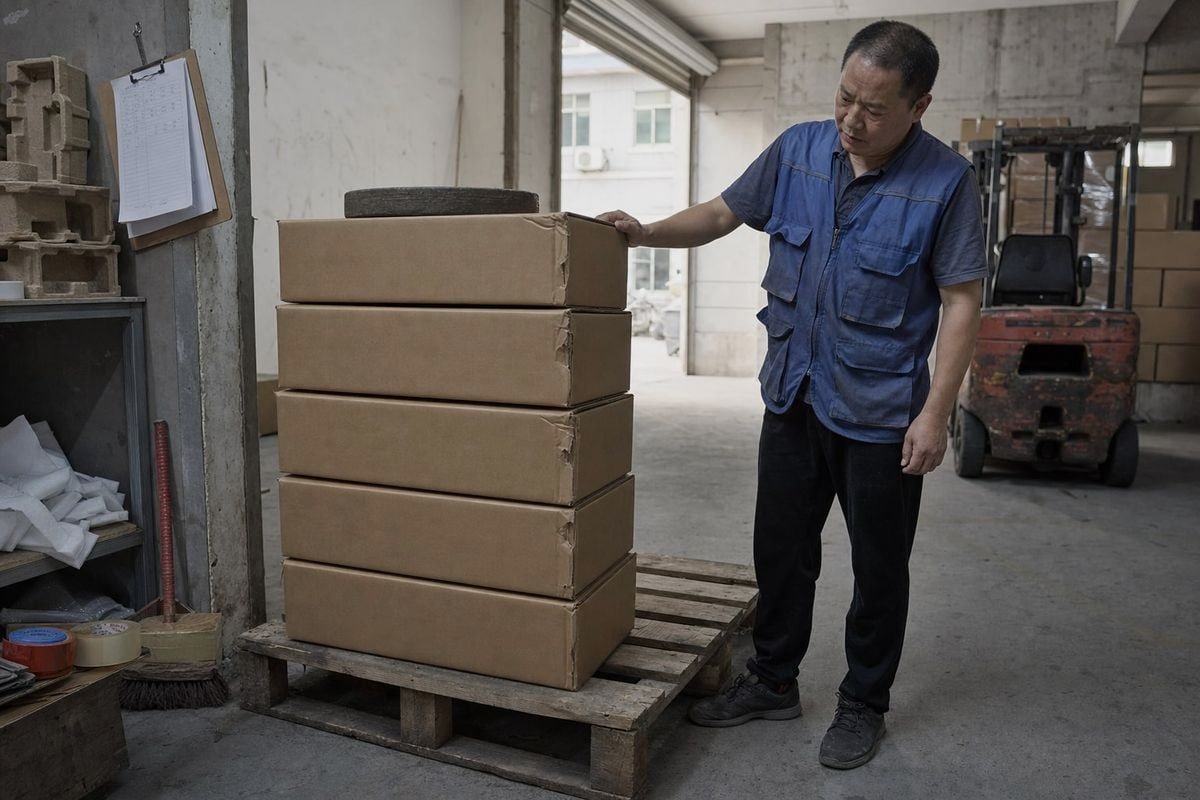
- Stack and compress. Load weight on the carton equal to a realistic pallet stack for 48 hours. Then measure lens curvature against an unshipped control pair.
- Heat cycle. Leave a packed unit in a hot environment for a day, then inspect for lens warping and adhesive softening.
Compare a control pair and a shipped pair side by side on a flat surface. Uneven temple contact or a changed shield curve means your packaging failed — fix it now, not after 10,000 units ship.
What packaging structure keeps lenses secure while still looking retail-ready on store shelves?
During a packaging development session last year, our team laid out a playful two-tone round frame — periwinkle front, mint temples — next to five insert prototypes. The winning design protected and presented at the same time.
A retail-ready protective structure uses a printed rigid box or window box with a vacuum-formed insert shaped to the lens base curve, individual compartments per pair, a semi-rigid bridge support, and branded graphics on the outer surfaces — protection and presentation built as one system.
The old thinking treated shipping protection and shelf appeal as separate problems. Modern eyewear packaging solves both with one structure. The trick is matching the internal geometry to the actual frame — which is why generic flat trays fail so often.
Match the Insert to the Frame Style
Different kids' styles need different internal support:
| Frame style | Weak point | Best structural solution |
|---|---|---|
| Wraparound shield (sport) | Curved single lens warps under flat pressure | Concave vacuum-formed tray matching the lens base curve |
| Round two-tone frame | Slim hinges and flexible temples twist | Compartment slot with temple channels and hinge clearance |
| Oversized mirrored lens | Coating scratches plus curvature stress | Microfiber-lined cradle, no direct contact on lens face |
Three structural details matter most. First, the insert should support the frame at the rims and temples — never press on the lens surface or squeeze the bridge. Over-tight padding causes the very deformation you are trying to prevent. Second, add a semi-rigid nose bridge support. When a carton is compressed, torque travels through the bridge and stresses lens seating; a small support blocks that path. Third, if the box holds multiple pairs, give each pair its own compartment so frames never press against each other.
For branding, the outer box carries the playful visuals kids' brands love — bright colors, characters, a die-cut window showing that iridescent mirrored lens. Underneath the fun graphics, the structure stays engineering-serious. Our OEM/ODM packaging service builds both together, so a new brand gets a box that survives a container voyage and then goes straight onto a shelf.
How do I balance protective packaging costs with my brand's budget for a new kids' eyewear line?
Early in my career at the factory, I learned a hard lesson: the cheapest packaging quote is rarely the cheapest packaging. A buyer who saved a few cents per unit paid it all back in returns and replacement freight.
Balance costs by matching packaging tiers to product value: standard styles get a pouch, molded pulp insert, and rigid carton; premium lines add hard cases and printed window boxes. Spending roughly a small percentage of unit cost on protection is cheaper than absorbing damage, returns, and reshipping.
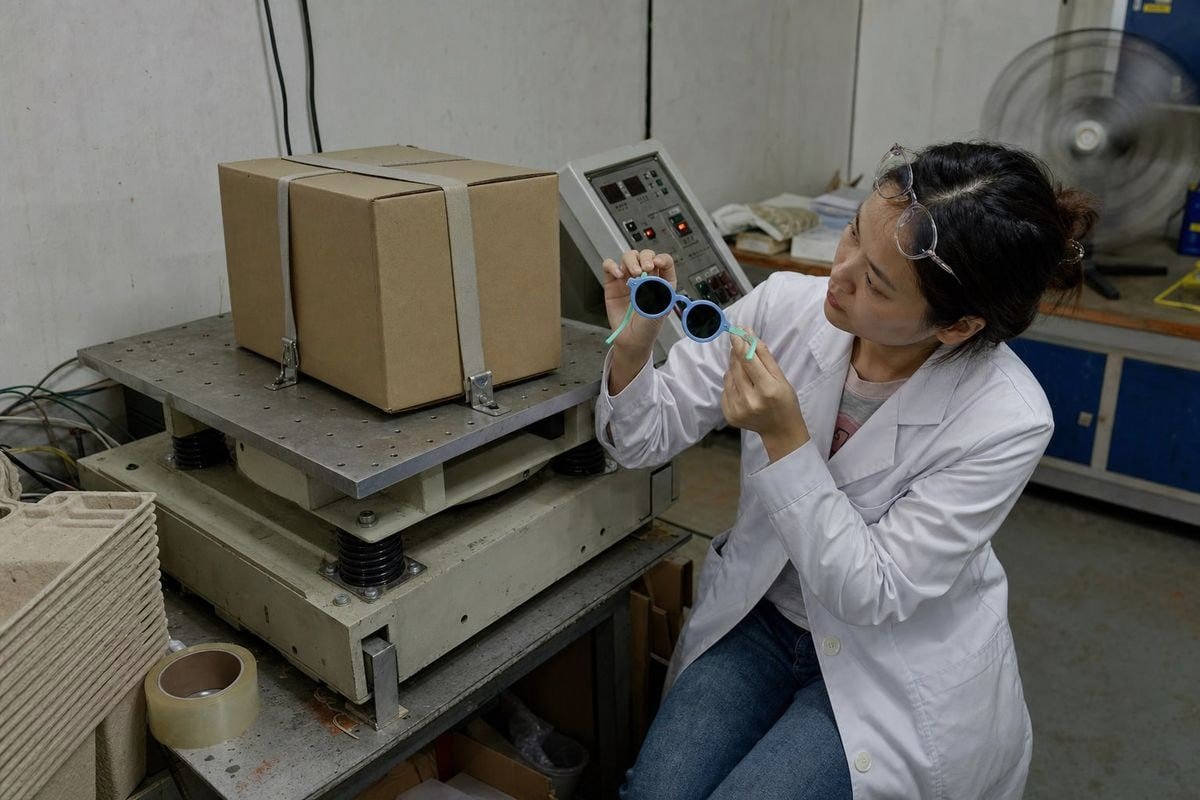
Packaging is not one budget line. It is an insurance policy, a marketing asset, and a logistics cost all at once. So price it against the total cost of failure, not just the unit price of cardboard.
A Tiered Cost Framework
| Tier | Typical structure | Best for | Relative cost |
|---|---|---|---|
| Essential | Microfiber pouch + molded pulp insert + rigid corrugated box | Value lines, promotional orders | Low |
| Standard | Semi-hard case + fitted insert + printed carton | Core retail kids' collections | Medium |
| Premium | Hard shell case + vacuum-formed tray + window gift box | Flagship styles, gifting season | Higher |
Now weigh that against failure costs. A deformed shipment triggers replacement production, a second round of freight, delayed shelf dates, retailer chargebacks, and — worst of all — a damaged reputation with a store buyer you worked months to win. In my experience, even one damaged batch usually costs more than years of upgraded packaging.
There are honest ways to save money without weakening protection. Right-size the outer carton so you pay for zero wasted air; smaller boxes also cut freight cost. Use molded pulp instead of custom foam where the fit allows — it is often cheaper at volume and supports your sustainability story. Consolidate packaging across styles by designing one insert that fits a family of frames. And because we already hold around 800 existing styles, new brands can pair proven frames with proven packaging formats and avoid heavy tooling investment while they test the market. Spend where forces concentrate — the insert and the outer box — and simplify where they do not.
Conclusion
Deformed lenses come from pressure, poor fit, and movement — not bad luck. Immobilize the frame, shield it in rigid structure, test before scaling, and your kids' sunglasses arrive perfect.
Footnotes
1. ISTA sets global shipping-damage testing standards relevant to preventing lens warping in transit. ↩︎
2. Background on lens curvature terminology relevant to the frame’s structural fit description. ↩︎
3. Background on the flexible polymer material used in kids’ eyewear frames discussed throughout. ↩︎
4. Background reference explains molded pulp material properties supporting the sustainability claim made here. ↩︎
5. Wikipedia background on the corrugated material forming the outer shipping carton. ↩︎
6. FDA guidance on BPA safety supports the child-safe material specification claim. ↩︎
7. Explains the freight cost concept referenced when discussing right-sizing cartons to save money. ↩︎
More Articles You Might Like
August 1, 2026
Should Factory Handle Kids Sunglasses Packaging & Labeling, or Use a Designated Supplier?
August 1, 2026
Own Warehouse vs Supplier Direct Fulfillment: Which Cuts Return Costs for Kids Sunglasses Brands?
August 1, 2026
Direct-to-Port Warehouse or Overseas Staging: Which Saves More on Kids Sunglasses Shipping?
Looking for a Reliable Kids Eyewear Partner?
Explore 800+ ready styles and full OEM/ODM support tailored to your brand.
Get in Touch English
  Español de México
  Deutsch
  Français
  日本語
日本語  العربية
  Português do Brasil