How to Choose Retail Packaging for TR90 & TPEE Kids Sunglasses?
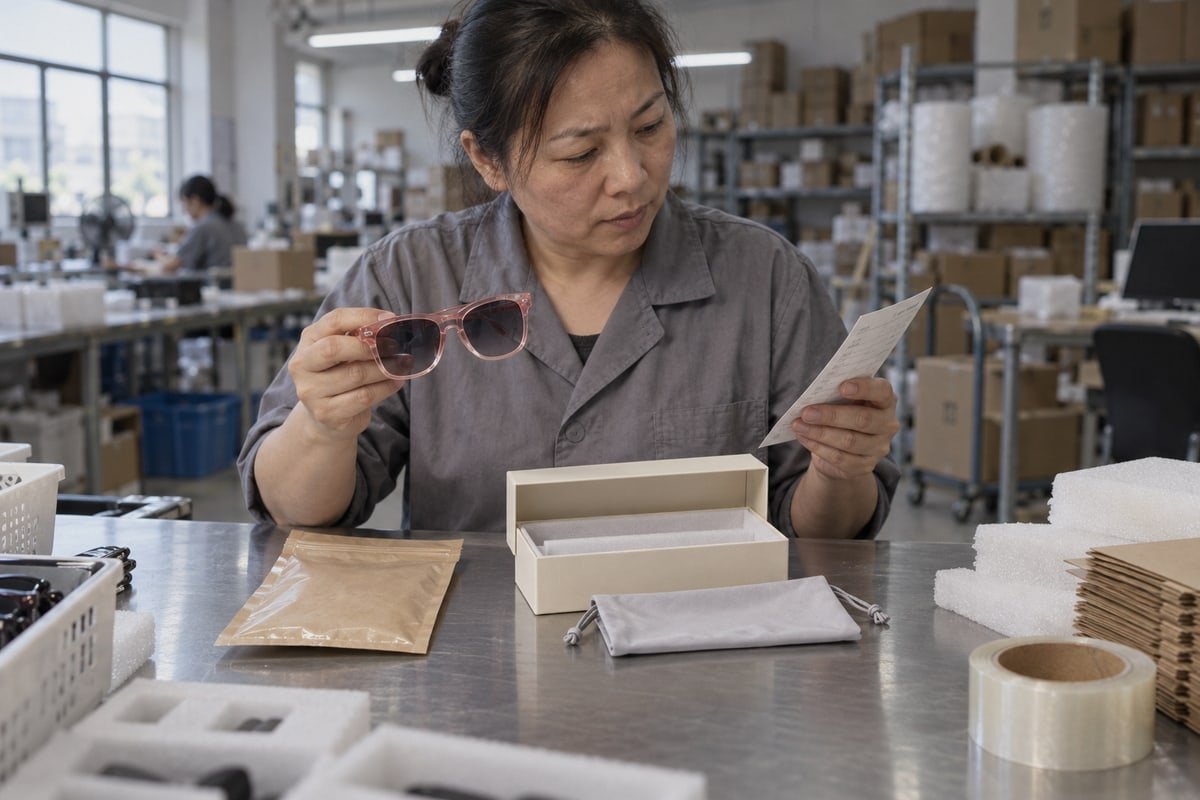
Retail packaging for TR90 & TPEE kids sunglasses often gets decided last FSC-certified kraft 1. In our Taizhou workshop, we have seen good frames lose sales because the box was an afterthought.
Choose retail packaging for TR90 and TPEE kids sunglasses by matching the child’s age band, the sales channel, and the brand promise. Pair a microfiber pouch with a printed retail box for retail, use polybags for wholesale, protect lenses and hinges, and lock labeling, warnings, and barcodes before sampling.
That is the short answer. The longer answer covers four practical questions. I will walk through protection, shelf appeal, cost, and safe materials, in that order.
How do I choose packaging that keeps flexible TR90 & TPEE frames protected during shipping and retail display?
Last spring, our QC team opened a returned carton and found polarized lenses 2 scuffed by loose spec cards. The frames were fine. The packaging had failed.
Protect flexible TR90 and TPEE frames with a soft microfiber pouch as the first layer, a rigid inner box or EVA case that stops compression, and a fitted insert that holds lenses off surfaces. Keep the lens protection sticker on until sale and pack in outer cartons with dividers.
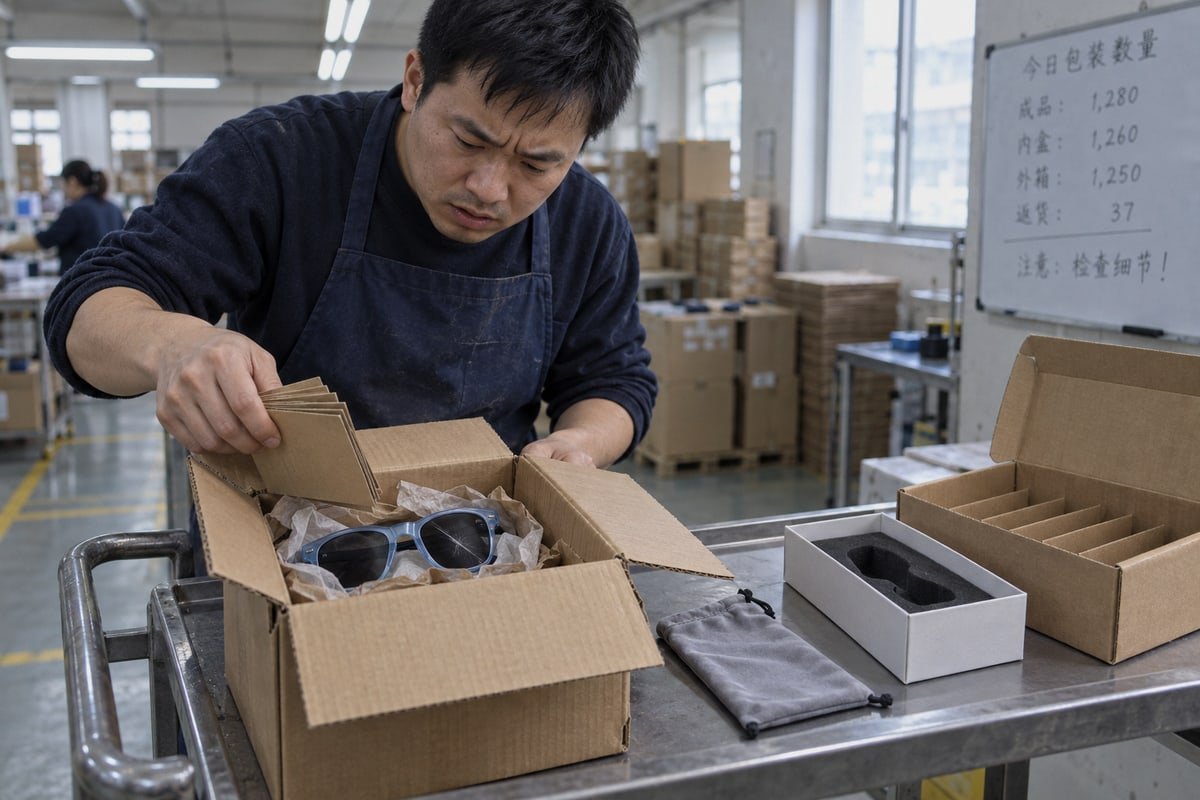
Flexible frames create a false sense of security. TR90 and TPEE are impact-resistant frames. A toddler can twist a TPEE temple almost flat and it springs back. But the lens is still a lens. The glossy translucent finish on a coral-pink gradient frame still scratches. The metal rivet hinge 3 still loosens if the temple is forced in the wrong direction inside a tight box. So the packaging has to protect the parts that do not bend.
Think in layers, not in one box
I ask buyers to picture three layers. The first layer touches the frame. The second layer stops crushing. The third layer survives the freight journey.
| Layer | Purpose | Typical options | Watch out for |
|---|---|---|---|
| Contact layer | Stops scratches on lenses and gloss finishes | Microfiber cleaning pouches, tissue sleeve, lens sticker | Rough paper inserts rubbing the lens |
| Structural layer | Stops compression and hinge stress | Printed retail box with insert, EVA case, protective hard cases | Boxes too small for the folded frame |
| Transit layer | Survives stacking, humidity, and handling | Inner box of 20 pcs, 5-ply outer carton, dividers | Overpacked cartons above the weight limit |
Match the layer to the frame material
TPEE toddler frames are soft and slightly rubbery. They can pick up a dent from a hard insert edge if they sit compressed for six weeks at sea. We prefer a pouch inside a box with a loose-fit insert. TR90 youth frames are firmer and lighter. They hold their shape well, so a snug die-cut insert works fine and looks neater through a window.
A packing spec you can copy
A common wholesale sunglasses packaging spec is 1 pc per opp bag, 20 pcs per inner box, and 500 pcs per carton. That is fine for bulk distribution. For retail, we replace the opp bag with a pouch and a single retail box, then keep the same 20-per-inner-box logic so the carton count stays predictable. On our TR90 frames with TPEE temples, we also fold the temples fully and check that the insert clears the hinge rivet. Small details like that are what a pre-production sample is for.
What packaging design options can help my kids' sunglasses brand stand out on store shelves?
A buyer from Melbourne once told me her frames sold slower than a competitor's, even though hers were better. The competitor's box had a window. Hers did not.
Kids' sunglasses packaging stands out with a transparent window that shows frame color, bold high-contrast graphics with playful type, a soft-touch matte finish, a hanging tab for peg displays, and a visible safety seal. Second-life boxes and QR-linked try-on filters add extra shelf appeal.
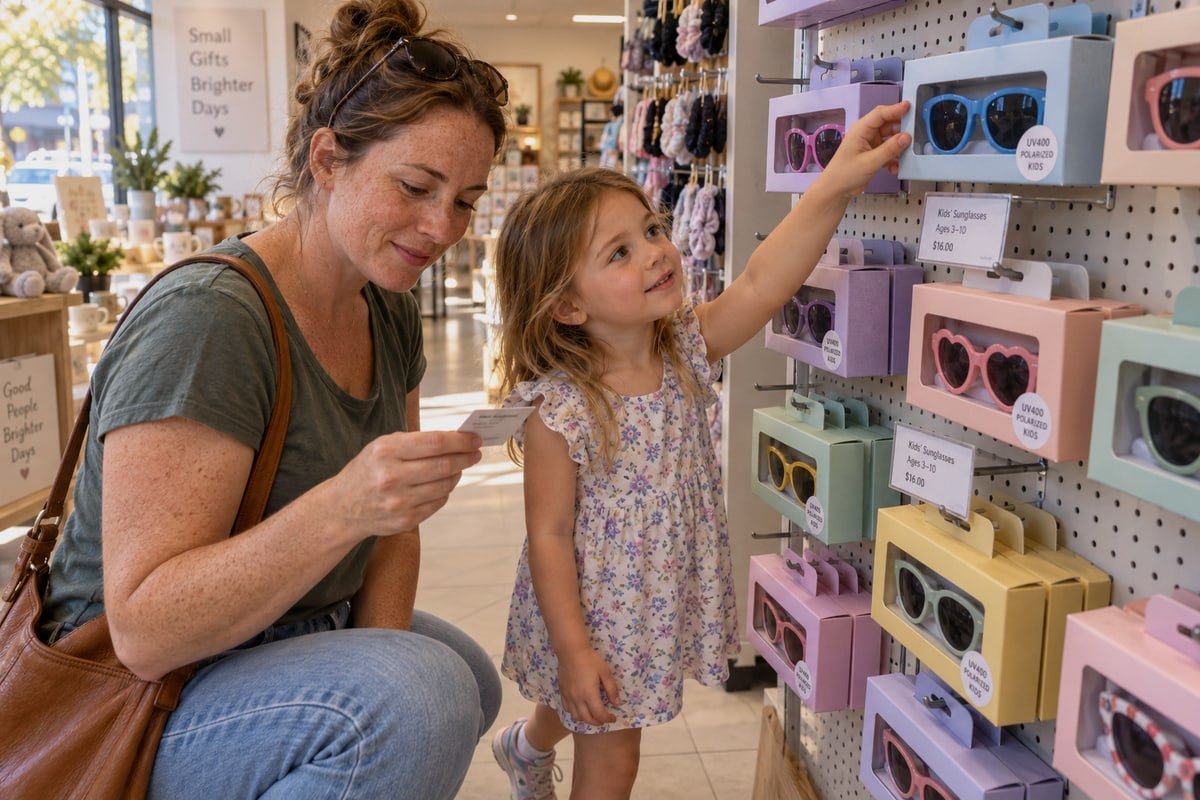
Shelf design has two audiences. The child sees color first. The parent reads the back panel. A good box serves both without confusing either. Here is how I break down the options that come up most often when we build custom branding options for a new line.
Design features ranked by impact
| Feature | Who it targets | Why it works | Cost note |
|---|---|---|---|
| High-clarity window | Child and parent | Shows a translucent sky-blue or coral gradient frame without handling | Low to medium |
| Bold colors and playful type | Child | Grabs attention at eye level in impulse zones | Low |
| Soft-touch matte finish | Parent | Mirrors the rubbery feel of TPEE and signals quality | Medium |
| Integrated hanging tab | Retailer | Fits peg hooks and point of purchase displays with a small footprint | Low |
| Certified Safety seal | Parent | States CPSIA or EN71 compliance where it can be seen | Low |
| Material iconography | Parent | Explains why flexible frames justify a higher price | Low |
| QR code with AR try-on | Child and parent | Lets kids preview styles before the box is opened | Medium |
| Second-life fold-out box | Child | Converts into a desk glasses holder or small toy | Medium to high |
Start with the window
If I could only pick one feature, it would be the window. Our translucent frames sell on color. A glossy pink-to-lavender gradient or a candy-blue crystal front does the selling if the parent can see it. A window also reduces in-store handling, which means fewer smudged lenses and fewer damaged hinges before purchase.
Design the unboxing, not just the front panel
Unboxing experience design matters more for online sales, but it also matters for gifts. A box that opens cleanly, with the pouch presented on top and the spec card underneath, feels considered. We test this on the sample bench. If the pouch snags or the insert flips out, we change the die line before printing. Simple things, done early, make the brand feel bigger than it is.
Keep it honest for parents
Playful graphics should never crowd the compliance panel. The UV400 or polarized claim, the age range, and the warning text 4 need clean space. I would rather shrink a cartoon than shrink a warning.
How do I balance custom branding needs with cost when ordering retail packaging in bulk?
Every packaging quote we prepare forces the same choice: spend on the box, or spend on the frame. Neither answer is always right, so we run the numbers together.
Balance custom branding and cost by using tiered packaging: a polybag and plain carton for wholesale, a logo pouch plus printed retail box for retail, and a hard case for gift sets. Freeze artwork, labels, and barcodes before sampling so bulk orders avoid costly reprints.
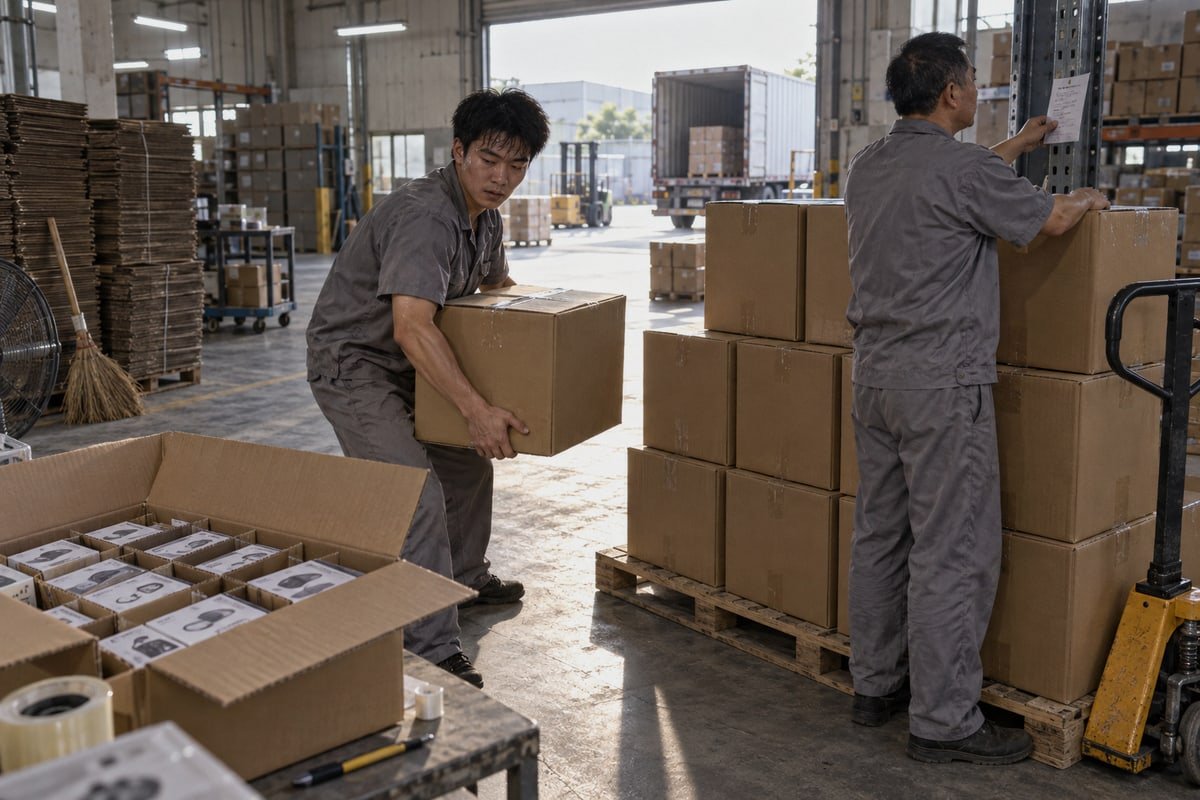
Two objections come up in almost every first call. The first buyer says, "Keep packaging minimal, I do not want to pay for a box that ends up in the bin." The second buyer says, "I need full retail branding or my distributor will not list it." Both are right for their channel. The mistake is treating packaging as one fixed decision for every SKU.
The three-tier approach
We resolve this by offering tiers on the same frame. Here is the structure we quote most often.
| Tier | Typical contents | Indicative unit cost | Best channel |
|---|---|---|---|
| Basic | 1 pc opp bag, 20 pcs inner box, 500 pcs carton | Lowest | Wholesale, promotional, bulk importers |
| Retail | Logo microfiber pouch plus full-color retail box with custom insert and spec card | Retail box around $0.80–1.50 | Brand retail, online marketplaces |
| Premium | Pouch plus protective hard case or EVA case plus gift box | Highest | Gift sets, department stores, optical shops |
The retail box figure comes from typical OEM quotations for full-color printing, a custom insert, and a spec card. Exact pricing shifts with size, finish, and quantity. Soft-touch lamination, spot UV, or a window film each add a little. A hanging tab adds almost nothing.
Where the real savings are
The biggest cost is not the box. It is the reprint. If a barcode is wrong, or a market-specific warning is missing, or the age label changes after printing, the whole run is waste. That is why we ask buyers to freeze artwork, warning inserts, hangtags, and carton marks before the sample stage. We then include the packaging in the pre-production sample so the buyer approves frame and box together.
Lower risk by starting with existing styles
Our roughly 800 existing styles let a new brand skip mold investment. The same logic applies to packaging. A buyer can start with our standard box die line, add a logo and a color scheme, and test the market. Once sell-through is proven, they move to a fully custom structure. That path keeps the first order affordable without looking generic on the shelf.
What sustainable or child-safe packaging materials should I consider for my kids' eyewear line?
Years ago we learned that a sturdy box with glossy lamination can undo the eco story of a TPEE frame. Now we ask about ink and coating first.
Consider FSC-certified kraft or recycled paperboard boxes, soy or food-grade inks, BPA-free coatings, recycled microfiber pouches, and reusable EVA cases. Avoid small loose parts, sharp staples, and plastic windows a toddler could tear off. Print CPSIA or EN71 compliance clearly for parents.
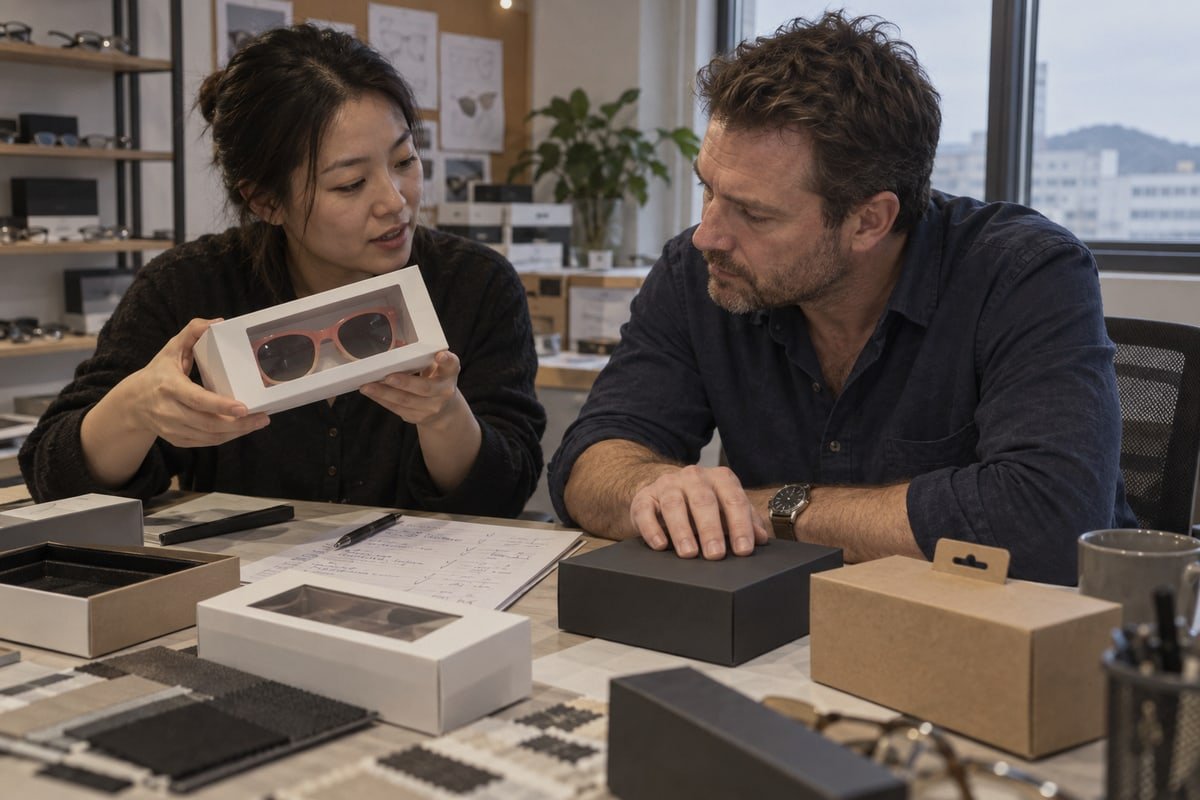
Parents who buy flexible, environmentally friendly frames expect the box to match. They notice if the outer carton is plain kraft and the retail box is wrapped in shiny plastic film. So we treat sustainable packaging solutions as a brand consistency issue, not a marketing extra.
Safe first, then sustainable
Child safety comes before recyclability. A toddler will chew a box corner. A four-year-old will pull at a window film. So the materials need to be safe if they end up in a mouth, and the structure needs to avoid choking hazards.
| Material choice | Safety benefit | Sustainability benefit | Trade-off |
|---|---|---|---|
| Recycled or FSC paperboard box | No plastic shards if torn | Recyclable, lower carbon than rigid plastic | Less moisture resistance |
| Food-grade or soy-based inks | Safe if chewed | Lower VOC emissions | Slightly muted brights |
| BPA-free materials in coatings and windows | No BPA migration | Easier to certify for kids' products | Higher cost than standard film |
| Recycled microfiber cleaning pouches | Soft, no hard edges | Reuses plastic bottle fiber | Color range is narrower |
| Reusable EVA case | Protects frame for years | Replaces single-use packaging | Adds weight and cost |
| Paper window instead of film | Nothing to tear off and swallow | Fully recyclable box | Product is less visible |
Materials to avoid on toddler products
We steer buyers away from metal staples, small plastic clips, loose foam beads, and glitter coatings. Each one is either a choking risk or an ingestion risk. Hangtags should be attached with a paper loop rather than a plastic barb where possible, especially for the TPEE toddler range.
Make compliance visible
A "Certified Safety" panel that names the standard, such as CPSIA for the US or EN71 for Europe, builds trust faster than any slogan. It also forces the supply chain to stay honest. We ask buyers to confirm which markets they ship to, then we align the warning insert, age label, and UV claim with those markets before print. Eco-friendly eyewear cases and kraft boxes look good, but the compliance text is what lets a retailer list the product.
The middle ground that works
Not every line needs a fully compostable box. A recycled paperboard 5 retail box, soy ink, a paper-loop hangtag, and a recycled pouch cover most of the parent's concerns at a sensible cost. That combination also keeps the shelf presence we discussed earlier.
Conclusion
Packaging chosen late costs sales, returns, and trust. Decide age band, channel, and labels first, then pick the box. We help brands get that right from the first sample.
Interested in sourcing the products mentioned in this article? See details and request a quote here:
Footnotes
1. Official guide to FSC labels ensuring paper products come from responsibly managed forests. ↩︎
2. Medical overview of how polarized lenses function to reduce glare and protect eyes. ↩︎
3. General reference for the structural components and history of eyewear frames. ↩︎
4. CPSC requirements for safety labeling and warning text on products intended for children. ↩︎
5. EPA resource providing data and environmental context for recycled paperboard and packaging materials. ↩︎
More Articles You Might Like



Looking for a Reliable Kids Eyewear Partner?
Explore 800+ ready styles and full OEM/ODM support tailored to your brand.
Get in Touch English
  Español de México
  Deutsch
  Français
  日本語
日本語  العربية
  Português do Brasil