How to Choose the Most Cost-Effective Quantity Tier for Kids’ Optical Frames?

Choosing the [most cost-effective quantity tier](https://okayeyewear.com/how-choose-most-cost-effective-order-quantity-kids-sunglasses/) for kids’ optical frames trips up even experienced buyers. On our production line in Taizhou, I see the same mistake repeatedly: buyers chase the lowest wholesale unit price 1, order too many frames, and then watch capital sit frozen in dead stock while children’s style preferences move on. The frames were cheap per unit — but expensive per sold pair. The good news is that with a clear framework, you can pick the tier that actually protects your margin.
The most cost-effective quantity tier for kids’ optical frames is the one with the lowest total landed cost per sold frame, not the lowest unit price. Match order size to a 60–90 day sell-through window: ready stock for testing, 200–500 piece MOQ tiers once demand is proven.
Let me break this down step by step. We will look at typical MOQs, how tiered pricing structures really work, how to scale up safely, and the hidden costs most buyers miss.
What MOQ Should I Expect When Sourcing Kids' Optical Frames from a Factory?
A buyer from Australia once emailed me asking why our Minimum Order Quantity (MOQ) changed depending on what she wanted. The answer taught her more about factory economics than any price list could.
Expect a Minimum Order Quantity of roughly 300–500 pieces per style for fully custom OEM kids' optical frames, 200–300 pieces for new colors on existing molds, and as low as 1 piece per style when buying from a factory's ready-stock catalog.

MOQ is not an arbitrary number a factory invents to pressure you. It reflects real production economics. When we run TR90 material frames through injection molding 2, each color change means purging the machine, recalibrating, and accepting material waste. Spreading that setup cost over 50 pieces makes each frame expensive. Spreading it over 300 pieces makes it reasonable. That is why the MOQ tiers exist.
The Three Common MOQ Tiers
Here is how quantity tiers typically break down when sourcing children's eyewear:
| Tier | Typical Quantity | Best For | Customization Level |
|---|---|---|---|
| Ready stock | From 1 piece per style | Market testing, small opticians, fast replenishment | None or minimal (existing colors) |
| Existing mold, new color | 200–300 pieces per style | Brands with proven styles wanting brand colors | Color, logo, packaging |
| Full custom OEM | 300–500 pieces per style | Established brands with sales data | New design, private label eyewear manufacturing |
Why Ready Stock Changes the Math for New Brands
Our factory keeps around 800 existing styles that buyers can choose from. This matters more than most first-time buyers realize. A new kids' brand in Japan or Europe can build a launch collection from existing designs, add their logo at a modest quantity, and skip mold investment entirely. That removes the biggest fixed cost from the equation.
Children's frames are generally 10–20% cheaper to produce than comparable adult frames because they use less material. Typical FOB costs 3 at MOQ run around $1.50–4.00 per unit for TR90 kids' frames and $2.50–5.00 for silicone infant frames. But remember: those attractive numbers only apply once you hit the quantity threshold. Below it, you are paying ready-stock pricing — which is often still the smarter choice, as we will see.
How Do Unit Costs Change as I Move Between Quantity Tiers?
There is a trade-off I walk buyers through almost every week: the gap between the price on the quotation and the true cost of each frame that actually sells. The two numbers behave very differently as quantities rise.
Unit costs typically drop 15–30% as you move from ready stock to custom MOQ, and another 10–20% at bulk tiers above 1,000 pieces, because economies of scale spread setup, tooling, and compliance costs. However, total cost per sold frame can rise if extra units become dead stock.
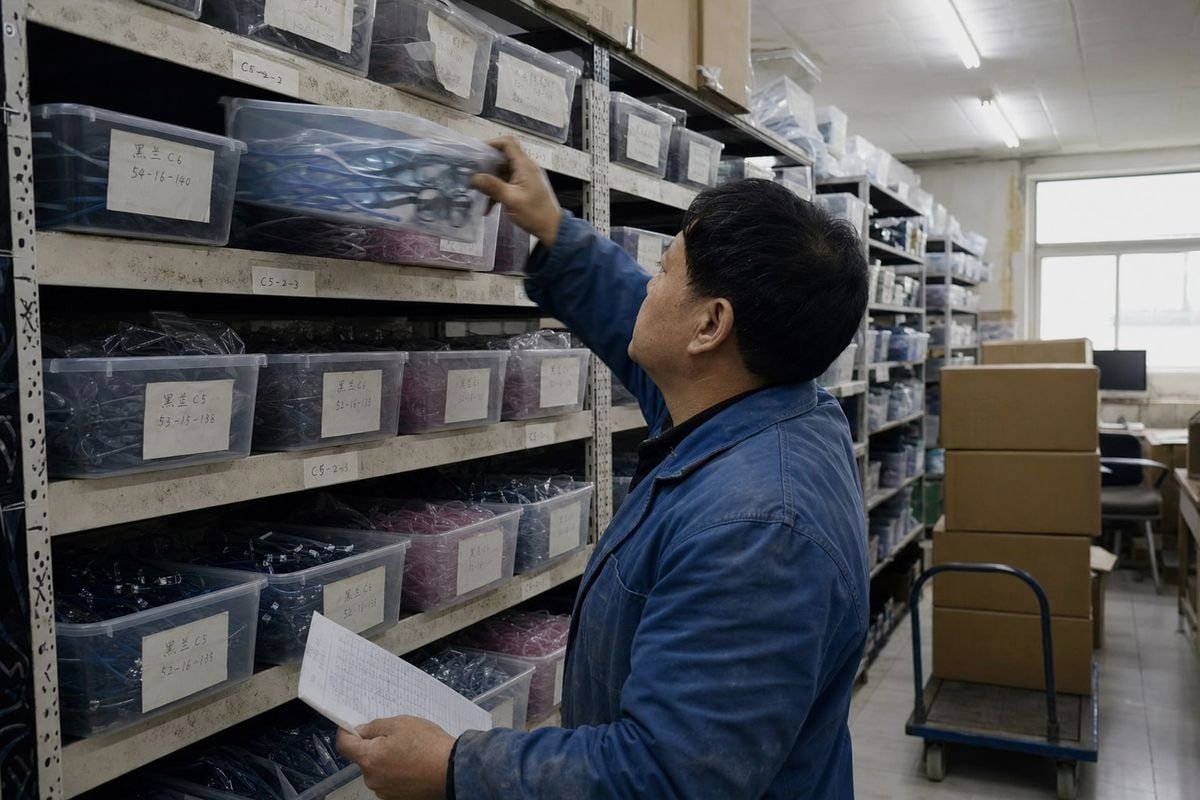
Tiered pricing structures reward volume because fixed costs get divided across more units. Mold amortization, safety testing per SKU, machine setup, and quality control 4 all cost roughly the same whether you order 300 or 3,000 pieces. Bulk ordering discounts are real. But they are only half the picture.
The Two Curves Every Buyer Should Compare
Think of two curves. The first is the wholesale unit price, which falls as quantity rises. The second is your cost per sold frame, which falls at first — then climbs again once unsold inventory, storage, and markdowns pile up. The most cost-effective tier sits where the second curve bottoms out, not where the first one does.
| Order Quantity | Illustrative Unit Price | If Sell-Through Is 95% | If Sell-Through Is 60% |
|---|---|---|---|
| 50 (ready stock) | $4.50 | ~$4.74 per sold frame | ~$7.50 per sold frame |
| 300 (MOQ) | $3.20 | ~$3.37 per sold frame | ~$5.33 per sold frame |
| 1,000 (bulk) | $2.60 | ~$2.74 per sold frame | ~$4.33 per sold frame |
Notice what happens at 60% sell-through: the bulk order's cost per sold frame is nearly as high as the ready-stock price at 95% sell-through — before you even add storage and markdown losses. Kids' eyewear makes this risk worse than adult eyewear. Children outgrow frames every 1–2 years, styles shift quickly with age groups, and a color that thrilled parents this season can look dated the next.
Where Bulk Genuinely Wins
Bulk tiers make sense for evergreen items. In our experience exporting to buyers in 20+ countries, neutral-colored flexible TR90 frames with TPEE temples sell steadily year after year. Trend-driven pastel or character-style frames do not. A hybrid strategy — high-volume tiers for evergreen basics, small-batch restocks for trend colors — consistently beats a single large bulk purchase.
Can I Start with a Smaller Order and Scale Up Without Losing Quality or Pricing Benefits?
One of our longest-standing distributor relationships started with a sample order of fewer than twenty ready-stock frames. Five years later, that buyer orders full custom OEM runs. Nothing about that path cost them quality — and it saved them from several expensive guesses.
Yes. Start with ready stock or the smallest MOQ to validate fit, comfort, and sell-through, then scale to custom tiers using real sales data. Reputable factories apply the same optical frame quality standards to small and large orders, and reward repeat buyers with better pricing over time.
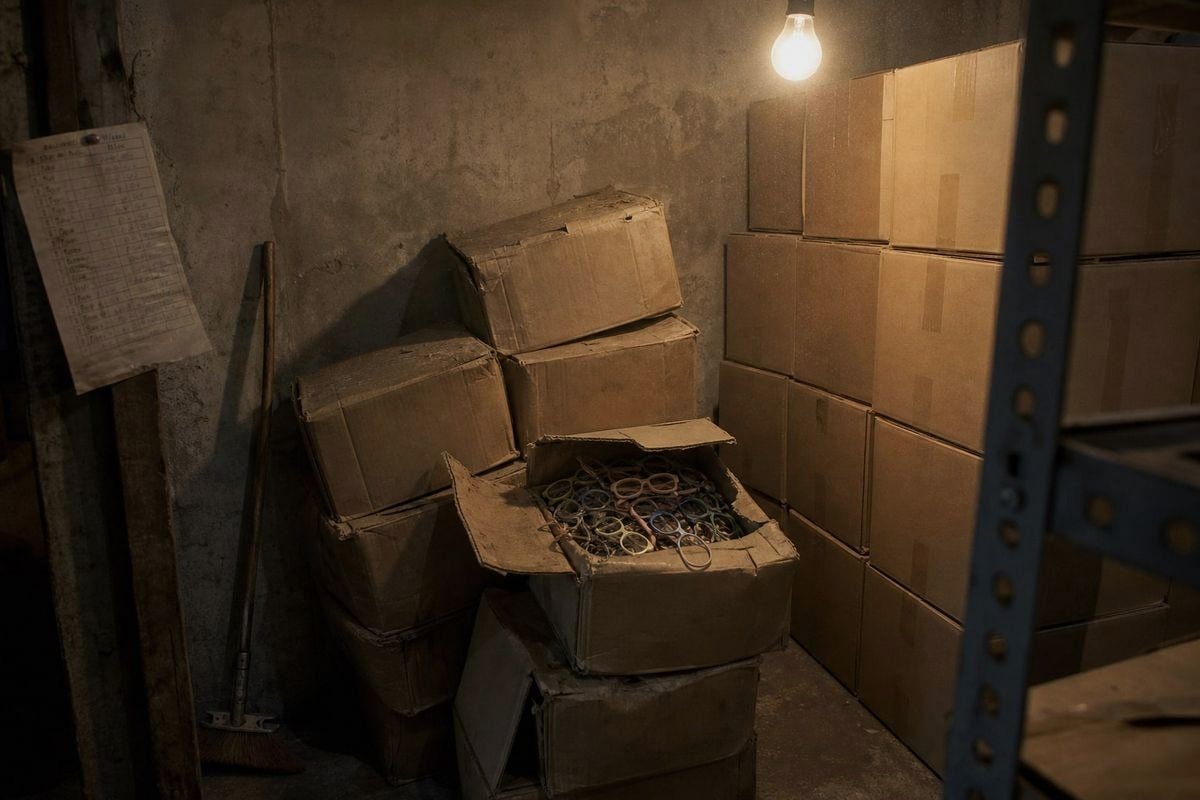
The fear I hear most often is that small orders mean second-rate treatment. At a properly run factory, that is simply not how it works. Our 5S-managed workshop applies identical quality control to a 30-piece ready-stock order and a 3,000-piece OEM run. The frames come off the same lines, from the same materials, checked by the same inspectors. What changes with quantity is customization depth and unit price — not safety or build quality.
A Practical Scaling Path
- Test with ready stock. Order small quantities across several styles and age segments. Little kids (3–6) need flexible, lightweight frames; big kids (7–9) need durability; teens (10–16) buy on style. Test all three if you serve all three.
- Read your data. Track which styles, colors, and sizes sell in 60–90 days. Note return reasons and breakage feedback from parents.
- Move winners to the color/logo tier. Take proven styles to the 200–300 piece tier with your brand colors and logo. Your SKU diversification stays controlled because you are only scaling validated designs.
- Reserve full custom OEM for proven demand. Commit to 300–500 piece custom runs only when a style has repeat sales history and stable demand.
How Scaling Affects Your Pricing Relationship
Factories value predictability. When a buyer places a small first order, communicates clearly, and returns with a larger one, we can plan capacity, hold materials, and often improve terms. Supply chain lead times 5 also shorten for repeat buyers, because specifications, packaging artwork, and QC criteria are already on file. In other words, starting small does not lock you out of pricing benefits — it builds the track record that unlocks them. What genuinely hurts pricing is erratic ordering: rushing into bulk, canceling, then disappearing for a season.
What Hidden Costs Should I Consider Beyond Just Per-Unit Price When Choosing an Order Quantity?
A hard lesson from my early years in this trade: two quotations that differ by $0.40 per frame can flip completely once you add everything that happens after the frames leave the factory gate.
Beyond unit price, account for freight and shipping costs, customs duties, compliance testing per SKU, quality inspections, warehousing, insurance, breakage and warranty exposure, and markdown risk. Together these typically add 15–30% over the ex-factory price — and they scale differently at each quantity tier.
Landed cost is the number that matters. Here is how the hidden costs behave as your order quantity changes:
| Cost Component | Small Orders (Ready Stock) | MOQ / Bulk Orders | Buyer Takeaway |
|---|---|---|---|
| Freight and shipping costs | High per unit (air or small parcels) | Low per unit (consolidated sea freight) | Bulk wins clearly here |
| Compliance/safety testing | Spread over few units — high per frame | Spread over many units — low per frame | Fixed per SKU; favors volume |
| Storage and carrying cost | Minimal | Grows with every month unsold | Small orders win |
| Markdown and dead-stock risk | Low exposure | High if styles miss | Small orders win |
| Warranty/breakage reserve | Easy to manage | Must be budgeted at scale | Depends on frame durability |
Compliance Is a Fixed Cost — Use It Wisely
Children's eyewear must meet safety standards 6, and testing is charged per SKU, not per unit. This cuts both ways. It makes tiny custom orders look expensive on paper. But it also means small ready-stock orders of already-compliant frames can be cheaper overall, because the factory has absorbed that testing across many buyers. When we develop TPEE and TR90 frames, safety and flexibility are engineered in from the start — a broken or unsafe frame costs a brand far more in returns and reputation than any unit-price saving.
Inventory Turnover Is the Silent Margin Killer
Your inventory turnover rate 7 deserves as much attention as your quotation. Kids' frames are a high-churn category: sizes are age-specific, colors are trend-sensitive, and replacement cycles run 1–2 years for younger children. A frame that sits nine months in your warehouse ties up cash, invites markdowns, and may age out of demand before it sells. When you calculate cost per sold frame across a realistic 60–90 day sell-through window, the "expensive" smaller tier often turns out to be the genuine bargain.
Conclusion
Chasing the lowest unit price sinks capital into dead stock. Instead, choose the tier with the lowest cost per sold frame: test small, validate demand, then scale proven styles confidently.
Footnotes
1. Alibaba is a leading sourcing platform illustrating how wholesale unit pricing tiers work. ↩︎
2. Explains the manufacturing process behind color-change setup costs mentioned in the article. ↩︎
3. Standard reference for Free On Board (FOB) shipping terms and cost allocation. ↩︎
4. Authoritative Wikipedia entry explaining quality control principles and manufacturing standards. ↩︎
5. Background concept on supply chain management explains why repeat orders shorten lead times. ↩︎
6. US CPSC regulates children’s product safety standards relevant to kids’ eyewear compliance. ↩︎
7. Wikipedia explains inventory turnover, a key metric for evaluating dead stock risk. ↩︎
More Articles You Might Like
August 5, 2026
Bio-Based vs Regular Cellulose Acetate: What's the Difference for Kids' Frames?
August 5, 2026
How Recyclable Are Kids' Optical Frame Materials, and What Eco-Friendly Alternatives Exist?
August 5, 2026
Do Kids Optical Frames Whiten or Age in Storage, and How to Control Warehouse Conditions?
Looking for a Reliable Kids Eyewear Partner?
Explore 800+ ready styles and full OEM/ODM support tailored to your brand.
Get in Touch English
  Español de México
  Deutsch
  Français
  日本語
日本語  العربية
  Português do Brasil