How to Choose Kids’ Sunglasses Displays for Different Store Sizes?
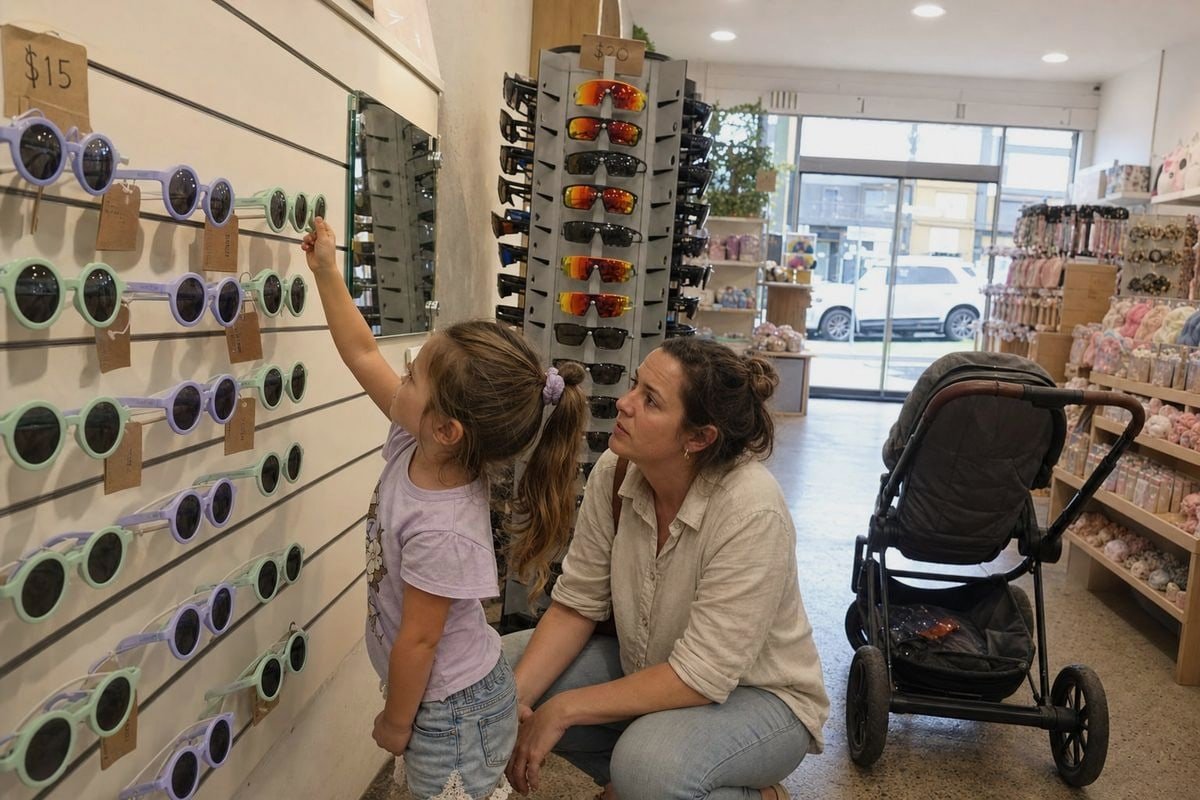
Choosing kids’ sunglasses displays sounds simple until buyers tell me their frames sit unsold in a corner. At our Taizhou factory, we hear this problem almost every week.
Choose kids’ sunglasses displays by matching footprint to store size: wall-mounted or countertop units for shops under 500 sq ft, rotating spinner racks for medium stores, and freestanding multi-tier or interactive displays for large formats. Always keep shelves at child-eye level with mirrors nearby.
The wrong display hides your product, blocks strollers, and kills impulse sales. The right one turns children into your best salespeople. Below, I break down each store size and display type.
What Display Options Work Best for Small Boutique Spaces with Limited Counter Room?
A boutique owner in Melbourne once told me her counter held exactly forty centimeters of free space. We shipped her flexible TR90 frames — and helped her rethink the display first.
For small boutiques under 500 sq ft, vertical slatwall panels, wall-mounted pegboard strips, and slim countertop stands work best. They preserve aisle width for strollers, keep kids' sunglasses at child-eye level, and hold 12–24 SKUs without consuming floor space.
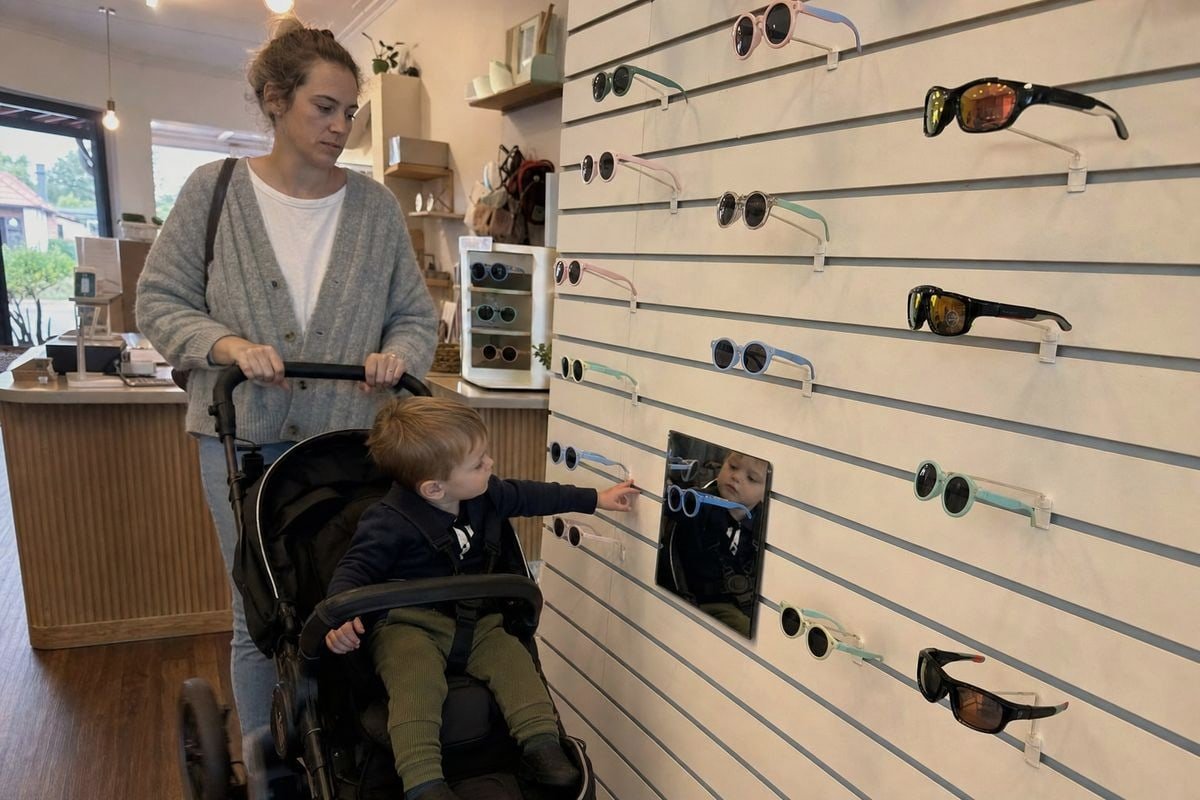
Small stores face one hard truth: every square foot must earn money. So the display cannot steal walking space. In our experience supplying kids' and baby brands across 20+ countries, small boutiques do best when they go vertical instead of horizontal.
Why Vertical Beats Horizontal in Tight Spaces
Parents push strollers. Kids run beside them. If a floor rack narrows your aisle below one meter, families simply skip that section. A wall-mounted display avoids this entirely. It also puts frames at multiple heights, so you can place playful pastel styles — like our round two-tone frames — at a child's eye line, around 90–110 cm from the floor.
Small-Space Display Comparison
| Display Type | Footprint | SKU Capacity | Best Position |
|---|---|---|---|
| Slatwall panel | Zero floor space | 20–40 pairs | Main wall near entrance |
| Countertop stand | ~30 × 30 cm | 6–12 pairs | Beside the register |
| Wall-mounted pegboard strip | Zero floor space | 12–24 pairs | End of an aisle |
| Hanging rail with clips | Zero floor space | 8–16 pairs | Under a shelf |
A few more tips from what we have seen work. First, add a small acrylic mirror directly on the wall panel. Parents decide fast when a child can try frames immediately. Second, keep density low. Six well-spaced styles sell better than twenty crammed together. Third, choose sturdy materials. Kids grab, pull, and twist displays — the same reason we build our frames in flexible TPEE and TR90. The display should survive the same treatment the glasses do.
How Do I Choose a Display That Matches My Store Layout and Customer Flow?
When we prepare retail-ready packaging for a new client, I always ask for photos of their store. Twice last year, that one question changed the entire display recommendation.
Map your customer flow first: place kids' sunglasses displays along the natural walking path, near the children's apparel zone or checkout. Match the display's shape to the traffic pattern — spinner racks for open loops, wall units for narrow racetrack layouts.
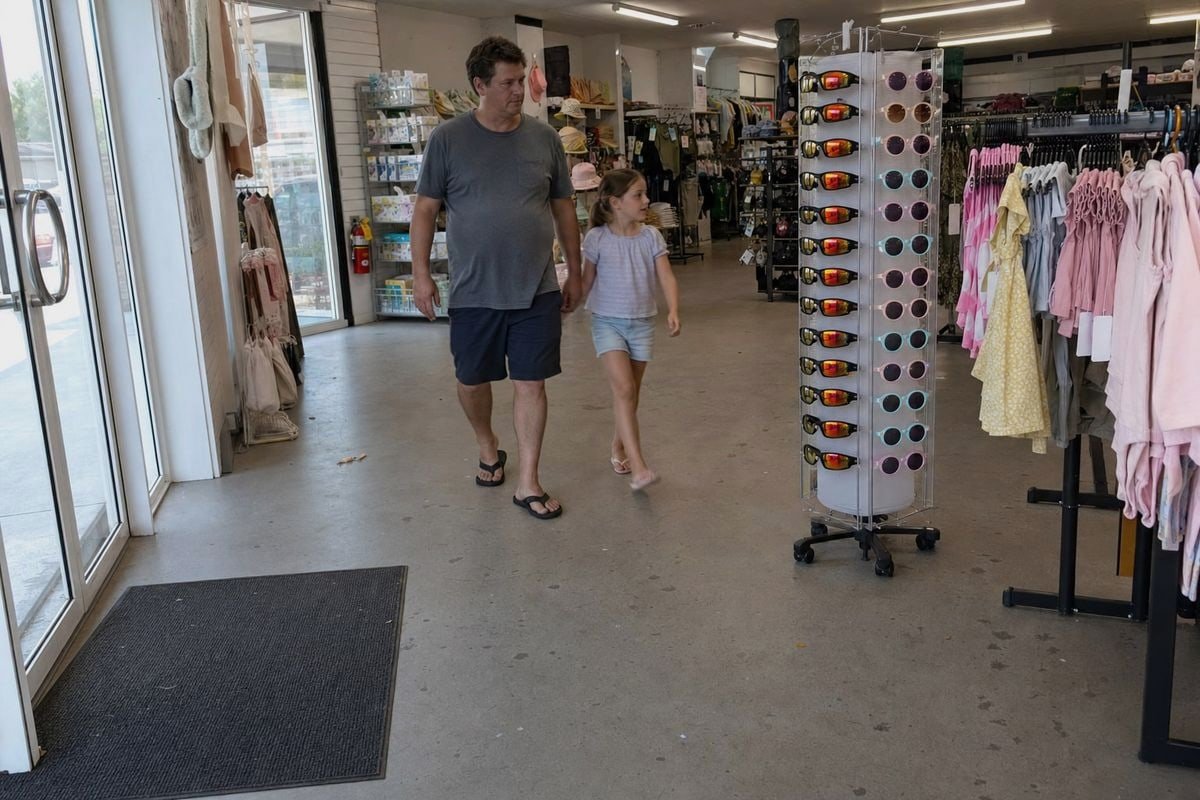
Store layout decides where eyes go before feet do. So the display must sit where families already walk, not where you have leftover space. Here is how I break it down when advising buyers.
Step 1: Identify Your Layout Type
Most kids' and baby stores follow one of three layouts. A grid layout uses parallel aisles. A racetrack layout 1 guides shoppers in a loop. A free-flow layout scatters fixtures in an open plan. Each one changes what display works.
Step 2: Find the Decompression Zone
The first two meters inside the door are a dead zone. Shoppers adjust to the space there and notice almost nothing. Never place your sunglasses display in that zone. Place it just past it, on the right side, since most shoppers turn right.
Step 3: Match Display to Flow
| Store Layout | Traffic Pattern | Recommended Display |
|---|---|---|
| Grid | Straight aisle runs | Endcap or slatwall at aisle ends |
| Racetrack / loop | One continuous path | Wall units along the loop, mirror at pause points |
| Free-flow | Wandering, exploratory | Spinner rack near the center or apparel zone |
Step 4: Anchor to a Companion Category
Kids' sunglasses are an impulse buy. Parents rarely enter a store planning to buy them. So place the display next to swimwear, hats, or outdoor gear. When we developed our UV400 polarized lens range 2, buyers who paired the display with sun-protection products reported far stronger attachment sales than those who isolated eyewear near optical sections. Finally, add a low mirror. A child who tries on a frame and smiles closes the sale for you.
Should I Choose Freestanding Floor Displays or Countertop Displays for My Store?
One trade-off I weigh constantly when quoting display accessories: capacity versus stability. A tall floor rack holds more, but a curious four-year-old can tip a poorly weighted one.
Choose freestanding floor displays if you have over 800 sq ft and 50+ SKUs; choose countertop displays for smaller stores, checkout impulse zones, or under 20 SKUs. Floor units maximize capacity, while countertop units maximize placement flexibility and cost less.
This is the question buyers ask us most often, so let me give you a direct comparison first, then the reasoning.
| Factor | Freestanding Floor Display | Countertop Display |
|---|---|---|
| Ideal store size | 800+ sq ft | Under 800 sq ft |
| SKU capacity | 48–144 pairs | 6–24 pairs |
| Typical cost | Higher | Lower |
| Mobility | Can relocate seasonally | Very easy to move |
| Child safety risk | Tipping if base is light | Falling if placed too high |
| Best use | Destination section | Impulse zone at register |
When the Floor Display Wins
A rotating spinner rack 3 is the workhorse of medium and large stores. It shows four faces of product in one compact footprint, so children can spin it and browse on their own. If you stock a wide range — say, sporty wraparound shield styles for active kids plus pastel round frames for everyday wear — a multi-tier spinner lets both categories live together without visual chaos. Just check two safety details: a weighted, wide base and rounded edges. Kids will spin it hard.
When the Countertop Display Wins
Countertop units shine at the register. Parents wait to pay, kids stand at counter height, and a small stand with six colorful frames triggers the classic "can I have this?" moment. They also suit seasonal testing. Several of our importer clients start a new market with one countertop unit of 12 styles from our existing 800-style catalog, then scale to floor racks once sell-through proves demand.
The Hybrid Answer
Honestly, many stores need both. Use a floor spinner as the main destination and a countertop unit as the impulse closer. The two placements catch different shopping moments.
How Can I Get a Custom Display Design That Fits My Brand and Store Size?
A procurement manager from Japan once sent us her brand's pastel color palette and asked if our packaging could match it. We matched the frames, the boxes — and pointed her toward a display in the same finish.
Work with your eyewear supplier or a POP display maker: share your store dimensions, brand colors, logo files, and SKU count. Request a matte or glossy finish that matches your branding, child-safe rounded edges, and a modular design that scales with seasonal inventory.
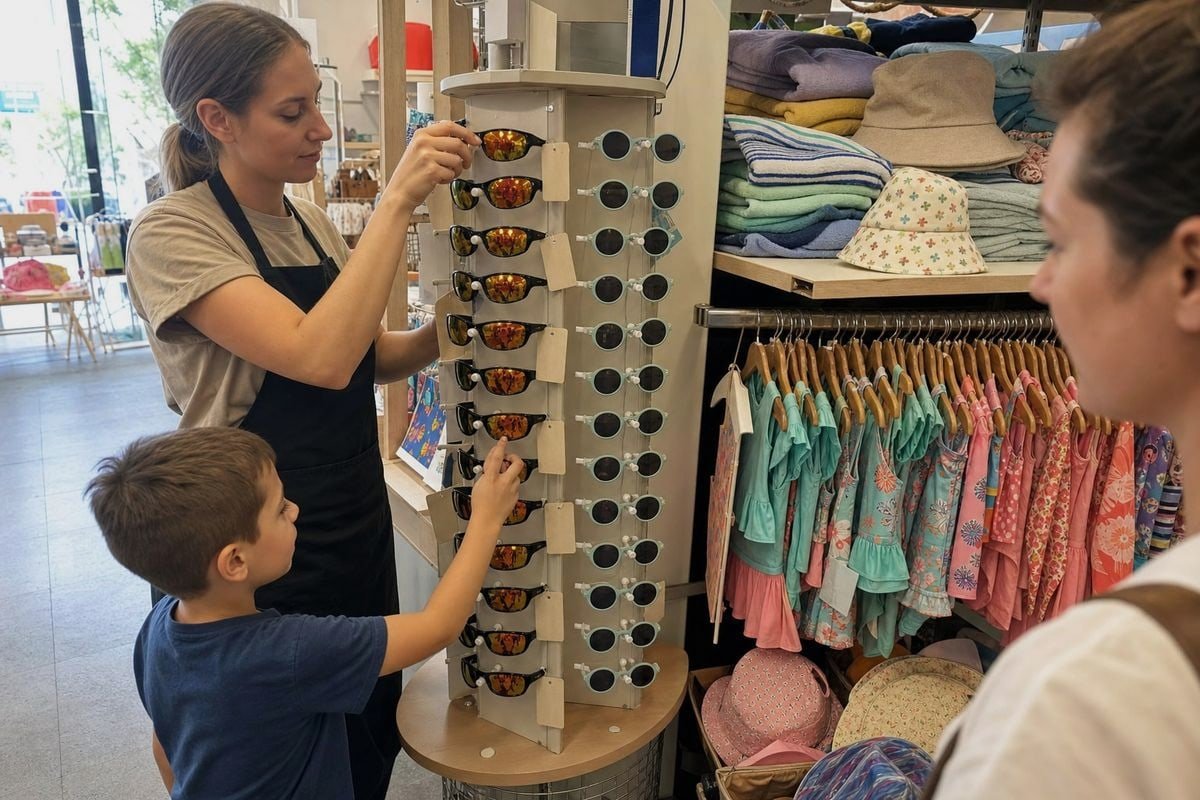
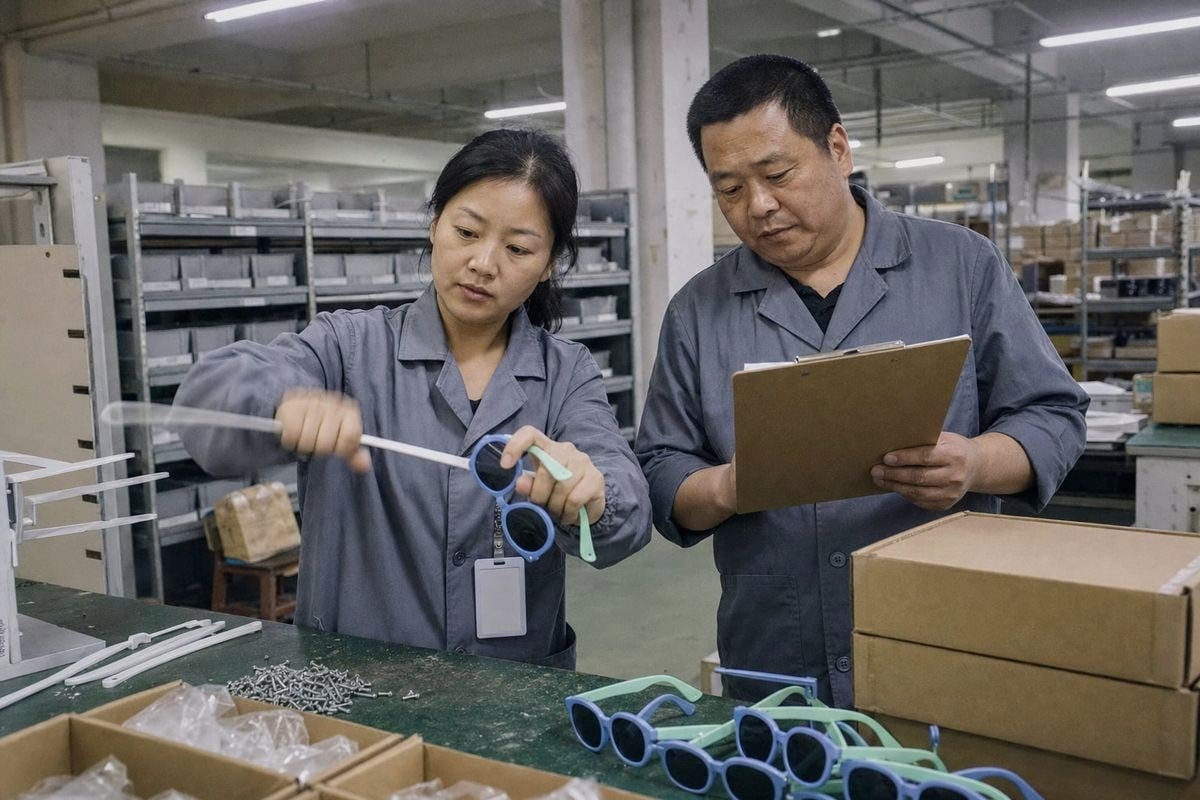
Custom displays sound expensive, but the process is more accessible than most new brands expect. Full OEM/ODM support 4 is the core of what we do — custom colors, logos, lenses, packaging, and accessories — and the display is simply the final layer of that same branded presentation. Here is the process I recommend.
A Simple Five-Step Custom Display Process
- Measure and photograph your space. Send exact counter or floor dimensions, plus photos of the intended spot. Guessing leads to displays that do not fit.
- Define your SKU plan. A 12-style boutique needs a very different structure than a 60-style flagship. Decide density per shelf before design starts.
- Share brand assets. Provide logo files, Pantone colors 5, and your preferred finish. A matte finish reduces glare and fingerprints in kid-heavy environments; glossy reads more premium but shows smudges.
- Demand child-safety specs. Rounded corners, no exposed screws, a stable base, and durable materials 6. We hold our flexible TPEE and TR90 frames to strict safety standards, and the fixture holding them should meet the same bar.
- Order a sample first. Test one unit in a real store for two to four weeks before committing to a full rollout.
Design Choices by Store Size
Modularity matters most. Choose a system where you can add tiers for summer peak season and remove them in winter. For larger formats, consider leaving space for a try-on mirror station or even a tablet screen, which differentiates your section from static small-store setups. And keep the visual language consistent: if your frames use soft pastel tones, a loud neon display fights your own product. The display should frame the eyewear, never compete with it.
Conclusion
Match your kids' sunglasses displays to store size, flow, and brand: go vertical in small shops, spin in medium ones, customize at scale — and always design for children first.
Footnotes
1. Background on standard retail layout types like racetrack, grid, and free-flow designs. ↩︎
2. WHO guidance on UV radiation supports the sun-protection claims behind UV400 lens marketing. ↩︎
3. Alibaba.com is a key sourcing platform for retail display fixtures like spinner racks. ↩︎
4. Explains the OEM/ODM manufacturing model referenced for custom display and eyewear sourcing. ↩︎
5. Pantone is the industry-standard color matching system used for brand-consistent display finishes. ↩︎
6. US child product safety authority governing durable, rounded, and non-hazardous fixture requirements. ↩︎
More Articles You Might Like

August 1, 2026
Should Factory Handle Kids Sunglasses Packaging & Labeling, or Use a Designated Supplier?

August 1, 2026
Own Warehouse vs Supplier Direct Fulfillment: Which Cuts Return Costs for Kids Sunglasses Brands?

August 1, 2026
Direct-to-Port Warehouse or Overseas Staging: Which Saves More on Kids Sunglasses Shipping?
Looking for a Reliable Kids Eyewear Partner?
Explore 800+ ready styles and full OEM/ODM support tailored to your brand.
Get in Touch English
  Español de México
  Deutsch
  Français
  日本語
日本語  العربية
  Português do Brasil