How to Ask Suppliers to Pre-Sort and Pack Kids’ Optical Frames by Store?
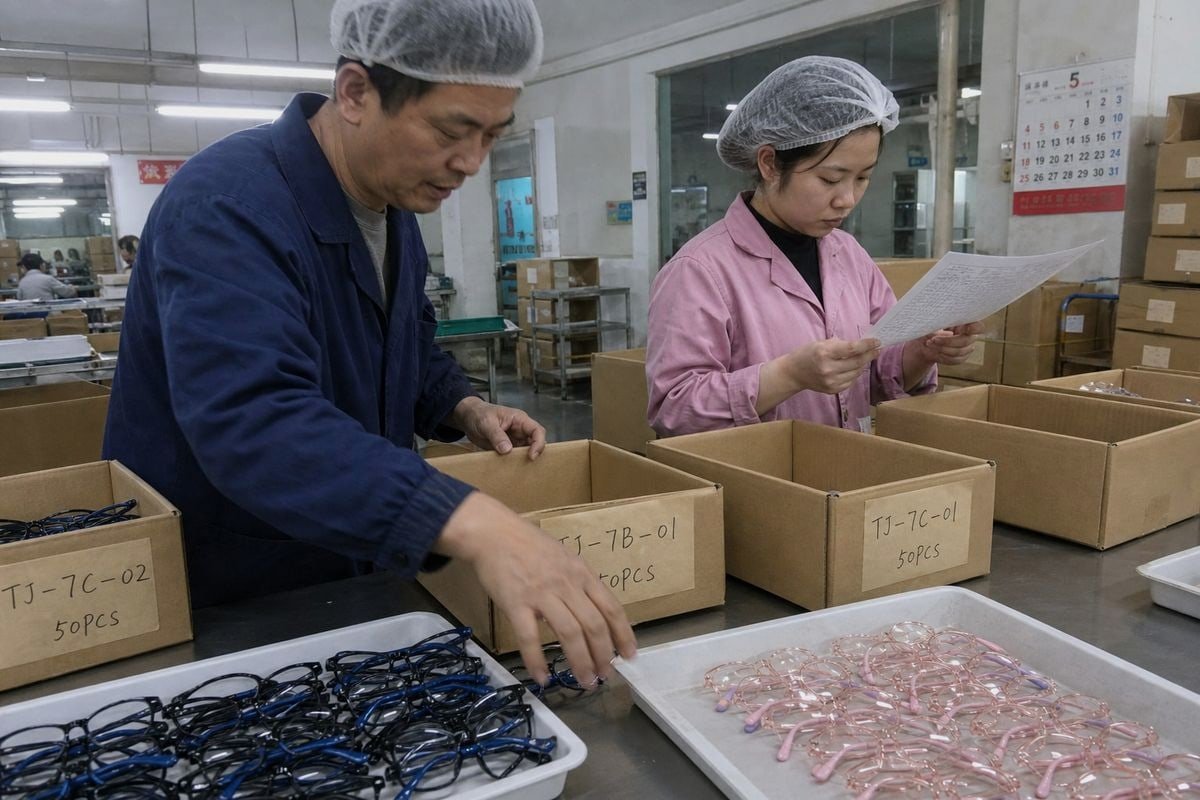
Asking suppliers to pre-sort and pack kids’ optical frames by store sounds simple — until mixed cartons arrive and your team spends days re-sorting multi-location retail distribution 1. Our factory sees this pain constantly.
To have suppliers pre-sort and pack kids’ optical frames by store, provide a store list with codes, SKU quantities per store, carton and inner-pack labeling rules, barcode formats, and shipping instructions in writing. Approve a packing sample before bulk production begins.
That is the short answer. The rest of this article breaks it down step by step, with templates, checklists, and the mistakes I see buyers make most often.
What information do I need to give my supplier for accurate store-by-store sorting?
A buyer from Australia once emailed us: "Just split the order across our 12 stores." That single sentence created three weeks of back-and-forth. Our packing team needed far more detail than that.
Give your supplier a store list with unique codes, a quantity matrix showing SKUs and colors per store, label content and barcode formats, inner-pack rules, destination addresses, and delivery deadlines. Clean input data is the foundation of accurate store-by-store sorting.

Pre-sorting is not a casual add-on. It is a retail operations spec 2, and it only works when the data behind it is complete. In our experience running purchase order fulfillment for kids' brands across 20+ countries, the orders that ship smoothly are always the ones with a proper allocation file attached to the PO.
The core data set
Here is what our packing team needs before we can build store cartons for children's optical frames:
| Data item | What it looks like | Why the supplier needs it |
|---|---|---|
| Store list with codes | ST-001 Sydney, ST-002 Melbourne | Codes go on every carton label |
| Quantity matrix | SKU × color × size × store | Defines exactly what goes in each box |
| Label specification | Text, barcode type, placement | Supports barcode labeling standards |
| Inner-pack format | Bags, trays, or sub-cartons | Prevents mixing inside master cartons |
| Ship-to details | One warehouse or direct-to-store | Sets shipping and routing instructions |
| Deadlines | Per store or per shipment | Drives the production schedule |
Kids' frames make this matrix bigger than you might expect. A children's range often carries more colors per style than an adult core range — think a glossy black frame with navy TPEE temples for one store, and a translucent blush-pink acetate look for another. Each store may need only two or three pieces of each variant. Without a clear matrix, that complexity turns into guesswork on the factory floor.
Send the matrix as a spreadsheet, not as prose in an email. One row per store per SKU. Our team imports it directly into the packing plan, which removes transcription errors. Also state your market compliance labeling needs — CE marks, country of origin, age grading — because those must print before packing starts, not after.
How can I make sure each store receives the correct frame styles and quantities?
There is a trade-off I weigh on every store-packed order: speed versus verification. Skipping verification saves two days at the factory but can cost a buyer two weeks of re-sorting at destination.
Lock allocations with a signed packing spec, approve a golden sample of one complete store carton, require in-line checks during packing, and match every carton against a detailed packing list before sealing. Verification at the factory is far cheaper than correction at the store.
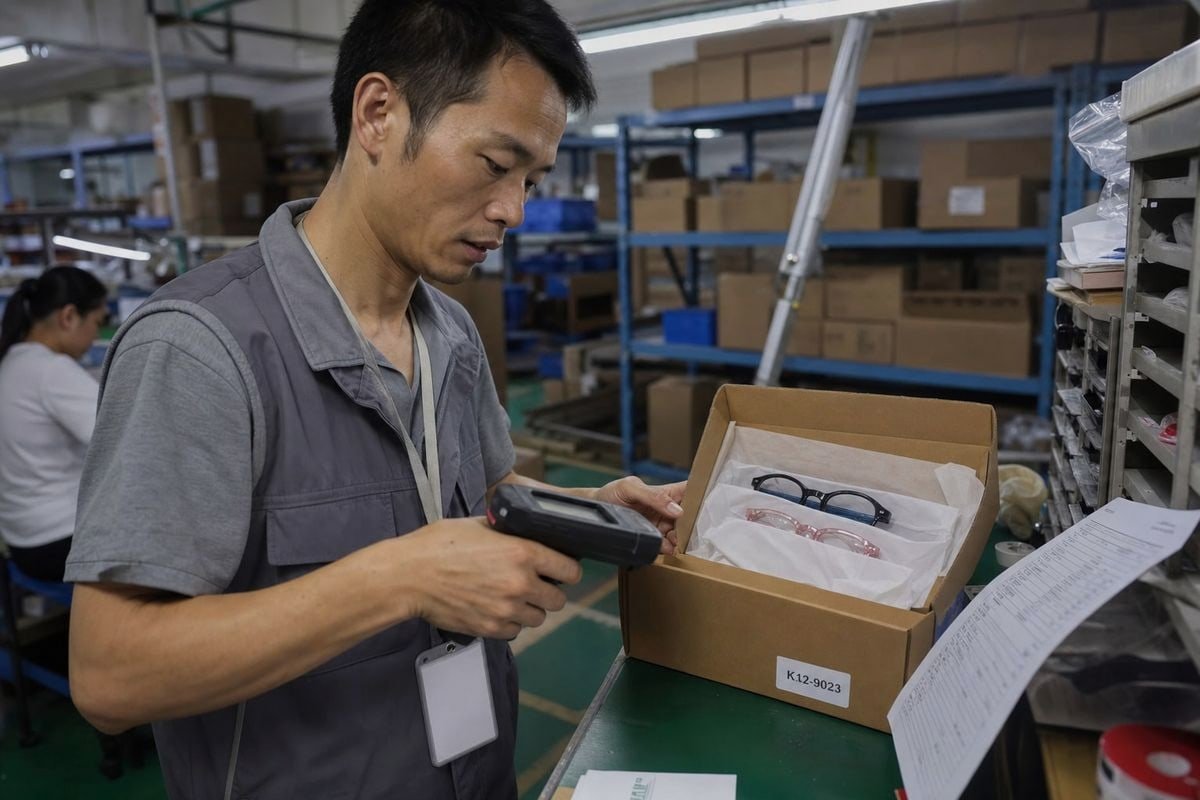
Accuracy comes from process, not hope. In our 5S-managed workshop 3, we treat store packing as a controlled operation with defined checkpoints, the same way we control hinge torque or temple flexibility on a TR90 kids' frame. Here is the sequence that works.
A five-step verification process
- Freeze the allocation file. Version it. If store quantities change, issue a new version number so the factory never packs from an outdated sheet. Some buyers ask for dynamic sorting instructions based on live POS data — that is workable, but only up to an agreed cut-off date before packing starts.
- Approve a golden sample carton. Ask the supplier to build one complete store carton — labels, inner packs, packing list — and photograph or ship it for approval. This proves the sorting logic, not just the product.
- Require in-line scanning. Each frame carries a SKU/UPC barcode 4; the packer scans it against the store's pick list. This is basic SKU-level inventory management 5 applied at the packing bench. Some larger chains go further with RFID source-tagging 6 for near zero-touch receiving, but barcode scanning already catches most mix-ups.
- Seal only after a two-person check. One packer fills, a second verifies quantity per box and color variation against the list.
- Reconcile totals. Total units across all store cartons must equal the PO. Any gap gets investigated before the shipment leaves.
Connect this to product QC as well. Kids' frames need hinge movement, bridge fit, and finish checks before packing, because a store-sealed carton is only valuable if the frames inside pass inspection. We keep a master sample on file and run batch inspections during production, so packing verification sits on top of solid product quality — not instead of it.
What packing and labeling formats work best for multi-store distribution?
When we developed store-ready packaging for a Japanese optical chain, the deciding factor was not cost. It was how their store staff opened boxes — fast, on the sales floor, with no back room.
The best format for multi-location retail distribution is one master carton per store, with SKU-labeled inner bags or trays inside, a dual-layer label system, and a packing list both inside and outside each carton. Match the format to each store's receiving workflow.

The phrase "pack by store" can mean several different things, and choosing the wrong format wastes money. Here is a practical comparison based on the configurations we build most often for pediatric eyewear wholesale buyers.
Packing format options compared
| Format | Best for | Watch out for |
|---|---|---|
| One master carton per store | Chains with steady per-store volume | Half-empty cartons if store orders are small |
| Store-labeled inner packs in shared cartons | Small stores, consolidated freight | Requires careful cross-docking logistics at the hub |
| One carton per store per style | High-volume flagship stores | Higher carton count and freight cost |
| Full size/color run per store carton | Assortment-driven kids' ranges | Needs an accurate allocation matrix |
| Retail-ready trays or peg-ready boxes | Floor-ready merchandising | Adds tooling and material cost |
The dual-layer label system
Labels do the heavy lifting in multi-store distribution. We recommend two layers. First, every individual frame carries a SKU/UPC barcode on its pouch or hang tag. Second, every carton displays the store code, destination, carton number in sequence, quantity per box, color and size breakdown, gross weight, and dimensions. Consistent barcode labeling standards across both layers let a warehouse cross-dock cartons without opening them.
The packing list, twice
Put a detailed packing list inside each carton and a copy in a pouch on the outside. This enables blind receiving: store staff can verify contents against the list without calling head office. For freight planning, also ask the supplier for carton dimensions, weights, and CBM per store shipment — this data belongs in your shipping and routing instructions, and it lets your forwarder quote accurately before the goods are even packed.
How do I avoid delays or errors when requesting pre-sorted packing from my factory?
A lesson I learned early in our fifteen years of eyewear production: most store-packing failures are not caused by careless packers. They are caused by requests that arrive too late, too vague, or both.
Avoid delays by sending the packing spec with the PO, confirming the supplier's pick and pack capability up front, agreeing on any packing fee in writing, freezing allocations before packing starts, and building sample approval into the timeline. Late or vague requests cause most errors.
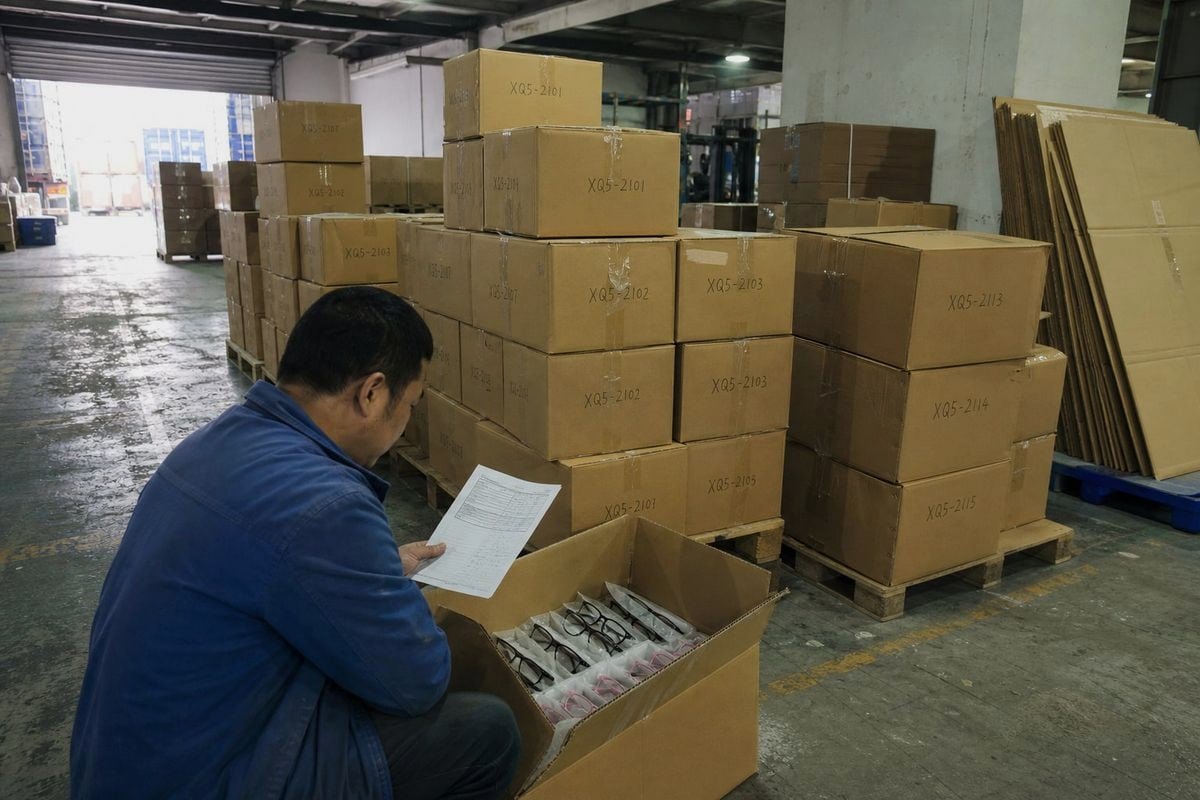
Timing is the first lever. If a store-packing request lands after production has started, the factory may already be bulk-packing frames, and repacking into store cartons adds days and handling risk. Send the full spec with the purchase order, and reference it in your vendor compliance guidelines if you buy repeatedly.
Common failure points and how to prevent them
| Failure point | Root cause | Prevention |
|---|---|---|
| Mixed store labels on identical cartons | No carton sequencing | Number cartons per store: ST-001, box 1 of 3 |
| SKU label mismatch with packing list | Manual data entry | Print labels from the same allocation file |
| Missing store quantity breakdown | Spec sent as loose email text | Use a versioned spreadsheet matrix |
| Frames shifting in oversized cartons | Wrong carton size | Specify carton dimensions; immobilize product |
| Barcode format inconsistency | No standard agreed | Define symbology and placement in the spec |
| Repacking chaos at destination | Poor carton marking | Approve label artwork before packing |
Then confirm capability honestly. Ask your supplier directly: do you already offer pick and pack services 7 at store level, and can you quote the packing fee separately? Pre-sorting adds labor — extra picking time, label printing, insert cards, multiple carton builds per PO — so a fair supplier will price it transparently rather than absorb it and cut corners. We would rather quote an honest packing fee than deliver a rushed, error-prone job.
Finally, be honest with yourself about when pre-sorting is not worth it. If your order is small, all stores share one assortment, or you run a strong in-house receiving team, bulk packing may reconcile more easily and cost less. Some buyers also prefer central sorting when store demand is volatile, because it keeps allocation flexible until the last moment. Pre-sorting is an operational optimization, not a universal rule — but for kids' optical frames with high style and color counts across many doors, it usually pays for itself in reduced backroom labor.
More Articles You Might Like

August 5, 2026
Bio-Based vs Regular Cellulose Acetate: What's the Difference for Kids' Frames?

August 5, 2026
How Recyclable Are Kids' Optical Frame Materials, and What Eco-Friendly Alternatives Exist?

August 5, 2026
Do Kids Optical Frames Whiten or Age in Storage, and How to Control Warehouse Conditions?
Looking for a Reliable Kids Eyewear Partner?
Explore 800+ ready styles and full OEM/ODM support tailored to your brand.
Get in Touch English
  Español de México
  Deutsch
  Français
  日本語
日本語  العربية
  Português do Brasil