How to Arrange a Remote Factory Audit for Kids’ Sunglasses from China?

A remote factory audit for kids’ sunglasses can save you thousands in travel costs — but only if you run it correctly. On our production line in Taizhou, we host these audits weekly. Buyers get burned when they treat the call like a casual chat. A trader shows a rented showroom, the buyer wires a deposit, and the “factory” disappears. I have heard this story from more than one importer who later found us. The fix is simple: structure your remote audit like a real due-diligence process, with document checks, a live walkthrough, and product-specific tests.
To arrange a remote factory audit for kids’ sunglasses from China, first verify the supplier’s business license and address, then schedule a live, unscripted video walkthrough of raw materials, production, and QC areas, request verified safety test reports, and confirm kids-specific capabilities before ordering samples.
That is the short version. Below, I will walk you through each stage in the order you should actually do it. Follow the sequence, and you will filter out fake factories before they cost you money.
What documents and evidence should I request before scheduling a remote audit?
A buyer from Australia once asked me for our business license 1 before we even discussed pricing. I respected that. Serious factories expect supplier verification requests — evasive ones dodge them.
Before scheduling a remote audit, request the Chinese business license with unified social credit code, export permits, ISO 9001 certification, product test reports for children's eyewear, factory photos with addresses, and bank details matching the registered company name. Verify each document independently, not just by reading the PDF.
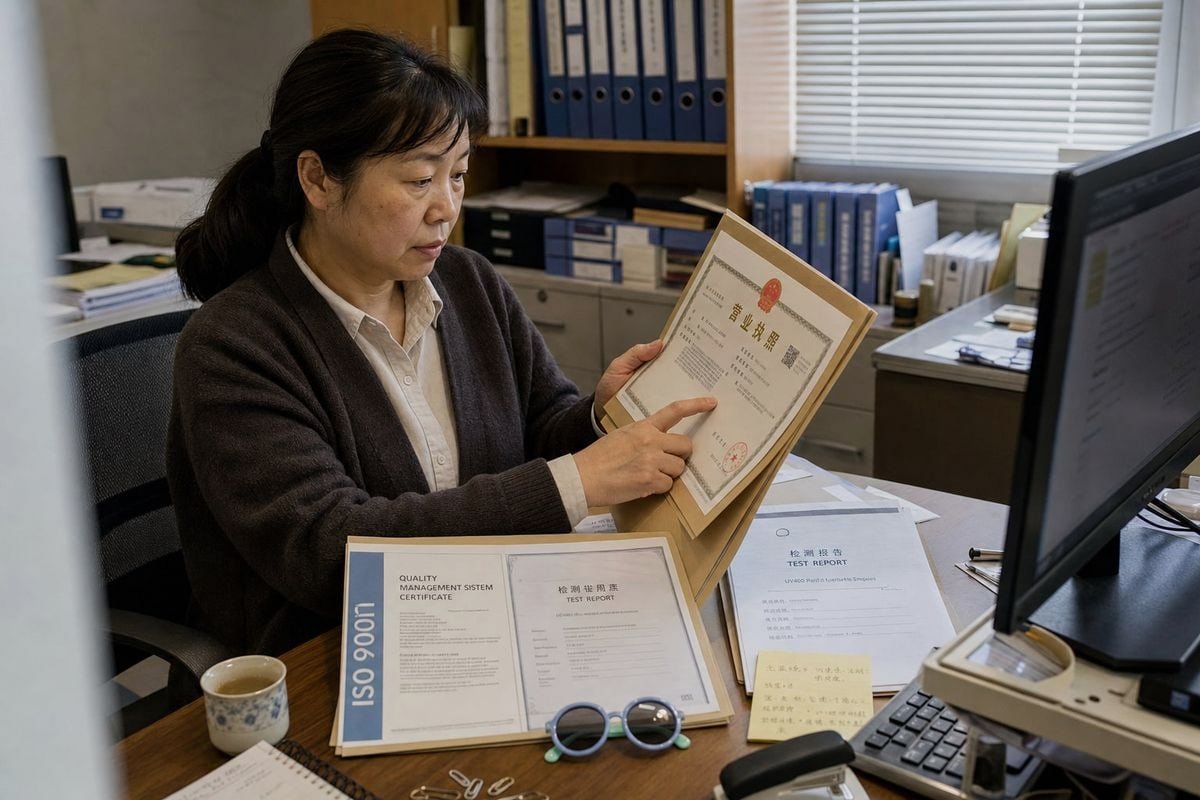
The document stage is where most fake suppliers fall apart. So do this work before you ever book the video call. It costs you nothing but an email and an hour of checking.
The core document checklist
Here is the exact list I recommend buyers request, based on what our own customers ask us for:
| Document | What it proves | How to verify it |
|---|---|---|
| Business license | Legal manufacturing entity | Check the unified social credit code on Qichacha or Tianyancha |
| Export license / customs registration | Can legally export to your market | Ask for the registration number and cross-check |
| ISO 9001 certification | A working quality management system | Look up the certificate number in the issuer's database |
| Product test reports (UV400, CPSIA, CE) | Product safety testing was actually done | Contact the lab with the report number |
| Factory photos and address | A real industrial site exists | Match the address on satellite maps; reverse-image search the photos |
| Proforma invoice and bank details | Payment goes to the real company | Confirm the bank account name matches the license |
Why the details matter
Pay attention to the business scope printed on the license. It should mention eyewear or glasses manufacturing, not just "trading" or "import and export." In our experience exporting to 20+ countries, buyers who skip this check often discover later that they paid a middleman with zero process control.
Also compare names carefully. If the license says one company, the invoice says another, and the bank account belongs to a third, stop. Legitimate factories keep these aligned. When our sales team sends a proforma invoice, the name matches our registered entity exactly, because we know serious brands check.
Finally, run a reverse image search 2 on any workshop photos the supplier sends. Stock photos reused across five different "factories" are a classic trader trick.
Which live video verification methods work best for checking safety and quality standards?
There is a trade-off I always explain to buyers: a scripted virtual factory tour is comfortable for the supplier, but an unscripted one is far more useful for you. We let visitors direct the camera anywhere, because staged tours prove nothing.
The best live video methods are an unscripted walkthrough where you direct the camera, viewing an in-production order similar to kids' sunglasses, interviewing the QC manager on eyewear defects, watching live hinge and lens tests, and recording the entire call as audit evidence.
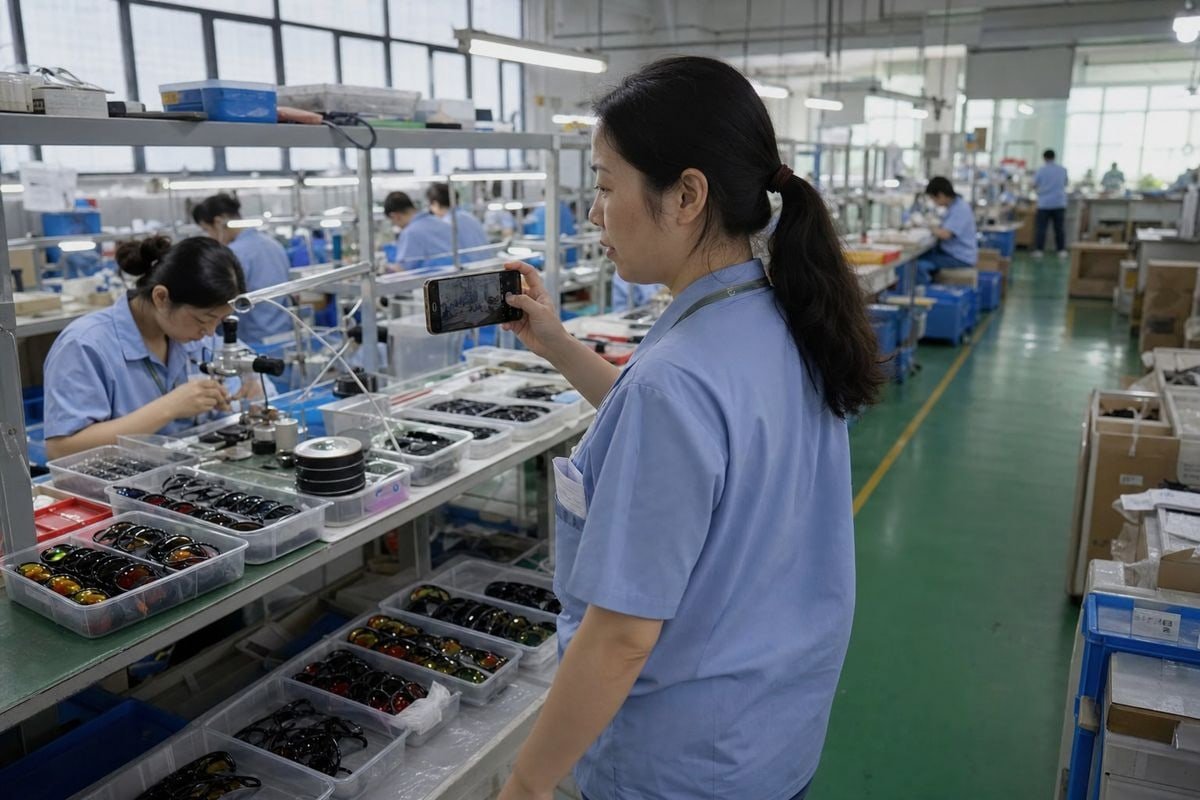
A live call reveals what documents cannot. But you must control the format, or the factory controls what you see.
Run the walkthrough in this order
- Start at the gate. Ask the host to walk from the factory entrance so you see the building signage and scale.
- Raw material storage. Check for labeled TR90, TPEE, or PC resin bags and organized racks. Messy, unlabeled storage suggests weak process control.
- Injection molding area. Count the machines. A real kids' eyewear factory has injection molding units sized for small frames, not just generic tooling.
- Assembly and lens fitting. Watch operators insert lenses and fit hinges. Ask how they check lens retention on small frames.
- Quality control inspection stations. Ask the QC manager, on camera, how they check frame alignment, bridge stability, and temple flexibility.
- Packing and finished goods. Confirm retail-ready packaging capability if you need branded presentation.
Techniques that expose staging
Direct the camera yourself. Say "turn left," "show me that corner," "open that box." A genuine factory complies easily. On our 5S-managed workshop floor, nothing changes when a buyer asks to see a random shelf — and that is exactly the point of 5S.
Ask to see an order in progress that resembles your product. If they claim to make kids' sunglasses but every line runs adult fashion frames or unrelated products, ask why. Also request a live test: have an operator flex a temple arm, twist a frame, or tug a hinge on camera. Flexible TPEE and TR90 frames 3 should bend and recover without cracking. Record everything. The footage becomes part of your audit file and protects you if disputes arise later.
Some buyers now schedule short unannounced "micro-audits" — quick 15-minute video check-ins during production. We support these, and they keep quality honest far better than one annual visit.
How can I confirm material safety and durability testing without visiting the factory in person?
Material safety is where children's eyewear differs most from adult sunglasses. When we developed our TPEE temple designs, the entire goal was a frame that bends around an active child's face without snapping into sharp pieces — and proving that remotely takes a specific method.
Confirm material safety remotely by requesting third-party lab reports with matching report numbers and factory names, verifying UV400 protection standards and CPSIA compliance with the issuing lab, watching live durability tests on video, and sending sealed samples to an independent laboratory yourself.
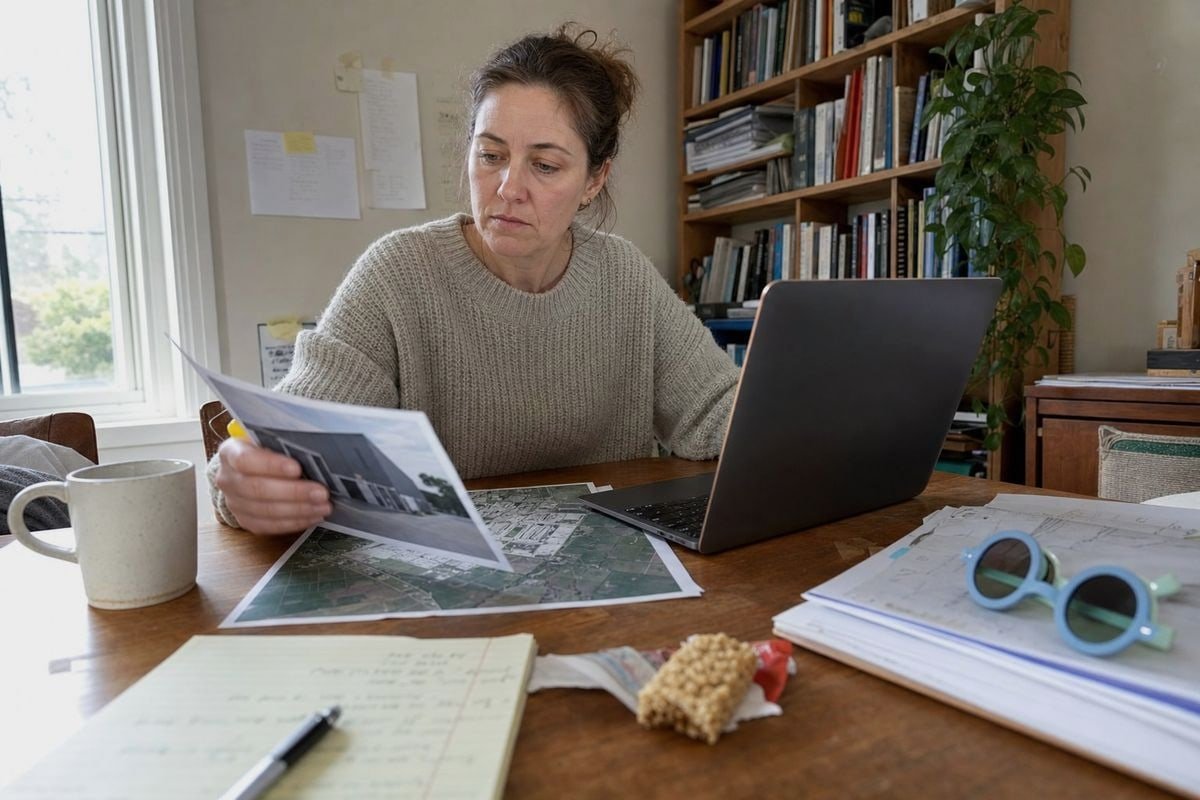
You cannot touch the frames through a screen. But you can triangulate the truth using three independent channels: verified documents, live demonstrations, and your own testing.
Match the standard to your market
Kids' sunglasses compliance varies by destination. Confirm the factory knows your market's rules, not just "we have CE."
| Market | Key requirements to confirm | What to ask for |
|---|---|---|
| United States | CPSIA compliance, FDA drop-ball impact test | CPC documentation, lab report numbers |
| European Union | CE marking under EN ISO 12312-1 | Declaration of Conformity, test file |
| Australia / New Zealand | AS/NZS 1067 4 sunglasses standard | Category rating and lab report |
| All markets | UV400 protection standards | Lens transmission test data |
A factory that hesitates when you name AS/NZS 1067 probably has not exported children's eyewear to Australia. In our experience, buyers from regulated markets ask about lens category ratings within the first two emails — and a capable supplier answers without googling.
Live tests you can watch on camera
Ask for these demonstrations during the call:
- UV meter reading on a lens pulled randomly from stock, showing UV400 blocking.
- Drop-ball or impact test on the factory's own equipment, if available.
- Torque and tension test on hinges and nose pads, since small detachable parts are a choke hazard for young children.
- Flex and twist test on TR90 and TPEE frames to show recovery without stress-whitening or cracking.
Also audit the chemical side. Ask the factory to show its raw material inventory live and match resin labels against REACH and RoHS declarations 5. Environmentally friendly material claims should trace back to supplier declarations, not marketing copy.
Finally, the strongest single step: have the factory seal random samples on camera and courier them to a third-party lab you appoint. Independent product safety testing on samples you selected removes any doubt about cherry-picked units.
What red flags should I watch for during a remote factory audit of children's eyewear?
A lesson I learned early in our 15 years of eyewear work: the suppliers who fail buyers are rarely obviously bad. They are vague. They deflect. The warning signs during a remote audit are behavioral as much as visual.
Major red flags include a fixed or "malfunctioning" camera, tours limited to a showroom, machinery mismatched to eyewear production, refusal to show similar in-production orders, misaligned company and bank names, unverifiable certificates, and no experience with small-frame children's sunglasses.
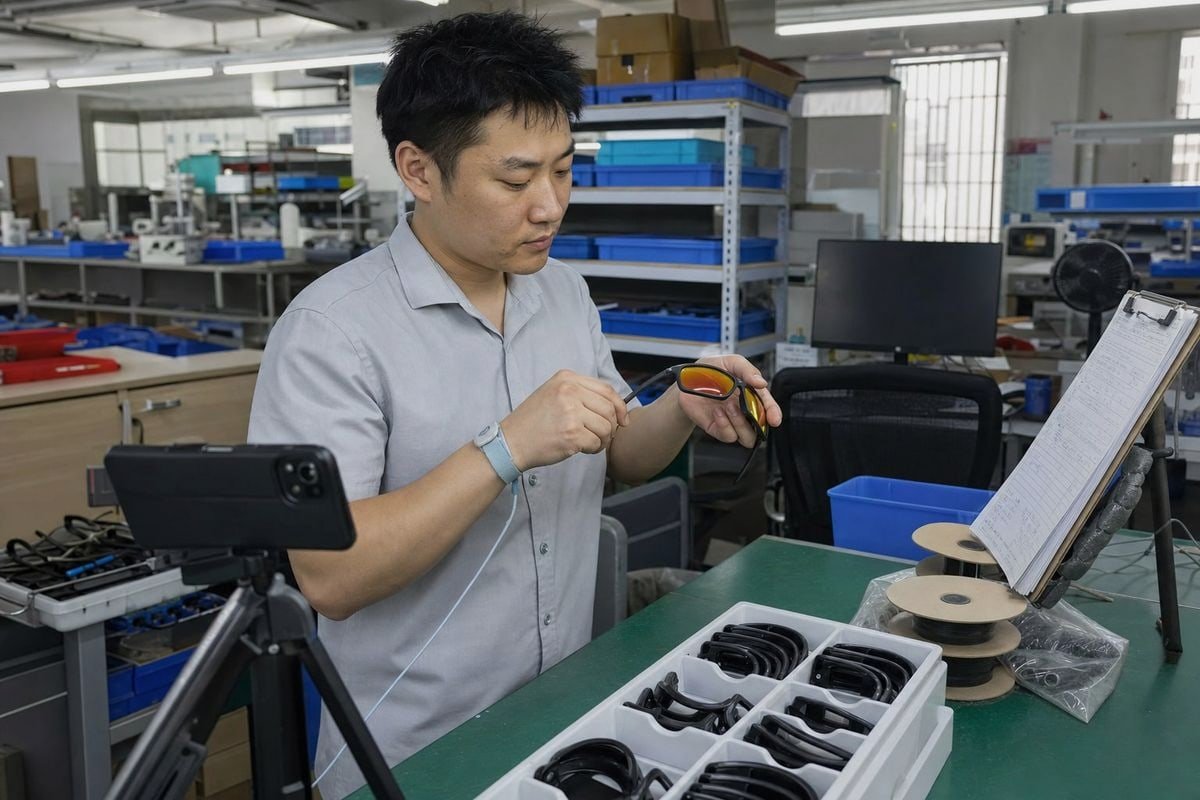
Treat every red flag as a data point, not an automatic disqualification. But when several stack up, walk away — or escalate to a third-party onsite audit before spending another dollar.
Red flags ranked by severity
| Red flag | What it usually means | Recommended action |
|---|---|---|
| Bank account name differs from business license | Possible fraud or hidden trader | Stop payment discussions immediately |
| Camera "loses connection" when you request new areas | Staged tour; hiding the real site | End the audit; deep supplier verification |
| Only a showroom or office is shown | Likely a trading company | Demand a full production walkthrough |
| Certificates cannot be verified with issuers | Forged or borrowed documents | Reject the claims; require fresh testing |
| No kids' or small-frame eyewear in production history | Generic factory guessing at child safety | Request samples and independent testing |
| QC manager cannot explain eyewear-specific defects | Weak quality control inspection system | Escalate to third-party auditing services 6 |
| Refuses unannounced follow-up check-ins | No confidence in daily consistency | Add a mandatory pre-shipment inspection |
The questions that reveal weak factories
Interview the QC manager directly, not just the salesperson. Ask what happens when a first-piece check fails. Ask who performs incoming inspection 7 on lenses. Ask whether they keep inspection records and work instructions for children's models. A real factory answers in specifics. A weak one gives you slogans.
Also probe subcontracting. Some suppliers pass your audit, then quietly outsource production to an unaudited workshop. Ask directly whether any process leaves the building, and write "no undisclosed subcontracting" into your purchase terms.
When doubts remain after a remote audit, do not gamble. Engage China-based third-party auditing services for an onsite visit, and consider a social compliance audit 8 if your brand's retailers require ethical sourcing evidence. A remote audit is a filter, not a guarantee. We tell our own prospective buyers the same thing: verify us remotely first, then visit or send an inspector before scaling up orders. Suppliers who welcome that sequence are the ones worth keeping.
Conclusion
A remote factory audit protects your kids' sunglasses brand from fake suppliers. Verify documents, direct the walkthrough, confirm testing, watch for red flags — then escalate onsite when needed. Done right, it turns risky sourcing into a structured, confident decision.
Footnotes
1. Background on what a business license verifies for a legally registered manufacturer. ↩︎
2. Explains the technique buyers use to detect reused or fake factory photos. ↩︎
3. Explains the flexible polymer materials used in children’s eyewear frames. ↩︎
4. Official standards body publishing the Australian/New Zealand sunglasses safety standard. ↩︎
5. Authoritative Wikipedia overview of REACH chemical safety and compliance standards. ↩︎
6. SGS is a globally recognized third-party auditing and inspection provider for manufacturers. ↩︎
7. Authoritative Wikipedia entry explaining quality control and material inspection protocols. ↩︎
8. Stable Wikipedia reference defining social auditing and ethical compliance frameworks. ↩︎
More Articles You Might Like
Looking for a Reliable Kids Eyewear Partner?
Explore 800+ ready styles and full OEM/ODM support tailored to your brand.
Get in Touch English
  Español de México
  Deutsch
  Français
  日本語
日本語  العربية
  Português do Brasil