What Are the Risks of Kids’ Sunglasses with Low Visible Light Transmittance?

Low visible light transmittance in kids’ sunglasses worries many buyers who visit our Taizhou factory. Dark lenses look protective, but darkness alone can quietly hide a serious safety gap.
The main risk of kids’ sunglasses with low visible light transmittance is that very dark lenses trigger pupil dilation, and if the lens lacks certified UV400 protection, more harmful UV radiation reaches the child’s retina than wearing no sunglasses at all.
Darkness is not protection. That is the core idea. Below, I break down how to spot the problem, why it matters, and how to source safely.
How do I know if a lens's visible light transmittance is too low for my child?
During a QC session last spring, our team pulled a competitor's sample from a trade show. The lens was almost black — a lens category 4 tint sold as a toddler style. That is exactly the kind of red flag I teach buyers to spot.
A lens is likely too dark for a child if it falls into lens category 4 (under 8% VLT), if the child cannot make eye contact through it in shade, or if the label shows no VLT category or UV400 marking at all.
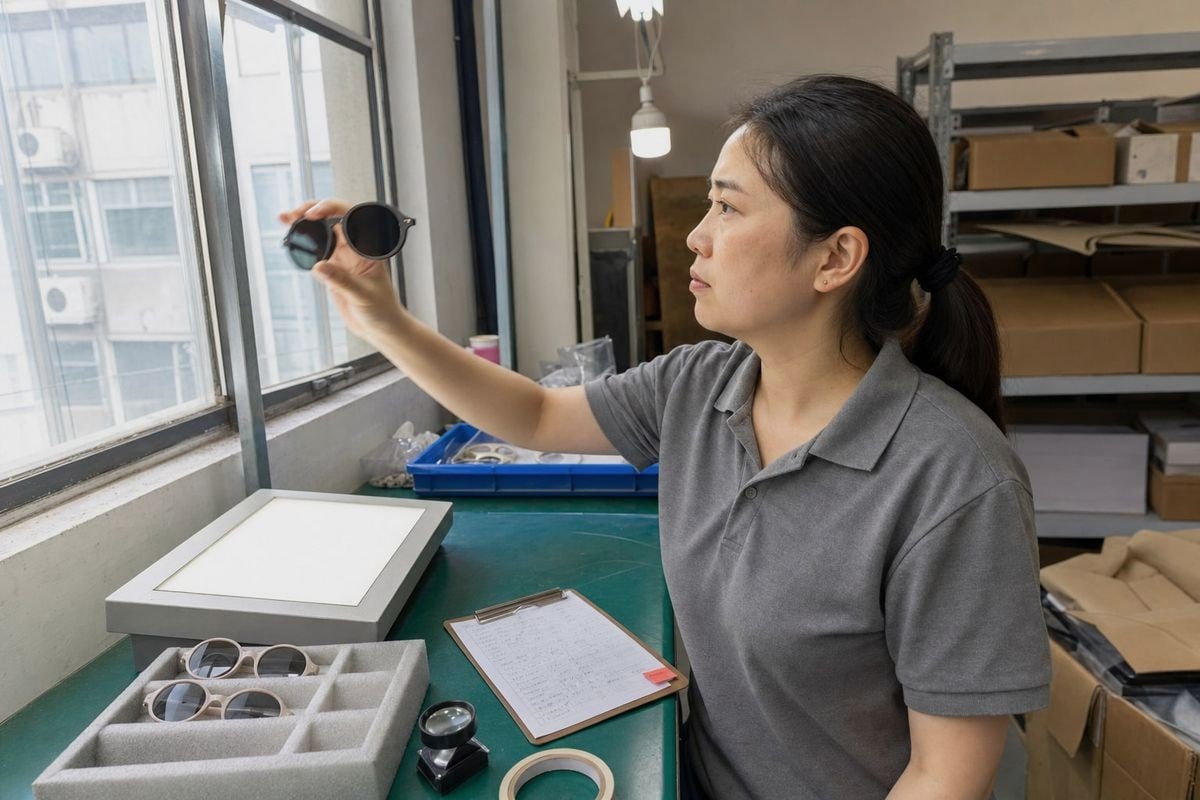
Visible light transmittance, or VLT, is simply the percentage of visible light that passes through the lens. A 20% VLT lens lets through 20% of light. Lower VLT means a darker lens. Under the norme ISO 12312-1 1 standard, sunglass lenses are grouped into five categories, from 0 to 4. Most children's sunglasses should sit in category 2 or 3.
Quick VLT category reference
| Lens Category | Plage de TLV | Utilisation typique | Suitable for Kids? |
|---|---|---|---|
| 0 | 80–100% | Fashion, indoor | Not sun protection |
| 1 | 43–80% | Overcast days | Limited protection |
| 2 | 18–43% | Everyday sun | Yes, ideal for most kids |
| 3 | 8–18% | Bright sun, beach | Yes, for strong sunlight |
| 4 | 3–8% | Glaciers, high altitude | Generally no — too dark |
There are simple field checks, too. Ask the child to walk from bright sun into shade. If they hesitate, stumble, or pull the glasses off, the tint is likely too dense. Children experience a longer neuro-visual adaptation lag than adults, so a very dark lens can cause a moment of near-functional blindness in transitions. Also watch color perception: if a child cannot tell a red ball from a brown one while wearing the glasses, the tint or its color balance is wrong.
Finally, check the label. Reputable products state the lens category, the VLT range, and the UV claim. Vague labels like "sun lens" or "dark tint" with no numbers are a warning sign we see constantly on cheap novelty imports.
Can dark lenses with poor VLT actually cause more UV damage to my child's eyes?
A procurement manager from Australia once asked me this exact question during a factory audit. She had assumed dark automatically meant safe. Our lens supplier's transmission test report changed her mind in five minutes.
Yes. Dark lenses without adequate UV filtration cause pupil dilation, which opens the eye wider and lets more UVA and UVB reach internal structures. For children, whose crystalline lenses transmit far more UV than adults', this can mean greater damage than wearing nothing.
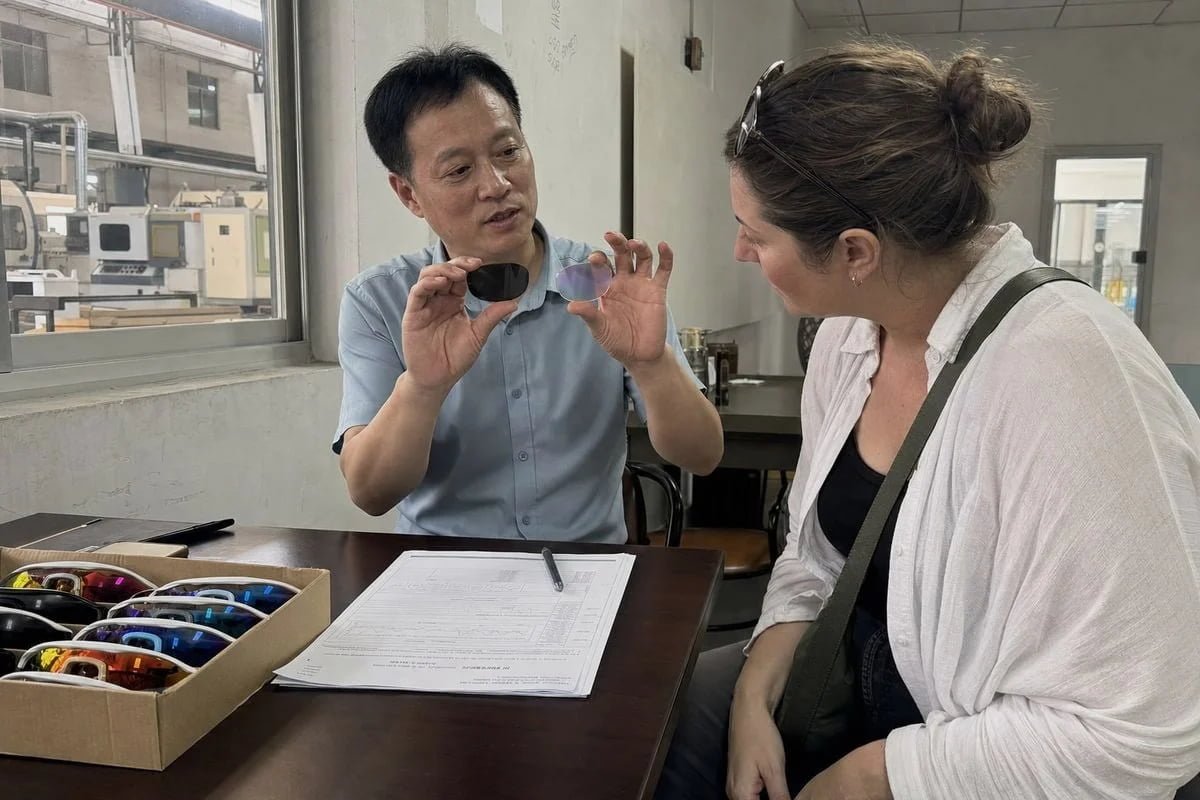
The mechanism is simple. Your pupil reacts to visible brightness, not to UV. Put a very dark lens in front of a child's eye and the pupil dilates to compensate for the dimness. If that lens blocks UV properly, no problem. If it does not, the dilated pupil becomes an open door for radiation.
Why children carry higher risk than adults
Pediatric ophthalmology sources consistently note that a child's est plus clair que celui d'un adulte, 3 is more transparent than an adult's. Some estimates suggest a young child's eye can pass dramatically more UV through to the retina — with dilated pupils, the exposure multiplies further. Children also spend more hours outdoors each year than most adults, so the cumulative dose builds early.
The long-term consequences linked to UV exposure 4 include:
- Cataracts developing earlier in life
- Pterygium, a tissue growth on the eye surface
- Photokeratitis, a painful "sunburn" of the cornea
- Retinal damage and a possible contribution to macular degeneration 5
There is also a false-security effect. High-density tints make parents feel the child is protected, so they allow longer sun exposure without checking for actual UV400 certification. The dark lens hides the danger it creates. That is why, when we develop lenses for our own kids' lines, we treat UV filtration as the fixed requirement and tint density as the adjustable comfort feature — never the reverse.
One honest nuance: low VLT alone, on a properly UV-filtering lens, is not the villain. A dark polycarbonate lens with genuine UV400 protection is far safer than a light lens with poor filtering.
What visible light transmittance level should I look for when sourcing kids' sunglasses?
The trade-off we weigh most often in product development is glare reduction versus visual function. Push the tint too light and bright-beach comfort suffers. Push it too dark and you compromise how a child actually sees and plays.
For most children's sunglasses, source lens category 2 (18–43% VLT) for everyday wear and category 3 (8–18% VLT) for beach, snow, or strong summer sun. Avoid category 4 lenses for children, and always pair any tint with certified UV400 protection.
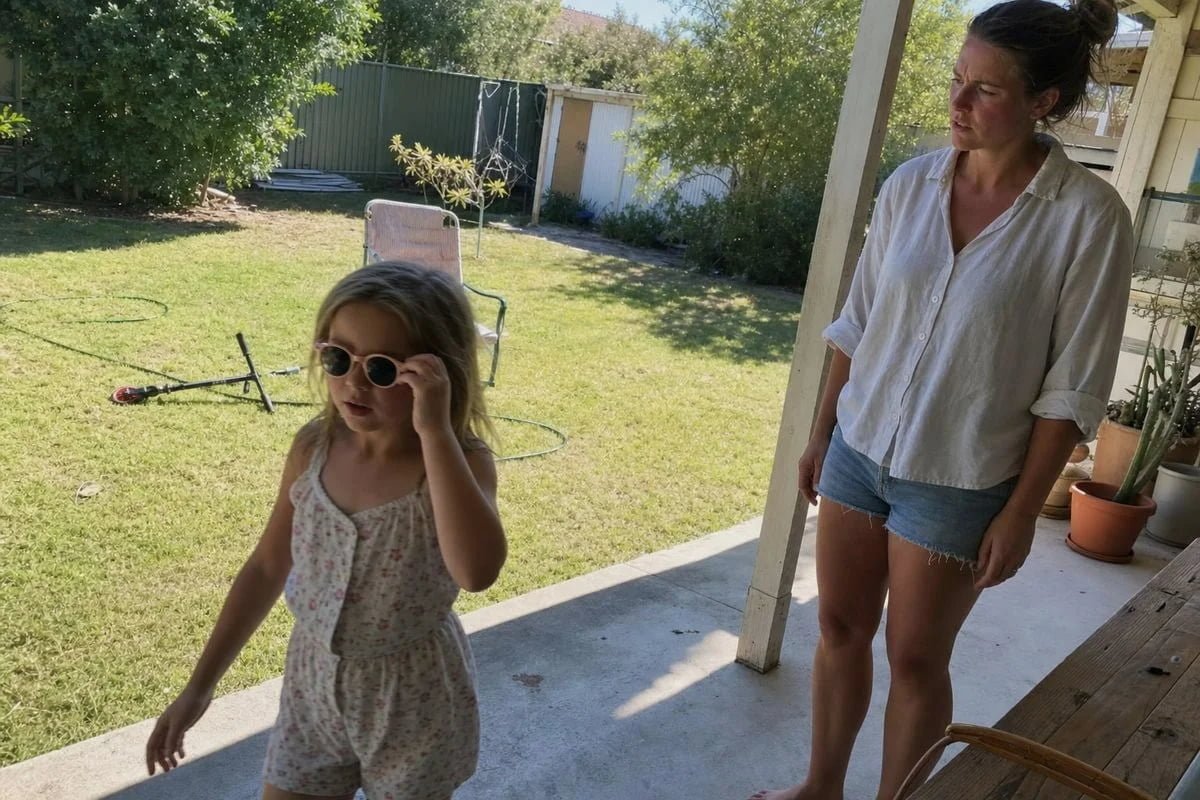
VLT selection should follow the end use of the product, not aesthetics alone. Here is the framework we share with brand buyers when they spec a new collection from our existing styles.
Matching VLT to real use cases
| Cas d'utilisation | Catégorie recommandée | Pourquoi ça marche |
|---|---|---|
| Everyday outdoor play | Catégorie 2 | Comfortable glare reduction, safe in shade transitions |
| Beach and water sports | Catégorie 3, idéalement polarisée | Cuts reflected glare off water and sand |
| Snow and high altitude | Category 3 with wraparound frame | Blocks intense reflected light and side entry |
| School run, mixed light | Catégorie 2 | Child keeps clear vision moving indoors and out |
| Fashion or costume styles | Category 0–1 only if UV400 | Low tint, but UV filtering still mandatory |
There are child-specific reasons to avoid excessive darkness beyond UV concerns. Extremely low transmittance can impair peripheral vision 6 and depth perception, which raises the risk of falls and collisions during active play. Some consumer guidance also flags that prolonged very-dark tints may interfere with visual development, including the maturation of contrast sensitivity that supports early reading skills. The clinical evidence here is weaker than the UV evidence, but for a children's product, we design conservatively.
Also consider HEV light protection as a secondary feature, not a headline. Consensus statements describe only a theoretical link between visible blue light and macular degeneration in children, so it should never replace verified UV performance in your spec sheet. On our production line, a typical kids' spec reads: verres en polycarbonate 7, UV400, category 2 or 3, impact-resistant, in a flexible TPEE or TR90 frame that will not snap against a child's face.
How can I verify VLT and safety compliance when choosing a sunglasses manufacturer?
Fifteen years of exporting children's eyewear taught us one lesson early: buyers who ask for documents before samples avoid almost every compliance disaster. The buyers who trust a lens's appearance are the ones who end up with recalls.
Verify compliance by requesting lens transmission test reports against ISO 12312-1 or your market's standard, confirming UV400 claims with third-party lab data, auditing the factory's QC process, and testing production samples — never just showroom samples — before shipment.
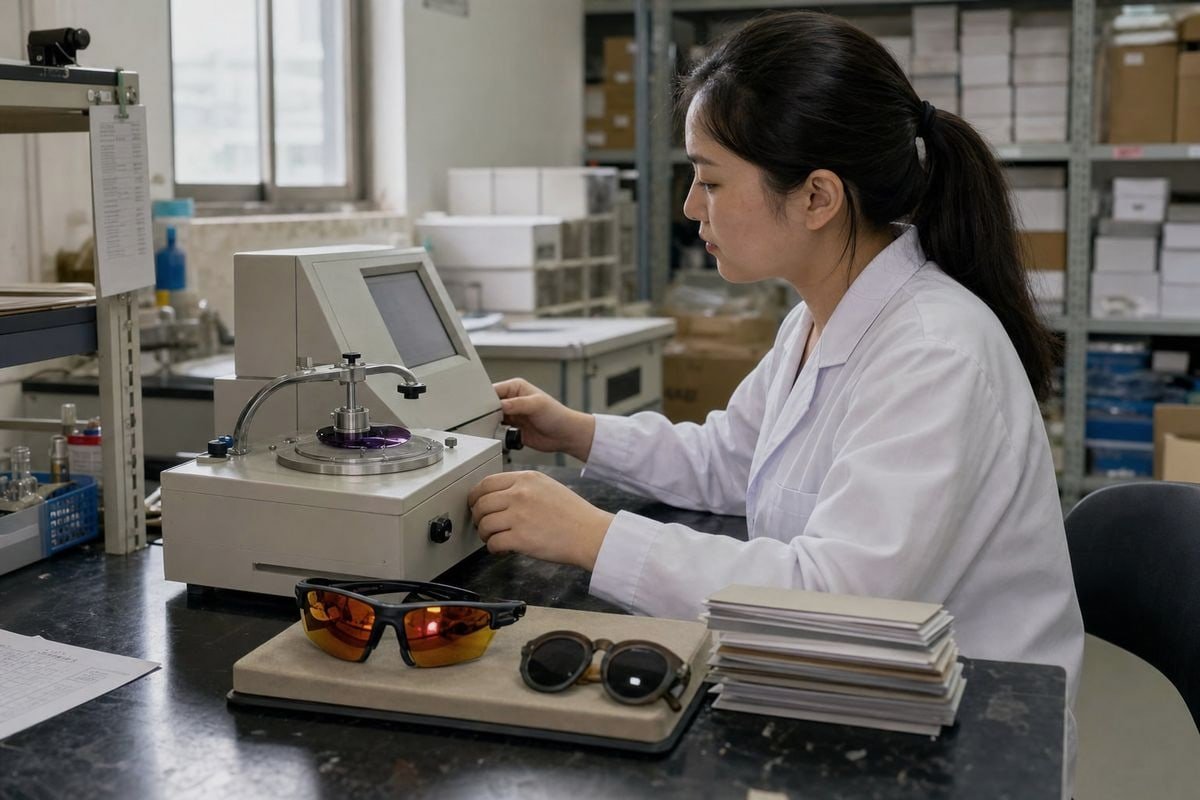
Labels can lie. Independent testing of children's sunglasses has found that some products deliver excellent UV protection while others fail badly, and some labels are ambiguous or outright misleading. Even standards compliance has limits: certain standards still permit small amounts of UVA transmission in category 3 lenses. So "compliant" is the starting line, not the finish line.
Une liste de vérification pratique
- Request spectral transmission reports. These show exact VLT and UV transmission curves per lens batch, not marketing claims.
- Match the standard to your market. ISO 12312-1 for Europe and much of the world, ANSI Z80.3 for the US, AS/NZS 1067 for Australia. Confirm the report references the right one.
- Check the lens material. Polycarbonate lenses inherently block most UV and resist impact, which suits active children better than cheap acrylic.
- Audit the factory, not the trader. Visit or video-audit the workshop. At our 5S-managed facility, we walk buyers through incoming lens inspection, assembly checks, and pre-shipment sampling because process visibility builds trust faster than any brochure.
- Test golden samples and production samples separately. A perfect showroom sample means little if mass production uses a different lens supplier.
- Verify frame safety alongside lenses. Flexible TPEE and TR90 materials reduce breakage and injury risk, and full OEM/ODM partners should document material safety too.
| Document to Request | Ce qu'il prouve |
|---|---|
| Spectral transmission report | Actual VLT category and UV400 performance |
| Standard conformity certificate | Compliance with ISO 12312-1 or equivalent |
| Material safety data | Frame and lens materials safe for children |
| Enregistrements de CQ par lot | Cohérence entre les séries de production |
| Rapport d'inspection avant expédition | The goods you receive match what was tested |
One more sourcing tip from our export experience across 20+ countries: choose partners with a broad existing style library. Working from proven, pre-tested styles — we maintain roughly 800 — lets a new brand launch with verified lenses instead of gambling on untested new molds.
Conclusion
Dark lenses can hide danger. Low VLT plus poor UV filtering invites pupil dilation and deeper UV damage in children's vulnerable eyes. Source category 2–3 lenses with verified UV400 protection, demand test reports, and partner with a factory that treats child safety as the spec — not the marketing.
Notes de bas de page
1. Official standards body defining sunglass lens categories referenced throughout the article. ↩︎
2. FDA consumer guidance on choosing UV-protective sunglasses matches product spec discussed. ↩︎
3. Corrected Wikipedia link for the anatomical structure of the lens in the eye. ↩︎
4. EPA guidance on cumulative UV exposure supports the article’s long-term risk claims. ↩︎
5. NIH eye institute page explains this condition mentioned as a possible UV-related risk. ↩︎
6. Defines the visual function that overly dark lenses can impair in children. ↩︎
7. Explains the material properties behind UV blocking and impact resistance claims. ↩︎
Plus d'articles que vous pourriez aimer

Vous recherchez un partenaire fiable en lunetterie pour enfants ?
Explorez plus de 800 styles prêts et un support OEM/ODM complet adapté à votre marque.
Contactez-nous English
  Español de México
  Deutsch
  Français
  日本語
日本語  العربية
  Português do Brasil