What Should a Kids Sunglasses Q&A Cover on Lens Safety and Non-Toxic Materials?
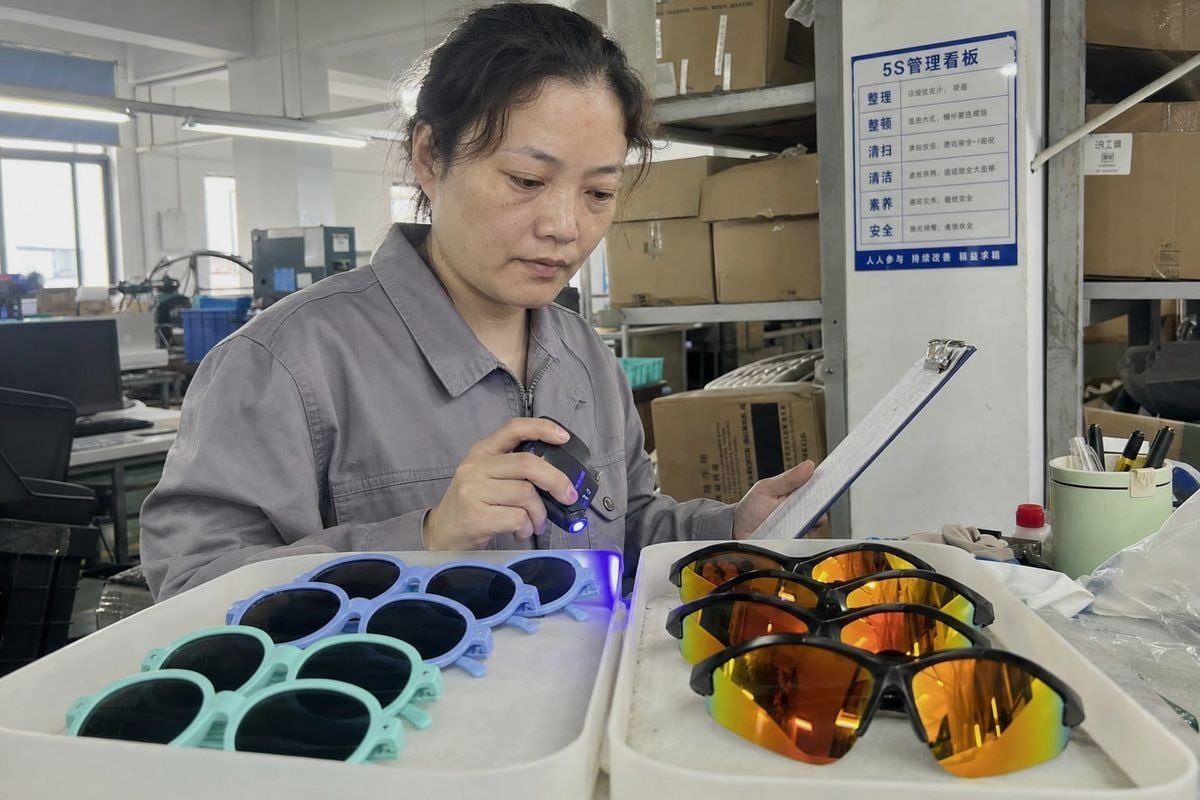
Every week, buyers ask our Taizhou factory the same worried question: a kids sunglasses Q&A on lens safety and non-toxic materials sounds simple, until a recall notice lands.
A kids sunglasses Q&A should cover UV400 protection verified by test reports, impact-resistant polycarbonate or shatterproof lens options, non-toxic frame certifications like CPSIA compliance and REACH, safe skin-contact materials such as TPEE and TR90, and batch-level quality control questions for the manufacturer.
Below, I break each of those areas into practical questions AQL sampling 1. You can use them directly in your next supplier conversation or [sourcing checklist](https://okayeyewear.com/how-specify-frame-lens-safety-requirements-kids-sunglasses-suppliers/).
How do I verify that the lenses meet UV400 safety standards before placing an order?
A buyer from Australia once sent us a competitor's sample bisphenol A 2. The lenses were nearly black, yet they failed the UV transmittance test badly. Darkness told her nothing about protection.
Verify UV400 claims by requesting a spectrophotometer test report showing transmittance below 400 nm, confirming compliance with a recognized standard like EN ISO 12312-1, ANSI Z80.3 standards, or AS/NZS 1067.1:2016, and testing random pre-shipment samples through a third-party lab.
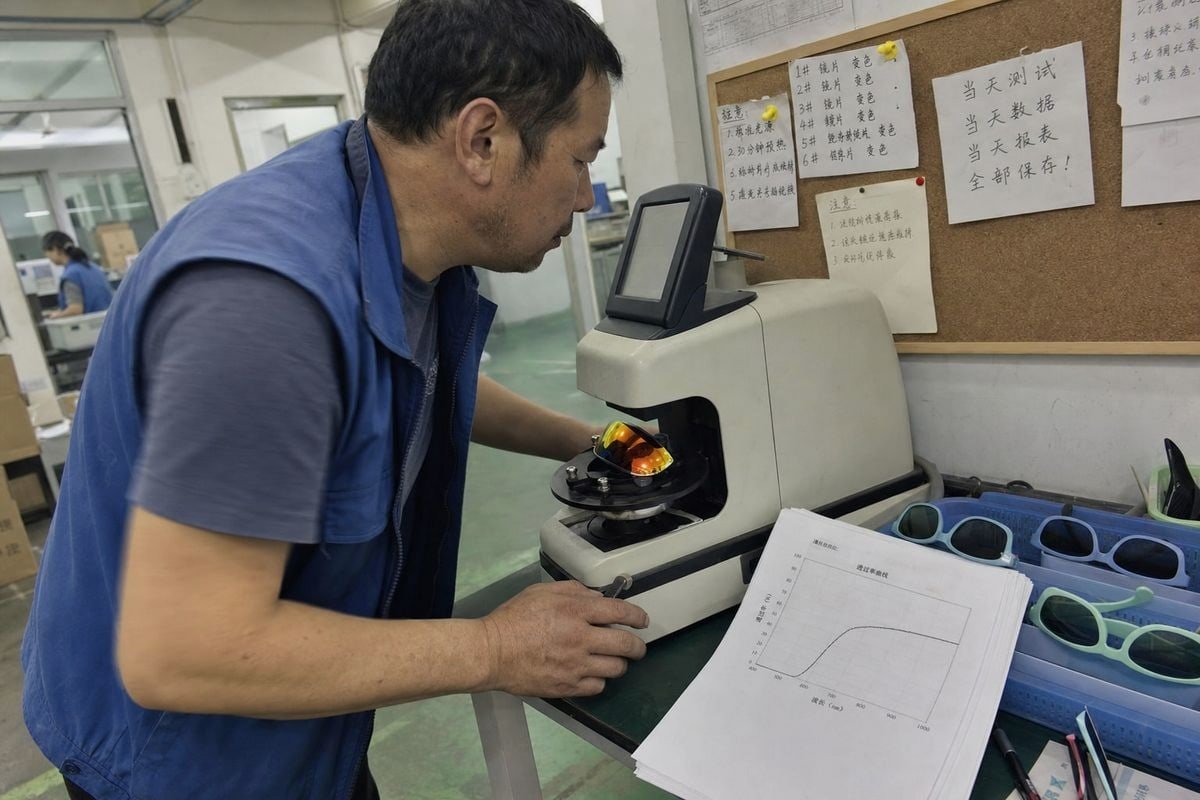
UV protection is invisible. That is the core problem. A parent cannot see it, and honestly, a buyer holding a sample cannot see it either. So verification has to rest on documents and instruments, not on how dark the tint looks. In our lab, we run lenses through a spectrophotometer that measures how much light passes through at each wavelength. A genuine UV400 lens blocks light up to 400 nanometers le rayonnement ultraviolet 3, which covers both UVA and UVB.
Why tint is not the same as protection
Tint controls visible light and glare. UV protection comes from the lens material and its UV-absorbing additives. A cheap dark lens without absorbers is arguably worse than no sunglasses, because the dark tint makes a child's pupils dilate, letting more unfiltered UV reach the retina. This is why Category 3 sun filters, the common darkness level for bright outdoor use, must always be paired with a verified UV cutoff.
The three-step verification I recommend to buyers
- Ask for the standard, not the slogan. "100% UV" is marketing. EN ISO 12312-1 4, ANSI Z80.3, or AS/NZS 1067.1:2016 are testable benchmarks tied to your market.
- Request the actual test report. It should name the lab, the standard, the lens batch, and show transmittance curves.
- Spot-check production. Pull random pairs from the shipment batch and send them for independent testing. We encourage this; a reliable factory will never resist it.
| Marking or claim | What it actually tells you | Should you trust it alone? |
|---|---|---|
| "UV400" printed on lens | Marketing claim of blocking to 400 nm | No — ask for the report |
| CE / UKCA mark | Declared conformity with EN ISO 12312-1 | Partly — verify the declaration file |
| Category 3 label | Visible light tint level, not UV blocking | No — tint ≠ UV protection |
| Third-party transmittance report | Measured UV performance on that batch | Yes — this is the real signal |
One more nuance buyers raise: are polarized lenses safer? Polarization reduces glare on water and roads, which is comfortable. But it is not a safety substitute for UV400 protection. We offer both polarized and non-polarized options across our roughly 800 existing styles, and we tell every client the same thing: get the UV report first, then choose polarization as a feature.
What certifications should I request to confirm the materials are non-toxic for children?
Documentation habits vary widely between markets, and after fifteen years of exporting kids' eyewear to over 20 countries, our sales team keeps a certification map for each region on the wall.
Request CPSIA compliance testing for lead and phthalates in the US, REACH SVHC reports for Europe, and material-level documentation proving frames are BPA-free and phthalate-free. Ask for a Children's Product Certificate backed by CPSC-accepted third-party lab results for each production batch.
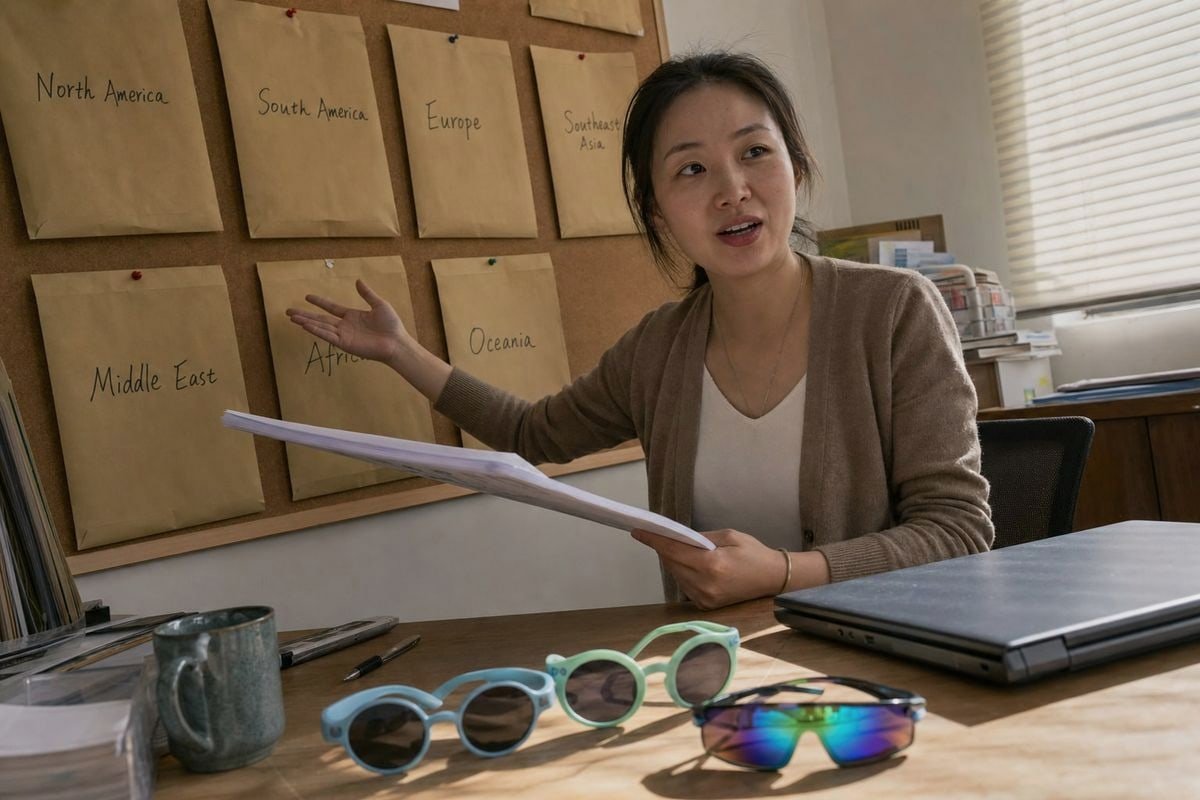
Children's sunglasses sit in a special regulatory category. They are worn on the face for hours, and toddlers chew them. That means chemical safety rules for children's products apply, not just general sunglass optics standards. The certificates you need depend on where you sell, so let me lay it out the way I do for new brand clients.
The core chemical certifications by market
| Market | Key requirement | What the document proves |
|---|---|---|
| United States | CPSIA compliance 5 (CPC + third-party lab test) | Lead below limits, phthalate-free materials in accessible parts |
| Union européenne | REACH SVHC 6 screening + EN ISO 12312-1 conformity | No restricted substances above thresholds; optical safety |
| Australia / NZ | AS/NZS 1067.1:2016 + chemical safety expectations | Sunglass performance category and lens safety |
| Japan | Buyer-specified chemical testing, often phthalate and heavy metals | Skin-contact and mouthing safety |
Watch out for vague safety language
Here is a buyer objection I hear often: "The supplier says the frames are non-toxic, isn't that enough?" No. "Non-toxic," "eco-friendly," and even "BPA-free frames" are useful claims, but they only mean something when a lab report sits behind them. On our production line, raw TPEE and TR90 pellets arrive with material safety data, and we can trace which resin lot went into which frame batch. That traceability is what turns a marketing phrase into a defensible compliance file.
Also ask whether accessories were tested. Straps, cases, and nose pads touch skin too. Some baby styles use food-grade silicone contact points, and those should appear in the same test scope, not be quietly excluded. A complete children's product test covers every accessible component, because a regulator or retailer auditor will not accept a report that only covers the lens.
How can I check if the frame materials like TPEE and TR90 are safe for young skin?
There is a trade-off we weigh on every new kids' style: the frame must be flexible enough to survive twisting, yet firm enough to hold shatterproof lenses securely. Material choice decides both.
Check TPEE and TR90 safety by requesting skin-contact and heavy-metal test reports, confirming the resin grade is BPA-free and phthalate-free, performing a twist-and-bend flexibility test on samples, and verifying the frames pass thermal stability checks so plastics do not leach in heat.
TPEE and TR90 have become the go-to pair for children's eyewear, and for good reason. TR90 is a lightweight thermoplastic with a strong memory effect; it bends and snaps back instead of cracking into sharp pieces. TPEE behaves like flexible TPE frames — soft, rubbery, and forgiving — which is why we often build TR90 fronts with TPEE temples. The rigid front holds the lenses precisely, while the soft temples flex when a toddler yanks the glasses sideways. Our engineers have found this combination survives abuse tests that break conventional acetate frames within seconds.
But "TR90" printed on a spec sheet is not a safety guarantee. Resin quality varies. Here is how I suggest you probe it.
A practical inspection sequence
- Ask which resin brand and grade is used. Reputable factories can name the supplier and provide material data sheets.
- Request skin-contact chemical reports. These should cover heavy metals and confirm phthalate-free, BPA-free formulations.
- Do the twist test yourself. A genuine flexible kids’ frame twists 90 degrees or folds flat and returns to shape. Brittle imitation material whitens or cracks at the hinge zone.
- Check thermal behavior. Kids' sunglasses live in hot cars and beach bags. Ask whether the factory tests frames at elevated temperatures for deformation and odor, which signals chemical stability.
- Inspect small parts. Hinge screws and decorative pieces must be secured so nothing detaches during mouthing or rough play.
Why softness matters beyond safety
A soft, matte-finish TPEE surface is gentler on a child's nose bridge and behind the ears. Comfort drives compliance: kids keep comfortable sunglasses on, and sunglasses only protect eyes while they stay on the face. Fit matters for the same reason — wraparound coverage and correctly sized frames reduce stray UV entering from the sides, and adjustable or curved temple tips keep the pair in place during play.
What questions should I ask my manufacturer to ensure consistent quality control on every batch?
A lesson our 5S-managed workshop learned early: passing one lab test is easy; passing the same test on batch fifty is the real discipline. Buyers should audit for consistency, not perfection.
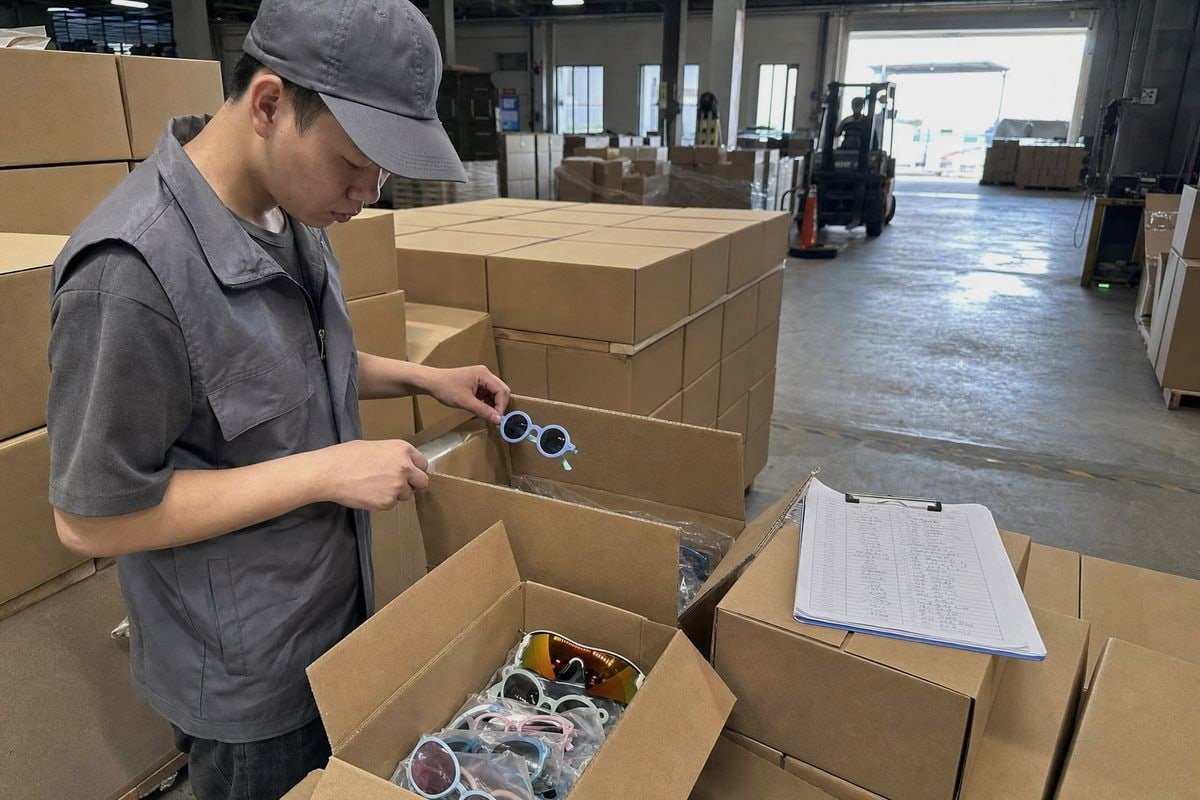
Ask how raw materials are traced to batches, what incoming and in-line inspection steps exist, whether each batch gets UV transmittance and impact spot-checks, what the AQL sampling level is at final inspection, and how nonconforming lots are quarantined and reported to you.
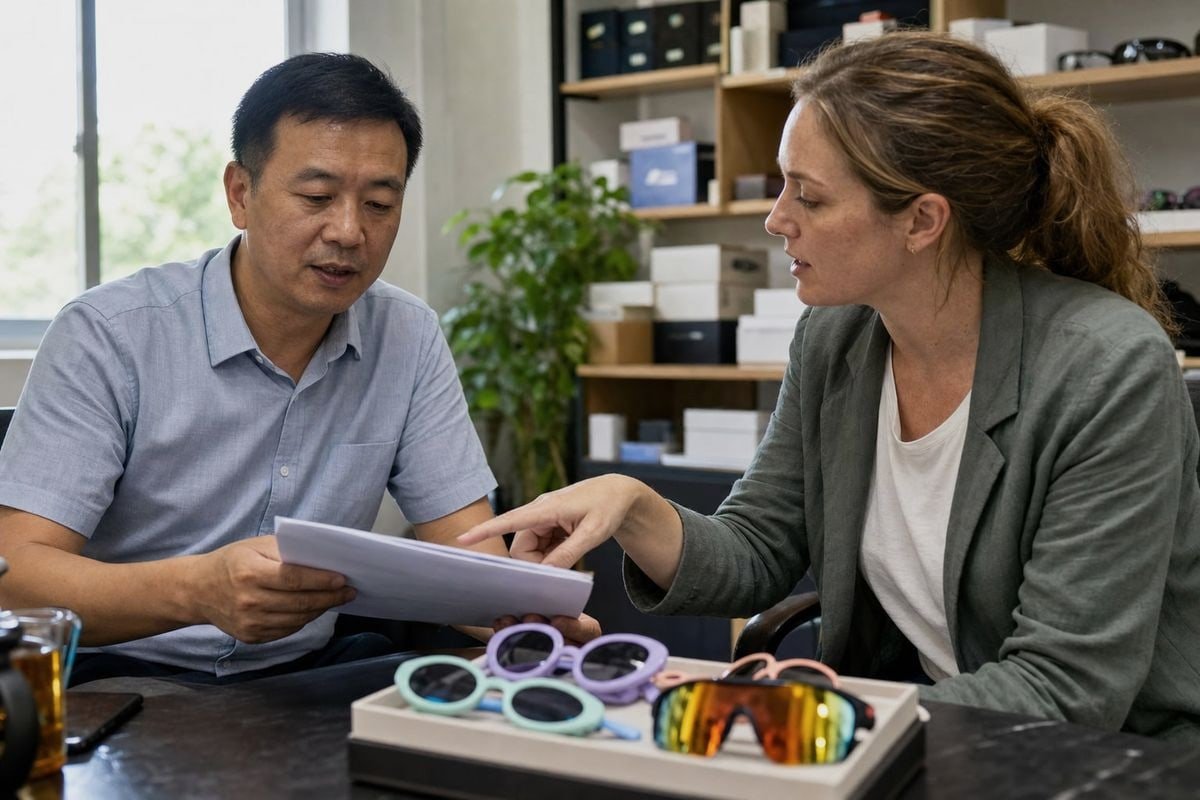
Consistency is a system, not a promise. When a Japanese baby-brand client audited us, they did not ask whether we could make a safe frame. They asked how we would know if batch thirty-seven drifted out of spec. That is exactly the right mindset, and the questions below reflect it.
The QC questions worth putting in writing
| Question to ask | What a strong answer looks like |
|---|---|
| How do you trace resin lots to finished frames? | Lot numbers recorded from pellet intake through injection to packing |
| Do you test UV performance per batch? | In-house spectrophotometer checks plus periodic third-party UV400 protection verification |
| What is your final inspection sampling plan? | A defined AQL level with documented defect categories |
| How do you test impact and durability? | Drop, twist, and hinge-cycle tests on impact-resistant polycarbonate 7 lenses and frames |
| What happens when a batch fails? | Quarantine, root-cause analysis, and proactive notification to the buyer |
| Can I see your workshop management system? | Evidence of 5S or similar discipline, calibrated equipment, trained inspectors |
Consistency signals beyond the checklist
Ask about people, not just paperwork. A factory with long-tenured workers — ours has around 120 across fifteen years of eyewear production — holds process knowledge that new-hire-heavy workshops lose every season. Ask how color matching is controlled between orders, because kids' brands live and die on consistent Pantone matching across reorders. Ask how packaging is inspected too; a scratched lens caused by rough packing fails the customer even if the lens itself passed every optical test.
Finally, ask about change control. If the factory switches a resin supplier or a lens coating vendor, will you be told before shipment? For OEM/ODM programs with custom logos, lenses, and retail-ready packaging, silent substitutions are the single biggest hidden risk. A partner mindset means changes are discussed first, documented, and re-tested. That is the difference between buying sunglasses and building a children's eyewear brand you can defend to any retailer or regulator.
Conclusion
Unsafe kids’ sunglasses risk children's eyes and your brand. Demand verified UV400 reports, CPSIA and REACH documentation, proven TPEE/TR90 materials, and batch-level QC — then partner accordingly.
Notes de bas de page
1. Comprehensive Wikipedia overview of the acceptable quality limit sampling standards used in manufacturing. ↩︎
2. FDA resource on BPA safety relevant to verifying BPA-free frame material claims. ↩︎
3. Background encyclopedia reference on UV radiation relevant to UV400 lens protection discussion. ↩︎
Plus d'articles que vous pourriez aimer
1 août 2026
L'usine doit-elle gérer l'emballage et l'étiquetage des lunettes pour enfants, ou utiliser un fournisseur désigné ?
1 août 2026
Entrepôt propre vs. exécution directe par le fournisseur : lequel réduit les coûts de retour pour les marques de lunettes pour enfants ?
1 août 2026
Entrepôt direct au port ou staging outre-mer : lequel permet d'économiser le plus sur l'expédition des lunettes pour enfants ?
Vous recherchez un partenaire fiable en lunetterie pour enfants ?
Explorez plus de 800 styles prêts et un support OEM/ODM complet adapté à votre marque.
Contactez-nous English
  Español de México
  Deutsch
  Français
  日本語
日本語  العربية
  Português do Brasil