TR90 vs Lunettes de vue enfant en métal : Lequel offre une meilleure flexibilité et réparabilité ?
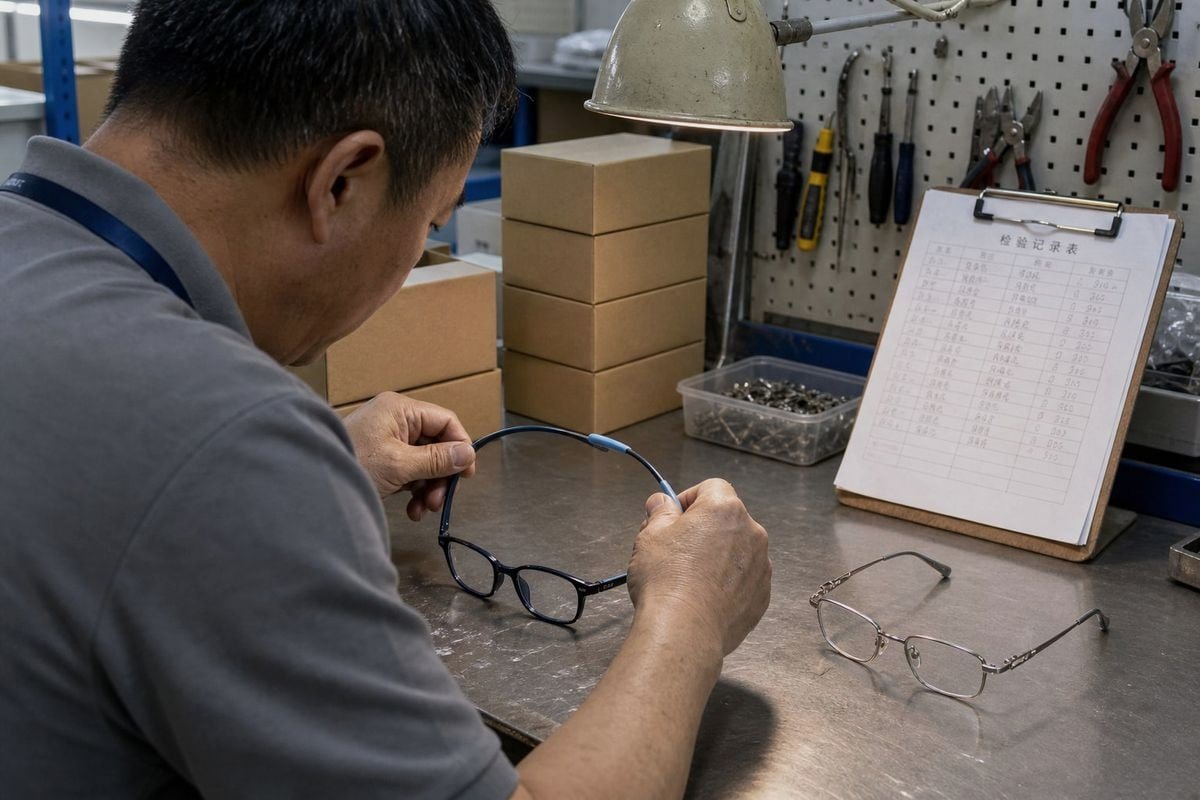
Les acheteurs nous interrogent sur les lunettes de vue enfant en TR90 par rapport aux lunettes en métal presque chaque semaine, car choisir le mauvais matériau peut réduire silencieusement les marges d'une marque par le biais de retours et de plaintes.
Les montures optiques TR90 pour enfants offrent une meilleure flexibilité, se plient et reprennent leur forme après des chutes et des torsions sans se casser. Les montures en métal offrent une meilleure réparabilité, car les opticiens peuvent souder, réaligner et remplacer des pièces avec précision. Pour les enfants actifs, le TR90 évite généralement les dommages ; le métal rend les dommages plus faciles à réparer professionnellement.
Ces deux atouts résolvent des problèmes différents. La flexibilité protège la monture avant que les dommages ne surviennent. La réparabilité sauve la monture après que les dommages sont survenus. Laissez-moi vous expliquer les deux, depuis l'usine.
Comment les montures en TR90 et en métal se comparent-elles lorsque mon enfant plie ou fait tomber accidentellement ses lunettes ?
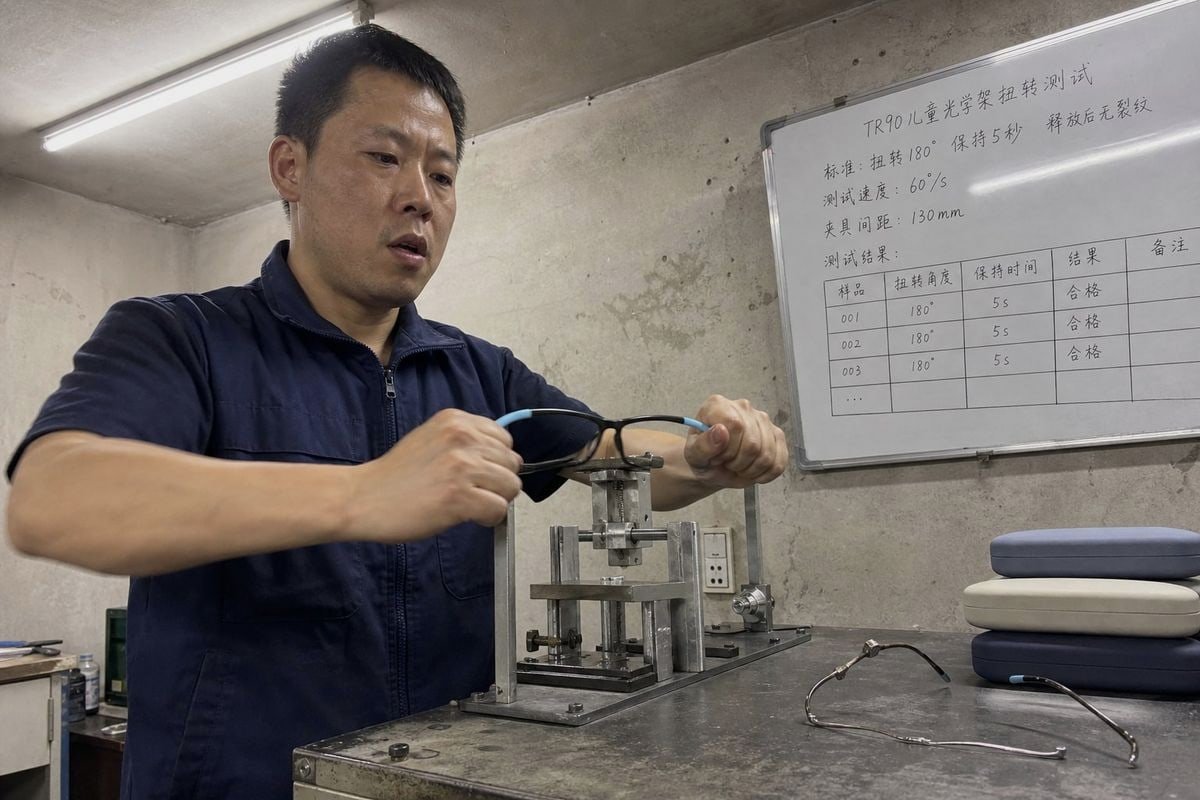
Lors de nos tests de chute à Taizhou, nous tordons les branches en TR90 sur près de 180 degrés. Les voir reprendre leur forme n'est jamais lassant, même après quinze ans dans le domaine de l'optique.
Lorsqu'ils sont pliés ou tombés, les montures TR90 fléchissent, absorbent l'impact et reviennent à leur forme originale grâce à la technologie de mémoire de forme. Les montures en métal restent pliées après l'impact, et les points de contrainte au niveau des charnières et des ponts peuvent se fissurer, bien qu'un pli persistant puisse être redressé professionnellement.
Voici un aperçu rapide côte à côte avant d'approfondir :
| Comportement après abus | montures TR90 | Montures en métal |
|---|---|---|
| Torsion ou assis sur la monture | Revient à sa forme | Maintient la déformation de manière permanente |
| Chute violente sur du béton | Absorbe les chocs, se fissure rarement | Peut se bosseler ; la charnière ou le pont peut se fissurer |
| Schéma de rupture | Se déforme et reprend sa forme | Peut se casser en morceaux tranchants |
| Tolérance à la flexion quotidienne | Extrêmement élevée | Faible ; repose sur un mécanisme de charnière à ressort |
Pourquoi le TR90 se comporte ainsi
Le TR90 est un matériau thermoplastique — spécifiquement à base de nylon polyamide thermoplastique 1 développé pour les lunettes de sport. Sa structure moléculaire lui confère une véritable technologie de mémoire de forme. Lorsqu'un enfant s'assoit sur les lunettes ou les retire d'une seule main, la monture se déforme élastiquement et reprend sa forme. Dans les scénarios à fort impact comme les chutes dans les cours de récréation, le TR90 agit comme un amortisseur et est beaucoup moins susceptible de se casser en morceaux tranchants près de l'œil de l'enfant. Cette résistance aux chocs est exactement la raison pour laquelle nous construisons la majeure partie de notre collection enfant autour du TR90, souvent associé à des embouts de branches souples en TPEE.
Là où les montures en métal peinent sous les abus
Les montures en acier inoxydable et en titane ont une résistance à la traction élevée, mais cette rigidité se retourne contre elles en cas de manipulation brutale. La charge se concentre sur les charnières, les soudures et le pont. Un mécanisme de charnière à ressort aide à la flexion extérieure des branches, mais il ne fait rien lorsque le pont subit un coup direct. La monture reste pliée — ce qui semble mauvais, et l'est souvent, mais comme nous le verrons dans la section suivante, ce même trait est précisément ce qui rend le métal réparable.
Une mise en garde pour les acheteurs de TR90 : le matériau peut souffrir de fissuration sous contrainte environnementale lorsqu'il est régulièrement exposé aux produits chimiques contenus dans les écrans solaires et les répulsifs à insectes. L'acier inoxydable et le titane 2 y sont immunisés. Pour les gammes de produits axées sur la plage, nous conseillons aux acheteurs de spécifier des revêtements résistants aux produits chimiques et de rappeler aux utilisateurs finaux de nettoyer les montures.
Puis-je obtenir facilement des pièces de rechange si je choisis des montures en métal au lieu de TR90 pour la collection de mes enfants ?
Une distributrice en Allemagne m'a un jour demandé pourquoi les opticiens de son marché privilégiaient encore le métal. Sa réponse m'a surprise : leurs laboratoires pouvaient réparer presque tout en métal, en interne, le jour même.
Oui — les montures en métal sont plus faciles à entretenir avec des pièces de rechange. Les opticiens peuvent remplacer les vis, les plaquettes de nez réglables et les embouts de branches, et même effectuer des soudures sur les montures aux jonctions cassées. Les montures TR90 utilisent moins de composants remplaçables, de sorte que les unités endommagées sont généralement remplacées plutôt que réparées.
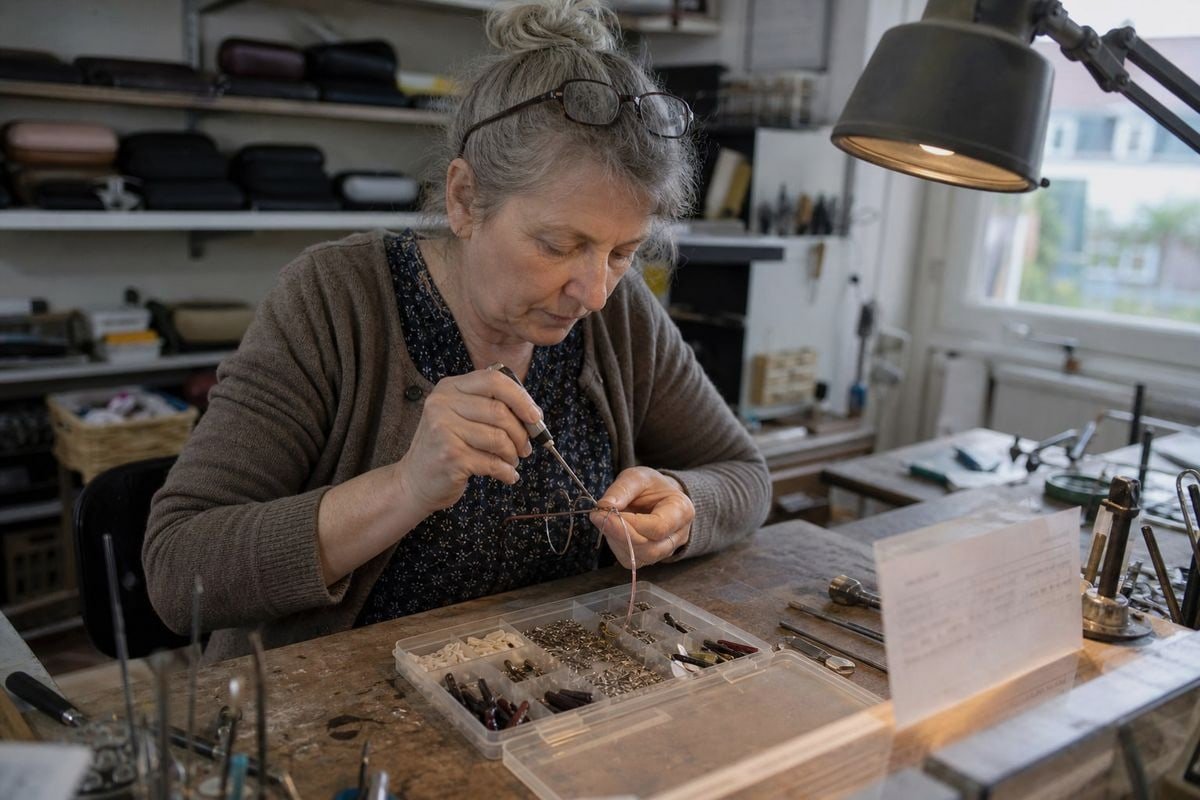
La réparabilité signifie des choses différentes selon la personne qui effectue la réparation. Décomposons honnêtement, car nous vendons les deux types de matériaux à nos acheteurs.
Ce qui peut réellement être réparé
| Réparation ou pièce | Montures en métal | montures TR90 |
|---|---|---|
| Plaquettes de nez ajustables | Facilement remplaçables | Généralement moulées ; non remplaçables |
| Vis des charnières | Tailles standard, échange facile | Charnières monobloc souvent sans vis |
| Pont ou joint cassé | Soudure de monture possible | Pas pratiquement réparable |
| Réalignement des branches | Pliage précis et répétable | Nécessite un chauffage à environ 100–120°C |
| Embouts de branche | Remplaçable sur la plupart des modèles | Parfois remplaçable (embouts TPEE) |
Le contrepoint honnête pour le TR90
Voici la nuance que la plupart des articles ignorent : le TR90 résiste souvent si bien aux dommages qu'il est moins nécessaire de le réparer en premier lieu. Le métal est plus réparable après un dommage — mais il est aussi plus susceptible d'en avoir besoin. D'après notre expérience d'exportation dans plus de 20 marchés, les montures TR90 pour enfants reviennent pour garantie beaucoup moins souvent que les styles métalliques comparables.
Il y a aussi un avantage en matière de sécurité concernant la question des pièces. Beaucoup de nos conceptions modernes en TR90 utilisent des charnières monobloc sans vis. Pas de vis signifie pas de petites vis qui se desserrent et deviennent des risques d'étouffement potentiels pour les tout-petits. Moins de pièces, moins de points de défaillance.
Pour les acheteurs B2B, mon conseil pratique est le suivant : si votre canal de vente au détail comprend des magasins d'optique avec des laboratoires internes, la réparabilité du métal est un véritable argument de vente. Si vous vendez par le biais de magasins pour bébés, de commerce électronique ou de détaillants de plein air sans infrastructure de réparation, la prévention des dommages du TR90 est bien plus importante que la récupération des dommages du métal.
Pourquoi est-ce que je vois de plus en plus de marques passer du métal au TR90 pour les montures optiques pour enfants ?
Il y a cinq ans, environ la moitié des demandes d'échantillons parvenant à notre usine de Taizhou concernaient des styles métalliques pour enfants. Aujourd'hui, la grande majorité des nouvelles demandes spécifient le TR90 ou le TPEE dès le départ.
Les marques changent car le TR90 offre des lunettes légères, une résistance supérieure aux chocs, des propriétés hypoallergéniques et des taux de retour plus bas pour les collections pour enfants. Il se moule également dans des coloris vifs et ludiques avec un risque d'outillage plus faible, correspondant à la façon dont les marques modernes pour enfants conçoivent, commercialisent et vendent leurs lunettes.

Le changement n'est pas dicté par la mode. Il est dicté par des avantages produits mesurables qui sont importants spécifiquement pour les enfants. Voici les principales forces derrière cette tendance, telles que nous les voyons du côté de la production.
Poids et confort sur les petits visages
Le TR90 est nettement plus léger que la plupart des alliages métalliques — certaines sources le citent même comme étant environ 30% plus léger que l'acétate, bien que ce chiffre le compare à l'acétate plutôt qu'au métal directement. Quoi qu'il en soit, des lunettes légères minimisent la pression sur le pont nasal en développement d'un enfant. Les montures plus légères glissent également moins, ce qui signifie moins de remontées en milieu de journée et un meilleur alignement des verres avec la pupille.
Sécurité de la peau et propriétés hypoallergéniques
Le TR90 est intrinsèquement hypoallergénique. Il ne contient aucun nickel souvent présent dans les alliages métalliques à bas prix, ce qui le rend plus sûr pour les enfants ayant dermatite de contact 3 ou une peau sensible. Pour les marques de bébés et de tout-petits, cela seul décide souvent du matériau.
Raisons commerciales derrière le changement
- Coûts de garantie inférieurs. Les montures qui se plient et reviennent à leur forme génèrent moins de retours que les montures qui restent pliées ou se cassent.
- Liberté de conception. Le TR90 se moule en pastels translucides, en blocs de couleurs bicolores et en formes douces et arrondies — comme les façades noires brillantes avec des branches en TPEE bleu marine à bleu ciel que nous produisons.
- Risque de lancement réduit. Les nouvelles marques peuvent choisir parmi nos quelque 800 styles existants au lieu d'investir dans des outillages métalliques, puis personnaliser les couleurs, les logos et les emballages via OEM/ODM.
- Marketing de sécurité. "Se plie, ne casse pas" est un message que les parents comprennent instantanément.
Le métal conserve sa place dans les styles optiques minimalistes et classiques et les lignes pour adultes. Mais pour les collections pour enfants, le marché a clairement voté.
Que dois-je considérer concernant la durabilité à long terme et les coûts de réparation avant de choisir un matériau de cadre pour ma gamme de produits ?
Le compromis le plus difficile que j'aborde avec les responsables des achats est le suivant : voulez-vous une monture qui se casse rarement, ou une monture qui est bon marché à réparer quand elle se casse ?
Pesez quatre facteurs : niveau d'abus attendu, infrastructure de réparation dans votre canal de vente, force de la prescription de la lentille et objectifs de durabilité. Le TR90 réduit le coût total pour les enfants actifs grâce à moins de casses ; le métal réduit le coût de réparation par incident là où un support d'opticien existe et convient mieux aux lentilles à forte dioptrie.
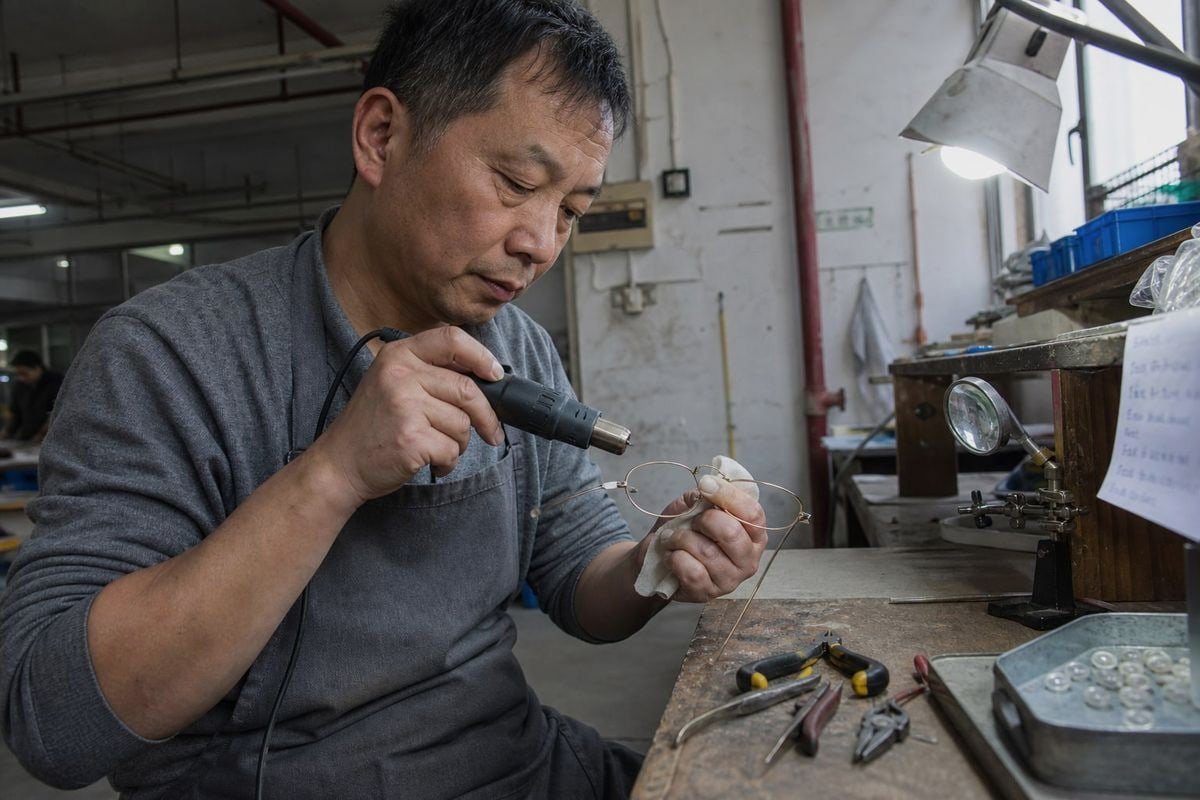
Le coût total de possession est la bonne perspective pour cette décision — pas le prix unitaire. Laissez-moi vous présenter le cadre que nous partageons avec les acheteurs de marques lors du développement de produits.
Un cadre de décision pour votre gamme de produits
| Considération | Favorise le TR90 | Favorise le métal |
|---|---|---|
| Enfants très actifs, sports, tout-petits | ✔ Se plie au lieu de casser | — |
| Canal de vente au détail en magasin d'optique avec laboratoires | — | ✔ Soudable, réglable |
| Verres de prescription à forte puissance (épais) | — | ✔ Meilleure tension structurelle |
| Canal e-commerce ou magasin pour bébés | ✔ Moins de retours, pas de réparation nécessaire | — |
| Peau sensible, allergies au nickel | ✔ Hypoallergénique | Alliages sans nickel ou titane uniquement |
| Message de durabilité | — | ✔ Recyclable à l'infini |
Deux points techniques négligés
Premièrement, la puissance de la prescription est importante. Les montures en métal offrent une meilleure tension structurelle pour les verres à forte puissance intégrité structurelle 4. La flexibilité extrême du TR90 peut faire sortir les verres épais de la monture si celle-ci est trop sollicitée. Si votre collection cible des prescriptions fortes, discutez de la profondeur de la monture et de la rétention des verres avec votre usine avant de finaliser la conception — nous ajustons la géométrie de la rainure sur nos montures optiques en TR90 pour cette raison exacte.
Deuxièmement, la durabilité se présente sous un autre angle. Les montures en métal sont plus écologiques d'un point de vue du recyclage car l'acier inoxydable et le titane sont infiniment recyclables. Le TR90 est un thermoplastique complexe difficile à retraiter. Nous travaillons avec des qualités de matériaux respectueuses de l'environnement, mais je dis honnêtement aux acheteurs : si la recyclabilité en fin de vie ancre l'histoire de votre marque, le métal a l'argument le plus fort, tandis que le TR90 l'emporte sur la longévité en utilisation.
Enfin, budgétez votre contrôle qualité en conséquence. Dans notre atelier géré selon la méthode 5S, les montures en TR90 subissent des contrôles de flexion et de torsion ; les montures en métal nécessitent des inspections des soudures et des placages en revanche. Matériaux différents, modes de défaillance différents, plans de contrôle qualité différents.
Conclusion
Choisir mal ici coûte aux marques des retours, des plaintes et de la confiance. Le TR90 l'emporte sur la flexibilité et la tolérance aux chocs ; le métal l'emporte sur la réparabilité précise. Adaptez le matériau à votre canal, et les deux problèmes disparaissent.
Notes de bas de page
Spécifications techniques du fabricant principal du TR90, détaillant ses propriétés en tant que polyamide thermoplastique haute performance. ↩︎
Données de l'industrie sur la durabilité confirmant la recyclabilité infinie de l'acier et du titane par rapport aux matériaux thermoplastiques. ↩︎
Recommandations médicales sur la dermatite de contact induite par le nickel, soutenant le besoin de matériaux hypoallergéniques dans les lunettes pour enfants. ↩︎
Étude faisant autorité du NIH sur les propriétés mécaniques et la durabilité des matériaux de montures de lunettes. ↩︎
Plus d'articles que vous pourriez aimer

Vous recherchez un partenaire fiable en lunetterie pour enfants ?
Explorez plus de 800 styles prêts et un support OEM/ODM complet adapté à votre marque.
Contactez-nous English
  Español de México
  Deutsch
  Français
  日本語
日本語  العربية
  Português do Brasil