Can Kids’ Anti-Blue-Light Glasses Be Recycled, and How to Dispose of Old Ones?
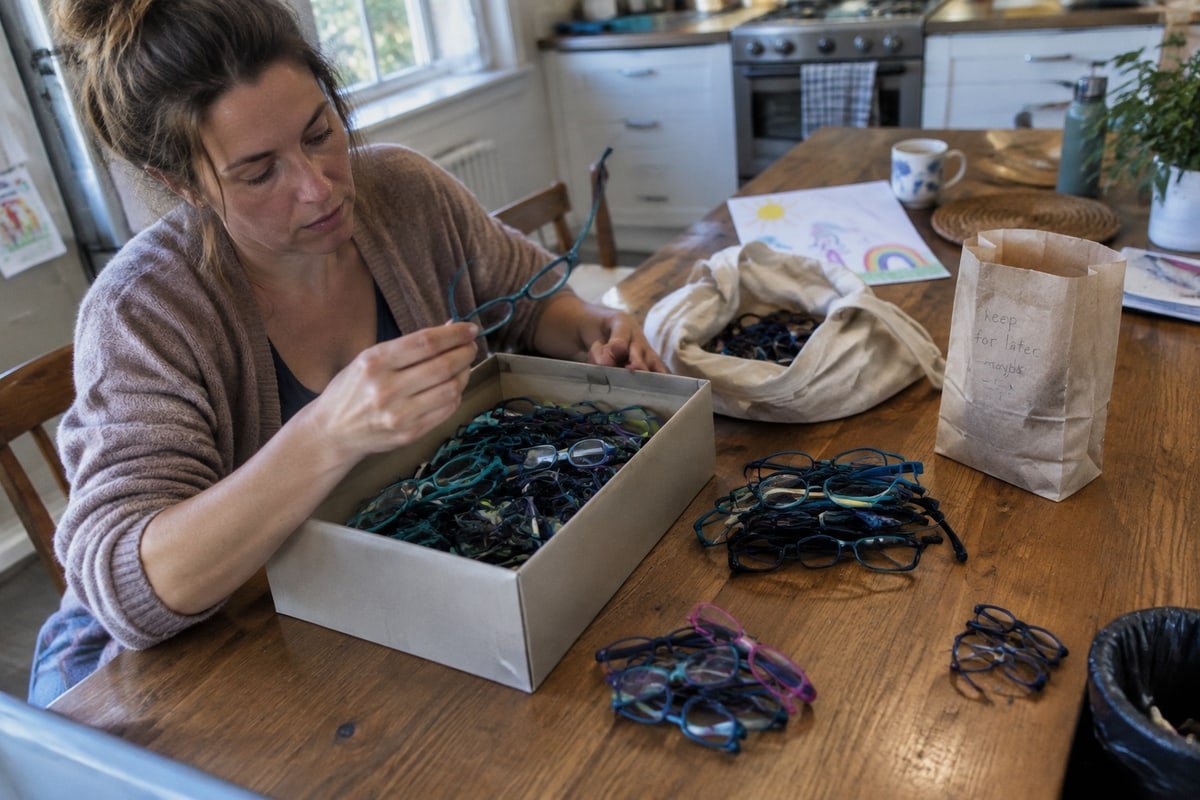
Parents keep writing to us about outgrown kids’ anti-blue-light glasses eyeglass donation centers 1. Most end up in the trash. On our Taizhou production line, we design frames with that ending in mind.
Kids’ anti-blue-light glasses are rarely accepted in curbside recycling because they mix plastic frames, metal hinges, and coated lenses. The best disposal path is reuse or donation first, then a specialty eyewear recycling or brand take-back program, and household trash only as a last resort.
That short answer hides a lot of detail. Frame material changes the route. Lens type changes it again. Below, I walk through what the glasses are made of, how a brand can run a take-back scheme, what to print for parents, and how to pick materials that make the next pair easier to recycle.
What materials in kids' anti-blue-light glasses affect how I can recycle or dispose of them?
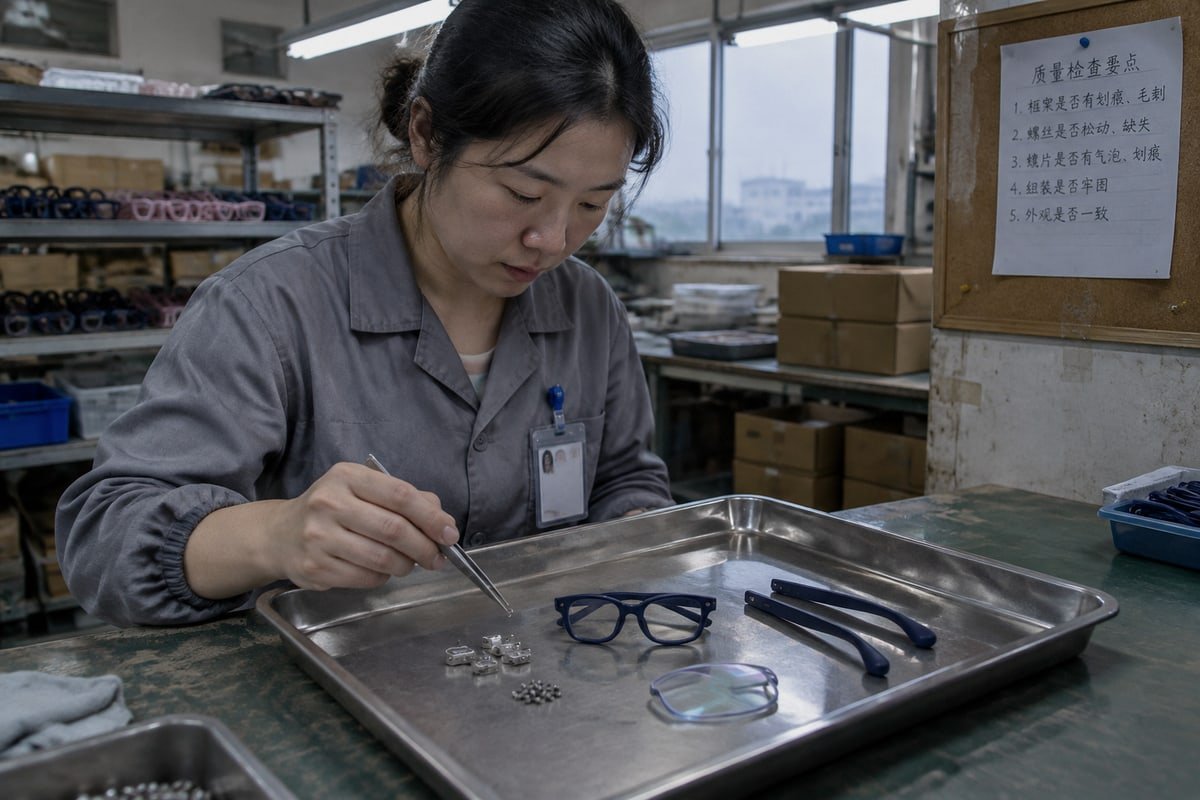
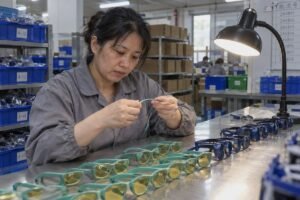
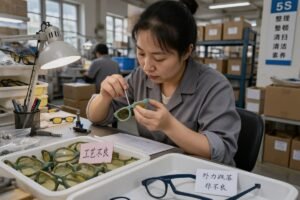
Last month our QC team pulled apart a returned navy frame to check the hinge. Six different materials sat on the bench. That small pile explains the recycling problem.
The frame polymer, lens material, lens coatings, metal hinges and screws, and any soft silicone or TPE parts all decide the disposal route. Mixed materials block curbside recycling, so kids' anti-blue-light glasses usually need a specialty program, donation, or careful disassembly instead.
Why one pair equals several waste streams
A single pair looks like one object. To a recycler, it is a small assembly. The front is one polymer. The temples may be another. The hinges are metal. The screws are tiny. The lenses are a third plastic with a coating on top. Soft temple tips add rubber or silicone. Curbside sorting lines are built for bottles, cans, and cardboard. Small mixed items either jam the line or fall through the screens. That is why almost every municipal program says no to whole glasses.
Here is how the parts in a typical kids' pair break down.
| Composant | Typical material in kids' blue-light glasses | Curbside bin? | Better route |
|---|---|---|---|
| Façade de monture | TR90 nylon, TPEE 2, acetate, or recycled plastic | Non | Optical recycling programs; scrap plastic only if the polymer is marked |
| Temples and soft tips | TPEE, TPE, or silicone | Non | Soft plastic processing, not rigid plastic streams |
| Hinges and screws | Stainless steel or nickel alloys | Too small to sort | Scrap metal if separated; otherwise specialty recycler |
| Lentilles | Polycarbonate or CR-39 with a blue-light coating | Non | Polycarbonate lens disposal through a specialty recycler; trash if none exists |
| Case and cloth | Microfiber, EVA foam, cardboard | Cardboard yes; others no | Reuse for the next pair |
Lenses are the hardest part
In our factory, lenses are the component I worry about most at end of life. Polycarbonate is tough and safe for children, which is exactly why we use it. But that same toughness means it can take centuries to break down in a landfill, and coatings may leach chemicals into soil over time. The pale yellow tint on our teal retro frame and the mirrored film on our polarized clip-on are thin layers bonded to the plastic. A recycler cannot peel them off. Glass lenses are not much better. They are not the same glass as bottles and jars, so they do not belong in the glass bin either.
Soft frames need a different stream
Many kids' frames use flexible TPE, TPEE, or silicone so they bend instead of snap. That flexibility protects a child's face. It also means these frames need soft plastic processing, not the rigid plastic stream that handles bottles. Metal frames in titanium or stainless steel are easier to recycle at scrap facilities, but few parents choose rigid metal for a five-year-old.
The recycled-content tension
Brands now advertise recycled plastics 3 in blue-light glasses, and retailers highlight recycled content in listings. I support that trend. Still, a frame made from recycled polymer is just as hard to recycle again if it is bolted to metal hinges and coated lenses. Sustainable eyewear materials at the start do not guarantee eco-friendly glasses disposal at the end.
How can I set up a take-back or recycling program for my kids' eyewear brand?
A brand buyer from Australia raised this on a video call. She wanted a take-back scheme for her small kids' label. Her worry was cost, not intent.
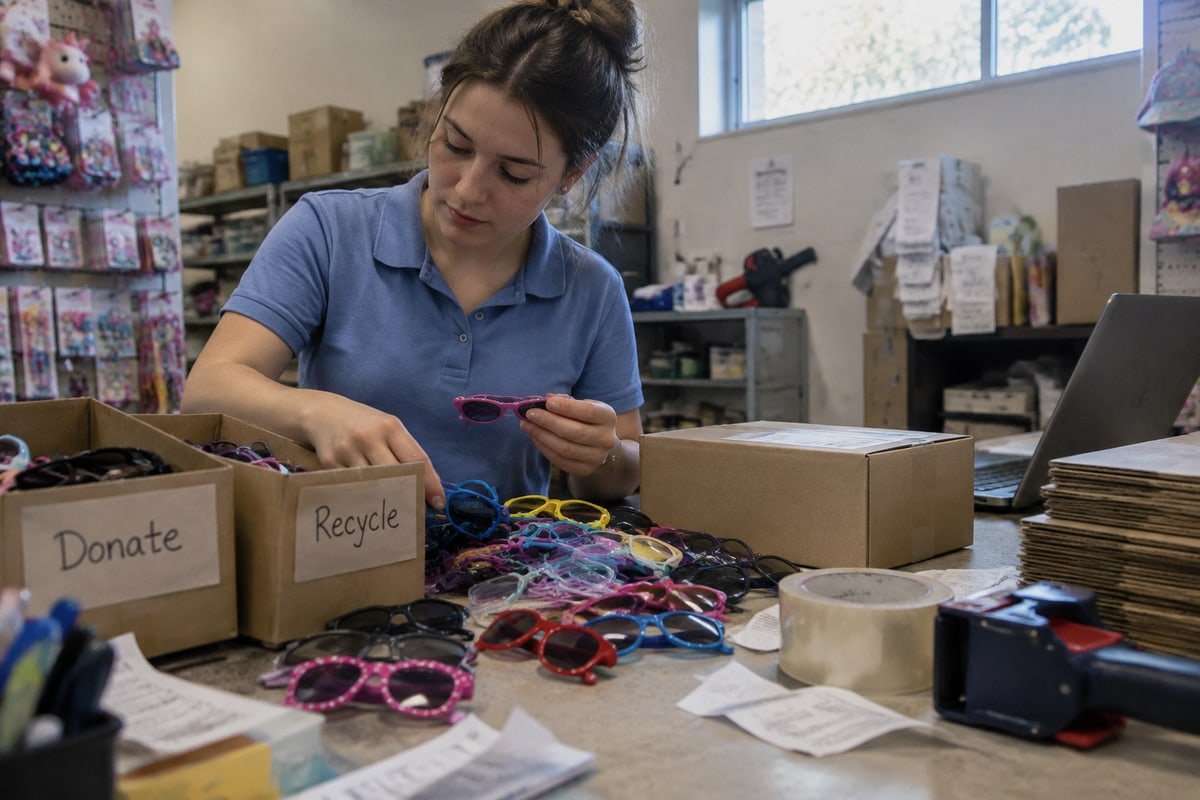
Start with a simple mail-back or retailer drop-box scheme, partner with an established optical recycler or a TerraCycle Zero Waste Box, define which items you accept, sort intact pairs for donation, and offer a size-upgrade discount so parents actually return outgrown frames.
A six-step process that fits a small brand
I told that buyer the same thing I tell every brand we supply. Do not build a recycling plant. Build a collection habit. Here is the order that works.
- Decide what you accept. Intact pairs only? Broken frames? Loose lenses? Clip-ons? Write the list before you print anything. Some programs accept broken spectacles, sunglasses, and goggles. Others reject loose lenses or cracked plastic frames. Your rules must match your processing partner's rules.
- Pick a collection channel. A prepaid mail-back envelope suits online brands. A drop box suits brands with optical stockists. Event collection suits school or sports partnerships.
- Choose a processing partner. Usable pairs can go to humanitarian channels such as Lions Club Recycle for Sight or New Eyes for the Needy. Worn or broken pairs can go into a TerraCycle Zero Waste Box or to specialized B2B optical recyclers. Some of those recyclers recover high-purity polymers from blue-light lenses 4 for industrial uses like automotive safety glass or protective shields.
- Build the incentive. Kids outgrow frames fast. A digital wellness trade-in that offers a discount on the next size in exchange for the old pair turns a chore into a reason to come back.
- Communicate at the moment of purchase. A packaging insert, a QR code on the case, and a short product-page note do more than a long sustainability page.
- Track and report honestly. Count pairs returned and pairs donated or recycled. Do not claim more than the partner confirms.
Comparing program models
| Program model | Idéal pour | Main cost driver | Watch-out |
|---|---|---|---|
| Prepaid mail-back envelope | Online-first brands | Postage per return | Low return rates without an incentive |
| Retail drop box | Brands with stockists | Box production and pickup logistics | Contamination with cases, cloths, and non-eyewear items |
| Size-upgrade trade-in | Kids' brands where outgrowing is the norm | Discount margin | Returned pairs must actually reach a recycler or donation channel |
| Third-party box such as TerraCycle | Small volumes, quick start | Box purchase price | Acceptance list must be checked before promising anything |
Where the factory fits in
Our role in a program like this is upstream. With roughly 800 existing styles, a brand can standardize on a few material platforms, such as TR90 fronts with TPEE temples, instead of launching ten unrelated constructions. Fewer material types mean simpler sorting when pairs come back. Our OEM/ODM team also prints return instructions on the packaging and adds a spare-screw pouch, which extends the life of a pair before it ever reaches the box. That is a small, real step toward a circular economy in eyewear, and it treats optical waste management as a design decision rather than an afterthought.
What should I tell parents about safely disposing of old kids' glasses?
One lesson from fifteen years of eyewear work: parents do the right thing when the instructions fit on a packaging insert. Long guides get ignored.
Tell parents to clean and donate usable glasses through eyeglass donation centers, use optical retailer drop boxes or mail-in programs for worn pairs, confirm broken frames are accepted before sending, keep glasses out of curbside bins, and use the trash only when no program exists.
Match the action to the condition
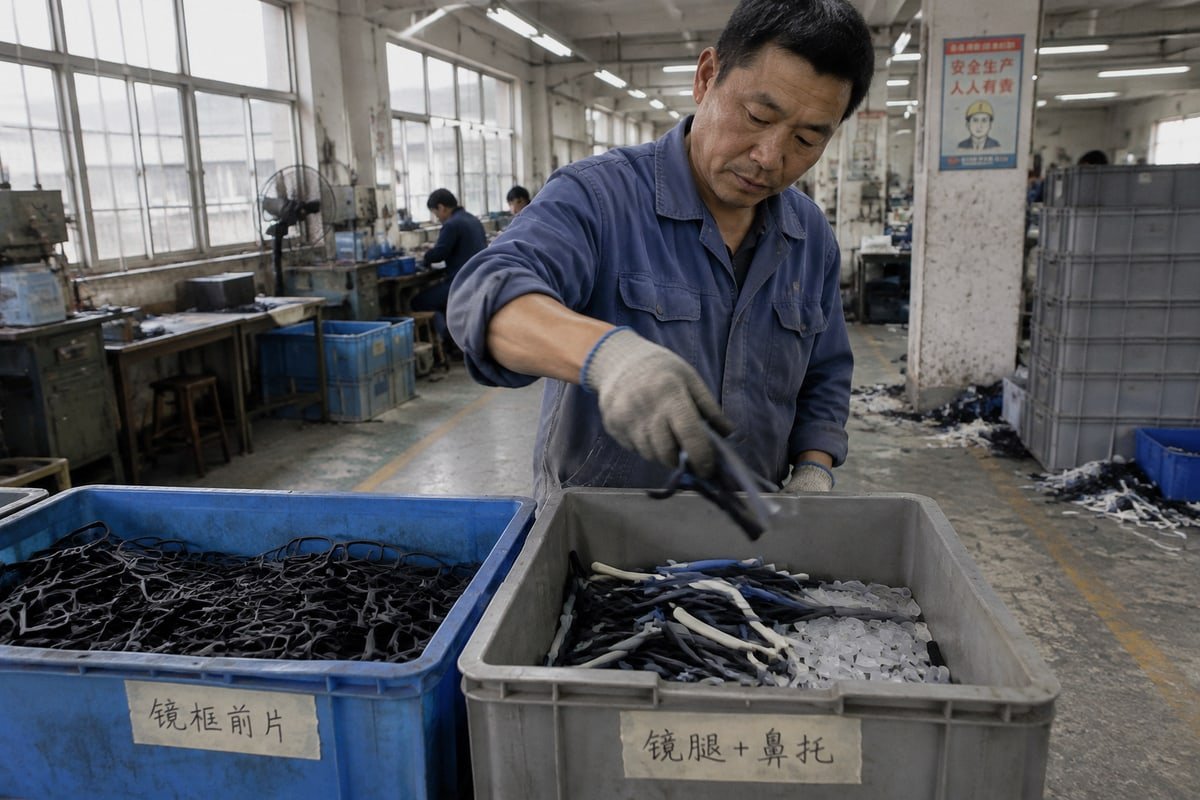
When we draft inserts for brand clients, we sort the advice by the state of the glasses. Parents can judge condition in seconds. They cannot judge polymer types.
| Condition of the glasses | What to tell parents |
|---|---|
| Usable but outgrown | Clean with mild soap, dry, and donate. Reuse has the highest environmental value. |
| Intact but scratched | Send to a mail-in or drop-box program. Many accept scratched lenses; a few do not. |
| Broken frame or cracked lens | Check the program's acceptance list first. If broken pairs are excluded, use the trash. |
| Only loose lenses left | Do not mail loose lenses unless the program asks for them. Use them for a home experiment or trash them. |
| Case, cloth, and box | Keep them for the next pair or recycle the cardboard normally. |
Where parents can actually take them
Parents want a place, not a principle. In the United States, drop-off boxes sit in many Walmart Vision Centers, Costco warehouses, and LensCrafters stores. Lions Club Recycle for Sight and New Eyes for the Needy accept gently used frames and route them to vision care in developing regions. Some organizations want intact glasses only. Others accept broken spectacles, prescription glasses, sunglasses, safety glasses, and goggles. The insert should say: check the box or the website before you drop or mail.
Repurposing old spectacles at home
Not every pair needs to leave the house. Repurposing old spectacles is a fair option for a family. An outgrown frame with the lenses removed works for a costume or a DIY craft. A pair that still fits can stay in the car as an emergency backup. The lenses themselves make a good STEM lesson. Hold a blue-light lens over a phone screen and a child can see the tint shift. That shows light filtration and the visible spectrum 5 in a way a worksheet cannot. It also explains why the glasses were bought for digital eye strain protection in the first place.
What parents should not do
Keep this list short and print it in plain words.
- Do not put whole glasses in the curbside recycling bin.
- Do not put lenses in the glass bin with bottles and jars.
- Do not separate lenses from frames unless the recycler asks for it.
- Do not mail broken pairs to a program that lists intact glasses only.
- Do not leave a broken pair where a smaller child can reach sharp edges.
How can I choose eco-friendly materials from my manufacturer to make future recycling easier?
Every new style forces a trade-off on our design table. A soft TPEE temple protects a child's face, but pairing it with a TR90 front adds another material to separate.
Ask your manufacturer for mono-material or two-material frames, screwless or minimal-metal hinges, clearly marked polymer types, and lenses that pop out without tools. Choose flexible TR90 or TPEE over layered acetate, and request recycled-content options only when the recycler can process them.
Design choices that pay off at end of life
The easiest glasses to recycle are the ones with the fewest surprises inside. I weigh every one of these choices against child safety first, because a frame that snaps into sharp pieces is not sustainable in any sense.
| Choix de conception | Recycling benefit | Child-safety benefit | Compromis |
|---|---|---|---|
| Single-polymer frame in TR90 or TPEE | One material stream | Bends under impact instead of breaking | Fewer color-block effects than layered fronts |
| Screwless flex hinge | No metal to remove | No loose screws near the eye | Hinge wear after years of heavy use |
| Pop-out lenses | Lenses separate in seconds | Cheap lens replacement extends product life | Lens groove must still hold firmly on impact |
| Detachable polarized clip-on | Sun function without a second frame | One frame, two uses | One more part for parents to track |
| Polymer code molded inside the temple | Sorters can identify the plastic | Aucun | Small mold change, one-time cost |
Questions à poser à votre fournisseur
When a procurement manager visits our 5S-managed workshop, these are the questions I hope they ask.
- Which exact polymer is the front, and which is the temple?
- Can the lenses be removed by hand, and can spare lenses be ordered later?
- Are the hinges screwless, or can you switch to a screwless option on this style?
- If recycled content is used, can you document where it comes from?
- Can you print disposal and return instructions on the inner box or insert?
- Can we pick a few base constructions from your existing styles so our whole range shares one material platform?
That last question matters most for small brands. Our roughly 800 existing styles let a brand test the market without heavy mold investment. Choosing three or four of them on the same TR90 and TPEE platform also means every returned pair sorts the same way.
Recycled content versus recyclability
I raise this tension with every buyer who asks for "eco" frames. Acetate frame recycling is harder than it sounds. Acetate is plant-based, but it is blended with plasticizers and often built in layers with metal cores in the temples. Flexible TR90 and TPEE are single polymers we have worked with for years, and they hold up on active kids. Recycled TR90 is available. It is a good story on a product page. It only becomes real eco-friendly glasses disposal if the finished pair can come apart and if a program exists to take it. Sustainable eyewear materials, simple construction, and a take-back plan have to be chosen together. Pick one without the others and the next pair of kids' anti-blue-light glasses ends up in the same trash bag as the last one.
Conclusion
Outgrown kids' anti-blue-light glasses rarely belong in a curbside bin. That waste adds up. Reuse first, recycle through specialty programs second, and design the next pair to be taken apart.
Interested in sourcing the products mentioned in this article? See details and request a quote here:
Notes de bas de page
1. Lions Club is a leading global authority on eyeglass collection and humanitarian donation programs. ↩︎
2. Wikipedia provides a technical definition and properties of thermoplastic elastomers like TPEE used in eyewear. ↩︎
3. The EPA provides authoritative guidance on plastic recycling processes and environmental sustainability standards. ↩︎
4. The NIH provides extensive research on the physiological effects of blue light on ocular health. ↩︎
5. NASA provides authoritative scientific information on light filtration and the properties of the visible spectrum. ↩︎
Plus d'articles que vous pourriez aimer

septembre 29, 2026
Can Silicone Nose Pads and Temple Tips on Kids' Blue-Light Glasses Cause Skin Allergies?
septembre 29, 2026
What Are Common After-Sales Issues With Kids' Anti-Blue-Light Eyewear?
septembre 29, 2026
What Does a Kids' Anti-Blue-Light Glasses Warranty Cover, Including Accidental Drops?
Vous recherchez un partenaire fiable en lunetterie pour enfants ?
Explorez plus de 800 styles prêts et un support OEM/ODM complet adapté à votre marque.
Contactez-nous English
  Español de México
  Deutsch
  Français
  日本語
日本語  العربية
  Português do Brasil