How to Improve Hinge Durability When Sourcing Kids Optical Frames?
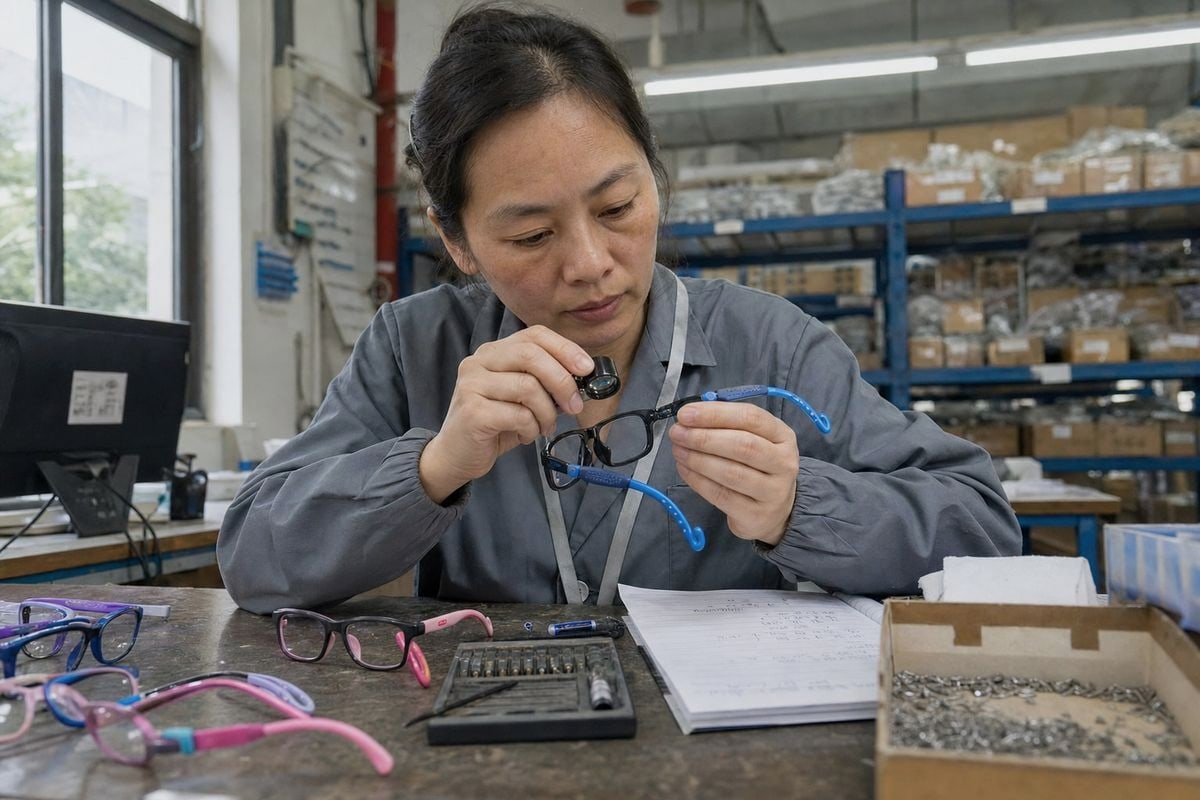
Hinge durability is the first thing I check when a returned kids optical frame lands on my desk in our Taizhou workshop. Nine times out of ten, the hinge failed first. Parents blame the brand, retailers issue refunds, and buyers lose repeat orders — all because of one small joint. The good news? After fifteen years of building children’s frames, we know exactly how to prevent it.
To improve hinge durability in kids optical frames, specify spring hinges or flexible screwless designs, require stainless steel screws with proper seating, match the hinge to the frame material, and demand cycle testing of at least 5,000 open-close cycles before approving bulk production.
That answer is short, but each part hides real sourcing decisions. Below, I break down testing, materials, manufacturing details, and how to pick the right factory partner.
How can I test hinge durability before placing a bulk order?
A buyer from Australia once asked me to open and close a sample frame two hundred times during a video call. It felt tedious. But her instinct was right — testing before ordering saves everyone money.
Test hinge durability by requesting cycle testing of 5,000+ open-close cycles, checking for maintained friction and screw retention afterward, performing manual wiggle and rebound tests on samples, and verifying smooth temple movement with no grinding, wobble, or side play.
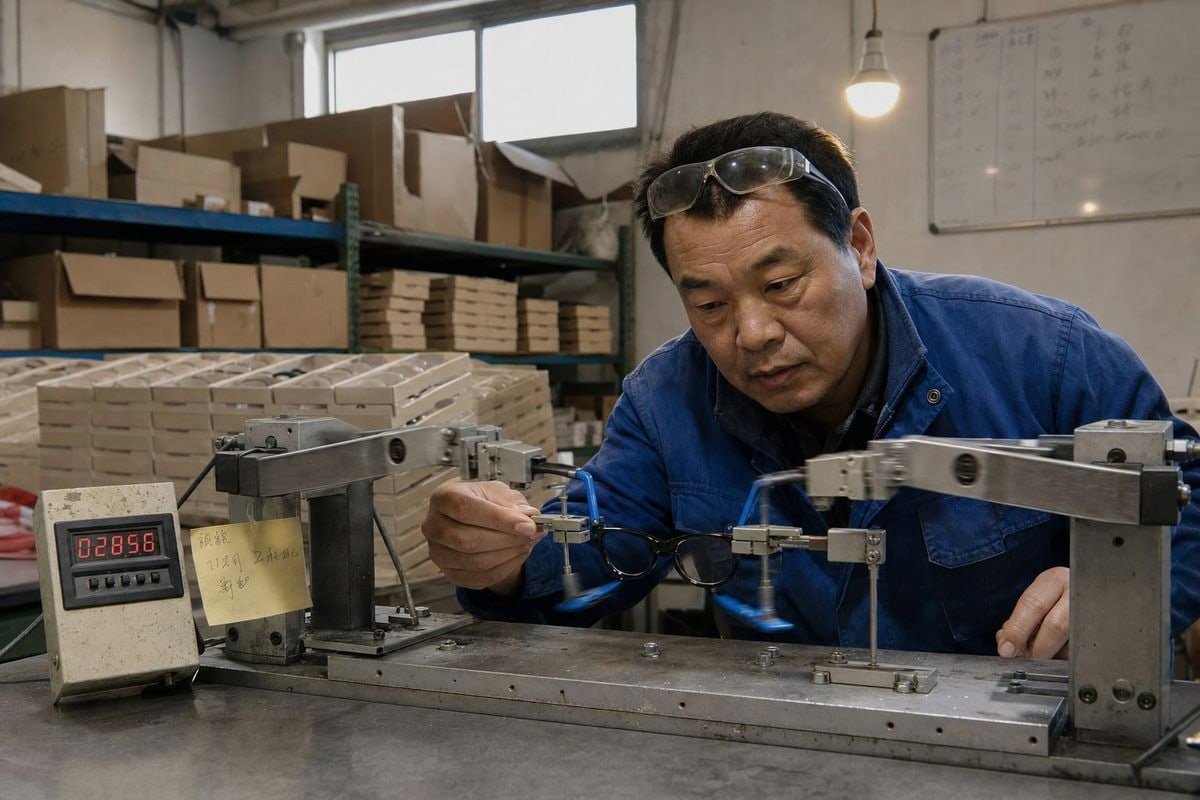
Kids can put a hinge through more than 10,000 opening-and-closing cycles per year. That number surprised one of our European clients, but think about it: on, off, dropped in a bag, pulled off with one hand, repeated daily. Your pre-order testing needs to simulate that abuse, not just a gentle showroom inspection.
The three-layer testing approach we recommend
First, ask the factory to run machine cycle tests. A compliance-oriented benchmark is 5,000 cycles: if the hinge loses friction or the screw backs out before that point, the design needs revision. On our production line, we run these tests on new hinge assemblies before they ever reach a customer's tech pack.
Second, do your own hands-on sample checks. You do not need a lab for these.
| Manual Test | How to Do It | What a Failure Looks Like |
|---|---|---|
| Open-close feel | Open and close temples 50+ times | Grinding, clicking, or loosening tension |
| Wiggle test | Hold the temple open and gently rock it sideways | Visible side play or barrel wobble |
| Rebound test (les charnières à ressort 1) | Push the temple outward past its stop | Slow or weak return to position |
| Screw seating | Inspect with a loupe | Protruding, tilted, or stripped screw heads |
| Symmetry check | Open both temples fully | Uneven opening angles or misaligned barrels |
Third, run a small abuse test. Twist the frame, flex the temples past 90 degrees, and drop the frame onto a desk from table height. Flexible eyewear built for children should survive all of this without the hinge loosening. If a sample fails your desk test, imagine it in a five-year-old's hands.
Finally, document everything. Ask the factory what failure threshold triggers a redesign on their side. A supplier with a real answer has real QC. A supplier who shrugs does not.
Which hinge materials hold up best to rough, everyday kids' use?
There is a trade-off we weigh on almost every new project: maximum flex versus easy repair. Our montures TR90 3 with TPEE temples lean toward flex, because active kids punish rigid joints first.
Spring hinges with quality steel springs, stainless steel screws, and screwless integrated hinges in TR90 or TPEE hold up best for children. Flexible hinge systems absorb twisting and overextension, while corrosion-resistant hardware prevents the loosening that causes most early failures.
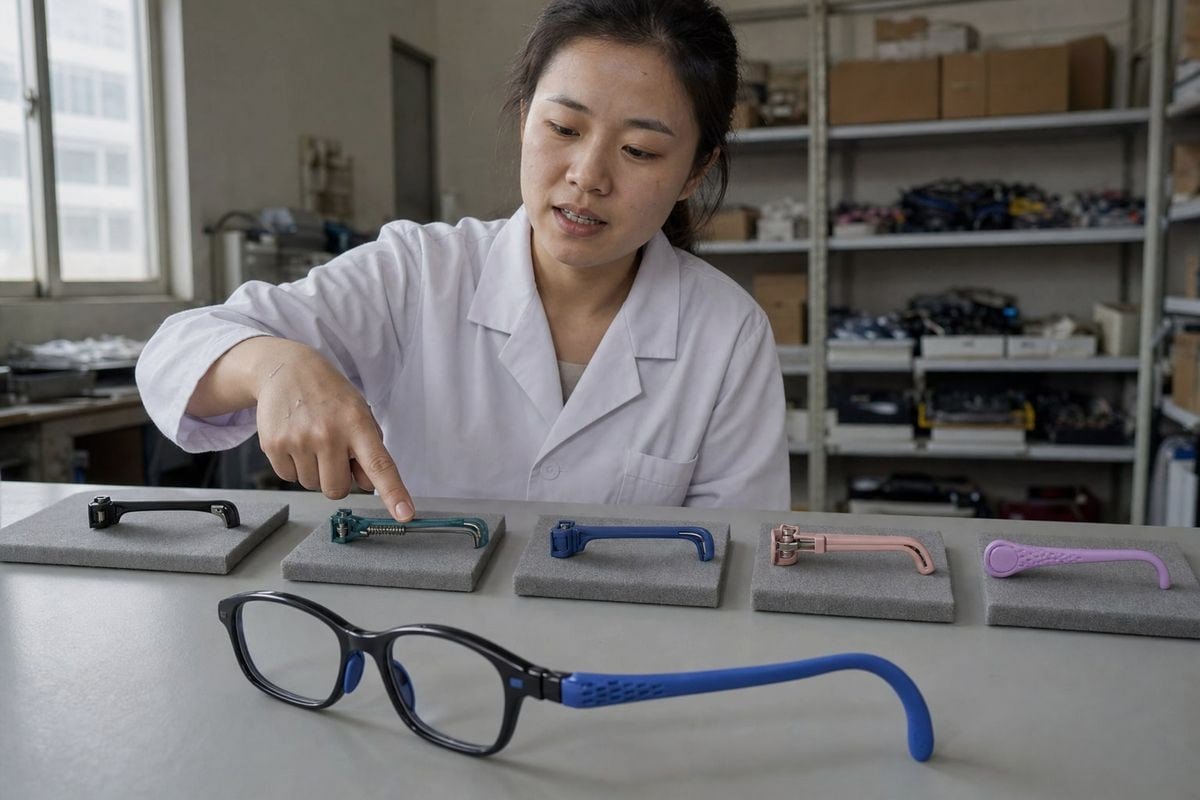
Here is a quick comparison of the main hinge options for children's eyewear before we go deeper:
| Hinge Type | Durability for Kids | Réparabilité | Coût relatif | Idéal pour |
|---|---|---|---|---|
| Standard barrel hinge | Modéré | Easy | Bas | Calm, older kids; budget lines |
| Spring hinge (flex hinge) | Élevé | Modéré | Moyen | Most active children |
| 180 degree hinges | Très élevé | Modéré | Moyen-élevé | Sports and rough daily use |
| Screwless / integrated hinge | Élevé | Harder | Moyen | Toddlers and preschoolers |
| Hingeless flexible frame | Très élevé | Limité | Variable | Very young children |
Why spring hinges are the safe default
Spring hinges let the temple flex outward beyond its normal stop. When a child rips glasses off with one hand — which happens constantly — the spring absorbs the stress instead of the barrel snapping. In our export experience across 20+ countries, spring hinges and 180 degree hinges consistently generate the fewest hinge complaints.
But I will raise the objection buyers often bring me: spring hinges add complexity and are harder to repair than a simple barrel hinge. That is true. The resolution is context. If your retail model includes optician support and kids glasses repair services, standard barrels with quality screws can work. If your frames are sold online with no repair channel, the extra flex of a spring hinge prevents the failure in the first place — prevention beats repair.
Match the hinge to children's eyewear materials
The hinge never works alone. TR90 nylon flexes and recovers its shape, so it pairs naturally with spring or integrated hinges. Memory metal frames 4 and titanium frames offer similar resilience in metal, though titanium raises cost. Branches en TPEE 5 — which we use widely — bend dramatically without cracking, taking load off the hinge entirely. Even the lenses matter: lightweight verres en polycarbonate 6 reduce the mass swinging on the hinge every time the frame is dropped.
For toddlers, screwless hinges or fully hingeless flexible frames remove the tiny screw as a failure point and a safety concern at the same time.
What manufacturing details actually affect how long a hinge lasts?
During a 5S audit of our workshop last year, we traced a batch of loose temples back to a single worn heat-insertion tool. That lesson stuck with me: hinge durability lives or dies in small manufacturing details buyers never see.
Hinge lifespan depends on alloy quality, plating, screw specification and seating, barrel alignment, attachment method matched to the frame material, and assembly tolerances. Even a premium hinge design fails early when tolerances are loose or screws are poorly seated.
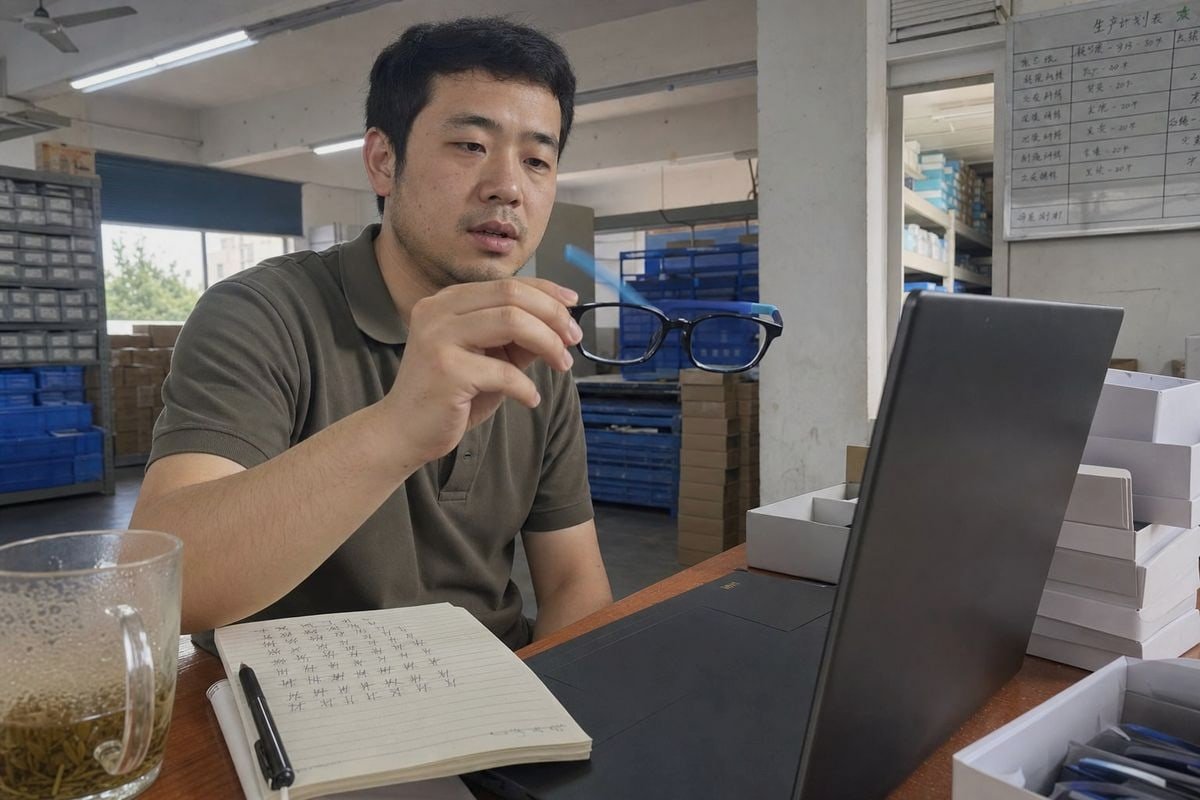
Durability is a system property, not a component property. That is the single most important idea in this article. Buyers often ask me for "the best hinge" as if it were a catalog item. In reality, the same hinge model can last five years or five weeks depending on how it is specified and installed.
The details that matter most, ranked
- Screw quality and retention. Loose or stripping screws are the most common early failure. Specify stainless steel or nickel-free alloy screws, recessed and seated flush. stainless steel screws 7 Thread-locking treatments help on frames sold without local repair support.
- Attachment method matched to substrate. Acetate, injection-molded plastic, TR90, and metal each need a different anchoring approach — heat-inserted, riveted, molded-in, or soldered. A mismatch causes the hinge to pull out of the frame long before the hinge itself wears.
- Barrel alignment and tolerances. Misaligned barrels concentrate stress on one edge, grinding themselves loose. Clean alignment gives smooth, even opening force.
- Alloy and plating quality. Low-grade alloys fatigue, and poor plating corrodes — especially with children's sweat and outdoor play. Corrosion accelerates loosening and can trigger skin irritation.
- Spring component quality. In spring hinges, a weak spring means weak rebound and rapid fatigue. Test rebound on every sample round.
What to write into your tech pack
Request the hinge supplier and model number, hinge material and finish, attachment method, and full screw specification. On our OEM/ODM projects, we include all of this by default, because a documented hinge spec keeps batch two identical to batch one. Impact resistance in the finished frame comes from this whole chain working together — not from any single glamorous component.
How do I choose a factory partner that guarantees reliable hinge quality?
Early in my time at our Taizhou factory, a distributor told me he had switched suppliers three times in two years — always over hinge complaints, never over price. That conversation shaped how we present our own QC process today.
Choose a factory that documents hinge specifications in writing, performs in-house cycle testing with clear failure thresholds, offers repair parts and standardized screws, demonstrates material expertise across TR90 and flexible hinge systems, and shows consistent QC records across repeat batches.
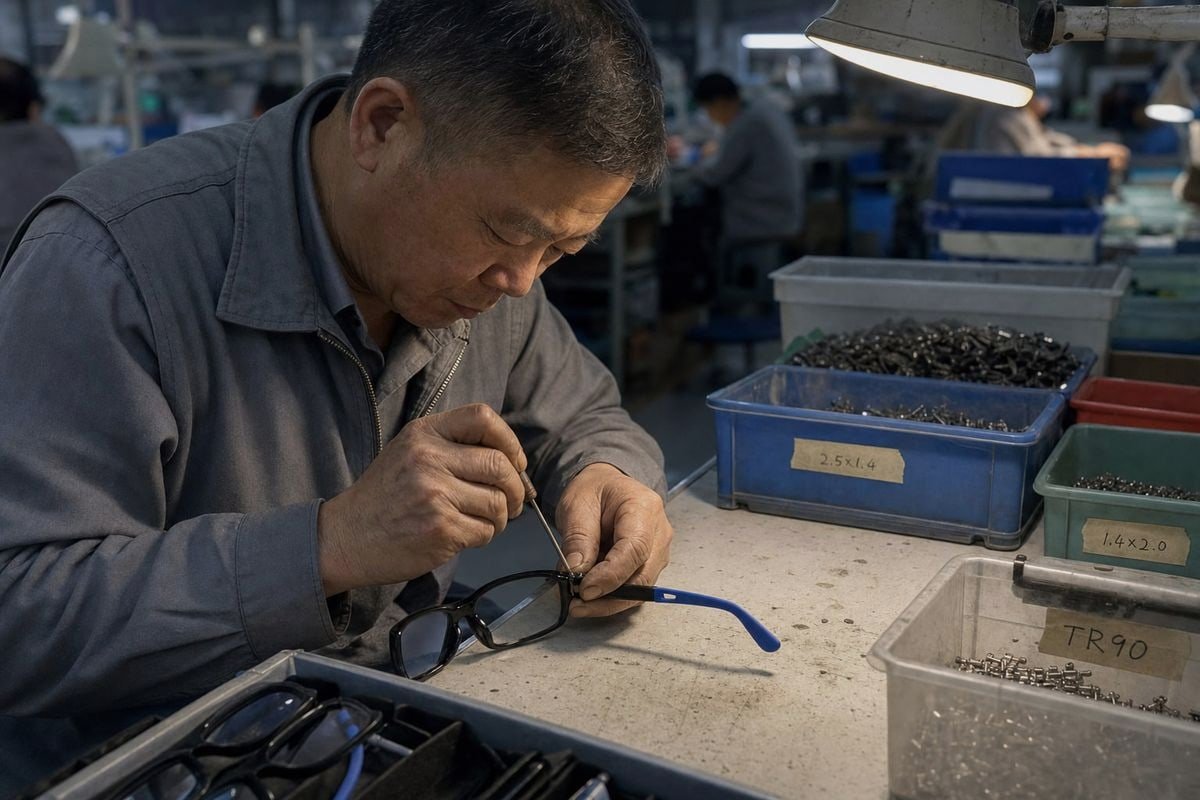
A factory visit or video audit tells you more than any catalog. But if you cannot visit, ask targeted questions and judge the quality of the answers. Vague replies signal vague processes.
Questions that separate real factories from traders
| Question à poser | Réponse solide | Signe d'avertissement |
|---|---|---|
| Who supplies your hinges? | Named supplier, model numbers, spec sheets | "Good quality, don't worry" |
| Do you cycle-test hinges? | Yes, with cycle counts and failure thresholds | No testing, or "the hinge factory tests" |
| What screws do you use? | Stainless steel, spec available, flush seating standard | Unspecified generic hardware |
| Are repair parts available? | Standardized screws, spare temples on request | Proprietary parts, no aftersales support |
| Can I see QC records? | Inspection reports per batch | Nothing documented |
Why repairability belongs in the conversation
Serviceability is part of long-term durability. Standardized screws and replaceable hinge components mean a small kids glasses repair keeps a frame in use instead of in a landfill. When we develop frames for baby and kids brands, we flag which styles use standard hardware and which use molded screwless hinges, so the buyer can choose deliberately based on their retail model.
There is also a shortcut worth mentioning. New brands do not need to engineer hinges from zero. With roughly 800 existing styles on our shelf — spring hinges, screwless designs, TPEE temples, TR90 fronts — a buyer can test the market with proven hinge systems and no mold investment. Once volumes grow, full OEM customization of colors, logos, lenses, and packaging builds on a hinge platform that already passed cycle testing. That sequencing lowers risk on both sides.
Finally, weigh communication. A partner who explains a hinge trade-off honestly — even when it costs them a quick sale — will still be answering your emails in year three.
Conclusion
Hinge failure kills kids' frames — and repeat orders. But it is preventable. Specify spring hinges or screwless systems, demand cycle testing and stainless hardware, and partner with a factory that proves durability in writing.
Notes de bas de page
1. Explains the function and benefits of spring hinges for eyewear durability and comfort. ↩︎
2. Describes glasses endurance test for hinge durability, including cycle testing. ↩︎
3. Describes the properties and advantages of TR90 material, a common choice for durable eyewear frames. ↩︎
4. Provides information on memory metal as a resilient and flexible material for eyewear frames. ↩︎
5. Explains the benefits of TPEE material for temple flexibility, durability, and resistance to wear. ↩︎
6. Describes the advantages of polycarbonate lenses, including impact resistance and lightweight properties. ↩︎
7. Details the importance of stainless steel for screw quality, retention, and corrosion resistance in eyewear. ↩︎
Plus d'articles que vous pourriez aimer

Vous recherchez un partenaire fiable en lunetterie pour enfants ?
Explorez plus de 800 styles prêts et un support OEM/ODM complet adapté à votre marque.
Contactez-nous English
  Español de México
  Deutsch
  Français
  日本語
日本語  العربية
  Português do Brasil