Kids Sunglasses: Margins & Costs of Overseas Brands vs. China OEM?
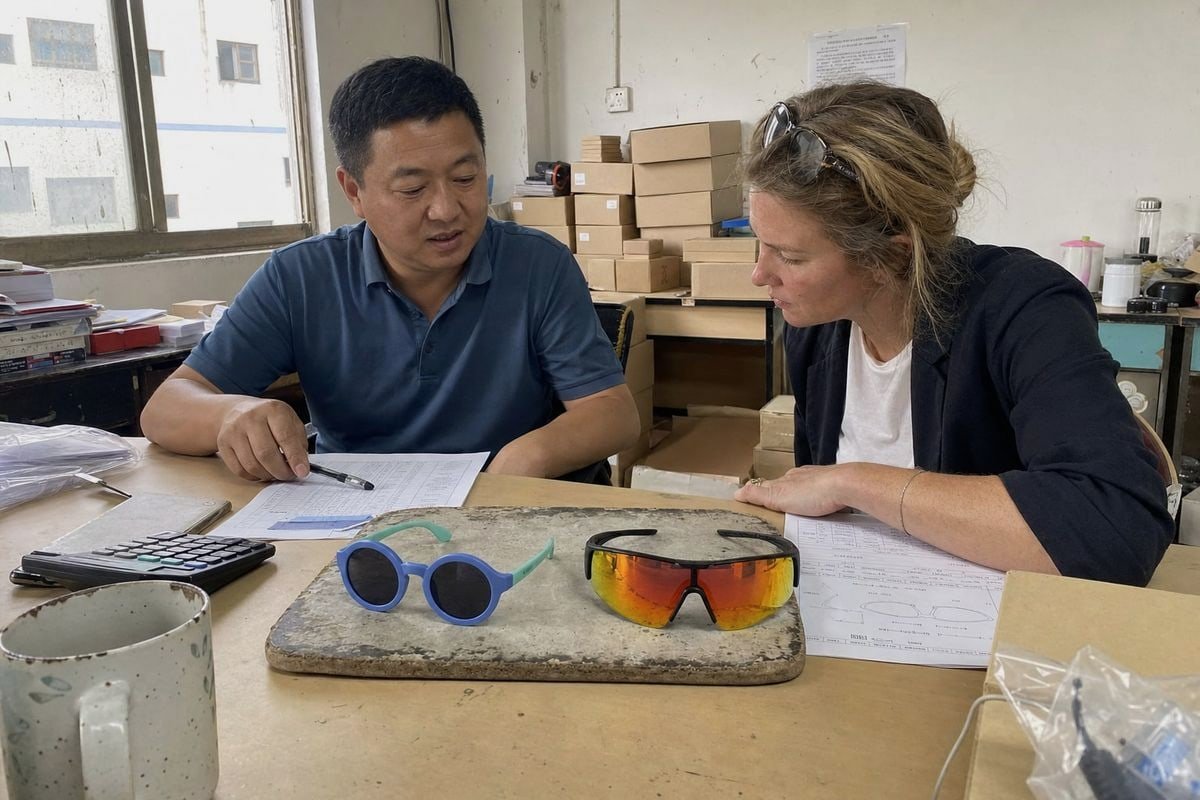
Kids sunglasses margins puzzle many buyers who visit our Taizhou factory. They see identical-looking frames retailing at $10 or $150, and they cannot explain the gap. That gap eats profit silently.
Kids sunglasses from a China OEM typically land at $1.50–$4.00 per unit, while overseas branded equivalents wholesale at $8–$25. Branded retail markups reach 5x–10x landed cost; OEM private label runs 2x–3x but keeps far more margin in your hands.
The real question is not which model is cheaper. It is which model fits your channel. Below, I break down the savings, the hidden costs, the margin math, and the quality question.
How much can I actually save by switching from an overseas brand to a China OEM manufacturer?
Last spring, a buyer from Australia showed me her old invoice from a European brand distributor. When we quoted the same TR90 style from our existing molds, she went quiet.
Switching from an overseas brand to a China OEM manufacturer typically cuts your cost per unit by 60–80%. A branded kids frame wholesaling at $12–$20 can often be produced OEM for $2–$4 landed, freeing $8–$16 of margin per pair for your own brand.
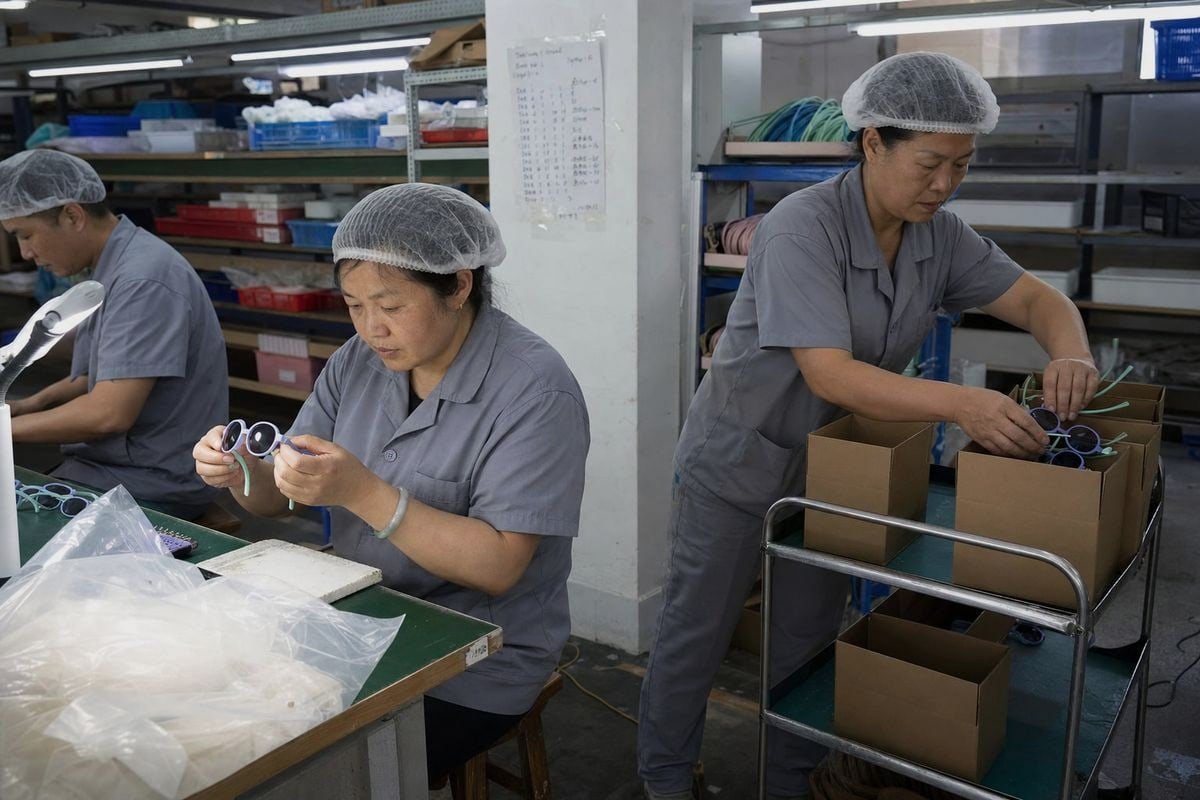
The savings are real, but you need to understand where they come from. You are not getting a worse product for less money. You are removing layers of markup that never touched the product itself.
Where the overseas brand price actually goes
When you buy from an established overseas brand, your wholesale unit price carries the brand's design office, licensing fees, marketing budget, distributor margin, and inventory risk. The frame and lens themselves are often a small fraction of what you pay. Retail listings prove the spread: designer kids sunglasses sell from roughly $49 to over $300, while value frames start under $10. The manufacturing reality behind both can be surprisingly similar.
A side-by-side cost picture
Here is a simplified comparison based on what we see across our export orders to 20+ countries:
| Cost layer | Overseas brand route | China OEM route |
|---|---|---|
| Factory ex-works cost | $2.00–$4.50 (hidden from you) | $1.20–$3.50 (visible to you) |
| Brand/licensing markup | $3–$8 | $0 |
| Distributor margin | $3–$6 | $0 |
| Your buy-in price | $8–$25 | $1.50–$4.00 + freight |
| Typical retail price | $30–$120+ | $15–$45 under your label |
The catch you must accept
The savings come with responsibilities. With OEM, you own quality control decisions 1, compliance testing, and brand building. In our experience, buyers who start with existing styles from our catalog of roughly 800 designs avoid mold investment entirely, which is the smartest first step. They test the market with lower risk, then invest in custom tooling once a style proves itself. That sequencing is where the real savings compound.
A procurement manager from Japan once told me his "cheap" quote from another supplier ended up 40% more expensive after tooling, testing, and rework. We rebuilt his cost sheet line by line.
Watch for five hidden costs: custom mold fees of $2,300–$3,300 per style, compliance testing charges, import duties and tariffs, freight surcharges on air shipments, and rework or replacement costs from weak quality control. These can add 20–50% to a naive unit-price comparison.
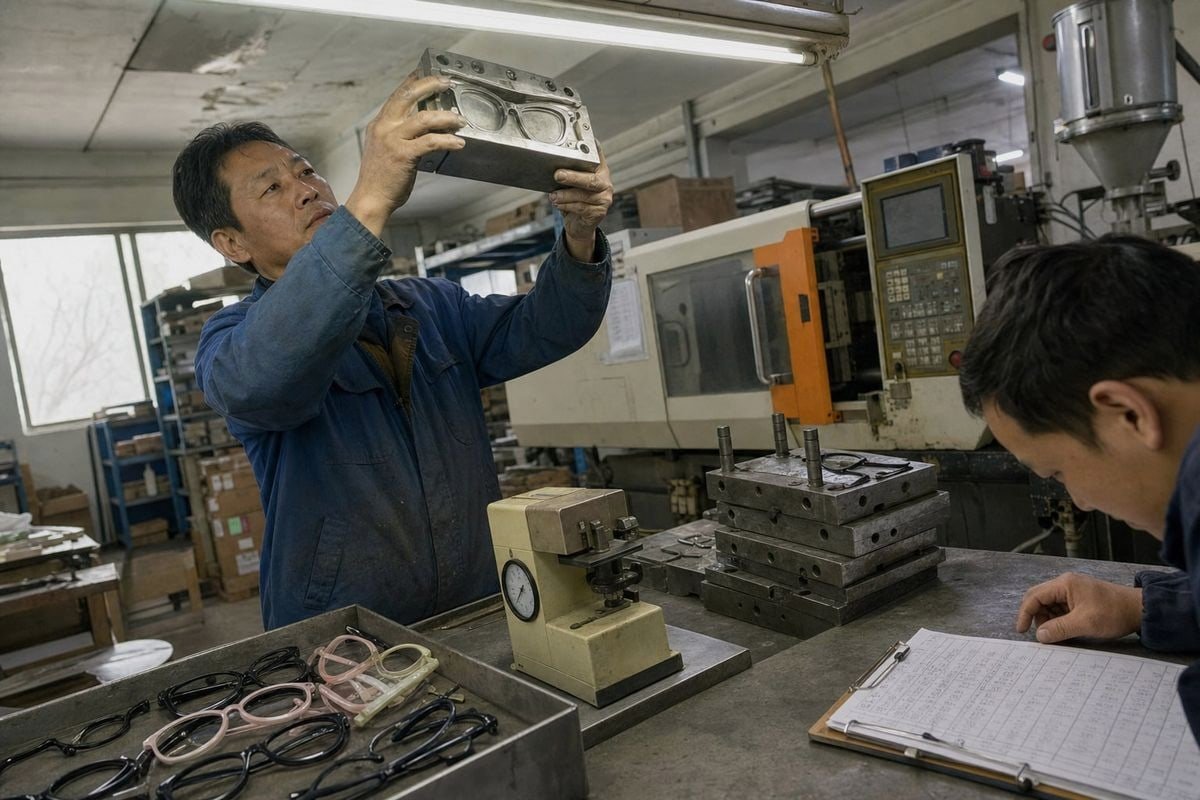
Hidden costs kill more private label projects than bad products do. Let me walk through each one honestly, because a quote that ignores them is not a quote. It is bait.
Tooling and mold investment
If you want a fully custom shape, a front frame mold typically costs $1,300–$2,000, and a set of temple molds adds another $1,000–$1,300. That is $2,300–$3,300 before a single pair ships. This is exactly why we maintain a large library of existing styles. A new kids brand can launch with custom colors and logos on proven molds and skip this expense entirely until volume justifies it.
Compliance, duties, and logistics
Overseas brands bake these into their price. Direct buyers must budget for them separately:
| Hidden cost | Typical range | Who usually forgets it |
|---|---|---|
| Custom mold set | $2,300–$3,300 per style | First-time brand founders |
| UV400 / Conformité CPSIA 2 | Per-batch lab fees | Buyers new to children's products |
| Import duties and tariffs | Varies by market and HS code | Buyers comparing FOB prices only |
| Air freight for small batches | 3–5x sea freight per kg | Seasonal or micro-drop sellers |
| Rework and returns from poor QC | Unpredictable | Everyone who chose on price alone |
The quality-control cost nobody quotes
The most expensive hidden cost is a container of frames with loose hinges or off-spec colors. Our 5S-managed workshop exists because we learned, over fifteen years, that catching a defect at the assembly bench costs cents, while catching it in a customer's warehouse costs the relationship. When you compare a direct factory partnership against an overseas supplier, ask how defects are prevented, not just what the wholesale unit price is. FDA registration requirements 3 for the US market and BSCI-style social audits also carry administrative weight; a factory that already supports these saves you real money and real headaches.
How do I calculate my true profit margin after factoring in MOQ, shipping, and customization fees?
Margin math is where I spend the most time with new buyers. One founder building a beach-lifestyle kids brand sent me a spreadsheet with retail price minus unit price and called it margin. We fixed it together.
Calculate true margin as: retail price minus fully landed cost, where landed cost equals unit price plus amortized customization fees, freight per unit, duties, testing, and packaging. Divide net profit by retail price. Most healthy OEM kids sunglasses programs target 60–75% gross margin at retail.
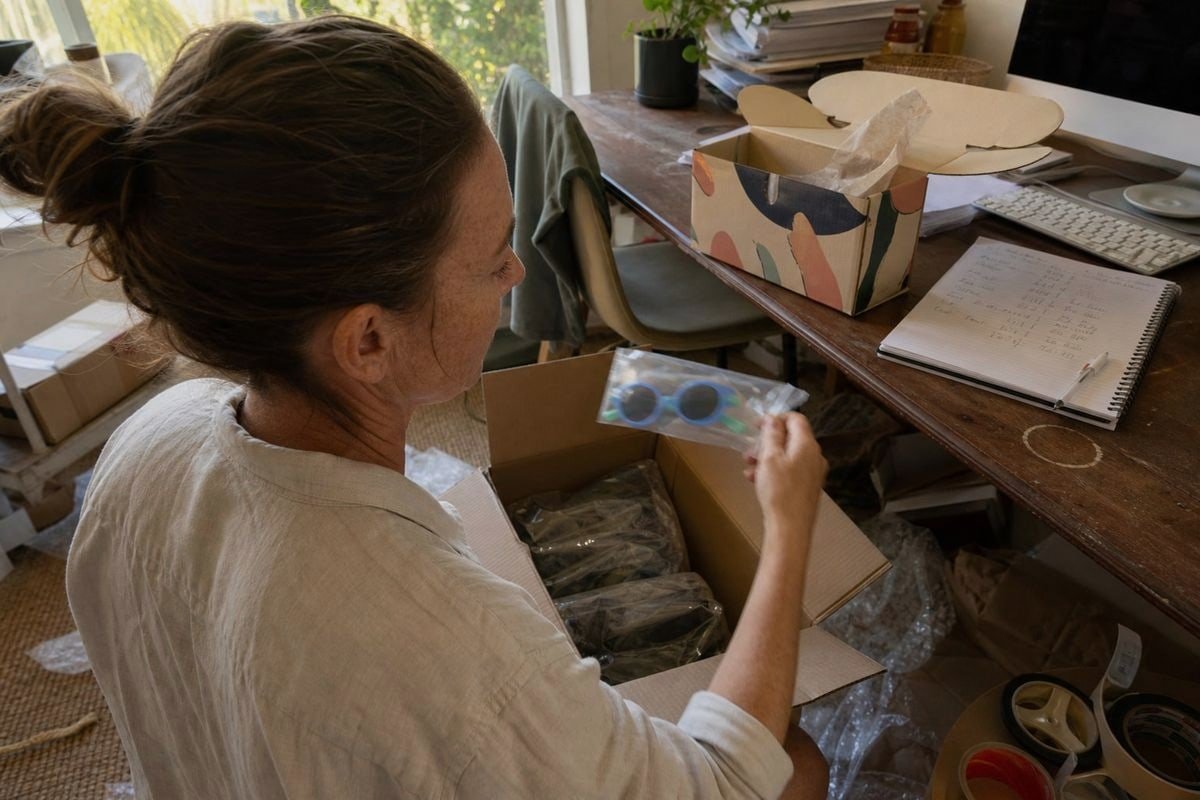
Let me make this concrete with a step-by-step method you can copy into a spreadsheet today.
The five-step landed cost calculation
- Start with the unit price at your MOQ tier. Minimum Order Quantity for custom colors or branding typically runs 300–1,000 units per style, with meaningful price breaks arriving around 3,000+ units.
- Amortize one-time fees. Spread logo plates, custom packaging setup, and any mold costs across your first order quantity.
- Add freight per unit. Sea freight is cheap per pair; air freight for 200–500 unit micro-drops costs more but protects sell-through and reduces seasonal inventory risk.
- Add duties, testing, and insurance. Include CPSIA compliance testing and UV400 verification 4 per batch.
- Add fulfillment and returns reserve. A small per-unit buffer for replacements matters in children's products.
A worked example
| Line item | Per unit (1,000 pcs, TR90 frame + TPEE 5 temples) |
|---|---|
| Factory unit price with custom logo and colors | $2.80 |
| Custom packaging (amortized) | $0.45 |
| Sea freight + insurance | $0.30 |
| Duties and clearance | $0.35 |
| Batch testing (amortized) | $0.15 |
| Returns/replacement reserve | $0.20 |
| True landed cost | $4.25 |
| DTC retail price | $24.95 |
| Gross margin | ~83% |
Notice something important: at this margin, you can afford a replacement-insurance offer, where one free replacement pair is built into the retail price. High-margin kids brands use this to drive loyalty and lifetime value. Polarized lens technology 6 or hybrid UV400 plus blue-light lenses add $0.40–$1.00 to cost but support a $5–$10 higher retail price, so the upsell usually improves margin rather than eroding it. Your retail markup strategy should be built on this landed number, never on the FOB quote.
Can I get the same quality and safety standards from a China OEM as I would from an established overseas brand?
This is the question I respect most, because it is the right one to ask first. Parents forgive a boring color. They never forgive an unsafe product on a child's face.
Yes, provided you choose a factory with genuine children's eyewear expertise. UV400 protection standards, CPSIA compliance testing, and impact-safe flexible materials like TPEE and TR90 are process capabilities, not brand privileges. Many overseas brands source from the same specialized Chinese factories you can work with directly.
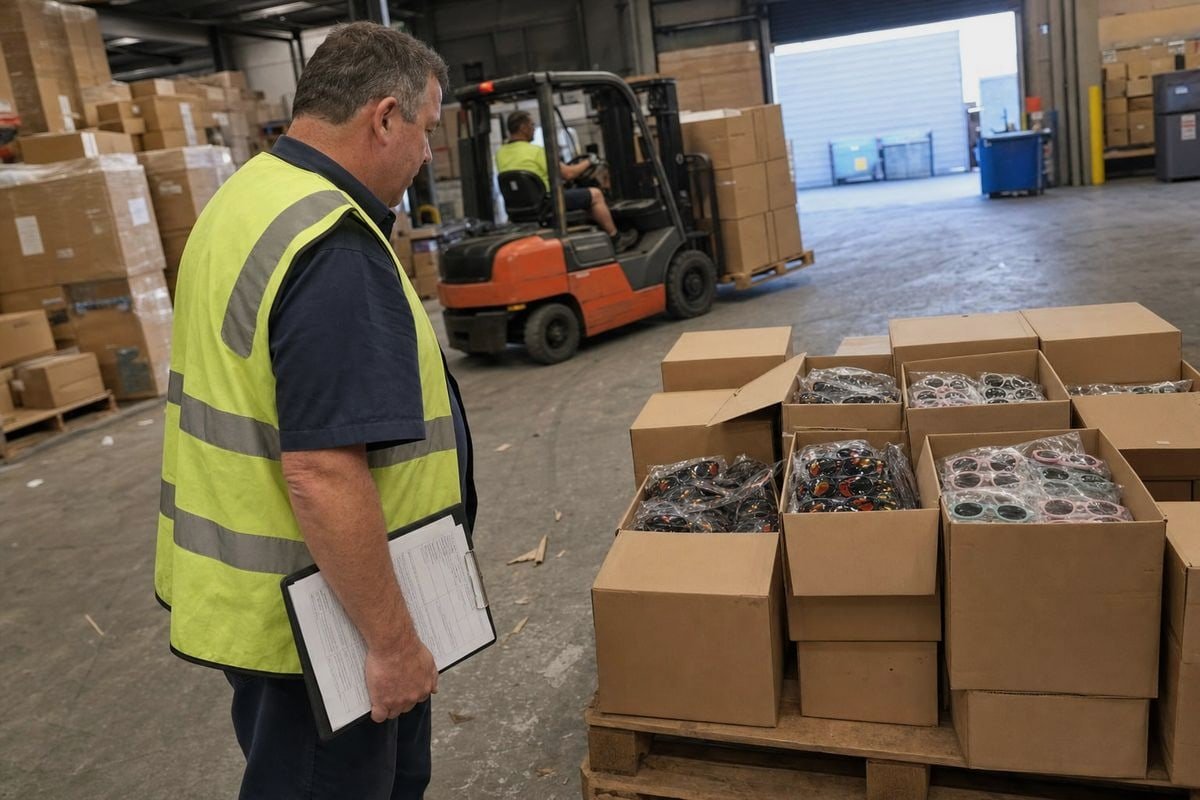
Quality in children's eyewear is not a mystery. It is a set of specific, checkable decisions. Here is how to evaluate them.
Materials are the foundation
Basic polycarbonate frames 7 are the cheapest option, and they dominate the low end of the market. Flexible, near-unbreakable materials like TPEE and TR90 add roughly $0.50–$1.50 per unit, and that increment is the single best safety investment in the category. Our factory specializes in TR90 fronts with TPEE flexible frames and temples precisely because active kids sit on, twist, and chew their sunglasses. A rigid frame that snaps creates sharp edges near an eye. A TPEE temple bends and returns. We are also seeing bio-TPEE, derived from castor oil, become the premium sustainable standard for infant eyewear, commanding around a 20% price premium over standard grades.
Verification beats trust
An overseas brand gives you implicit trust. A good OEM gives you explicit proof. Demand these:
- UV400 lens test reports for every production batch, not just samples.
- CPSIA documentation for the US, plus relevant EN standards for Europe.
- FDA registration requirements handled before shipment to the US market.
- Pull tests and torsion tests on hinges and temples during in-line QC.
- BSCI or equivalent social audit status for the workshop itself.
Where OEM can actually exceed brand quality
Because ODM production services put you in direct contact with engineers, you control specifications the brand route hides from you. You choose lens thickness, hinge type, temple flexibility, and packaging protection. On our production line, buyers routinely tighten specs beyond what the branded product they used to import ever offered. Private label manufacturing done well is not a compromise on safety. It is ownership of it.
Conclusion
High retail prices hide thin brand-side margins; direct OEM sourcing puts that spread in your pocket. Match the model to your channel, verify safety rigorously, and the margin follows.
Notes de bas de page
1. Authoritative NIST (.gov) resource on ISO 9001 and quality management systems. ↩︎
2. CPSC is the US regulator that defines CPSIA compliance testing rules for children’s products. ↩︎
3. Updated URL for the FDA’s medical device registration and listing guidance. ↩︎
4. Authoritative overview of international sunglasses standards, avoiding ISO site access issues. ↩︎
5. Explains thermoplastic elastomer properties that make TPEE flexible and impact-resistant. ↩︎
6. General background on sunglasses lens technologies including polarization referenced in the article. ↩︎
7. Background on polycarbonate material properties relevant to basic eyewear frame construction. ↩︎
Plus d'articles que vous pourriez aimer
1 août 2026
L'usine doit-elle gérer l'emballage et l'étiquetage des lunettes pour enfants, ou utiliser un fournisseur désigné ?
1 août 2026
Entrepôt propre vs. exécution directe par le fournisseur : lequel réduit les coûts de retour pour les marques de lunettes pour enfants ?
1 août 2026
Entrepôt direct au port ou staging outre-mer : lequel permet d'économiser le plus sur l'expédition des lunettes pour enfants ?
Vous recherchez un partenaire fiable en lunetterie pour enfants ?
Explorez plus de 800 styles prêts et un support OEM/ODM complet adapté à votre marque.
Contactez-nous English
  Español de México
  Deutsch
  Français
  日本語
日本語  العربية
  Português do Brasil