Quel est le MOQ typique pour la personnalisation de lunettes de soleil pour enfants ?
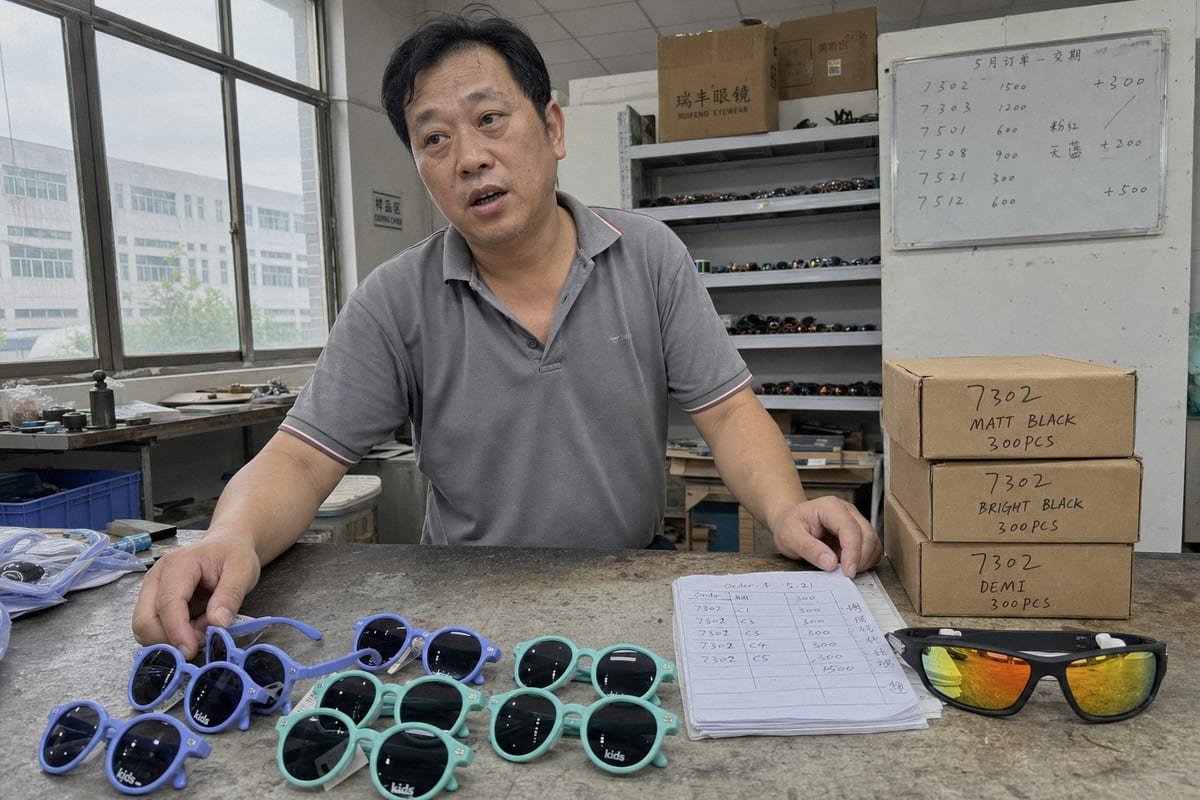
Le MOQ typique pour la personnalisation de lunettes de soleil pour enfants confond de nombreuses nouvelles marques CE pour l'Europe 1. Les acheteurs envoient des e-mails chaque semaine à notre usine de Taizhou, craignant que les minimums n'écrasent leur budget de lancement avant même de vendre une seule paire.
Le MOQ typique pour la personnalisation de lunettes de soleil pour enfants est d'environ 300 pièces par style. Les commandes de logo seul sur des montures existantes peuvent commencer à 50 à 100 unités, tandis que les conceptions entièrement personnalisées nécessitant de nouveaux moules exigent souvent 500 à 1 000 pièces ou plus par modèle.
Ce seul chiffre cache beaucoup de nuances. La vraie réponse dépend de la mesure dans laquelle vous personnalisez, des matériaux que vous choisissez et de la flexibilité de votre fournisseur. Laissez-moi tout expliquer.
Quel montant minimum puis-je investir pour ma première commande de lunettes de soleil pour enfants sans prendre de risques importants ?
Au printemps dernier, une fondatrice de startup de Melbourne nous a demandé seulement 60 paires pour tester son réseau de boutiques. Nous avons dit oui — parce qu'elle avait choisi parmi nos styles existants, pas un nouveau moule.
Vous pouvez commencer dès 20 à 100 pièces par modèle si vous commandez des lunettes de soleil pour enfants en stock ou ajoutez un logo simple sur des montures existantes. Les véritables commandes personnalisées avec de nouvelles couleurs ou formes nécessitent généralement 300 pièces par style comme point de départ réaliste.
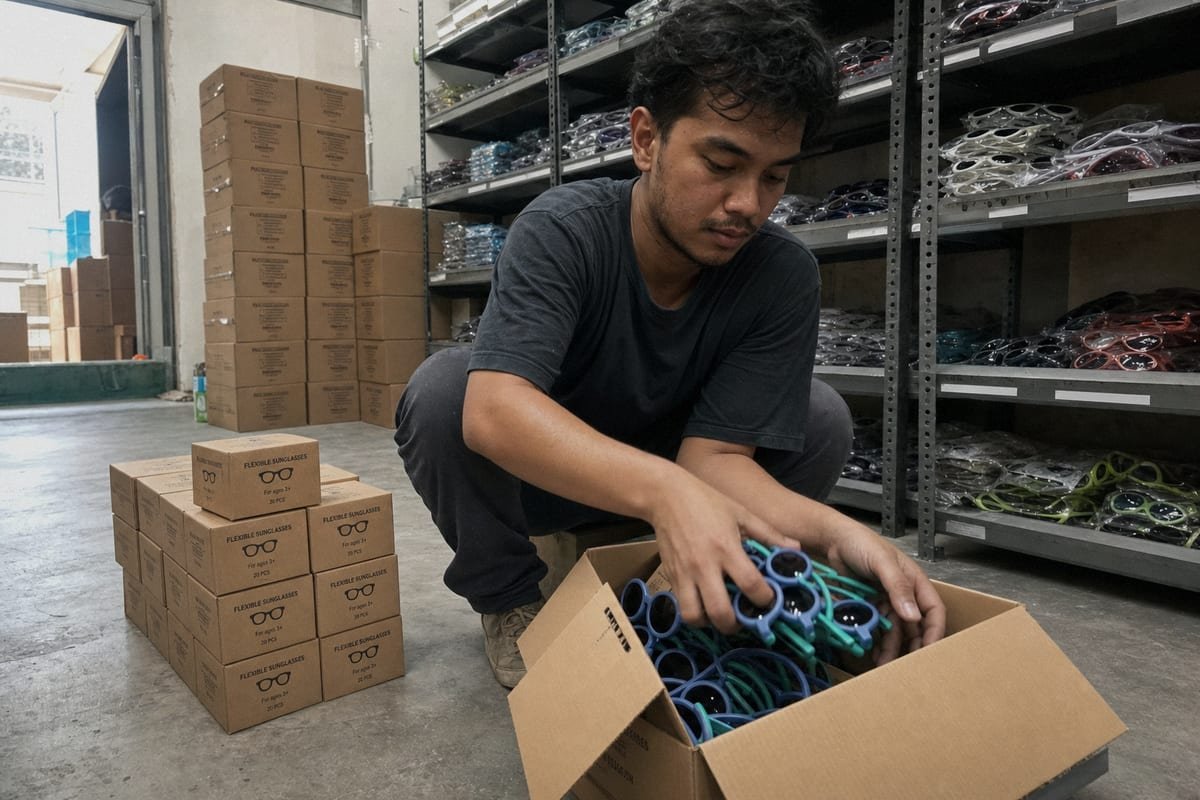
Votre point d'entrée dépend entièrement du type de commande. Dans la fabrication de lunettes, il existe trois niveaux, et chacun a un minimum très différent. Voici comment ils se comparent :
| Type de commande | MOQ typique | Ce que vous obtenez | Niveau de risque |
|---|---|---|---|
| Lunettes de soleil pour enfants en stock | 20 pièces/couleur/modèle | Montures existantes, couleurs existantes, pas de marque | Très faible |
| Logo sur montures existantes | 50–100 unités | Fabrication en marque privée avec votre logo | Bas |
| Couleurs, verres, emballages personnalisés | ~300 pièces/style | Couleurs Pantone sur mesure, spécifications des verres, aspect prêt pour la vente au détail | Moyen |
| Nouveau moule propriétaire | 1 000–3 000 unités | Forme de monture exclusive à la marque | Élevé |
Pourquoi les commandes en stock sont si peu coûteuses à lancer
Les marchandises en stock existent déjà. L'usine détient des stocks, il n'y a donc pas de mise en place de production, pas de correspondance de couleurs et pas de coût d'outillage. C'est pourquoi certains fournisseurs, y compris nous, autorisent 20 pièces par couleur et par modèle sur les stocks de gros. C'est le moyen le plus sûr de valider la demande.
Pourquoi les commandes de logo seul se situent au milieu
Ajouter votre logo à une monture prête est une personnalisation légère, pas une série de production complète. L'usine n'a besoin que d'une configuration d'impression ou de transfert par tampon, donc 50 à 100 unités couvrent généralement les coûts de configuration. Gardez à l'esprit que les techniques d'impression de logo varient ; la gravure laser et l'impression UV permettent parfois des lots encore plus petits que la sérigraphie.
Où se produit le vrai bond
Au moment où vous demandez une couleur de monture personnalisée, l'usine doit mélanger le matériau, faire fonctionner les machines d'injection et les nettoyer par la suite. Ce temps machine est le même que vous commandiez 300 pièces ou 3 000. Ainsi, 300 devient le seuil pratique où le prix unitaire de gros reste logique pour les deux parties.
Quels facteurs affectent le MOQ lors de la personnalisation des couleurs, des logos ou des emballages ?
Il y a un compromis que nous évaluons sur chaque devis : coût de mise en place versus taille du lot. Une combinaison de couleurs pervenche et menthe personnalisée semble simple sur le papier, mais elle change l'ensemble des calculs de production.
Le MOQ augmente avec la profondeur de personnalisation. Les couleurs de monture personnalisées ajoutent des minimums de mélange de matériaux, les nouveaux moules ajoutent des coûts d'outillage, les matériaux haut de gamme comme l'acétate ou les bio-résines nécessitent de gros achats de matières premières, et les tests de sécurité pour enfants ajoutent des frais de laboratoire fixes que seules les grandes séries peuvent absorber.
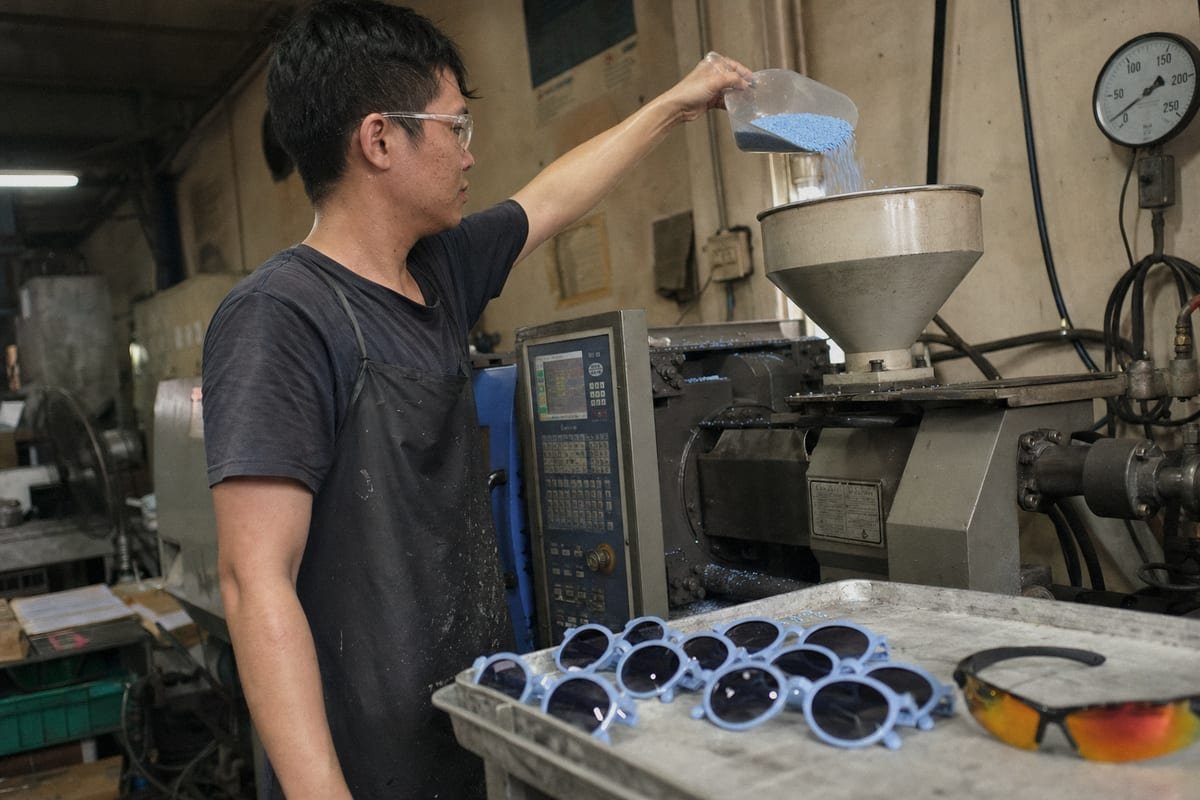
Chaque couche de personnalisation ajoute un coût fixe. L'usine doit répartir ce coût sur votre commande, sinon le prix unitaire de gros devient irréalisable. Comprendre ces couches vous aide à négocier intelligemment.
Le choix du matériau détermine le seuil
Les plastiques moulés par injection tels que le PC et le TR90 sont flexibles pour les petites séries car les granulés sont faciles à sourcer en quantités modestes. L'acétate haut de gamme est différent — il se présente sous forme de grandes feuilles, de sorte que les usines ont généralement besoin de 300+ unités pour justifier la découpe d'une couleur personnalisée. Les options écologiques comme le bio-acétate ou le plastique océanique recyclé 2 peuvent entraîner une prime de MOQ de deux à trois fois supérieure, car les fournisseurs de résine ne vendent ces matériaux qu'en volumes industriels. Nos propres montures flexibles en TPEE entrent dans la catégorie plus flexible du moulage par injection, ce qui explique en partie pourquoi les marques pour enfants trouvent nos minimums gérables.
La conformité de sécurité ajoute du volume caché
Les produits pour enfants sont des produits réglementés. Les certifications de conformité de sécurité telles que exigences CPSIA 3 pour les États-Unis ou CE pour l'Europe nécessitent des tests de lot en laboratoire, et ces frais de laboratoire sont fixes quelle que soit la taille du lot. Les tests sont également destructeurs — les tests d'impact et de couple 4 cassent de vraies unités. C'est pourquoi les usines intègrent souvent une marge de sécurité de 5 à 10 % dans les MOQ pour enfants. Sur une très petite série, les coûts de test seuls pourraient dépasser le coût du produit.
Couches de personnalisation en un coup d'œil
| Personnalisation | Effet sur le MOQ | Pourquoi |
|---|---|---|
| Couleur standard en stock | Aucun | Matière déjà mélangée |
| Couleur de monture Pantone personnalisée | Pousse à ~300 pièces | Temps de purge de machine et de correspondance des couleurs |
| Impression de logo | Base de +50–100 pièces | Mise en place d'impression par emplacement |
| Options de verres polarisés / Mises à niveau UV400 | Augmentation modérée | Minimums du fournisseur de verres par teinte |
| Options d'emballage personnalisées (boîtes, pochettes, étuis) | Souvent 500–1 000 pièces sur l'emballage lui-même | Minimums des plaques d'impression chez les fournisseurs d'emballage |
| Nouveau moule de monture | 1 000–3 000 pièces | Investissement en outillage dur |
Un détail négligé : emballage personnalisé a souvent son propre MOQ, distinct des montures. Un fournisseur de boîtes de marque peut exiger 1 000 unités même si votre commande de montures est de 300. Nous aidons généralement les acheteurs à aligner les deux minimums, ou proposons un emballage standard avec une pochette imprimée pour combler le fossé.
Puis-je mélanger des styles de moules existants pour atteindre plus facilement le MOQ ?
Une acheteuse d'une marque japonaise pour bébés m'a dit un jour qu'elle avait besoin de variété plus que de volume. Nous avons résolu le problème en divisant une commande sur quatre de nos montures existantes — des pastels ronds pour les tout-petits, des boucliers enveloppants sportifs pour les enfants plus âgés.
Oui. La plupart des usines, y compris la nôtre, autorisent les MOQ fractionnés sur des moules existants. Vous pouvez atteindre un seuil de 300 pièces avec 100 unités de chacune des trois couleurs, ou combiner plusieurs styles de catalogue en une seule commande consolidée pour atteindre les minimums de quantité totale.
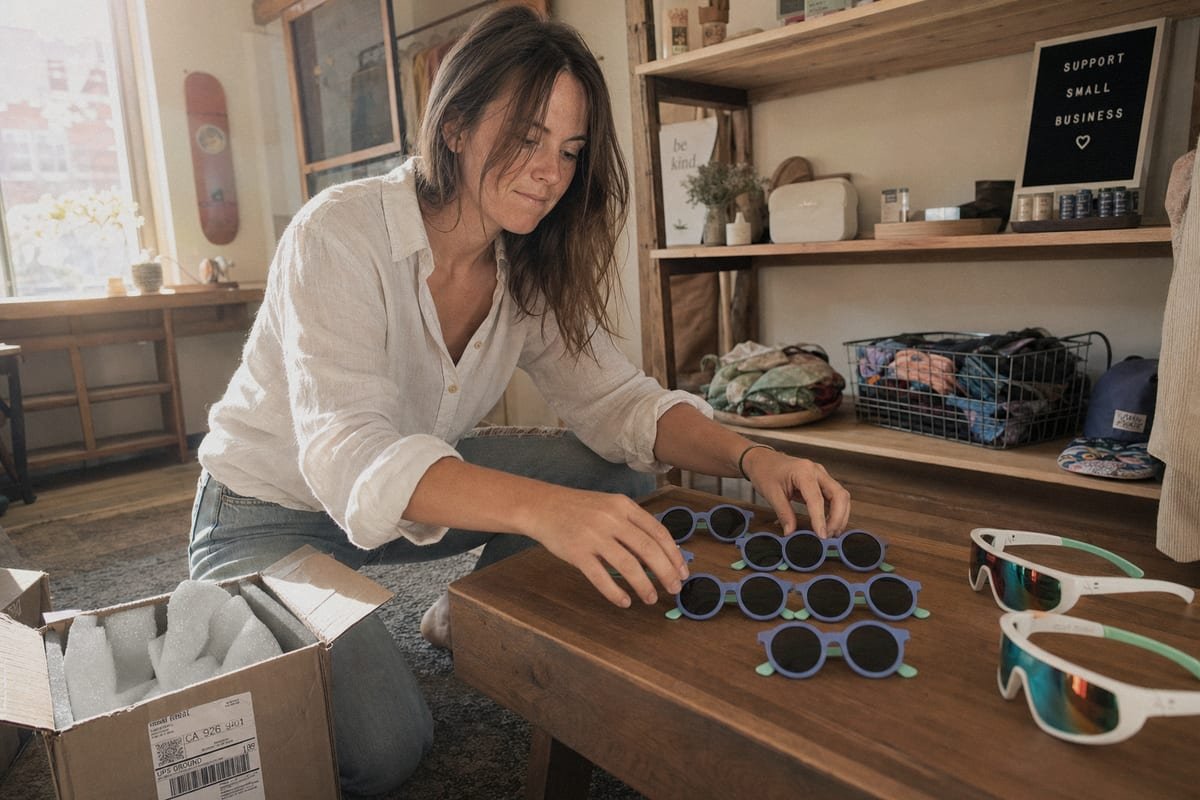
C'est là qu'un grand catalogue existant devient votre plus grand allié. Notre usine possède environ 800 styles existants, de sorte que les acheteurs peuvent construire une collection complète de vente au détail — montures rondes pastel, boucliers sportifs miroir, montures de style optique — sans payer pour un seul nouveau moule. C'est la voie la plus rapide pour contourner les minimums d'outillage lourds.
Comment fonctionnent réellement les MOQ fractionnés
Les usines citent généralement le MOQ par style ou par couleur, mais beaucoup permettent de diviser le total. Voici les méthodes de fractionnement courantes :
- Fractionnement par couleur au sein d'un même style. Commandez 300 pièces au total comme 100 bleues, 100 roses et 100 menthe — toutes du même moule.
- Fractionnement par style au sein d'une même matière. Combinez deux styles TR90 qui partagent la même pastille brute, une tactique parfois appelée mise en commun des matières.
- Fractionnement par taille au sein d'une famille. Utilisez la même matière et la même couleur de monture pour les tailles tout-petits et jeunes, ou même les lignes adultes assorties, pour atteindre les minimums de matières premières sur les SKUs.
- Fractionnement par verres. Exécutez une couleur de monture avec des options de verres standard UV400 et polarisés, car les normes de protection UV400 s'appliquent aux deux.
Ce que le fractionnement ne peut pas faire
Le fractionnement réduit le risque par SKU 5, pas l'engagement total. Si votre logo nécessite des mises en place d'impression séparées pour chaque style, de petits frais d'impression par style peuvent s'appliquer. Et les plaques d'emballage ne sont toujours partagées que si les illustrations sont identiques. Nous recommandons toujours une conception d'emballage unifiée sur tous les styles pour cette raison exacte — cela maintient les options d'emballage personnalisées abordables à de petits volumes de production.
Un exemple pratique
Un acheteur souhaitant un lancement de six SKUs pourrait commander 300 pièces au total : deux styles de montures, trois couleurs chacune, 50 pièces par SKU, une conception de boîte partagée. Cela offre une réelle variété en rayon au minimum de commande personnalisée standard, avec des verres UV400 sur toute la ligne et un look de marque unique.
Comment choisir la bonne stratégie de MOQ lors de l'exploration d'un nouveau marché ?
Quinze ans d'exportation de lunettes pour enfants vers plus de 20 pays ont appris à notre équipe une leçon : les marques échouent rarement parce que les MOQ sont trop élevés. Elles échouent parce qu'elles achètent la mauvaise quantité du mauvais produit.
Adaptez votre stratégie MOQ à votre étape de validation. Testez la demande avec 20 à 100 unités en stock ou uniquement avec des unités de logo, passez à une commande personnalisée de 300 pièces une fois que les styles sont approuvés, et n'investissez dans des moules propriétaires qu'après que les ventes répétées confirmées justifient des engagements d'outillage de plus de 1 000 unités.
Considérez le MOQ comme un investissement échelonné, pas comme un obstacle unique. Chaque étape répond à une question commerciale différente, et chaque étape a une structure de coûts différente.
| Étape | Question à laquelle il répond | Commande suggérée | Focus d'investissement typique |
|---|---|---|---|
| Étape 1 : Échantillonnage | La qualité du produit répond-elle à mes normes ? | 2–10 échantillons | Frais d'échantillon de prototype, expédition |
| Étape 2 : Test de marché | Mes clients achèteront-ils cela ? | 20–100 unités en stock ou avec logo | Image de marque, photos de produits |
| Étape 3 : Lancement de la marque | Puis-je créer une vraie collection ? | 300 pièces/style, réparties sur les couleurs | Services OEM et ODM, emballage |
| Étape 4 : Mise à l'échelle | Ai-je besoin d'exclusivité ? | 1 000+ pièces avec nouveau moule | Outillage, design exclusif |
Commencez par des échantillons, pas par des promesses
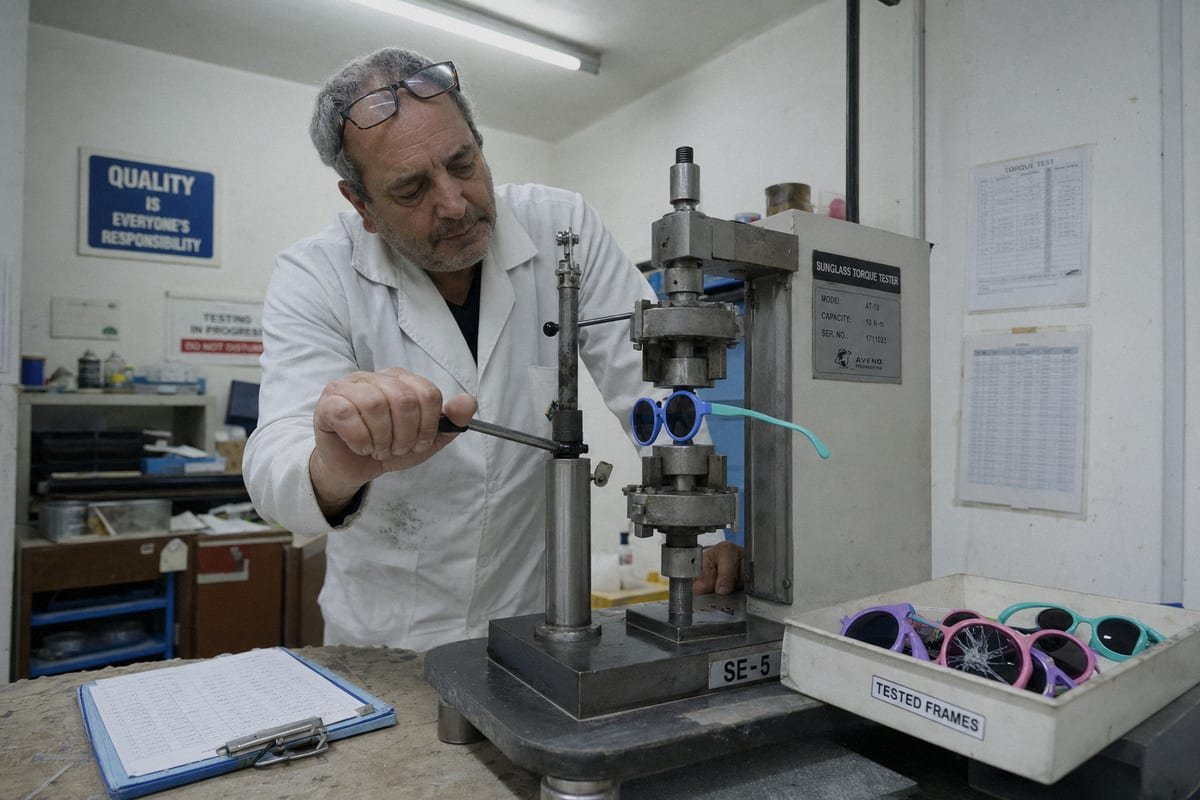
Payez toujours les frais d'échantillon de prototype et tenez le produit entre vos mains en premier. Vérifiez la résistance de la charnière, la clarté des verres 6, et la flexibilité du cadre. Pour les lunettes pour enfants, nous disons spécifiquement aux acheteurs de tordre les branches — le TPEE et le TR90 doivent fléchir et retrouver leur forme, car les enfants s'assoient sur leurs lunettes de soleil. Un cadre rigide et cassant est un problème de retour assuré.
Intégrez les délais de livraison dans votre stratégie
Le délai de livraison pour une commande en gros de 300 pièces personnalisées est généralement de 30 à 45 jours, plus les tests et l'expédition. Les commandes en stock sont expédiées en quelques jours. Si votre test de marché réussit en octobre mais que votre commande personnalisée prend jusqu'en janvier, vous pourriez manquer votre saison estivale. Les acheteurs avisés exécutent les étapes 2 et 3 en parallèle.
Négociez ce qui est réellement négociable
Vous ne pouvez pas négocier les frais de laboratoire ou la physique de l'outillage. Mais vous pouvez négocier la consolidation des SKU, la conception d'emballage partagée, des teintes de verres standard 7 au lieu de revêtements miroir exotiques, et la livraison échelonnée. Un bon partenaire d'usine vous guidera ouvertement à travers ces leviers — cette transparence est généralement le meilleur indicateur d'une relation fiable à long terme.
Conclusion
Attendez-vous à environ 300 pièces par style pour les lunettes de soleil personnalisées pour enfants, moins pour le travail en stock ou avec logo, plus pour les nouveaux moules. Commencez petit, répartissez intelligemment et augmentez uniquement après preuve.
Notes de bas de page
Guide officiel de la Commission européenne sur les exigences de marquage CE pour les produits entrant sur le marché européen. ↩︎
Article de Wikipédia expliquant l'impact environnemental et les processus de recyclage des déchets plastiques. ↩︎
Article faisant autorité de Wikipédia sur le Consumer Product Safety Improvement Act (CPSIA). ↩︎
Norme internationale spécifiant les exigences de sécurité et de performance pour les lunettes de soleil et les lunettes associées. ↩︎
Définition faisant autorité de l'unité de gestion des stocks (SKU) et de son application commerciale. ↩︎
Explication scientifique de la transmission de la lumière et de la transparence des matériaux, pertinente pour la qualité des verres. ↩︎
Guide de l'industrie d'un important fournisseur de soins oculaires expliquant les différentes options de teintes de verres et leurs avantages. ↩︎
Plus d'articles que vous pourriez aimer

Vous recherchez un partenaire fiable en lunetterie pour enfants ?
Explorez plus de 800 styles prêts et un support OEM/ODM complet adapté à votre marque.
Contactez-nous English
  Español de México
  Deutsch
  Français
  日本語
日本語  العربية
  Português do Brasil